
Brazil Insulin Drugs & Delivery Devices Market Size, Share, Trends and Forecast by Drug, Device, and Region, 2026-2034
Brazil Insulin Drugs & Delivery Devices Market Summary:
The Brazil insulin drugs & delivery devices market size was valued at USD 949.40 Million in 2025 and is projected to reach USD 1,033.73 Million by 2034, growing at a compound annual growth rate of 0.95% from 2026-2034.
The Brazil insulin drugs and delivery devices market is driven by the rising prevalence of diabetes attributed to urbanization, sedentary lifestyles, and dietary changes across the population. Government programs via the Sistema Único de Saúde, which provide free or subsidized access to insulin, along with advancements in delivery technologies, such as smart insulin pens featuring digital tracking, and the growing elderly population in need of chronic disease management, together bolster the Brazil insulin drugs and delivery devices market.
Key Takeaways and Insights:
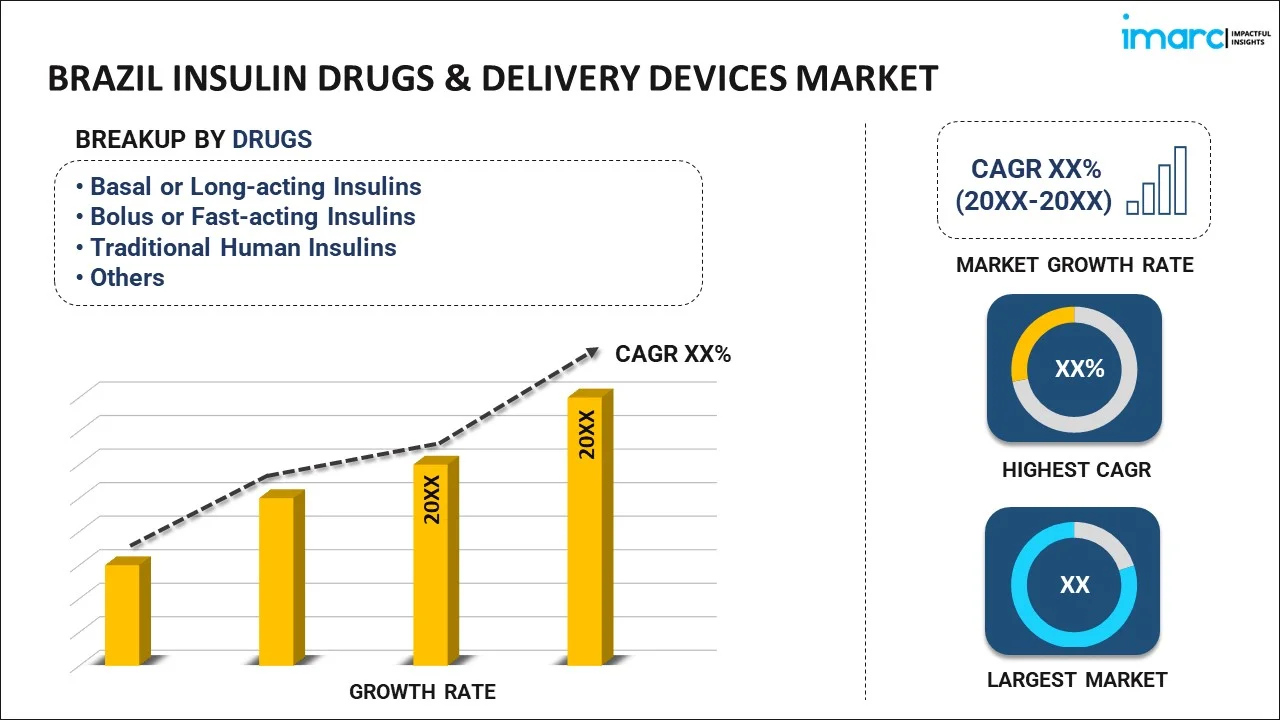
- By Drug: Basal or long-acting insulins dominate the market with a share of 37% in 2025, due to their convenient once-daily dosing and ability to provide consistent glucose control for patients with type 1 and type 2 diabetes who need foundational insulin therapy.
- By Device: Insulin pens lead the market with a share of 58% in 2025, owing to their user-friendly design, dose accuracy, portability, and growing adoption of smart pens with Bluetooth connectivity and mobile health platform integration.
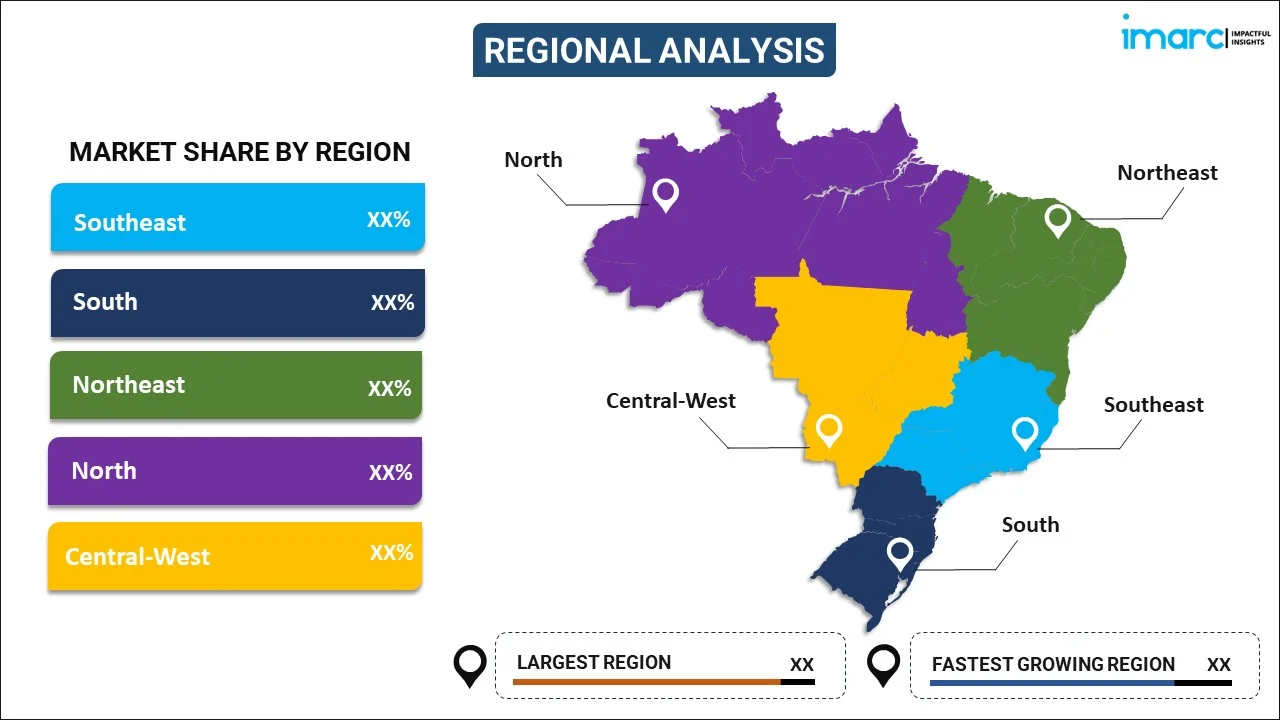
- By Region: Southeast represents the largest segment with a market share of 33% in 2025, supported by well-established healthcare infrastructure, higher population density in São Paulo and Rio de Janeiro, and greater access to advanced medical technologies.
- Key Players: The Brazil insulin drugs and delivery devices market demonstrates moderate competitive intensity, with both multinational and regional manufacturers vying across various price tiers and therapeutic categories. Competition is driven by innovation in insulin formulations, advanced delivery technologies, and expanding distribution networks.
The Brazil insulin drugs and delivery devices market represents a critical component of the nation's diabetes care ecosystem, serving millions of adults living with diabetes. The market is characterized by continuous pharmaceutical innovation, with basal insulin analogs providing extended glycemic control and rapid-acting formulations enabling precise mealtime glucose management. Healthcare infrastructure improvements have expanded diagnostic capabilities across both urban and rural regions, increasing diabetes identification rates and subsequent treatment initiation. In October 2024, Novo Nordisk announced plans to invest USD 158 million in renovating its Montes Claros facility in Minas Gerais state to expand sustainable insulin production capacity, demonstrating strong manufacturer commitment to serving the Brazilian market.
Brazil Insulin Drugs & Delivery Devices Market Trends:
Integration of Digital Health Technologies in Diabetes Management
The market is witnessing significant adoption of smart insulin delivery devices featuring Bluetooth connectivity, dose tracking capabilities, and integration with mobile health applications. These connected solutions enable real-time glucose data sharing between patients, caregivers, and healthcare providers, improving treatment adherence and glycemic outcomes. Brazil's healthcare system is increasingly adopting smart insulin pens that offer digital dose tracking, reminders, and seamless smartphone connectivity, particularly valuable for managing diabetes in underserved and remote populations where specialist access remains limited. For instance, in August 2025, at Brazil’s largest hybrid medical education conference on endocrinology and diabetes, SIBIONICS, an official partner of the G7 Summit 2025, unveiled its advanced GS1 continuous glucose monitoring (CGM) system, impressing over 100 leading physicians and diabetes specialists from across the nation.
Expansion of Biosimilar Insulin Market Penetration
Biosimilar insulins are gaining substantial traction as cost-effective alternatives to originator biologics, supported by evolving regulatory frameworks and growing healthcare system acceptance. ANVISA's RDC 875/2024 regulatory updates have streamlined biosimilar registration pathways, allowing the utilization of international reference products and the potential waiver of certain clinical studies when scientifically justified. This regulatory modernization aligns with global standards and facilitates broader biosimilar market entry, with pilot programs demonstrating treatment cost reductions exceeding fifty percent in select health plans. By September 2025, ANVISA had approved 67 biosimilars, reinforcing the regulatory agency’s commitment to maintaining rigorous quality, safety, and efficacy standards.
Rising Adoption of Advanced Insulin Delivery Systems
The market is increasingly shifting toward sophisticated insulin delivery solutions, such as insulin pumps integrated with continuous glucose monitoring (CGM) systems. These technologies allow automated insulin administration based on real-time glucose measurements, closely replicating natural pancreatic insulin secretion. The growing adoption of CGM-enabled pump systems in Brazil supports closed-loop diabetes management, helping to minimize hypoglycemic events and optimize glycemic control. By reducing the need for manual intervention, these connected devices enhance treatment adherence and improve overall quality of life for patients managing diabetes.
Market Outlook 2026-2034:
The outlook for Brazil’s insulin drugs and delivery devices market remains strong, driven by rising diabetes prevalence, ongoing improvements in healthcare infrastructure, and continuous innovation in insulin formulations and delivery systems. Government initiatives promoting diabetes care accessibility through the SUS, along with growing patient awareness supported by digital health platforms and educational programs, are fostering broader adoption. These factors collectively create a favorable environment for sustained market growth and the expansion of advanced insulin therapies across the country. The market generated a revenue of USD 949.40 Million in 2025 and is projected to reach a revenue of USD 1,033.73 Million by 2034, growing at a compound annual growth rate of 0.95% from 2026-2034.
Brazil Insulin Drugs & Delivery Devices Market Report Segmentation:
|
Segment Category |
Leading Segment |
Market Share |
|
Drug |
Basal or Long-acting Insulins |
37% |
|
Device |
Insulin Pens |
58% |
|
Region |
Southeast |
33% |
Drug Insights:
To get detailed segment analysis of this market, Request Sample
- Basal or Long-acting Insulins
- Lantus (Insulin Glargine)
- Levemir (Insulin Detemir)
- Toujeo (Insulin Glargine)
- Tresiba (Insulin Degludec)
- Basaglar (Insulin Glargine)
- Bolus or Fast-acting Insulins
- NovoRapid/Novolog (Insulin aspart)
- Humalog (Insulin lispro)
- Apidra (Insulin glulisine)
- FIASP (Insulin aspart)
- Admelog (Insulin lispro Sanofi)
- Traditional Human Insulins
- Novolin/Mixtard/Actrapid/Insulatard
- Humulin
- Insuman
- Combination Insulins
- NovoMix (Biphasic Insulin aspart)
- Ryzodeg (Insulin degludec and Insulin aspart)
- Xultophy (Insulin degludec and Liraglutide)
- Soliqua/Suliqua (Insulin glargine and Lixisenatide)
- Biosimilar Insulins
- Insulin Glargine Biosimilars
- Human Insulin Biosimilars
Basal or long-acting insulins dominate with a market share of 37% of the total Brazil insulin drugs & delivery devices market in 2025.
Basal or long-acting insulins constitute the foundation of insulin therapy for millions of Brazilian diabetes patients, providing sustained background insulin coverage that maintains glucose homeostasis between meals and overnight. These formulations, including insulin glargine and insulin detemir, offer predictable pharmacokinetic profiles with duration extending up to twenty-four hours or longer, enabling once-daily dosing convenience that significantly improves patient compliance with prescribed treatment regimens.
The segment is supported by ongoing innovation in insulin analog development, with next-generation formulations providing improved glycemic stability and lower risk of hypoglycemia compared to earlier insulin products. Manufacturers are enhancing local production capabilities to meet increasing demand, strengthening supply chain reliability and ensuring consistent access to long-acting insulin for healthcare providers and patients across Brazil. This focus on advanced formulations and robust manufacturing infrastructure helps address treatment continuity and supports the broader adoption of modern insulin therapies in the country.
Device Insights:
- Insulin Pens
- Cartridges in Reusable Pens
- Disposable Insulin Pens
- Insulin Pumps
- Insulin Pump Devices
- Insulin Pump Reservoirs
- Insulin Infusion Sets
- Insulin Syringes
- Insulin Jet Injectors
Insulin pens leads with a share of 58% of the total Brazil insulin drugs & delivery devices market in 2025.
Insulin pens represent the preferred delivery method across Brazil's diabetic population, offering significant advantages over traditional syringe administration including enhanced dose accuracy, simplified insulin measurement, reduced injection pain through fine-gauge needles, and improved portability supporting flexible lifestyle management. Both disposable pre-filled pens and reusable pens with cartridge systems demonstrate strong market adoption across patient demographics.
The segment is experiencing transformation through smart pen technology integration, with devices incorporating Bluetooth connectivity, automatic dose logging, and mobile application synchronization enabling comprehensive diabetes data management. These digital capabilities support improved treatment adherence through reminder functions and facilitate remote monitoring by healthcare providers. Brazil's healthcare system increasingly recognizes smart insulin pen benefits for improving patient outcomes, particularly in regions with limited access to specialized endocrinology services.
Regional Insights:
To get detailed regional analysis of this market, Request Sample
- Southeast
- South
- Northeast
- North
- Central-West
Southeast exhibits clear dominance with a 33% share of the total Brazil insulin drugs & delivery devices market in 2025.
The Southeast region serves as Brazil's primary healthcare hub, with major metropolitan centers including São Paulo and Rio de Janeiro hosting the nation's most advanced medical facilities, specialized diabetes clinics, and comprehensive pharmaceutical distribution networks. The region's well-established healthcare infrastructure enables widespread availability of both innovative insulin formulations and advanced delivery devices including continuous glucose monitoring systems and insulin pumps.
Higher urbanization levels, elevated disposable income, and concentrated healthcare professional expertise support greater adoption of advanced diabetes management technologies throughout the Southeast. The region's population density and economic development facilitate efficient distribution logistics, ensuring consistent insulin supply availability even during challenging circumstances, though the May 2024 floods in Rio Grande do Sul demonstrated vulnerability to cold-chain disruptions affecting medication storage.
Market Dynamics:
Growth Drivers:
Why is the Brazil Insulin Drugs & Delivery Devices Market Growing?
Rising Prevalence of Diabetes Across Brazilian Population
The escalating diabetes burden represents the fundamental driver of insulin market expansion in Brazil, with lifestyle transformations including urbanization, sedentary behavior patterns, and dietary shifts contributing to increasing type 2 diabetes incidence. Research projections indicate that by 2036, approximately twenty-seven percent of the Brazilian population aged over twenty-five years may be affected by type 2 diabetes, with prevalence potentially reaching thirty-six percent among women. This demographic health challenge directly translates to sustained insulin therapy demand as patients require long-term glycemic management to prevent diabetes-related complications affecting cardiovascular, renal, and neurological systems. The high proportion of undiagnosed cases, estimated at thirty-two percent of diabetic individuals, suggests continued market expansion as screening programs identify additional patients requiring treatment initiation.
Government Healthcare Initiatives Supporting Diabetes Care Accessibility
The Brazilian government's commitment to universal healthcare access through the Sistema Único de Saúde significantly supports insulin market growth by ensuring free or subsidized medication availability for low-income populations. Public health programs distribute essential diabetes management medications including insulin formulations, across the national healthcare network, reducing financial barriers that might otherwise limit treatment adherence. Diabetes and obesity together account for approximately 30% of SUS healthcare expenditure, reflecting substantial governmental resource allocation toward chronic disease management. Government initiatives promoting diabetes prevention through healthy food incentives and sweetened-beverage excise taxes introduced in 2025 demonstrate comprehensive policy approaches addressing both treatment access and disease prevention strategies.
Technological Advancements in Insulin Delivery Mechanisms
Ongoing advances in insulin delivery systems are reshaping diabetes care by improving precision, convenience, and patient outcomes. Smart insulin pens, sophisticated pump technologies, and integrated glucose monitoring solutions support more accurate dosing and streamlined daily management. Connected platforms allow automated tracking, therapy reminders, and seamless data sharing with healthcare professionals, strengthening treatment adherence and personalization. The growing integration of glucose monitoring with insulin delivery is enabling semi-automated and closed-loop approaches that ease the burden of disease management, enhance safety, and support more consistent glycemic control while improving overall quality of care for people living with diabetes.
Market Restraints:
What Challenges the Brazil Insulin Drugs & Delivery Devices Market is Facing?
Healthcare Infrastructure Limitations in Remote Regions
Large geographical distances in Brazil are also an issue in terms of distributing insulin. In addition, regionally located areas in Brazil are less likely to have developed health infrastructure. Unavailable or less accessible specialized care in areas like endocrinology, cold storage for temperature-sensitive items like insulin, as well as an underdeveloped pharmacy infrastructure, are factors that limit market reach.
High Costs of Advanced Insulin Delivery Devices
The substantial cost differential between advanced insulin delivery technologies such as insulin pumps and continuous glucose monitoring systems, compared to conventional delivery methods, limits widespread adoption among price-sensitive patient populations. Economic inequality across Brazilian society creates affordability barriers, with many patients unable to access premium diabetes management tools despite their clinical benefits.
Regulatory Complexity and Reimbursement Limitations
Stringent regulatory requirements for insulin product registration and biosimilar approval through ANVISA create barriers to market entry for manufacturers, potentially limiting competitive dynamics and product availability. Inconsistent reimbursement coverage for advanced delivery devices across private insurance plans and public healthcare programs restricts patient access to innovative diabetes management technologies.
Competitive Landscape:
The Brazil insulin drugs and delivery devices market demonstrates moderate competitive intensity, with established multinational pharmaceutical corporations maintaining dominant market positions while facing increasing challenges from regional manufacturers and biosimilar producers. Market leaders leverage extensive product portfolios spanning multiple insulin formulations and delivery device categories, supported by robust research and development capabilities and established distribution networks. Strategic partnerships between global pharmaceutical companies and local healthcare institutions facilitate market penetration and technology transfer. Companies increasingly focus on differentiation through connected device ecosystems, patient support programs, and innovative formulation development to maintain competitive advantages in evolving market conditions.
Recent Developments:
- April 2025: Novo Nordisk committed R$6.4 billion to expand its Montes Claros production facility, enhancing manufacturing capacity for injectable drugs including insulin formulations, to strengthen supply chain resilience in the Brazilian market.
- February 2025: Brazil’s Ministry of Health disclosed plans for Fiocruz and Biomm to collaborate under a production development partnership aimed at fully localizing the manufacture of insulin glargine. The initiative, aligned with the Productive Development Partnerships program, is expected to supply the medication to the country’s public healthcare system in the latter half of 2025. As part of the project, the active pharmaceutical ingredient will be produced by Bio-Manguinhos/Fiocruz at the Strategic Inputs Technology Complex, a new manufacturing facility to be established in Eusébio, Ceará.
Brazil Insulin Drugs & Delivery Devices Market Report Coverage:
| Report Features | Details |
|---|---|
| Base Year of the Analysis | 2025 |
| Historical Period | 2020-2025 |
| Forecast Period | 2026-2034 |
| Units | Million USD |
| Scope of the Report | Exploration of Historical and Forecast Trends, Industry Catalysts and Challenges, Segment-Wise Historical and Predictive Market Assessment:
|
| Drugs Covered |
|
| Devices Covered |
|
| Regions Covered | Southeast, South, Northeast, North, Central-West |
| Customization Scope | 10% Free Customization |
| Post-Sale Analyst Support | 10-12 Weeks |
| Delivery Format | PDF and Excel through Email (We can also provide the editable version of the report in PPT/Word format on special request) |
Key Questions Answered in This Report
The Brazil insulin drugs & delivery devices market size was valued at USD 949.40 Million in 2025.
The Brazil insulin drugs & delivery devices market is expected to grow at a compound annual growth rate of 0.95% from 2026-2034 to reach USD 1,033.73 Million by 2034.
Basal or long-acting insulins represent the largest drug segment share at 37% in 2025, driven by their once-daily dosing convenience and sustained glucose control capabilities essential for baseline insulin therapy requirements.
Key factors driving the Brazil insulin drugs & delivery devices market include rising diabetes prevalence attributed to lifestyle changes, government healthcare initiatives ensuring insulin accessibility, technological advancements in delivery devices, and expanding geriatric population requiring chronic disease management.
Major challenges include healthcare infrastructure limitations in remote regions affecting distribution and cold-chain logistics, high costs of advanced delivery devices limiting accessibility, inconsistent reimbursement coverage, and regulatory complexity affecting market entry timelines.
Need more help?
- Speak to our experienced analysts for insights on the current market scenarios.
- Include additional segments and countries to customize the report as per your requirement.
- Gain an unparalleled competitive advantage in your domain by understanding how to utilize the report and positively impacting your operations and revenue.
- For further assistance, please connect with our analysts.
 Request Customization
 Speak to an Analyst
 Request Brochure
 Inquire Before Buying
Benefits of Customization
- Personalize this research
- Triangulate with your data
- Get data as per your format and definition
- Gain a deeper dive into a specific application, geography, customer, or competitor
- Any level of personalization
Get in Touch With Us
UNITED STATES
Phone: +1-201-971-6302
INDIA
Phone: +91-120-433-0800
UNITED KINGDOM
Phone: +44-753-714-6104
Email: sales@imarcgroup.com
Client Testimonials




.webp)




.webp)












