
Brazil Self Monitoring Blood Glucose Devices Market Size, Share, Trends and Forecast by Component, and Region, 2026-2034
Brazil Self Monitoring Blood Glucose Devices Market Summary:
The Brazil self monitoring blood glucose devices market size was valued at USD 329.18 Million in 2025 and is projected to reach USD 479.79 Million by 2034, growing at a compound annual growth rate of 4.28% from 2026-2034.
The Brazil self monitoring blood glucose devices market shows a positive outlook, supported by rising diabetes prevalence, increasing health awareness, and greater emphasis on home-based disease management. Growing adoption of preventive healthcare practices and regular glucose monitoring is encouraging demand across both urban and semi-urban populations. Technological advancements, such as compact devices, improved accuracy, and user-friendly designs, further enhance adoption. Expanding access through pharmacies and digital health channels also supports sustained market growth.
Key Takeaways and Insights:
- By Component: Test strips dominate the market with a share of 84% in 2025, reflecting the essential and recurring nature of consumable testing supplies required for frequent daily blood glucose measurements by diabetic patients across residential and clinical settings throughout Brazil.
- By Region: Southeast leads the market with a share of 51% in 2025, driven by the concentration of healthcare infrastructure, higher population density in metropolitan areas, including São Paulo and Rio de Janeiro, and elevated disposable incomes enabling access to quality diabetes management devices.
- Key Players: Leading manufacturers drive the Brazil self monitoring blood glucose devices market by expanding product portfolios, improving accuracy technologies, and strengthening nationwide distribution networks. Their investments in marketing, affordability initiatives, and partnerships with healthcare providers boost awareness and adoption. Some of the key players operating in the market include Abbott Laboratories, Ascensia Diabetes Care Holdings AG (PHC Holdings Corp.), and Roche Diabetes Care.
The Brazil self monitoring blood glucose devices market is experiencing sustained growth, driven by the surging incidence of diabetes mellitus across the nation. The prevalence of diabetes (% of individuals aged 20 to 79) in Brazil was noted to be 10.6 % in 2024, according to the World Bank collection of development indicators. The expanding elderly demographic, coupled with lifestyle changes, including sedentary behaviors and dietary modifications, continues to fuel diabetes incidence rates. Government initiatives through the Unified Health System have progressively increased assistance for diabetic patients by distributing glucose monitors and test strips, thereby democratizing access to essential monitoring tools. Technological advancements in glucometer accuracy and user-friendly designs are enhancing patient compliance with regular glucose monitoring protocols. Rising healthcare awareness, combined with increased disposable incomes in urban centers, supports market expansion, as patients prioritize proactive diabetes management to prevent complications, including cardiovascular disease, nephropathy, and retinopathy, thereby driving the market share.
Brazil Self Monitoring Blood Glucose Devices Market Trends:
Digital Integration and Smartphone Connectivity
The integration of digital technologies with traditional glucose monitoring devices represents a transformative trend reshaping diabetes self-management in Brazil. Modern glucometers increasingly feature Bluetooth connectivity, enabling automatic data transmission to smartphone applications for comprehensive tracking and analysis. These platforms provide real-time insights, trend visualization, and personalized alerts that support proactive glucose management. Integration with telemedicine services enables remote monitoring and timely clinical intervention. Enhanced data sharing also improves patient engagement, treatment adherence, and long-term health outcomes.
Government Healthcare Initiatives Supporting Diabetes Management
Federal and state governments in Brazil are strengthening diabetes care infrastructure through expanded programs under the Unified Health System. These initiatives improve access to diagnostic devices, testing strips, and essential diabetes management supplies. Public health campaigns are increasing awareness about early diagnosis and regular glucose monitoring. In August 2025, the ‘DiabetesCare’ initiative, created by the Federal University of Sergipe, was launched to offer education on diabetes and pharmaceutical support. Partnerships with private manufacturers support localized production and cost reductions. Training programs for healthcare professionals enhance disease management capabilities. Together, these efforts expand adoption of self monitoring blood glucose devices across diverse income groups.
Rising Demand for User-Friendly Home Monitoring Solutions
Consumer preferences are shifting towards simplified, painless, and accurate home-based glucose monitoring solutions. Manufacturers are responding by developing devices with larger displays, reduced blood sample requirements, and faster result times. The home-care segment represents one of the fastest-growing end user categories, as patients increasingly prefer convenient self monitoring over clinical visits. This trend aligns with broader healthcare digitization and telehealth adoption, enabling remote patient monitoring and reducing healthcare system burden while empowering individuals to actively manage their diabetes.
Market Outlook 2026-2034:
The Brazil self monitoring blood glucose devices market demonstrates promising growth potential, driven by escalating diabetes prevalence and enhanced healthcare infrastructure. The aging population trajectory underscores long-term demand sustainability. The market generated a revenue of USD 329.18 Million in 2025 and is projected to reach a revenue of USD 479.79 Million by 2034, growing at a compound annual growth rate of 4.28% from 2026-2034. Technological innovations, including improved sensor accuracy and mobile health integration, are expected to enhance patient outcomes. Government initiatives to expand access to diabetes diagnostics and reimbursement support are further strengthening market penetration across public healthcare settings. Rising patient awareness and physician adoption of home-based monitoring solutions continue to support consistent device uptake nationwide.
Brazil Self Monitoring Blood Glucose Devices Market Report Segmentation:
| Segment Category | Leading Segment | Market Share |
|---|---|---|
| Component | Test Strips | 84% |
| Region | Southeast | 51% |
Component Insights:
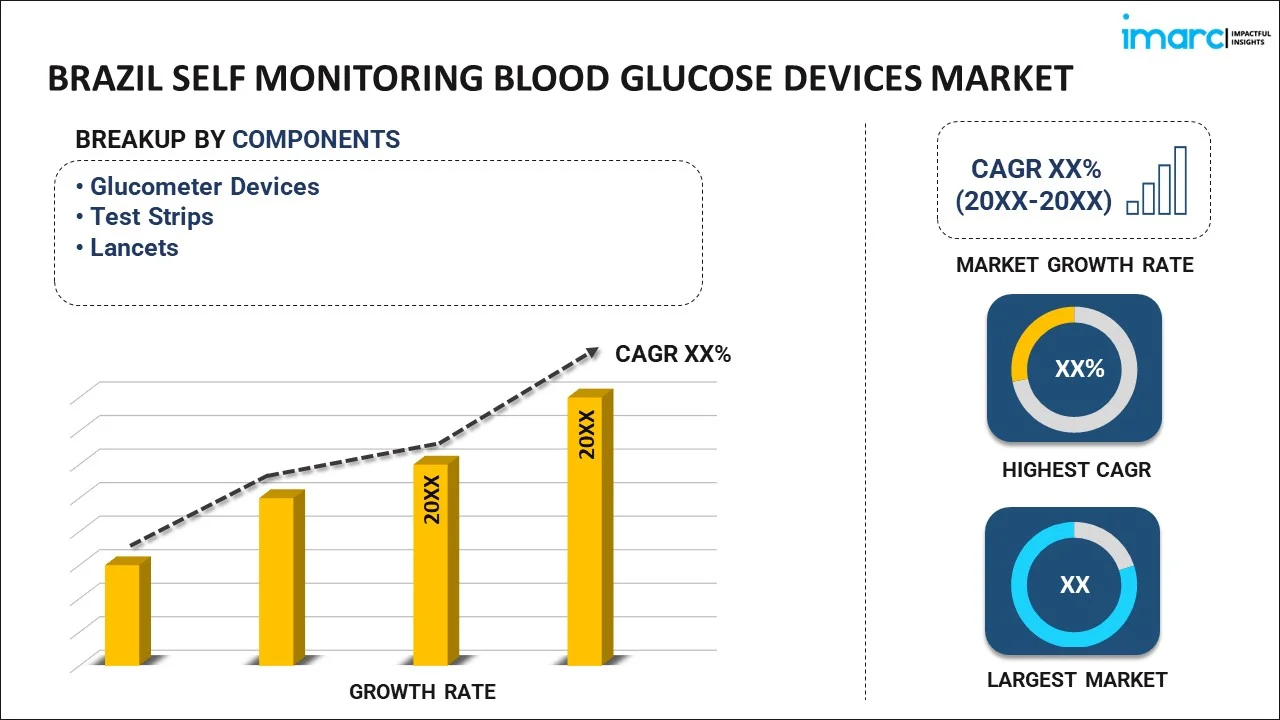
To get detailed segment analysis of this market Request Sample
- Glucometer Devices
- Test Strips
- Lancets
Test strips dominate with a market share of 84% of the total Brazil self monitoring blood glucose devices market in 2025.
Test strips constitute essential consumables for diabetic patients conducting regular glucose measurements. These small disposable strips react with blood samples through glucose oxidase enzymes, producing gluconic acid that enables meters to calculate precise glucose concentrations. The consumable nature of test strips generates recurring demand as patients typically require multiple daily measurements. The Brazilian public health system supports diabetes management by distributing test strips through the Sistema Único de Saúde (SUS) network, enhancing accessibility across income segments.
The dominant position of test strips reflects their fundamental role in effective diabetes management protocols and their integration with government healthcare programs. Manufacturers focus on developing strips compatible with multiple meter brands while improving accuracy and reducing blood sample volume requirements. The segment benefits from established distribution networks through pharmacies and healthcare facilities nationwide, ensuring consistent availability and driving sustained revenue generation. Rising frequency of daily glucose testing among insulin-dependent patients further accelerates repeat purchases, reinforcing the recurring demand nature of test strips.
Regional Insights:
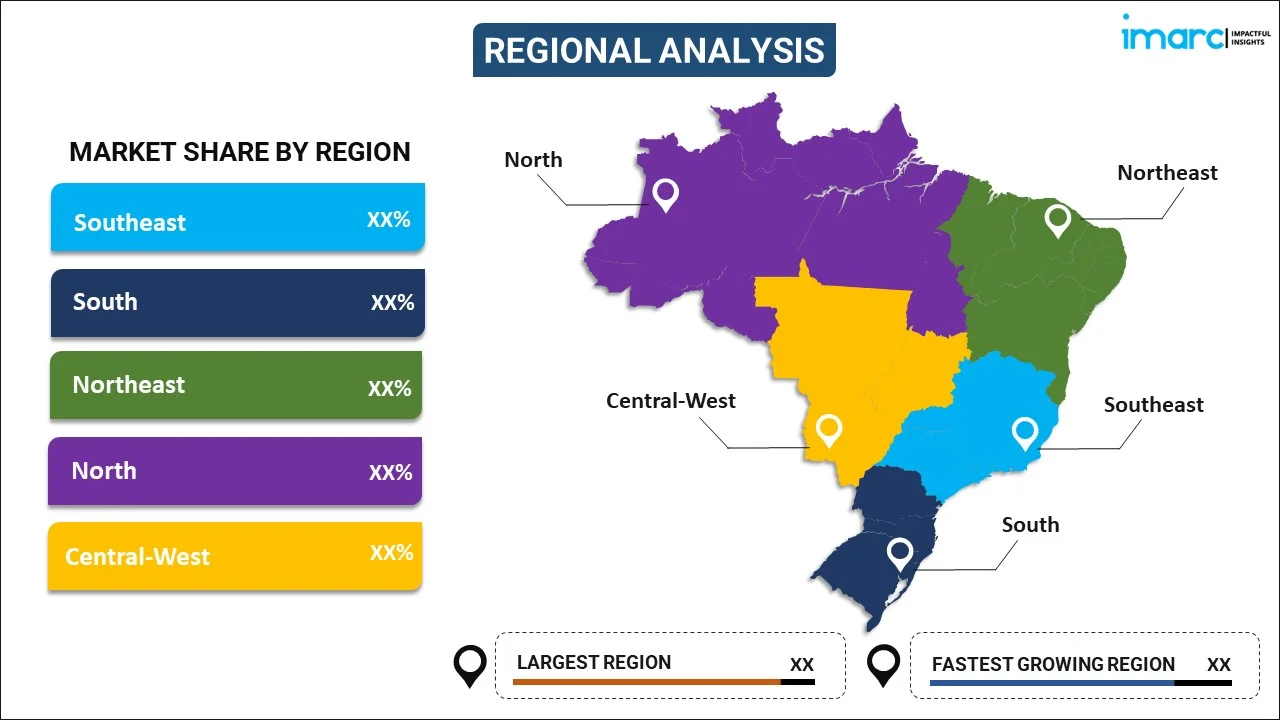
To get detailed regional analysis of this market Request Sample
- Southeast
- South
- Northeast
- North
- Central-West
Southeast leads with a share of 51% of the total Brazil self monitoring blood glucose devices market in 2025.
Southeast commands the largest market share in the Brazil self monitoring blood glucose devices sector, driven by population concentration and superior healthcare infrastructure. In October 2025, Roquette, an international leader in plant-derived ingredients and pharmaceutical excipients for health, nutrition, and bio-industrial sectors, marked the official launch of its Innovation Center for the Health & Pharma Solutions Business Group in São Paulo, Brazil. São Paulo and Rio de Janeiro metropolitan areas house Brazil's largest urban populations with correspondingly high diabetes prevalence. The region benefits from well-developed pharmaceutical distribution networks, extensive pharmacy chains, and concentrated presence of multinational medical device companies.
Higher disposable incomes and greater health awareness among urban residents further support adoption of advanced glucose monitoring devices, including digitally enabled meters. The Southeast also leads in private health insurance coverage, enabling quicker uptake of newer technologies beyond basic monitoring solutions. Strong physician density and frequent patient–doctor interactions promote regular glucose testing and adherence to monitoring regimens. Additionally, the region’s role as Brazil’s economic and innovation hub encourages early market entry for new products, pilot programs, and partnerships with hospitals, reinforcing its leadership position in the market.
Market Dynamics:
Growth Drivers:
Why is the Brazil Self Monitoring Blood Glucose Devices Market Growing?
Rising Diabetes Prevalence and Aging Population Demographics
The escalating prevalence of diabetes mellitus represents the primary growth catalyst for the Brazil self monitoring blood glucose devices market. Brazil ranks among nations with one of the highest diabetic populations globally, driven by lifestyle modifications, including sedentary behaviors, processed food consumption, and urbanization patterns. The aging population amplifies diabetes incidence as metabolic efficiency declines with advancing age. According to the IBGE Population Projections, approximately 37.8% of Brazil's population will be aged 60 years or older by 2070, dramatically expanding the at-risk demographic. Rising obesity rates and increasing prevalence of hypertension further intensify diabetes risk across both urban and semi-urban populations. Greater disease awareness and improved diagnosis rates are expanding the treated patient pool requiring regular glucose monitoring. Public health campaigns emphasizing early detection encourage routine testing and self monitoring practices. Together, these factors are creating sustained, long-term demand for self monitoring blood glucose devices across Brazil.
Government Healthcare Programs and Public Health Initiatives
The Brazilian government’s strong commitment to diabetes care through the Unified Health System plays a vital role in driving accessibility and adoption of self monitoring blood glucose devices. Public healthcare policies have consistently expanded coverage for diabetes management supplies, ensuring that glucose monitors and test strips are more widely available to eligible patients. Strategic collaborations between federal authorities and private manufacturers help reduce device costs through efficient procurement, pricing controls, and streamlined distribution networks. Government prioritization of diabetes management is reinforced through sustained investments in chronic disease programs and integrated primary healthcare services. In parallel, national health initiatives addressing obesity, physical inactivity, and poor dietary habits support long-term diabetes prevention and control. These coordinated efforts enhance patient awareness, encourage routine glucose monitoring, and promote equitable access to essential monitoring tools across urban and rural populations, strengthening overall market growth.
Technological Advancements in Device Accuracy and Usability
Continuous technological innovations enhance the appeal and effectiveness of self monitoring blood glucose devices, encouraging broader adoption among Brazilian diabetic patients. Manufacturers invest significantly in improving measurement accuracy, reducing required blood sample volumes, and accelerating result delivery times. Digital integration capabilities, including Bluetooth connectivity, enable seamless data transmission to smartphone applications for comprehensive glucose tracking and pattern analysis. Advanced algorithms incorporated into connected devices provide personalized insights, helping patients optimize insulin dosing decisions. User interface improvements, including larger displays and simplified operating procedures, accommodate elderly users who represent a substantial patient demographic. These technological refinements improve patient compliance with monitoring protocols while delivering superior clinical outcomes. Ongoing innovations also support remote monitoring and physician connectivity, strengthening long-term disease management and patient engagement.
Market Restraints:
What Challenges the Brazil Self Monitoring Blood Glucose Devices Market is Facing?
High Device and Consumable Costs for Low-Income Populations
The high cost associated with glucose testing technologies poses a barrier for those who belong to poorer sections of society. Though there are government services that distribute materials through SUS, there is often a gap between demand and supply, meaning that patients are forced to buy them separately, which may hamper budgets. The cost of test strips can add up to a high amount due to the number of times that patients are supposed to test on a daily basis for an effective treatment strategy for diabetes.
Limited Healthcare Infrastructure in Remote Regions
Geographic inequalities related to the provision of health care infrastructure limit market reach across Brazil's vast territory. In the rural areas of Brazil and the northern part of the country, there is poor pharmaceutical distribution infrastructure, thereby reducing access to health facilities and hindering the accessibility of self monitoring blood glucose devices and education for people with undiagnosed diabetes. Inequities in health care supply chain infrastructure within these regions lead to irregular product distribution and higher prices. Additionally, a lack of health care practitioners reduces diabetes screening and glucose monitoring protocol guidance, thus hindering device adoption.
Patient Compliance and Health Literacy Challenges
Insufficient patient education regarding proper glucose monitoring techniques and result interpretation undermines optimal device utilization. Many diabetic patients lack understanding of glycemic target ranges or appropriate responses to abnormal readings. Low health literacy rates among certain demographics impede compliance with recommended monitoring frequencies and lifestyle modifications. Cultural factors and diabetes stigma in some communities discourage proactive disease management, while elderly patients may struggle with device operation complexities despite usability improvements.
Competitive Landscape:
The Brazil self monitoring blood glucose devices market exhibits moderate concentration with established multinational corporations commanding significant market positions. Leading players leverage robust distribution networks and strong brand recognition to maintain competitive advantages. These companies invest substantially in research and development (R&D) activities to introduce innovative products featuring enhanced accuracy, connectivity, and user convenience. Strategic partnerships with healthcare providers and public health systems strengthen market penetration while building patient loyalty. Competition intensifies around product differentiation through technological features, pricing strategies, and after-sales support services. Domestic manufacturers and emerging entrants seek market share by offering cost-effective alternatives targeting price-sensitive consumer segments.
Some of the key players include:
- Abbott Laboratories
- Ascensia Diabetes Care Holdings AG (PHC Holdings Corp.)
- Roche Diabetes Care
Brazil Self Monitoring Blood Glucose Devices Market Report Coverage:
| Report Features | Details |
|---|---|
| Base Year of the Analysis | 2025 |
| Historical Period | 2020-2025 |
| Forecast Period | 2026-2034 |
| Units | Million USD |
| Scope of the Report | Exploration of Historical and Forecast Trends, Industry Catalysts and Challenges, Segment-Wise Historical and Predictive Market Assessment:
|
| Components Covered | Glucometer Devices, Test Strips, Lancets |
| Regions Covered | Southeast, South, Northeast, North, Central-West |
| Companies Covered | Abbott Laboratories, Ascensia Diabetes Care Holdings AG (PHC Holdings Corp.), Roche Diabetes Care, etc. |
| Customization Scope | 10% Free Customization |
| Post-Sale Analyst Support | 10-12 Weeks |
| Delivery Format | PDF and Excel through Email (We can also provide the editable version of the report in PPT/Word format on special request) |
Frequently Asked Questions About the Brazil Self Monitoring Blood Glucose Devices Market Report
The Brazil self monitoring blood glucose devices market size was valued at USD 329.18 Million in 2025.
The Brazil self monitoring blood glucose devices market is expected to grow at a compound annual growth rate of 4.28% from 2026-2034 to reach USD 479.79 Million by 2034.
Test strips dominated the market with a share of 84%, reflecting the essential consumable nature of testing supplies required for daily glucose measurements and their integration with government healthcare distribution programs.
Key factors driving the Brazil self monitoring blood glucose devices market include rising diabetes prevalence, aging population demographics, government healthcare initiatives, technological advancements in device accuracy, and expanding digital health integration.
Major challenges include high device and consumable costs for low-income populations, limited healthcare infrastructure in remote regions, patient compliance issues, health literacy gaps, and inconsistent product availability through public health systems.
Need more help?
- Speak to our experienced analysts for insights on the current market scenarios.
- Include additional segments and countries to customize the report as per your requirement.
- Gain an unparalleled competitive advantage in your domain by understanding how to utilize the report and positively impacting your operations and revenue.
- For further assistance, please connect with our analysts.
 Request Customization
 Speak to an Analyst
 Request Brochure
 Inquire Before Buying
Benefits of Customization
- Personalize this research
- Triangulate with your data
- Get data as per your format and definition
- Gain a deeper dive into a specific application, geography, customer, or competitor
- Any level of personalization
Get in Touch With Us
UNITED STATES
Phone: +1-201-971-6302
INDIA
Phone: +91-120-433-0800
UNITED KINGDOM
Phone: +44-753-714-6104
Email: [email protected]
Client Testimonials




.webp)




.webp)













