
Europe Advanced Wound Care Market Size, Share, Trends and Forecast by Product, Application, End User, and Country, 2026-2034
Europe Advanced Wound Care Market Summary:
The Europe advanced wound care market size was valued at USD 2.66 Billion in 2025 and is projected to reach USD 3.90 Billion by 2034, growing at a compound annual growth rate of 4.3% from 2026-2034.
Europe’s advanced wound care market is growing steadily, driven by an aging population, rising chronic disease burden, and increasing demand for innovative wound management solutions. Growth is supported by strong healthcare infrastructure, favorable reimbursement policies, and active clinical research across key economies. Increasing awareness of evidence-based care and wider adoption of technologically advanced therapies across hospitals, clinics, and homecare settings are sustaining long-term market expansion.
Key Takeaways and Insights:
-
By Product: Exudate management dominates the market with approximately 28.03% share in 2025, driven by widespread clinical adoption of foam dressings, hydrocolloids, and alginate products that effectively manage wound fluid while maintaining optimal moisture balance for tissue regeneration.
-
By Application: Chronic wounds lead the market with a share of 64.06% in 2025, owing to the high prevalence of diabetic foot ulcers, venous leg ulcers, and pressure ulcers among the aging European population requiring specialized long-term wound management solutions.
-
By End User: Hospitals represent the largest segment with a market share of 78.05% in 2025, attributed to concentrated clinical expertise, comprehensive wound care formularies, and availability of specialized nursing staff managing complex acute and chronic wound cases.
-
By Country: Germany leads the regional market with approximately 25% share in 2025, supported by advanced healthcare infrastructure, strong reimbursement policies, and significant presence of leading wound care manufacturers driving product innovation and market penetration.
-
Key Players: The Europe advanced wound care market exhibits a consolidated competitive landscape characterized by established multinational medical device corporations competing through product innovation, clinical evidence generation, and comprehensive wound care solutions portfolios spanning dressings, therapy devices, and biologics.
Europe’s advanced wound care industry is a mature yet evolving healthcare segment focused on managing chronic and acute wounds through specialized products and technologies. The market includes infection control solutions, exudate management dressings, active wound care biologics, and therapy devices aimed at accelerating healing, reducing complications, and lowering overall healthcare costs. A significant elderly population vulnerable to chronic wounds ensures sustained baseline demand. In March 2025, Convatec showcased its strongest wound care innovation pipeline ever at the European Wound Management Association (EWMA) conference in Barcelona, underscoring intensified R&D efforts on next‑generation dressings and healing technologies. Across Europe, healthcare systems prioritize evidence-based wound care protocols to shorten healing times, reduce infection risks, and limit hospital stays. Supportive regulatory frameworks encourage innovation while ensuring safety and efficacy, enabling adoption of advanced biomaterials, antimicrobial technologies, intelligent wound monitoring systems, and integrated digital health solutions for improved, data-driven patient outcomes.
Europe Advanced Wound Care Market Trends:
Integration of Bioactive and Regenerative Technologies
The advanced wound care sector is witnessing significant innovation through the development and adoption of bioactive wound care products that actively promote tissue regeneration rather than simply providing passive wound coverage. In October 2024, Mölnlycke Health Care acquired Austria’s P.G.F. Industry Solutions GmbH, maker of Granudacyn®, enhancing its advanced wound care portfolio and European market presence. Skin substitutes, growth factor applications, and collagen-based matrices are gaining clinical acceptance for managing complex wounds that fail to respond to conventional treatments. These regenerative approaches represent a paradigm shift toward actively stimulating the body's natural healing mechanisms.
Expansion of Negative Pressure Wound Therapy Applications
Negative pressure wound therapy (NPWT) is increasingly moving beyond hospitals into outpatient and home care settings, supported by portable, easy-to-use devices. Its proven effectiveness in accelerating wound healing, minimizing infection, and managing complex surgical and traumatic wounds is boosting adoption across multiple clinical areas. Manufacturers are launching single-use disposable systems and advanced smart pumps with wireless connectivity, improving treatment accessibility, enhancing patient compliance, and enabling more convenient, personalized wound care outside traditional clinical environments.
Shift Toward Ambulatory and Home-Based Wound Care
Healthcare systems across Europe are increasingly emphasizing ambulatory and home-based wound care delivery to reduce hospitalization costs while maintaining treatment quality. In 2025, the Horizon Europe–funded ICAREWOUNDS project launched pilot evaluations of an integrated chronic wound care model across European hospitals, enhancing care pathways, remote monitoring, and primary-specialist coordination. This trend is driving demand for advanced dressings with extended wear times, simplified application procedures, and enhanced patient comfort that enable effective wound management outside institutional settings. Telehealth integration and remote wound assessment technologies support this transition by maintaining clinical oversight while reducing in-person visit requirements.
Market Outlook 2026-2034:
The Europe advanced wound care market outlook remains positive, supported by demographic trends, technological innovation, and evolving healthcare delivery models that favor advanced wound management solutions. The aging population across European countries ensures sustained demand for chronic wound care products, while surgical volume growth creates ongoing requirements for acute wound management. Healthcare policy emphasis on reducing wound-related complications, readmissions, and overall treatment costs aligns with advanced wound care value propositions that demonstrate improved healing outcomes and reduced total cost of care. The market generated a revenue of USD 2.66 Billion in 2025 and is projected to reach a revenue of USD 3.90 Billion by 2034, growing at a compound annual growth rate of 4.3% from 2026-2034.
Europe Advanced Wound Care Market Report Segmentation:
|
Segment Category |
Leading Segment |
Market Share |
|
Product |
Exudate Management |
28.03% |
|
Application |
Chronic Wounds |
64.06% |
|
End User |
Hospitals |
78.05% |
|
Country |
Germany |
25% |
Product Insights:
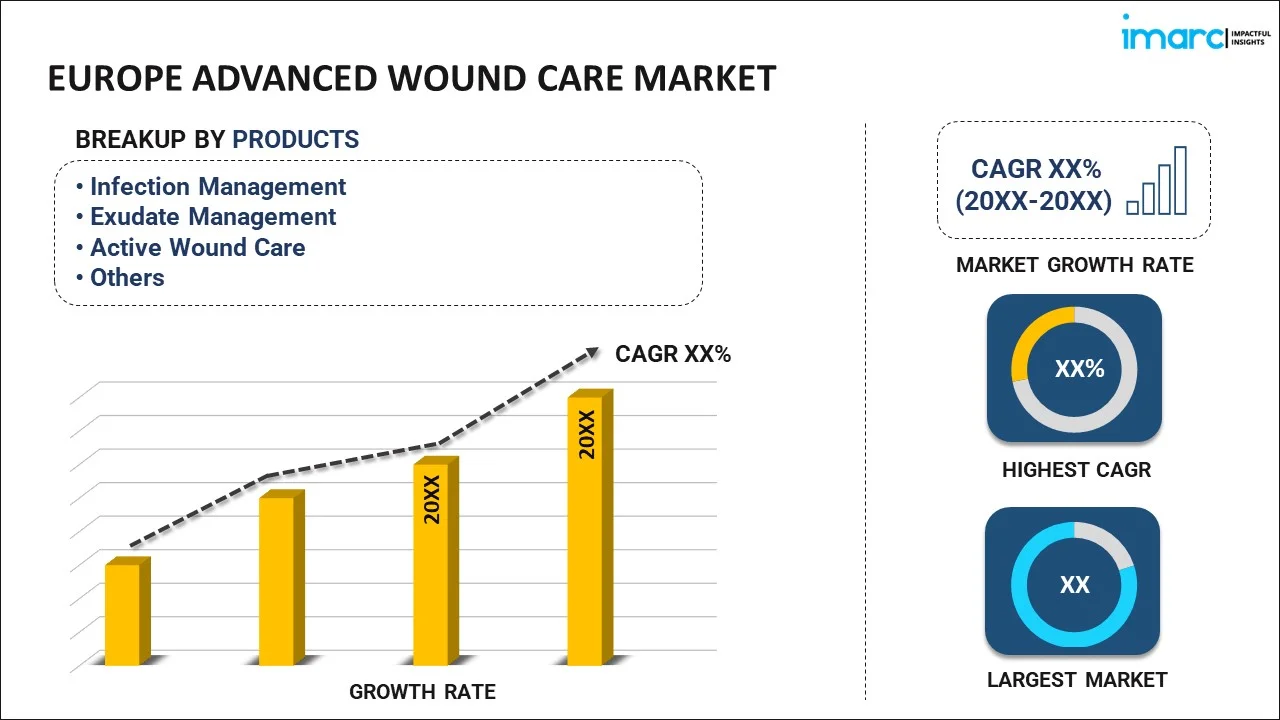
- Infection Management
- Silver Wound Dressings
- Non-silver Dressings
- Collagen Dressings
- Exudate Management
- Hydrocolloids Dressings
- Foam Dressings
- Alginate Dressings
- Hydrogel Dressings
- Active Wound Care
- Skin Substitutes
- Growth Factors
- Therapy Devices
- Negative Pressure Wound Therapy (NPWT)
- Oxygen and Hyperbaric Oxygen Equipment
- Electromagnetic Therapy Devices
- Others
The exudate management dominates with a market share of 28.03% of the total Europe advanced wound care market in 2025.
Exudate management products encompass a comprehensive range of advanced dressings specifically designed to effectively absorb and manage wound fluid while maintaining the optimal moist wound environment essential for tissue regeneration. This category includes hydrocolloid, foam, alginate, and hydrogel dressings, each tailored for specific wound exudate levels. In July 2025, Convatec obtained regulatory clearance in the UK and European Union for its nextgeneration Aquacel™ ConvaFiber™ Hydrofiber® dressing, designed for improved absorption and strength to enhance exudate management across wounds.
The segment's leadership position reflects the fundamental importance of exudate management in wound healing protocols across virtually all wound categories. Effective fluid management prevents maceration of surrounding tissue, reduces infection risk, and creates conditions conducive to cellular migration and tissue repair. Healthcare professionals increasingly select advanced exudate management products based on robust clinical evidence demonstrating superior healing outcomes, faster recovery times, reduced complications, and improved patient comfort compared to traditional dressing approaches.
Application Insights:
- Chronic Wounds
- Pressure Ulcers
- Diabetic Foot Ulcers
- Venous Leg Ulcers
- Arterial Ulcers
- Acute Wounds
- Burns and Trauma
- Surgical Wounds
The chronic wounds leads with a share of 64.06% of the total Europe advanced wound care market in 2025.
Chronic wounds represent non-healing wounds that fail to progress through normal healing stages within expected timeframes, typically persisting beyond three months despite appropriate treatment. This category encompasses diabetic foot ulcers, venous leg ulcers, pressure ulcers, and arterial ulcers, each presenting distinct pathophysiological challenges requiring specialized management approaches and advanced wound care products. In July 2024, MediWound received €16.25 million from the European Innovation Council Accelerator to advance EscharEx® clinical development, targeting diabetic foot ulcers and chronic wounds, accelerating its potential European availability.
The segment's dominance reflects Europe's demographic profile, characterized by substantial geriatric populations and a high prevalence of chronic diseases, particularly diabetes and vascular disorders that impair wound healing capacity. Chronic wounds impose significant healthcare resource burdens, requiring repeated clinical interventions, extended treatment durations, frequent hospitalizations, and comprehensive care coordination. This scenario drives sustained demand for advanced therapeutic products that effectively promote wound closure, reduce complications, enhance patient outcomes, and support more efficient, cost-effective healthcare delivery across the region.
End User Insights:
- Hospitals
- Community Health Service Centers
The hospitals dominate with a market share of 78.05% of the total Europe advanced wound care market in 2025.
Hospitals serve as the primary consumption channel for advanced wound care products, managing the most complex acute and chronic wound cases requiring specialized clinical expertise, comprehensive product formularies, and integrated multidisciplinary care approaches. Inpatient wound management encompasses post-surgical wound care, trauma-related injuries, severe burns, and complex chronic wounds that necessitate intensive monitoring and advanced therapeutic interventions. In 2025, the European Commission granted EUR 7.3 million to INJECTHEAL, supporting development of a 4D injectable hydrogel for chronic wounds and advancing innovative hospital-adopted therapies.
The segment's leadership reflects concentrated clinical expertise within hospital settings, including dedicated wound care nurse specialists, vascular surgeons, and dermatologists who manage challenging cases requiring advanced treatment modalities. Hospitals maintain extensive wound care product inventories spanning dressings, negative pressure devices, skin substitutes, and growth factors to address diverse wound presentations. Additionally, hospital-based wound care programs drive clinical evidence generation through research initiatives that inform treatment guidelines and support product adoption decisions.
Country Insights:
- Germany
- France
- United Kingdom
- Italy
- Spain
- Others
Germany exhibits a clear dominance with a 25% share of the total Europe advanced wound care market in 2025.
Germany represents Europe's largest national market for advanced wound care products, reflecting the country's substantial healthcare expenditure, comprehensive insurance coverage, and advanced medical infrastructure supporting specialized wound management services. The German healthcare system emphasizes evidence-based treatment protocols and maintains favorable reimbursement frameworks for advanced wound care products that demonstrate clinical and economic benefits.
The country's market leadership is supported by the presence of major wound care manufacturers maintaining research, development, and production facilities within Germany. Strong clinical research networks generate evidence supporting advanced wound care adoption, while established distribution channels ensure product availability across hospital, outpatient, and home care settings. Germany's aging demographic profile and high chronic disease prevalence create sustained demand for innovative wound management solutions
Market Dynamics:
Growth Drivers:
Why is the Europe Advanced Wound Care Market Growing?
Aging Population and Rising Chronic Disease Prevalence
Europe’s demographic evolution, marked by increasing life expectancy and a growing proportion of elderly individuals, drives the advanced wound care market by elevating baseline demand. Age-related physiological changes compromise tissue repair and wound healing, making older adults particularly vulnerable to pressure ulcers, venous leg ulcers, and diabetic foot ulcers that require specialized interventions. According to Eurostat’s 2025 Demography of Europe, by January 2024, the EU population aged 65 and over reached 21.6%, while those aged 80+ increased to 6.1%, showing a clear demographic shift. Concurrently, the rising prevalence of chronic diseases such as diabetes and cardiovascular disorders exacerbates wound complications, creating a compounded need for advanced therapeutic solutions capable of managing multifactorial healing challenges across healthcare settings.
Technological Innovation and Clinical Evidence Generation
Ongoing advancements in biomaterials, delivery systems, and therapeutic technologies broaden treatment possibilities while enhancing clinical outcomes, fueling adoption of advanced wound care products. In 2025, Rapid Nexus Nanotech Wound Solutions received FDA 510(k) clearance for its Hemastyl gel device, the first to target underlying tissue pathology in chronic wounds. Manufacturers increasingly invest in research to develop dressings with superior antimicrobial activity, improved moisture balance, and bioactive components that actively promote tissue regeneration. Simultaneously, clinical evidence from randomized trials, real-world studies, and health economic analyses validates these innovations, supporting reimbursement decisions, guideline integration, and healthcare professional confidence, ultimately reinforcing advanced wound care as a reliable, evidence-backed solution.
Healthcare System Focus on Cost-Effective Wound Management
European healthcare systems prioritize cost-effective strategies to address the financial burden of chronic and complex wounds, driving interest in advanced wound care solutions. Although unit costs may be higher than traditional dressings, these products reduce overall care costs by accelerating healing, minimizing dressing changes, preventing infections, and lowering hospitalization rates. Total cost of care approaches, which consider downstream complications like amputations and prolonged stays, favor advanced wound care adoption, as measurable reductions in complications, readmissions, and extended care needs demonstrate both clinical and economic value to providers and payers.
Market Restraints:
What Challenges the Europe Advanced Wound Care Market is Facing?
Reimbursement Variability and Budget Constraints
Reimbursement frameworks for advanced wound care products vary significantly across European countries and healthcare settings, creating market access challenges and limiting adoption in certain jurisdictions. Budget pressures within healthcare systems may restrict access to higher-cost advanced wound care products, favoring lower-cost alternatives despite potential differences in clinical outcomes. Demonstrating value propositions that satisfy diverse payer requirements remains challenging for manufacturers seeking broad market access.
Clinical Training and Protocol Standardization Gaps
Effective utilization of advanced wound care products requires appropriate clinical training and adherence to evidence-based protocols that may not be consistently available across all care settings. Variability in wound assessment skills, product selection decisions, and treatment protocol implementation can limit the realization of potential clinical benefits from advanced wound care technologies. Addressing educational gaps and promoting standardized approaches remains essential for optimizing market development.
Regulatory Complexity and Market Entry Barriers
The European regulatory environment for medical devices, including wound care products, involves complex approval pathways and compliance requirements that may delay product introductions and increase development costs. Regulatory frameworks continue evolving with enhanced clinical evidence requirements that extend development timelines and investment needs. Smaller innovative companies may face particular challenges navigating regulatory complexity while competing against established manufacturers with greater resources.
Competitive Landscape:
The Europe advanced wound care market exhibits a consolidated competitive structure dominated by established multinational medical device and healthcare companies with comprehensive wound care portfolios spanning dressings, therapy devices, and biologics. Market leaders maintain competitive positioning through continuous product innovation, clinical evidence generation, and integrated wound care solutions addressing diverse clinical needs. Strategic emphasis on research and development enables introduction of differentiated products featuring advanced biomaterials, antimicrobial technologies, and smart monitoring capabilities. Companies pursue market expansion through geographic coverage optimization, channel development, and healthcare professional education initiatives that build brand loyalty and clinical adoption. The competitive landscape reflects increasing focus on value-based positioning that demonstrates total cost of care benefits, outcome improvements, and healthcare system alignment supporting advanced wound care adoption across institutional and community care settings.
Recent Developments:
-
In December 2025, Swedish medtech company Amferia secured a €3.5 M investment to accelerate development and commercialization of its next‑generation antimicrobial wound care technology for human and animal health. The funding will support clinical progress toward CE marking and expand its proprietary hydrogel platform offerings.
Europe Advanced Wound Care Market Report Coverage:
| Report Features | Details |
|---|---|
| Base Year of the Analysis | 2025 |
| Historical Period | 2020-2025 |
| Forecast Period | 2026-2034 |
| Units | Billion USD |
| Scope of the Report | Exploration of Historical and Forecast Trends, Industry Catalysts and Challenges, Segment-Wise Historical and Predictive Market Assessment:
|
| Products Covered |
|
| Applications Covered |
|
| End Users Covered | Hospitals, Community Health Service Centers |
| Countries Covered | Germany, France, United Kingdom, Italy, Spain, Others |
| Customization Scope | 10% Free Customization |
| Post-Sale Analyst Support | 10-12 Weeks |
| Delivery Format | PDF and Excel through Email (We can also provide the editable version of the report in PPT/Word format on special request) |
Frequently Asked Questions About the Europe Advanced Wound Care Market Share, Size, Scope, & Report Report
The Europe advanced wound care market size was valued at USD 2.66 Billion in 2025.
The Europe advanced wound care market is expected to grow at a compound annual growth rate of 4.3% from 2026-2034 to reach USD 3.90 Billion by 2034.
Exudate management held the largest market share of 28.03%, driven by widespread clinical adoption of foam dressings, hydrocolloids, and alginate products essential for effective wound fluid management and optimal healing environment maintenance.
Key factors driving the Europe advanced wound care market include the aging population with increased chronic wound susceptibility, rising prevalence of diabetes and vascular diseases, technological innovation in wound care products, and healthcare system focus on cost-effective wound management solutions.
Major challenges include reimbursement variability across countries, healthcare budget constraints limiting advanced product adoption, clinical training gaps affecting optimal product utilization, regulatory complexity extending product development timelines, and inconsistent wound care protocol standardization across care settings.
Need more help?
- Speak to our experienced analysts for insights on the current market scenarios.
- Include additional segments and countries to customize the report as per your requirement.
- Gain an unparalleled competitive advantage in your domain by understanding how to utilize the report and positively impacting your operations and revenue.
- For further assistance, please connect with our analysts.
 Request Customization
 Speak to an Analyst
 Request Brochure
 Inquire Before Buying
Benefits of Customization
- Personalize this research
- Triangulate with your data
- Get data as per your format and definition
- Gain a deeper dive into a specific application, geography, customer, or competitor
- Any level of personalization
Get in Touch With Us
UNITED STATES
Phone: +1-201-971-6302
INDIA
Phone: +91-120-433-0800
UNITED KINGDOM
Phone: +44-753-714-6104
Email: [email protected]
Client Testimonials




.webp)




.webp)












