Ammonium Carbonate Price Report: IMARC Group Delivers Real-Time Prices, Historical Data, and Forecast Analysis
04-Jun-2026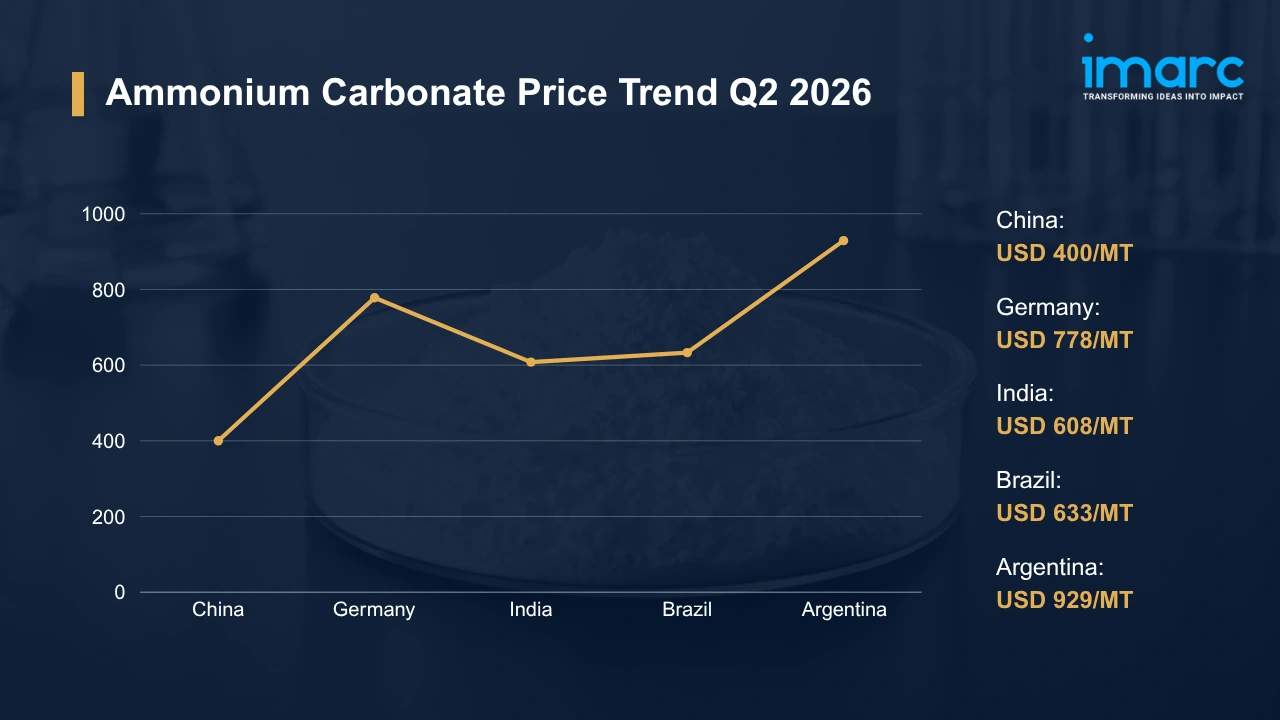
Ammonium carbonate is a white crystalline inorganic compound that decomposes into ammonia and carbon dioxide upon heat exposure. Highly soluble in water, it carries a characteristic ammonia odor. The compound serves bakery leavening, pharmaceutical formulation, textile processing, ceramics, and specialty chemical synthesis, while ammonium carbonate prices respond to upstream ammonia feedstock cost movements, energy expenditure in manufacturing, and ocean freight logistics on key trade lanes.
Global Market Overview:
Globally, the ammonium carbonate industry was valued at USD 799.05 Million in 2025. Market projections indicate steady growth, with the industry expected to reach USD 1,207.35 Million by 2034, with a compound annual growth rate (CAGR) of 4.69% during 2026-2034. Expanding food processing and pharmaceutical production sustains the ammonium carbonate price trend, while broadening specialty chemical and ceramics applications continue diversifying end-user demand across key regions.
Ammonium Carbonate Price Trend Q2 2026:
Regional prices (USD per MT) and QoQ changes Q2 2026 vs Q1 2026:
| Region | Price (USD/MT) | QoQ Change | Direction |
|---|---|---|---|
| China | 400 | +1.45% | ↑ |
| Germany | 778 | +2.21% | ↑ |
| India | 608 | +1.87% | ↑ |
| Brazil | 633 | +2.11% | ↑ |
| Argentina | 929 | +1.89% | ↑ |
To access real-time prices Request Sample
What Moved Prices:
China:
- In Q2 2026, ammonium carbonate prices in China reached USD 400/MT as procurement from the food processing, pharmaceutical, and chemical manufacturing sectors maintained stable, need-based buying patterns through the quarter. Buyers gradually restored purchasing volumes following earlier inventory reductions, encouraging suppliers to hold firmer offers. Balanced feedstock availability limited cost-side disruptions.
- Domestic producers maintained output at steady rates, preventing excess stock buildup. With distribution channels adequately supplied, conservative order placement from chemical-grade buyers kept procurement volumes predictable. Rising energy and utility costs provided modest underlying cost support, tracing an upward price path on the ammonium carbonate price chart for Q2 2026.
Germany:
- During Q2 2026, ammonium carbonate prices in Germany climbed to USD 778/MT as food additive manufacturers, pharmaceutical producers, and specialty chemical users maintained stable purchasing activity. Producers continued operating under controlled manufacturing conditions, while limited spot availability allowed suppliers to sustain the upward pricing movement observed through the quarter.
- Firmer natural gas and energy costs across European markets reinforced producer cost floors, limiting the scope for downward price negotiation. Industrial buyers maintained regular procurement schedules to meet production requirements, with contract discussions reflecting stronger supplier pricing confidence. Import volumes remained balanced without triggering excess product availability in regional markets.
India:
- In Q2 2026, ammonium carbonate prices in India strengthened to USD 608/MT, driven by healthy downstream demand from food processing, pharmaceutical, and chemical manufacturing segments. Buyers replenished inventories progressively following prior purchasing cycles, while domestic producers maintained regular operating schedules with sufficient feedstock availability supporting uninterrupted manufacturing throughput.
- Feedstock ammonia availability remained sufficient, enabling consistent production without notable cost disruptions at domestic manufacturing facilities. Port gateway operations functioned normally, supporting timely material flows across pharmaceutical and food processing clusters. Conservative buying behavior among dye intermediates and textile manufacturers kept demand incremental rather than urgency-led.
Brazil:
- During Q2 2026, ammonium carbonate prices in Brazil advanced to USD 633/MT as industrial demand from food processing, pharmaceutical production, and chemical manufacturing remained resilient throughout the period. Buyers maintained regular procurement to support production requirements, while distributors managed inventories carefully to avoid accumulating excess supply above operational needs.
- Import dependency kept the market sensitive to fluctuations in ocean freight and supplier quotations from key exporting regions. BRL exchange rate movements added modest cost pressure on imported volumes, translating into firmer landed cost assessments for industrial buyers. Domestic supply conditions remained balanced as local producers operated at consistent rates.
Argentina:
- In Q2 2026, ammonium carbonate prices in Argentina reached USD 929/MT as downstream demand from food processing, pharmaceutical manufacturing, and industrial chemical applications remained stable. Buyers continued routine procurement to maintain production schedules, while suppliers carefully controlled inventory levels across distribution channels in response to firm market sentiment.
- Limited local production capacity sustained high reliance on overseas supply, making prices in Argentina particularly sensitive to import logistics costs and supplier pricing strategies. Domestic inflation dynamics and peso valuation shifts further elevated landed material costs, reinforcing the upward pricing trend registered across Q2 2026 in this import-dependent market.
Drivers Influencing the Market:
Several factors continue to shape ammonium carbonate pricing and market behavior:
- Food Processing and Pharmaceutical Sector Demand: Bakery leavening, pharmaceutical excipient formulation, and laboratory reagent use anchor baseline ammonium carbonate procurement globally. Within these sectors, purchasing behavior holds broadly consistent year-round. Urbanization-driven processed food consumption and expanded pharmaceutical production across emerging economies sustain steady order volumes, while seasonal biscuit and confectionery manufacturing schedules introduce periodic demand variability across the supply chain.
- Upstream Ammonia Feedstock Costs: Ammonia is the primary feedstock for ammonium carbonate production, and its price directly influences manufacturing economics. As natural gas accounts for the dominant share of global ammonia production costs, energy market fluctuations translate directly into cost pressure for ammonium carbonate manufacturers. Supply concentration in key ammonia-exporting regions introduces periodic availability constraints that amplify cost variability across international procurement markets.
- Energy Expenditure in Production: Natural gas and electricity costs represent critical input variables for ammonium carbonate producers, given energy-intensive processing at synthesis and purification stages. Per the EIA, the Henry Hub natural gas spot price averaged USD 3.52 per million British thermal units in 2025, rising 56% from 2024’s record low level. This energy cost shift elevated production cost floors globally, as tracked through the ammonium carbonate price index across key supplier regions.
- Ocean Freight and Logistics Economics: Container shipping rates directly influence landed costs for import-dependent ammonium carbonate markets, particularly across Latin America, South Asia, and import-reliant European buyers. Assessed in mid-July 2026, Drewry’s World Container Index reached USD 4,547 per 40-foot container, signaling elevated conditions on key East–West trade lanes. Sustained freight rates at these levels compress procurement margins for buyers dependent on Asian-origin supply.
- Environmental and Regulatory Compliance: Tightening environmental regulations governing nitrogen compound handling, storage, and disposal raise operational compliance costs for producers and distributors. Imposed under chemical safety frameworks across major economies, registration and evaluation requirements add administrative and testing obligations that filter progressively into market pricing. Producers investing in cleaner processing methods also face elevated capital expenditure, reinforcing cost bases across major manufacturing regions.
- Trade Policy and Currency Dynamics: Export controls, import tariff structures, and trade policy shifts among major ammonium carbonate-producing nations influence global price differentials and supply availability across import-dependent markets. With BRL, ARS, and INR subject to depreciation cycles, buyers sourcing from USD-denominated suppliers face elevated landed costs that amplify upward price adjustments in regional markets. Tariff schedule revisions and policy announcements in key exporting economies require close tracking by procurement teams.
Recent Highlights & Strategic Developments:
Recent strategic moves within the industry further illustrate evolving dynamics:
- In September 2025, a research study explored the influence of temperature on carbonation consolidation of steel slag using ammonium carbonate solution, demonstrating potential for eco-friendly construction materials with meaningful CO2 sequestration benefits. Findings outlined a carbamate-based pathway that strengthens solid materials while capturing carbon dioxide at the processing stage.
Outlook & Strategic Takeaways:
Looking ahead, the ammonium carbonate market is expected to sustain gradual expansion through 2034, supported by broadening food processing and pharmaceutical sector consumption across emerging economies and expanding specialty chemical synthesis applications. Feedstock ammonia cost trajectories, regulatory compliance requirements, and ocean freight rate dynamics will collectively serve as the pivotal variables shaping the ammonium carbonate price forecast across key supply regions.
To navigate this complex landscape, stakeholders should:
- Monitor Regional Price Differentials: Track quarterly pricing variations across China, Germany, India, Brazil, and Argentina to identify cost-saving procurement windows. Establish benchmarking protocols that compare landed costs against prevailing contract rates, incorporating currency and freight adjustments for comprehensive sourcing decisions.
- Assess Freight Market Developments: Monitor container shipping rate trends on Asia–Latin America and Asia–Europe corridors to anticipate landed cost movements. Negotiate flexible logistics contracts incorporating rate adjustment clauses tied to spot market indices such as Drewry’s World Container Index.
- Evaluate Downstream Demand Indicators: Track activity indices in food processing, pharmaceutical, and specialty chemical sectors across principal consumption regions. Correlate demand signals with procurement planning cycles to optimize inventory positioning and avoid overstocking ahead of seasonal demand cycles.
- Review Regulatory Compliance Expenditures: Audit current compliance costs associated with nitrogen compound handling, storage, and environmental discharge obligations across all active supplier relationships. Identify process-level efficiencies that reduce regulatory burden while maintaining chemical safety standards in key trading jurisdictions.
- Strengthen Currency Exposure Management: Implement hedging strategies for procurement denominated in BRL, ARS, and INR to stabilize landed cost projections in import-dependent markets. Coordinate treasury and procurement functions to align foreign exchange coverage with ammonium carbonate price per MT targets and import payment schedules.
- Explore Emerging Application Segments: Investigate growth opportunities in CO2 mineralization, eco-friendly building materials, and specialty ceramics where ammonium carbonate adoption is gaining research traction. Engage with technical partners to evaluate the commercial viability of novel applications that could expand the addressable demand base through 2034.
Subscription Plans & Customization:
IMARC offers flexible subscription models to suit varying needs:
- Monthly Updates: 12 deliverables/year
- Quarterly Updates: 4 deliverables/year
- Biannual Updates: 2 deliverables/year
Each includes detailed datasets (Excel + PDF) and post-report analyst support.
Get in Touch With Us
UNITED STATES
Phone: +1-201-971-6302
INDIA
Phone: +91-120-433-0800
UNITED KINGDOM
Phone: +44-753-714-6104
Email: [email protected]
Client Testimonials




.webp)




.webp)












