Nylon DTY Prices Q1 2026: China Holds at USD 2,091/MT While Brazil Tops Global Markets
25-Jun-2026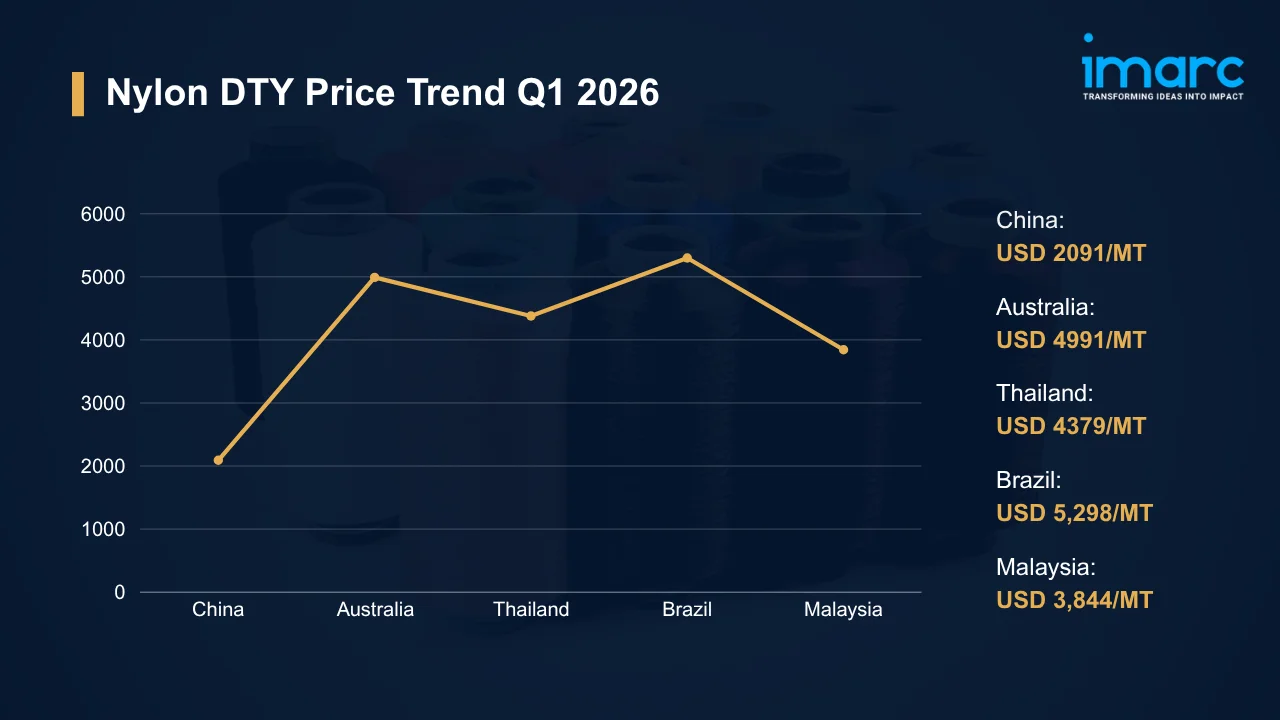
Nylon DTY is a synthetic filament formed by texturing partially oriented polyamide yarn through a mechanical crimping process that imparts bulk, stretch, softness, and crimp retention. Produced primarily from nylon 6 or nylon 66 polymer, the fiber delivers high tensile strength, abrasion resistance, and excellent dyeability across applications spanning hosiery, activewear, swimwear, lingerie, sportswear, upholstery, and elastic fabrics. Nylon DTY prices respond to upstream caprolactam and crude oil derivative cost movements, energy expenditure in the texturing process, ocean container freight rates on Asia-centric corridors, and procurement cycles among downstream garment manufacturers and fabric converters.
Global Market Overview:
Globally, the nylon DTY industry was valued at USD 19.10 Billion in 2025. Market projections indicate steady growth, with the industry expected to reach USD 31.99 Billion by 2034, with a compound annual growth rate (CAGR) of 5.90% during 2026-2034. Synthetic performance fiber adoption across athleisure, activewear, and technical textile segments drives consistent volume growth, while expanding use of high-tenacity nylon variants in automotive interior fabrics and industrial applications reinforces the nylon DTY price trend toward a structurally firmer long-term trajectory.
Nylon DTY Price Trend Q1 2026:
Regional prices (USD per MT) and QoQ changes Q1 2026 vs Q4 2025:
| Region | Price (USD/MT) | QoQ Change | Direction |
|---|---|---|---|
| China | 2,091 | +6.23% | ↑ |
| Australia | 4,991 | +4.56% | ↑ |
| Thailand | 4,379 | +4.21% | ↑ |
| Brazil | 5,298 | +7.86% | ↑ |
| Malaysia | 3,844 | +3.15% | ↑ |
To access real-time prices Request Sample
What Moved Prices:
China:
- In Q1 2026, at USD 2,091/MT, nylon DTY prices in China reversed the softness of Q4 2025 as downstream textile mills stepped up procurement volumes for apparel, home furnishing, and industrial fabric output. Caprolactam cost pressure tightened producer margins, compelling offer revisions that held the pricing floor firm throughout the period.
- Converters across Southeast Asia prioritized early restocking to avoid later cost escalation, lifting export demand from Chinese suppliers. The nylon DTY price chart for Q1 2026 reflected improved nylon fiber offtake and disciplined volume allocation by producers, sustaining the upward direction into March.
Australia:
- During Q1 2026, nylon DTY prices in Australia reached USD 4,991/MT, gaining 4.56% over Q4 2025. Firmer demand from textile processors, sportswear brands, and upholstery buyers outpaced available import supply, as replacement costs across Asia-to-Oceania shipping corridors rose in line with carrier surcharge implementation.
- Buyers without near-term inventory coverage accelerated purchasing to secure supply continuity. Spot availability contracted as lead times lengthened on key trade lanes, and the absence of competitive offers from spot sellers kept procurement costs on an upward path through the close of March 2026.
Thailand:
- In the first quarter of 2026, nylon DTY prices in Thailand climbed to USD 4,379/MT as fabric producers and garment manufacturers raised purchasing volumes on the back of stronger export order books from apparel and home textile customers. Sentiment among Thai converters shifted more constructive compared with Q4 2025.
- Feedstock cost support encouraged producers to revise base offers upward, and disciplined volume allocation prevented oversupply conditions from forming. Buyers found negotiating concessions difficult across the quarter, as regional supply stayed adequate but short of what converters needed for uninterrupted production scheduling.
Brazil:
- In Q1 2026, nylon DTY prices in Brazil surged to USD 5,298/MT, the sharpest QoQ gain across all tracked regions at 7.86%. Domestic textile demand recovered visibly, with buyers from apparel, furnishing, and industrial fabric sectors securing material ahead of anticipated further cost increases tied to currency and import dynamics.
- BRL exchange rate pressure amplified landed cost calculations for import-dependent distributors, translating currency weakness into higher quotations. Balanced local inventories offered buyers little downward leverage, and sellers maintained revised pricing throughout the quarter without material concession pressure.
Malaysia:
- During Q1 2026, nylon DTY prices in Malaysia rose to USD 3,844/MT, advancing 3.15% from Q4 2025 levels as knitting, weaving, and apparel manufacturing sectors raised procurement in line with improving production schedules. Clearer export order visibility gave buyers greater confidence to rebuild working stock positions.
- Feedstock cost structures remained firm, keeping production cost floors elevated for regional yarn manufacturers. Suppliers held disciplined offer management throughout the period, with local and export demand together providing sufficient absorption to sustain the upward pricing direction without meaningful week-to-week volatility.
Drivers Influencing the Market:
Several factors continue to shape nylon DTY pricing and market behavior:
- Textile and Apparel Sector Demand: Knitted fabric producers, garment manufacturers, hosiery plants, activewear brands, and technical textile converters form the broad demand base sustaining nylon DTY consumption globally. Urbanization and rising disposable incomes across Asia and Latin America generate consistent volume offtake. Seasonal garment export cycles in key manufacturing economies create quarterly fluctuations in procurement intensity, periodically amplifying or dampening spot buying pressure across the supply chain.
- Upstream Caprolactam and Feedstock Costs: Caprolactam pricing shapes nylon DTY production economics directly, given that polyamide feedstock represents a substantial share of total manufacturing cost. Benzene and cyclohexanone price movements transmit upstream cost pressure to yarn producers, compelling offer revisions when feedstock markets shift. Integrated caprolactam-nylon facilities concentrated in China retain a structural cost advantage, reinforcing competitive price positioning and anchoring the broader nylon DTY price index across major supply regions.
- Energy Expenditure in Texturing and Production: Electricity and thermal energy consumed during the draw texturing process represent a consistent cost variable for nylon DTY manufacturers globally. Per the US Energy Information Administration, the Henry Hub natural gas spot price averaged USD 3.52 per million British thermal units across 2025, a 56% increase from 2024. Regional electricity tariff divergences between Asia, Europe, and Latin America continue to influence competitive cost positioning among yarn producers sourcing across different power markets.
- Ocean Freight and Logistics Economics: Container shipping rates on Asia-to-Oceania, Asia-to-Latin America, and intra-Asia corridors directly set the landed import cost floor for nylon DTY in markets such as Australia, Brazil, and Malaysia. Drewry's World Container Index rose 12% to USD 2,182 per 40ft container in December 2025, driven by consecutive rate increases on East-West trade routes. Carrier surcharge schedules and capacity discipline extended elevated freight cost conditions into Q1 2026, sustaining procurement cost pressure for distant importing buyers.
- Environmental and Regulatory Compliance: Chemical safety mandates, wastewater discharge standards, and synthetic fiber labeling requirements raise operational compliance costs for nylon DTY producers and distributors across regulated markets. Extended producer responsibility frameworks and textile waste reduction legislation introduce additional administrative and capital expenditure obligations. Investment in bio-based polyamide pathways and recycled nylon content, while strategically necessary, carries incremental cost burdens that progressively transmit to finished product pricing.
- Trade Policy and Currency Dynamics: Tariff structures and bilateral trade agreements between major nylon DTY producers and consumers shape sourcing economics and import competitiveness at regional level. Currency depreciation in import-dependent economies, Brazil being the clearest example in Q1 2026, amplifies landed cost calculations for distributors procuring in USD-denominated contracts. Procurement teams increasingly align inventory build strategies with currency hedging cycles to manage exposure to exchange rate volatility across quarterly buying windows.
Recent Highlights & Strategic Developments:
Recent strategic moves within the industry further illustrate evolving dynamics:
- In July 2025, Century Enka Limited disclosed to investors that it had committed substantial capital expenditure toward expanding its downstream nylon filament yarn and tire-cord fabric capacities, with DTY-related applications covered under the investment scope. The company also announced parallel investments in renewable power generation infrastructure and nylon waste recycling capabilities directed at strengthening the sustainability credentials of its nylon DTY operations.
Outlook & Strategic Takeaways:
Looking ahead, the nylon DTY market is expected to sustain measured expansion through 2034, supported by durable demand growth from global apparel, activewear, and technical textile sectors and by broadening end-use adoption across automotive interior fabrics and industrial applications. Caprolactam and benzene feedstock cost trajectories will remain the decisive variable shaping the nylon DTY price forecast, as energy-intensive yarn production economics amplify any upstream volatility across both producing and importing regions.
To navigate this complex landscape, stakeholders should:
- Monitor Regional Price Differentials: Track quarterly pricing variations across China, Brazil, Australia, Thailand, and Malaysia to identify cost-optimized procurement windows. Establish benchmarking protocols comparing nylon DTY landed costs against prevailing contract rates to support systematic sourcing decisions.
- Assess Freight Market Developments: Track container shipping rate movements on Asia-Pacific and Asia-Latin America corridors to anticipate landed cost shifts well in advance. Negotiate logistics contracts incorporating rate adjustment mechanisms tied to prevailing Drewry WCI readings to cap cost exposure.
- Evaluate Downstream Demand Indicators: Monitor fabric converter order books and garment export schedules across principal consumption regions for early signals on procurement cycle timing. Correlate apparel production activity data with yarn purchasing timelines to align inventory positioning ahead of demand acceleration.
- Review Regulatory Compliance Expenditures: Audit costs tied to chemical safety, wastewater discharge, and environmental obligations across production and distribution facilities. Identify operational efficiencies that reduce the compliance burden without compromising textile safety or product certification requirements.
- Strengthen Currency Exposure Management: Implement hedging instruments for procurement denominated in BRL and other volatile currencies, stabilizing the nylon DTY price per MT within landed cost projections. Align treasury and procurement functions so that foreign exchange coverage matches anticipated import payment timelines across seasonal buying cycles.
- Explore Emerging Application Segments: Investigate demand potential within recycled-content nylon DTY and bio-based polyamide variants to build portfolio resilience. Engage textile research partners to assess commercial viability of performance-enhanced nylon constructions in technical, medical, and industrial end-use markets.
Subscription Plans & Customization:
IMARC offers flexible subscription models to suit varying needs:
- Monthly Updates — 12 deliverables/year
- Quarterly Updates — 4 deliverables/year
- Biannual Updates — 2 deliverables/year
Each includes detailed datasets (Excel + PDF) and post-report analyst support.

Get in Touch With Us
UNITED STATES
Phone: +1-201-971-6302
INDIA
Phone: +91-120-433-0800
UNITED KINGDOM
Phone: +44-753-714-6104
Email: [email protected]
Client Testimonials




.webp)




.webp)












