Soda Ash Prices in the USA Hold at USD 274/MT Amid Stable Industrial Demand
06-Feb-2026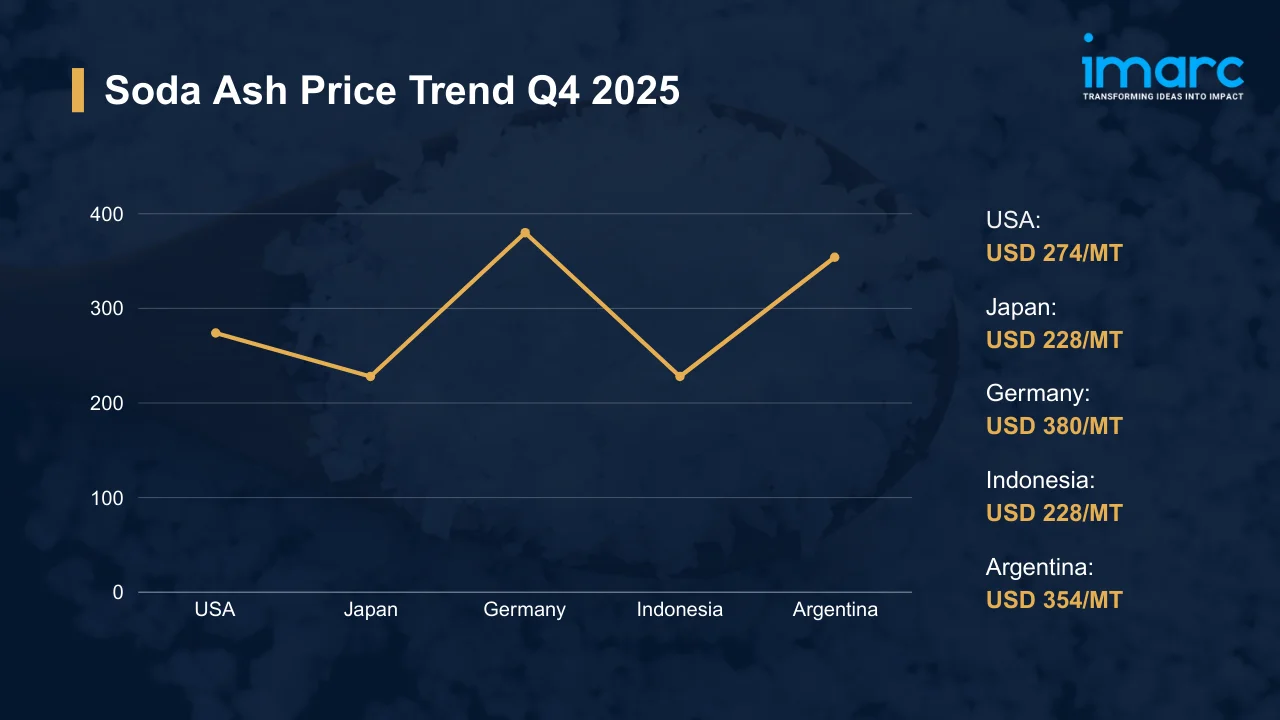
Soda ash, also referred to as sodium carbonate, is a white, odorless powder that dissolves readily in water and exhibits pronounced alkaline characteristics. It is derived either from natural trona ore deposits or through the synthetic Solvay process involving limestone, ammonia, and sodium chloride. The compound serves as a critical input across a wide array of industries, functioning as a fluxing agent in glass manufacturing, a pH regulator and water softener in detergent and cleaning product formulation, and a processing aid in textile finishing, metallurgical operations, pulp and paper production, and water treatment systems. Owing to its extensive industrial footprint, soda ash pricing remains highly responsive to shifts in glass sector activity, feedstock availability, energy costs, and environmental compliance requirements.
Global Market Overview:
Globally, the soda ash industry was valued at USD 21.62 Billion in 2025. Market projections indicate steady growth, with the industry expected to reach USD 31.17 Billion by 2034, registering a compound annual growth rate (CAGR) of 4.15% during 2026-2034. This expansion is underpinned by the pervasive adoption of soda ash across multiple industrial verticals, notably glass manufacturing, chemical synthesis, and household cleaning product formulation. Heightened consumption in the production of detergents, soaps, and ancillary cleaning agents continues to bolster demand trajectories. Furthermore, escalating global concerns surrounding water purity standards, combined with rising capital deployment into water treatment infrastructure projects, are reinforcing long-term market fundamentals. Technological advancements in production processes and the growing emphasis on sustainable manufacturing practices are also contributing to the evolving demand landscape, as producers seek to optimize operational efficiency while complying with increasingly rigorous environmental regulations worldwide.
Soda Ash Price Trend Q4 2025:
Regional prices (USD per MT) and QoQ changes vs Q3 2025:
| Region | Price (USD/MT) | QoQ Change | Direction |
|---|---|---|---|
| USA | 274 | -2.14% | ↓ |
| Japan | 228 | -13.31% | ↓ |
| Germany | 380 | +2.15% | ↑ |
| Indonesia | 228 | -8.06% | ↓ |
| Argentina | 354 | -3.28% | ↓ |
To access real-time prices Request Sample
What Moved Prices:
- USA: Soda ash prices in the USA settled at USD 274/MT in Q4 2025, which was a slight decrease from the previous quarter. As procurement activity from detergent and glass fabricators declined and both industries ran at lower capacity near the year-end, the domestic market saw persistent downward pressure. Due to the persistently high inventory levels throughout the main distribution channels, suppliers were unable to defend previous pricing thresholds. Concurrently, supply-side worries were lessened by continuous production of natural soda ash from trona-based plants and steady logistics operations along important inland corridors, which further restrained the quarter's increasing price trend.
- Japan: Soda ash prices in Japan fell to USD 228/MT in the fourth quarter of 2025, which was a significant decrease from previous levels. Because cautious industrial output reflected broader economic restriction throughout the manufacturing sector, downstream consumption from flat glass makers and chemical processing facilities remained muted. Major Japanese ports received import volumes that were sufficient to meet current consumption demands, so preventing the formation of supply tightness. Additionally, uninterrupted material inflows and tightly controlled landed procurement prices were guaranteed by a stable working environment at the main port facilities and regular international shipping schedules.
- Germany: In Germany, soda ash prices advanced to USD 380/MT in Q4 2025, which was an increase over the previous quarter. Resilient demand from producers of specialized chemicals and container glass, both of which maintained strong production schedules over the period, was the major factor sustaining the price appreciation. Cost-wise, increased expenses for energy management and environmental compliance requirements placed more financial strain on domestic manufacturers. In order to preserve margin integrity in a more regulated production environment, manufacturers had to pass through higher operating expenses as a result of these increased cost pressures.
- Indonesia: In Q4 2025, soda ash prices in Indonesia retreated to USD 228/MT amid prevailing bearish market conditions. Weak offtake from the glass manufacturing segment, coupled with a deceleration in construction-linked consumption, significantly dampened domestic demand dynamics. Sufficient volumes of imported material continued to arrive at principal port terminals, ensuring that availability remained comfortable and precluding any supply-driven price recovery. Additionally, intensifying competition among regional and international suppliers compelled market participants to adopt more accommodative pricing strategies, with traders lowering their offer levels to secure contracts in a buyer-dominated trading environment.
- Argentina: In the fourth quarter of 2025, soda ash prices in Argentina eased to USD 354/MT, continuing a softening trajectory observed in the broader Latin American market. Industrial activity across primary end-use sectors remained muted, with restrained procurement volumes from both detergent formulators and glass fabricators reflecting cautious operating conditions. Adequate availability of both domestically sourced and imported material alleviated concerns over potential supply shortfalls, keeping overall market sentiment tilted toward the bearish side. Prevailing economic uncertainty further discouraged buyers from building forward inventories, resulting in diminished spot market engagement and limited transactional volumes during the quarter.
Drivers Influencing the Market:
Several factors continue to shape soda ash pricing and market behavior:
- Glass Industry Demand Fluctuations: The glass manufacturing sector remains one of the largest consumers of soda ash globally. Variations in production schedules across flat glass, container glass, and specialty glass segments directly influence procurement volumes. Seasonal adjustments in furnace pull rates and shifts in construction activity create corresponding fluctuations in soda ash consumption and pricing levels.
- Energy Cost Dynamics: Production of soda ash, whether through synthetic routes or natural trona processing, is inherently energy-intensive. Movements in natural gas prices and electricity tariffs materially impact unit manufacturing costs. Producers operating in regions with elevated energy expenditures face compressed margins, often necessitating upward pricing adjustments to preserve financial viability.
- Environmental Compliance Expenditures: Increasingly stringent environmental regulations across major producing regions impose additional operational costs on soda ash manufacturers. Compliance obligations related to emissions reduction, waste management, and sustainability reporting require capital investment and ongoing expenditures. These regulatory burdens are progressively being reflected in product pricing structures across key markets.
- Trade Flow Patterns and Logistics: Cross-border trade dynamics, encompassing ocean freight rates, port congestion levels, and inland transportation costs, exert considerable influence on delivered soda ash prices. Import-dependent markets are particularly susceptible to fluctuations in shipping schedules, bunker fuel surcharges, and terminal handling charges, which affect landed cost calculations.
- Currency Exchange Rate Movements: Given the predominantly dollar-denominated nature of international soda ash trade, exchange rate volatility meaningfully impacts procurement economics for importing nations. Currency depreciation in buyer markets raises effective landed costs, while appreciation provides temporary cost relief. These monetary dynamics frequently shape purchasing schedules and inventory strategies.
- Downstream Detergent and Chemical Sector Activity: Soda ash serves as a foundational raw material in detergent manufacturing and various chemical synthesis processes. Consumption trends within household cleaning products, industrial cleaning formulations, and sodium-based chemical production collectively generate substantial demand. Seasonal consumption patterns and evolving consumer preferences further modulate offtake volumes throughout the year.
Recent Highlights & Strategic Developments:
Recent strategic moves within the industry further illustrate evolving dynamics:
- In October 2025, Sapphire Chemicals (Private) Limited, operating as a fully owned subsidiary of Sapphire Textile Mills Limited, unveiled plans to establish a modern soda ash manufacturing facility with an annual production capacity of 220,000 Tons.
Outlook & Strategic Takeaways:
Looking ahead, the soda ash market is expected to sustain its growth trajectory, underpinned by expanding glass industry requirements and escalating investments in water treatment infrastructure globally. Evolving energy cost structures will continue to shape competitive dynamics across producing regions.
To navigate this complex landscape, stakeholders should:
- Monitor Regional Price Differentials: Track quarterly pricing movements across all major consuming markets to identify arbitrage opportunities and cost-optimization windows. Establish systematic benchmarking protocols that capture both spot and contract price variations for informed procurement decisions.
- Diversify Supplier Networks: Expand sourcing relationships beyond single-origin dependencies to mitigate supply disruption risks. Engage with both natural and synthetic soda ash producers across multiple geographies to ensure procurement continuity during periods of market volatility.
- Strengthen Inventory Management Practices: Adopt demand-responsive stocking strategies that balance carrying costs against supply security requirements. Implement rolling inventory models that account for seasonal demand variations and potential logistics disruptions.
- Assess Regulatory Compliance Implications: Review the evolving environmental regulatory landscape in key producing regions for potential cost impacts. Factor anticipated compliance-driven price adjustments into forward procurement budgets and supplier negotiations.
- Track Downstream Sector Health Indicators: Observe operational trends across the detergent production and chemical processing sectors closely. Use leading indicators from these industries to anticipate demand shifts and adjust purchasing strategies proactively.
- Hedge Currency Exposure Strategically: Implement financial instruments to manage foreign exchange risks associated with dollar-denominated soda ash procurement. Align hedging strategies with anticipated import volumes and payment timelines to minimize currency-related cost volatility.
Subscription Plans & Customization:
IMARC offers flexible subscription models to suit varying needs:
- Monthly Updates — 12 deliverables/year
- Quarterly Updates — 4 deliverables/year
- Biannual Updates — 2 deliverables/year
Each includes detailed datasets (Excel + PDF) and post-report analyst support.
Get in Touch With Us
UNITED STATES
Phone: +1-201-971-6302
INDIA
Phone: +91-120-433-0800
UNITED KINGDOM
Phone: +44-753-714-6104
Email: [email protected]
Client Testimonials




.webp)




.webp)












