
Saudi Arabia Personal Hygiene Market Size, Share, Trends and Forecast by Product, Gender, Distribution Channel, and Region, 2026-2034
Saudi Arabia Personal Hygiene Market Summary:
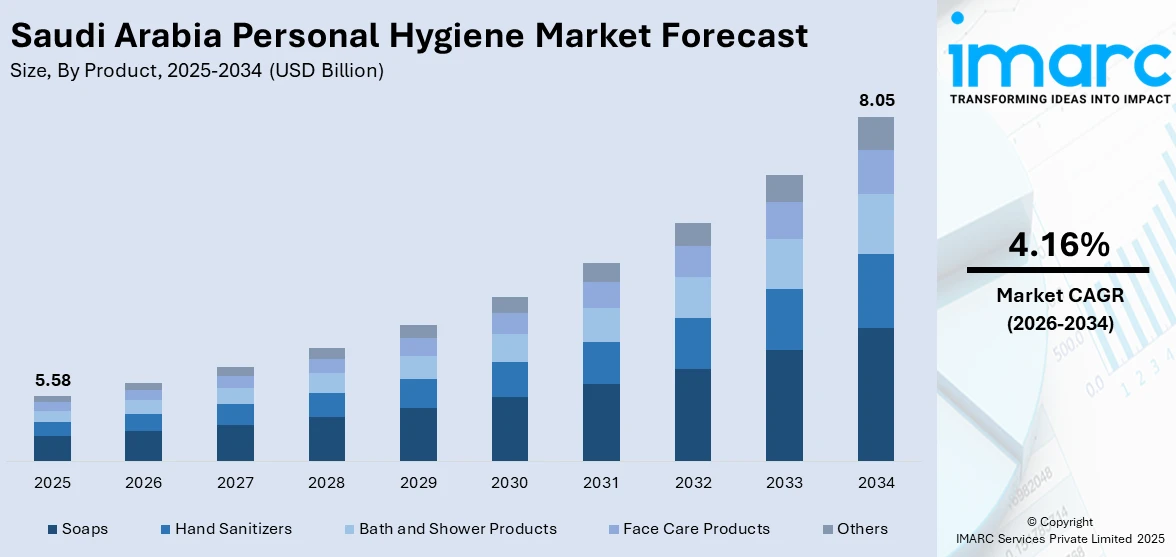
The Saudi Arabia personal hygiene market size was valued at USD 5.58 Billion in 2025 and is projected to reach USD 8.05 Billion by 2034, growing at a compound annual growth rate of 4.16% from 2026-2034.
The Saudi Arabia personal hygiene market is witnessing robust expansion driven by heightened health awareness, urbanization, and evolving consumer lifestyles aligned with Vision 2030 initiatives. Rising disposable incomes and increasing emphasis on personal grooming across demographic segments are fueling demand for quality hygiene products. The market benefits from a young, digitally connected population embracing modern self-care routines and halal-certified formulations, supporting sustained growth in the Saudi Arabia personal hygiene market share.
Key Takeaways and Insights:
- By Product: Soaps dominate the market with a share of 29% in 2025, owing to their widespread usage for personal hygiene, affordability, and availability across distribution channels. The demand is driven by cultural preferences for cleanliness, rising health consciousness, and increasing availability of antibacterial and scented options that appeal to Saudi consumers.
- By Gender: Unisex leads the market with a share of 52% in 2025. This dominance is driven by households preferring versatile products suitable for all family members, cost-effectiveness, and the convenience of shared hygiene products. Growing demand for all-purpose formulations and family-oriented packaging further reinforces this segment's market leadership.
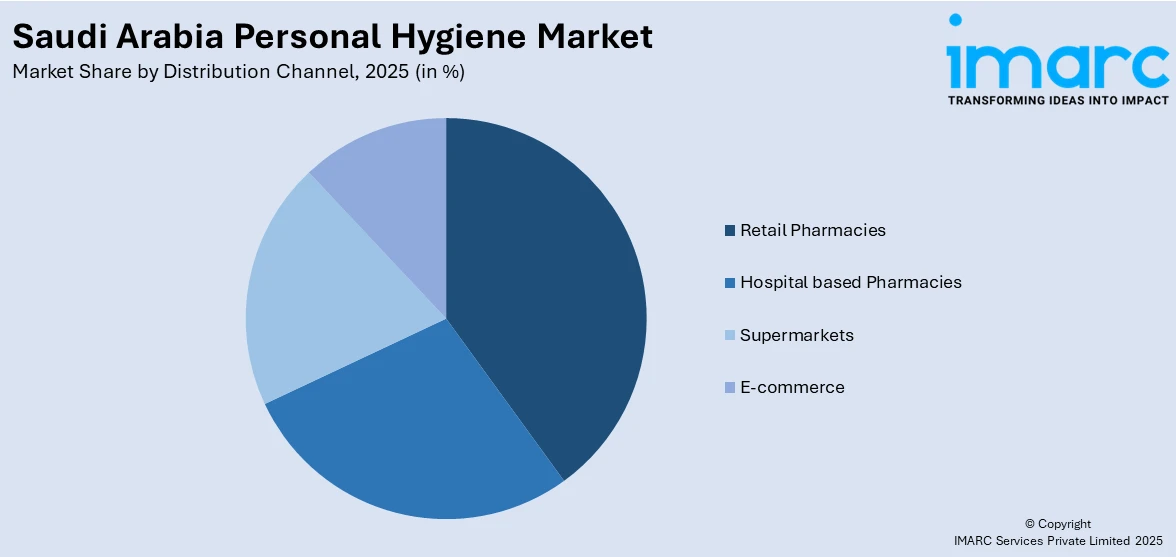
- By Distribution Channel: Retail pharmacies hold the largest segment with a market share of 30% in 2025, reflecting strong consumer preference for pharmacies that offer healthcare-related trust associations, wide product assortments, and professional guidance on personal care items, particularly for sensitive skin and medicated formulations.
- By Region: Northern and Central Region represents the largest region with 35% share in 2025, driven by the concentration of Saudi Arabia's population in Riyadh metropolitan area, higher disposable incomes, robust healthcare infrastructure, and strong retail pharmacy networks serving urban consumers.
- Key Players: Key players drive the Saudi Arabia personal hygiene market by expanding product portfolios, improving formulation technologies, and strengthening nationwide distribution. Their investments in marketing, affordability, and partnerships with healthcare providers boost awareness, accelerate adoption, and ensure consistent product availability across diverse consumer segments.
To get more information on this market Request Sample
The Saudi Arabia personal hygiene market is experiencing transformative growth fueled by rising consumer awareness regarding health and cleanliness practices. Vision 2030 initiatives have significantly elevated consumer spending power, with female workforce participation contributing substantially to household purchasing decisions. The country recorded 36.84 million internet users in early 2024, representing 99% penetration, which has revolutionized how consumers discover and purchase hygiene products through e-commerce platforms and social media channels. Regional customs place a strong emphasis on personal hygiene and grooming, which sustains the steady need for basic personal care products. The market benefits from the hot, dry climate that shapes demand for specialized cleansing and moisturizing solutions. Growing demand for halal-certified, organic, and natural hygiene products aligned with religious values and health consciousness continues propelling market expansion across all demographic cohorts.
Saudi Arabia Personal Hygiene Market Trends:
Rising Demand for Halal-Certified and Natural Products
Saudi consumers are increasingly gravitating toward halal-certified personal hygiene products that comply with Islamic principles while meeting modern efficacy standards. The Saudi Food and Drug Authority's mandatory halal certification frameworks and GCC Standardization Organization's GSO 1943:2024 standards have established stringent compliance requirements distinguishing the Kingdom's market. The halal cosmetics sector in Saudi Arabia is demonstrating strong consumer preference for religiously compliant formulations that avoid alcohol, pork derivatives, and synthetic chemicals.
E-commerce Transformation and Digital Engagement
Digital platforms are revolutionizing personal hygiene product distribution across Saudi Arabia. Social media platforms including Instagram, TikTok, and Snapchat have transformed product discovery for younger consumers, with social commerce channels becoming primary origins for online hygiene purchases. Nice One Beauty, a leading beauty and personal care e-commerce platform in Saudi Arabia, launched an initial public offering in December 2024, aiming to raise SAR 1.21 billion riyals, reflecting growing investor confidence in digital retail channels.
Premiumization and Men's Grooming Expansion
The Kingdom is witnessing accelerated demand for premium personal hygiene products as rising disposable incomes enable consumers to invest in high-quality formulations. The men's grooming segment is experiencing notable growth as social acceptance of male self-care widens under Vision 2030's lifestyle diversification emphasis. Beiersdorf's 2024 launch of NIVEA MEN Deep Clean Face Wash demonstrates multinational commitment to expanding male-focused hygiene offerings in the Saudi market.
How Vision 2030 is Transforming the Saudi Arabia Personal Hygiene Market:
Saudi Arabia's Vision 2030 has reshaped the outlook of the personal hygiene market by diversifying the economy away from oil dependency and positioning the Kingdom as a regional hub for health, wellness, and consumer goods manufacturing. Such regulatory reforms as the Saudi Food and Drug Authority's updated cosmetics listing guidelines, the establishment of the Halal Products Development Company through the Public Investment Fund, and the streamlining of e-commerce regulations have boosted investor confidence and attracted global personal care brands to establish direct market presence. Demand for premium hygiene products is accelerated by the Kingdom's predominantly young population, rising female labor force participation rates, and rising disposable incomes. Meanwhile, expanded pharmacy networks, alongside the IMDAD smart logistics center, create sophisticated distribution infrastructure that elevates the personal hygiene purchasing experience.
Market Outlook 2026-2034:
The Saudi Arabia personal hygiene market outlook remains positive through the forecast period, supported by sustained economic diversification under Vision 2030 and growing consumer emphasis on health and wellness. Continued urbanization, population growth and expanding middle-class purchasing power will drive consistent demand across all product categories. Strategic investments in local manufacturing capabilities, e-commerce infrastructure expansion, and product innovation targeting halal-certified and natural formulations will continue shaping competitive dynamics throughout the forecast period. The market generated a revenue of USD 5.58 Billion in 2025 and is projected to reach a revenue of USD 8.05 Billion by 2034, growing at a compound annual growth rate of 4.16% from 2026-2034.
Saudi Arabia Personal Hygiene Market Report Segmentation:
|
Segment Category |
Leading Segment |
Market Share |
|
Product |
Soaps |
29% |
|
Gender |
Unisex |
52% |
|
Distribution Channel |
Retail Pharmacies |
30% |
|
Region |
Northern and Central Region |
35% |

Product Insights:
- Soaps
- Hand Sanitizers
- Bath and Shower Products
- Face Care Products
- Others
Soaps dominate with a market share of 29% of the total Saudi Arabia personal hygiene market in 2025.
The soaps segment maintains its leading position in the Saudi Arabia personal hygiene market owing to widespread usage for daily cleansing rituals, cultural emphasis on frequent handwashing practices, and affordability across income segments. Consumer preference for antibacterial formulations has intensified following heightened hygiene awareness, with demand for specialized variants including moisturizing, medicated, and scented options gaining momentum. The Saudi Arabia bath soap market size reached USD 229.6 Million in 2025. Looking forward, IMARC Group expects the market to reach USD 319.4 Million by 2034, exhibiting a growth rate (CAGR) of 3.74% during 2026-2034, demonstrating sustained consumer preference for traditional soap formats alongside liquid soap alternatives.
Growing consumer awareness regarding natural and organic ingredients is reshaping product development within the soaps segment. Local artisanal brands are introducing handcrafted soaps infused with indigenous ingredients including camel milk, olive oil, and honey sourced from various Saudi regions, reflecting cultural heritage and authenticity. The availability of various soap types including antibacterial, herbal, and premium fragranced options strengthens segment appeal, making soaps the most popular choice among consumers in the Saudi personal hygiene market.
Gender Insights:
- Unisex
- Male
- Female
Unisex leads with a share of 52% of the total Saudi Arabia personal hygiene market in 2025.
The unisex segment dominates the Saudi Arabia personal hygiene market driven by household preferences for versatile products suitable for all family members. Cost-effectiveness and convenience of shared hygiene products appeal to Saudi families seeking practical solutions for daily cleansing routines. Manufacturers are responding with gender-neutral formulations featuring universally appealing fragrances and multi-functional benefits. The mass category in personal care reflects price sensitivity among Saudi consumers, with unisex products offering superior value propositions compared to gender-specific alternatives.
Saudi household dynamics favor unisex hygiene products that simplify purchasing decisions while serving diverse family needs. The growing expatriate population comprising various nationalities further supports demand for universally acceptable hygiene formulations. Product innovation targets family-oriented packaging sizes and multipacks that enhance value perception. Retail pharmacies and supermarkets prominently display unisex hygiene products, reflecting strong consumer pull across demographic segments. Market leaders maintain extensive portfolios of unisex personal care items, ensuring widespread availability through established distribution networks.
Distribution Channel Insights:
Access the comprehensive market breakdown Request Sample
- Retail Pharmacies
- Hospital based Pharmacies
- Supermarkets
- E-commerce
The retail pharmacies exhibit a clear dominance with a 30% share of the total Saudi Arabia personal hygiene market in 2025.
Retail pharmacies maintain market leadership in personal hygiene distribution owing to healthcare-related trust associations that reduce purchasing discomfort for sensitive products. The Saudi Arabia pharmacy retail market size was valued at USD 18.9 Billion in 2025 and is projected to reach USD 30.1 Billion by 2034, with personal care products representing a significant component of non-pharmaceutical sales. Major pharmacy chains provide extensive nationwide coverage, ensuring consistent product availability across urban and semi-urban areas.
Saudi consumers prefer pharmacies for personal hygiene purchases due to professional guidance availability, product authenticity assurance, and wider assortment of medicated and dermatologically tested formulations. The integration of digital health platforms including e-prescriptions and online ordering enhances pharmacy channel accessibility. Major pharmacy chains have invested in state-of-the-art smart logistics and distribution centers designed to serve the entire Kingdom, significantly improving supply chain efficiency and product availability across their extensive retail networks.
Regional Insights:
- Northern and Central Region
- Western Region
- Eastern Region
- Southern Region
Northern and Central Region represents the leading region with a 35% share of the total Saudi Arabia personal hygiene market in 2025.
The Northern and Central Region dominates the Saudi Arabia personal hygiene market driven by Riyadh's concentration as the capital and primary commercial hub. The region benefits from the highest population density, major hospital networks, research centers, and corporate headquarters strengthening pharmaceutical and personal care consumption. Riyadh serves as the epicenter of government employees, corporate professionals, and international expatriates, creating diverse consumer segments with substantial purchasing power and sophisticated product preferences across all hygiene categories.
The region's robust healthcare infrastructure and extensive retail pharmacy networks ensure widespread product availability and accessibility for urban consumers. Major pharmacy chains maintain their highest store concentrations in Riyadh metropolitan area, offering comprehensive personal hygiene assortments with professional guidance. Government-driven healthcare reforms and infrastructure investments under Vision 2030 continue strengthening the region's dominant position, while rising urbanization and expanding middle-class households sustain consistent demand for quality personal hygiene products throughout the Northern and Central Region.
Market Dynamics:
Growth Drivers:
Why is the Saudi Arabia Personal Hygiene Market Growing?
Rising Health and Hygiene Awareness Among Consumers
Heightened public awareness regarding personal hygiene practices and preventive healthcare is significantly propelling market expansion across Saudi Arabia. Consumers are increasingly recognizing the importance of regular handwashing, proper sanitation, and quality hygiene products in preventing infectious diseases and maintaining overall wellness. Government-led public health campaigns and educational initiatives have successfully elevated hygiene consciousness across demographic segments, driving consistent demand for soaps, sanitizers, and other personal care items. The hot, dry climate conditions prevalent throughout the Kingdom create specific hygiene needs, with consumers seeking frequent cleansing solutions to address perspiration and environmental challenges. Healthcare transformation initiatives under Vision 2030 emphasize preventive care and wellness, encouraging Saudis to invest in personal hygiene products as essential components of healthy lifestyles. The prevalence of chronic diseases including diabetes and obesity has increased health consciousness, with consumers prioritizing hygiene products alongside wellness supplements. Religious practices emphasizing cleanliness further reinforce hygiene awareness, supporting sustained demand for personal care formulations that align with both health requirements and cultural values.
Vision 2030 Economic Diversification Driving Consumer Spending
Saudi Arabia's Vision 2030 economic transformation program is generating substantial impacts on consumer spending patterns and personal hygiene market dynamics. Economic diversification initiatives have expanded employment opportunities, elevated household incomes, and strengthened middle-class purchasing power across the Kingdom. Female workforce participation has increased significantly, contributing substantially to household discretionary spending and driving demand for personal care products across categories. Rising disposable incomes enable consumers to trade up from basic hygiene products to premium and specialized formulations offering enhanced benefits and superior quality. The government's emphasis on lifestyle diversification has normalized personal grooming and self-care practices, expanding market opportunities beyond traditional hygiene categories. Infrastructure development including mega-projects and urban expansion attracts expatriate talent, broadening the consumer base for personal hygiene products. Tourism sector growth projected under Vision 2030 targets creates additional demand for hospitality-grade hygiene supplies. The establishment of local manufacturing capabilities reduces import dependence while creating employment opportunities. Consumer spending on healthcare has increased markedly, with Saudis increasingly willing to invest in wellness products including premium personal hygiene formulations.
Young, Digitally Connected Population Shaping Market Trends
Saudi Arabia's predominantly young population with high digital connectivity is fundamentally reshaping personal hygiene market dynamics and product preferences. With approximately 63% of the population under 30 years of age, the Kingdom boasts a tech-savvy consumer base highly exposed to global hygiene and wellness trends through digital platforms. High internet penetration and increased social media users account have created unprecedented opportunities for brands to engage consumers through digital channels. Young Saudi consumers actively follow beauty and personal care influencers on platforms rapidly adopting trending hygiene products and routines. E-commerce platforms enable convenient access to diverse product selections, with online hygiene purchases growing substantially year over year. Digital engagement has democratized market entry for emerging brands while compelling established players to enhance online presence and social commerce capabilities. The youth demographic demands innovation, sustainability, and authenticity from hygiene brands, driving continuous product development and marketing evolution.
Market Restraints:
What Challenges the Saudi Arabia Personal Hygiene Market is Facing?
Complex Regulatory Compliance Requirements
The Saudi Food and Drug Authority's FASEH system mandates pre-market notification for all personal hygiene products, requiring manufacturers to submit comprehensive ingredient lists, safety data, and manufacturing-site certifications before commercial distribution. Compliance timelines ranging from two to twelve months for products requiring clinical substantiation create barriers for international brands seeking market entry, disadvantaging companies reliant on rapid product launches.
Counterfeit Product Proliferation Undermining Trust
Counterfeit personal hygiene products continue challenging market integrity despite intensified regulatory enforcement efforts. SFDA inspections have resulted in closure of outlets and seizure of counterfeit items, yet premium brands remain disproportionately affected as price-sensitive consumers may knowingly purchase fakes while affluent buyers experiencing counterfeit encounters face brand disillusionment that depresses repeat purchases, requiring continuous investment in authentication technologies.
Intense Market Competition and Price Sensitivity
The Saudi personal hygiene market faces intense competition with established multinational corporations and local players competing for market share. Government regulation of pharmaceutical product prices limits profit margins for pharmacies, while emphasis on generic alternatives further compresses profitability. With over 10,000 pharmacies operating across the Kingdom, market saturation creates significant entry barriers for new players lacking established distribution networks.
Competitive Landscape:
The Saudi Arabia personal hygiene market exhibits a moderately concentrated competitive structure characterized by multinational corporations holding significant market positions alongside dynamic local and regional players. Global leaders maintain strong footholds through extensive brand portfolios, established distribution networks, and continuous product innovation. Leading players in bath and shower categories leverage diverse brand portfolios spanning mass-market and premium segments to capture broad consumer appeal. Local brands are gaining momentum by emphasizing cultural authenticity, halal compliance, and understanding of Saudi consumer preferences. Companies are investing in local manufacturing capabilities, digital marketing strategies, and partnerships with pharmacy chains to strengthen market positioning.
Recent Developments:
- In September 2024, FSN E-Commerce Ventures Ltd, parent company of Indian beauty retailer Nykaa, established a wholly owned subsidiary named Nysaa Trading LLC in Saudi Arabia for the sale of beauty and personal care products including cosmetics, toiletries, perfumes, and soaps through online and offline channels.
- In July 2024, Henkel inaugurated a cutting-edge beauty care production facility in Riyadh, Saudi Arabia. The facility produces products under the Pert brand including shampoos and conditioners, featuring next-generation water treatment technology and sustainable practices aligned with Henkel's global sustainability objectives.
Saudi Arabia Personal Hygiene Market Report Coverage:
| Report Features | Details |
|---|---|
| Base Year of the Analysis | 2025 |
| Historical Period | 2020-2025 |
| Forecast Period | 2026-2034 |
| Units | Billion USD |
| Scope of the Report |
Exploration of Historical Trends and Market Outlook, Industry Catalysts and Challenges, Segment-Wise Historical and Future Market Assessment:
|
| Products Covered | Soaps, Hand Sanitizers, Bath and Shower Products, Face Care Products, Others |
| Genders Covered | Unisex, Male, Female |
| Distribution Channels Covered | Retail Pharmacies, Hospital based Pharmacies, Supermarkets, E-commerce |
| Regions Covered | Northern and Central Region, Western Region, Eastern Region, Southern Region |
| Customization Scope | 10% Free Customization |
| Post-Sale Analyst Support | 10-12 Weeks |
| Delivery Format | PDF and Excel through Email (We can also provide the editable version of the report in PPT/Word format on special request) |
Frequently Asked Questions About the Saudi Arabia Personal Hygiene Market Report
The Saudi Arabia personal hygiene market size was valued at USD 5.58 Billion in 2025.
The Saudi Arabia personal hygiene market is expected to grow at a compound annual growth rate of 4.16% from 2026-2034 to reach USD 8.05 Billion by 2034.
Soaps dominated the market with a share of 29%, driven by widespread usage for personal hygiene, affordability, cultural preferences for cleanliness, and availability of antibacterial and scented options.
Key factors driving the Saudi Arabia personal hygiene market include rising health and hygiene awareness, Vision 2030 economic initiatives increasing disposable incomes, young digitally connected population, and growing demand for halal-certified products.
Major challenges include complex regulatory compliance requirements, counterfeit product proliferation undermining brand trust, intense market competition, price sensitivity among consumers, and high entry barriers for new market participants.
Need more help?
- Speak to our experienced analysts for insights on the current market scenarios.
- Include additional segments and countries to customize the report as per your requirement.
- Gain an unparalleled competitive advantage in your domain by understanding how to utilize the report and positively impacting your operations and revenue.
- For further assistance, please connect with our analysts.
 Request Customization
 Speak to an Analyst
 Request Brochure
 Inquire Before Buying
Benefits of Customization
- Personalize this research
- Triangulate with your data
- Get data as per your format and definition
- Gain a deeper dive into a specific application, geography, customer, or competitor
- Any level of personalization
Get in Touch With Us
UNITED STATES
Phone: +1-201-971-6302
INDIA
Phone: +91-120-433-0800
UNITED KINGDOM
Phone: +44-753-714-6104
Email: [email protected]
Client Testimonials




.webp)




.webp)













Related Reports

Choose your plan
*Please note that the prices mentioned below are starting prices for each bundle type. Kindly contact our team for further details.*
Single User License
- 1 User License, Access on 2 Devices
- PDF Report + Excel Dataset (Password Protected)
- Lifetime Access
- No Printing Rights
- 10% Free Report Customization
- 10–12 Weeks of Analyst Support
Five User License
- Access for 5 Users, 2 Devices per User
- PDF Report + Excel Dataset (Password Protected)
- Lifetime Access
- Dedicated Account Manager
- 12–14 Weeks of Analyst Support
- No Printing Rights
- 15% Free Report Customization
- 25% Discount on Your Next Purchase
Corporate User License
- Unlimited User Access (Within Your Organization)
- PDF Report + Excel Dataset
- Lifetime Access
- Dedicated Account Manager
- 14–20 Weeks of Analyst Support
- No Printing Rights
- 20% Free Report Customization
- 30% Discount on Your Next Purchase
Essential Insights
What's included:
3 reports
- Lifetime Access
- PDF Reports
- Excel Datasets
- 2 Weeks of Free Analyst Support
- 2 User Licenses
- Access on 2 Devices
- Printing Rights
- Complimentary PowerPoint (PPT) Version
- Complimentary License Upgrade
Professional Access
What's included:
5 reports
- Lifetime Access
- PDF Reports
- Excel Datasets
- 8 Weeks of Free Analyst Support
- 2 User Licenses
- Access on 2 Devices
- Printing Rights
- Complimentary PowerPoint (PPT) Version
- Complimentary License Upgrade
Business Advantage
What's included:
8 reports
- Lifetime Access
- PDF Reports
- Excel Datasets
- 14 Weeks of Free Analyst Support
- 2 User Licenses
- Access on 2 Devices
- Printing Rights
- Complimentary PowerPoint (PPT) Version
- Complimentary License Upgrade
Enterprise Intelligence
What's included:
10 reports
- Lifetime Access
- PDF Reports
- Excel Datasets
- 20 Weeks of Free Analyst Support
- 2 User Licenses
- Access on 2 Devices
- Printing Rights
- Complimentary PowerPoint (PPT) Version
- Complimentary License Upgrade