
United States Frozen Fruits and Vegetables Market Size, Share, Trends and Forecast by Product Type, Distribution Channel, and Region, 2026-2034
United States Frozen Fruits and Vegetables Market Summary:
The United States frozen fruits and vegetables market size was valued at USD 7,604 Million in 2025 and is projected to reach USD 9,100.6 Million by 2034, growing at a compound annual growth rate of 2.0% from 2026-2034.
The United States frozen fruits and vegetables market is experiencing steady growth driven by evolving consumer preferences toward convenient, nutritious, and shelf-stable food options. Increasing health consciousness among American consumers, coupled with busy lifestyles requiring quick meal solutions, continues to fuel demand for frozen produce. Advancements in freezing technologies, expanding retail and e-commerce distribution channels, and growing interest in organic and plant-based dietary choices are strengthening the United States frozen fruits and vegetables market share.
Key Takeaways and Insights:
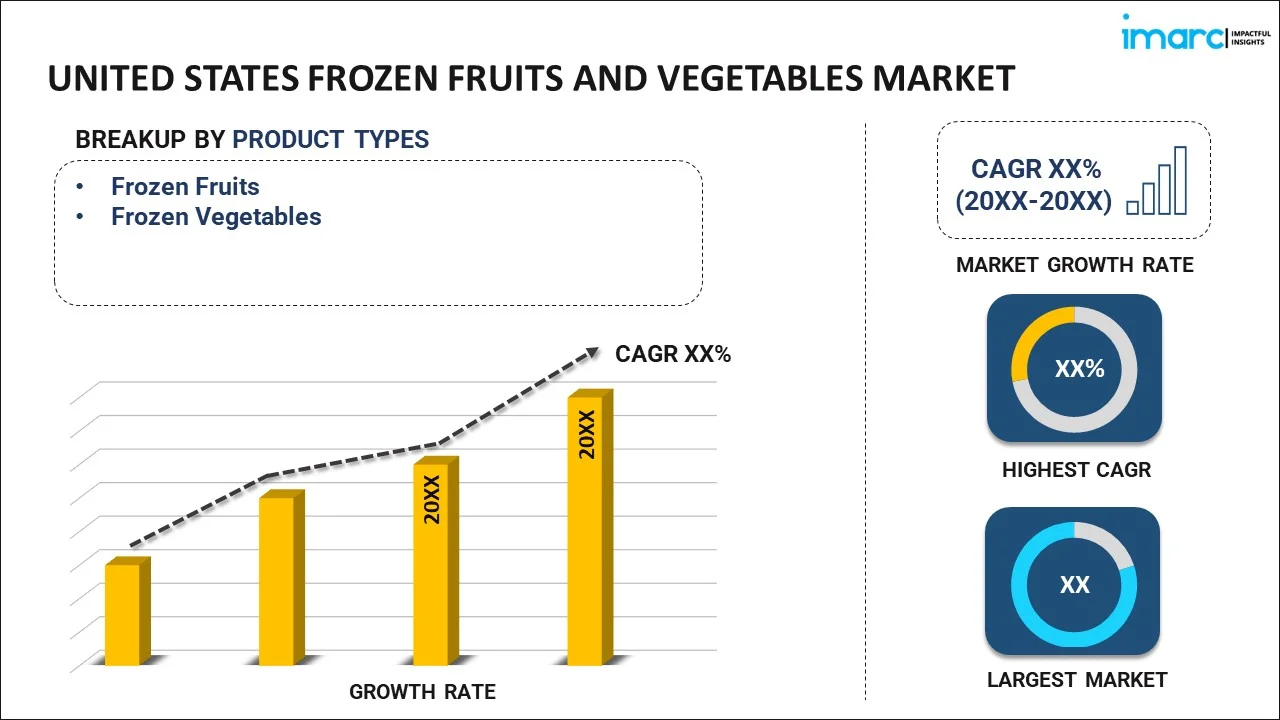
- By Product Type: Frozen vegetables dominate the market with a share of 63% in 2025, driven by year-round availability, extended shelf life, and superior nutritional retention compared to other preservation methods.
- By Distribution Channel: Supermarkets and hypermarkets lead the market with a share of 50% in 2025, due to wide product variety, strong cold-chain infrastructure, competitive pricing, and convenient one-stop shopping.
- Key Players: The United States frozen fruits and vegetables market exhibits a competitive landscape characterized by established multinational corporations and regional processors focusing on product innovation, sustainable packaging, and expanding distribution networks to strengthen market positioning and capture evolving consumer preferences.
The United States frozen fruits and vegetables market is undergoing steady transformation as producers adopt advanced freezing methods and environmentally responsible practices to align with rising consumer interest in convenient and nutritious food options. Ongoing consolidation and facility modernization are reshaping the competitive landscape, with companies prioritizing efficiency, quality preservation, and resource optimization. Clean-label positioning, organic product lines, and packaging innovations are becoming key differentiation strategies as consumers seek transparency and minimal processing. At the same time, evolving retail dynamics are influencing market access, with online grocery platforms and meal kit services expanding the availability of frozen produce beyond traditional retail channels. These digital avenues are improving product visibility, supporting impulse purchases, and catering to changing consumption habits. Together, technological progress, sustainability focus, and diversified distribution channels are strengthening the market’s ability to meet modern lifestyle demands while maintaining product quality and convenience.
United States Frozen Fruits and Vegetables Market Trends:
Rising Demand for Organic and Clean-Label Frozen Products
Consumer preference for organic and clean-label frozen fruits and vegetables is accelerating across the United States market. Health-conscious shoppers increasingly seek products free from synthetic pesticides, artificial additives, and preservatives, driving manufacturers to reformulate offerings. The USDA's Strengthening Organic Enforcement Rule, implemented in March 2024, mandates stricter traceability and fraud prevention measures, enhancing consumer confidence in organic certifications and supporting United States frozen fruits and vegetables market growth. Companies are removing FD&C colors and introducing wholesome ingredient formulations to align with these preferences.
Advancement of Individual Quick Freezing Technology
Individual Quick Freezing (IQF) technology continues to transform the frozen produce sector by preserving cellular structure, texture, and nutritional content of fruits and vegetables. The United States IQF market has established a strong presence, driven by widespread adoption across food processing facilities that value efficiency, product quality preservation, and operational flexibility. For instance, in August 2024, Key Technology unveiled its new COMPASS optical sorter for IQF products, enhancing food safety and quality detection capabilities for fruits, vegetables, and other frozen items. These technological advancements are improving product quality and extending shelf life while meeting stringent food safety requirements.
Expansion of E-Commerce and Direct-to-Consumer Channels
Digital transformation is reshaping frozen produce distribution as consumers increasingly purchase groceries online. The United States e-commerce market size reached USD 1,161.5 Billion in 2024. Looking forward, IMARC Group expects the market to reach USD 2,099.7 Billion by 2033, exhibiting a growth rate (CAGR) of 6.46% during 2025-2033. Online grocery adoption in the United States remains significantly underpenetrated, with a large consumer base purchasing groceries digitally while only a limited portion of supermarkets currently offer online shopping options, signaling considerable scope for further market expansion. Major retailers including Walmart, Kroger, and Target are expanding freezer sections and developing private-label frozen products to capture this growing demand. Subscription box services and farm-to-door delivery models are gaining traction, particularly among health-focused consumers seeking convenient access to frozen fruits and vegetables.
Market Outlook 2026-2034:
The United States frozen fruits and vegetables market is expected to maintain steady growth as consumers increasingly favor convenient, nutritious, and environmentally responsible food choices. The expanding popularity of plant-based diets, continued urbanization, and ongoing improvements in cold chain infrastructure are supporting broader adoption of frozen produce. In addition, supportive policy measures aimed at reducing food waste and enhancing nutrition security are strengthening the market environment. Together, these factors are creating favorable conditions for sustained industry expansion and wider acceptance of frozen fruits and vegetables across households and foodservice channels. The market generated a revenue of USD 7,604 Million in 2025 and is projected to reach a revenue of USD 9,100.6 Million by 2034, growing at a compound annual growth rate of 2.0% from 2026-2034.
United States Frozen Fruits and Vegetables Market Report Segmentation:
|
Segment Category |
Leading Segment |
Market Share |
|
Product Type |
Frozen Vegetables |
63% |
|
Distribution Channel |
Supermarkets and Hypermarkets |
50% |
Breakup by Product Type:
To get detailed analysis of this market, Request Sample
- Frozen Fruits
- Frozen Vegetables
Frozen vegetables dominate the market with a share of 63% of the total United States frozen fruits and vegetables market in 2025.
The frozen vegetables segment maintains its dominant position driven by strong consumer demand for convenient, nutritious, and cost-effective produce options. Popular varieties including mixed vegetables, broccoli, peas, corn, and spinach serve diverse culinary applications across households and foodservice establishments. The segment benefits from Individual Quick Freezing technology, which preserves cellular integrity, texture, and nutritional content, making frozen vegetables comparable or superior to fresh alternatives in many cooking applications.
Manufacturers are expanding their product portfolios with sauced vegetables, ready-to-cook options, and premium formats to align with changing consumer tastes. New launches increasingly emphasize convenient, flavor-forward solutions designed for quick meal preparation. The category’s consistent year-round availability, long shelf life, and ability to minimize food waste compared with fresh produce continue to reinforce its strong market position, making frozen vegetables a practical and appealing choice for modern households. For instance, in September 2024, Green Giant unveiled a lineup of twelve new vegetable-focused frozen products, featuring three entirely new additions, Crispy Smashed Potatoes, Corn Cob Bites, and Veggie Ramen. The company is also broadening its Restaurant Style range with new offerings across Roasting Veggies and Veggies & Rice. These products are now available in the frozen aisle, with wider nationwide distribution planned for later in the year.
Distribution Channel Insights:
- Supermarkets and Hypermarkets
- Independent Retailers
- Convenience Stores
- Online
- Others
Supermarkets and hypermarkets lead the market with a share of 50% of the total United States frozen fruits and vegetables market in 2025.
Supermarkets and hypermarkets lead the United States frozen fruits and vegetables market due to their extensive nationwide presence, strong cold-chain infrastructure, and ability to offer a wide assortment under one roof. These formats provide consumers with consistent product quality, trusted private labels, and competitive pricing driven by high-volume procurement. Large freezer space allows prominent in-store placement and bulk stocking, improving visibility and impulse purchases. Additionally, frequent promotions, loyalty programs, and one-stop shopping convenience align well with routine grocery buying behavior.
Another key factor is the alignment of supermarkets and hypermarkets with evolving consumer preferences for convenience, value, and reliability. Shoppers often associate these stores with food safety compliance, clear labeling, and nutritional transparency, which is important for frozen produce. Their ability to stock both mainstream and premium, organic, and private-label frozen options caters to diverse income groups. Moreover, efficient inventory turnover and established supplier relationships ensure steady availability, reinforcing consumer trust and repeat purchases.
Breakup by Region:
To get detailed analysis of this market, Request Sample
- Northeast
- Midwest
- South
- West
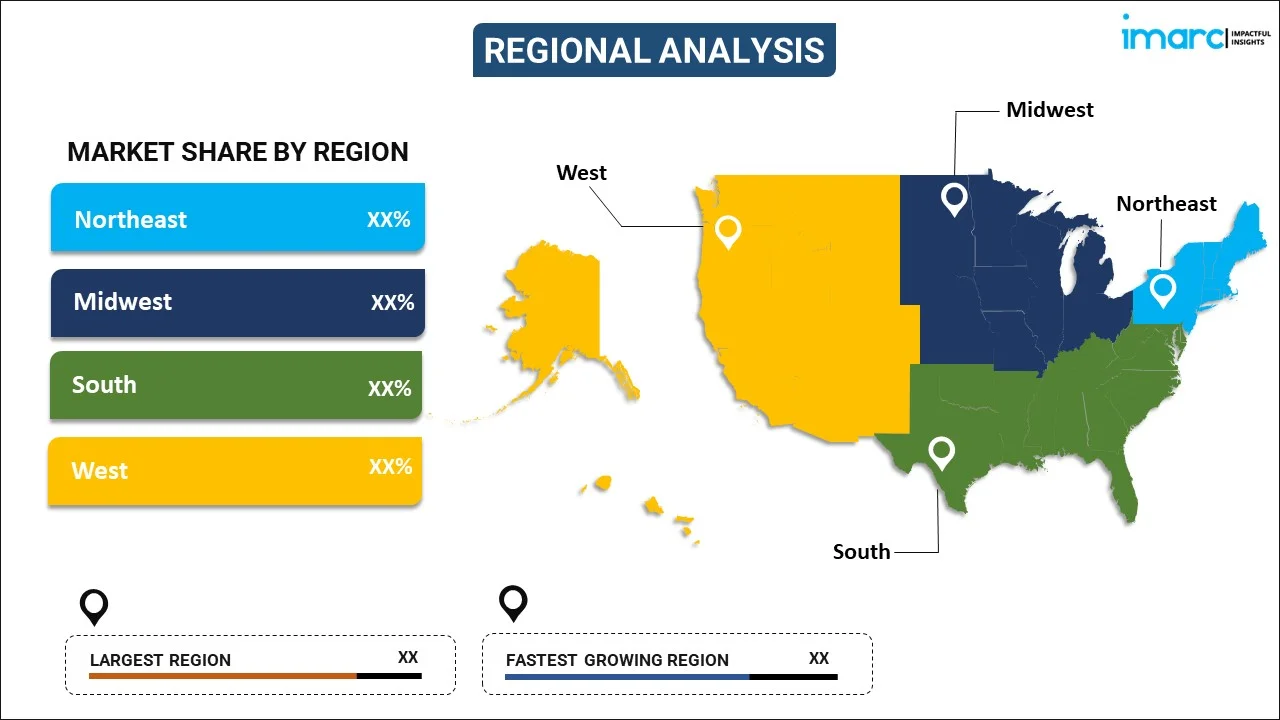
The Northeast frozen fruits and vegetables market is driven by dense urban populations, busy lifestyles, and limited time for fresh food preparation. High demand for convenient, long-shelf-life food options supports frozen produce consumption. Seasonal variability and harsh winters also reduce year-round availability of fresh fruits and vegetables, encouraging frozen alternatives. Additionally, strong retail penetration, health awareness, and demand from foodservice outlets such as restaurants and institutions contribute to steady market growth.
In the Midwest, the market is supported by strong agricultural linkages, large-scale food processing infrastructure, and cost-conscious consumers. Frozen fruits and vegetables offer affordability, reduced food waste, and consistent quality, aligning well with regional preferences. Long winters and reliance on bulk grocery shopping further boost frozen food demand. The presence of major food manufacturers and widespread supermarket networks also facilitates efficient distribution and high household penetration of frozen produce.
The Southern US market benefits from rapid population growth, rising urbanization, and increasing demand for convenient meal solutions. Busy working households favor frozen fruits and vegetables for quick preparation and year-round availability. Expansion of modern retail formats and improving cold storage infrastructure enhance accessibility. Additionally, growing health awareness and demand from foodservice, particularly quick-service restaurants, drive consumption of frozen produce across the region.
The West is driven by health-conscious consumers, high adoption of plant-based diets, and strong demand for smoothies, ready meals, and functional foods using frozen produce. Busy lifestyles and high disposable incomes support premium and organic frozen offerings. While fresh produce is widely available, frozen options appeal for convenience and reduced spoilage. Strong e-commerce grocery penetration, innovation, and sustainability-focused consumption patterns further stimulate market growth in this region.
Market Dynamics:
Growth Drivers:
Why is the United States Frozen Fruits and Vegetables Market Growing?
Rising Consumer Demand for Convenience and Nutritious Food Options
Changing consumer lifestyles characterized by dual-income households, busy schedules, and urbanization are driving strong demand for convenient yet nutritious food solutions. Frozen fruits and vegetables offer significant time savings through reduced preparation requirements while maintaining nutritional value comparable to fresh produce. Modern freezing technologies, particularly Individual Quick Freezing, preserve vitamins, minerals, and cellular structure, addressing historical consumer concerns about nutritional quality. Consumer education initiatives by industry associations, including the American Frozen Food Institute, emphasize frozen foods' role in reducing household food waste while providing year-round access to seasonal produce varieties.
Expansion of Retail and E-Commerce Distribution Channels
Retail channel expansion and e-commerce growth are significantly enhancing frozen produce accessibility across the United States. Major retailers are investing in expanded freezer sections, improved merchandising, and private-label product development to capture growing consumer demand. Online grocery platforms including Amazon Fresh, Instacart, and retailer-specific applications enable convenient home delivery of frozen products, particularly appealing to time-constrained consumers. Cold chain logistics improvements and last-mile delivery innovations are ensuring product quality throughout the e-commerce fulfillment process. The integration of subscription services and meal kit providers into frozen food distribution creates additional touchpoints for reaching health-conscious consumers seeking convenient meal solutions.
Technological Advancements in Freezing and Processing Equipment
The continuous improvement of freezing technologies, processing equipment, and cold chain infrastructure is enhancing product quality and increasing operational efficiency throughout the industry. The availability of modern IQF systems that have smart sensors, automation, and efficient energy designs can be used to control temperature and maintain a constant output. The use of the optical sorting system and automated quality control technologies is enhancing food safety measures as well as minimizing the use of manual labor. The sustained investment in facilities modernization is also allowing manufacturers to increase the number of value-added products merchandise such as sauced vegetables, ready-to-cook, and high-end organic products, which are increasing the demands of consumers who can afford a higher cost.
Market Restraints:
What Challenges the United States Frozen Fruits and Vegetables Market is Facing?
Consumer Perception Challenges Regarding Product Quality
Despite the technological changes, there are still people who consider frozen food as unhealthy compared to fresh food. The issue of texture change, preservatives and sodium level presents a drawback to adoption by the health-conscious segments. The educational initiatives in the industry to overcome these myths should be long-term, and manufacturers should work on the reformulation of clean labels and clear nutritional information.
Cold Chain Infrastructure and Energy Cost Pressures
The distribution of frozen food demands a significant level of cold chain infrastructure, and a source of continuous energy costs spent on refrigerated storage and transportation. The increase in energy prices, fluctuating fuel prices, and the lack of labor affect the costs of operations along the supply chain. In rural and underserved regions, cold storage and distribution may be insufficient, which will not allow entering specific geographic locations.
Raw Material Price Volatility and Supply Chain Disruptions
Agricultural commodity price fluctuations, weather-related crop impacts, and supply chain disruptions create cost pressures for frozen produce manufacturers. Climate variability affects fruit and vegetable yields, potentially impacting raw material availability and pricing stability. Global supply chain challenges and transportation constraints can affect import availability and processing facility operations.
Competitive Landscape:
The United States frozen fruits and vegetables market exhibits a moderately consolidated competitive landscape with established multinational food corporations competing alongside regional processors and private-label suppliers. Market leaders focus on product innovation, manufacturing efficiency, and distribution network expansion to maintain competitive positioning. Companies are investing in clean-label reformulations, organic product lines, and sustainable packaging solutions to align with evolving consumer preferences. Strategic acquisitions and partnerships enable portfolio diversification and geographic expansion, while investments in automated processing facilities improve operational efficiency and product quality. Private-label growth presents both competitive pressure and contract manufacturing opportunities for established processors.
Recent Developments:
- June 2025: Conagra Brands introduced more than 50 new frozen food products, including Birds Eye Ultimate Cheesy and Buttery Vegetables featuring broccoli and corn with enhanced sauce formulations, along with Alexia Broccoli and Aged Cheddar premium vegetable side dishes, expanding convenient frozen produce options for consumers.
- February 2024: Twin City Foods and Smith Frozen Foods announced a strategic merger to form TCF Holdings, Inc., combining the two Pacific Northwest frozen vegetable processors' capabilities to better serve customers and support local farmers through enhanced operational efficiencies and expanded product offerings.
United States Frozen Fruits and Vegetables Market Report Scope:
| Report Features | Details |
|---|---|
| Base Year of the Analysis | 2025 |
| Historical Period | 2020-2025 |
| Forecast Period | 2026-2034 |
| Units | Million USD |
| Scope of the Report | Exploration of Historical Trends and Market Outlook, Industry Catalysts and Challenges, Segment-Wise Historical and Future Market Assessment:
|
| Product Types Covered | Frozen Fruits, Frozen Vegetables |
| Distribution Channels Covered | Supermarkets and Hypermarkets, Independent Retailers, Convenience Stores, Online, Others |
| Regions Covered | Northeast, Midwest, South, West |
| Customization Scope | 10% Free Customization |
| Post-Sale Analyst Support | 10-12 Weeks |
| Delivery Format | PDF and Excel through Email (We can also provide the editable version of the report in PPT/Word format on special request) |
Key Questions Answered in This Report
The United States frozen fruits and vegetables market size was valued at USD 7,604 Million in 2025.
The United States frozen fruits and vegetables market is expected to grow at a compound annual growth rate of 2.0% from 2026-2034 to reach USD 9,100.6 Million by 2034.
Frozen vegetables dominate with 63% market share in 2025, driven by year-round availability, nutritional retention through IQF technology, extended shelf life, and versatile applications across household and foodservice sectors.
Key factors driving the United States frozen fruits and vegetables market include rising consumer demand for convenience and nutrition, expansion of retail and e-commerce distribution channels, technological advancements in freezing equipment, and growing preference for organic and clean-label products.
Major challenges include persistent consumer perception issues regarding frozen product quality, cold chain infrastructure and energy cost pressures, raw material price volatility, and competition from fresh produce and other convenience food alternatives.
Need more help?
- Speak to our experienced analysts for insights on the current market scenarios.
- Include additional segments and countries to customize the report as per your requirement.
- Gain an unparalleled competitive advantage in your domain by understanding how to utilize the report and positively impacting your operations and revenue.
- For further assistance, please connect with our analysts.
 Request Customization
 Speak to an Analyst
 Request Brochure
 Inquire Before Buying
Benefits of Customization
- Personalize this research
- Triangulate with your data
- Get data as per your format and definition
- Gain a deeper dive into a specific application, geography, customer, or competitor
- Any level of personalization
Get in Touch With Us
UNITED STATES
Phone: +1-201-971-6302
INDIA
Phone: +91-120-433-0800
UNITED KINGDOM
Phone: +44-753-714-6104
Email: sales@imarcgroup.com
Client Testimonials




.webp)




.webp)












