
Asia Pacific Feed Additives Market Size, Share, Trends and Forecast by Source, Product Type, Livestock, Form, and Country, 2026-2034
Asia Pacific Feed Additives Market Size, Share, Trends & Forecast (2026-2034)
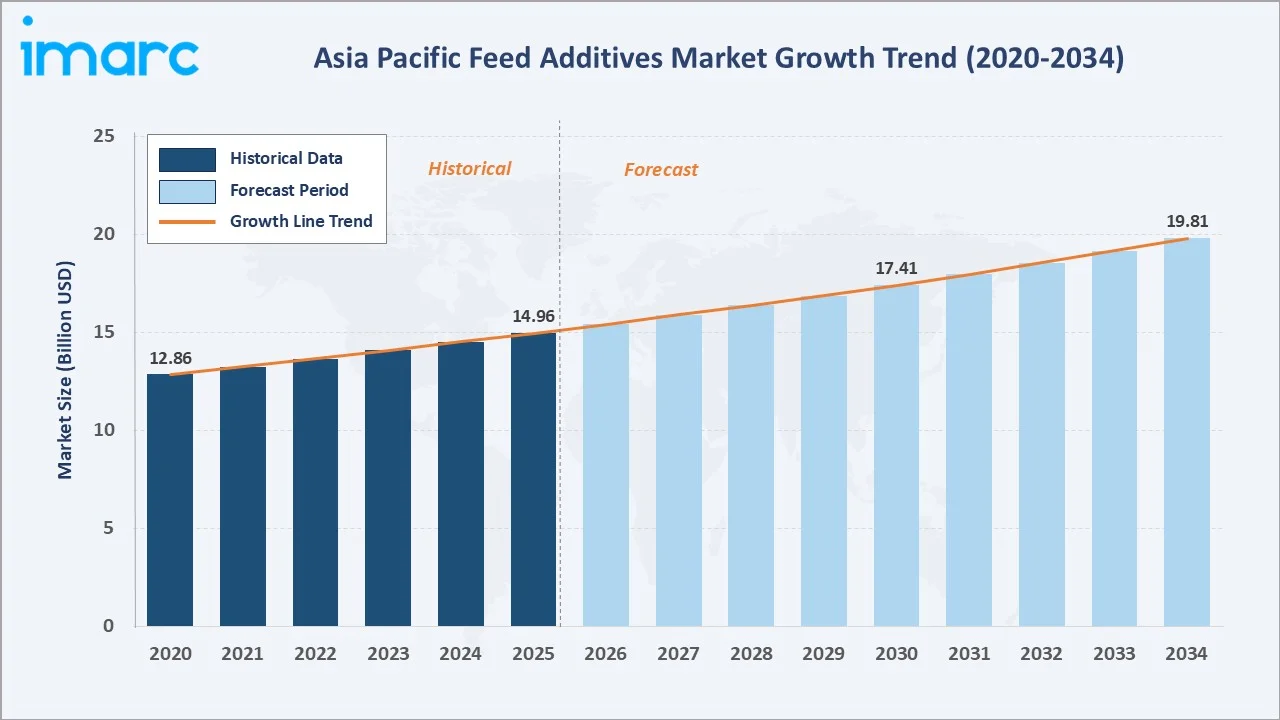
The Asia Pacific feed additives market was valued at USD 14.96 Billion in 2025 and is projected to reach USD 19.81 Billion by 2034, exhibiting a CAGR of 3.07% during 2026-2034. Rising meat, egg, and dairy consumption, broadening commercial livestock farming, and a steady shift away from antibiotic growth promoters are the primary drivers shaping the market expansion.
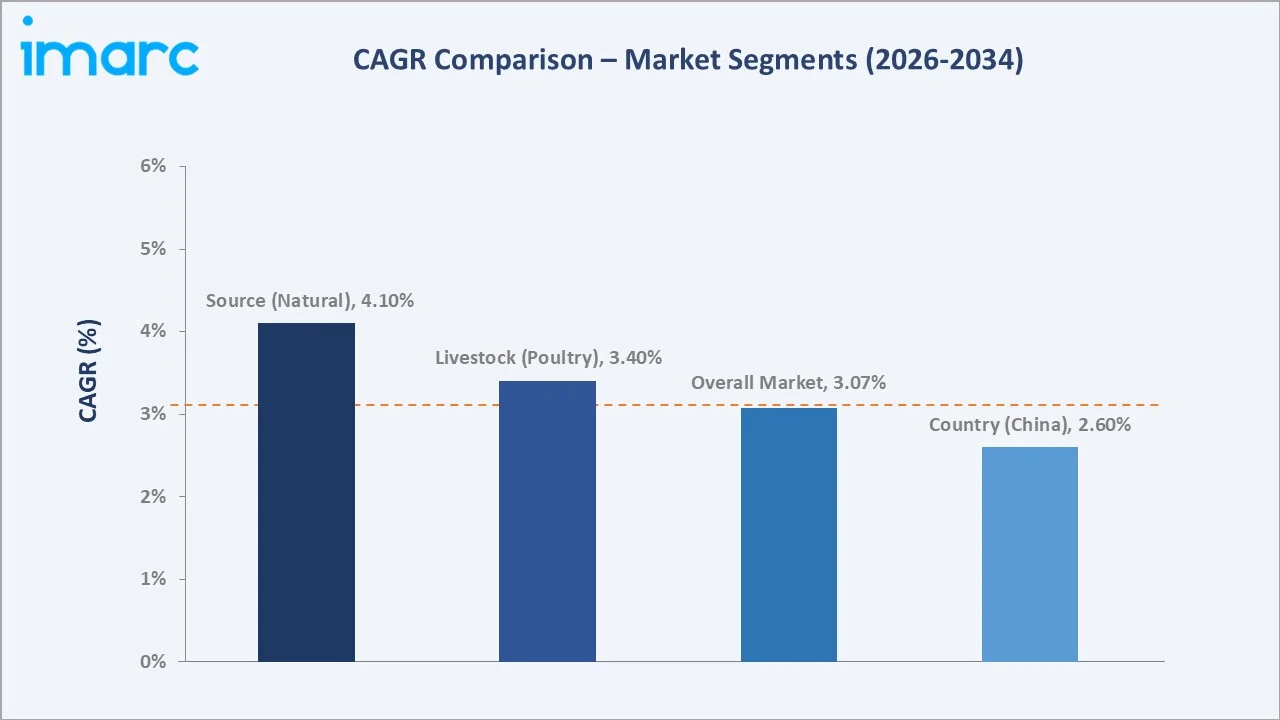
Natural leads the source segment at 58.7%, poultry commands 43.8% of the livestock segment, and China holds 38.7% country share.
Market Snapshot
|
Metric |
Value |
|
Market Size (2025) |
USD 14.96 Billion |
|
Forecast Market Size (2034) |
USD 19.81 Billion |
|
CAGR (2026-2034) |
3.07% |
|
Base Year |
2025 |
|
Historical Period |
2020-2025 |
|
Forecast Period |
2026-2034 |
|
Largest Country |
China (38.7%, 2025) |
|
Second Largest Country |
Japan (15.2%, 2025) |
|
Leading Source |
Natural (58.7%, 2025) |
|
Leading Livestock |
Poultry (43.8%, 2025) |
The Asia Pacific feed additives market expanded from USD 12.86 Billion in 2020 to USD 14.96 Billion in 2025, driven by intensifying commercial livestock production, rising protein consumption, and growing adoption of specialty nutrition solutions across the region. Anchored at USD 17.41 Billion in 2030, the forecast to USD 19.81 Billion by 2034 is supported by continued dietary diversification, aquaculture expansion, and tightening feed-quality regulations across permitted formats.
To get more information on this market, Request Sample
CAGR trajectories across source and livestock sub-segments, together with country-level demand, show India and aquatic animal expanding faster than the overall 3.07% market CAGR, driven by rising protein consumption, aquaculture expansion, and increasing formalization of commercial feed manufacturing across emerging Asia Pacific economies.
Executive Summary
The Asia Pacific feed additives market is on a steady growth trajectory from USD 12.86 Billion in 2020 to USD 19.81 Billion by 2034. The industry has moved from basic nutritional supplementation toward performance-driven, science-led formulations spanning amino acids, enzymes, vitamins, minerals, and phytogenic compounds.
Natural leads the source segment at 58.7% in 2025, supported by clean-label preferences and reduced reliance on synthetic growth promoters, while poultry commands 43.8% of the livestock segment on the back of high feed-conversion efficiency requirements. China holds 38.7% country share, led by the scale of its compound feed industry and dense livestock population.
Key Market Insights
|
Insight |
Data |
|
Leading Source |
Natural - 58.7% share (2025) |
|
Second Largest Source |
Synthetic - 41.3% share (2025) |
|
Leading Livestock |
Poultry - 43.8% share (2025) |
|
Second Largest Livestock |
Ruminants - 28.6% share (2025) |
|
Leading Country |
China - 38.7% share (2025) |
|
Second Largest Country |
Japan - 15.2% share (2025) |
|
Top Companies |
Cargill, Incorporated, Archer Daniels Midland Company, Nutreco, Evonik Industries AG, BASF SE |
Key Analytical Observations Expanding On the Data Above:
- Natural dominance at 58.7% is supported by rising clean-label preferences, regulatory tightening on synthetic growth promoters, and greater farmer awareness of gut-health and immunity-focused formulations.
- Synthetic share at 41.3% remains relevant for cost-sensitive, high-volume compound feed operations that prioritize consistent nutrient specification and price stability.
- Poultry leadership at 43.8% reflects the segment's short production cycles, high feed-conversion sensitivity, and the scale of commercial broiler and layer operations across China, India, and Southeast Asia.
- Ruminants at 28.6% are supported by growing adoption of feed additives that improve rumen function, fiber digestion, nutrient utilization, and overall animal health, particularly across dairy and beef production systems.
- China share at 38.7% is anchored by its leading compound feed manufacturing base and dense integrated poultry and swine systems.
Asia Pacific Feed Additives Market Overview
Feed additives are substances incorporated into animal diets, including amino acids, enzymes, vitamins, minerals, probiotics, and phytogenic compounds, to enhance nutrient absorption, growth performance, immunity, and overall feed efficiency across poultry, swine, ruminant, and aquaculture production systems.
The Asia Pacific ecosystem integrates raw material suppliers, additive manufacturers, premix formulators, compound feed millers, distributors, and regulatory authorities operating across diverse national feed-safety frameworks. Rising per-capita meat, egg, and dairy consumption, expanding commercial and intensive livestock operations, and macroeconomic factors such as urbanization and disposable income growth continue to shape additive demand across the region's fast-evolving livestock and aquaculture industries.
Market Dynamics
To evaluate market opportunities, Request Sample
Market Drivers
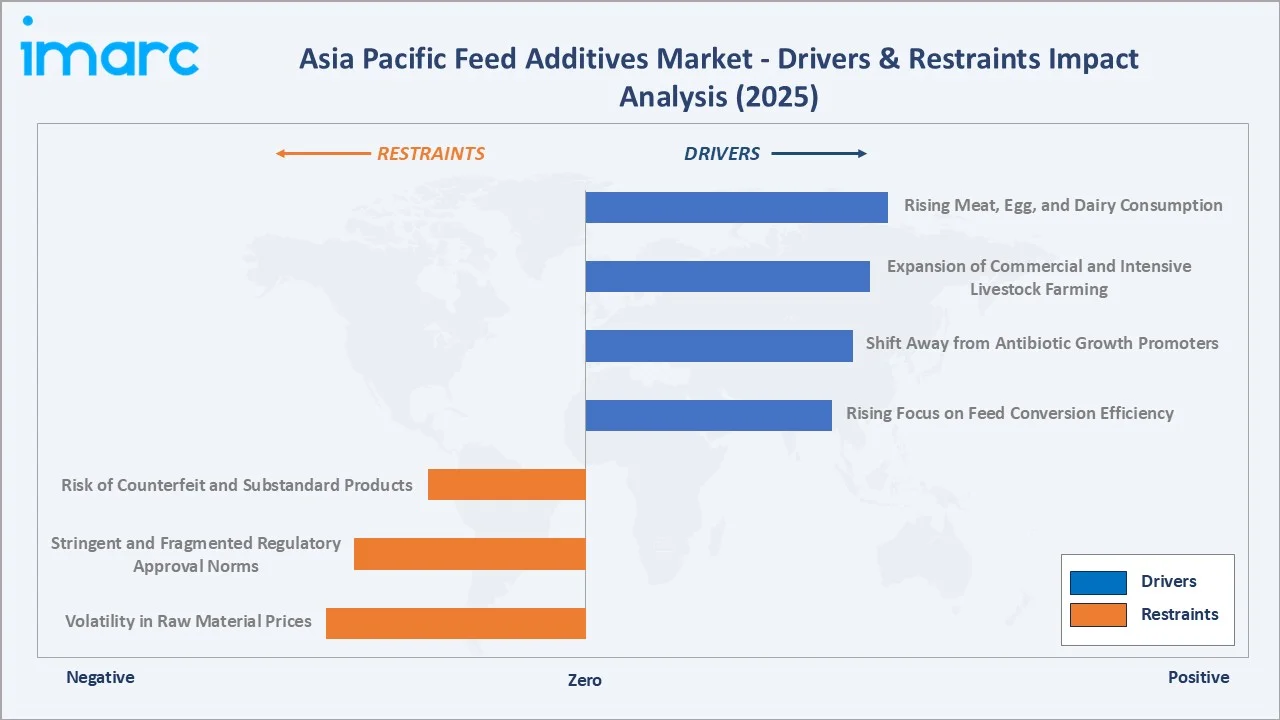
- Rising Meat, Egg, and Dairy Consumption: Expanding middle-class populations and urbanization across China, India, and Southeast Asia are driving sustained growth in animal protein consumption, lifting demand for productivity-enhancing feed additives. As per the BAHS- 2025, in India, the total milk output was projected to reach 247.87 Million Tons in 2024-25, up from 239.30 Million Tons in 2023-24, reflecting a growth of 3.58% in 2024-25 compared to the prior year.
- Expansion of Commercial and Intensive Livestock Farming: The shift from backyard and smallholder operations toward integrated, commercial-scale poultry, swine, and dairy production is increasing reliance on standardized, additive-enriched feed formulations.
- Shift Away from Antibiotic Growth Promoters: Tightening antibiotic-use regulations across several markets are accelerating adoption of probiotics, prebiotics, enzymes, and phytogenic alternatives.
- Rising Focus on Feed Conversion Efficiency: Producers are increasingly prioritizing feed additives that improve nutrient absorption and reduce feed-to-gain ratios, supporting margins amid volatile input costs.
Market Restraints
- Volatility in Raw Material Prices: Feed additive manufacturing depends on inputs, such as amino acid precursors, vitamin intermediates, and specialty chemicals, whose costs are exposed to global supply disruptions, currency swings, and weather-related shortages in major producing countries.
- Stringent and Fragmented Regulatory Approval Norms: Differing feed-safety and additive registration requirements across Asia Pacific countries create compliance complexity and slow the introduction of new formulations.
- Risk of Counterfeit and Substandard Products: The presence of unregulated or mislabeled additives in fragmented distribution channels can undermine farmer confidence and complicate quality assurance for established manufacturers.
Market Opportunities
- Expansion of Natural and Phytogenic Additives: Growing farmer and consumer preference for clean-label livestock products is creating opportunities for botanical extracts, essential oils, and organic acid-based formulations.
- Aquaculture-Specific Additive Development: Rising aquaculture output across Vietnam, Indonesia, and India is opening opportunities for specialized aquafeed additives that improve disease resistance and growth performance in fish and shrimp.
Market Challenges
- Limited Awareness Among Smallholder Farmers: Fragmented smallholder livestock operations across parts of South and Southeast Asia often lack awareness of the productivity benefits of advanced feed additives, slowing adoption.
- Cold Chain and Storage Constraints: Certain probiotic and enzyme-based additives require controlled storage conditions, and inconsistent cold chain infrastructure in rural areas can affect product efficacy.
Emerging Market Trends
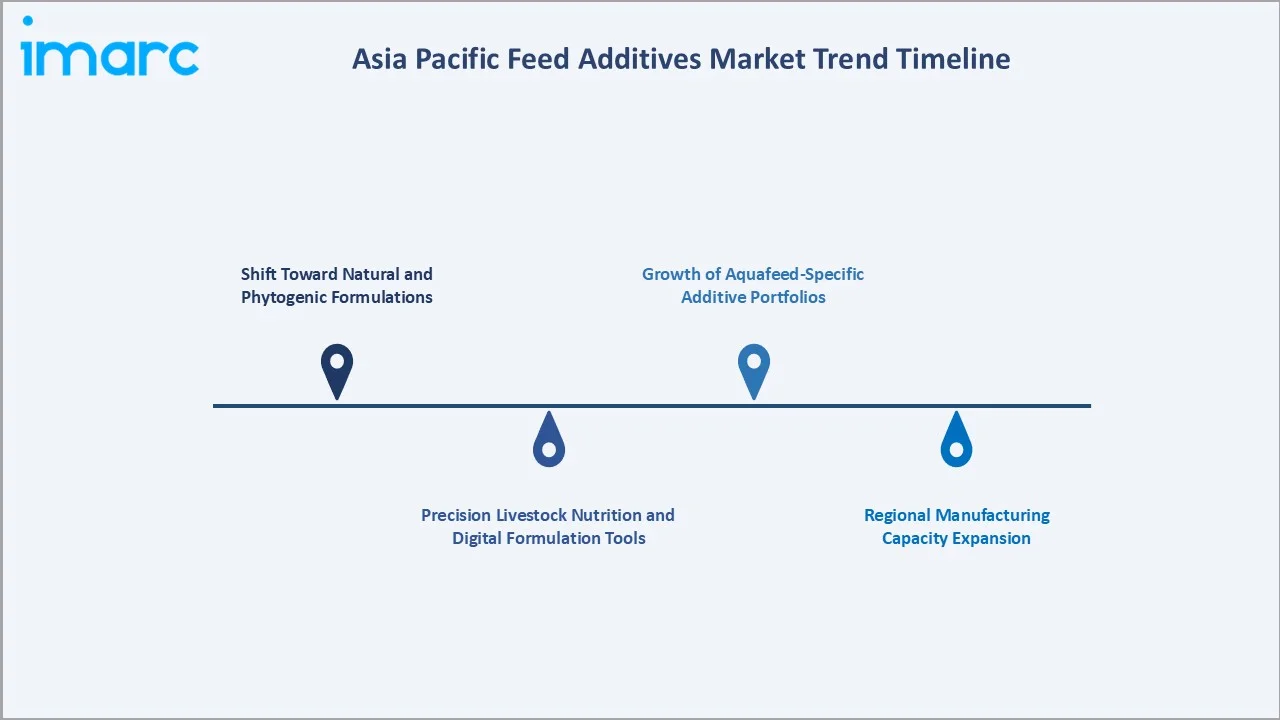
1. Shift Toward Natural and Phytogenic Formulations
Manufacturers are reformulating additive portfolios around botanical extracts, essential oils, and organic acids as farmers and end-consumers increasingly favor antibiotic-free and clean-label animal protein. This transition is also encouraging investment in regional natural-ingredient sourcing and extraction capacity across China and Southeast Asia.
2. Precision Livestock Nutrition and Digital Formulation Tools
Adoption of data-driven feed formulation platforms is enabling producers to fine-tune nutrient inclusion rates in real time, helping reduce feed formulation costs while improving feed conversion ratios and supporting broader adoption among large integrated producers.
3. Growth of Aquafeed-Specific Additive Portfolios
Rising aquaculture output across India, Indonesia, and Vietnam is prompting additive manufacturers to expand dedicated aquafeed portfolios, including immune-boosting and water-quality-supporting formulations tailored to fish and shrimp production systems.
4. Regional Manufacturing Capacity Expansion
Global and regional players are localizing production of amino acids, vitamins, and premixes closer to end markets to reduce import dependence, shorten supply chains, and improve responsiveness to country-specific regulatory requirements.
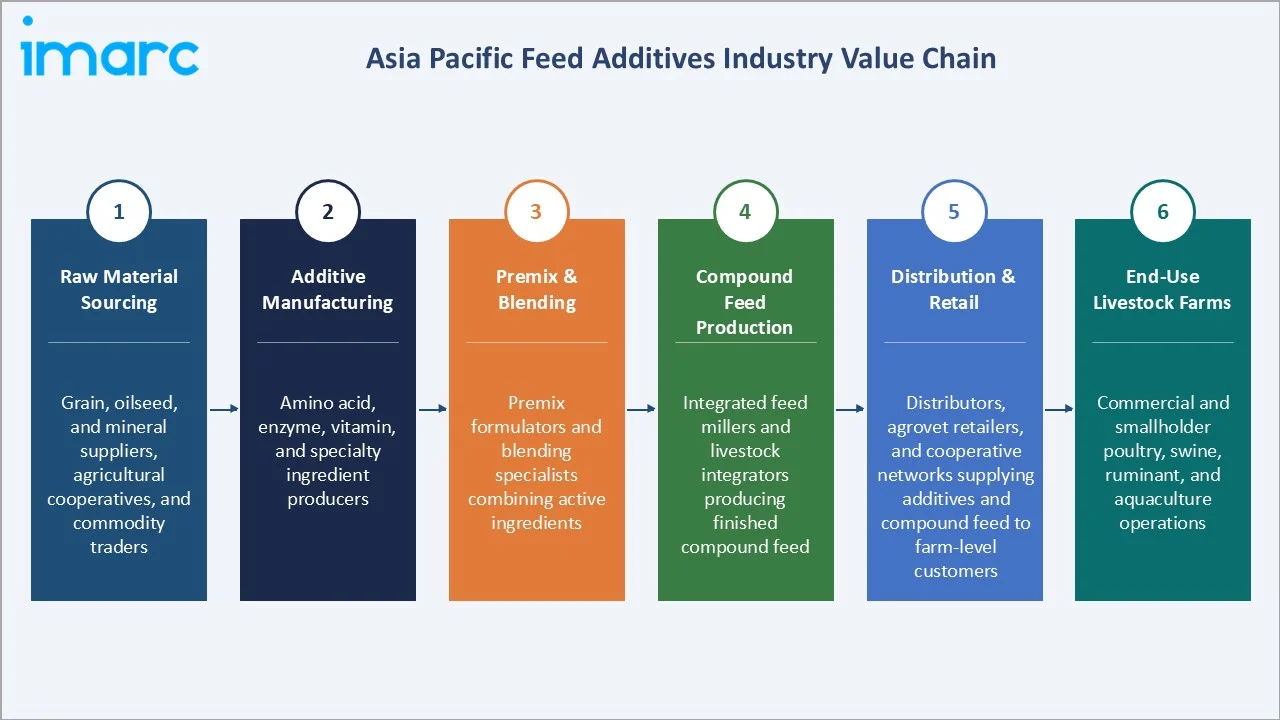
Industry Value Chain Analysis
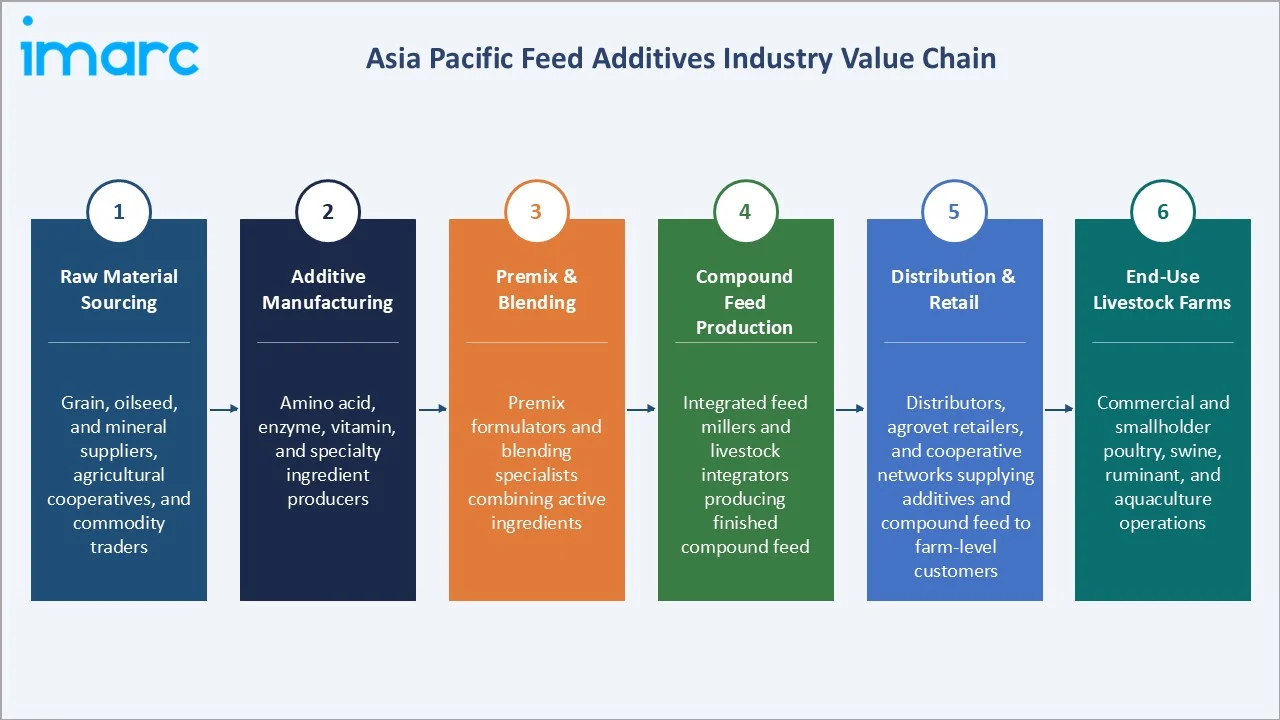
The Asia Pacific feed additives value chain spans six stages, from upstream raw material sourcing through end-use livestock and aquaculture farms. Additive manufacturing and premix formulation capture the highest value-add, while distribution reach and regulatory compliance increasingly determine sustainable competitive positioning across this diversified regional industry.
|
Stage |
Key Players / Examples |
|
Raw Material Sourcing |
Grain, oilseed, and mineral suppliers, agricultural cooperatives, and commodity traders supporting upstream input procurement |
|
Additive Manufacturing |
Amino acid, enzyme, vitamin, and specialty ingredient producers operating regional and global production facilities |
|
Premix & Blending |
Premix formulators and blending specialists combining active ingredients into customized nutrition solutions |
|
Compound Feed Production |
Integrated feed millers and livestock integrators producing finished compound feed for commercial farms |
|
Distribution & Retail |
Distributors, agrovet retailers, and cooperative networks supplying additives and compound feed to farm-level customers |
|
End-Use Livestock Farms |
Commercial and smallholder poultry, swine, ruminant, and aquaculture operations utilizing additive-enriched feed |
Vertically integrated players with proprietary formulation technology and direct distribution networks are positioned to capture greater value than partners reliant on third-party distribution and contract manufacturing.
Technology Landscape in the Asia Pacific Feed Additives Industry
Enzyme and Fermentation Technology
Advances in microbial fermentation are enabling more efficient, cost-competitive production of amino acids, enzymes, and probiotic strains, supporting the shift toward natural and performance-enhancing feed formulations across the region.
Precision Nutrition and Digital Formulation Platforms
Data-driven feed formulation software and near-infrared spectroscopy-based ingredient analysis are helping producers optimize nutrient inclusion rates, reduce waste, and improve feed conversion ratios across large-scale commercial operations.
Natural Ingredient Extraction Technology
Investment in botanical extraction, essential oil distillation, and organic acid production capacity is supporting the region's transition toward clean-label and antibiotic-free feed additive formulations.
Quality and Traceability Systems
Automated quality testing and digital traceability systems are gaining traction among larger manufacturers seeking to strengthen supply chain transparency and meet increasingly stringent national feed-safety requirements across export-oriented markets.
Market Segmentation Analysis
The report covers the following segments:
|
Segment Category |
Leading Segment |
Market Share |
Year |
|
Source |
Natural |
58.7% |
2025 |
|
Product Type |
Amino Acid |
🔒 |
2025 |
|
Livestock |
Poultry |
43.8% |
2025 |
|
Form |
Dry |
🔒 |
2025 |
|
Country |
China |
38.7% |
2025 |

By Source
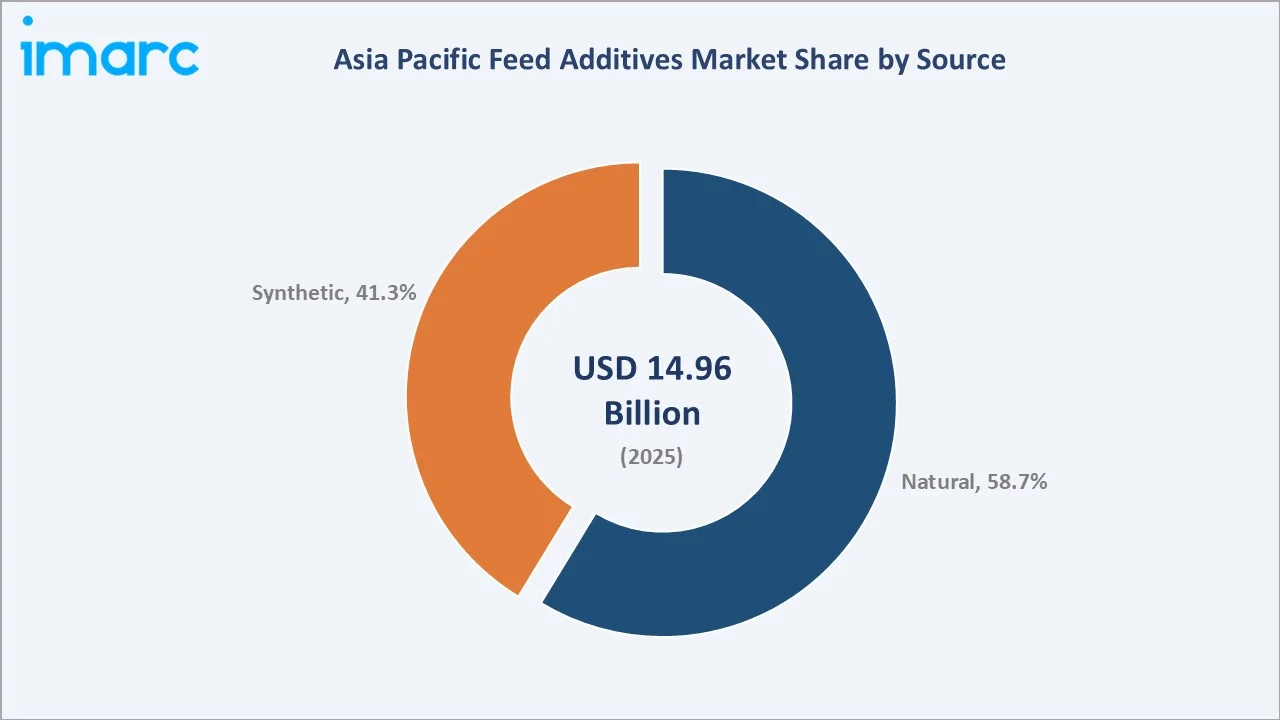
Natural commands a 58.7% majority share in 2025, driven by rising clean-label preferences, regulatory tightening on synthetic growth promoters, and greater farmer awareness of gut-health-focused nutrition. The segment benefits from expanding phytogenic and organic acid product portfolios across regional manufacturers.
To access detailed market analysis, Request Sample
Synthetic accounts for the remaining 41.3% in 2025, remaining relevant for cost-sensitive, high-volume compound feed operations that prioritize consistent nutrient specification, particularly in large-scale poultry and swine production systems.
By Livestock
Poultry leads the livestock segment with a 43.8% share in 2025, supported by short production cycles, high feed-conversion sensitivity, and the scale of commercial broiler and layer operations across China, India, and Southeast Asia.
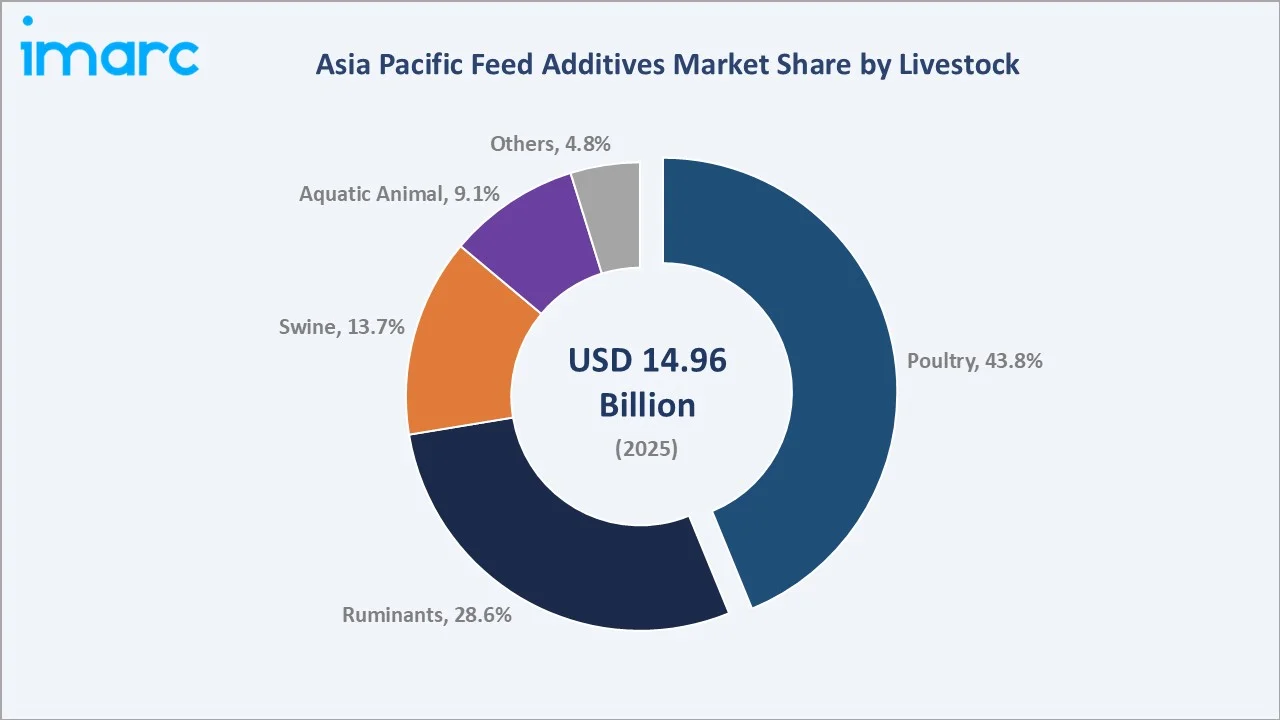
Ruminants follow at 28.6%, anchored by expanding commercial dairy operations and increasing demand for feed additives that support digestion, nutrient utilization, and animal productivity.
Regional Market Insights
|
Country |
Share (2025) |
Key Growth Drivers |
|
China |
38.7% |
Large-scale compound feed industry, dense integrated poultry and swine systems, and strong government support for livestock modernization |
|
Japan |
15.2% |
Mature livestock sector, high demand for premium and specialty feed additive formulations, and strict feed-safety regulatory standards |
|
India |
14.6% |
Expanding organized dairy, poultry, and aquaculture sectors, rising disposable incomes, and growing government-backed livestock productivity programs |
|
South Korea |
9.8% |
Advanced commercial livestock operations, strong emphasis on feed efficiency, and increasing adoption of natural and functional additives |
|
Australia |
8.2% |
Established ruminant and dairy industries, high animal health standards, and strong export-oriented livestock production |
|
Indonesia |
7.1% |
Rapidly expanding poultry and aquaculture production, rising protein consumption, and growing commercial feed milling capacity |
|
Others |
6.4% |
Emerging livestock and aquaculture sectors across Southeast Asia supported by rising protein demand and modernizing feed distribution networks |
China at 38.7% in 2025 leads the country-wise landscape, anchored by its broad compound feed manufacturing base, dense livestock populations, and continuous government support for animal husbandry modernization.
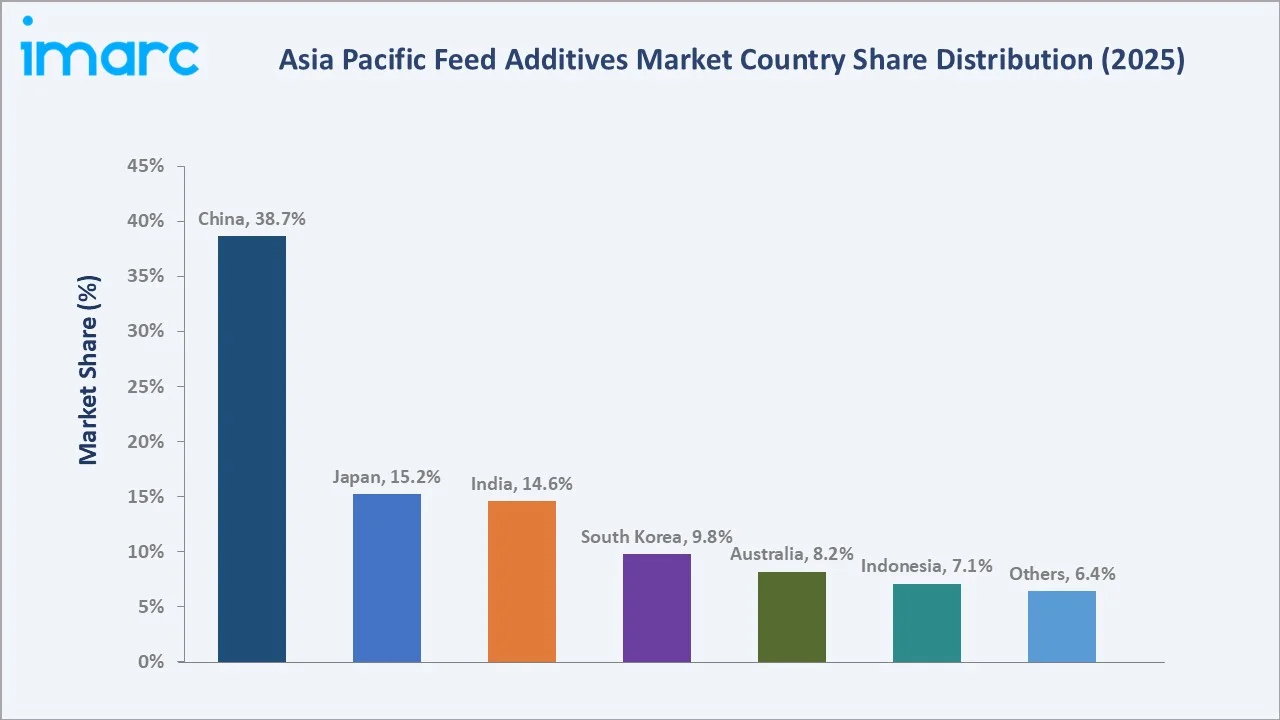
India, with a 14.6% share, represents one of the fastest-growing country markets, supported by rapid expansion of organized dairy, poultry, and aquaculture sectors alongside rising disposable incomes and supportive government programs.
Competitive Landscape
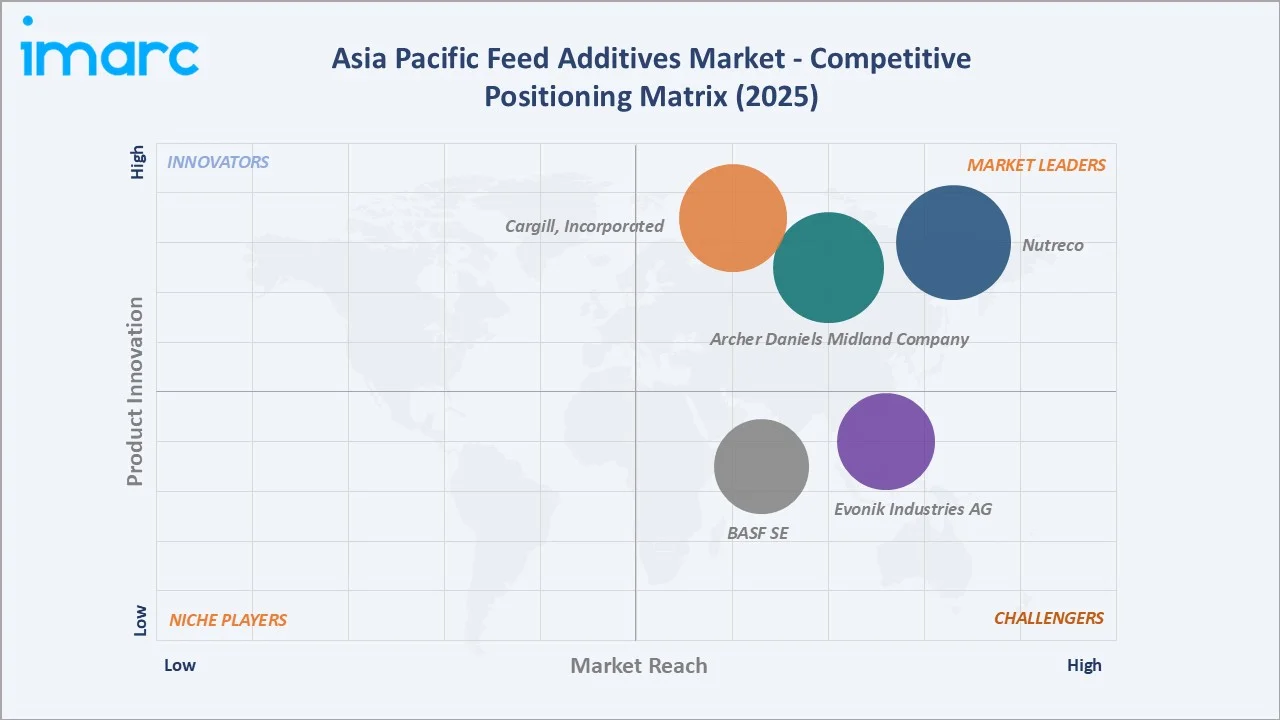
The Asia Pacific feed additives market is moderately consolidated, with established global players leading through broad product portfolios, regional manufacturing capacity, and strong distribution networks, while specialized manufacturers compete on innovation in amino acids, enzymes, and natural additive formulations. Brand strength, R&D depth, and regulatory readiness form the key competitive moats across the region's diversified livestock and aquaculture end markets.
|
Company Name |
Brand / Key Product |
Position |
Strategic Focus |
|
Cargill, Incorporated |
Provimi |
Leader |
Broad-portfolio animal nutrition provider with integrated regional manufacturing and distribution |
|
Archer Daniels Midland Company |
ADM Animal Nutrition |
Leader |
Diversified nutrition solutions provider leveraging global ingredient sourcing and formulation expertise |
|
Nutreco |
Trouw Nutrition |
Leader |
Global animal and aqua nutrition specialist expanding regional premix and feed-safety manufacturing |
|
Evonik Industries AG |
MetAMINO |
Challenger |
Specialty amino acid producer focused on precision nutrition and feed efficiency solutions |
|
BASF SE |
BASF Animal Nutrition |
Challenger |
Diversified chemical major offering enzymes, vitamins, and specialty feed additive solutions |
Key players include Cargill, Incorporated, Archer Daniels Midland Company, Nutreco, Evonik Industries AG, and BASF SE, among others.
Key Company Profiles
Cargill, Incorporated
Cargill, Incorporated is a privately held global agribusiness and food company headquartered in Minnesota, United States. Through its animal nutrition business, the company supplies premixes, specialty additives, and compound feed solutions to poultry, swine, ruminant, and aquaculture producers across the Asia Pacific region.
- Product Portfolio: Premixes and specialty feed additive solutions covering vitamins, minerals, and functional nutrition ingredients for multiple livestock species.
- Recent Developments: The firm continues to invest in its animal nutrition capabilities, with a focus on strengthening production, formulation, and technical support across key Asia Pacific markets.
- Strategic Focus: Strengthening regional manufacturing and distribution reach while expanding natural and sustainability-focused nutrition solutions for Asia Pacific producers.
Archer Daniels Midland Company
Archer Daniels Midland Company is a global agricultural processing and nutrition company headquartered in Chicago, Illinois, United States. Its animal nutrition business supplies amino acids, specialty feed ingredients, and premix solutions, supported by an extensive regional sourcing and formulation network.
- Product Portfolio: Amino acids, enzymes, and specialty feed additives for poultry, swine, and aquaculture diets.
- Recent Developments: The company continues to broaden its specialty nutrition capabilities and strengthen its regional ingredient and formulation network to support evolving animal nutrition requirements.
- Strategic Focus: Expanding specialty and natural ingredient offerings while deepening technical support capabilities for regional feed producers.
Nutreco
Nutreco is a global animal and aqua nutrition company headquartered in Amersfoort, the Netherlands. Through its animal nutrition business, the company supplies premixes, feed specialties, and feed-safety solutions to poultry, swine, ruminant, and aquaculture producers across the Asia Pacific region.
- Product Portfolio: Premixes, feed specialties, and feed-safety solutions for poultry, swine, ruminant, and aquaculture producers, complemented by a dedicated aquafeed portfolio.
- Recent Developments: Nutreco continues to enhance its regional animal and aqua nutrition operations through investments in manufacturing capabilities, technical expertise, and solutions focused on feed efficiency and animal performance.
- Strategic Focus: Strengthening its Asia Pacific manufacturing and technical service network while expanding feed-safety and precision nutrition offerings for regional producers.
Market Concentration Analysis
The Asia Pacific feed additives market is moderately fragmented, with the leading global manufacturers, including Cargill, Incorporated, Archer Daniels Midland Company, and Nutreco, accounting for a meaningful share of regional amino acid, vitamin, and premix supply alongside numerous specialized and regional producers.
Barriers to entry include the technical complexity of amino acid and enzyme manufacturing, the need for regional regulatory registration across multiple national feed-safety frameworks, and the scale required to compete on production cost. These factors favor well-capitalized incumbents with established manufacturing footprints and distribution networks.
Consolidation is gradually advancing as larger players acquire specialty ingredient producers and expand regional manufacturing capacity, while smaller regional formulators compete through localized product customization and customer relationships across fragmented, smallholder-heavy markets.
Investment & Growth Opportunities
Fastest-Growing Segments
Aquatic animal expands fastest among livestock categories, driven by rising aquaculture output across India and Indonesia. Natural represents the next-fastest growth avenue, supported by clean-label and antibiotic-free farming trends.
Emerging Markets
India represents a significant emerging opportunity, anchored by expanding organized dairy, poultry, and aquaculture sectors. Indonesia's growing commercial feed milling capacity similarly presents untapped potential for regional and global additive manufacturers.
Venture & Investment Trends
Investment is increasingly concentrated in natural ingredient extraction capacity, precision nutrition technology platforms, and regional manufacturing expansion, aligning with the sector's shift toward performance-oriented and sustainability-linked feed formulations.
Future Market Outlook (2026-2034)
The Asia Pacific feed additives market is forecast to expand from USD 14.96 Billion in 2025 to USD 19.81 Billion by 2034 at a CAGR of 3.07%, adding approximately USD 4.85 Billion in incremental market value over the forecast period.
Three forces will shape the market through 2034: continued formalization of commercial livestock and aquaculture production, sustained shift toward natural and phytogenic additive formulations, and deeper integration of precision nutrition technologies across regional feed manufacturing operations.
By 2034, the Asia Pacific feed additives industry is expected to be defined by higher-value, performance-oriented formulations, with natural additives and aquafeed-specific solutions accounting for a meaningfully higher share of overall demand. Regional manufacturing expansion and tightening feed-safety regulation are expected to further support the market's structural growth.
Research Methodology
Primary Research
Primary research included structured interviews with feed additive manufacturers, compound feed millers, livestock producers, regulatory specialists, and distribution partners, validating market sizing, segment shares, and country-level demand trends.
Secondary Research
Secondary sources included national feed industry association publications, government livestock and agriculture statistics, company annual reports and investor presentations, and regulatory filings across major Asia Pacific markets.
Forecasting Models
Market forecasts used top-down and bottom-up models combining livestock population trends, compound feed production volumes, additive inclusion rates, and macroeconomic variables, with scenario analysis addressing regulatory change and raw material price volatility.
Report Coverage:
| Report Features | Details |
|---|---|
| Base Year of the Analysis | 2025 |
| Historical Period | 2020-2025 |
| Forecast Period | 2026-2034 |
| Units | Billion USD |
| Scope of the Report | Exploration of Historical Trends and Market Outlook, Industry Catalysts and Challenges, Segment-Wise Historical and Future Market Assessment:
|
| Sources Covered | Synthetic, Natural |
| Product Types Covered | Amino Acids, Phosphates, Vitamins, Acidifiers, Carotenoids, Enzymes, Mycotoxin Detoxifiers, Flavors and Sweeteners, Antibiotics, Minerals, Antioxidants, Non-Protein Nitrogen, Preservatives, Phytogenics, Probiotics |
| Livestocks Covered | Ruminants, Poultry, Swine, Aquatic Animal, Others |
| Forms Covered | Dry, Liquid |
| Countries Covered | China, Japan, India, South Korea, Australia, Indonesia, Others |
| Companies Covered | Cargill, Incorporated, Archer Daniels Midland Company, Nutreco, Evonik Industries AG, BASF SE, etc. |
| Customization Scope | 10% Free Customization |
| Post-Sale Analyst Support | 10-12 Weeks |
| Delivery Format | PDF and Excel through Email (We can also provide the editable version of the report in PPT/Word format on special request) |
Frequently Asked Questions About the Asia Pacific Feed Additives Market Report
The Asia Pacific feed additives market was valued at USD 14.96 Billion in 2025, driven by rising livestock production, expanding aquaculture output, and growing adoption of performance-enhancing nutrition solutions.
The market is projected to grow at a CAGR of 3.07% from 2026-2034, reaching USD 19.81 Billion, supported by rising protein consumption and regional manufacturing expansion.
Natural dominates at 58.7% in 2025, driven by clean-label preferences, regulatory tightening on synthetic growth promoters, and rising farmer awareness of gut-health-focused nutrition.
Poultry dominates at 43.8% in 2025, supported by short production cycles, high feed-conversion sensitivity, and the scale of commercial broiler and layer operations across the region.
China commands a 38.7% share in 2025, anchored by its large-scale compound feed industry, extensive livestock production base, and strong demand for performance-enhancing and nutritional feed additives.
Leading players include Cargill, Incorporated, Archer Daniels Midland Company, Nutreco, Evonik Industries AG, and BASF SE, among others.
Tightening restrictions on antibiotic growth promoters across several Asia Pacific markets are accelerating adoption of probiotics, enzymes, and phytogenic additive alternatives among commercial producers.
Fluctuations in amino acid precursor, vitamin intermediate, and specialty ingredient costs create margin pressure for manufacturers, prompting greater focus on supply chain diversification and cost management.
Precision nutrition platforms, fermentation-based amino acid production, and natural ingredient extraction technologies are enabling manufacturers to deliver more efficient, sustainable, and performance-oriented additive formulations.
Need more help?
- Speak to our experienced analysts for insights on the current market scenarios.
- Include additional segments and countries to customize the report as per your requirement.
- Gain an unparalleled competitive advantage in your domain by understanding how to utilize the report and positively impacting your operations and revenue.
- For further assistance, please connect with our analysts.
 Request Customization
 Speak to an Analyst
 Request Brochure
 Inquire Before Buying
Benefits of Customization
- Personalize this research
- Triangulate with your data
- Get data as per your format and definition
- Gain a deeper dive into a specific application, geography, customer, or competitor
- Any level of personalization
Get in Touch With Us
UNITED STATES
Phone: +1-201-971-6302
INDIA
Phone: +91-120-433-0800
UNITED KINGDOM
Phone: +44-753-714-6104
Email: [email protected]
Client Testimonials




.webp)




.webp)













Related Reports

Choose your plan
*Please note that the prices mentioned below are starting prices for each bundle type. Kindly contact our team for further details.*
Single User License
- 1 User License, Access on 2 Devices
- PDF Report + Excel Dataset (Password Protected)
- Lifetime Access
- No Printing Rights
- 10% Free Report Customization
- 10–12 Weeks of Analyst Support
Five User License
- Access for 5 Users, 2 Devices per User
- PDF Report + Excel Dataset (Password Protected)
- Lifetime Access
- Dedicated Account Manager
- 12–14 Weeks of Analyst Support
- No Printing Rights
- 15% Free Report Customization
- 25% Discount on Your Next Purchase
Corporate User License
- Unlimited User Access (Within Your Organization)
- PDF Report + Excel Dataset
- Lifetime Access
- Dedicated Account Manager
- 14–20 Weeks of Analyst Support
- No Printing Rights
- 20% Free Report Customization
- 30% Discount on Your Next Purchase
Essential Insights
What's included:
3 reports
- Lifetime Access
- PDF Reports
- Excel Datasets
- 2 Weeks of Free Analyst Support
- 2 User Licenses
- Access on 2 Devices
- Printing Rights
- Complimentary PowerPoint (PPT) Version
- Complimentary License Upgrade
Professional Access
What's included:
5 reports
- Lifetime Access
- PDF Reports
- Excel Datasets
- 8 Weeks of Free Analyst Support
- 2 User Licenses
- Access on 2 Devices
- Printing Rights
- Complimentary PowerPoint (PPT) Version
- Complimentary License Upgrade
Business Advantage
What's included:
8 reports
- Lifetime Access
- PDF Reports
- Excel Datasets
- 14 Weeks of Free Analyst Support
- 2 User Licenses
- Access on 2 Devices
- Printing Rights
- Complimentary PowerPoint (PPT) Version
- Complimentary License Upgrade
Enterprise Intelligence
What's included:
10 reports
- Lifetime Access
- PDF Reports
- Excel Datasets
- 20 Weeks of Free Analyst Support
- 2 User Licenses
- Access on 2 Devices
- Printing Rights
- Complimentary PowerPoint (PPT) Version
- Complimentary License Upgrade