
Beauty Drinks Market Size, Share, Trends and Forecast by Type, Ingredients, Function, Distribution Channel, and Region, 2026-2034
Beauty Drinks Market Size and Share:
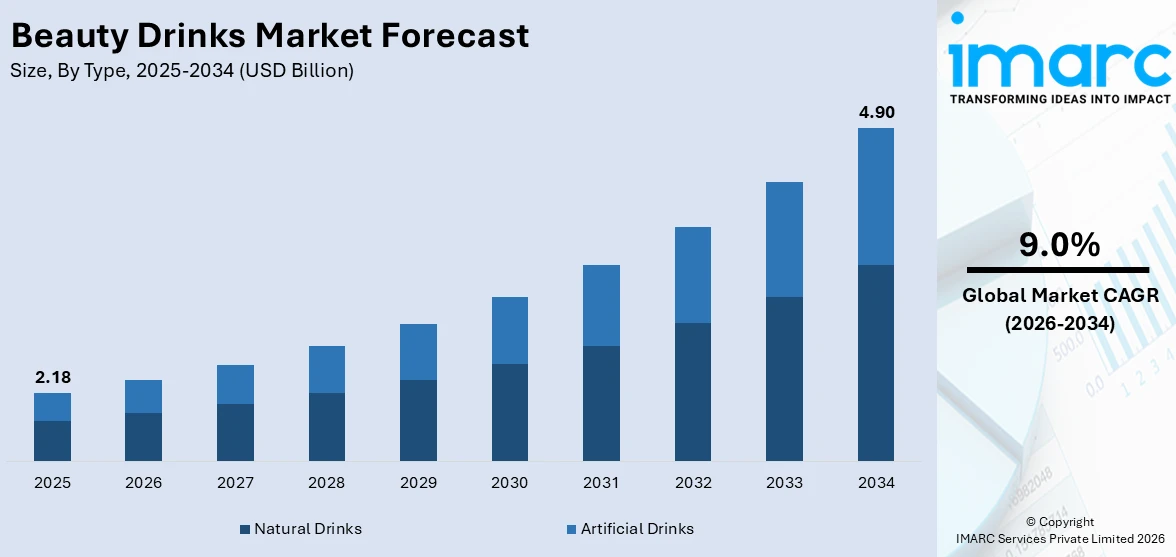
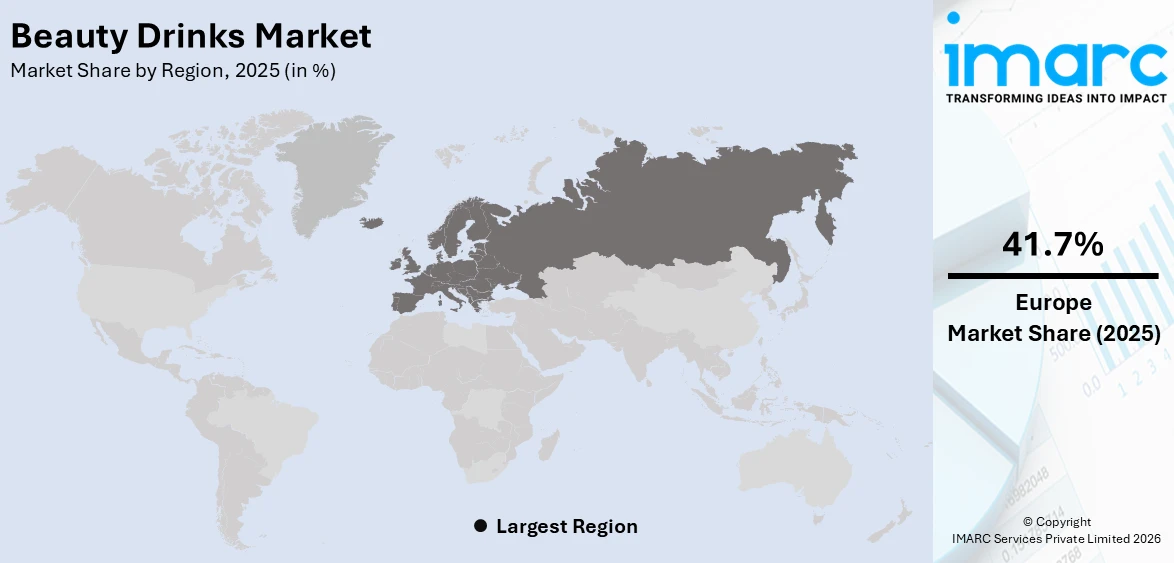
The global beauty drinks market size was valued at USD 2.18 Billion in 2025. Looking forward, IMARC Group estimates the market to reach USD 4.90 Billion by 2034, exhibiting a CAGR of 9.0% from 2026-2034. Europe currently dominates the market, holding a market share of 41.7% in 2025. The area benefits from a strong customer desire for clean-label and natural beauty products, a well-established wellness culture, high discretionary incomes, and a comprehensive regulatory system that guarantees product quality and transparency, all contributing to the beauty drinks market share.
A number of reasons, such as increased consumer awareness of the relationship between nutrition and physical appearance, expanding desire for holistic beauty solutions, and the growing popularity of nutricosmetic products, are driving the worldwide beauty drinks market. Convenience and long-term effects are driving consumers away from traditional topical skincare products and toward ingestible beauty solutions that provide advantages from within. The acceptance of functional beauty beverages has accelerated due to the aging population in developed nations and growing concerns about skin issues related to lifestyle choices. Additionally, the quick development of e-commerce platforms has increased market accessibility, allowing firms to interact with customers directly through tailored product recommendations and focused marketing. The surge in social media influence and wellness-focused content creation continues to amplify awareness and demand for beauty drinks market growth across diverse demographics worldwide.
Driven by a significant societal movement toward holistic wellness and preventive healthcare, the United States has established itself as a major hub for the beauty drink industry. Customers are actively looking for functional beverages that combine skincare and nutrition as the idea of ingestible beauty gains traction. Growing consumer demand for products that provide systemic aesthetic benefits through internal consumption, bolstered by a move toward transparent formulations, is driving this market evolution. Modern distribution tactics, such as direct-to-consumer models and specialized digital platforms, are also changing the market by streamlining accessibility. The industry's growing trajectory in both physical and digital retail environments is sustained by the connection between creative product development and a wellness-oriented lifestyle, which guarantees that these beverages remain a mainstay in everyday routines.
To get more information on this market Request Sample
Beauty Drinks Market Trends:
Growing Demand for Holistic Beauty Solutions
The market for beauty drinks is being driven forward by consumers' growing interest in holistic beauty solutions. People of all ages are becoming less dependent on topical skincare products and more interested in items that improve physical appearance through internal nutrition. A greater comprehension of the fundamental relationship between gut health, nutritional intake, and general skin quality is driving this shift. As a result, customers are including specialty beauty drinks enhanced with vitamins, antioxidants, collagen, and hyaluronic acid into their everyday wellness routines. Younger populations, who value both convenience and effectiveness in their hectic lives, have a particularly strong preference for single-dose functional shots and ready-to-drink formulations. Additionally, companies are being encouraged to create multipurpose beverages that concurrently target several skincare issues due to the convergence of the beauty and health markets. This strategic innovation guarantees a steady, rising demand for ingestible beauty products while successfully broadening the market base.
Rising E-Commerce and Digital Distribution
The rapid expansion of e-commerce and digital distribution channels is significantly reshaping the beauty drinks market outlook and competitive dynamics. Online retail platforms give customers easy access to a variety of beauty beverages, allowing them to compare products, read reviews, and make well-informed purchases from the comfort of their own homes. Through customized suggestions and subscription services, direct-to-consumer business models enable firms to strengthen their relationships with customers and increase client lifetime value. Tech-savvy customers are finding and testing brands more quickly because of the growth of social media marketing, influencer relationships, and digital advertising. According to the India Brand Equity Foundation, Indian e-commerce is projected to grow at a compound annual growth rate of 27% by 2026, reaching USD 163 billion, demonstrating how expanding online retail infrastructure is making beauty beverages more accessible across developing markets. Both well-known companies and up-and-coming brands are able to reach larger audiences thanks to this digital transformation without having to pay the overhead associated with traditional retail distribution.
Innovation in Natural and Clean-Label Products
The accelerating innovation in natural and clean-label product formulations is strengthening the beauty drinks market forecast across global regions. Products without artificial ingredients are becoming more and more popular among consumers, which is indicative of a larger trend toward sustainability and holistic wellness. In response, producers are creating beauty drinks with sustainably derived bioactive substances, organic ingredients, and plant-based extracts. Modern product development tactics are greatly influenced by the need for transparent sourcing and health claims that have been scientifically substantiated. This trend is especially noticeable in the natural drink market, where formulas with herbal and botanical infusions draw health-conscious consumers looking for efficient and eco-friendly beauty products. The emphasis on internal nourishment that is consistent with ethical consumption standards continues as the market grows. This development guarantees that beauty-from-within products will continue to be an important and expanding presence in the global functional beverage market.
Beauty Drinks Industry Segmentation:
IMARC Group provides an analysis of the key trends in each segment of the global beauty drinks market, along with forecast at the global, regional, and country levels from 2026-2034. The market has been categorized based on type, ingredients, function, and distribution channel.
Analysis by Type:
- Natural Drinks
- Artificial Drinks
Natural drinks hold 62.1% of the market share. Customers looking for clean-label, chemical-free beauty beverages prefer natural drinks, which are made with organic components including actual fruit extracts, herbal infusions, and plant-based bioactive compounds. The market gains from the increasing global trend of eco-friendly and sustainable purchasing habits, where people favor goods with little processing and transparent ingredient sourcing. Due to their perceived safety and compatibility with holistic wellness regimens, natural beauty beverages containing collagen derived from marine sources, antioxidants from berries, and botanical vitamins are in great demand. For instance, in January 2025, HEYTEA and Vida Glow collaborated to launch a limited-edition beauty drink named Ocean's Glow, blending marine collagen with mango, green tea, and blue spirulina for skin, hair, and nail support across Asian markets. Furthermore, customers are choosing natural substitutes as a result of growing knowledge of the negative effects synthetic substances have on the environment, which strengthens segment dominance.
Analysis by Ingredients:
- Collagen Proteins
- Vitamins and Minerals
- Fruit Extracts
- Others
Vitamins and minerals lead the market with a share of 34.7%. Vitamins and minerals are now the most widely used ingredient category in the beauty beverage market due to their demonstrated capacity to preserve the health of the skin, hair, and nails from within. These essential nutrients are frequently used in functional beverages to treat common problems like hydration, antioxidant protection, and cellular regeneration. These components are a good place to start for anyone interested in ingestible beauty products because of their high level of consumer familiarity and their scientifically demonstrated benefits. Manufacturers are focusing more on how these vital nutrients interact with other bioactive compounds to enhance overall product performance. Businesses may now simultaneously address a range of wellness goals thanks to this shift toward multifunctional formulations, which appeals to a growing number of customers who place a high value on internal nutrition. Because of this, incorporating these essential elements is still crucial to the growth of the global beauty-from-within market.
Analysis by Function:
- Anti-Aging
- Detoxication
- Radiance
- Vitality
- Others
Anti-aging dominates the market, with a share of 38.2%. The market for beauty drinks is dominated by the anti-aging category, which is driven by consumers' increased concern for preventing visible indications of aging and preserving skin elasticity. In order to promote internal synthesis and fight oxidative stress at the cellular level, these functional drinks are made with bioactive substances and antioxidants. Both an older population in industrialized nations and a growing interest in preventive skincare among younger generations are driving this market rise. Anti-aging drinks have become a mainstay on international retail and digital platforms due to their growing visibility, which has been supported by strategic marketing and endorsements. Ingested solutions are becoming more and more integrated into daily routines as customers shift toward holistic wellness. This change indicates a wider dedication to long-term skin health, guaranteeing that these nutrient-rich drinks continue to be the major engine of business expansion while serving a wide range of consumers looking for systemic aesthetic advantages.
Analysis by Distribution Channel:
Access the comprehensive market breakdown Request Sample
- Grocery Retailers
- Beauty Specialty Stores
- Drug Stores and Pharmacies
- Others
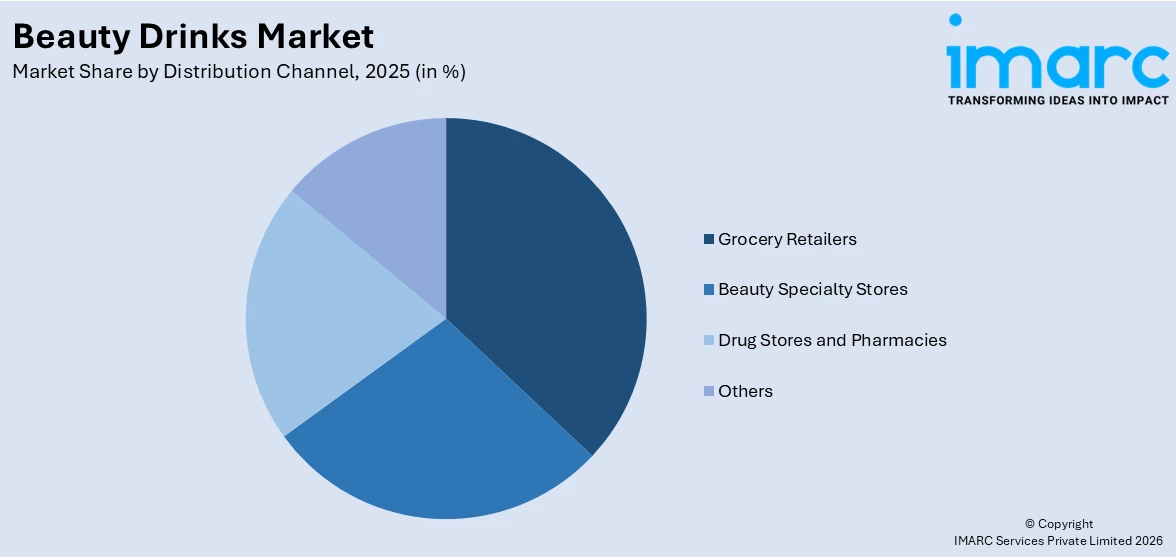
Grocery retailers represent the leading segment, with a market share of 29.3%. Because of their vast store networks, high foot traffic, and ability to provide customers with convenient access to functional beauty beverages in addition to their normal grocery purchases, grocery merchants are the main distribution channel for beauty drinks. The wellness and functional beverage categories' growing shelf space allocation in supermarkets and hypermarkets, which improves product visibility and promotes impulsive sales, is credited with the channel's dominance. Customers would rather be able to compare brands, visually inspect things before making a purchase, and take advantage of in-store promotions. For instance, in January 2025, GNC launched its Premier Collagen line, offering specialized formulations through its retail network designed to support youthful skin in multiple formats, expanding accessibility through physical stores. In order to meet the increasing demand for nutricosmetic items, grocery stores are also investing in special health and beauty aisles, solidifying their position as the primary distribution channel.
Regional Analysis:
To get more information on the regional analysis of this market Request Sample
- North America
- United States
- Canada
- Asia Pacific
- China
- Japan
- India
- South Korea
- Australia
- Indonesia
- Others
- Europe
- Germany
- France
- United Kingdom
- Italy
- Spain
- Russia
- Others
- Latin America
- Brazil
- Mexico
- Others
- Middle East and Africa
Europe, accounting for 41.7% of the share, enjoys the leading position in the market. The region’s market dominance is rooted in a well-established wellness culture and a sophisticated consumer preference for natural, clean-label beauty solutions. This demand is driven by a deep understanding of nutricosmetic benefits, leading individuals to seek premium beverages featuring scientifically validated ingredients. A robust regulatory framework ensures consistent product quality and safety, which significantly strengthens consumer confidence across the market. Furthermore, advanced distribution networks, ranging from specialized health outlets and pharmacies to mature digital commerce platforms, facilitate seamless access to these functional products. The shift toward preventive healthcare and internal beauty solutions reflects a fundamental change in lifestyle priorities, where systemic nutrition is viewed as essential to aesthetic maintenance. This synergy between informed consumer behavior, stringent quality standards, and efficient market infrastructure sustains the region's leading position in the global industry, ensuring that ingestible beauty remains a primary pillar of the broader functional beverage landscape.
Key Regional Takeaways:
North America Beauty Drinks Market Analysis
North America represents a significant and rapidly growing market for beauty drinks, driven by strong consumer awareness of functional nutrition and preventive wellness. The region's advanced retail infrastructure, established supplement industry, and high levels of disposable income create a favorable environment for premium beauty beverage adoption. American and Canadian consumers are increasingly incorporating collagen-based ready-to-drink beverages, vitamin-enriched beauty shots, and clean-label functional drinks into their daily wellness routines. The growing influence of social media, wellness influencers, and celebrity endorsements has accelerated product discovery and trial across diverse demographic segments. The direct-to-consumer distribution model has emerged as a powerful growth driver, enabling brands to build personalized relationships with consumers through subscription services and AI-powered product recommendations, thereby reflecting strong upward momentum in the beauty drinks market trends across the North American region. Furthermore, the convergence of beauty and health categories is encouraging established food and beverage companies to enter the functional beauty space, intensifying competition and innovation within the market.
United States Beauty Drinks Market Analysis
The United States holds 80.00% of the market share in North America. The United States represents the premier national market for beauty beverages in its region, driven by a robust consumer appetite for holistic wellness and the increasing normalization of ingestible beauty. American consumers, particularly younger demographics, prioritize functional products that offer systemic benefits such as skin hydration, anti-aging properties, and overall wellness enhancement. The popularity of collagen-based and antioxidant-rich formulations continues to surge, bolstered by clinical evidence and extensive digital marketing. The nation benefits from a mature and diverse retail ecosystem, spanning mass retailers, specialty health stores, and rapidly expanding e-commerce platforms, which facilitates broad consumer access. Despite the prevalence of supplements, there remains significant untapped potential for innovation within the liquid nutritional format. Furthermore, a structured regulatory framework provides a clear pathway for product development, ensuring that the growing emphasis on clean-label transparency and ingredient accountability aligns with consumer expectations for quality. This synergy between market maturity, regulatory oversight, and evolving lifestyle trends positions the country as a central hub for future industry growth.
Asia-Pacific Beauty Drinks Market Analysis
Asia-Pacific represents a dynamic and rapidly expanding market for beauty drinks, driven by ancient internal beauty traditions and an increasing awareness of functional nutrition. Key nations across the region lead this development, supported by a strong cultural emphasis on comprehensive skincare routines. The market benefits from high digital adoption rates, extensive e-commerce infrastructure, and innovative product development capabilities that cater to a vast consumer base. This deeply embedded preference for ingestible solutions reflects a broader integration of wellness into daily life. Furthermore, rapid urbanization and the expansion of the middle class across developing economies continue to create significant growth opportunities for manufacturers. The synergy between traditional practices and modern lifestyle shifts ensures the region remains a dominant force in the global landscape for aesthetic-focused beverages.
Latin America Beauty Drinks Market Analysis
Latin America is witnessing significant traction in the beauty drinks market, fueled by rising beauty consciousness and expanding urban populations. Key regional markets are seeing heightened consumer interest in collagen-based and antioxidant-rich beverages, primarily distributed through pharmacy and beauty retail channels. This emerging position in the functional beauty space is further accelerated by expanding digital infrastructure and the growing influence of social media, which bolster product awareness among younger segments. As lifestyle trends shift toward holistic wellness, the region's integration of ingestible beauty solutions continues to strengthen, offering new growth opportunities for manufacturers across both physical and online platforms.
Middle East and Africa Beauty Drinks Market Analysis
The Middle East and Africa region presents a developing but promising market for beauty drinks, driven by increasing urbanization, rising disposable incomes, and growing consumer awareness of wellness and beauty products. The region's expanding middle-class population is demonstrating heightened interest in functional beverages that offer beauty-enhancing benefits alongside nutritional value. The growing availability of beauty drinks through modern retail channels, pharmacies, and e-commerce platforms is improving market accessibility across diverse markets. The Gulf Cooperation Council countries, particularly the United Arab Emirates and Saudi Arabia, represent key markets supported by high consumer spending power and the increasing influence of global beauty trends across the region.
Competitive Landscape:
The competitive landscape of the beauty drinks market is characterized by the presence of both established multinational corporations and specialized functional beverage companies. Key market participants are focusing on strategic product innovation, including the development of new formulations incorporating collagen peptides, botanical extracts, and multifunctional ingredients to address diverse consumer needs. Companies are investing in clinical research and scientific validation to substantiate efficacy claims and build consumer trust. Mergers and acquisitions, strategic partnerships, and licensing agreements are common strategies employed to expand product portfolios and geographic reach. The growing emphasis on sustainable packaging, clean-label formulations, and transparent ingredient sourcing reflects the industry's response to evolving consumer preferences. Additionally, digital marketing strategies, influencer collaborations, and direct-to-consumer distribution models are being leveraged to enhance brand visibility and customer engagement in an increasingly competitive marketplace.
The report provides a comprehensive analysis of the competitive landscape in the beauty drinks market with detailed profiles of all major companies, including:
- Asterism Healthcare Plus, Inc.
- DECIEM The Abnormal Beauty Company
- Hangzhou Nutrition Biotechnology Co. Ltd.
- Kino Biotech
- Lacka Foods Limited
- Sappe Public Company Limited
- Shiseido Company Limited
- Skinade.com (Bottled Science Ltd.)
- The Coca-Cola Company
- Vital Proteins LLC (Nestlé Health Science)
Latest News and Developments:
- In August 2025, Vital Proteins LLC, a Nestlé Health Science brand, launched its first-ever ready-to-drink collagen and protein shake, featuring 30 grams of protein and 10 grams of collagen peptides per serving in a light chocolate flavor. The product was introduced as the brand's entry into the ready-to-drink beverage format, targeting consumers seeking convenient beauty-from-within solutions.
- In June 2025, Sappe Public Company Limited entered the ready-to-drink tea segment with the launch of Sappe Beauti Tea, a health-focused oolong tea available in two variants. The Beauti Collagen Tea in peach flavor is infused with collagen for skin hydration, while the Beauti Fiber Tea in lychee flavor contains dietary fiber for digestive health support. Both formulations feature zero percent sugar and low calories.
Beauty Drinks Market Report Scope:
| Report Features | Details |
|---|---|
| Base Year of the Analysis | 2025 |
| Historical Period | 2020-2025 |
| Forecast Period | 2026-2034 |
| Units | Billion USD |
| Scope of the Report |
Exploration of Historical and Forecast Trends, Industry Catalysts and Challenges, Segment-Wise Historical and Future Market Assessment:
|
| Types Covered | Natural Drinks, Artificial Drinks |
| Ingredients Covered | Collagen Proteins, Vitamins and Minerals, Fruit Extracts, Others |
| Functions Covered | Anti-Aging, Detoxication, Radiance, Vitality, Others |
| Distribution Channels Covered | Grocery Retailers, Beauty Specialty Stores, Drug Stores and Pharmacies, Others |
| Regions Covered | North America, Asia Pacific, Europe, Latin America, Middle East and Africa |
| Countries Covered | United States, Canada, China, Japan, India, South Korea, Australia, Indonesia, Germany, France, United Kingdom, Italy, Spain, Russia, Brazil, Mexico |
| Companies Covered | Asterism Healthcare Plus, Inc., DECIEM The Abnormal Beauty Company, Hangzhou Nutrition Biotechnology Co. Ltd., Kino Biotech, Lacka Foods Limited, Sappe Public Company Limited, Shiseido Company Limited, Skinade.com (Bottled Science Ltd.), The Coca-Cola Company, Vital Proteins LLC (Nestlé Health Science), etc. |
| Customization Scope | 10% Free Customization |
| Post-Sale Analyst Support | 10-12 Weeks |
| Delivery Format | PDF and Excel through Email (We can also provide the editable version of the report in PPT/Word format on special request) |
Key Benefits for Stakeholders:
- IMARC's report offers a comprehensive quantitative analysis of various market segments, historical and current market trends, market forecasts, and dynamics of the beauty drinks market from 2020-2034.
- The research study provides the latest information on the market drivers, challenges, and opportunities in the global beauty drinks market.
- The study maps the leading, as well as the fastest-growing, regional markets. It further enables stakeholders to identify the key country-level markets within each region.
- Porter's Five Forces analysis assists stakeholders in assessing the impact of new entrants, competitive rivalry, supplier power, buyer power, and the threat of substitution. It helps stakeholders to analyze the level of competition within the beauty drinks industry and its attractiveness.
- Competitive landscape allows stakeholders to understand their competitive environment and provides an insight into the current positions of key players in the market.
Frequently Asked Questions About the Beauty Drinks Market Report
The beauty drinks market was valued at USD 2.18 Billion in 2025.
The beauty drinks market is projected to exhibit a CAGR of 9.0% during 2026-2034, reaching a value of USD 4.90 Billion by 2034.
The beauty drinks market is driven by rising consumer awareness of the connection between nutrition and skin health, growing demand for holistic beauty solutions, the increasing popularity of collagen-based and vitamin-enriched beverages, expanding e-commerce distribution channels, and the broader convergence of beauty and wellness categories that encourages adoption of ingestible beauty products.
Europe currently dominates the beauty drinks market, accounting for a share of 41.7%. The region benefits from a well-established wellness culture, high disposable incomes, strong regulatory frameworks ensuring product quality, and deep consumer preference for natural and scientifically validated beauty beverages.
Some of the major players in the beauty drinks market include Asterism Healthcare Plus, Inc., DECIEM The Abnormal Beauty Company, Hangzhou Nutrition Biotechnology Co. Ltd., Kino Biotech, Lacka Foods Limited, Sappe Public Company Limited, Shiseido Company Limited, Skinade.com (Bottled Science Ltd.), The Coca-Cola Company, Vital Proteins LLC (Nestlé Health Science), etc.
Need more help?
- Speak to our experienced analysts for insights on the current market scenarios.
- Include additional segments and countries to customize the report as per your requirement.
- Gain an unparalleled competitive advantage in your domain by understanding how to utilize the report and positively impacting your operations and revenue.
- For further assistance, please connect with our analysts.
 Request Customization
 Speak to an Analyst
 Request Brochure
 Inquire Before Buying
Benefits of Customization
- Personalize this research
- Triangulate with your data
- Get data as per your format and definition
- Gain a deeper dive into a specific application, geography, customer, or competitor
- Any level of personalization
Get in Touch With Us
UNITED STATES
Phone: +1-201-971-6302
INDIA
Phone: +91-120-433-0800
UNITED KINGDOM
Phone: +44-753-714-6104
Email: [email protected]
Client Testimonials




.webp)




.webp)













Related Reports

Choose your plan
*Please note that the prices mentioned below are starting prices for each bundle type. Kindly contact our team for further details.*
Single User License
- 1 User License, Access on 2 Devices
- PDF Report + Excel Dataset (Password Protected)
- Lifetime Access
- No Printing Rights
- 10% Free Report Customization
- 10–12 Weeks of Analyst Support
Five User License
- Access for 5 Users, 2 Devices per User
- PDF Report + Excel Dataset (Password Protected)
- Lifetime Access
- Dedicated Account Manager
- 12–14 Weeks of Analyst Support
- No Printing Rights
- 15% Free Report Customization
- 25% Discount on Your Next Purchase
Corporate User License
- Unlimited User Access (Within Your Organization)
- PDF Report + Excel Dataset
- Lifetime Access
- Dedicated Account Manager
- 14–20 Weeks of Analyst Support
- No Printing Rights
- 20% Free Report Customization
- 30% Discount on Your Next Purchase
Essential Insights
What's included:
3 reports
- Lifetime Access
- PDF Reports
- Excel Datasets
- 2 Weeks of Free Analyst Support
- 2 User Licenses
- Access on 2 Devices
- Printing Rights
- Complimentary PowerPoint (PPT) Version
- Complimentary License Upgrade
Professional Access
What's included:
5 reports
- Lifetime Access
- PDF Reports
- Excel Datasets
- 8 Weeks of Free Analyst Support
- 2 User Licenses
- Access on 2 Devices
- Printing Rights
- Complimentary PowerPoint (PPT) Version
- Complimentary License Upgrade
Business Advantage
What's included:
8 reports
- Lifetime Access
- PDF Reports
- Excel Datasets
- 14 Weeks of Free Analyst Support
- 2 User Licenses
- Access on 2 Devices
- Printing Rights
- Complimentary PowerPoint (PPT) Version
- Complimentary License Upgrade
Enterprise Intelligence
What's included:
10 reports
- Lifetime Access
- PDF Reports
- Excel Datasets
- 20 Weeks of Free Analyst Support
- 2 User Licenses
- Access on 2 Devices
- Printing Rights
- Complimentary PowerPoint (PPT) Version
- Complimentary License Upgrade