
Bioactive Ingredients Market Size, Share, Trends and Forecast by Ingredients Type, Application, and Region, 2026-2034
Bioactive Ingredients Market Size, Share, Trends & Forecast (2026-2034)
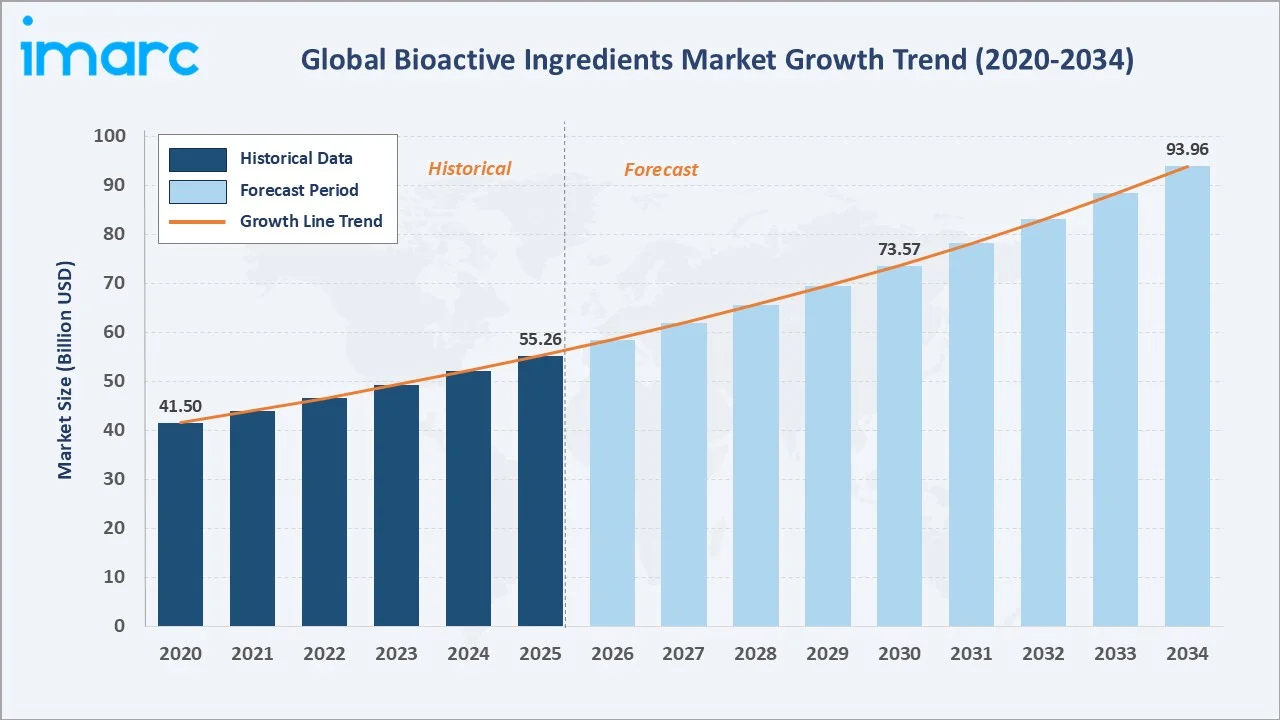
The global bioactive ingredients market reached USD 55.26 Billion in 2025 and is projected to reach USD 93.96 Billion by 2034, growing at a CAGR of 5.89% during 2026-2034. Growing consumer health consciousness and extensive product applications in the personal care industry are fueling the market.
Fibers lead the ingredients type segment at 24.8%, dietary supplements dominate applications at 46.7%, and Asia Pacific commands 38.9% of the global market share. Rising demand for natural, plant-based wellness solutions and advancements in extraction and encapsulation technologies are accelerating bioactive ingredient adoption across nutraceutical, functional food, and personal care industries worldwide.
Market Snapshot
|
Metric |
Value |
|
Market Size (2025) |
USD 55.26 Billion |
|
Forecast Market Size (2034) |
USD 93.96 Billion |
|
CAGR (2026-2034) |
5.89% |
|
Base Year |
2025 |
|
Historical Period |
2020-2025 |
|
Forecast Period |
2026-2034 |
|
Dominant Ingredients Type |
Fibers (24.8%, 2025) |
|
Dominant Application |
Dietary Supplements (46.7%, 2025) |
|
Leading Region |
Asia Pacific (38.9%, 2025) |
The market expanded from USD 41.50 Billion in 2020 to USD 55.26 Billion in 2025, anchored at USD 73.57 Billion in 2030 and forecast to reach USD 93.96 Billion by 2034. Supply chain disruptions during 2020-2021 briefly constrained natural raw material availability, but demand recovered steadily as extraction capacity expanded and consumer wellness spending strengthened across dietary supplement and functional beverage categories.
To get more information on this market, Request Sample
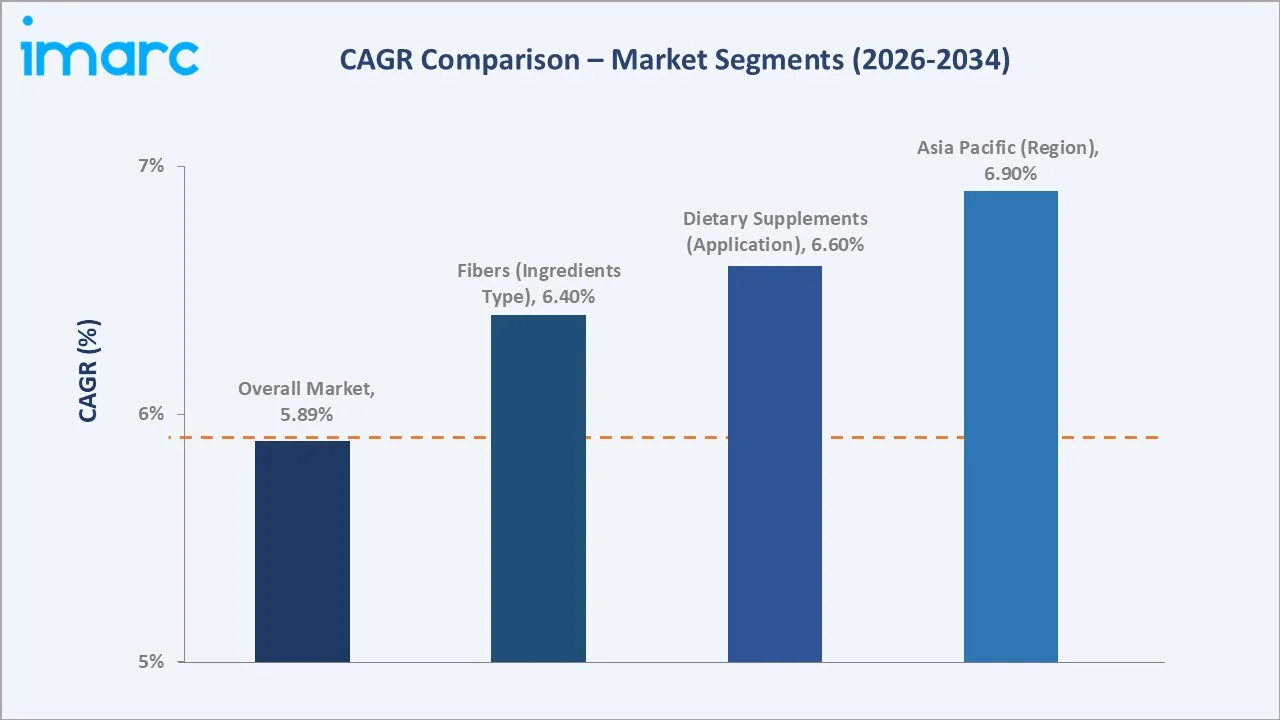
Fibers grow at ~6.4% CAGR as digestive-health and fiber-fortification applications expand across food and supplement categories. Dietary supplements grow at ~6.6% CAGR, the fastest among applications, while Asia Pacific advances at ~6.9% CAGR, outpacing global growth on rising health consciousness across China, Japan, and India.
Executive Summary
The global bioactive ingredients market reached USD 55.26 Billion in 2025, reflecting rising consumer demand for natural, health-supporting compounds across dietary supplements, functional foods, and personal care. Bioactive ingredients, derived from plant, animal, and microbial sources, deliver targeted physiological benefits including digestive, immune, and cognitive support. The market is projected to reach USD 93.96 Billion by 2034.
Fibers at 24.8% dominate the ingredients type segment through digestive-health applications and fortification demand. Dietary supplements at 46.7% lead applications through convenient nutrient delivery for busy, health-conscious consumers. Asia Pacific at 38.9% leads regionally through abundant natural resources, traditional medicine practices, and rising disposable incomes across China, Japan, and India.
Key Market Insights
|
Insight |
Data |
|
Dominant Ingredients Type |
Fibers - 24.8% share (2025) |
|
Dominant Application |
Dietary Supplements - 46.7% market share (2025) |
|
Leading Region |
Asia Pacific - 38.9% market share (2025) |
|
Market Opportunity |
Sustainable bio-based production; marine/algae bioactives; personalized nutrition; mental-health botanicals; clean-label sourcing |
Key Analytical Observations Supporting The Above Data:
- Fibers at 24.8%: Fibers dominate through their established role in digestive health, regular bowel function, and chronic disease risk reduction. Widespread fortification use in bakery, beverage, and supplement products by manufacturers such as Tate & Lyle strengthens segment demand across mainstream food and nutraceutical categories.
- Dietary Supplements at 46.7%: Dietary supplements dominate by offering a convenient, accessible format for nutrient delivery, particularly for busy consumers. Expanding product ranges targeting joint, immune, and cognitive health, supported by ingredients like Lonza's undenatured collagen, sustain strong segment growth worldwide.
- Asia Pacific at 38.9%: Asia Pacific leads through rich biodiversity, strong traditional medicine heritage, and supportive government research policies. China, Japan, and India's expanding health-conscious populations and rising disposable incomes generate substantial demand for natural bioactive compounds.
Bioactive Ingredients Market Overview
The global bioactive ingredients market encompasses the sourcing, extraction, formulation, and supply of natural and naturally derived compounds, including fibers, vitamins, probiotics, omega-3 fatty acids, minerals, carotenoids, and plant extracts, used across dietary supplements, functional beverages, personal care, and animal nutrition applications.
The ecosystem integrates raw material and biomass suppliers, extraction and processing firms, encapsulation technology providers, ingredient manufacturers, brand owners across nutraceutical, food, and personal care industries, and regulatory bodies overseeing ingredient safety and labeling standards. Rising urbanization, preventive healthcare spending, and clean-label consumer preferences shape overall demand.
Market Dynamics
To evaluate market opportunities, Request Sample
Market Drivers
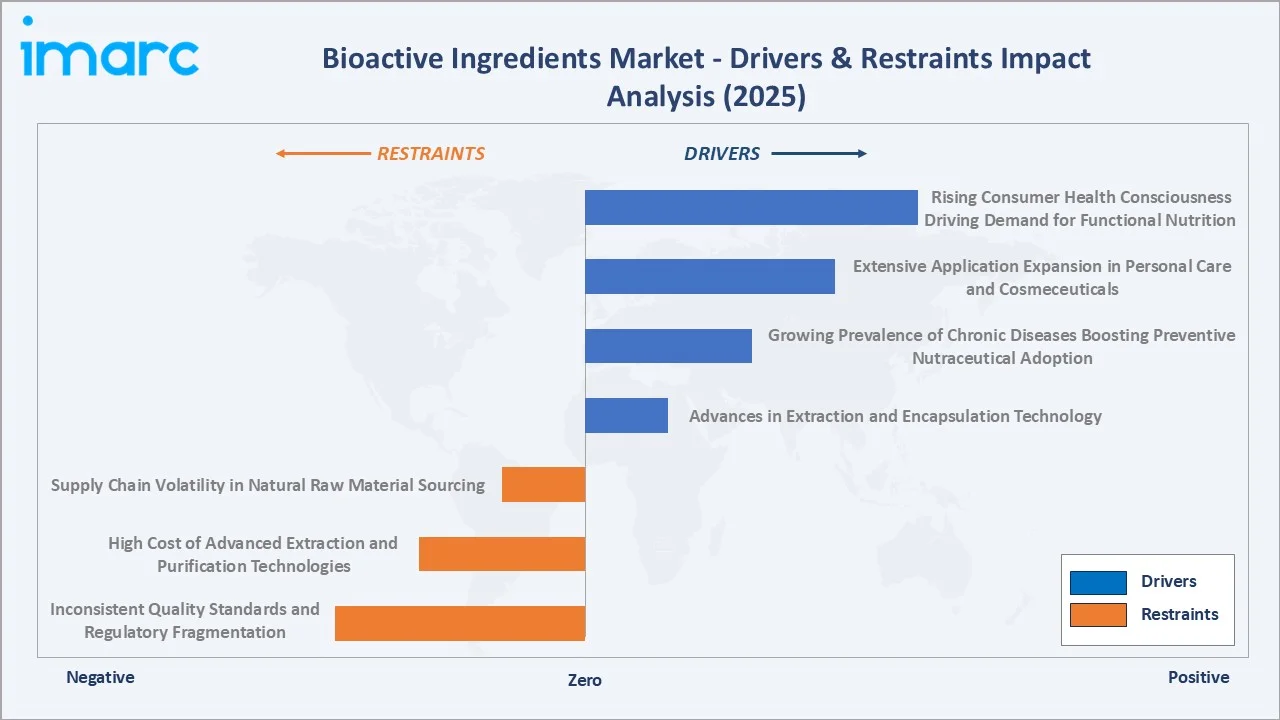
- Rising Consumer Health Consciousness Driving Demand for Functional Nutrition: Growing awareness of holistic health solutions is encouraging consumers to seek natural substances that support immunity, digestion, and overall wellbeing. This shift is boosting adoption of bioactive-enriched supplements and functional foods, as consumers increasingly prioritize preventive nutrition over reactive treatment for long-term health management.
- Extensive Application Expansion in Personal Care and Cosmeceuticals: Bioactive ingredients are increasingly incorporated into skincare and haircare formulations for their cellular-level benefits. Growing preference for natural, plant-based actives that improve skin texture and reduce visible aging is expanding demand, exemplified by OZiva's 2024 antioxidant-based skincare launches.
- Growing Prevalence of Chronic Diseases Boosting Preventive Nutraceutical Adoption: Rising incidence of digestive disorders, cardiovascular conditions, and metabolic diseases is driving consumers toward bioactive compounds offering antioxidant, anti-inflammatory, and immune-supportive properties. This preventive health trend is expanding bioactive ingredient use across dietary supplement and functional beverage categories globally.
- Advances in Extraction and Encapsulation Technology: Innovations in microencapsulation and enzymatic extraction are improving bioactive stability, bioavailability, and shelf life. These advancements enable manufacturers to deliver more effective formulations, broadening application potential across supplements, beverages, and personal care products while supporting premium ingredient positioning.
Market Restraints
- Inconsistent Quality Standards and Regulatory Fragmentation: Varying quality benchmarks and regulatory requirements across regions create standardization challenges for bioactive ingredient manufacturers. Inconsistent testing protocols and labeling requirements complicate international trade and increase compliance costs, particularly for smaller ingredient suppliers expanding into new markets.
- High Cost of Advanced Extraction and Purification Technologies: Sophisticated extraction methods required to isolate high-purity bioactive compounds involve significant capital investment in specialized equipment and skilled technical expertise. These elevated production costs can limit smaller manufacturers' market entry and constrain price competitiveness against synthetic alternatives.
- Supply Chain Volatility in Natural Raw Material Sourcing: Bioactive ingredient production depends heavily on natural biomass sources subject to seasonal availability, climate variability, and geographic concentration. Disruptions in raw material supply can create pricing volatility and production constraints, affecting manufacturers' ability to maintain consistent ingredient quality and delivery schedules.
Market Opportunities
- Advancements in Sustainable and Bio-Based Production Methods: Environmentally responsible sourcing and production techniques are gaining traction as manufacturers pursue sustainability goals. Wider adoption of green extraction technologies can open new growth avenues while meeting increasing consumer and regulatory demand for eco-friendly bioactive ingredient production.
- Expanding Application in Mental Health and Cognitive Wellness Products: Growing interest in botanicals supporting stress relief and cognitive function, is creating new opportunities for bioactive ingredient manufacturers to develop targeted mental wellness formulations for health-conscious consumers.
Market Challenges
- Bioavailability and Stability Challenges in Formulation: Many bioactive compounds face degradation during processing, storage, or digestion, limiting their functional efficacy in final products. Overcoming these stability barriers requires ongoing formulation research, adding development complexity and cost for manufacturers seeking to maximize ingredient effectiveness.
- Intensifying Competition from Synthetic and Low-Cost Alternatives: Synthetic ingredient substitutes often offer lower costs and greater production consistency, creating pricing pressure on natural bioactive ingredient suppliers. This competitive dynamic can affect margins, particularly in price-sensitive segments such as mass-market functional foods and animal nutrition.
Emerging Market Trends
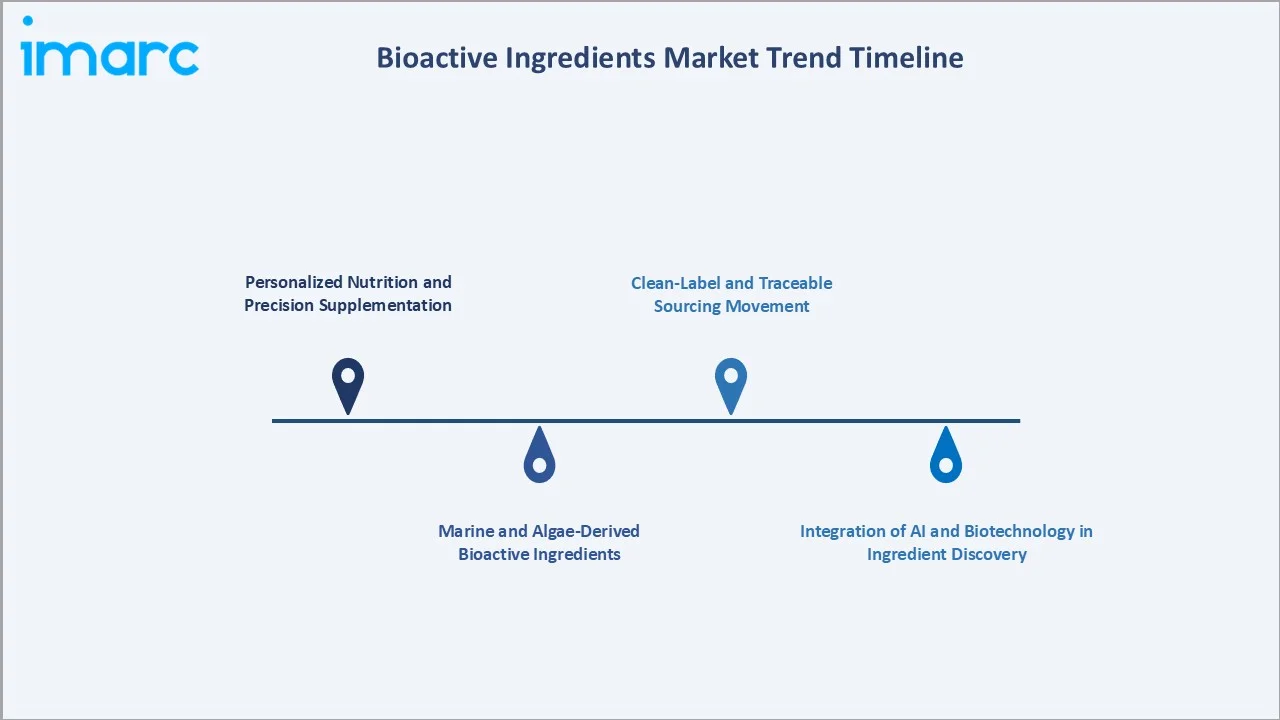
1. Personalized Nutrition and Precision Supplementation
Growing consumer interest in individualized health regimens is driving demand for bioactive ingredients tailored to specific genetic, lifestyle, or biomarker profiles. This trend is prompting manufacturers to develop modular ingredient platforms supporting customized supplement and functional food formulations.
2. Marine and Algae-Derived Bioactive Ingredients
Increasing focus on marine biodiversity is expanding interest in algae- and marine-sourced bioactives for omega-3, protein, and antioxidant applications. Companies are leveraging marine sources for novel peptide ingredients targeting skin and immune health.
3. Integration of AI and Biotechnology in Ingredient Discovery
Advanced computational tools and biomanufacturing techniques are accelerating identification and development of novel bioactive compounds. This convergence is shortening development timelines and enabling more precise, bio-identical ingredient replication.
4. Clean-Label and Traceable Sourcing Movement
Rising consumer demand for transparency is pushing manufacturers toward clean-label formulations with fully traceable, sustainably sourced ingredients. This trend is reshaping supplier relationships and driving investment in certification-based traceability systems across the value chain.
Industry Value Chain Analysis
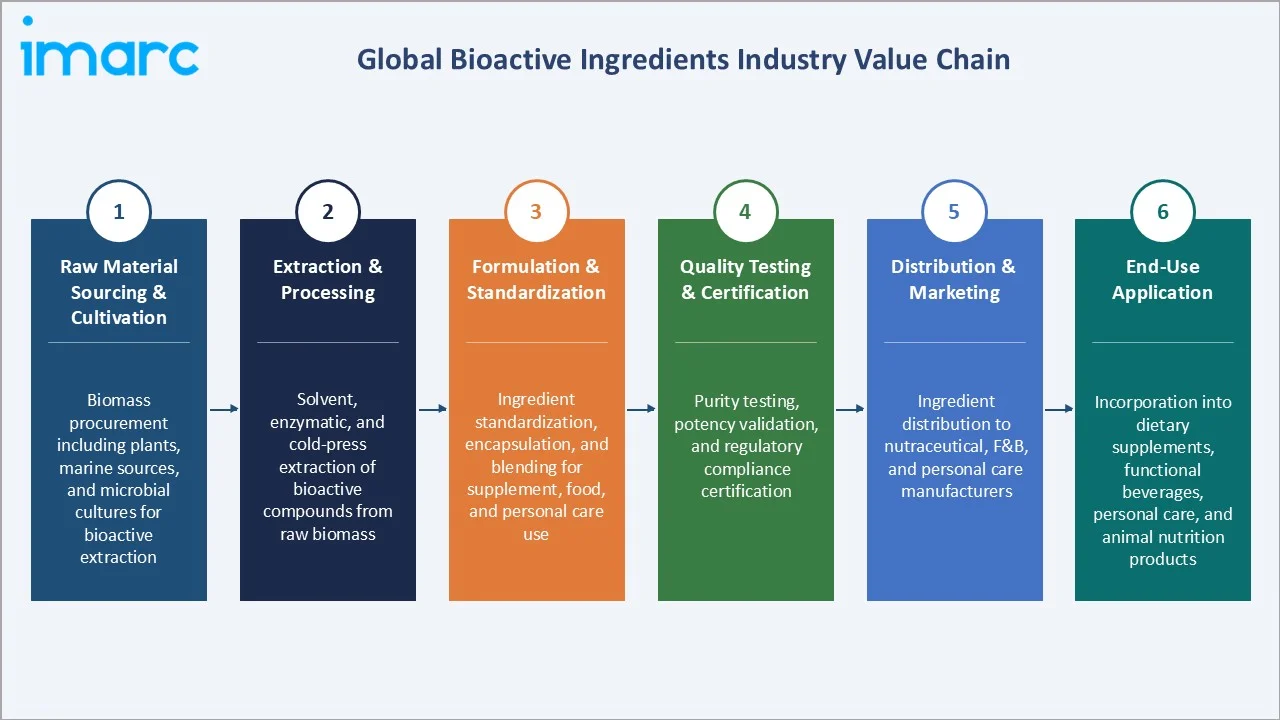
The bioactive ingredients value chain integrates raw material sourcing and cultivation, extraction and processing, formulation and standardization, quality testing and certification, distribution and marketing, and end-use application across nutraceutical, food, and personal care industries. The value chain has been progressively consolidating toward integrated extraction-to-formulation models as manufacturers seek greater quality control and cost efficiency.
The raw material sourcing tier remains the value chain's most geographically concentrated stage, given bioactive compounds' dependence on specific plant, marine, and microbial sources. Quality testing and certification is gaining prominence as regulatory scrutiny intensifies globally.
|
Stage |
Key Participants |
|
Raw Material Sourcing & Cultivation |
Biomass procurement including plants, marine sources, and microbial cultures for bioactive extraction |
|
Extraction & Processing |
Solvent, enzymatic, and cold-press extraction of bioactive compounds from raw biomass |
|
Formulation & Standardization |
Ingredient standardization, encapsulation, and blending for supplement, food, and personal care use |
|
Quality Testing & Certification |
Purity testing, potency validation, and regulatory compliance certification |
|
Distribution & Marketing |
Ingredient distribution to nutraceutical, F&B, and personal care manufacturers |
|
End-Use Application |
Incorporation into dietary supplements, functional beverages, personal care, and animal nutrition products |
Technology Landscape in the Bioactive Ingredients Industry
Microencapsulation Technology
Microencapsulation technology protects sensitive bioactive compounds from oxidation, moisture, and degradation while enabling controlled release. This technology improves ingredient stability, shelf life, and bioavailability, making it a preferred approach for probiotics, omega-3 fatty acids, and other sensitive bioactive compounds in supplement and food applications.
Fermentation-Based Bioactive Production
Fermentation-based production uses microbial and enzymatic processes to generate bioactive compounds with high purity and consistency. This approach offers scalable, sustainable alternatives to traditional extraction, supporting cost-effective production of probiotics, peptides, and specialty bioactive compounds for nutraceutical and functional food applications.
Enzymatic and Cold-Press Extraction Technology
In April 2024, Gattefosse introduced Eyeglorius, an oil-soluble bioactive ingredient targeting under-eye fatigue, sourced from sea buckthorn leaves using eco-design extraction principles. This reflects the industry's shift toward gentle, sustainable extraction methods that preserve bioactive potency while reducing solvent use and environmental impact.
Market Segmentation Analysis
The report covers the following segments:
|
Segment Category |
Leading Segment |
Market Share |
Year |
|
Ingredients Type |
Fibers |
24.8% |
2025 |
|
Application |
Dietary Supplements |
46.7% |
2025 |
|
Region |
Asia Pacific |
38.9% |
2025 |

By Ingredients Type
To access detailed market analysis, Request Sample
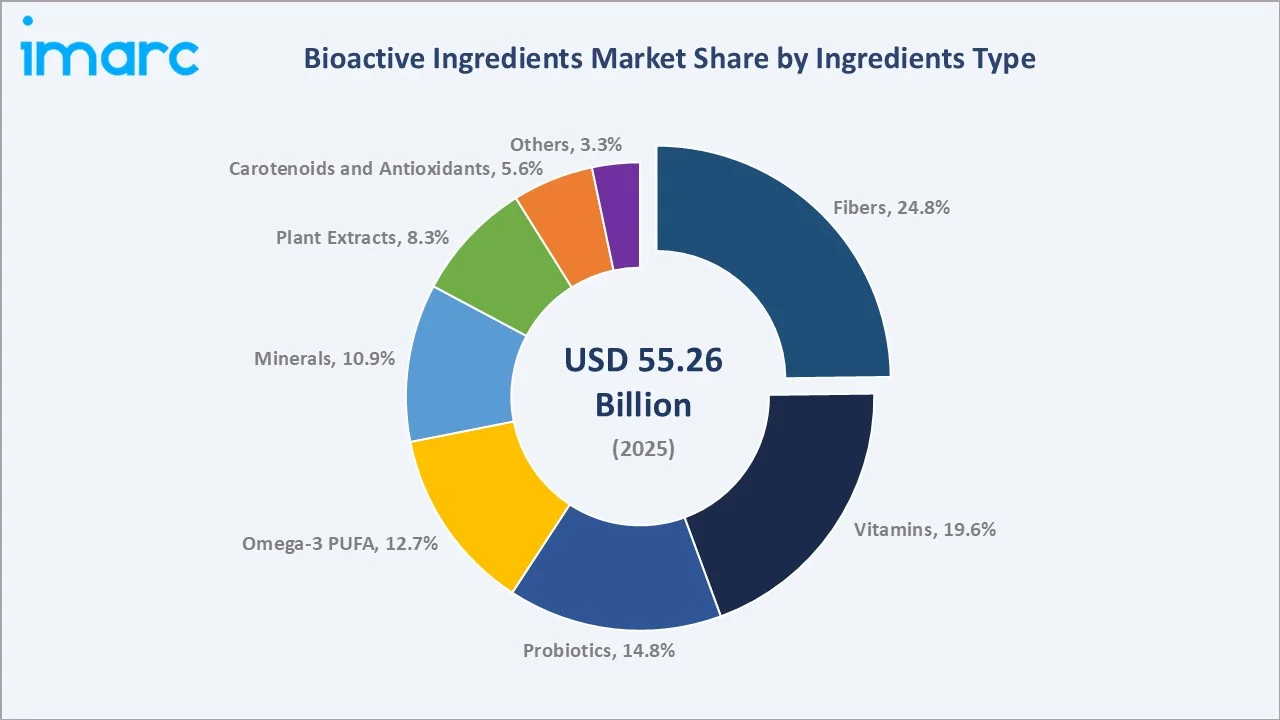
Fibers lead at 24.8% in 2025, supported by well-established digestive-health benefits and widespread fortification use across food and supplement categories. Vitamins follow at 19.6%, while probiotics at 14.8% capture rising gut-health demand. Omega-3 PUFA at 12.7% and minerals at 10.9% serve targeted cardiovascular and bone-health applications, with plant extracts, carotenoids and antioxidants, and other ingredient types comprising the remaining share.
By Application
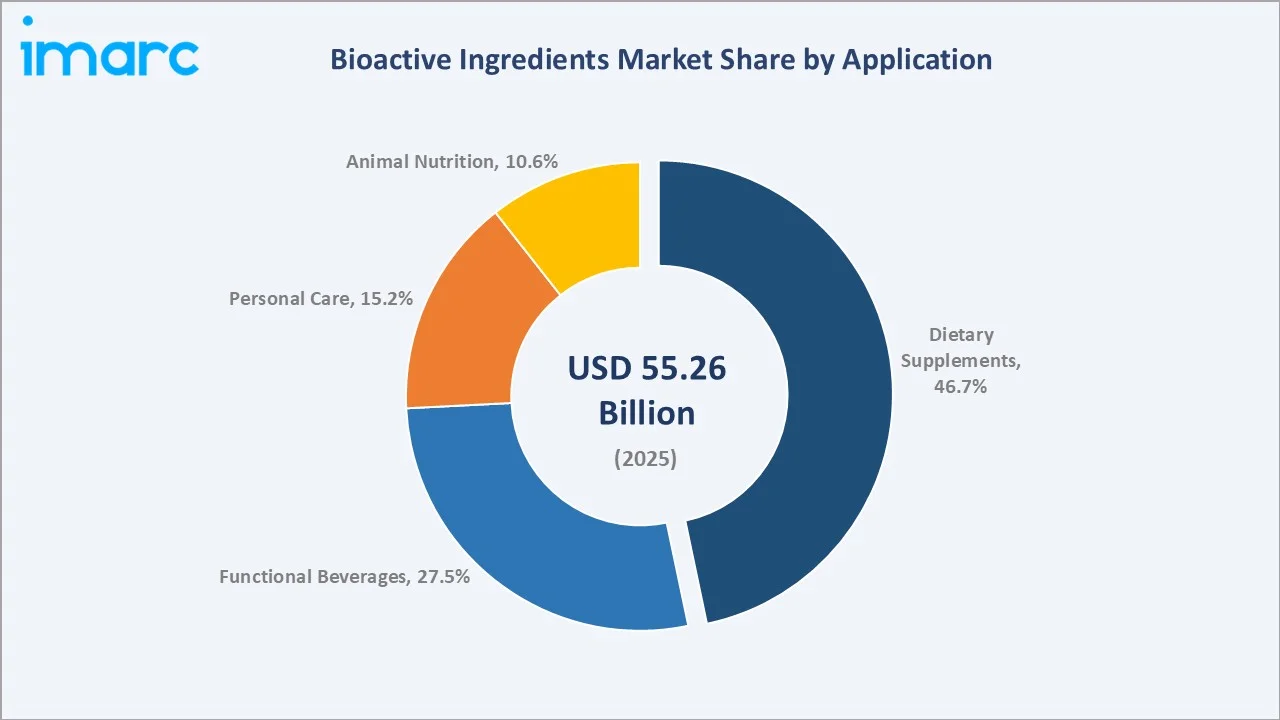
Dietary supplements lead at 46.7%, driven by convenient nutrient delivery for health-conscious consumers. Functional beverages follow at 27.5% as consumers seek on-the-go wellness options. Personal care at 15.2% reflects growing use of bioactive actives in skincare and haircare formulations, while animal nutrition at 10.6% captures rising demand for bioactive-enriched livestock and pet feed additives.
Regional Market Insights
|
Region |
Share (2025) |
Key Bioactive Ingredients Market Drivers & Characteristics |
|
Asia Pacific |
38.9% |
Driven by rich biodiversity, strong traditional medicine practices, expanding health-conscious populations, and supportive government research policies |
|
North America |
27.4% |
Supported by high dietary supplement consumption, advanced nutraceutical manufacturing, and strong personal care industry demand |
|
Europe |
22.1% |
Driven by stringent clean-label regulations, growing functional food demand, and investments in sustainable ingredient production |
|
Latin America |
6.2% |
Driven by rising health awareness, expanding functional beverage consumption, and growing personal care industry demand |
|
Middle East and Africa |
5.4% |
Emerging with growing wellness product adoption, expanding retail infrastructure, and rising disposable incomes |
Asia Pacific, at 38.9%, leads through China, Japan, and India's expanding health-conscious populations and rich natural biodiversity. North America, at 27.4%, reflects mature dietary supplement consumption and advanced nutraceutical manufacturing infrastructure across the United States and Canada.
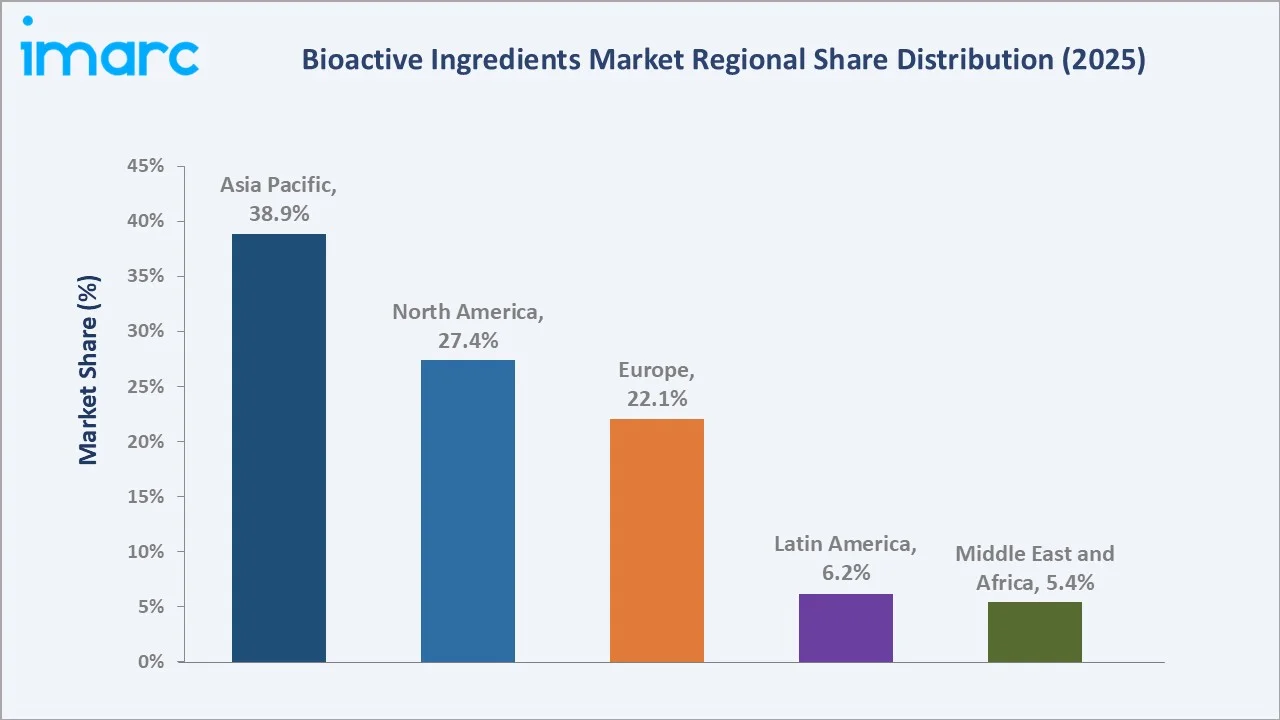
Europe, at 22.1%, reflects stringent clean-label regulations and rising functional food demand. Latin America, at 6.2%, and MEA, at 5.4%, represent early-stage but growing markets driven by rising wellness awareness and expanding retail infrastructure.
Competitive Landscape
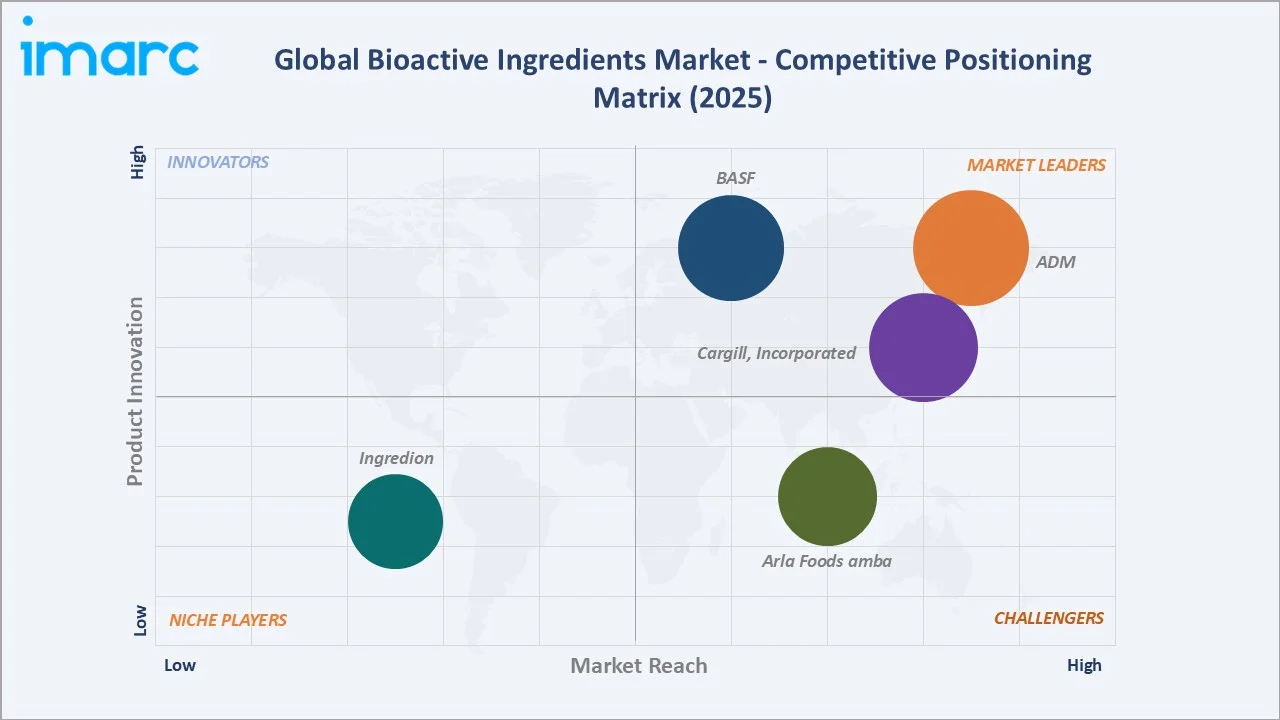
The global bioactive ingredients market competitive landscape is moderately fragmented, comprising diversified agri-food conglomerates, specialty ingredient manufacturers, and regional natural extract suppliers. Leading players are investing heavily in research and development to identify novel bioactive compounds, expand formulation capabilities, and forge strategic distribution partnerships. Sustainability-focused sourcing and branding initiatives are increasingly differentiating market leaders from smaller regional competitors.
|
Company Name |
Key Products |
Market Position |
Core Strength |
|
ADM |
Fibers, Plant Proteins, Nutraceutical Ingredients |
Market Leader |
ADM operates an extensive global ingredient sourcing and processing network spanning fibers, proteins, and specialty nutrition solutions. |
|
Cargill, Incorporated |
Functional Fibers, Omega-3 Ingredients, Zerose erythritol |
Market Leader |
Cargill leverages integrated agricultural supply chains to deliver scalable, cost-competitive bioactive ingredient solutions worldwide. |
|
BASF |
Carotenoids, Vitamins |
Market Leader |
BASF combines chemical engineering expertise with nutrition science to produce high-purity bioactive and specialty nutrient ingredients. |
|
Arla Foods amba |
Dairy-Derived Bioactive Proteins |
Strong Challenger |
Arla Foods focuses on whey-derived bioactive proteins and peptides for sports nutrition and clinical formulations. |
|
Ingredion |
Specialty Fibers, Plant-Based Ingredients |
Niche Player |
Ingredion develops specialty starches, fibers, and plant-based ingredient solutions supporting clean-label formulation trends. |
Key players include ADM, Cargill, Incorporated, BASF, Arla Foods amba, Ingredion, and others.
Key Company Profiles
ADM
ADM is a US-based global agribusiness and ingredient solutions company with a strong presence in the bioactive ingredients market through its fiber, protein, and nutrition ingredient portfolio.
- Key Products: Fibers, Plant Proteins, Nutraceutical Ingredients.
- Strategic Focus: Expanding natural fiber and plant-based nutrition ingredient portfolios through capacity investments and formulation innovation partnerships.
Cargill, Incorporated
Cargill, Incorporated is a US-based global food and agriculture company with a significant presence in the bioactive ingredients market through its functional fiber and omega-3 ingredient solutions.
- Key Products: Functional Fibers, Omega-3 Ingredients.
- Strategic Focus: Strengthening integrated agricultural supply chains to deliver scalable, sustainably sourced bioactive ingredient solutions globally.
BASF
BASF is a Germany-based chemical and nutrition company with a strong presence in the bioactive ingredients market through its carotenoid, vitamin, and omega-3 ingredient portfolio.
- Key Products: Carotenoids, Vitamins, Omega-3 PUFA.
- Strategic Focus: Advancing high-purity bioactive ingredient manufacturing and expanding its specialty nutrition portfolio across supplement and functional food applications.
Market Concentration Analysis
The bioactive ingredients market is moderately fragmented, with the top five key players collectively accounting for an estimated 25-35% of global bioactive ingredient revenue. Regional and specialty ingredient suppliers account for a substantial remaining share, reflecting the market's diverse raw material base and application breadth. Market concentration is expected to gradually increase as leading players expand through capacity investment and strategic partnerships.
Investment & Growth Opportunities
Highest Growth Segments
Dietary supplement applications (~6.6% CAGR), Asia Pacific regional expansion (~6.9% CAGR), fibers ingredient type (~6.4% CAGR), marine and algae-derived bioactives, personalized nutrition platforms, and clean-label traceable sourcing solutions represent the highest-growth investment vectors through 2034.
Emerging Investment Opportunities
Personal care applications represent a high-value emerging opportunity, as bioactive-enriched skincare and haircare formulations command premium pricing compared to conventional supplement ingredients, with rising consumer preference for natural, cellular-level skincare actives creating a structurally growing demand pool through 2034.
Investment Themes
- Sustainable extraction technology investment as a structural differentiator: Green and enzymatic extraction technologies represent a significant investment opportunity for ingredient manufacturers seeking cost and sustainability advantages. Companies achieving scalable, eco-efficient extraction can build a durable cost and brand positioning advantage over competitors dependent on conventional solvent-based processing.
- Marine and algae-derived bioactive ingredient development: Growing interest in marine biodiversity as a bioactive source creates opportunities for manufacturers to develop differentiated omega-3, protein, and antioxidant ingredient portfolios, addressing consumer demand for novel, sustainably sourced natural compounds beyond conventional plant and dairy sources.
Future Market Outlook (2026-2034)
The global bioactive ingredients market is projected to grow from USD 55.26 Billion in 2025 to USD 93.96 Billion by 2034, delivering a 5.89% CAGR over the forecast period. The market's anchor value of USD 73.57 Billion in 2030 represents a maturing industry increasingly defined by sustainable sourcing, personalized nutrition platforms, and clean-label transparency. Marine and algae-derived bioactives are expected to achieve wider commercial adoption, fermentation-based production will scale alongside traditional extraction methods, and AI-driven ingredient discovery will accelerate development of novel bioactive compounds.
Three structural forces define market growth through 2034: compounding consumer wellness spending across emerging and developed economies, expanding personal care and functional beverage application breadth beyond core dietary supplements, and continuous technological innovation improving bioactive ingredient stability, bioavailability, and cost efficiency across the value chain.
Research Methodology
Primary Research
Primary research comprised structured interviews with industry stakeholders, including ingredient R&D heads, nutraceutical formulation specialists, extraction technology engineers, and personal care product development leads across major producing and consuming regions.
Secondary Research
Secondary research encompassed company annual reports, industry association publications, regulatory agency databases, scientific journals on bioactive compound research, trade publications, and market forecast databases. Multiple secondary sources were reviewed to validate market size, segmentation, and competitive landscape data.
Forecasting Models
Market revenue forecasts were developed using a bottom-up model incorporating: (i) ingredient type production and consumption volumes; (ii) application-wise revenue per unit; (iii) regional demand patterns adjusted for economic and regulatory factors; (iv) historical growth trend extrapolation validated against industry benchmarks.
Bioactive Ingredients Market Report Scope:
| Report Features | Details |
|---|---|
| Base Year of the Analysis | 2025 |
| Historical Period | 2020-2025 |
| Forecast Period | 2026-2034 |
| Units | Billion USD |
| Scope of the Report |
Exploration of Historical Trends and Market Outlook, Industry Catalysts and Challenges, Segment-Wise Historical and Predictive Market Assessment:
|
| Ingredient Types Covered | Fibers, Vitamins, Omega-3 PUFA, Minerals, Carotenoids and antioxidants, Probiotics, Plant Extracts, Others |
| Applications Covered | Dietary Supplements, Functional Beverages, Personal Care, Animal Nutrition |
| Regions Covered | Asia Pacific, Europe, North America, Latin America, Middle East and Africa |
| Companies Covered | ADM, Cargill Incorporated, BASF, Arla Foods amba, Ingredion, etc. |
| Customization Scope | 10% Free Customization |
| Post-Sale Analyst Support | 10-12 Weeks |
| Delivery Format | PDF and Excel through Email (We can also provide the editable version of the report in PPT/Word format on special request) |
Key Benefits for Stakeholders:
- IMARC's industry report offers a comprehensive quantitative analysis of various market segments, historical and current market trends, market forecasts, and dynamics of the bioactive ingredients market from 2020-2034.
- The research report provides the latest information on the market drivers, challenges, and opportunities in the global bioactive ingredients market.
- The study maps the leading, as well as the fastest-growing, regional markets.
- Porter's five forces analysis assists stakeholders in assessing the impact of new entrants, competitive rivalry, supplier power, buyer power, and the threat of substitution. It helps stakeholders to analyze the level of competition within the bioactive ingredients industry and its attractiveness.
- The competitive landscape allows stakeholders to understand their competitive environment and provides insight into the current positions of key players in the market.
Frequently Asked Questions About the Bioactive Ingredients Market Report
The global bioactive ingredients market reached USD 55.26 Billion in 2025, driven by fibers dominant at 24.8%, dietary supplements leading applications at 46.7%, and Asia Pacific commanding 38.9% market share through China, Japan, and India's expanding health-conscious populations.
The market grows at 5.89% CAGR during 2026-2034, reaching USD 93.96 Billion by 2034, reflecting rising health consciousness, expanding personal care applications, and advancing extraction and encapsulation technologies.
Fibers lead at 24.8%, driven by established digestive-health benefits and widespread fortification use, growing at approximately 6.4% CAGR through expanding food and supplement applications.
Dietary supplements lead at 46.7% through convenient nutrient delivery for health-conscious consumers, growing at approximately 6.6% CAGR as product ranges targeting immune, joint, and cognitive health expand.
Asia Pacific leads at 38.9% through China, Japan, and India's rich biodiversity, traditional medicine practices, and rising disposable incomes.
Leading companies include ADM, Cargill, Incorporated, BASF, Arla Foods amba, Ingredion, and others.
The market is projected to reach approximately USD 73.57 Billion by 2030, with marine-derived bioactives and personalized nutrition platforms gaining wider commercial adoption.
Three priority opportunities: sustainable extraction technology investment, marine and algae-derived bioactive ingredient development, and personal care application expansion through premium bioactive-enriched formulations.
Need more help?
- Speak to our experienced analysts for insights on the current market scenarios.
- Include additional segments and countries to customize the report as per your requirement.
- Gain an unparalleled competitive advantage in your domain by understanding how to utilize the report and positively impacting your operations and revenue.
- For further assistance, please connect with our analysts.
 Request Customization
 Speak to an Analyst
 Request Brochure
 Inquire Before Buying
Benefits of Customization
- Personalize this research
- Triangulate with your data
- Get data as per your format and definition
- Gain a deeper dive into a specific application, geography, customer, or competitor
- Any level of personalization
Get in Touch With Us
UNITED STATES
Phone: +1-201-971-6302
INDIA
Phone: +91-120-433-0800
UNITED KINGDOM
Phone: +44-753-714-6104
Email: [email protected]
Client Testimonials




.webp)




.webp)













Related Reports

Choose your plan
*Please note that the prices mentioned below are starting prices for each bundle type. Kindly contact our team for further details.*
Single User License
- 1 User License, Access on 2 Devices
- PDF Report + Excel Dataset (Password Protected)
- Lifetime Access
- No Printing Rights
- 10% Free Report Customization
- 10–12 Weeks of Analyst Support
Five User License
- Access for 5 Users, 2 Devices per User
- PDF Report + Excel Dataset (Password Protected)
- Lifetime Access
- Dedicated Account Manager
- 12–14 Weeks of Analyst Support
- No Printing Rights
- 15% Free Report Customization
- 25% Discount on Your Next Purchase
Corporate User License
- Unlimited User Access (Within Your Organization)
- PDF Report + Excel Dataset
- Lifetime Access
- Dedicated Account Manager
- 14–20 Weeks of Analyst Support
- No Printing Rights
- 20% Free Report Customization
- 30% Discount on Your Next Purchase
Essential Insights
What's included:
3 reports
- Lifetime Access
- PDF Reports
- Excel Datasets
- 2 Weeks of Free Analyst Support
- 2 User Licenses
- Access on 2 Devices
- Printing Rights
- Complimentary PowerPoint (PPT) Version
- Complimentary License Upgrade
Professional Access
What's included:
5 reports
- Lifetime Access
- PDF Reports
- Excel Datasets
- 8 Weeks of Free Analyst Support
- 2 User Licenses
- Access on 2 Devices
- Printing Rights
- Complimentary PowerPoint (PPT) Version
- Complimentary License Upgrade
Business Advantage
What's included:
8 reports
- Lifetime Access
- PDF Reports
- Excel Datasets
- 14 Weeks of Free Analyst Support
- 2 User Licenses
- Access on 2 Devices
- Printing Rights
- Complimentary PowerPoint (PPT) Version
- Complimentary License Upgrade
Enterprise Intelligence
What's included:
10 reports
- Lifetime Access
- PDF Reports
- Excel Datasets
- 20 Weeks of Free Analyst Support
- 2 User Licenses
- Access on 2 Devices
- Printing Rights
- Complimentary PowerPoint (PPT) Version
- Complimentary License Upgrade