
Biodegradable Diapers Market Size, Share, Trends and Forecast by Raw Material, End-User, Distribution Channel, and Region, 2026-2034
Biodegradable Diapers Market Size, Share, Trends & Forecast (2026-2034)
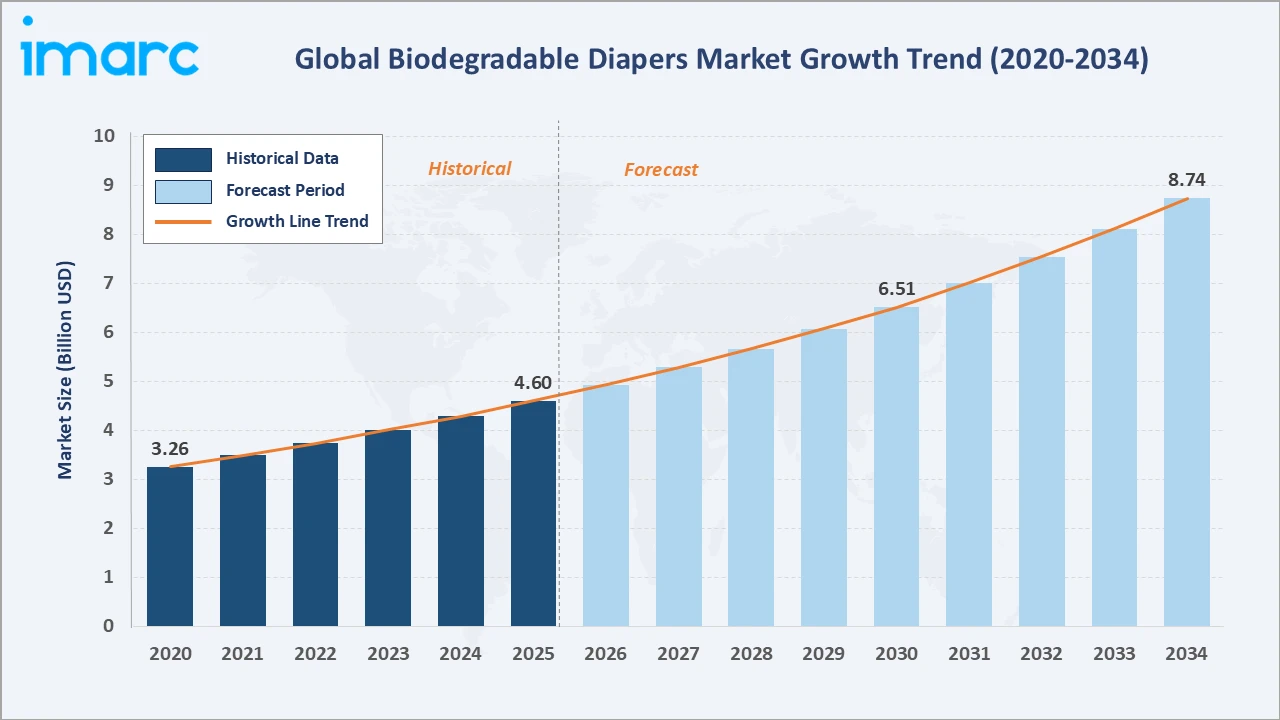
The global biodegradable diapers market reached USD 4.60 Billion in 2025 and is projected to reach USD 8.74 Billion by 2034, expanding at a CAGR of 7.16% during 2026-2034. Rising environmental awareness and sustainable parenting practices, growing adult incontinence care needs, and expanding retail and online distribution reach are the primary growth catalysts.
Market Snapshot
|
Metric |
Value |
|
Market Size (2025) |
USD 4.60 Billion |
|
Forecast Market Size (2034) |
USD 8.74 Billion |
|
CAGR (2026-2034) |
7.16% |
|
Base Year |
2025 |
|
Historical Period |
2020-2025 |
|
Forecast Period |
2026-2034 |
North America leads the global biodegradable diapers landscape, holding a 35.7% share in 2025, anchored by the region's high environmental awareness and strong retail distribution infrastructure. Babies command the largest share of the end-user segment at 84.3%, reflecting sustained parental demand for sustainable, skin-friendly diapering solutions.
To get more information on this market, Request Sample
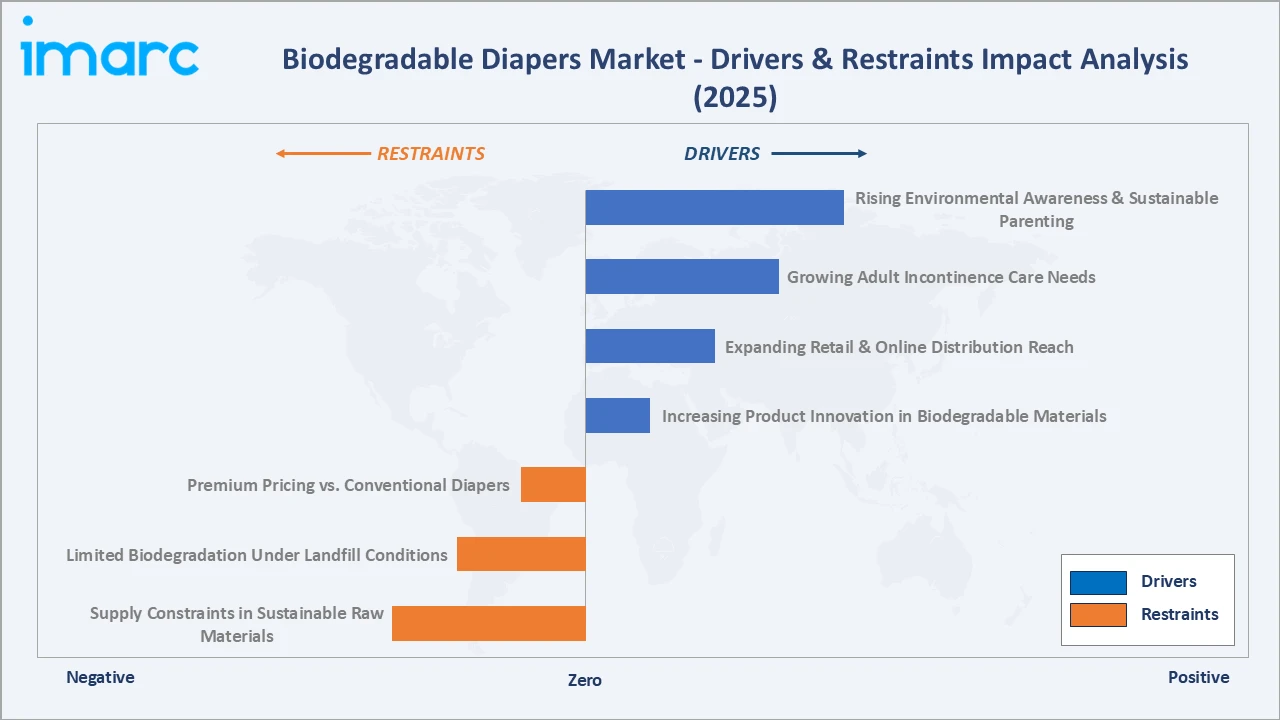
The global biodegradable diapers market is underpinned by three structural forces: rising environmental awareness driving sustainable parenting choices, growing adult incontinence care needs among aging populations, and continuous product innovation across biodegradable raw materials. Each force independently reinforces category growth, sustaining steady CAGR expansion through 2034 despite premium pricing pressure relative to conventional diapers.
Executive Summary
The global biodegradable diapers market is experiencing robust expansion, driven by rising environmental awareness, growing sustainable parenting practices, and increasing adult incontinence care needs among aging populations. The market was valued at USD 4.60 Billion in 2025 and is forecast to reach USD 8.74 Billion by 2034, growing at a CAGR of 7.16%.
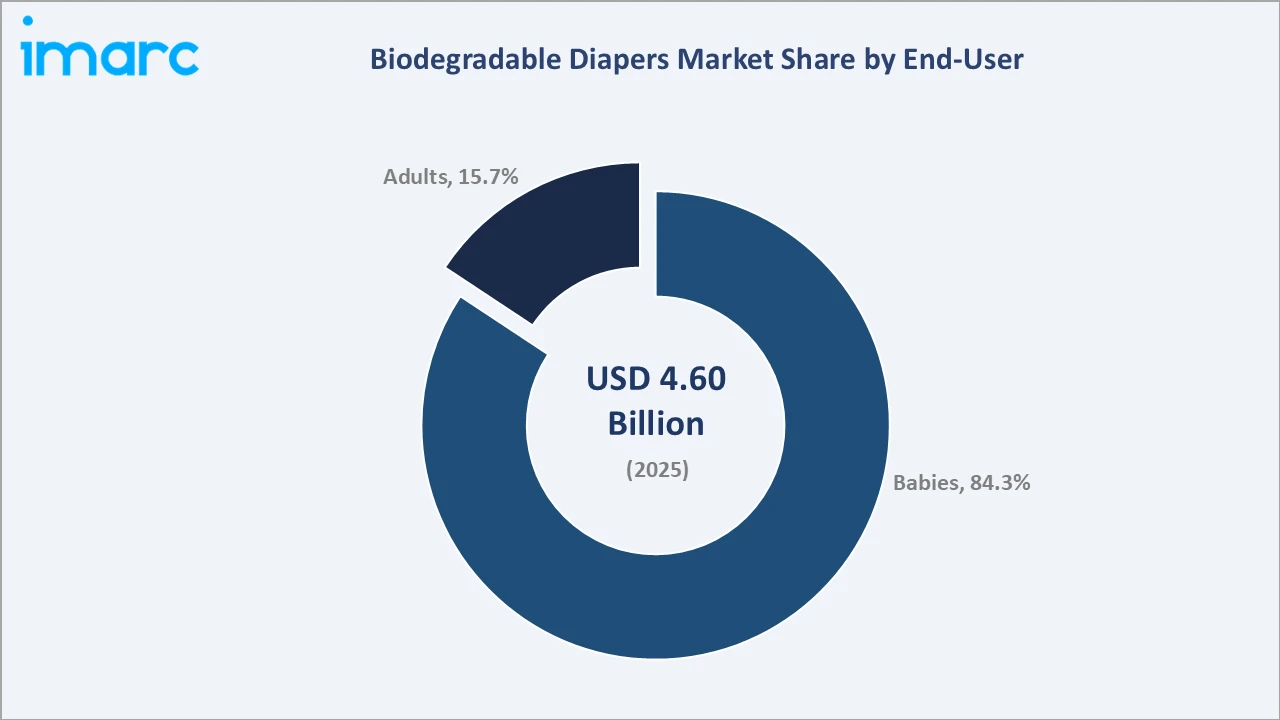
Babies dominate the end-user segment with an 84.3% share in 2025, encompassing the traditional core consumer base for biodegradable diapering products, while adults account for 15.7%, reflecting growing demand for sustainable incontinence care solutions among aging populations.
Cotton/wood pulp leads the raw material segment at 46.8% share, supported by established absorbent core manufacturing processes, while bamboo (28.7%) and starch (15.9%) serve varied sustainability and performance preferences. North America leads regionally at 35.7%, anchored by the region's high environmental awareness and retail infrastructure. Leading manufacturers are collectively shaping the industry's product innovation roadmap through continuous R&D investment and category expansion.
Key Market Insights
|
Insight |
Data |
|
Largest End-User Segment |
Babies – 84.3% share (2025) |
|
Fastest Growing End-User Segment |
Babies – ~7.4% CAGR (2026-2034) |
|
Largest Raw Material Segment |
Cotton/Wood Pulp – 46.8% share (2025) |
|
Leading Region |
North America – 35.7% share (2025) |
|
Top Companies |
Ontex Group NV, The Honest Company, Inc., Humble Group AB, ABENA Holding A/S, Unilever PLC |
Key Analytical Observations Supporting The Above Data:
- Babies account for 84.3% of the global biodegradable diapers market in 2025. This dominance reflects sustained parental demand for sustainable, skin-friendly diapering solutions as environmental awareness grows.
- Cotton/wood pulp remains the leading raw material at 46.8% share (2025), supported by established absorbent core manufacturing processes and consistent supply availability.
- Bamboo is expanding steadily at 28.7% share (2025), as manufacturers and consumers increasingly favor its rapid renewability and natural antibacterial properties.
- North America's 35.7% share (2025) reflects the region's high environmental awareness, strong retail infrastructure, and high per-capita spending on premium sustainable products.
- Rising adult incontinence care needs among aging populations are broadening the addressable consumer base beyond traditional baby diapering into adult care applications.
Biodegradable Diapers Market Overview
The biodegradable diapers market encompasses diapering products formulated from bamboo, cotton/wood pulp, starch, and other sustainable materials designed to decompose more readily than conventional plastic-based diapers, serving babies and adults seeking environmentally responsible hygiene solutions. The global biodegradable diapers ecosystem spans specialty sustainable material suppliers, consumer goods conglomerates, and an expanding retail and e-commerce distribution network.
Macroeconomic drivers include rising global environmental regulation and awareness, expanding retail and e-commerce infrastructure across urban centers, and growing consumer disposable income supporting premium sustainable product purchases. Manufacturers are simultaneously investing in compostable packaging and plant-based superabsorbent polymers to improve biodegradability and performance, positioning the global biodegradable diapers sector for continued category-led growth through 2034 despite premium pricing relative to conventional diapers.
Market Dynamics
To evaluate market opportunities, Request Sample
Market Drivers
- Rising Environmental Awareness & Sustainable Parenting: Growing consumer focus on environmental impact is driving sustained demand for biodegradable diapering alternatives across retail and online channels.
- Growing Adult Incontinence Care Needs: According to the WHO, by 2030, one in six people worldwide will be aged 60 years or older, with this population increasing from 1 billion in 2020 to 1.4 billion. Increasing aging populations globally are broadening demand for sustainable adult incontinence care products beyond traditional baby diapering.
- Expanding Retail & Online Distribution Reach: According to the International Trade Administration, global B2C e-commerce revenue is projected to reach USD 5.5 trillion by 2027, expanding at a CAGR of 14.4%. Growing retail and e-commerce infrastructure is improving product accessibility and enabling direct-to-consumer sales across previously underserved markets.
- Increasing Product Innovation in Biodegradable Materials: Manufacturers are advancing bamboo, cotton/wood pulp, and starch-based formulations, supporting premium product adoption across environmentally conscious consumer bases.
Market Restraints
- Premium Pricing vs. Conventional Diapers: Biodegradable diaper products typically cost 10-40% more than conventional alternatives, limiting adoption among price-sensitive consumer segments.
- Limited Biodegradation Under Landfill Conditions: Premium eco-friendly brands such as CuddleKin and Dyper reduce the share of plastic-based materials in diapers by approximately 20–30%. However, actual biodegradation rates can vary significantly depending on disposal conditions, raising questions about real-world environmental impact.
- Supply Constraints in Sustainable Raw Materials: Limited availability of certified sustainable bamboo and cotton supply chains can constrain manufacturing scale-up.
Market Opportunities
- Compostable Packaging & Core Innovation: Rising demand for fully compostable products presents opportunities for manufacturers investing in innovative packaging and absorbent core technologies.
- Plant-Based Superabsorbent Polymer Adoption: Growing research into plant-based superabsorbent alternatives creates opportunities for manufacturers to reduce reliance on petroleum-based materials. For instance, Namalab is developing a fully plant-based, compostable superabsorbent polymer called NamaSAP designed to replace fossil-based SAPs in diapers and other hygiene applications.
Market Challenges
- Balancing Cost and Sustainability: Manufacturers must balance premium sustainable material costs with the need to remain accessible to price-sensitive mainstream consumers.
- Consumer Education on Biodegradability Claims: Ensuring consumers understand actual biodegradability performance versus marketing claims requires ongoing transparency and certification investment.
Emerging Market Trends
1. Bamboo Fiber Diaper Line Expansion
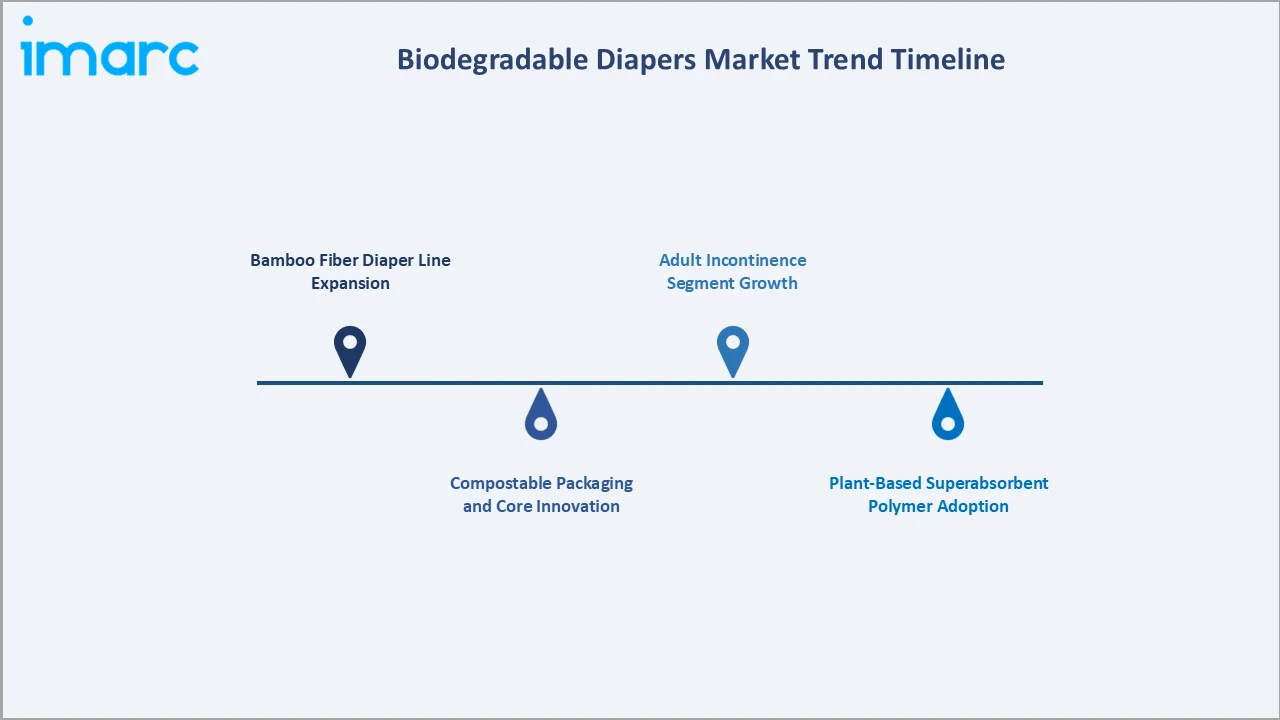
Manufacturers are increasingly launching bamboo-based diaper lines, leveraging the material's rapid renewability and natural antibacterial properties to appeal to environmentally conscious parents. For instance, in August 2023, Believe Diapers launched a new line of eco-friendly diapers made from 100% renewable and biodegradable bamboo material under the rebranded name Believe Baby.
2. Compostable Packaging & Core Innovation
Growing consumer demand for fully sustainable products is driving development of compostable packaging alongside biodegradable absorbent cores, extending sustainability across the entire product lifecycle. In June 2025, Texas-based Hiro Technologies launched MycoDigestible Diapers, supplied with fungi packets that are activated by moisture after disposal to help break down plastic components in landfills.
3. Adult Incontinence Segment Growth
In April 2024, Johns Hopkins students developed Biofide, a biodegradable incontinence pad that replaces conventional non-biodegradable superabsorbent polymers with fermentation-derived polyglutamic acid. The material can absorb up to 300 times its weight and is designed to decompose naturally without harmful residues.
4. Plant-Based Superabsorbent Polymer Adoption
In March 2026, Elea & Lili raised EUR 2.5 million (USD 2.9 million) to scale its biodegradable, microplastic-free cellulose-based alternative to fossil-derived superabsorbent polymers. The material is designed for diapers and agriculture, with funding supporting industrial-scale production, regulatory validation, field trials, and planned launches in Europe and the US.
Industry Value Chain Analysis
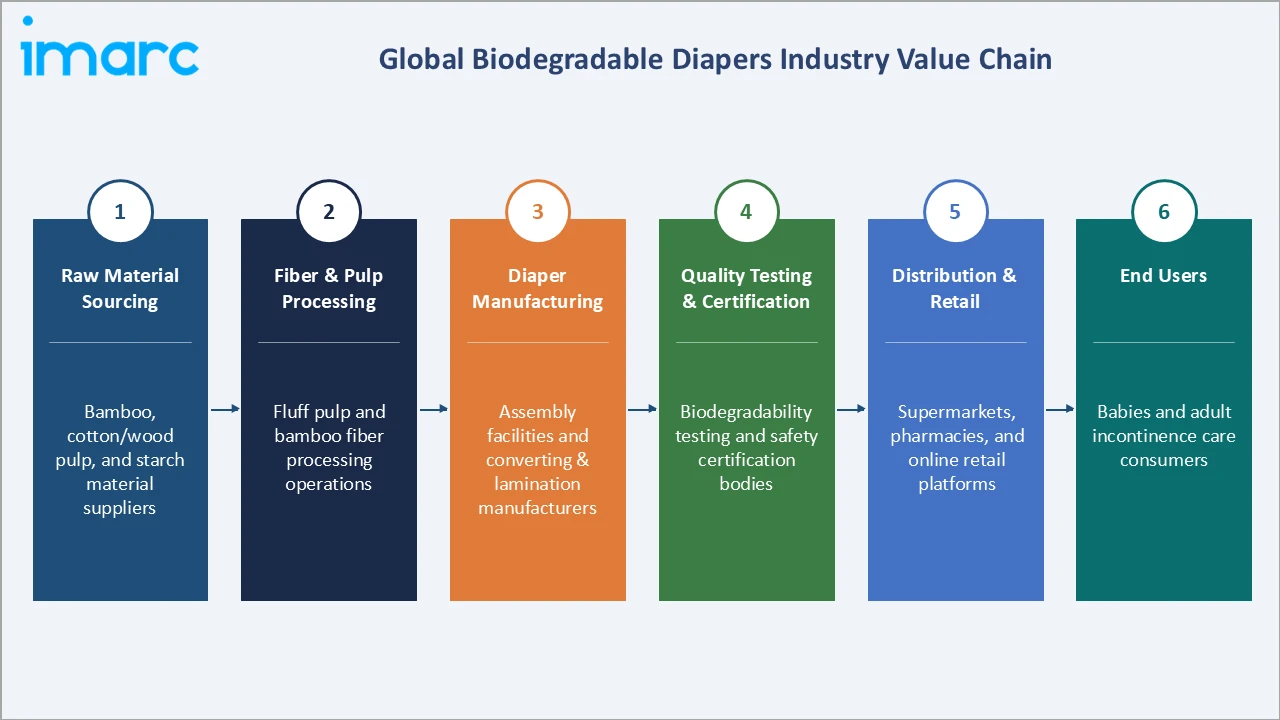
The global biodegradable diapers value chain spans raw material sourcing through end-consumer delivery, with each stage occupied by specialized suppliers, manufacturers, and retailers whose performance directly influences product quality, biodegradability, and consumer trust.
|
Stage |
Key Players / Examples |
|
Raw Material Sourcing |
Bamboo, cotton/wood pulp, and starch material suppliers |
|
Fiber & Pulp Processing |
Fluff pulp and bamboo fiber processing operations |
|
Diaper Manufacturing |
Assembly facilities and converting & lamination manufacturers |
|
Quality Testing & Certification |
Biodegradability testing and safety certification bodies |
|
Distribution & Retail |
Supermarkets, pharmacies, and online retail platforms |
|
End Users |
Babies and adult incontinence care consumers |
Technology Landscape in the Biodegradable Diapers Industry
Bamboo Fiber Innovation
Manufacturers are advancing bamboo fiber processing techniques to improve absorbency and softness, supporting broader adoption among environmentally conscious parents seeking sustainable alternatives. Producers are engineering multilayer bamboo fiber core structures that combine hydrophilic top sheets with moisture-wicking distribution layers, enabling acquisition rates and dry-back performance comparable to conventional SAP-based diapers.
Plant-Based Superabsorbent Development
Growing investment in plant-based superabsorbent polymer research is expanding biodegradable absorbent core technology, addressing rising demand for fully sustainable diapering solutions. Bio-based SAP derived from starch, cellulose, and polylactic acid (PLA) feedstocks is being validated for equivalent gel-blocking resistance and fluid retention capacity to petroleum-derived sodium polyacrylate, with manufacturers targeting full absorbent core compostability certification as the key commercial differentiator for premium retail positioning.
Compostable Packaging Technology
Manufacturers are adopting compostable packaging materials to extend sustainability across the entire product lifecycle, meeting rising consumer demand for zero-waste diapering solutions. Producers are transitioning from conventional polyethylene film outer packaging to certified home-compostable PLA and PBAT laminate pouches with water-based inks and paper-based inserts, enabling full packaging compostability claims.
Biodegradability Certification Systems
Expanding industry-standard biodegradability testing and certification infrastructure is strengthening consumer trust and supporting premium positioning across retail channels. Alignment with certifications such as TÜV Austria's OK Compost, the European Bioplastics certification, OEKO-TEX MADE IN GREEN, and USDA BioPreferred Program designation is becoming a prerequisite for premium retail shelf placement, with leading manufacturers investing in multi-standard certification strategies to address varying regulatory requirements and consumer expectations.
Market Segmentation Analysis
The report covers the following segments:
|
Segment Category |
Leading Segment |
Market Share |
Year |
|
End-User |
Babies |
84.3% |
2025 |
|
Raw Material |
Cotton/Wood Pulp |
46.8% |
2025 |
|
Distribution Channel |
Pharmacies |
🔒 |
2025 |
|
Region |
North America |
35.7% |
2025 |

By End-User
Babies dominate with an 84.3% share in 2025. This segment encompasses the traditional core consumer base for biodegradable diapering products, supported by sustained parental demand for sustainable, skin-friendly formulations.
To access detailed market analysis, Request Sample
Adults represent 15.7% (2025) of the market, reflecting growing demand for sustainable incontinence care solutions among aging populations, a segment expected to expand steadily as global demographics shift toward older age cohorts.
By Raw Material
Cotton/wood pulp leads the raw material segment at 46.8% share (2025), supported by established absorbent core manufacturing processes and consistent supply availability across major diaper manufacturers.
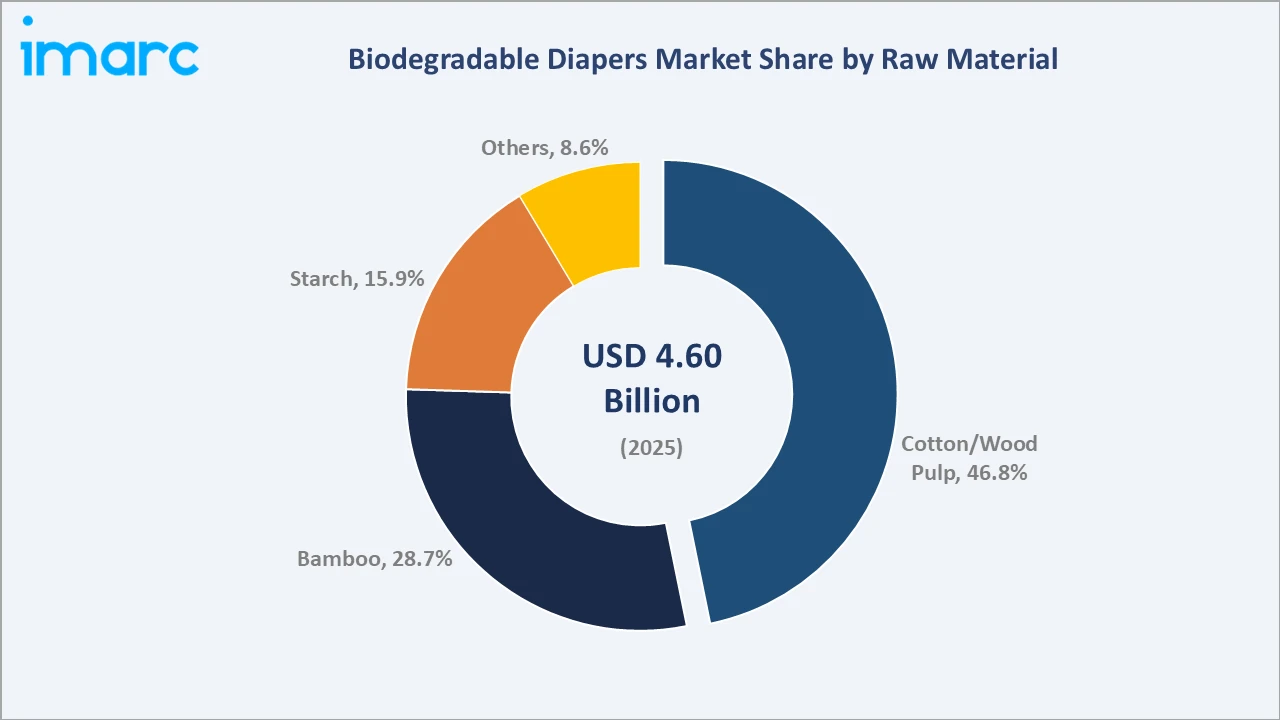
Bamboo is expanding steadily at 28.7% share (2025), as manufacturers and consumers increasingly favor its rapid renewability and natural antibacterial properties. Starch (15.9%) and others (8.6%) continue to serve specialty formulation needs across the diaper manufacturing industry.
Regional Market Insights
North America's market leadership (35.7%, 2025) reflects the region's high environmental awareness and strong retail distribution infrastructure. High per-capita disposable income and rising sustainability-conscious purchasing combine to sustain its dominant position through 2034.
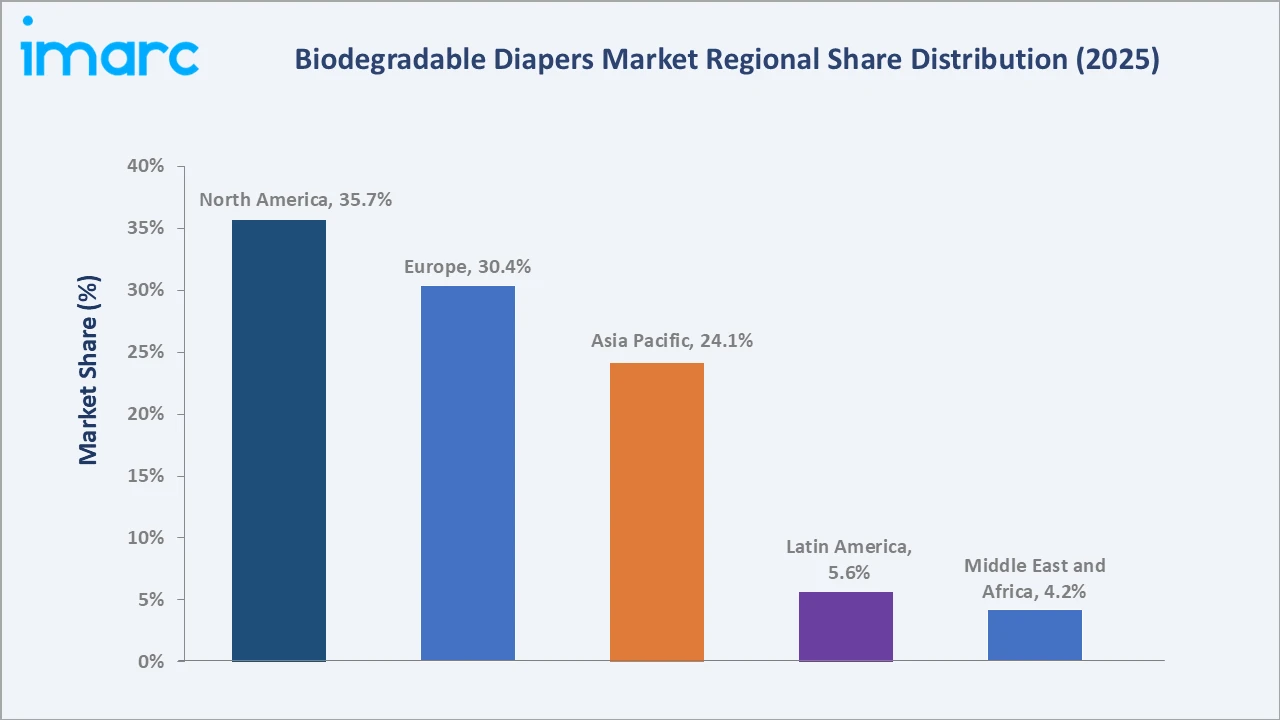
Europe at 30.4% represents the second-largest biodegradable diapers market globally. Stringent environmental regulations and expanding sustainable retail adoption are sustaining steady growth, positioning the region as a key contributor alongside North America through the forecast period.
|
Region |
Share (2025) |
Key Growth Drivers |
|
North America |
35.7% |
High environmental awareness and strong retail distribution infrastructure |
|
Europe |
30.4% |
Stringent environmental regulations and expanding sustainable retail adoption |
|
Asia Pacific |
24.1% |
Rising disposable income and expanding e-commerce distribution networks |
|
Latin America |
5.6% |
Emerging sustainability awareness and expanding retail distribution |
|
Middle East and Africa |
4.2% |
Growing interest in premium sustainable products and gradual retail expansion |
Competitive Landscape
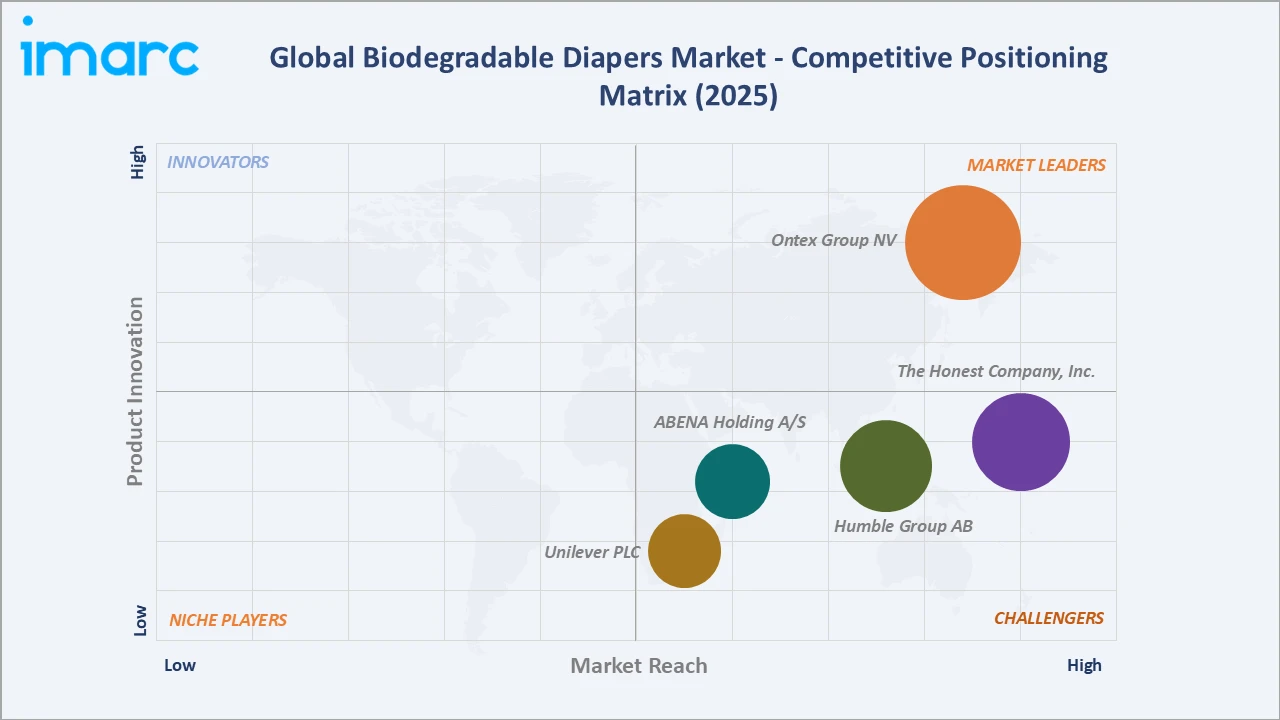
The global biodegradable diapers market exhibits moderate concentration, with leading manufacturers collectively holding a significant share of market revenue in 2025, reflecting sustained investment in product innovation and distribution reach.
|
Company Name |
Brand Name |
Market Position |
Core Strength |
|
Ontex Group NV |
Moltex Pure & Nature |
Market Leader |
Broad private-label and branded biodegradable diaper portfolio |
|
The Honest Company, Inc. |
Honest Clean Conscious Diapers |
Strong Challenger |
Premium sustainable diaper and consumer wellness brand positioning |
|
Humble Group AB |
Naty |
Strong Challenger |
Pioneer eco-certified diaper product heritage |
|
ABENA Holding A/S |
Bambo Nature |
Challenger |
Bamboo-based diaper specialty manufacturing expertise |
|
Unilever PLC |
Seventh Generation |
Challenger |
Established sustainable household and baby care brand presence |
Ontex Group NV dominates through comprehensive product portfolio and extensive global retail network, supported by continuous R&D investment. The Honest Company, Inc., Humble Group AB, ABENA Holding A/S, and Unilever PLC compete through targeted premium positioning, eco-certification heritage, and specialty retail differentiation, respectively.
Key Company Profiles
Ontex Group NV
Ontex Group NV is one of the leading global hygiene products manufacturers with a growing biodegradable diaper portfolio serving both private-label and branded retail channels worldwide.
- Product Portfolio: Moltex Pure & Nature biodegradable baby diapers distributed through private-label and branded retail partnerships.
- Recent Developments: In July 2025, Ontex Group NV introduced bio-based superabsorbent polymers in selected Moltex Pure & Nature diapers, replacing virgin fossil-based SAP while maintaining absorbency performance. The bioSAP offers a 15–25% lower carbon footprint than conventional SAP and supports Ontex’s target to reduce Scope 3 emissions by 25% by 2030.
- Strategic Focus: Scaling sustainable product innovation; deepening private-label and branded retail distribution partnerships.
The Honest Company, Inc.
The Honest Company, Inc. is a prominent premium consumer wellness brand known for its innovation-focused, sustainably positioned diaper category presence.
- Product Portfolio: Premium biodegradable diapers and baby care products under the Honest Clean Conscious Diapers brand.
- Recent Developments: In July 2025, The Honest Company, Inc. launched redesigned Clean Conscious Diapers featuring up to 100% leak protection, comfort dry technology, a plant-based inner liner, and a softer, breathable construction. The diapers are OEKO-TEX-certified, hypoallergenic, fragrance-free, and include stage-specific features for newborns through toddlers.
- Strategic Focus: Expanding premium product innovation; strengthening direct-to-consumer e-commerce presence.
Market Concentration Analysis
The global biodegradable diapers market exhibits moderate concentration, with key players collectively accounting for a significant share of total category revenue in 2025, reflecting sustained R&D investment, brand loyalty, and extensive distribution infrastructure worldwide.
Consolidation pressure remains limited as leading manufacturers maintain distinct strategic positioning: Ontex Group NV through comprehensive multi-category portfolios, The Honest Company, Inc. and Humble Group AB through premium and eco-certification positioning, and ABENA Holding A/S and Unilever PLC through specialty and heritage brand differentiation, rather than pursuing direct M&A consolidation.
Investment & Growth Opportunities
Fastest Growing Segments
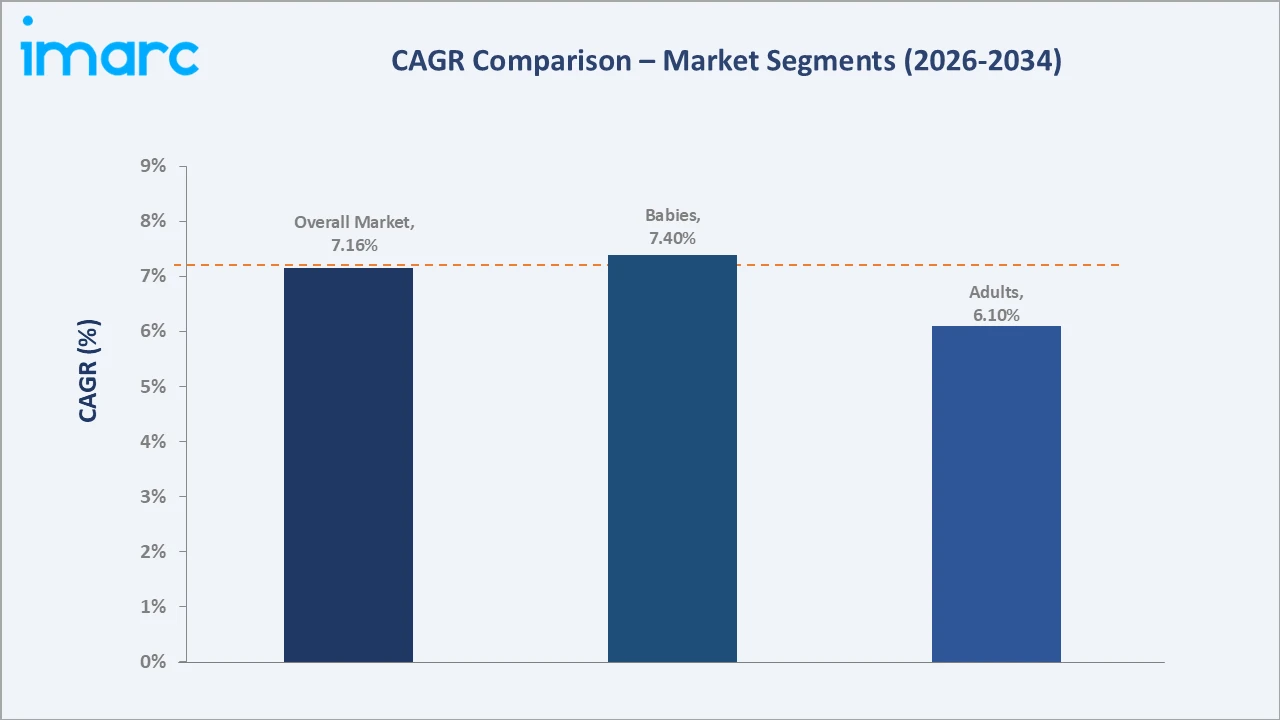
Babies (~7.4% CAGR) represent the highest-growth investment vector through 2034, driven by expanding sustainable parenting culture and continuous product innovation across bamboo, cotton/wood pulp, and starch-based formulations. This subcategory addresses a rapidly expanding addressable market within the global sustainability-conscious consumer ecosystem.
Emerging Market Expansion
Latin America and the Middle East and Africa collectively represent an incremental growth opportunity beyond North America and Europe by 2034, as rising sustainability awareness and expanding retail infrastructure accelerate category penetration in these secondary regional markets.
Venture and Institutional Investment Trends
- Manufacturer investment toward plant-based superabsorbent polymer innovation is creating supply chain opportunities for sustainable material suppliers serving the biodegradable diapers sector.
- Growing e-commerce and specialty retail expansion is sustaining institutional interest in direct-to-consumer sustainable diaper distribution platforms.
- Compostable packaging and core innovation, led by major manufacturers, is opening opportunities for material technology and formulation vendors serving the global hygiene products industry.
Future Market Outlook (2026-2034)
The global biodegradable diapers market is positioned for robust, sustainability-driven expansion through 2034. From a base of USD 4.60 Billion in 2025, the market is projected to reach USD 8.74 Billion by 2034, representing substantial incremental value creation at a CAGR of 7.16%. This growth is underpinned by rising environmental awareness, expanding adult incontinence care adoption, and continuous product innovation across the diaper manufacturing sector.
The end-user segment will continue evolving through 2034, with growing demand for adult incontinence care products as aging populations and sustainability preferences accelerate. This shift creates opportunities for manufacturers investing in plant-based superabsorbent polymers, compostable packaging, and expanding e-commerce distribution to capture the next phase of the global biodegradable diapers market growth.
Research Methodology
Primary Research
Primary research comprised structured interviews with industry participants across 2024-2025, including diaper manufacturer executives, retail category managers, sustainability specialists, and healthcare professionals globally. Expert input validated market sizing, segmentation trends, and regional consumption patterns.
Secondary Research
Secondary research encompassed manufacturer annual reports, sustainability industry association publications, and consumer goods trade press covering biodegradable diaper innovation, environmental regulation trends, and regional retail dynamics across major markets.
Forecasting Models
Market size estimations were derived using top-down and bottom-up forecasting, incorporating end-user and raw material segment transitions and manufacturer capacity disclosures. A base-case CAGR of 7.16% reflects consensus estimates validated against announced product launch timelines and manufacturer strategic investment plans.
Biodegradable Diapers Market Report Coverage:
| Report Features | Details |
|---|---|
| Base Year of the Analysis | 2025 |
| Historical Period | 2020-2025 |
| Forecast Period | 2026-2034 |
| Units | Billion USD |
| Scope of the Report |
Exploration of Historical Trends and Hot Melts Adhesive Market Outlook, Industry Catalysts and Challenges, Segment-Wise Historical and Future Market Assessment:
|
| Raw Materials Covered | Cotton/Wood pulp, Bamboo, Starch, Others |
| End-Users Covered | Babies, Adults |
| Distribution Channels Covered | Pharmacies, Supermarkets and Hypermarkets, Convenience Stores, Online, Others |
| Regions Covered | Asia Pacific, Europe, North America, Latin America, Middle East and Africa |
| Companies Covered | Ontex Group NV, The Honest Company Inc., Humble Group AB, ABENA Holding A/S, Unilever PLC, etc. |
| Customization Scope | 10% Free Customization |
| Post-Sale Analyst Support | 10-12 Weeks |
| Delivery Format | PDF and Excel through Email (We can also provide the editable version of the report in PPT/Word format on special request) |
Key Benefits for Stakeholders:
- IMARC’s report offers a comprehensive quantitative analysis of various market segments, historical and current market trends, market forecasts, and dynamics of the biodegradable diapers market from 2020-2034.
- The research study provides the latest information on the market drivers, challenges, and opportunities in the global biodegradable diapers market.
- The study maps the leading, as well as the fastest-growing, regional markets.
- Porter's five forces analysis assist stakeholders in assessing the impact of new entrants, competitive rivalry, supplier power, buyer power, and the threat of substitution. It helps stakeholders to analyze the level of competition within the biodegradable diapers industry and its attractiveness.
- Competitive landscape allows stakeholders to understand their competitive environment and provides an insight into the current positions of key players in the market.
Frequently Asked Questions About the Biodegradable Diapers Market Report
The global biodegradable diapers market reached USD 4.60 Billion in 2025 and is projected to reach USD 8.74 Billion by 2034.
The market is expected to grow at a CAGR of 7.16% during 2026-2034, driven by rising environmental awareness and sustainable parenting practices.
North America leads with a 35.7% share in 2025, anchored by the region's high environmental awareness and retail infrastructure.
Babies dominate with an 84.3% share in 2025, driven by sustained parental demand for sustainable, skin-friendly diapering solutions.
Cotton/wood pulp leads with a 46.8% share in 2025, supported by established absorbent core manufacturing processes.
Some of the key players include Ontex Group NV, The Honest Company, Inc., Humble Group AB, ABENA Holding A/S, and Unilever PLC.
Babies are growing fastest at an estimated 7.4% CAGR as sustainable parenting culture and product innovation accelerate adoption.
Key challenges include premium pricing versus conventional diapers, limited biodegradation under landfill conditions, and supply constraints in sustainable raw materials.
Plant-based superabsorbent polymer innovation, compostable packaging development, and e-commerce channel expansion represent leading investment opportunities.
Adult incontinence care, at 15.7% share, is expanding steadily as aging populations globally drive demand for sustainable adult care solutions.
Need more help?
- Speak to our experienced analysts for insights on the current market scenarios.
- Include additional segments and countries to customize the report as per your requirement.
- Gain an unparalleled competitive advantage in your domain by understanding how to utilize the report and positively impacting your operations and revenue.
- For further assistance, please connect with our analysts.
 Request Customization
 Speak to an Analyst
 Request Brochure
 Inquire Before Buying
Benefits of Customization
- Personalize this research
- Triangulate with your data
- Get data as per your format and definition
- Gain a deeper dive into a specific application, geography, customer, or competitor
- Any level of personalization
Get in Touch With Us
UNITED STATES
Phone: +1-201-971-6302
INDIA
Phone: +91-120-433-0800
UNITED KINGDOM
Phone: +44-753-714-6104
Email: [email protected]
Client Testimonials




.webp)




.webp)













Related Reports

Choose your plan
*Please note that the prices mentioned below are starting prices for each bundle type. Kindly contact our team for further details.*
Single User License
- 1 User License, Access on 2 Devices
- PDF Report + Excel Dataset (Password Protected)
- Lifetime Access
- No Printing Rights
- 10% Free Report Customization
- 10–12 Weeks of Analyst Support
Five User License
- Access for 5 Users, 2 Devices per User
- PDF Report + Excel Dataset (Password Protected)
- Lifetime Access
- Dedicated Account Manager
- 12–14 Weeks of Analyst Support
- No Printing Rights
- 15% Free Report Customization
- 25% Discount on Your Next Purchase
Corporate User License
- Unlimited User Access (Within Your Organization)
- PDF Report + Excel Dataset
- Lifetime Access
- Dedicated Account Manager
- 14–20 Weeks of Analyst Support
- No Printing Rights
- 20% Free Report Customization
- 30% Discount on Your Next Purchase
Essential Insights
What's included:
3 reports
- Lifetime Access
- PDF Reports
- Excel Datasets
- 2 Weeks of Free Analyst Support
- 2 User Licenses
- Access on 2 Devices
- Printing Rights
- Complimentary PowerPoint (PPT) Version
- Complimentary License Upgrade
Professional Access
What's included:
5 reports
- Lifetime Access
- PDF Reports
- Excel Datasets
- 8 Weeks of Free Analyst Support
- 2 User Licenses
- Access on 2 Devices
- Printing Rights
- Complimentary PowerPoint (PPT) Version
- Complimentary License Upgrade
Business Advantage
What's included:
8 reports
- Lifetime Access
- PDF Reports
- Excel Datasets
- 14 Weeks of Free Analyst Support
- 2 User Licenses
- Access on 2 Devices
- Printing Rights
- Complimentary PowerPoint (PPT) Version
- Complimentary License Upgrade
Enterprise Intelligence
What's included:
10 reports
- Lifetime Access
- PDF Reports
- Excel Datasets
- 20 Weeks of Free Analyst Support
- 2 User Licenses
- Access on 2 Devices
- Printing Rights
- Complimentary PowerPoint (PPT) Version
- Complimentary License Upgrade