
Biomass Gasification Market Size, Share, Trends and Forecast by Source, and Region, 2026-2034
Biomass Gasification Market Size and Share:
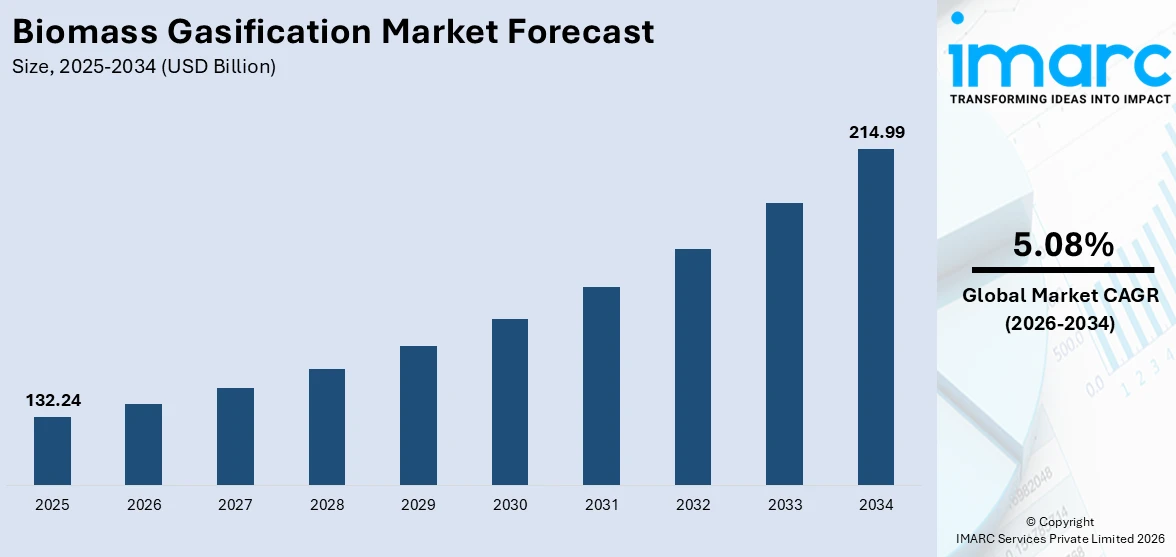
The global biomass gasification market size was valued at USD 132.24 Billion in 2025. Looking forward, IMARC Group estimates the market to reach USD 214.99 Billion by 2034, exhibiting a CAGR of 5.08% from 2026-2034. Europe currently dominates the market, holding a market share of 41.6% in 2025. Europe's dominant position is reinforced by strong bioenergy policy frameworks, deep integration of biomass into district heating and power systems, abundant forestry residue availability, and sustained government incentives targeting decarbonization, all of which continue to expand the region's biomass gasification market share.
The global biomass gasification market is expanding due to several interconnected drivers underpinning the market growth. The growing urgency to reduce greenhouse gas emissions and transition away from fossil fuel dependency is compelling governments and industries to adopt renewable energy technologies at unprecedented scale. Biomass gasification offers a uniquely flexible solution, capable of converting diverse organic materials including agricultural residues, wood chips, rice husks, and municipal solid waste into clean syngas for power generation, heating, chemical production, and biofuel synthesis. The technology's ability to simultaneously address energy security and waste management challenges gives it strategic relevance across both developed and developing economies. Furthermore, declining capital costs for gasification infrastructure, supported by public subsidies, tax credits, and feed-in tariff mechanisms, are making the technology increasingly accessible to smaller utilities and industrial operators globally, driving widespread market adoption.
The United States has emerged as a major region in the biomass gasification market growth owing to many factors. The country possesses abundant biomass feedstock resources, including agricultural crop residues, forestry byproducts, and substantial volumes of organic municipal solid waste, providing a strong and diversified raw material base for gasification operations. Federal renewable portfolio standards and state-level clean energy mandates have created a stable policy environment encouraging investment in bioenergy infrastructure. The rapid expansion of the biogas and biomethane sector, combined with the growing role of syngas in chemical manufacturing and fuel production, is further driving installation of new gasification capacity. For instance, in September 2024, the US Department of Energy announced USD 15 million in federal funding to support research and development on entrained-flow and fluidized-bed gasification technologies, specifically targeting clean hydrogen production from diverse feedstocks including biomass and municipal waste streams.
To get more information on this market Request Sample
Biomass Gasification Market Trends:
Rising Demand for Clean Energy Alternatives
The growing global push for clean energy alternatives has become a cornerstone driver for the biomass gasification sector. Governments and industries worldwide recognize that fossil fuels are finite resources with significant environmental consequences, compelling a structural shift toward sustainable energy systems. Biomass gasification converts organic waste materials, agricultural residues, forestry byproducts, and municipal solid waste, into syngas for electricity generation, heating, and transportation fuel applications. This transition aligns with international climate commitments, with countries pledging net-zero emissions targets through diversified renewable portfolios. The versatility of biomass gasification makes it particularly attractive to developing economies seeking energy independence alongside sustainable waste management. Waste-to-energy plants, a primary application of this technology, emit considerably lower carbon emissions per megawatt-hour than conventional coal-fired systems. For instance, in March 2025, the Indonesian government announced plans to construct waste-to-energy facilities in 30 cities to reduce pollution and improve municipal waste management. This initiative exemplifies accelerating adoption of gasification-based solutions as a practical, scalable component of global clean energy systems.
Growing Integration with Hydrogen Production
The integration of biomass gasification with green hydrogen production pathways is reshaping the biomass gasification market outlook, creating compelling new demand across energy and chemical industries. As the global hydrogen economy accelerates, biomass gasification provides one of the most cost-effective and low-carbon routes to producing green hydrogen, avoiding intermittency limitations associated with purely electricity-based electrolysis approaches. The thermochemical process converts biomass feedstocks into syngas rich in hydrogen and carbon monoxide, subsequently processed through water-gas shift reactions and membrane purification to yield high-purity hydrogen streams. This pathway is particularly valuable for decarbonizing hard-to-electrify industrial sectors including steel manufacturing, ammonia synthesis, and long-distance transportation. Governments across Europe and North America have introduced dedicated hydrogen strategies with substantial public funding for biomass-based hydrogen research and development. Germany, the world's largest biogas and biomethane market, produced a combined 329 PJ of biogas and biomethane in 2024 according to IEA data, reflecting the scale of bioenergy infrastructure supporting expanded hydrogen production through gasification integration.
Technological Advancements Driving Efficiency
Continuous innovation in gasification technology is redefining the biomass gasification market trends as companies and research institutions invest heavily in improving reactor designs, catalyst systems, and syngas purification processes. Modern fluidized-bed and entrained-flow gasifiers offer superior feedstock flexibility, accepting a wide range of biomass inputs including high-moisture and ash-rich materials, which broadens the economic viability of the technology. Advanced tar reduction systems and real-time digital monitoring platforms, incorporating artificial intelligence and machine learning tools, are optimizing operational parameters including temperature, pressure, and feedstock composition, to maximize syngas yield while minimizing operational costs. These innovations substantially reduce levelized production expenses, making biomass gasification increasingly competitive against conventional energy sources. The integration of carbon capture systems with gasification processes is enabling bioenergy with carbon removal applications, achieving net-negative emissions profiles.
Biomass Gasification Industry Segmentation:
IMARC Group provides an analysis of the key trends in each segment of the global biomass gasification market, along with forecast at the global and regional levels from 2026-2034. The market has been categorized based on source.
Analysis by Source:
Access the comprehensive market breakdown Request Sample
- Solid Biomass
- Biogas
- Municipal Waste
- Liquid Biomass
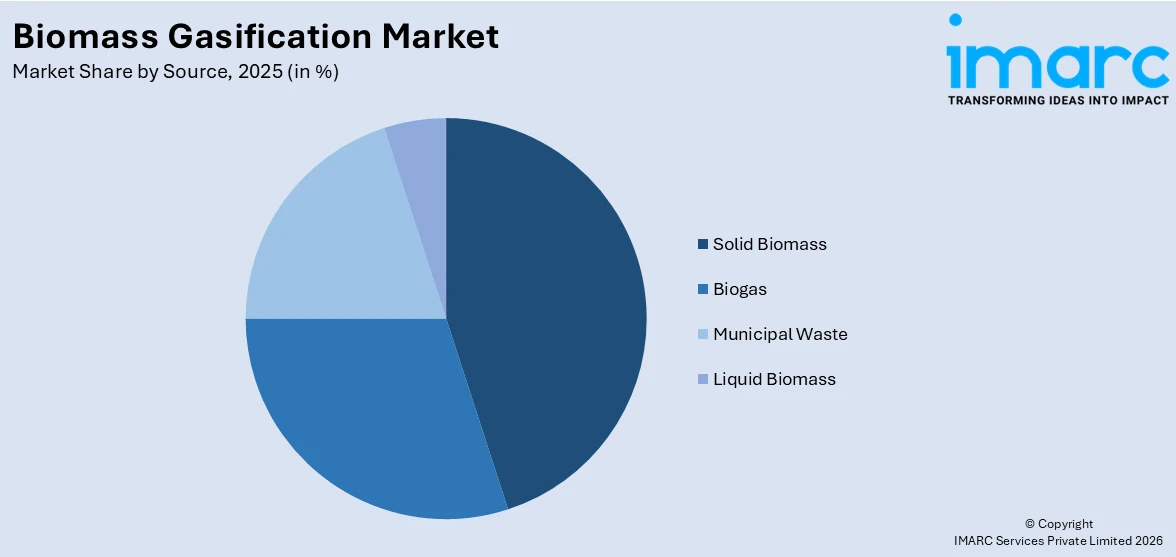
Solid biomass holds 45.2% of the market share. As the most widely available biomass feedstock, solid biomass encompasses wood chips, crop residues, rice husks, sugarcane bagasse, and other lignocellulosic materials from agricultural and forestry activities. Its high carbon content and calorific value make it an exceptionally effective feedstock for thermochemical gasification, yielding syngas suitable for power generation and chemical synthesis. The extensive global availability of solid biomass feedstocks, combined with established supply chain infrastructure, underpins this segment's dominant position. The segment benefits from compatibility with fixed-bed and fluidized-bed gasifier technologies, which are among the most widely deployed systems. Furthermore, growing demand for renewable electricity and district heating in Europe and North America has accelerated investment in solid biomass gasification capacity, supporting favorable biomass gasification market forecast projections. For instance, in June 2025, DP CleanTech entered a Memorandum of Understanding with RAW Power to develop biomass power projects in Sarawak, Malaysia, targeting scalable capacities of 50–400 MWe using straw and tropical grass feedstock.
Regional Analysis:
To get more information on the regional analysis of this market Request Sample
- North America
- Europe
- Asia Pacific
- Latin America
- Middle East and Africa
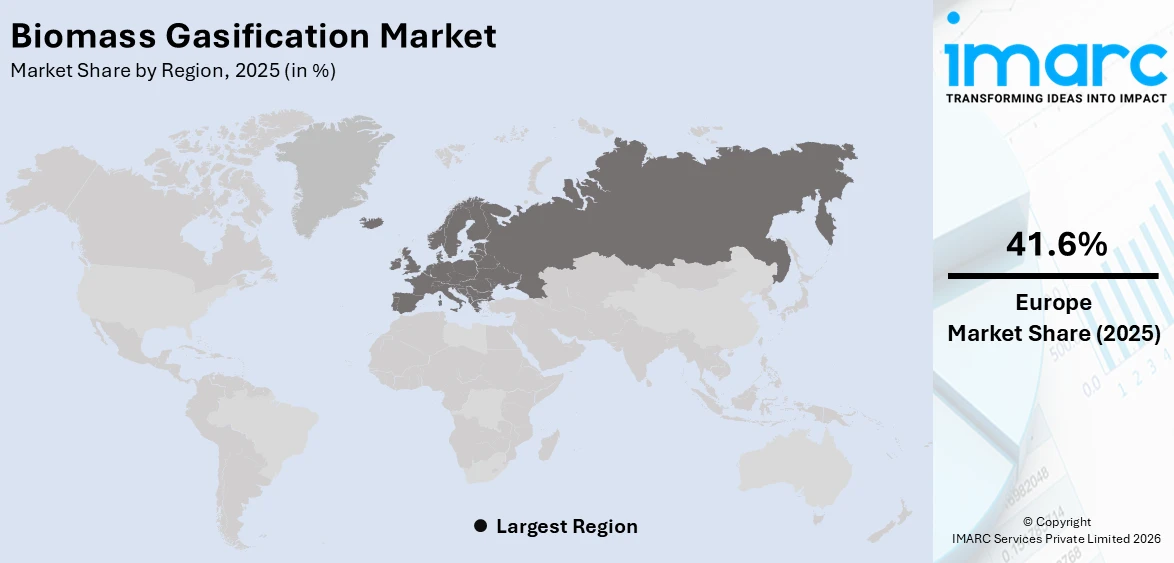
Europe, accounting for 41.6% of the share, enjoys the leading position in the market. Europe's dominance in the global biomass gasification market is underpinned by the continent's ambitious renewable energy targets under the EU Renewable Energy Directive III, which mandates a 42.5% renewable energy share by 2030. The region also enjoys a mature bioenergy system that comprises large district heating, many combined heat and power plants using biomass, and an efficient supply chain using forestry residues sourced in the northern and central European countries and the Baltic region. Favourable policy measures streamlined regulatory behaviours towards the production of biomethane, and the rising investment in carbon capture programs is also enhancing the development of bioenergy in the region and motivating the use of superior energy systems that use biomass. Sustained capital investment has been drawn to the region due to the regulatory environment in the region, coupled with the high electricity prices, which have favored the use of biomass alternatives. Ahead of 2030, EUR 28.4 billion in private investment has already been committed to biomethane development across Europe, reflecting strong confidence in the region's bioenergy expansion trajectory.
Key Regional Takeaways:
North America Biomass Gasification Market Analysis
North America represents one of the most active regions for biomass gasification investment and deployment, driven by abundant feedstock availability, robust federal and state-level policy frameworks, and a growing demand for renewable energy and sustainable waste management solutions. The region enjoys a wide agricultural production with the cultivation of corn, wheat, and soy beans, which produces huge amounts of crop residues that can be used in the process of gasification. Moreover, the Pacific Northwest, Great Lakes, and Southeast regions of the United States have a large amount of forest resources, which are a steady source of woody biomass. The Renewable Fuel Standard, the Investment tax credits of bioenergy infrastructure, and special Department of Energy research programs have provided a favorable investment environment at the Federal level. Canada also makes significant contributions to the regional market with their large forestry industry and provincial clean energy requirements that are more biomass-based electricity production. The growing interest in integrating gasification with carbon capture technologies to achieve net-negative emissions is attracting further investment from utilities and industrial operators. In 2025, the United States biogas industry added 20 new landfill gas capture projects, bringing the total to 599 facilities, representing USD 912 million in investment, demonstrating the sustained momentum behind bioenergy infrastructure development.
United States Biomass Gasification Market Analysis
The United States hosts one of the most developed bioenergy markets globally, with biomass gasification playing an increasingly central role in the nation's clean energy strategy. The federal investment incentives coupled with the state-based renewable portfolio standards, as well as robust institutional demand for decarbonized energy, have established a high density of gasification projects in each of the power generation, industrial heat, and hydrogen production markets. This is because the country has a wide variety of biomass feedstock bases, which include agricultural crop residues, forestry byproducts, specific energy crops, and municipal solid waste, so that the small-scale systems distributed, as well as the large commercial gasification plants, have a continuous supply. The increasing demand for the transformation of non-recyclable waste streams into renewable syngas is influencing investment in urban waste-to-energy. The high growth rate of the renewable natural gas market, designed by regulatory policies like the Renewable Fuel Standard and state-funded low-carbon fuel requirements, has also increased the need for advanced gasification technologies. Rural electrification initiatives and agricultural waste valorization programs are also creating new opportunities across suburban and rural markets. In 2025, industry-wide biogas capture capacity in the United States reached 780.7 billion cubic feet per year, reflecting a 7.5% increase, demonstrating strong and sustained momentum behind national bioenergy infrastructure expansion.
Europe Biomass Gasification Market Analysis
Europe holds the largest share of the global biomass gasification market, sustained by comprehensive bioenergy policy, favorable regulatory incentives, and deep investments in renewable energy infrastructure. The EU Renewable Energy Directive III mandating a 42.5% renewable energy share by 2030 has stimulated substantial long-term investment commitments across the continent's bioenergy value chain. Countries including Germany, Finland, France, Italy, Denmark, and the Netherlands have established strong biogas and biomethane production ecosystems, contributing to a rapidly expanding market. Biomass gasification is increasingly used in combined heat and power applications for district heating in Northern and Central European cities, where coal-phase-out mandates are accelerating the shift to cleaner alternatives. The growing number of countries producing biomethane, reaching 25 in Europe according to the European Biogas Association, reflects widening geographic diversification of bioenergy production. In 2024, European biogas and biomethane production reached 22 bcm, up from 21.7 bcm in 2023, highlighting steady sectoral expansion despite regulatory uncertainty.
Asia-Pacific Biomass Gasification Market Analysis
Asia-Pacific is a significant and rapidly evolving market for biomass gasification, driven by the region's vast agricultural biomass production, rising energy demand linked to urbanization and industrialization, and a growing government focus on clean energy transitions. Countries such as China, India, Japan, and Australia are actively expanding bioenergy capacity across industrial and residential sectors. China has seen accelerating biogas production growth, with power generation accounting for many biogas applications across the country. In India, policy momentum continues to expand the sector meaningfully; India's government introduced a compressed biogas blending mandate into domestic piped natural gas and transport fuel supplies starting in fiscal year 2025–2026, creating a major new demand driver that is expected to accelerate deployment of gasification and biogas infrastructure across the country's diverse agricultural and urban regions, supporting both rural electrification and industrial decarbonization goals.
Latin America Biomass Gasification Market Analysis
Latin America is an emerging yet strategically promising market for biomass gasification, driven by the region's expansive agricultural and forestry resources, particularly in Brazil, Argentina, and Colombia. Sugarcane bagasse, crop residues, and forestry byproducts represent considerable untapped feedstock potential for gasification-based power generation and biofuel production. Government policies promoting clean energy and renewable power generation across Brazil and neighboring countries are creating favorable conditions for investment in bioenergy infrastructure. Biomass already plays an important role within the region’s energy systems, reflecting its strategic value as a renewable resource. As countries pursue low-carbon energy transitions, advanced biomass conversion technologies such as gasification are gaining attention for their ability to support sustainable energy production and reduce reliance on fossil fuels.
Middle East and Africa Biomass Gasification Market Analysis
The Middle East and Africa region represents an early-stage but strategically important market for biomass gasification, driven by increasing energy demand, substantial organic waste generation, and growing recognition of bioenergy's potential to address rural electrification and waste management challenges. Several African governments are incorporating biomass-to-energy initiatives into their national energy strategies, recognizing the potential of gasification technologies to support sustainable power generation in off-grid and rural communities. Biomass already plays a significant role in the region’s energy mix, creating strong opportunities to transition from traditional biomass use to more efficient and cleaner gasification-based systems. These technologies can help reduce emissions, improve energy efficiency, and expand reliable energy access across many parts of the continent.

Competitive Landscape:
The global biomass gasification market is characterized by intense competition among established technology providers, engineering companies, and emerging specialized firms. Leading participants differentiate themselves through the breadth of their gasifier technology portfolios, covering fixed-bed, fluidized-bed, and entrained-flow configurations, as well as their capacity to deliver turnkey project solutions encompassing feedstock logistics, plant engineering, and syngas utilization systems. Strategic partnerships, joint ventures, and technology licensing agreements are increasingly common as companies seek to expand geographic reach and feedstock capabilities. The market also witnesses growing investment in research and development aimed at improving gasifier efficiency, reducing tar formation, and integrating advanced digital control systems. Mergers and acquisitions have accelerated market consolidation, with larger energy conglomerates acquiring specialized gasification technology firms to strengthen their clean energy portfolios. Collaboration with utilities, municipalities, and industrial operators is enabling companies to develop diverse business models ranging from build-own-operate installations to technology licensing arrangements globally.
Latest News and Developments:
- In February 2026, Barcelona-based Waste to Energy Advanced Solutions (WtEnergy) raised €10 million to expand deployment of its biomass and industrial waste gasification technology across Europe. The funding will support project execution, standardized plant development, organizational strengthening, and new syngas application development.
- In June 2025, Honeywell, Johnson Matthey, GIDARA Energy, and SAMSUNG E&A formed a strategic technology partnership to introduce an integrated global solution for producing sustainable aviation fuel (SAF) from biomass and municipal solid waste. The collaboration combines the companies’ expertise to support customers across the entire SAF value chain, from raw material processing to final fuel production.
Biomass Gasification Market Report Scope:
| Report Features | Details |
|---|---|
| Base Year of the Analysis | 2025 |
| Historical Period | 2020-2025 |
| Forecast Period | 2026-2034 |
| Units | Billion USD, TWh |
| Scope of the Report |
Exploration of Historical Trends and Market Outlook, Industry Catalysts and Challenges, Segment-Wise Historical and Future Market Assessment:
|
| Sources Covered | Solid Biomass, Biogas, Municipal Waste, Liquid Biomass |
| Region Covered | North America, Europe, Asia Pacific, Latin America, Middle East and Africa |
| Customization Scope | 10% Free Customization |
| Post-Sale Analyst Support | 10-12 Weeks |
| Delivery Format | PDF and Excel through Email (We can also provide the editable version of the report in PPT/Word format on special request) |
Key Benefits for Stakeholders:
- IMARC's report offers a comprehensive quantitative analysis of various market segments, historical and current market trends, market forecasts, and dynamics of the biomass gasification market from 2020-2034.
- The research study provides the latest information on the market drivers, challenges, and opportunities in the global biomass gasification market.
- The study maps the leading, as well as the fastest-growing, regional markets.
- Porter's Five Forces analysis assists stakeholders in assessing the impact of new entrants, competitive rivalry, supplier power, buyer power, and the threat of substitution. It helps stakeholders to analyze the level of competition within the biomass gasification industry and its attractiveness.
- Competitive landscape allows stakeholders to understand their competitive environment and provides an insight into the current positions of key players in the market.
Frequently Asked Questions About the Biomass Gasification Market Report
The biomass gasification market was valued at USD 132.24 Billion in 2025.
The biomass gasification market is projected to exhibit a CAGR of 5.08% during 2026-2034, reaching a value of USD 214.99 Billion by 2034.
The biomass gasification market is driven by growing global demand for renewable energy, accelerating decarbonization policies, increasing adoption of waste-to-energy technologies, and abundant availability of diverse biomass feedstocks. Government incentives including subsidies, feed-in tariffs, and renewable portfolio standards, coupled with advancing gasification efficiencies and the growing hydrogen economy, are further accelerating adoption across power, industrial, and transportation sectors.
Europe currently dominates the biomass gasification market, accounting for a share of 41.6%. The region benefits from comprehensive bioenergy policy frameworks, extensive biogas and biomethane infrastructure, abundant forestry residue feedstocks, and strong government incentives promoting decarbonization across residential and industrial sectors, collectively establishing a robust and mature biomass gasification ecosystem.
Need more help?
- Speak to our experienced analysts for insights on the current market scenarios.
- Include additional segments and countries to customize the report as per your requirement.
- Gain an unparalleled competitive advantage in your domain by understanding how to utilize the report and positively impacting your operations and revenue.
- For further assistance, please connect with our analysts.
 Request Customization
 Speak to an Analyst
 Request Brochure
 Inquire Before Buying
Benefits of Customization
- Personalize this research
- Triangulate with your data
- Get data as per your format and definition
- Gain a deeper dive into a specific application, geography, customer, or competitor
- Any level of personalization
Get in Touch With Us
UNITED STATES
Phone: +1-201-971-6302
INDIA
Phone: +91-120-433-0800
UNITED KINGDOM
Phone: +44-753-714-6104
Email: [email protected]
Client Testimonials




.webp)




.webp)













Related Reports

Choose your plan
*Please note that the prices mentioned below are starting prices for each bundle type. Kindly contact our team for further details.*
Single User License
- 1 User License, Access on 2 Devices
- PDF Report + Excel Dataset (Password Protected)
- Lifetime Access
- No Printing Rights
- 10% Free Report Customization
- 10–12 Weeks of Analyst Support
Five User License
- Access for 5 Users, 2 Devices per User
- PDF Report + Excel Dataset (Password Protected)
- Lifetime Access
- Dedicated Account Manager
- 12–14 Weeks of Analyst Support
- No Printing Rights
- 15% Free Report Customization
- 25% Discount on Your Next Purchase
Corporate User License
- Unlimited User Access (Within Your Organization)
- PDF Report + Excel Dataset
- Lifetime Access
- Dedicated Account Manager
- 14–20 Weeks of Analyst Support
- No Printing Rights
- 20% Free Report Customization
- 30% Discount on Your Next Purchase
Essential Insights
What's included:
3 reports
- Lifetime Access
- PDF Reports
- Excel Datasets
- 2 Weeks of Free Analyst Support
- 2 User Licenses
- Access on 2 Devices
- Printing Rights
- Complimentary PowerPoint (PPT) Version
- Complimentary License Upgrade
Professional Access
What's included:
5 reports
- Lifetime Access
- PDF Reports
- Excel Datasets
- 8 Weeks of Free Analyst Support
- 2 User Licenses
- Access on 2 Devices
- Printing Rights
- Complimentary PowerPoint (PPT) Version
- Complimentary License Upgrade
Business Advantage
What's included:
8 reports
- Lifetime Access
- PDF Reports
- Excel Datasets
- 14 Weeks of Free Analyst Support
- 2 User Licenses
- Access on 2 Devices
- Printing Rights
- Complimentary PowerPoint (PPT) Version
- Complimentary License Upgrade
Enterprise Intelligence
What's included:
10 reports
- Lifetime Access
- PDF Reports
- Excel Datasets
- 20 Weeks of Free Analyst Support
- 2 User Licenses
- Access on 2 Devices
- Printing Rights
- Complimentary PowerPoint (PPT) Version
- Complimentary License Upgrade