
Biopharmaceutical Third Party Logistics (3PL) Market Size, Share, Trends and Forecast by Supply Chain, Service Type, and Region, 2026-2034
Biopharmaceutical Third Party Logistics (3PL) Market Size, Share, Trends & Forecast (2026-2034)
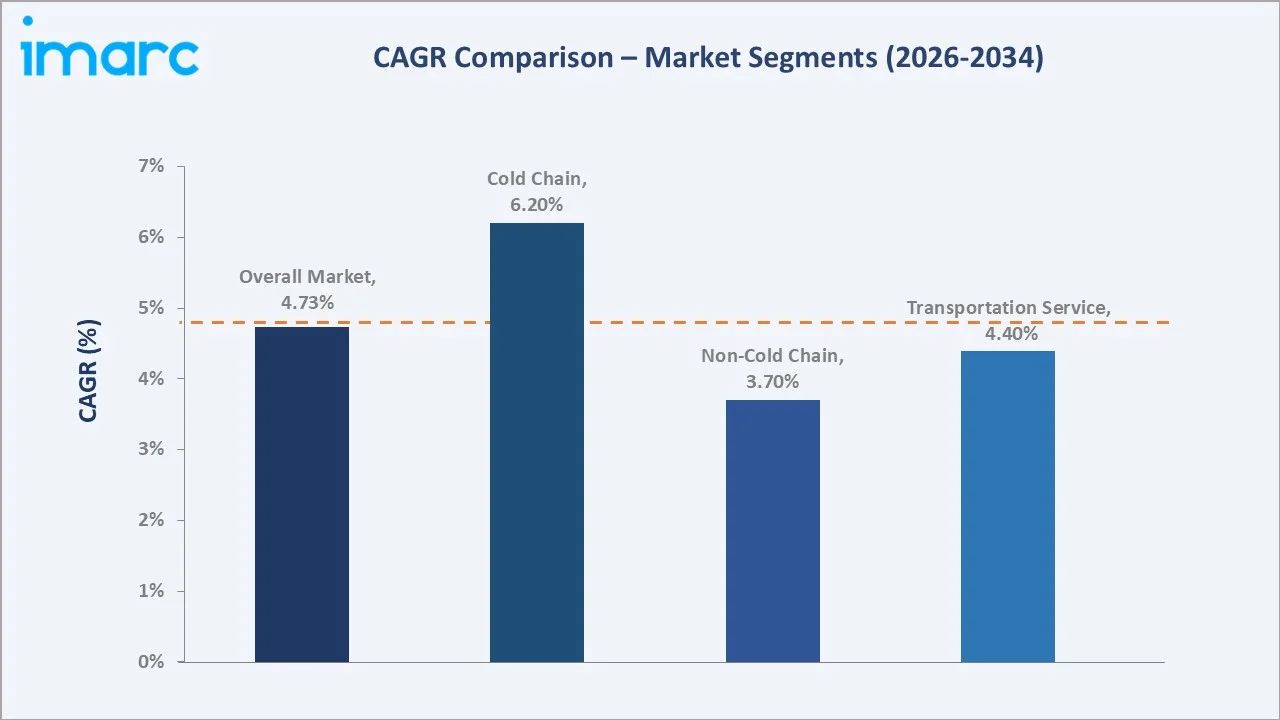
The biopharmaceutical third-party logistics (3PL) market size was valued at USD 135.6 Billion in 2025 and is estimated to reach USD 142.0 Billion in 2026, and is projected to reach USD 208.2 Billion by 2034, growing at a CAGR of 4.73% during 2026-2034. The market is driven by rapid expansion of biologics and biosimilar pipelines, tightening GDP regulatory requirements for pharmaceutical distribution, and growing outsourcing of pharmaceutical supply chain operations to specialised third party logistics providers. Growing demand for temperature-sensitive storage and validated cold chain transport is underpinning sustained market growth globally.
Non-Cold Chain leads supply chain segmentation at 54.7%. Warehousing and Storage commands 43.8% of service type. North America holds the largest regional share at 37.2%.
Market Snapshot
|
Metric |
Value |
|
Base Year Market Size (2025) |
USD 135.6 Billion |
|
Market Size (2026) |
USD 142.0 Billion |
|
Forecast Market Size (2034) |
USD 208.2 Billion |
|
CAGR (2026-2034) |
4.73% |
|
Base Year |
2025 |
|
Historical Period |
2020-2025 |
|
Forecast Period |
2026-2034 |
|
Dominant Supply Chain |
Non-Cold Chain (54.7%, 2025) |
|
Dominant Service Type |
Warehousing and Storage (43.8%, 2025) |
|
Leading Region |
North America (37.2%, 2025) |
The biopharmaceutical 3PL market size increased from USD 107.6 Billion in 2020 to USD 135.6 Billion in 2025 and is estimated to reach USD 142.0 Billion in 2026. The market is further expected to grow to USD 170.9 Billion by 2030 and USD 208.2 Billion by 2034. The market is underpinned by accelerating biologics output, biosimilar market penetration, growing mRNA and cell and gene therapy commercialisation, and sustained pharmaceutical outsourcing to specialised third party logistics providers globally.
-market_ppt_pushppreet.webp)
To get more information on this market, Request Sample
The Cold Chain segment is growing fastest at approximately 6.2% CAGR through accelerating biologics and advanced therapy volumes. Non-Cold Chain grows steadily at approximately 3.7% CAGR through lyophilised biologics and ambient-temperature formulation advances sustaining above-standard pharmaceutical logistics growth.
Executive Summary
The biopharmaceutical 3PL market expanded from USD 135.6 Billion in 2025 to an estimated USD 142.0 Billion in 2026, positioning it among the world's largest logistics market segments. The market's scale is underpinned by the biopharmaceutical industry's extraordinary pipeline growth, the regulatory complexity of biological drug distribution, and the increasing strategic importance of cold chain integrity in ensuring therapeutic efficacy. These structural demand drivers are supporting sustained 3PL investment, particularly in GDP-compliant cold chain facilities and digital supply chain monitoring platforms. The market is projected to reach USD 208.2 Billion by 2034. Non-Cold Chain at 54.7% leads through strong ambient-temperature biologics demand. Warehousing and Storage at 43.8% reflects biopharmaceutical inventory expansion. North America leads regionally at 37.2%.
Key Market Insights
|
Insight |
Data |
|
Dominant Supply Chain |
Non-Cold Chain – 54.7% share (2025) |
|
Dominant Service Type |
Warehousing and Storage – 43.8% market share (2025) |
|
Leading Region |
North America – 37.2% share (2025) |
|
Market Opportunity |
Cold chain infrastructure expansion for biologics, biosimilars, and mRNA therapies; digital supply chain integration; emerging market 3PL hub development |
Key Analytical Observations Supporting the Above Data:
- Non-Cold Chain at 54.7%: The Non-Cold Chain segment dominates due to strong demand for ambient and controlled room-temperature biopharmaceutical storage, covering lyophilised biologics, oral solid dosage forms, and pharmaceutical excipients. Growing formulation advances enabling room-temperature stability for previously refrigerated products are further supporting this segment's leadership and widening its market share advantage over cold chain alternatives.
- Warehousing and Storage at 43.8%: Warehousing and Storage leads service type through GDP-compliant biopharmaceutical storage requirements, expanding biopharmaceutical manufacturer inventory holdings, and growing adoption of automated storage and retrieval systems. The increasing complexity of biologics portfolios and the requirement for multiple storage temperature zones within single facilities are driving 3PL warehousing investment and expanding this segment's commercial scale above other service types.
- North America at 37.2%: North America leads regionally through the US FDA-regulated biologics manufacturing concentration, the world's most advanced biopharmaceutical 3PL infrastructure, and the highest per-unit biopharmaceutical logistics expenditure globally. The region's established network of GDP-certified cold chain facilities, combined with the concentration of leading biopharmaceutical manufacturers, sustains its dominant regional market position.
Biopharmaceutical Third Party Logistics (3PL) Market Overview
The biopharmaceutical 3PL market serves as the critical operational backbone of the global biopharmaceutical supply chain, encompassing temperature-controlled warehousing, validated transportation, regulatory compliance management, and reverse logistics for biologics, vaccines, biosimilars, and advanced therapy medicinal products (ATMPs). Market dynamics are shaped by pharmaceutical manufacturers outsourcing an increasing share of supply chain operations to specialised 3PL providers driven by the high complexity and regulatory requirements of biopharmaceutical handling.
The biopharmaceutical 3PL ecosystem integrates specialised cold chain infrastructure, GDP-compliant warehouse networks, validated air and ground freight lanes, IoT monitoring platforms, and regulatory documentation management systems. Macroeconomic factors include expanding global biologics output, tightening pharmaceutical supply chain regulations, increasing clinical trial activity requiring specialised logistics, and growing biosimilar competition driving cost efficiency in logistics operations.
Market Dynamics
To evaluate market opportunities, Request Sample
Market Drivers
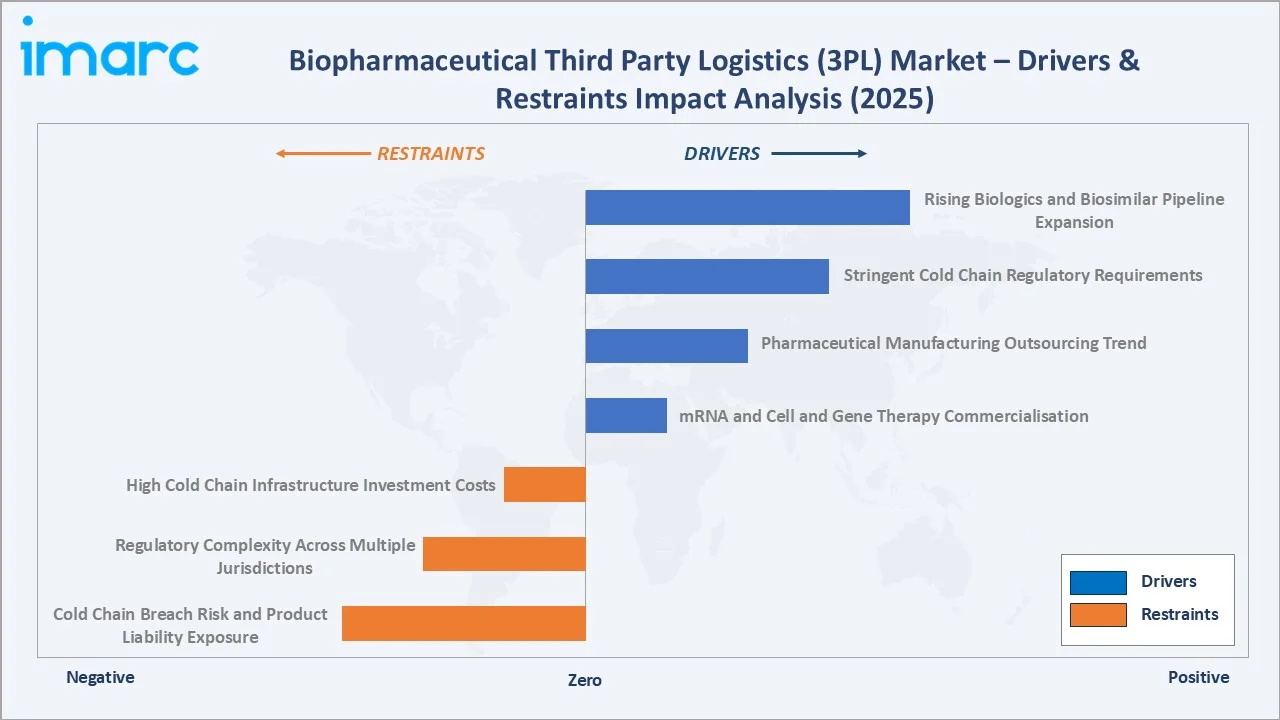
- Rising Biologics and Biosimilar Pipeline Expansion: The rapid expansion of biologics and biosimilar pipelines globally is generating sustained demand for specialised 3PL services capable of handling high-value, temperature-sensitive biological products requiring validated cold chain environments. Over 2,000 biologic molecules are currently in clinical development globally, each requiring specialised logistics handling. This expanding pipeline is directly translating into growing 3PL service contracts as pharmaceutical manufacturers seek GDP-certified partners capable of managing complex biopharmaceutical distribution requirements across multiple temperature zones and regulatory jurisdictions.
- Stringent Cold Chain Regulatory Requirements: Global regulations, including FDA 21 CFR Part 211, EU GDP guidelines (EU 2013/C 343/01), and WHO technical report series, mandate pharmaceutical-grade storage and transport for biologics, compelling manufacturers to partner with certified 3PL providers rather than managing distribution in-house. The increasing enforcement of GDP compliance requirements across emerging markets, combined with growing regulatory scrutiny of temperature excursions and documentation integrity, is expanding the addressable market for specialised biopharmaceutical 3PL providers at the expense of general logistics operators.
- Pharmaceutical Manufacturing Outsourcing Trend: Pharmaceutical and biopharmaceutical companies are increasingly outsourcing non-core logistics functions to specialised 3PLs, reducing capital expenditure on warehouse infrastructure while gaining access to regulatory expertise, established compliance frameworks, and proven cold chain networks. This structural outsourcing trend is accelerating as biopharmaceutical manufacturers prioritise manufacturing capacity expansion and pipeline investment over logistics infrastructure development, creating sustained and growing commercial opportunity for 3PL providers with validated biopharmaceutical handling capabilities.
- mRNA and Cell and Gene Therapy Commercialisation: The rapid commercialisation of mRNA vaccines, CAR-T therapies, and gene therapies requires ultra-low temperature (-80°C and cryogenic) logistics capabilities, driving major 3PL players to invest significantly in specialised ultra-low temperature facilities and transport solutions. This emerging therapy category demands chain-of-identity tracking, short shelf lives requiring rapid distribution, and extremely precise temperature maintenance throughout the supply chain, creating an entirely new and fast-growing logistics segment requiring capital-intensive infrastructure investment by specialised 3PL providers.
Market Restraints
- High Cold Chain Infrastructure Investment Costs: Building and maintaining GDP-compliant cold chain facilities, validated temperature-controlled vehicles, and IoT monitoring infrastructure requires significant and sustained capital investment, creating substantial barriers for smaller 3PL providers and limiting market entry capacity in emerging economies. The specialised nature of biopharmaceutical cold chain infrastructure demands ongoing investment in calibration, validation, and regulatory documentation that further increases operational costs above standard logistics infrastructure.
- Regulatory Complexity Across Multiple Jurisdictions: Divergent pharmaceutical distribution regulations across regions, including differing GDP requirements, serialisation standards, import and export permits, and temperature documentation requirements, create significant compliance complexity for global 3PL operators serving multinational biopharmaceutical clients. This regulatory complexity increases operational overhead, qualified personnel requirements, and the risk of regulatory non-compliance events that can result in product rejection and substantial financial penalties.
- Cold Chain Breach Risk and Product Liability Exposure: Temperature excursions resulting in biopharmaceutical product degradation expose 3PL providers to significant liability, product replacement costs, and reputational damage in markets where a single cold chain breach can destroy multi-million-dollar biopharmaceutical batches. The high unit values of biologics, biosimilars, and advanced therapies mean that logistics errors carry disproportionate financial consequences relative to standard pharmaceutical logistics, creating heightened insurance and risk management requirements.
Market Opportunities
- Biosimilar Market Expansion in Emerging Economies: Growing biosimilar approvals and market penetration in Asia-Pacific, Latin America, and Middle East markets are creating significant demand for cost-effective, GDP-compliant 3PL networks in markets previously underserved by specialised biopharmaceutical logistics providers. The maturing biosimilar regulatory frameworks in these markets, combined with expanding healthcare budgets and growing patient access to biological therapies, are creating sustained demand for pharmaceutical-grade logistics infrastructure.
- Digital Supply Chain and IoT Technology Integration: Real-time temperature monitoring via IoT sensors, predictive analytics for shipment risk assessment, AI-driven inventory optimisation, and blockchain-based serialisation platforms represent significant technology-enabled growth opportunities for 3PL providers able to offer differentiated digital supply chain capabilities to biopharmaceutical clients. The increasing sophistication of pharmaceutical supply chain technology requirements is creating commercial opportunities for technology-forward 3PL providers to capture premium pricing and preferred supplier positions.
Market Challenges
- Global Supply Chain Disruptions and Network Resilience: Driver shortages, port congestion, geopolitical disruptions, and pandemic-related supply chain interruptions continue to affect pharmaceutical supply chain reliability, increasing pressure on 3PL providers to build resilient, redundant distribution networks with multiple routing options and contingency logistics protocols. Building and maintaining sufficient network redundancy to guarantee uninterrupted biopharmaceutical distribution requires significant investment in alternative transportation channels and backup storage facilities.
- Ultra-Low Temperature Logistics Complexity: Ultra-low temperature requirements for advanced therapies, including -80°C storage for mRNA products and cryogenic (-196°C liquid nitrogen) transport for cell and gene therapies, demand continuous equipment investment, specialised personnel training, and stringent qualification and validation programmes that challenge standard 3PL operators seeking to enter the high-margin advanced therapy logistics segment. This creates significant operational complexity and regulatory burden requiring dedicated investment and experienced personnel to manage safely.
Emerging Market Trends
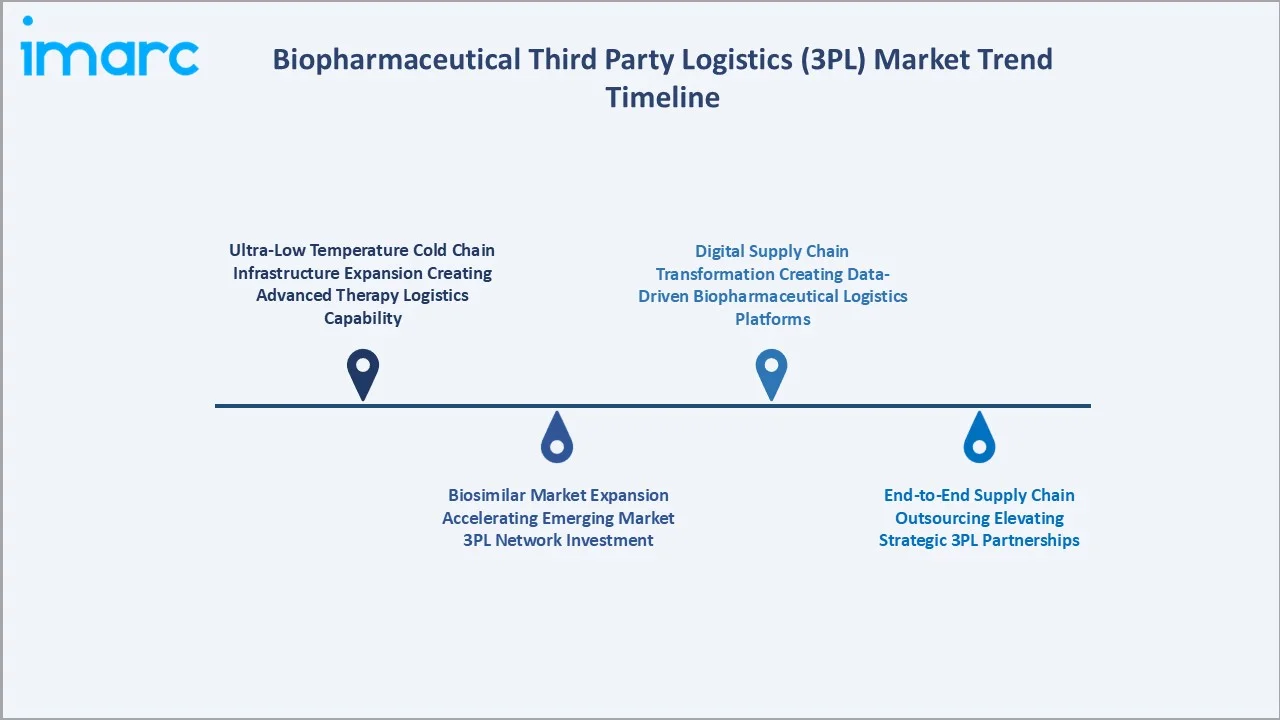
1. Ultra-Low Temperature Cold Chain Infrastructure Expansion Creating Advanced Therapy Logistics Capability
The commercialisation of mRNA vaccines, CAR-T therapies, and gene therapies demands -80°C and cryogenic storage capabilities, driving major 3PL players to invest in ultra-low temperature facilities. This is creating a specialised and high-margin logistics segment for biopharmaceutical 3PL providers with the capital and technical expertise to build and maintain validated ultra-low temperature infrastructure at commercial scale.
2. Digital Supply Chain Transformation Creating Data-Driven Biopharmaceutical Logistics Platforms
Real-time temperature monitoring via IoT sensors, predictive analytics for shipment risk assessment, and blockchain-based serialisation are transforming biopharmaceutical 3PL into a technology-enabled service category. Leading 3PL providers are investing in proprietary digital logistics platforms that provide biopharmaceutical clients with end-to-end supply chain visibility, compliance documentation, and predictive excursion risk management across all temperature zones.
3. Biosimilar Market Expansion Accelerating Emerging Market 3PL Network Investment
Growing biosimilar approvals in Asia-Pacific and Latin America are creating demand for cost-effective, GDP-compliant 3PL networks in markets previously underserved by specialised biopharmaceutical logistics infrastructure. Established global 3PL players and regional logistics providers are investing in GDP-certified facilities, cold chain validation programmes, and regulatory compliance teams in key emerging markets to capture growing biosimilar distribution volumes.
4. End-to-End Supply Chain Outsourcing Elevating Strategic 3PL Partnerships
Pharmaceutical manufacturers are increasingly delegating full supply chain management to 3PL providers, elevating the strategic role of 3PLs in biopharmaceutical value chains. This transition from transactional logistics procurement to long-term strategic partnership is creating multi-year preferred supplier agreements and expanding the scope of 3PL service contracts to include regulatory affairs support, quality management, and customer service functions.
Industry Value Chain Analysis
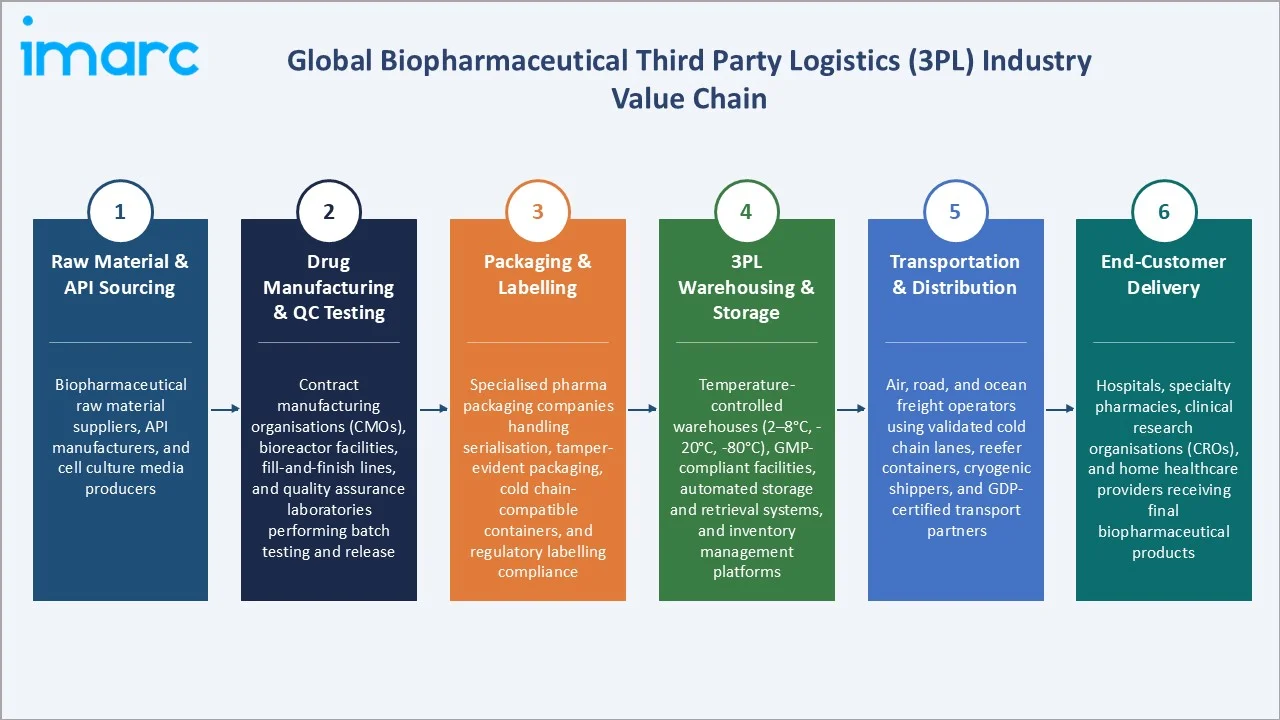
The biopharmaceutical 3PL value chain integrates upstream raw material sourcing with downstream patient delivery through a series of specialised, regulatory-compliant operational stages. The value chain's commercial structure creates the unique biopharmaceutical logistics dynamic, where specialised cold chain infrastructure and GDP compliance requirements create high barriers to entry and sustain premium pricing for qualified 3PL providers throughout the supply chain.
|
Stage |
Key Participants |
|
Raw Material & API Sourcing |
Biopharmaceutical raw material suppliers, API manufacturers, and cell culture media producers. |
|
Drug Manufacturing & QC Testing |
Contract manufacturing organisations (CMOs), bioreactor facilities, fill-and-finish lines, and quality assurance laboratories performing batch testing and release. |
|
Packaging & Labelling |
Specialised pharma packaging companies handling serialisation, tamper-evident packaging, cold chain-compatible containers, and regulatory labelling compliance. |
|
3PL Warehousing & Storage |
Temperature-controlled warehouses (2–8°C, -20°C, -80°C), GMP-compliant facilities, automated storage and retrieval systems, and inventory management platforms. |
|
Transportation & Distribution |
Air, road, and ocean freight operators using validated cold chain lanes, reefer containers, cryogenic shippers, and GDP-certified transport partners. |
|
End-Customer Delivery |
Hospitals, specialty pharmacies, clinical research organisations (CROs), and home healthcare providers receiving final biopharmaceutical products. |
The warehousing and storage stage is the biopharmaceutical 3PL value chain's most commercially significant segment, where GDP-compliant temperature-controlled facilities, validated monitoring systems, and qualified personnel create the highest barriers to entry and sustain premium service pricing. The transportation stage is experiencing the fastest growth driven by expanding biologics cross-border shipments, growing air freight demand for high-value biological therapies, and increasing last-mile delivery complexity for patient-administered biologics.
Technology Landscape in the Biopharmaceutical 3PL Industry
Cold Chain Monitoring and IoT Sensor Technology
IoT-enabled temperature loggers, GPS-tracked reefer containers, and cloud-based cold chain monitoring platforms provide real-time visibility for biopharmaceutical shipments, reducing cold chain excursion risk and ensuring GDP regulatory compliance. Real-time monitoring data enables immediate corrective action when temperature deviations occur, minimising product loss and regulatory non-compliance risk across complex multi-modal biopharmaceutical distribution networks globally.
Warehouse Automation and Robotics
Automated storage and retrieval systems (AS/RS), robotic picking, and AI-driven inventory optimisation are transforming biopharmaceutical warehouse operations, improving accuracy, reducing handling-related product damage, and enabling the high-throughput processing required by large-scale biologics and vaccine distribution programmes. Warehouse automation is also supporting the scalable capacity expansion required to handle growing biopharmaceutical volumes without proportional increases in qualified personnel requirements.
Blockchain-Based Serialisation and Track-and-Trace
Blockchain technology enables immutable end-to-end product traceability across the biopharmaceutical supply chain, supporting DSCSA compliance, EU Falsified Medicines Directive requirements, and counterfeiting prevention for high-value biological therapies. The adoption of blockchain serialisation platforms is creating new data-driven partnership models between biopharmaceutical manufacturers and 3PL providers through shared immutable supply chain records.
Market Segmentation Analysis
The report covers the following segments:
|
Segment Category |
Leading Segment |
Market Share |
Year |
|
Supply Chain |
Non-Cold Chain |
54.7% |
2025 |
|
Service Type |
Warehousing and Storage |
43.8% |
2025 |
|
Region |
North America |
37.2% |
2025 |

By Supply Chain
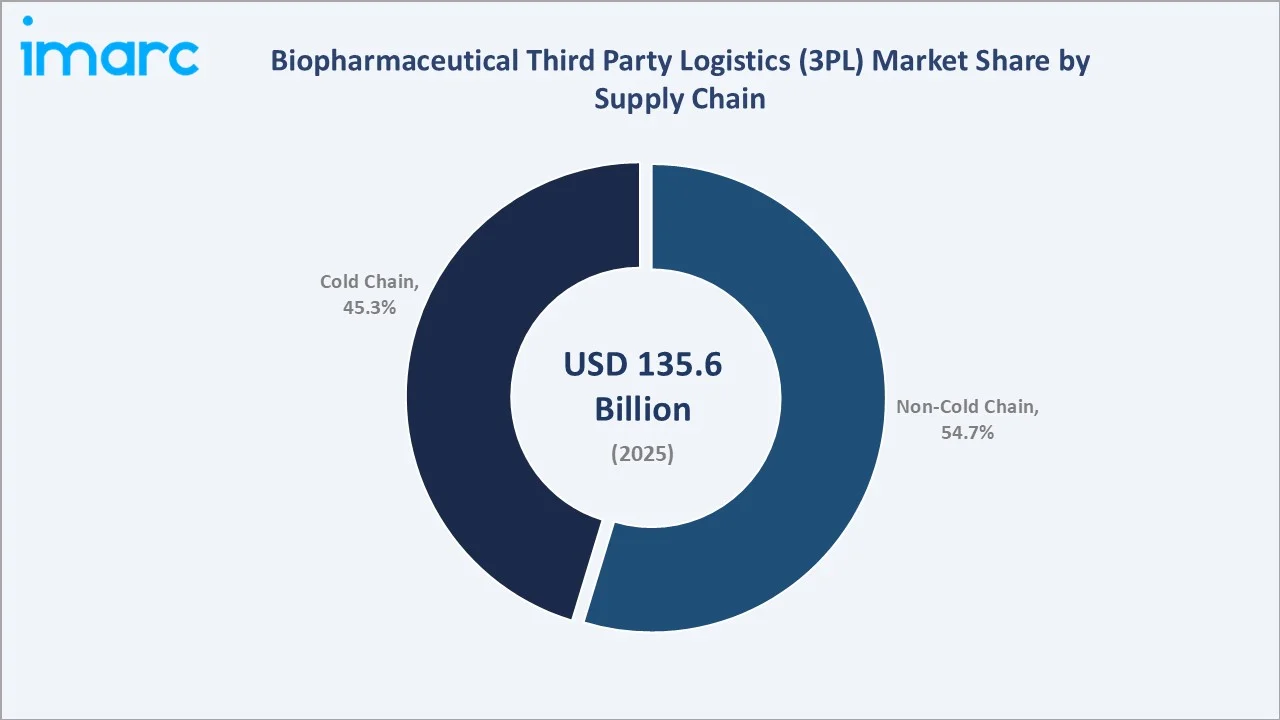
Non-Cold Chain leads at 54.7% (2025). This segment serves ambient and controlled room-temperature biopharmaceutical products, including lyophilised biologics, oral solid dosage forms, certain vaccines stabilised at room temperature, and pharmaceutical excipients that do not require refrigeration or freezing. Non-Cold Chain's commercial dominance reflects the broad range of biopharmaceutical products achievable at ambient storage conditions through lyophilisation and formulation stabilisation technologies.
To access detailed market analysis, Request Sample
Cold Chain at 45.3% is the fastest-growing supply chain segment, driven by biologics, vaccines, and advanced cell and gene therapies requiring validated cold storage at 2–8°C, -20°C, or ultra-low -80°C temperatures. The continued expansion of biologic drug approvals requiring refrigerated storage is sustaining Cold Chain's growth trajectory above Non-Cold Chain through the forecast period.
By Service Type
Warehousing and Storage leads at 43.8% (2025). This segment encompasses GDP-compliant biopharmaceutical warehouses, cGMP storage facilities, controlled environment storage operations, and automated inventory management systems critical for biological drug integrity and regulatory compliance throughout the distribution chain.
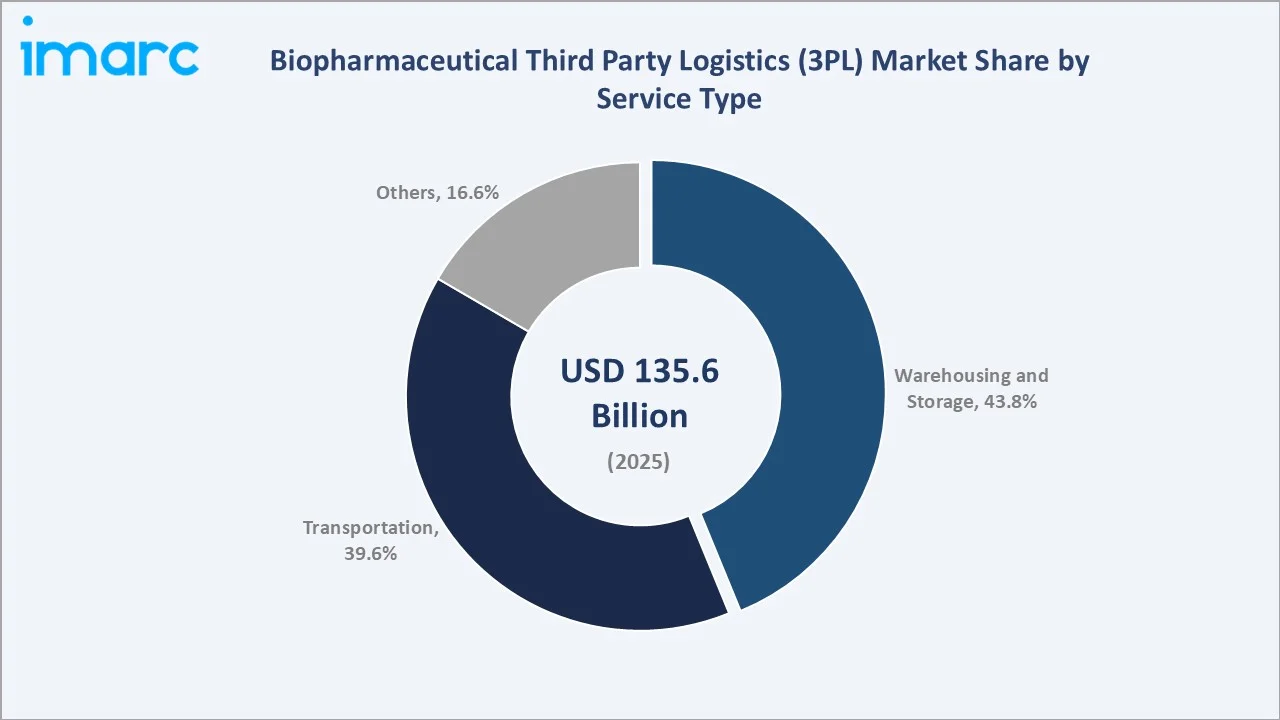
Transportation at 39.6% reflects sustained demand for validated air and ground freight lanes for high-value biologics and vaccines. Others at 16.6% includes packaging, labelling, regulatory compliance support, kitting, and reverse logistics services for recalled or expired biopharmaceutical products.
Regional Market Insights
|
Region |
Share (2025) |
Key Drivers & Characteristics |
|
North America |
37.2% |
Driven by the US FDA-regulated biologics sector, advanced cold chain infrastructure, and high biopharmaceutical R&D investment. |
|
Europe |
28.1% |
Strong biosimilar pipeline, EMA regulatory support, and established pharmaceutical manufacturing hubs in Germany, France, and the UK. |
|
Asia-Pacific |
24.3% |
Rapid biopharmaceutical manufacturing expansion in China and India, growing clinical trial activity, and improving logistics infrastructure. |
|
Latin America |
6.1% |
Brazil and Mexico lead regional growth through expanding healthcare systems and increased biologics demand. |
|
Middle East and Africa |
4.3% |
Nascent market with growing opportunity as GCC countries invest in healthcare infrastructure and biologics import capacity. |
North America's 37.2% market leadership reflects the US biopharmaceutical industry's global scale, the concentration of FDA-regulated biologics manufacturing in the northeastern US corridor, and the region's established network of GDP-certified cold chain facilities serving leading biopharmaceutical manufacturers. Europe's 28.1% reflects its robust biosimilar market, EMA regulatory framework, and pharmaceutical manufacturing clusters in Germany, Switzerland, Ireland, and Belgium.
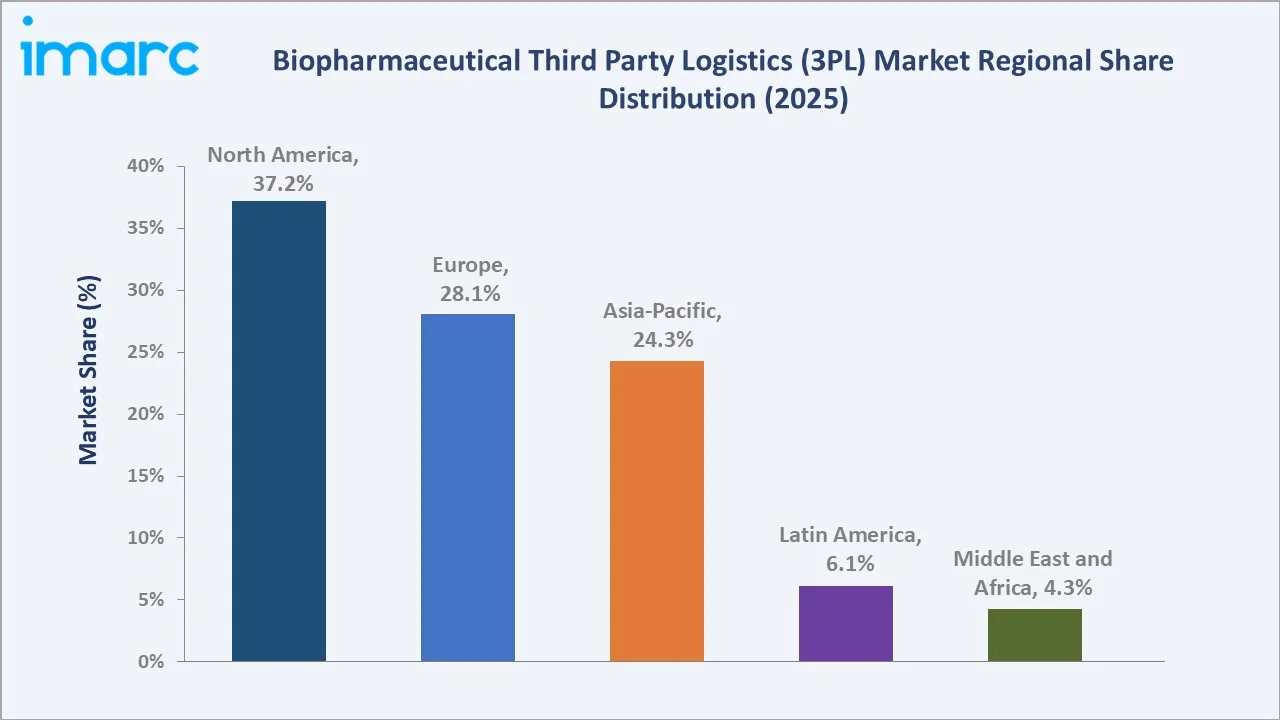
Asia-Pacific at 24.3% is the fastest-growing region, led by China's biopharmaceutical manufacturing scale-up, India's biosimilar export growth, and expanding healthcare infrastructure across South Korea, Japan, and Southeast Asia. Latin America at 6.1% is led by Brazil and Mexico, where expanding healthcare budgets and growing biologics market penetration are driving investment in specialised 3PL cold chain infrastructure.
Competitive Landscape
The global biopharmaceutical 3PL market features intense competition between global integrated logistics players and specialised pharmaceutical 3PL providers. Competition is driven by GDP compliance capabilities, cold chain network breadth, digital monitoring platforms, regulatory expertise, and the ability to provide integrated end-to-end biopharmaceutical supply chain solutions across multiple regions and temperature zones.
|
Company |
Key Services |
Market Position |
Core Strength |
|
DHL International GmbH |
Cold chain freight, GDP warehousing, clinical trial logistics |
Market Leader |
End-to-end temperature-controlled logistics and global biopharmaceutical supply chain solutions |
|
Kuehne+Nagel |
GDP storage, clinical supply, HealthChain |
Strong Challenger |
Advanced pharma logistics network with GDP-compliant cold chain capabilities |
|
FedEx |
Custom Critical, SenseAware monitoring, cold chain lanes |
Strong Challenger |
Specialised cold chain network with real-time IoT monitoring for temperature-assured biologics delivery |
|
McKesson Corporation |
Specialty drug, 3PL warehousing, oncology logistics |
Strong Challenger |
Dominant US pharmaceutical distributor with robust specialty drug and biologics 3PL infrastructure |
|
United Parcel Service of America, Inc. |
UPS Healthcare, cold chain delivery, returns management |
Strong Challenger |
Premier healthcare logistics through UPS Healthcare with temperature-assured delivery and returns management |
Key players include DHL International GmbH, Kuehne+Nagel, FedEx, McKesson Corporation, United Parcel Service of America, Inc., and others.
Key Company Profiles
DHL International GmbH
DHL International GmbH is the world's leading international logistics company and a dominant force in biopharmaceutical 3PL through its DHL Life Sciences and Healthcare division, operating across 220+ countries with a comprehensive portfolio of GDP-compliant cold chain services for biological drugs, vaccines, and advanced therapies.
- Key Services: Temperature-controlled air and ground freight, cGMP-compliant warehousing, GDP-validated cold chain storage, clinical trial supply logistics, last-mile cold chain delivery, and reverse logistics for recalled biopharmaceutical products.
- Strategic Focus: DHL's strategic focus is on deepening biopharmaceutical 3PL capabilities through proprietary technology integration, including its SensorTronic monitoring platform for real-time cold chain visibility, GDP compliance investment across its global facility network, and building integrated digital supply chain platforms that provide biopharmaceutical clients with end-to-end visibility, compliance documentation, and predictive excursion risk management across all temperature zones and distribution channels. DHL is also expanding its ultra-low temperature logistics capabilities to support the growing commercial pipeline of advanced therapy medicinal products.
Kuehne+Nagel
Kuehne+Nagel is a leading global logistics provider headquartered in Switzerland with a strong pharmaceutical and healthcare business unit, offering end-to-end supply chain solutions for biopharmaceutical clients across more than 100 countries through its KN PharmaChain service platform and GDP-certified global warehousing network.
- Key Services: KN PharmaChain temperature-controlled logistics, GDP-compliant cGMP warehousing, clinical supply chain management, temperature-controlled air and ocean freight, and integrated regulatory compliance and documentation management for biopharmaceutical clients across all major global markets.
- Strategic Focus: Kuehne + Nagel's strategic focus is on building integrated digital logistics platforms that provide real-time cold chain visibility and compliance monitoring for biopharmaceutical clients, while expanding its validated cold chain lane network to cover emerging biopharmaceutical markets in Asia-Pacific and Latin America and deepening its clinical trial logistics capabilities to capture growing demand from contract research organisations and biopharmaceutical manufacturers. The company is also investing in blockchain-based serialisation and track-and-trace technology to meet evolving regulatory requirements and provide enhanced traceability across complex global biopharmaceutical distribution networks.
Market Concentration Analysis
The global biopharmaceutical 3PL market is moderately concentrated, with the top five players collectively accounting for an estimated 40–50% of global biopharmaceutical 3PL market revenue. Concentration is highest in North America and Europe, where established 3PL providers with GDP compliance certifications and extensive cold chain infrastructure command premium positioning and preferred supplier contracts.
Market concentration is evolving through two opposing forces: global 3PL leaders are deepening their biopharmaceutical specialisation and technology platforms, incrementally growing their market share through expanded service scope and geographic coverage, while the Asia-Pacific market is growing more fragmented as regional logistics providers invest in GDP compliance capabilities and compete alongside global 3PL operators for growing regional biologics distribution volumes.
Investment & Growth Opportunities
Highest Growth Segments
Cold Chain segment (~6.2% CAGR through expanding biologics and advanced therapy volumes), ultra-low temperature cell and gene therapy logistics (~12–15% CAGR from early base), Asia-Pacific 3PL market expansion (~7.1% CAGR), clinical trial logistics growth (~8–10% CAGR through expanding global trial activity), and digital cold chain monitoring platform development (~20–25% CAGR) represent the highest-growth biopharmaceutical 3PL investment vectors through 2034.
Emerging Investment Opportunities
The cell and gene therapy logistics segment — requiring cryogenic transport at -196°C liquid nitrogen and chain-of-identity tracking for each individual patient therapy — represents the most specialised, highest-margin, and fastest-growing emerging opportunity within biopharmaceutical 3PL, with commercial scale-up of approved CAR-T therapies and gene therapy products creating sustained and rapidly growing demand for ultra-low temperature logistics capability.
Investment Themes
- Ultra-low temperature cold chain infrastructure expansion for cell and gene therapy commercial-scale logistics: The fastest-growing biopharmaceutical category requires the most capital-intensive 3PL infrastructure investment, creating significant commercial opportunity for first-mover 3PL providers establishing validated ultra-low temperature networks before the major wave of advanced therapy commercial launches.
- Digital supply chain platform investment combining IoT monitoring, AI analytics, and blockchain serialisation: Technology differentiation is becoming a primary competitive requirement in biopharmaceutical 3PL as regulatory agencies and manufacturers demand real-time supply chain visibility and immutable compliance documentation across all distribution channels and temperature zones.
Future Market Outlook (2026-2034)
The global biopharmaceutical 3PL market is projected to grow from USD 135.6 Billion in 2025 to USD 142.0 Billion in 2026, reaching USD 208.2 Billion by 2034, registering a CAGR of 4.73% during 2026–2034. The market's anchor value of USD 170.9 Billion in 2030 represents the biopharmaceutical 3PL industry at a structural scale inflection, where advanced therapy commercial volumes, biosimilar market maturity, and digital supply chain transformation intersect to create sustained above-healthcare-logistics average growth.
Three structural forces define biopharmaceutical 3PL market growth through 2034: the accelerating commercialisation of advanced therapies (cell, gene, and mRNA products) demanding ultra-specialised logistics capabilities; the global expansion of biosimilar markets in Asia-Pacific and Latin America creating new geographic demand for GDP-compliant cold chain infrastructure; and the digital transformation of pharmaceutical supply chains through IoT, AI, and blockchain technology platforms creating sustainable competitive differentiation for technology-forward 3PL providers.
Research Methodology
Primary Research
Primary research comprised structured interviews with biopharmaceutical 3PL industry stakeholders, including Logistics Directors, Vice Presidents of Supply Chain at pharmaceutical companies, Regulatory Compliance Officers at 3PL providers, Cold Chain Technology Directors, Quality Assurance Managers, and representatives from pharmaceutical industry associations across North America, Europe, and Asia-Pacific.
Secondary Research
Secondary research encompassed pharmaceutical industry publications, FDA and EMA regulatory filings, company annual reports, GDP guideline documentation from WHO and national medicines agencies, pharmaceutical logistics industry whitepapers, government health sector investment data, and clinical trial registry data for active biopharmaceutical pipeline assessment. Over 65 secondary sources were reviewed.
Forecasting Models
Market revenue forecasts were developed using a bottom-up biopharmaceutical production volume model: global biopharmaceutical output by product category multiplied by logistics spend per unit, aggregated by region and service type, with regulatory compliance cost factors, cold chain premium factors, and digital logistics investment multipliers applied across all market segments.
Biopharmaceutical Third Party Logistics (3PL) Market Report Coverage:
| Report Features | Details |
|---|---|
| Base Year of the Analysis | 2025 |
| Historical Period | 2020-2025 |
| Forecast Period | 2026-2034 |
| Units | Billion USD |
| Scope of the Report | Exploration of Historical Trends and Market Outlook, Industry Catalysts and Challenges, Segment-Wise Historical and Future Market Assessment:
|
| Supply Chains Covered | Cold Chain, Non-Cold Chain |
| Service Types Covered | Transportation, Warehousing and Storage, and Others |
| Regions Covered | Asia Pacific, Europe, North America, Latin America, Middle East and Africa |
| Countries Covered | United States, Canada, Germany, France, United Kingdom, Italy, Spain, Russia, China, Japan, India, South Korea, Australia, Indonesia, Brazil, Mexico |
| Companies Covered | DHL International GmbH, Kuehne+Nagel, FedEx, McKesson Corporation, United Parcel Service of America, Inc., etc. |
| Customization Scope | 10% Free Customization |
| Post-Sale Analyst Support | 10-12 Weeks |
| Delivery Format | PDF and Excel through Email (We can also provide the editable version of the report in PPT/Word format on special request) |
Frequently Asked Questions About the Biopharmaceutical Third Party Logistics Market Report
Biopharmaceutical third party logistics market size is estimated at USD 142.0 Billion in 2026, driven by expanding biologics and biosimilar pipelines, growing demand for validated cold chain storage and transport, and accelerating pharmaceutical manufacturing outsourcing to specialised 3PL providers with GDP-certified infrastructure and regulatory expertise across global markets.
The biopharmaceutical 3PL market grows at a CAGR of 4.73% during 2026-2034, reaching USD 208.2 Billion by 2034. Overall growth is sustained by the biologics pipeline expansion, biosimilar market globalisation, advanced therapy commercialisation, and the digital transformation of pharmaceutical supply chains driving technology-premium 3PL service demand.
Non-Cold Chain leads at 54.7% through broad ambient-temperature biopharmaceutical product demand, covering lyophilised biologics, oral dosage forms, and pharmaceutical excipients achievable at controlled room temperature through formulation stabilisation technologies and lyophilisation advances sustaining Non-Cold Chain's commercial dominance.
Warehousing and Storage leads at 43.8% through GDP-compliant biopharmaceutical storage requirements, expanding biopharmaceutical manufacturer inventory holdings across multiple temperature zones, and growing adoption of automated warehousing systems enabling high-throughput biological product handling.
North America leads at 37.2% through the US FDA-regulated biologics manufacturing concentration, the world's most advanced biopharmaceutical cold chain infrastructure network, and the highest per-unit biopharmaceutical logistics expenditure driven by complex specialty drug and advanced therapy distribution requirements.
Leading companies include DHL International GmbH, Kuehne+Nagel, FedEx, McKesson Corporation, United Parcel Service of America, Inc., and others.
The biopharmaceutical 3PL market is projected to reach USD 170.9 Billion by 2030, with Asia-Pacific growing fastest as biopharmaceutical manufacturing expands across China, India, South Korea, and Singapore requiring sophisticated cold chain 3PL capabilities, and with advanced therapy commercial logistics creating new ultra-low temperature infrastructure investment requirements globally.
Three priority investment opportunities include ultra-low temperature cold chain infrastructure for advanced therapy commercialisation, digital supply chain platform development combining IoT monitoring and AI analytics for GDP compliance, and emerging market 3PL hub development in Asia-Pacific and Latin America capturing growing biosimilar distribution volumes.
Need more help?
- Speak to our experienced analysts for insights on the current market scenarios.
- Include additional segments and countries to customize the report as per your requirement.
- Gain an unparalleled competitive advantage in your domain by understanding how to utilize the report and positively impacting your operations and revenue.
- For further assistance, please connect with our analysts.
 Request Customization
 Speak to an Analyst
 Request Brochure
 Inquire Before Buying
Benefits of Customization
- Personalize this research
- Triangulate with your data
- Get data as per your format and definition
- Gain a deeper dive into a specific application, geography, customer, or competitor
- Any level of personalization
Get in Touch With Us
UNITED STATES
Phone: +1-201-971-6302
INDIA
Phone: +91-120-433-0800
UNITED KINGDOM
Phone: +44-753-714-6104
Email: [email protected]
Client Testimonials




.webp)




.webp)













Related Reports

Choose your plan
*Please note that the prices mentioned below are starting prices for each bundle type. Kindly contact our team for further details.*
Single User License
- 1 User License, Access on 2 Devices
- PDF Report + Excel Dataset (Password Protected)
- Lifetime Access
- No Printing Rights
- 10% Free Report Customization
- 10–12 Weeks of Analyst Support
Five User License
- Access for 5 Users, 2 Devices per User
- PDF Report + Excel Dataset (Password Protected)
- Lifetime Access
- Dedicated Account Manager
- 12–14 Weeks of Analyst Support
- No Printing Rights
- 15% Free Report Customization
- 25% Discount on Your Next Purchase
Corporate User License
- Unlimited User Access (Within Your Organization)
- PDF Report + Excel Dataset
- Lifetime Access
- Dedicated Account Manager
- 14–20 Weeks of Analyst Support
- No Printing Rights
- 20% Free Report Customization
- 30% Discount on Your Next Purchase
Essential Insights
What's included:
3 reports
- Lifetime Access
- PDF Reports
- Excel Datasets
- 2 Weeks of Free Analyst Support
- 2 User Licenses
- Access on 2 Devices
- Printing Rights
- Complimentary PowerPoint (PPT) Version
- Complimentary License Upgrade
Professional Access
What's included:
5 reports
- Lifetime Access
- PDF Reports
- Excel Datasets
- 8 Weeks of Free Analyst Support
- 2 User Licenses
- Access on 2 Devices
- Printing Rights
- Complimentary PowerPoint (PPT) Version
- Complimentary License Upgrade
Business Advantage
What's included:
8 reports
- Lifetime Access
- PDF Reports
- Excel Datasets
- 14 Weeks of Free Analyst Support
- 2 User Licenses
- Access on 2 Devices
- Printing Rights
- Complimentary PowerPoint (PPT) Version
- Complimentary License Upgrade
Enterprise Intelligence
What's included:
10 reports
- Lifetime Access
- PDF Reports
- Excel Datasets
- 20 Weeks of Free Analyst Support
- 2 User Licenses
- Access on 2 Devices
- Printing Rights
- Complimentary PowerPoint (PPT) Version
- Complimentary License Upgrade