
Brazil Agricultural Enzymes Market Size, Share, Trends and Forecast by Enzyme Type, Product Type, Crop Type, and Region, 2026-2034
Brazil Agricultural Enzymes Market Summary:
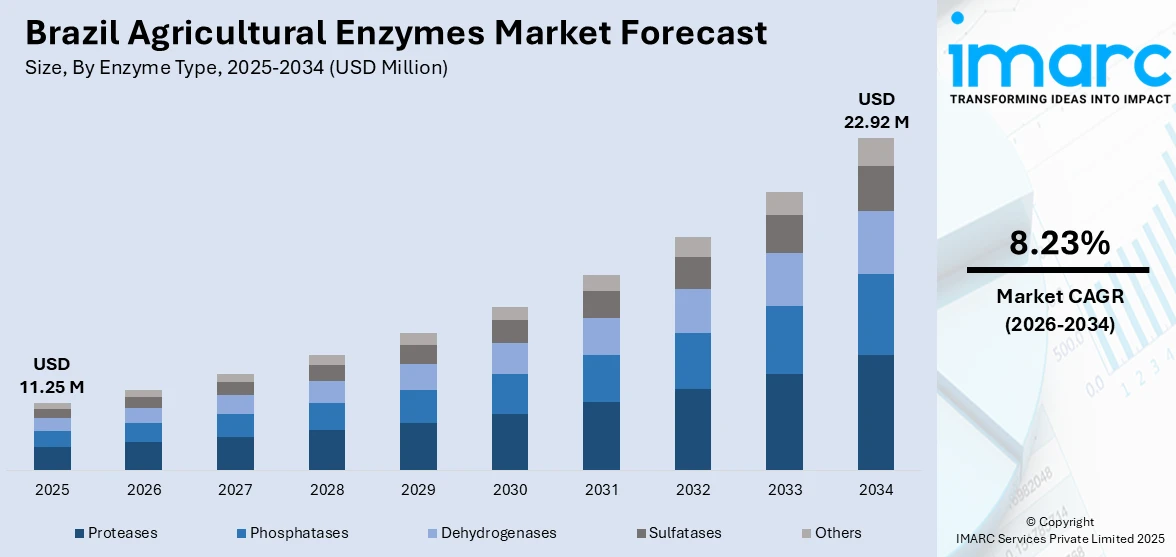
The Brazil agricultural enzymes market size was valued at USD 11.25 Million in 2025 and is projected to reach USD 22.92 Million by 2034, growing at a compound annual growth rate of 8.23% from 2026-2034.
The Brazil agricultural enzymes market is expanding, as farmers increasingly embrace sustainable and bio-based crop management solutions. The growing awareness about soil health preservation, the shift towards eco-friendly farming inputs, and advancements in enzyme formulation technologies are accelerating demand. The country's vast agricultural landscape, combined with a strong regulatory push towards biological alternatives, positions Brazil as a key growth destination for agricultural enzyme adoption and innovation.
Key Takeaways and Insights:
- By Enzyme Type: Proteases dominate the market with a share of 33.8% in 2025, owing to their critical role in nitrogen cycling and soil protein hydrolysis. Their ability to enhance nutrient availability in cereal and oilseed cultivation systems continues to strengthen adoption across major farming regions.
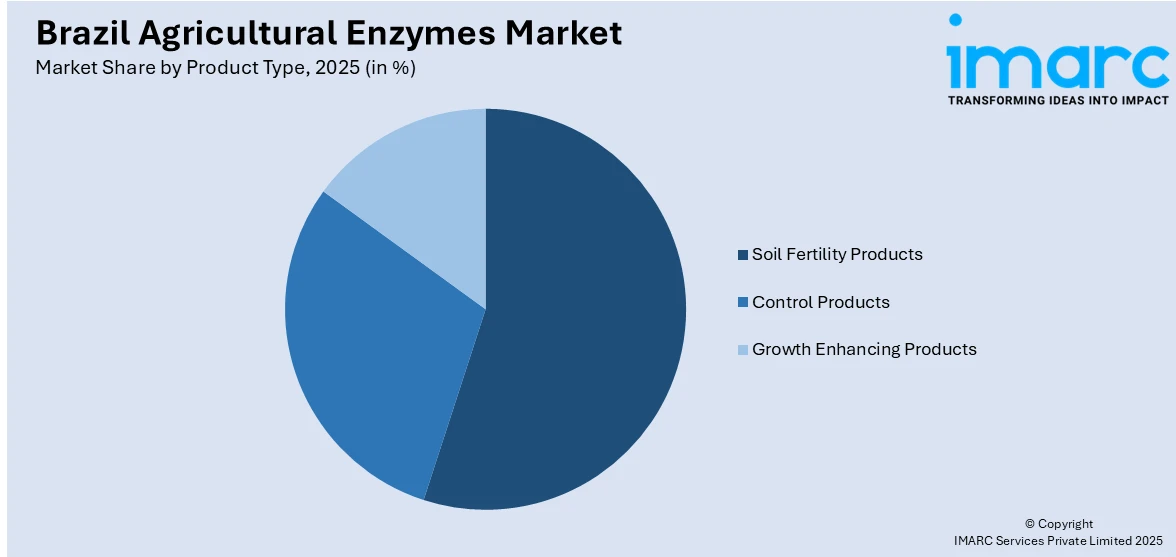
- By Product Type: Soil fertility products lead the market with a share of 45.2% in 2025. This dominance is driven by intensifying demand for sustainable soil enrichment solutions that reduce dependency on synthetic chemical fertilizers while promoting long-term agricultural productivity and soil microbiome health.
- By Crop Type: Cereals and grains comprise the largest segment with a market share of 49.6% in 2025, reflecting the extensive cultivation of soybean, corn, rice, and wheat across Brazilian farmlands, where enzyme-based fertility and protection solutions are widely integrated into crop management programs.
- By Region: Southeast represents the largest region with 42.1% share in 2025, driven by the concentration of agricultural research institutions, advanced farming operations in São Paulo and Minas Gerais, and strong proximity to enzyme manufacturing and distribution networks.
- Key Players: Key players drive the Brazil agricultural enzymes market by investing in research and development (R&D) of advanced bio-based formulations, expanding distribution networks, forging strategic partnerships with agribusiness cooperatives, and aligning product portfolios with the country's growing emphasis on sustainable and regenerative farming practices.
To get more information on this market Request Sample
The Brazil agricultural enzymes market is witnessing robust growth, as the country's agricultural sector increasingly transitions towards biological and sustainable farming inputs. Enzymes, such as proteases, phosphatases, and dehydrogenases, are gaining traction as eco-friendly alternatives that improve soil fertility, nutrient cycling, and crop resilience without the environmental drawbacks associated with synthetic chemicals. The country's strong regulatory support, highlighted by the enactment of Federal Law No. 15,070/2024, commonly known as the Bio-inputs Law, passed in December 2024, has provided a comprehensive framework for the production, registration, and commercialization of biological inputs, including enzyme-based products. This legislation has boosted investor and producer confidence by offering legal clarity and incentives for bio-input adoption across conventional, organic, and agroecological cultivation systems. Rising awareness about soil health degradation, coupled with increasing costs of imported chemical fertilizers, is further propelling farmers towards enzyme-based alternatives.
Brazil Agricultural Enzymes Market Trends:
Rising Adoption of Multi-Enzyme Blends in Precision Agriculture
Brazilian farmers are increasingly adopting multi-enzyme blend formulations that combine complementary enzymatic activities for enhanced field performance. These cocktail products address diverse soil and crop needs in a single application, improving efficiency in nutrient mobilization and stress response. This integrated approach helps reduce input complexity and minimizes repeated field applications, saving time and labor. Rising emphasis on sustainable agriculture is further supporting demand for enzyme-based solutions that improve soil health naturally. Continuous improvements in formulation stability are also enabling consistent performance across Brazil’s varied climatic and soil conditions.
Expansion of On-Farm Bio-input Production Systems
A growing number of Brazilian producers are establishing on-farm biofactories to manufacture biological inputs, including enzyme formulations, directly at the agricultural site. This approach allows farmers to customize products to specific soil and crop conditions while reducing procurement costs. It also shortens supply chains, ensuring fresher biological inputs while reducing dependence on external suppliers. Additionally, on-farm biofactories encourage knowledge transfer and innovation among farmers, strengthening Brazil’s domestic agri-biological ecosystem.
Integration of Enzyme-Based Biocontrol Technologies
Enzyme-based biocontrol solutions are emerging as a complementary strategy to microbial and chemical crop protection in Brazil. These technologies leverage naturally occurring peptides and enzymes to activate plant immune systems and provide defense against pathogens. In December 2024, Brazil's regulatory agencies approved Elemental Enzymes' Vismax Specialty, a peptide-based biofungicide for citrus crops affected by Citrus Greening and Citrus Canker, with trials demonstrating an average 19% yield increase over three years, underscoring the commercial viability of enzyme biocontrol technologies in Brazil.
Market Outlook 2026-2034:
The Brazil agricultural enzymes market is poised for sustained expansion, as the agricultural sector deepens its commitment to sustainable intensification and biological farming practices. Growing regulatory support, technological innovations in enzyme formulation and encapsulation, and expanding distribution networks are expected to broaden market penetration across diverse crop types and farming systems. The market generated a revenue of USD 11.25 Million in 2025 and is projected to reach a revenue of USD 22.92 Million by 2034, growing at a compound annual growth rate of 8.23% from 2026-2034. Increasing investments by both domestic and international companies in research collaborations and product registrations are expected to accelerate the introduction of next-generation enzyme technologies.
.webp)
Brazil Agricultural Enzymes Market Report Segmentation:
|
Segment Category |
Leading Segment |
Market Share |
|
Enzyme Type |
Proteases |
33.8% |
|
Product Type |
Soil Fertility Products |
45.2% |
|
Crop Type |
Cereals and Grains |
49.6% |
|
Region |
Southeast |
42.1% |
Enzyme Type Insights:
- Phosphatases
- Dehydrogenases
- Sulfatases
- Proteases
- Others
Proteases dominate with a market share of 33.8% of the total Brazil agricultural enzymes market in 2025.
Proteases have established themselves as the leading enzyme type in the Brazil agricultural enzymes market, due to their crucial role in nitrogen cycling by breaking down soil organic proteins into amino acids that plants can use. Their role is especially vital in Brazil's vast soybean and corn agricultural systems, where effective nitrogen management directly affects crop production. Moreover, proteases enhance nutrient utilization efficiency by minimizing nitrogen losses via leaching and volatilization. This encourages greater productivity and more sustainable fertilizer methods in extensive agricultural operations.
The increasing incorporation of protease-based formulations into precision agriculture initiatives is further reinforcing this segment's standing in the market. These enzymes act as dependable markers for soil biological activity and fertility condition, allowing farmers to make informed choices regarding nutrient management. Their suitability for digital soil monitoring tools improves immediate field evaluations and precise input usage. Consequently, farmers can minimize input expenses while ensuring steady crop outcomes.
Product Type Insights:
Access the comprehensive market breakdown Request Sample
- Soil Fertility Products
- Control Products
- Growth Enhancing Products
Soil fertility products lead with a share of 45.2% of the total Brazil agricultural enzymes market in 2025.
Soil fertility products have secured the largest share of the Brazil agricultural enzymes market, driven by the pressing need to treat the pervasive nutrient depletion in the nation's intensively farmed areas. These enzyme-enriched products are essential for maintaining long-term agricultural productivity because they improve nutrient bioavailability, promote organic matter decomposition, and restore soil microbial balance. By gradually increasing structure and decreasing compaction, they also aid in the rehabilitation of deteriorated soils. Even in systems with heavy multi-cropping, this maintains consistent yield performance.
Farmers' interest in biological soil enrichment options, which offer consistent performance at reduced long-term costs, has increased as a result of the rising cost volatility of imported chemical fertilizers. Phosphatases, ureases, and cellulases included in enzyme-based soil fertility products enhance the cycling of carbon, nitrogen, and phosphorus in the soil profile, which promotes root growth and water retention. These products help reduce total input dependency by promoting more effective fertilizer use. Their implementation aligns with sustainable farming practices and resilience against input price fluctuations.
Crop Type Insights:
- Cereals and Grains
- Oilseeds and Pulses
- Fruits and Vegetables
- Turf and Ornamentals
- Others
Cereals and grains exhibit a clear dominance with a 49.6% share of the total Brazil agricultural enzymes market in 2025.
Cereals and grains represent the dominant crop type segment in the Brazil agricultural enzymes market, reflecting the enormous scale of soybean, corn, rice, and wheat cultivation across the country. These staple crops require consistent soil fertility management and biological protection solutions to sustain productivity across successive planting cycles. According to the World Bank collection of development indicators, compiled from officially recognized sources, in 2023, Brazil's cereal output was recorded at 155,877,474 Metric Tons, demonstrating the massive agricultural base that drives enzyme demand in this segment.
The increasing use of double-cropping systems, in which cycles of soybean and second-crop corn exert heavy demands on soil nutrient reserves, further encourages the use of enzyme-based treatments in cereal and grain production. Cellulases, proteases, and phosphatases are examples of agricultural enzymes that aid in the quick breakdown of residue in between crop cycles, releasing vital nutrients and enhancing soil structure for replanting. Faster field turnover is made possible while preserving soil fertility and promoting steady yields during many harvests.
Regional Insights:
- Southeast
- South
- Northeast
- North
- Central-West
Southeast represents the leading region with a 42.1% share of the total Brazil agricultural enzymes market in 2025.
Southeast commands the largest share of the Brazil agricultural enzymes market, anchored by the states of São Paulo and Minas Gerais, which host the country's most diversified agricultural operations. The region's strong concentration of sugarcane, coffee, and citrus farming creates sustained demand for enzyme-based fertility and crop protection solutions. Additionally, the region benefits from proximity to leading agricultural research institutions, including Embrapa centers and major universities, which drive innovation in enzyme formulation and application technologies.
The Southeast is a leader in the adoption of enzymes, which is supported by high levels of automation and robust agricultural infrastructure. Effective integration of enzyme-based solutions into farm management techniques is made possible by the region's farmers' improved access to extension services, digital agriculture tools, and tailored advisory support. Stable product availability and technical support are guaranteed by the presence of both domestic biotech entrepreneurs and international input suppliers.
Market Dynamics:
Growth Drivers:
Why is the Brazil Agricultural Enzymes Market Growing?
Supportive Government Policies and Regulatory Frameworks for Biological Inputs
The Brazilian government's encouragement of biological agricultural inputs is a key driver of the market expansion. In order to lessen reliance on chemical fertilizers and enhance the long-term health of the soil, policymakers have given priority to sustainable agricultural methods, which has created an environment that is conducive to enzyme-based solutions. Biological goods are becoming more accessible to the market, owing to streamlined regulatory procedures and more transparent approval channels, which promote innovation and expedite commercialization. The creation of sophisticated enzyme formulations suited to regional crops and soil conditions is further supported by government-sponsored research projects and public-private partnerships (PPPs). Additionally, farmers are becoming able to use customized biological inputs, due to the ongoing acknowledgment of on-farm production practices. These actions lower the complexity of compliance, boost producer confidence, and draw in both foreign and domestic investment.
Growing Need to Reduce Dependency on Imported Chemical Fertilizers
Brazil’s heavy dependence on imported chemical fertilizers is prompting agricultural enterprises to seek more cost-effective and sustainable alternatives, including enzyme-based soil fertility products. Large-scale crop production systems require substantial nutrient inputs, exposing farmers to supply chain disruptions and fluctuating input prices. Enzyme solutions provide a complementary strategy by improving the bioavailability of existing soil nutrients, accelerating organic matter breakdown, and supporting more efficient nutrient cycling. This enables crops to access nutrients more effectively without relying solely on synthetic fertilizers. As a result, farmers can reduce application volumes, stabilize input costs, and maintain or enhance yield performance. Growing awareness about soil degradation caused by prolonged chemical fertilizer use is further reinforcing interest in biological approaches. Together, these economic and agronomic benefits are driving wider adoption of enzyme-based fertility solutions across soybean, corn, and other key cropping systems in Brazil.
Expansion of Smart Agriculture and Digital Farming Practices
The rapid expansion of smart agriculture and digital farming practices in Brazil is strongly supporting the growth of the agricultural enzymes market. As per IMARC Group, the Brazil smart agriculture market size reached USD 435.9 Million in 2025. Farmers are increasingly adopting technologies, such as soil sensors, satellite monitoring, farm management software, and variable-rate application systems, to improve decision-making and input efficiency. Enzyme-based products align well with these technologies, as their performance can be optimized based on real-time soil and crop data. This enables precise nutrient management, reduced input wastage, and improved yield consistency. Digital tools also help farmers monitor soil biological activity, making it easier to assess the benefits of enzyme applications over time. As technology-driven farming becomes more widespread across large and mid-sized operations, demand is rising for biological inputs that complement data-driven practices. This integration is positioning agricultural enzymes as a key component of modern, efficiency-focused farming systems in Brazil.
Market Restraints:
What Challenges the Brazil Agricultural Enzymes Market is Facing?
Variability in Enzyme Efficacy Under Diverse Environmental Conditions
Agricultural enzymes, as biological molecules, exhibit sensitivity to environmental variables including soil pH, temperature, moisture levels, and microbial composition. Brazil's vast geographic and climatic diversity means that enzyme products effective in one region may deliver inconsistent results in another. This performance variability complicates product standardization and farmer confidence, as outcomes depend heavily on local soil conditions and agricultural practices. Overcoming this challenge requires ongoing field trial investment and the development of region-specific formulations.
High Production Costs and Cold-Chain Logistics Requirements
The manufacturing of high-quality agricultural enzyme products involves specialized biotechnological processes, including fermentation, extraction, and formulation, which contribute to elevated production costs compared to conventional chemical inputs. Additionally, many liquid enzyme formulations require temperature-controlled storage and transportation to maintain biological activity, posing logistical challenges in Brazil's vast interior agricultural regions where cold-chain infrastructure remains underdeveloped. These cost and distribution barriers limit market penetration, particularly in price-sensitive farming communities.
Limited Farmer Awareness and Technical Knowledge of Enzyme Applications
Despite growing interest in biological inputs, many Brazilian producers remain unaware about the specific benefits and proper application methods for agricultural enzymes. The complexity of enzyme modes of action, combined with limited access to specialized technical assistance in remote agricultural regions, hinders broader adoption. Many farmers lack training in integrating enzyme-based products into existing crop management programs, creating a knowledge gap that slows uptake, particularly among smallholders and mid-scale producers outside major farming hubs.
Competitive Landscape:
The Brazil agricultural enzymes market features a mix of established multinational biotechnology firms and emerging domestic innovators competing through product differentiation, technological advancement, and distribution network expansion. Companies are focusing on developing tailored enzyme formulations for Brazil's diverse cropping systems, investing in local R&D facilities, and establishing strategic alliances with agrochemical distributors and farming cooperatives. Firms that combine strong scientific capabilities with extensive farmer outreach and technical support programs are gaining competitive advantages in securing market share across the country's major agricultural regions. Localized manufacturing and faster last-mile delivery are also helping players improve product availability and responsiveness to regional farm needs.
Brazil Agricultural Enzymes Market Report Coverage:
|
Report Features |
Details |
|
Base Year of the Analysis |
2025 |
|
Historical Period |
2020-2025 |
|
Forecast Period |
2026-2034 |
|
Units |
Million USD |
|
Scope of the Report |
Exploration of Historical Trends and Market Outlook, Industry Catalysts and Challenges, Segment-Wise Historical and Future Market Assessment:
|
|
Enzyme Types Covered |
Phosphatases, Dehydrogenases, Sulfatases, Proteases, Others |
|
Product Types Covered |
Soil Fertility Products, Control Products, Growth Enhancing Products |
|
Crop Types Covered |
Cereals and Grains, Oilseeds and Pulses, Fruits and Vegetables, Turf and Ornamentals, Others |
|
Regions Covered |
Southeast, South, Northeast, North, Central-West |
|
Customization Scope |
10% Free Customization |
|
Post-Sale Analyst Support |
10-12 Weeks |
|
Delivery Format |
PDF and Excel through Email (We can also provide the editable version of the report in PPT/Word format on special request) |
Frequently Asked Questions About the Brazil Agricultural Enzymes Market Report
The Brazil agricultural enzymes market size was valued at USD 11.25 Million in 2025.
The Brazil agricultural enzymes market is expected to grow at a compound annual growth rate of 8.23% from 2026-2034 to reach USD 22.92 Million by 2034.
Proteases dominated the market with a share of 33.8%, driven by their critical role in nitrogen cycling, soil protein hydrolysis, and enhancing nutrient availability for major crops, including soybean, corn, and rice, across Brazilian farming regions.
Key factors driving the Brazil agricultural enzymes market include supportive government regulations for biological inputs, growing demand for sustainable soil fertility solutions, rising costs of imported chemical fertilizers, and increasing investments in agricultural biotechnology partnerships.
Major challenges include limited farmer awareness and technical knowledge of enzyme applications, variability in enzyme efficacy under diverse environmental conditions, high production costs, cold-chain logistics constraints, and inconsistent field-level performance outcomes.
Need more help?
- Speak to our experienced analysts for insights on the current market scenarios.
- Include additional segments and countries to customize the report as per your requirement.
- Gain an unparalleled competitive advantage in your domain by understanding how to utilize the report and positively impacting your operations and revenue.
- For further assistance, please connect with our analysts.
 Request Customization
 Speak to an Analyst
 Request Brochure
 Inquire Before Buying
Benefits of Customization
- Personalize this research
- Triangulate with your data
- Get data as per your format and definition
- Gain a deeper dive into a specific application, geography, customer, or competitor
- Any level of personalization
Get in Touch With Us
UNITED STATES
Phone: +1-201-971-6302
INDIA
Phone: +91-120-433-0800
UNITED KINGDOM
Phone: +44-753-714-6104
Email: [email protected]
Client Testimonials




.webp)




.webp)













Related Reports

Choose your plan
*Please note that the prices mentioned below are starting prices for each bundle type. Kindly contact our team for further details.*
Single User License
- 1 User License, Access on 2 Devices
- PDF Report + Excel Dataset (Password Protected)
- Lifetime Access
- No Printing Rights
- 10% Free Report Customization
- 10–12 Weeks of Analyst Support
Five User License
- Access for 5 Users, 2 Devices per User
- PDF Report + Excel Dataset (Password Protected)
- Lifetime Access
- Dedicated Account Manager
- 12–14 Weeks of Analyst Support
- No Printing Rights
- 15% Free Report Customization
- 25% Discount on Your Next Purchase
Corporate User License
- Unlimited User Access (Within Your Organization)
- PDF Report + Excel Dataset
- Lifetime Access
- Dedicated Account Manager
- 14–20 Weeks of Analyst Support
- No Printing Rights
- 20% Free Report Customization
- 30% Discount on Your Next Purchase
Essential Insights
What's included:
3 reports
- Lifetime Access
- PDF Reports
- Excel Datasets
- 2 Weeks of Free Analyst Support
- 2 User Licenses
- Access on 2 Devices
- Printing Rights
- Complimentary PowerPoint (PPT) Version
- Complimentary License Upgrade
Professional Access
What's included:
5 reports
- Lifetime Access
- PDF Reports
- Excel Datasets
- 8 Weeks of Free Analyst Support
- 2 User Licenses
- Access on 2 Devices
- Printing Rights
- Complimentary PowerPoint (PPT) Version
- Complimentary License Upgrade
Business Advantage
What's included:
8 reports
- Lifetime Access
- PDF Reports
- Excel Datasets
- 14 Weeks of Free Analyst Support
- 2 User Licenses
- Access on 2 Devices
- Printing Rights
- Complimentary PowerPoint (PPT) Version
- Complimentary License Upgrade
Enterprise Intelligence
What's included:
10 reports
- Lifetime Access
- PDF Reports
- Excel Datasets
- 20 Weeks of Free Analyst Support
- 2 User Licenses
- Access on 2 Devices
- Printing Rights
- Complimentary PowerPoint (PPT) Version
- Complimentary License Upgrade