
Brazil Automotive Adaptive Lighting System Market Size, Share, Trends and Forecast by Type, Vehicle Type, Sales Channel, and Region, 2026-2034
Brazil Automotive Adaptive Lighting System Market Summary:
The Brazil automotive adaptive lighting system market size was valued at USD 35.76 Million in 2025 and is projected to reach USD 56.44 Million by 2034, growing at a compound annual growth rate of 5.20% from 2026-2034.
The Brazil automotive adaptive lighting system market is experiencing significant momentum driven by the country’s expanding automotive sector and increasing consumer demand for enhanced vehicle safety features. Rising urbanization, coupled with growing middle-class populations in metropolitan areas, is propelling the adoption of advanced lighting technologies across vehicle segments. The shift toward electric and hybrid vehicles, supported by government programs like MOVER, is further accelerating demand for energy-efficient adaptive lighting solutions that align with sustainability objectives and Brazil’s automotive adaptive lighting system market share.
Key Takeaways and Insights:
- By Type: Front dominates the market with a share of 65% in 2025, driven by stringent safety regulations requiring enhanced nighttime visibility and the critical role of adaptive headlamps in reducing frontal collision risks on Brazilian highways.
- By Vehicle Type: Mid-segment passenger vehicles lead the market with a share of 51% in 2025, reflecting the growing affordability of adaptive lighting features in mass-market vehicles as automakers democratize advanced safety technologies.
- By Sales Channel: OEM represents the largest segment with a market share of 68% in 2025, as vehicle manufacturers increasingly integrate adaptive lighting systems as standard or optional features to meet consumer expectations and regulatory requirements.
- By Region: Southeast dominates the market with a share of 40% in 2025, attributed to the concentration of automotive manufacturing facilities, higher disposable incomes in Sao Paulo metropolitan area, and dense urban traffic conditions requiring advanced visibility solutions.
- Key Players: The Brazil automotive adaptive lighting system market exhibits moderate consolidation, with multinational lighting specialists competing alongside regional suppliers. Major global manufacturers maintain strong positions through technology partnerships and local manufacturing presence, while domestic players focus on aftermarket solutions and cost-competitive offerings.
The Brazil automotive adaptive lighting system market is experiencing significant momentum as technological advancements align with rising consumer emphasis on vehicle safety and driving comfort. Innovations such as adaptive front lighting and intelligent LED systems are gaining wider acceptance across passenger and commercial vehicle segments due to their ability to enhance road visibility, optimize energy efficiency, and improve overall vehicle design. At the same time, structural changes within Brazil’s automotive industry, supported by policy-driven modernization efforts and increasing investment in advanced manufacturing, are fostering a favorable environment for the adoption of next-generation lighting technologies. The growing focus on sustainability, regulatory compliance, and safety performance is further encouraging automakers to integrate adaptive lighting solutions, reinforcing Brazil’s position as a developing center for automotive technology innovation in the Latin American region.
Brazil Automotive Adaptive Lighting System Market Trends:
Rapid Adoption of LED Matrix and Adaptive Beam Technologies
The transition from traditional halogen lighting to advanced LED and matrix beam systems is accelerating across Brazil’s automotive sector. Matrix LED headlights utilize grids of individually controlled diodes that automatically adjust illumination patterns based on vehicle speed, road conditions, and oncoming traffic detection. These systems enhance nighttime visibility while minimizing glare for other road users. Modern LED headlamps now achieve brightness levels exceeding ten thousand lumens with operational lifespans reaching fifty thousand hours, representing significant improvements over conventional alternatives. Major automakers operating in Brazil are increasingly standardizing LED adaptive systems across their model ranges, reflecting both consumer demand and regulatory pressures for improved road safety. For instance, in April 2025, Valeo and Appotronics announced a partnership to develop next-generation front lighting systems using innovative laser video projection technology. The new solutions aim to enhance adaptive driving beam (ADB) functionality, improving road safety while meeting drivers’ rising demand for more comfortable lighting and integrated entertainment features.
Integration with Electric Vehicle Platforms
The expansion of electric and hybrid vehicle production in Brazil is driving increased adoption of adaptive lighting systems optimized for electrified powertrains. Energy-efficient LED adaptive headlamps consume significantly less power than conventional lighting, extending battery range and supporting overall vehicle efficiency objectives. Chinese automaker BYD commenced production at its Camaçari manufacturing facility in Bahia, establishing the first dedicated electric vehicle factory in Latin America with the capacity to produce locally manufactured EVs equipped with advanced lighting technologies. This development reflects broader industry trends toward integrating sophisticated adaptive lighting systems as standard features in electric vehicles, aligning with Brazil’s sustainability goals under the MOVER program. In 2025, BYD, GWM, and Chevrolet collectively assembled an estimated 25,000 vehicles in Brazil, according to Argus, drawing on automaker-reported data. Looking ahead, Chinese and traditional automakers are projected to produce between 250,000 and 300,000 electric vehicles in the country in 2026, marking the first year that Brazil will achieve a significant volume of domestically manufactured EVs.
Convergence with Advanced Driver Assistance Systems
Automotive adaptive lighting systems are increasingly integrating with broader vehicle intelligence networks, including sensors, artificial intelligence algorithms, and connectivity infrastructure. Modern adaptive headlamps communicate with onboard cameras and radar systems to anticipate road conditions and optimize beam patterns in real-time. This integration enables features such as automatic high-beam assist, predictive curve illumination, and dynamic glare reduction that respond to changing driving environments. Vehicle manufacturers are prototyping next-generation exterior lighting solutions, including projection systems that display warning indicators on road surfaces to alert pedestrians and other drivers to vehicle maneuvers, representing the convergence of lighting, safety, and communication technologies.
Market Outlook 2026-2034:
The Brazil automotive adaptive lighting system market demonstrates strong growth potential through the forecast period, supported by favorable regulatory developments, increasing foreign investment in local manufacturing, and rising consumer awareness of vehicle safety technologies. The automotive industry restructuring driven by electrification trends and government incentive programs is creating sustained demand for advanced lighting solutions. Continued expansion of electric vehicle production facilities and strengthening partnerships between global lighting specialists and local automakers will support market growth. The market generated a revenue of USD 35.76 Million in 2025 and is projected to reach a revenue of USD 56.44 Million by 2034, growing at a compound annual growth rate of 5.20% from 2026-2034.
.webp)
Brazil Automotive Adaptive Lighting System Market Report Segmentation:
| Segment Category | Leading Segment | Market Share |
|---|---|---|
| Type | Front | 65% |
| Vehicle Type | Mid-Segment Passenger Vehicles | 51% |
| Sales Channel | OEM | 68% |
| Region | Southeast | 40% |
Type Insights:
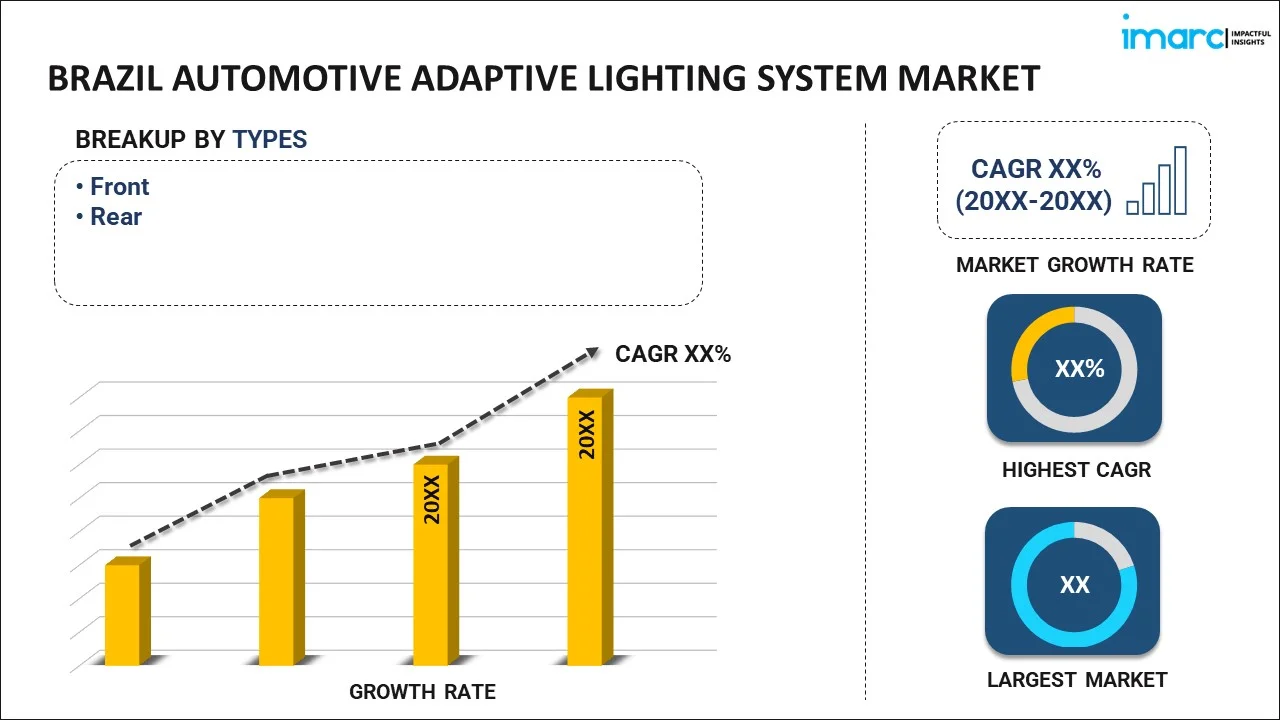
To get detailed segment analysis of this market Request Sample
- Front
- Rear
Front dominates with a market share of 65% of the total Brazil automotive adaptive lighting system market in 2025.
Front adaptive lighting systems constitute the primary growth driver in Brazil’s automotive lighting market, reflecting their critical importance in enhancing driver visibility and reducing nighttime accident rates. Brazilian traffic regulations under Law 14.071/2020 mandate the use of low-beam headlights or daytime running lights on single-lane highways, reinforcing demand for advanced front lighting solutions that provide optimal illumination across diverse driving conditions. Modern adaptive front headlamps incorporate steering-responsive beam adjustment, automatic high-beam control, and dynamic cornering illumination that collectively improve safety margins during nighttime and adverse weather driving.
The technological sophistication of front adaptive lighting systems continues to evolve as manufacturers incorporate LED matrix technology and intelligent beam management algorithms. These systems feature arrays of individually controlled LEDs that adjust automatically based on road conditions, surrounding traffic, and navigation inputs. Such innovations are designed to enhance visibility, reduce glare for other drivers, and improve safety in complex driving environments, particularly in urban and high-traffic areas, reflecting the broader trend toward smarter, more responsive vehicle lighting solutions.
Vehicle Type Insights:
- Mid-Segment Passenger Vehicles
- Sports Cars
- Premium Vehicles
Mid-segment passenger vehicles lead the market with a share of 51% of the total Brazil automotive adaptive lighting system market in 2025.
Mid-segment passenger vehicles represent the largest application category for automotive adaptive lighting systems in Brazil, driven by expanding middle-class purchasing power and automaker strategies to democratize advanced safety features. The growing consumer expectation for premium technologies in mass-market vehicles is encouraging manufacturers to standardize adaptive lighting across mainstream model ranges. Cost reductions in LED component manufacturing and increased production scale have made adaptive lighting economically viable for mid-priced vehicles, accelerating penetration rates in this critical market segment.
Brazilian automakers are increasingly upgrading standard features in mid-segment vehicles, bringing technologies like adaptive headlight systems, once limited to premium models, within reach of a broader consumer base. By combining adaptive lighting with driver assistance functions, these vehicles offer enhanced safety and convenience for drivers navigating complex urban traffic. This shift reflects a wider industry trend toward democratizing advanced automotive technologies, making sophisticated features more accessible across mainstream vehicle segments while meeting growing consumer expectations for safety and innovation.
Sales Channel Insights:
- OEM
- Aftermarket
OEM represent the largest share at 68% of the total Brazil automotive adaptive lighting system market in 2025.
Original equipment manufacturer channels dominate the Brazil automotive adaptive lighting system market as automakers increasingly integrate advanced lighting systems as standard or optional factory equipment. The technical complexity of modern adaptive lighting systems, including integration requirements with vehicle electronics and calibration procedures, favors factory installation over aftermarket retrofitting. OEM channels benefit from established supplier relationships with global lighting specialists and economies of scale in component procurement.
Major automotive lighting manufacturers maintain strong partnerships with vehicle producers operating in Brazil to supply integrated adaptive lighting modules designed for specific model platforms. These collaborations enable optimized system performance, warranty coverage, and regulatory compliance that aftermarket alternatives cannot consistently match. The aftermarket segment primarily serves replacement demand and vehicle upgrade applications, with growing opportunities in the retrofit LED headlight category as consumers seek to modernize older vehicles with improved lighting technology.
Regional Insights:
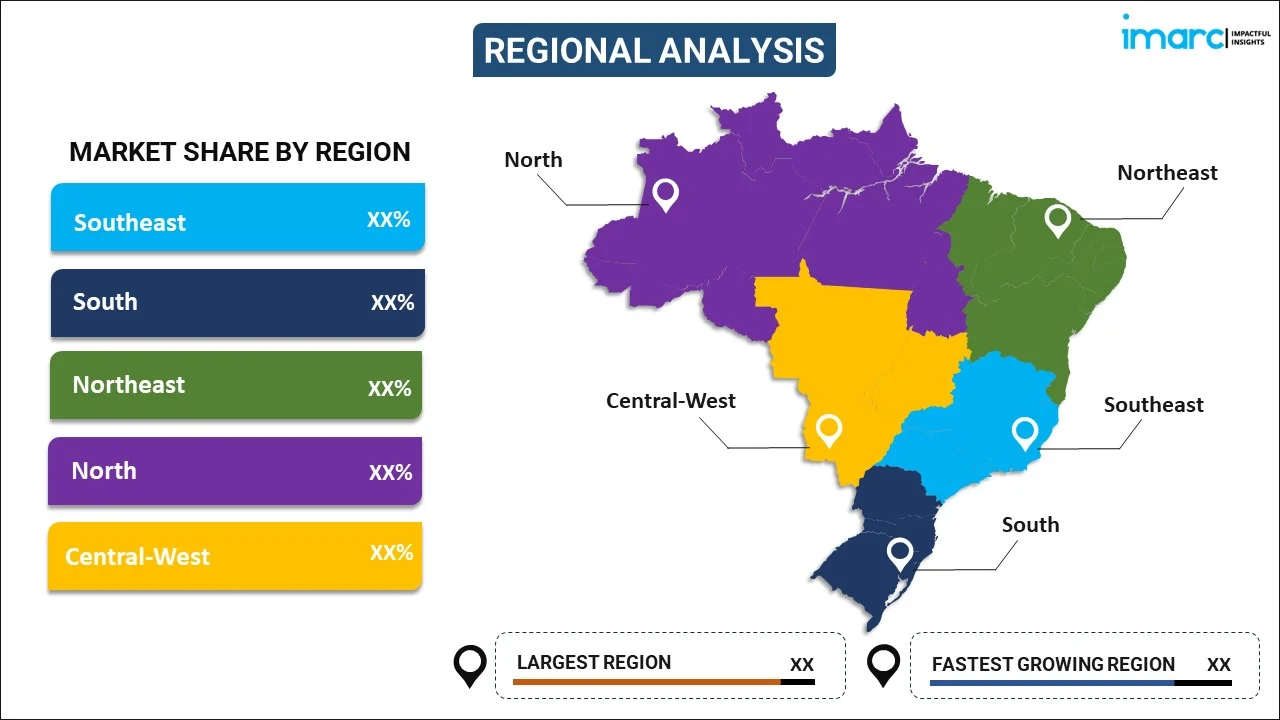
To get detailed regional analysis of this market Request Sample
- Southeast
- South
- Northeast
- North
- Central-West
Southeast exhibits clear dominance with a 40% share of the total Brazil automotive adaptive lighting system market in 2025.
The Southeast region encompasses Brazil’s primary automotive manufacturing corridor and highest concentration of vehicle ownership, driving substantial demand for adaptive lighting systems. São Paulo, as the country’s economic powerhouse and largest metropolitan area, generates significant market activity through both new vehicle sales and aftermarket applications. The region’s dense urban traffic conditions, frequent nighttime driving requirements, and higher average income levels create favorable conditions for advanced lighting technology adoption.
Major automaker manufacturing facilities concentrated in the Southeast region facilitate localized supply chains for adaptive lighting components, supporting competitive pricing and efficient distribution. The presence of global automotive suppliers, including HELLA, Valeo, and Magneti Marelli, in the region strengthens the adaptive lighting ecosystem through technology transfer, local manufacturing capabilities, and technical support infrastructure. Consumer awareness of vehicle safety technologies remains highest in southeastern metropolitan areas, further supporting premium feature adoption rates.
Market Dynamics:
Growth Drivers:
Why is the Brazil Automotive Adaptive Lighting System Market Growing?
Strengthening Government Regulations and Safety Standards
The traffic policymakers in Brazil have also come up with tighter safety controls, which encourage the use of adaptive lighting systems. Mandatory performance requirements on vehicle lighting have now been spelled out in national standards, as it gives manufacturers an incentive to use state-of-the-art illumination. There is also legislation mandating daytime running lights or low-beam in some roads, which form additional incentives to automakers to install advanced headlamp systems on vehicles. These regulatory items contribute to the unprecedented government objectives of decreasing the occurrence of traffic fatalities and promoting road security, making adaptive lighting an essential component of current vehicle safety design.
Expanding Automotive Industry Investment and Manufacturing Capacity
The automotive sector in Brazil is experiencing a boom in investment due to the increased localized production by manufacturers and the introduction of new vehicle platforms with new technologies. Governmental support of innovations and low-emission cars is facilitating the introduction of advanced systems, such as adaptive lighting. Both global and Chinese automakers are establishing production facilities in the country, equipping vehicles with advanced lighting as standard features. This trend is driving competition and pushing automakers across all segments to offer more technologically advanced, feature-rich vehicles to meet evolving consumer expectations.
Growing Consumer Demand for Enhanced Safety Features
Brazilian consumers demonstrate increasing prioritization of vehicle safety features in purchase decisions, driven by rising awareness of accident prevention technologies and improving economic conditions in urban markets. The expansion of middle-class populations in major metropolitan areas creates sustained demand for vehicles equipped with advanced safety systems including adaptive lighting. Consumer research indicates growing willingness to pay premium prices for visibility-enhancing features that reduce nighttime driving risks and improve overall driving comfort. This demand pattern encourages automakers to standardize adaptive lighting across broader model ranges, transitioning advanced illumination from luxury exclusive features to mainstream market expectations.
Market Restraints:
What Challenges the Brazil Automotive Adaptive Lighting System Market is Facing?
High Implementation and Component Costs
The sophisticated technology incorporated in automotive adaptive lighting systems results in significantly higher component costs compared to conventional lighting solutions. LED matrix modules, electronic control units, sensor arrays, and precision actuators required for adaptive functionality represent substantial manufacturing expenses that impact vehicle pricing. Price-sensitive consumer segments and budget-constrained automakers face challenges justifying premium pricing for advanced lighting features, potentially limiting market penetration in entry-level vehicle categories.
Technical Complexity and Skilled Labor Requirements
Automotive adaptive lighting systems require specialized technical expertise for installation, calibration, and maintenance procedures that exceed conventional lighting service requirements. The integration complexity with vehicle electronics, software calibration needs, and precision alignment requirements creates challenges for service networks lacking adequately trained technicians. This technical barrier limits aftermarket adoption opportunities and increases service costs for consumers in regions with an underdeveloped automotive service infrastructure.
Infrastructure and Economic Development Disparities
Regional economic disparities within Brazil create uneven market conditions for adaptive lighting adoption, with lower-income regions demonstrating limited demand for premium vehicle technologies. Infrastructure limitations including road quality variations and inconsistent street lighting across different regions reduce the perceived value proposition of advanced adaptive lighting features. Economic volatility and currency fluctuations impact import costs for lighting components, creating pricing uncertainties that complicate manufacturer planning and consumer purchase decisions.
Competitive Landscape:
The Brazil automotive adaptive lighting system market exhibits moderate consolidation with global lighting specialists maintaining dominant market positions through established OEM relationships and technological leadership. The competitive landscape is characterized by intensive research and development activities focused on LED matrix technology, intelligent beam control algorithms, and integration with emerging vehicle platforms. Market participants pursue differentiation strategies through product innovation, strategic partnerships with automakers, and expansion of local manufacturing capabilities. The entry of Chinese automotive manufacturers into Brazil is introducing new competitive dynamics as these players bring vertically integrated lighting supply chains and aggressive pricing strategies. Established suppliers respond through technology partnerships, capacity expansions, and enhanced after-sales service offerings to maintain market positions.
Recent Developments:
- September 2024: FORVIA HELLA secured billion-dollar lighting orders from a major United States automaker, reinforcing the company’s position in software-defined lamp architectures and signaling confidence in advanced adaptive lighting technologies with implications for global supply chain strategies including Latin American operations.
- May 2024: The Auto Alliance consortium, including BYD, Raizen, and Movida doubled its electric vehicle fleet target to 20,000 units by the end of 2025 in Brazil, following stronger-than-expected adoption rates since the alliance's 2022 launch and reflecting growing demand for vehicles equipped with advanced lighting technologies.
Brazil Automotive Adaptive Lighting System Market Report Coverage:
| Report Features | Details |
|---|---|
| Base Year of the Analysis | 2025 |
| Historical Period | 2020-2025 |
| Forecast Period | 2026-2034 |
| Units | Million USD |
| Scope of the Report | Exploration of Historical and Forecast Trends, Industry Catalysts and Challenges, Segment-Wise Historical and Predictive Market Assessment:
|
| Types Covered | Front, Rear |
| Vehicle Types Covered | Mid-Segment Passenger Vehicles, Sports Cars, Premium Vehicles |
| Sales Channels Covered | OEM, Aftermarket |
| Regions Covered | Southeast, South, Northeast, North, Central-West |
| Customization Scope | 10% Free Customization |
| Post-Sale Analyst Support | 10-12 Weeks |
| Delivery Format | PDF and Excel through Email (We can also provide the editable version of the report in PPT/Word format on special request) |
Frequently Asked Questions About the Brazil Automotive Adaptive Lighting System Market Report
The Brazil automotive adaptive lighting system market size was valued at USD 35.76 Million in 2025.
The Brazil automotive adaptive lighting system market is expected to grow at a compound annual growth rate of 5.20% from 2026-2034 to reach USD 56.44 Million by 2034.
Front represents the largest market share at 65% in 2025, driven by stringent safety regulations mandating enhanced nighttime visibility and the critical importance of adaptive headlamps in reducing collision risks on Brazilian roadways.
Key factors driving the Brazil automotive adaptive lighting system market include strengthening government safety regulations under Contran and the Headlight Law, expanding automotive industry investment through the MOVER program, and growing consumer demand for enhanced vehicle safety features.
Major challenges include high implementation and component costs for advanced lighting systems, technical complexity requiring specialized installation and maintenance expertise, regional economic disparities affecting adoption rates, and infrastructure limitations in certain geographic areas.
Need more help?
- Speak to our experienced analysts for insights on the current market scenarios.
- Include additional segments and countries to customize the report as per your requirement.
- Gain an unparalleled competitive advantage in your domain by understanding how to utilize the report and positively impacting your operations and revenue.
- For further assistance, please connect with our analysts.
 Request Customization
 Speak to an Analyst
 Request Brochure
 Inquire Before Buying
Benefits of Customization
- Personalize this research
- Triangulate with your data
- Get data as per your format and definition
- Gain a deeper dive into a specific application, geography, customer, or competitor
- Any level of personalization
Get in Touch With Us
UNITED STATES
Phone: +1-201-971-6302
INDIA
Phone: +91-120-433-0800
UNITED KINGDOM
Phone: +44-753-714-6104
Email: [email protected]
Client Testimonials




.webp)




.webp)













Related Reports

Choose your plan
*Please note that the prices mentioned below are starting prices for each bundle type. Kindly contact our team for further details.*
Single User License
- 1 User License, Access on 2 Devices
- PDF Report + Excel Dataset (Password Protected)
- Lifetime Access
- No Printing Rights
- 10% Free Report Customization
- 10–12 Weeks of Analyst Support
Five User License
- Access for 5 Users, 2 Devices per User
- PDF Report + Excel Dataset (Password Protected)
- Lifetime Access
- Dedicated Account Manager
- 12–14 Weeks of Analyst Support
- No Printing Rights
- 15% Free Report Customization
- 25% Discount on Your Next Purchase
Corporate User License
- Unlimited User Access (Within Your Organization)
- PDF Report + Excel Dataset
- Lifetime Access
- Dedicated Account Manager
- 14–20 Weeks of Analyst Support
- No Printing Rights
- 20% Free Report Customization
- 30% Discount on Your Next Purchase
Essential Insights
What's included:
3 reports
- Lifetime Access
- PDF Reports
- Excel Datasets
- 2 Weeks of Free Analyst Support
- 2 User Licenses
- Access on 2 Devices
- Printing Rights
- Complimentary PowerPoint (PPT) Version
- Complimentary License Upgrade
Professional Access
What's included:
5 reports
- Lifetime Access
- PDF Reports
- Excel Datasets
- 8 Weeks of Free Analyst Support
- 2 User Licenses
- Access on 2 Devices
- Printing Rights
- Complimentary PowerPoint (PPT) Version
- Complimentary License Upgrade
Business Advantage
What's included:
8 reports
- Lifetime Access
- PDF Reports
- Excel Datasets
- 14 Weeks of Free Analyst Support
- 2 User Licenses
- Access on 2 Devices
- Printing Rights
- Complimentary PowerPoint (PPT) Version
- Complimentary License Upgrade
Enterprise Intelligence
What's included:
10 reports
- Lifetime Access
- PDF Reports
- Excel Datasets
- 20 Weeks of Free Analyst Support
- 2 User Licenses
- Access on 2 Devices
- Printing Rights
- Complimentary PowerPoint (PPT) Version
- Complimentary License Upgrade