
Brazil Biocontrol Agents Market Size, Share, Trends and Forecast by Form, Crop Type, and Region, 2026-2034
Brazil Biocontrol Agents Market Summary:
The Brazil biocontrol agents market size was valued at USD 95.09 Million in 2025 and is projected to reach USD 188.27 Million by 2034, growing at a compound annual growth rate of 7.89% from 2026-2034.
The Brazil biocontrol agents market is witnessing strong growth, fueled by rising environmental awareness and a growing emphasis on sustainable farming practices. Concerns over chemical pesticide residues in food and the long-term impact of conventional agrochemicals on soil health are prompting farmers to adopt biological alternatives. As a major global agricultural producer, Brazil benefits from supportive regulatory frameworks for bioinput registration, further encouraging the use of biocontrol solutions. These factors collectively contribute to the expanding market presence and adoption of biocontrol agents across the country.
Key Takeaways and Insights:
- By Form: Microbials dominate the market with a share of 63% in 2025, driven by the effectiveness of bacterial and fungal agents including Bacillus and Trichoderma species in controlling agricultural pests and diseases.
- By Crop Type: Cash crops lead the market with a share of 50% in 2025, supported by Brazil's extensive cultivation of sugarcane, coffee, and cotton under organic farming practices.
- Key Players: The Brazil biocontrol agents market displays moderate fragmentation, with a mix of large-scale and regional manufacturers competing across different price segments. The industry also includes numerous domestic companies focusing on specialized biocontrol solutions, contributing to a diverse and competitive landscape.
Brazil has positioned itself as a global leader in the adoption of biocontrol solutions, particularly within large-scale row crop agriculture. The country’s extensive biodiversity offers a rich source of beneficial organisms that can be utilized for sustainable pest management. Over the years, the biocontrol sector has experienced significant growth, with a steadily expanding portfolio of registered products and increasing acceptance among farmers. The integration of these biological solutions into Integrated Pest Management (IPM) practices has become a key strategy for combating pest resistance to conventional chemical pesticides, which is an ongoing challenge in major crops such as soybeans, corn, and sugarcane. The maturation of the biocontrol market in Brazil reflects both regulatory support and rising awareness of sustainable farming practices, enabling farmers to enhance crop protection while minimizing environmental impact. This trend underscores the country’s commitment to promoting innovative, eco-friendly approaches in modern agriculture.
Brazil Biocontrol Agents Market Trends:
Surge in Product Registrations and Market Diversification
The Brazilian biocontrol market is witnessing unprecedented growth in product registrations and portfolio diversification. Data indicate an average growth of 10 new microbial nematicide registrations per year since 2016. Between 2018 and 2024, 107 new microbial fungicide products were registered, representing approximately 90% of current biofungicides available. This regulatory momentum is accompanied by portfolio diversification as companies expand beyond single biocontrol categories to offer comprehensive biological solutions for integrated pest management programs.
Advancement in Multi-Strain Microbial Formulations
Development of microbial consortia represents a significant technological advancement in agricultural biopesticides. Integrating different microbial species with complementary traits creates synergistic effects, boosting the effectiveness of biocontrol and strengthening plants’ ability to withstand both biological and environmental stresses. Multi-strain microbial products now account for a substantial portion of new product launches, offering enhanced resistance management and increased pest control durability under variable climatic conditions prevalent in Brazil's diverse agricultural regions.
Integration of Digital Technologies in Biocontrol Application
Precision application technologies are transforming biocontrol deployment across Brazilian agriculture. Drone-based biocontrol application has expanded significantly in recent years, reducing input waste and improving field-level pest suppression consistency, particularly in horticulture and plantation crops. AI-driven screening platforms have reduced microbial strain discovery cycles while increasing efficacy hit rates, enabling faster identification of pest-specific biological agents compared to traditional laboratory methods.
Brazil Biocontrol Agents Market Outlook 2026-2034:
The Brazil biocontrol agents market is poised for continued growth, driven by increasing adoption of sustainable agricultural practices. Expanding awareness of eco-friendly crop protection solutions is encouraging broader use of biological alternatives to chemical pesticides. Investments in production capabilities and infrastructure reflect strong industry confidence, supporting the sector’s ability to meet rising demand. The market’s growth is further fueled by the integration of biocontrol agents into modern farming strategies, highlighting Brazil’s commitment to sustainable agriculture and the adoption of innovative, environmentally responsible crop management solutions. The market generated a revenue of USD 95.09 Million in 2025 and is projected to reach a revenue of USD 188.27 Million by 2034, growing at a compound annual growth rate of 7.89% from 2026-2034.
.webp)
Brazil Biocontrol Agents Market Report Segmentation:
|
Segment Category |
Leading Segment |
Market Share |
|
Form |
Microbials |
63% |
|
Crop Type |
Cash Crops |
50% |
Form Insights:
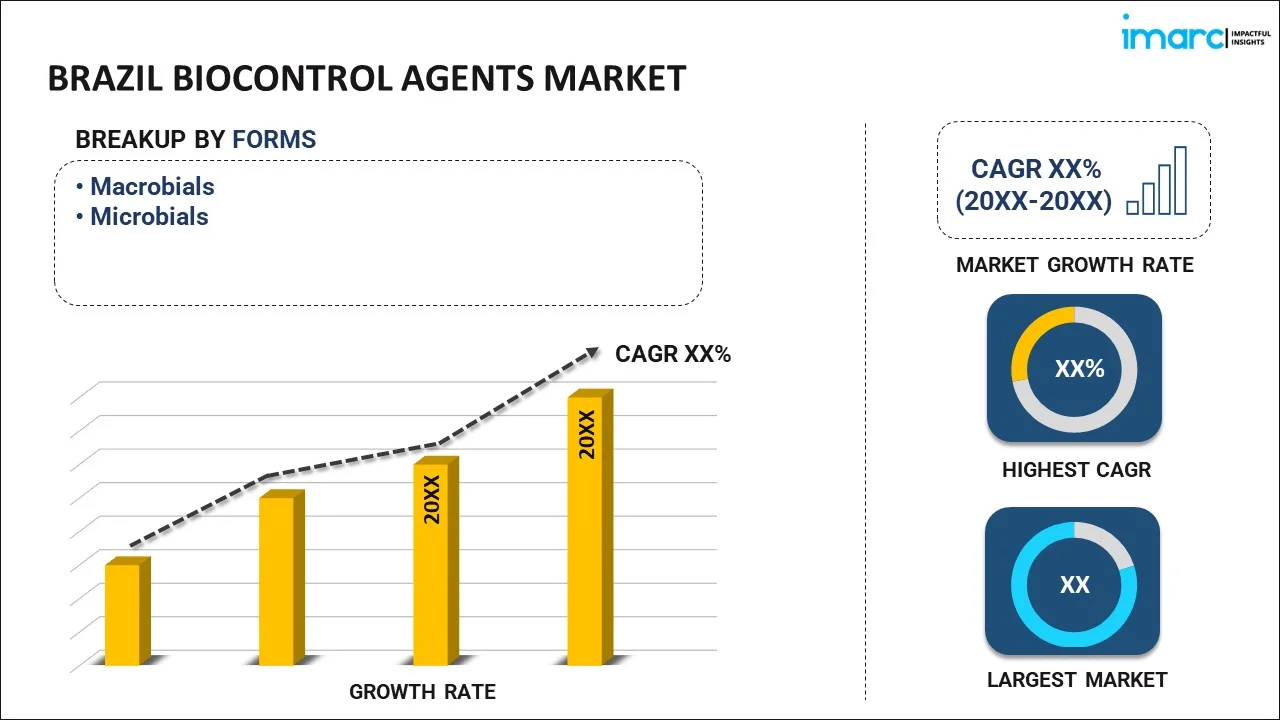
To get detailed segment analysis of this market, Request Sample
- Macrobials
- Entamopathogenic Nematodes
- Parasitoids
- Predators
- Microbials
- Bacterial Biocontrol Agents
- Fungal Biocontrol Agents
- Others
Microbials dominate the Brazil biocontrol agents market with a share of 63% in 2025.
The microbials segment includes bacterial agents that have become integral to modern pest management strategies in Brazil. Bacillus species are widely used due to their ability to produce antimicrobial metabolites that effectively combat a broad range of agricultural pathogens. These bacterial biocontrol agents are particularly valued for their consistency, safety, and compatibility with sustainable farming practices. By offering targeted protection against crop diseases, they enable farmers to reduce reliance on chemical pesticides while maintaining crop health and productivity, reinforcing their role as a cornerstone of biological crop protection strategies.
Fungal biocontrol agents are increasingly adopted for both insect pest management and disease control. Species such as entomopathogenic fungi are used extensively to protect key crops, offering environmentally friendly alternatives to conventional chemical treatments. The development of reference strains and streamlined regulatory processes has facilitated product registration and commercialization, supporting the entry of new products into the market. These fungi provide effective, sustainable pest control solutions that align with modern agricultural practices, promoting crop protection while minimizing ecological impact.
Crop Type Insights:
- Cash Crops
- Horticultural Crops
- Row Crops
Cash crops lead the Brazil biocontrol agents market with a share of 50% in 2025.
The cash crops segment benefits from Brazil's prominent position as a leading global producer of sugarcane and coffee, with increasing demand for organically grown variants from international markets including Japan, Europe, and North America. Sugarcane cultivation has extensively adopted biological control methods, with the parasitoid wasp Cotesia flavipes being widely used to control the sugarcane borer Diatraea saccharalis, where organic products control around half of the planted area. Coffee production similarly benefits from biological alternatives for controlling rust caused by Hemileia vastatrix.
The prominence of cash crops in biocontrol adoption reflects the economic imperative of meeting international quality and safety standards for agricultural exports. Cotton cultivation has also embraced biocontrol solutions, with farmers increasingly incorporating beneficial microorganisms into integrated pest management programs to address pest resistance issues while reducing chemical residue levels. The segment's continued growth is supported by the peculiarities of organic cash crop production and increasing farm experiments with biological insecticides and integrated pest management methods.
Regional Insights:
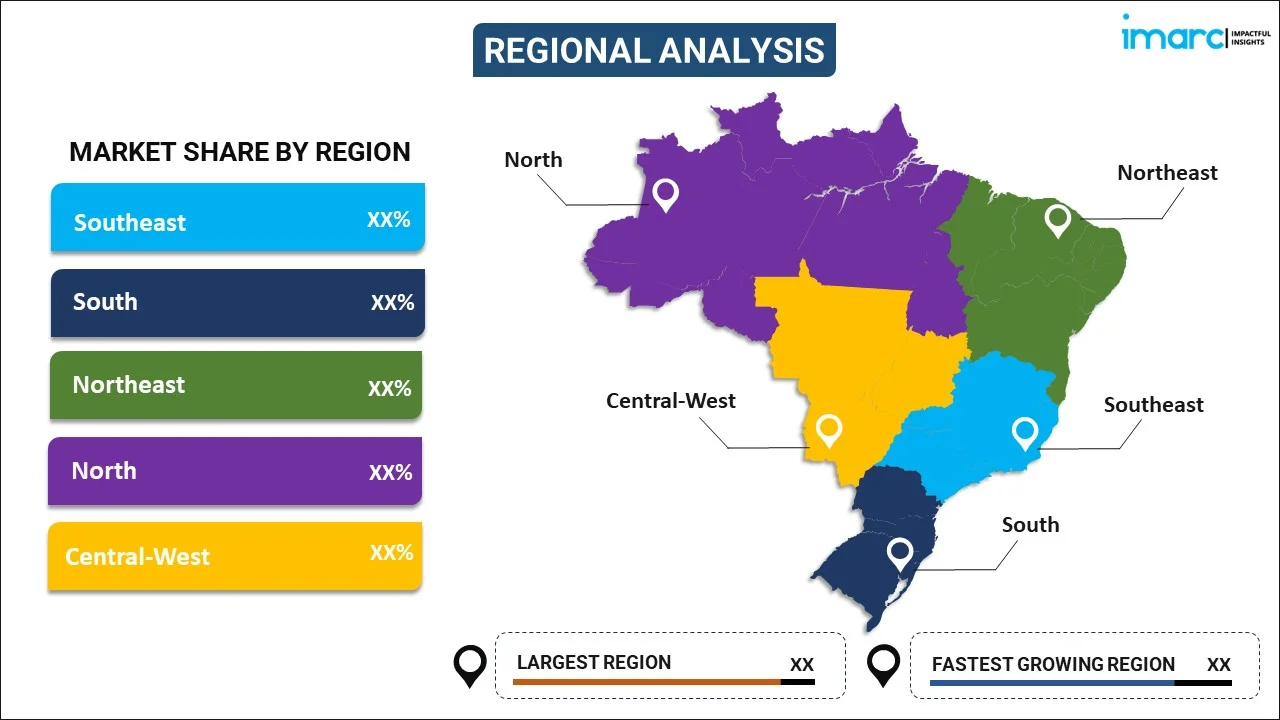
To get detailed regional analysis of this market, Request Sample
- Southeast
- South
- Northeast
- North
- Central-West
The Southeast region drives demand for biocontrol agents due to its highly diversified agricultural sector, including crops like coffee, sugarcane, and vegetables. High farm intensification, coupled with strong adoption of sustainable farming practices, encourages the use of biological pest and disease management solutions. Well-established infrastructure, accessibility to distribution networks, and supportive regulatory frameworks further facilitate the adoption of microbial and fungal biocontrol products in this key agricultural hub.
The South benefits from intensive cultivation of soybeans, corn, and wheat, making pest and disease management a priority. Farmers increasingly rely on biocontrol agents to reduce chemical pesticide use and manage resistance issues. The region’s focus on sustainable and precision agriculture practices, combined with high awareness of eco-friendly solutions and access to regional distribution channels, supports steady growth of the biocontrol market.
In the Northeast, expanding cultivation of fruits, vegetables, and sugarcane drives biocontrol adoption. Limited availability of chemical pesticide alternatives and rising emphasis on sustainable practices push farmers toward biological solutions. The region’s investment in agricultural extension services, government support programs, and increasing awareness of environmental impact contribute to market growth and encourage the integration of microbial and fungal agents into crop protection strategies.
The North region’s tropical climate and high biodiversity create favorable conditions for pest proliferation, necessitating effective pest management strategies. The adoption of biocontrol agents is driven by the need to protect high-value crops like cocoa, açaí, and fruit plantations. Environmental sustainability concerns, regulatory encouragement, and the desire to reduce chemical inputs in sensitive ecosystems further propel the use of microbial and fungal biocontrol solutions.
The Central-West region, a key area for soybeans, corn, and cotton, drives biocontrol growth through large-scale row crop farming and intensive agricultural practices. Rising adoption of integrated pest management strategies, the need to combat pesticide resistance, and strong regulatory support encourage farmers to incorporate microbial and fungal agents. Expanding awareness of sustainable agriculture and access to distribution networks also facilitates widespread adoption in this vital agricultural belt.
Market Dynamics:
Growth Drivers:
Why is the Brazil Biocontrol Agents Market Growing?
Growing Environmental Awareness and Demand for Sustainable Agriculture
Rising environmental consciousness among farmers and consumers has accelerated the shift toward sustainable agricultural practices in Brazil. Growing awareness about the ecological impact of chemical pesticides, including soil degradation, water contamination, and biodiversity loss, has prompted adoption of biological alternatives. Brazil achieved a 26% reduction in chemical pesticide usage across soybean farms through nationwide microbial biocontrol deployment programs in 2024. Consumer preference for pesticide-free produce and organic food products has further incentivized farmers to incorporate biocontrol agents into their crop protection strategies.
Favorable Regulatory Framework and Government Support
Brazil has developed a regulatory framework that encourages the registration and commercialization of biological crop protection products. Streamlined approval processes, combined with government support for research, farmer education, and economic incentives, facilitate the adoption of biocontrol solutions. Policies promoting agroecology and organic farming provide technical guidance and regulatory backing for farmers transitioning to sustainable practices. This supportive environment reduces barriers for product entry, accelerates commercialization, and helps integrate biological alternatives into conventional and organic farming systems, fostering long-term growth of the biocontrol agents market.
Pest Resistance to Chemical Pesticides and Nematode Challenges
Growing pest resistance to chemical pesticides has increased reliance on biocontrol agents as part of integrated pest management strategies. As conventional chemicals lose effectiveness over time, farmers seek alternative solutions to maintain crop protection. Plant-parasitic nematodes present persistent challenges, affecting yields across major crops. The adoption of microbial and biological nematicides has risen in response, providing effective, sustainable options for managing pests and supporting healthier crops while reducing dependence on traditional chemical treatments.
Market Restraints:
What Challenges the Brazil Biocontrol Agents Market is Facing?
Higher Production Costs Compared to Chemical Alternatives
Production and development of biological crop protection products is still problematic because the costs of manufacturing them are higher than those of other chemical products. The high prices are linked to complex production methods and the short shelf life of products, and thus may not be adopted, especially by small-scale farmers. These are still issues that impede the extended application of biocontrol solutions, though they have environmental and agronomic advantages.
Limited Farmer Awareness and Technical Knowledge
Despite the benefits of biopesticides, many Brazilian farmers remain unaware of their advantages or sceptical about their effectiveness. Difficulties in the transfer of biological control technology and a lack of technical assistance limit adoption by farmers. This knowledge gap stems from insufficient demonstration programs, limited marketing budgets compared to multinational chemical corporations, and a lack of local success stories.
Shelf Life Limitations and Application Variability
Abiotic factors that include temperature, ultraviolet radiation, rainfall, and changes in humidity are still impediments to the widespread use of biocontrol agents. Most biopesticides have reduced shelf life and need special storage conditions, which create logistical problems in terms of distribution and supply chain management. The variability of performance under the various climatic conditions may influence farmer confidence in the biological solutions.
Competitive Landscape:
The Brazil biocontrol agents market exhibits moderate fragmentation with a mix of multinational corporations and domestic companies competing across various segments. The market structure comprises over 100 companies offering biocontrol products, though small national companies predominate. Major international players leverage their global research capabilities and extensive product portfolios to establish market presence, while domestic companies benefit from local knowledge, established distribution networks, and competitive pricing. Portfolio diversification trends are evident as companies expand beyond single biocontrol categories. Strategic partnerships between research institutions and manufacturers are leading to the development of crop-specific solutions tailored to Brazil's unique agricultural landscape, intensifying competitive dynamics.
Recent Developments:
- June 2025: Koppert announced investment plans of USD 200 million to establish two new biocontrol factories in Brazil by 2030, aiming to multiply production capacity by five to seven times to meet growing demand for biological solutions in domestic and international markets.
- January 2024: UPL launched Tackler in Brazil, a liquid bioinsecticide containing Beauveria bassiana formulated to control pests in crops such as coffee, corn, and sugarcane, expanding the company's biological product portfolio in the country.
Brazil Biocontrol Agents Market Report Coverage:
| Report Features | Details |
|---|---|
| Base Year of the Analysis | 2025 |
| Historical Period | 2020-2025 |
| Forecast Period | 2026-2034 |
| Units | Million USD |
| Scope of the Report | Exploration of Historical and Forecast Trends, Industry Catalysts and Challenges, Segment-Wise Historical and Predictive Market Assessment:
|
| Forms Covered |
|
| Crop Types Covered | Cash Crops, Horticultural Crops, Row Crops |
| Regions Covered | Southeast, South, Northeast, North, Central-West |
| Customization Scope | 10% Free Customization |
| Post-Sale Analyst Support | 10-12 Weeks |
| Delivery Format | PDF and Excel through Email (We can also provide the editable version of the report in PPT/Word format on special request) |
Frequently Asked Questions About the Brazil Biocontrol Agents Market Report
The Brazil biocontrol agents market size was valued at USD 95.09 Million in 2025.
The Brazil biocontrol agents market is expected to grow at a compound annual growth rate of 7.89% from 2026-2034 to reach USD 188.27 Million by 2034.
Microbials dominated the Brazil biocontrol agents market with a 63% share in 2025, driven by the effectiveness of bacterial and fungal agents including Bacillus and Trichoderma species, in controlling agricultural pests and diseases.
Key factors driving the Brazil biocontrol agents market include growing environmental awareness and demand for sustainable agriculture, favorable regulatory frameworks, rising pest resistance to chemical pesticides, and increasing consumer preference for pesticide-free produce.
Major challenges include higher production costs compared to chemical pesticides, limited farmer awareness and technical knowledge, shelf life limitations, and application variability under diverse climatic conditions prevalent in Brazil's agricultural regions.
Need more help?
- Speak to our experienced analysts for insights on the current market scenarios.
- Include additional segments and countries to customize the report as per your requirement.
- Gain an unparalleled competitive advantage in your domain by understanding how to utilize the report and positively impacting your operations and revenue.
- For further assistance, please connect with our analysts.
 Request Customization
 Speak to an Analyst
 Request Brochure
 Inquire Before Buying
Benefits of Customization
- Personalize this research
- Triangulate with your data
- Get data as per your format and definition
- Gain a deeper dive into a specific application, geography, customer, or competitor
- Any level of personalization
Get in Touch With Us
UNITED STATES
Phone: +1-201-971-6302
INDIA
Phone: +91-120-433-0800
UNITED KINGDOM
Phone: +44-753-714-6104
Email: [email protected]
Client Testimonials




.webp)




.webp)













Related Reports

Choose your plan
*Please note that the prices mentioned below are starting prices for each bundle type. Kindly contact our team for further details.*
Single User License
- 1 User License, Access on 2 Devices
- PDF Report + Excel Dataset (Password Protected)
- Lifetime Access
- No Printing Rights
- 10% Free Report Customization
- 10–12 Weeks of Analyst Support
Five User License
- Access for 5 Users, 2 Devices per User
- PDF Report + Excel Dataset (Password Protected)
- Lifetime Access
- Dedicated Account Manager
- 12–14 Weeks of Analyst Support
- No Printing Rights
- 15% Free Report Customization
- 25% Discount on Your Next Purchase
Corporate User License
- Unlimited User Access (Within Your Organization)
- PDF Report + Excel Dataset
- Lifetime Access
- Dedicated Account Manager
- 14–20 Weeks of Analyst Support
- No Printing Rights
- 20% Free Report Customization
- 30% Discount on Your Next Purchase
Essential Insights
What's included:
3 reports
- Lifetime Access
- PDF Reports
- Excel Datasets
- 2 Weeks of Free Analyst Support
- 2 User Licenses
- Access on 2 Devices
- Printing Rights
- Complimentary PowerPoint (PPT) Version
- Complimentary License Upgrade
Professional Access
What's included:
5 reports
- Lifetime Access
- PDF Reports
- Excel Datasets
- 8 Weeks of Free Analyst Support
- 2 User Licenses
- Access on 2 Devices
- Printing Rights
- Complimentary PowerPoint (PPT) Version
- Complimentary License Upgrade
Business Advantage
What's included:
8 reports
- Lifetime Access
- PDF Reports
- Excel Datasets
- 14 Weeks of Free Analyst Support
- 2 User Licenses
- Access on 2 Devices
- Printing Rights
- Complimentary PowerPoint (PPT) Version
- Complimentary License Upgrade
Enterprise Intelligence
What's included:
10 reports
- Lifetime Access
- PDF Reports
- Excel Datasets
- 20 Weeks of Free Analyst Support
- 2 User Licenses
- Access on 2 Devices
- Printing Rights
- Complimentary PowerPoint (PPT) Version
- Complimentary License Upgrade