
Brazil Biotechnology Market Size, Share, Trends and Forecast by Product Type, Technology, Application, and Region, 2026-2034
Brazil Biotechnology Market Summary:
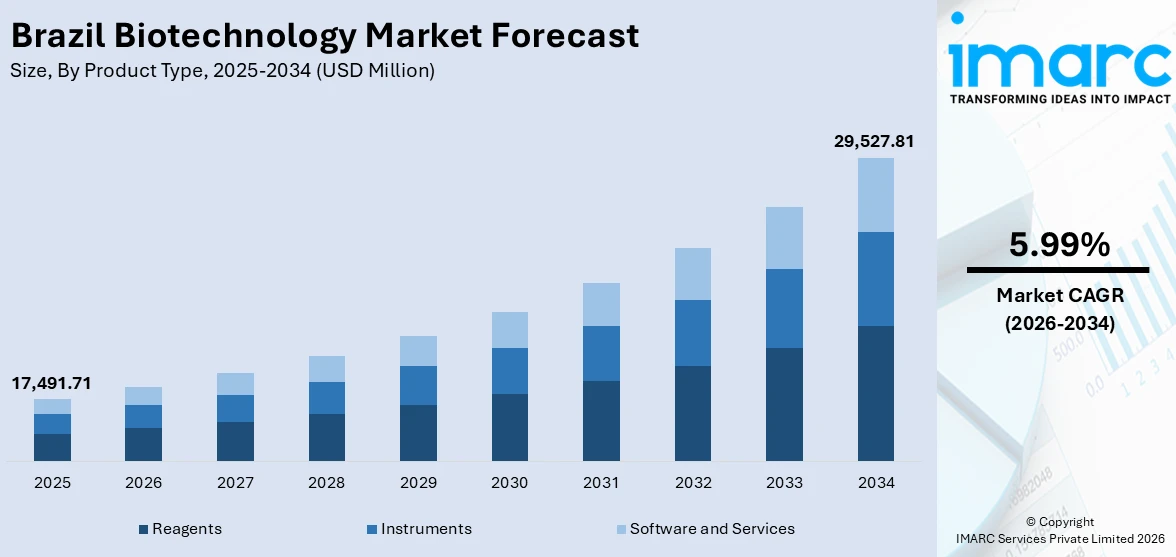
The Brazil biotechnology market size was valued at USD 17,491.71 Million in 2025 and is projected to reach USD 29,527.81 Million by 2034, growing at a compound annual growth rate of 5.99% from 2026-2034.
The Brazil biotechnology market is gaining steady momentum as the country strengthens its role as a leading innovation hub in Latin America. Growing public investment in healthcare biotechnology, precision medicine, and agricultural genetics is accelerating development. Regulatory modernization by ANVISA is streamlining approval pathways for biologics and biosimilars, improving access to advanced therapies. Expansion of genomic research initiatives and rising demand for personalized medicine, advanced diagnostics, and sustainable agriculture are attracting domestic and international investors, further reinforcing Brazil’s biotechnology market growth trajectory.
Key Takeaways and Insights:
- By Product Type: Reagents hold the largest market share at 47.3% in 2025, establishing themselves as the foundational component driving research capabilities and diagnostic throughput across Brazil’s expanding biotechnology sector.
- By Technology: DNA sequencing leads the market with a 21.6% share in 2025, reflecting the country’s growing emphasis on genomic research, precision medicine, and next-generation sequencing applications in clinical and agricultural settings.
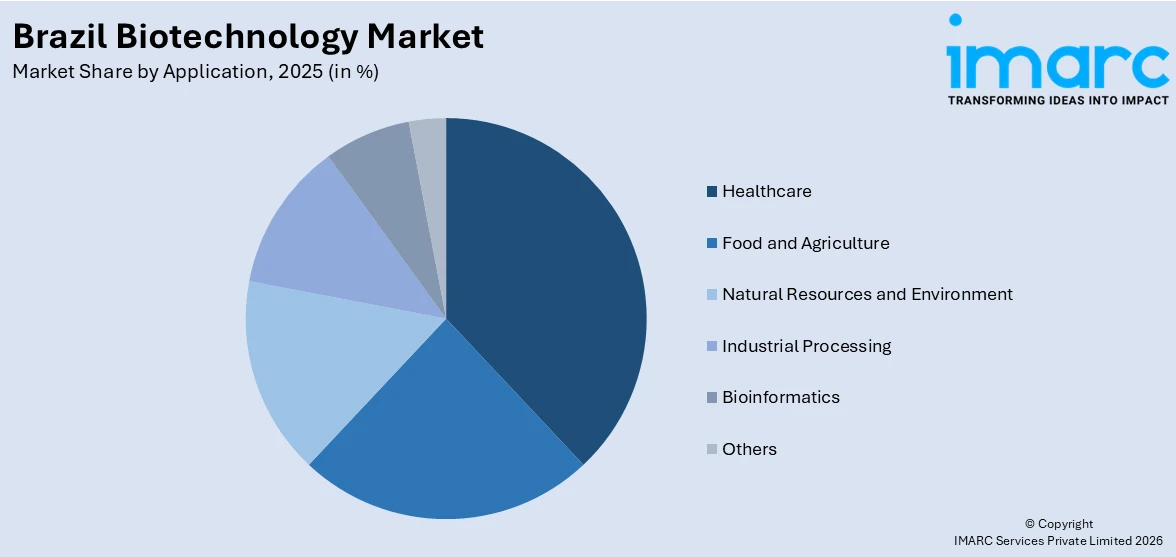
- By Application: Healthcare dominates the market with a 38.4% share in 2025, driven by rising chronic disease prevalence, government investment in public health genomics, and expanding biosimilar availability across therapeutic categories.
- By Region: Southeast comprises the largest region with a 52.8% share in 2025, driven by the concentration of research institutions, biotech startups, pharmaceutical manufacturers, and healthcare infrastructure in São Paulo and Rio de Janeiro metropolitan areas.
- Key Players: The market is characterized by a dynamic mix of multinational pharmaceutical companies, domestic biotechnology firms, research institutions, and emerging startups. Competitive intensity is driven by innovation in biologics, biosimilars, genomics, and agricultural biotechnology, with strategic collaborations, regulatory expertise, and strong research capabilities shaping long-term positioning.
To get more information on this market Request Sample
The Brazil biotechnology market is advancing as healthcare systems, research institutions, and agricultural enterprises increasingly adopt biotechnology-driven solutions to address evolving demands. A major factor shaping this progress is the country’s expanding commitment to genomic research and biopharmaceutical innovation, which supports the long-term viability of precision medicine and sustainable agriculture. For instance, Eurofarma, one of Brazil’s largest pharmaceutical companies, launched Eurofarma Ventures in 2023 with a commitment of up to USD 100 Million to invest in innovative biotechnology startups focused on precision medicine, genetic editing, and artificial intelligence applied to molecule discovery. Government-led regulatory modernization, expanding biosimilar availability, and growing public-private partnerships in research and development are contributing to a more favorable environment for biotechnology adoption. Besides this, strengthening institutional capabilities and increasing venture capital engagement are further positioning the market for sustained expansion across multiple application areas.
Brazil Biotechnology Market Trends:
Expansion of Precision Medicine and Genomic Research
Brazil is witnessing a transformative shift toward precision medicine as government-backed genomic initiatives gain scale and clinical relevance. The Genomas Brasil Program, established through the Ministry of Health, funded over 250 research projects across 19 of the country’s 27 federative units by August 2025, with cardiovascular diseases receiving the largest funding allocation of BRL 257.4 Million. This investment is advancing population-level genomic understanding, supporting personalized treatment protocols, and strengthening the integration of genomic data into public healthcare delivery through the unified health system.
Growing Biosimilar Market and Regulatory Modernization
Brazil’s biosimilar landscape is expanding rapidly as ANVISA introduces streamlined regulatory pathways that reduce development timelines and facilitate market access. In May 2024, ANVISA issued RDC 875/2024, which permits the use of international reference products and allows clinical study waivers when analytical data demonstrate high similarity. This regulatory modernization is attracting global biosimilar developers to the Brazilian market, fostering competition, and improving affordability of biologic therapies, contributing to the Brazil biotechnology market growth.
Rise of Agricultural Biotechnology and Biological Solutions
Agricultural biotechnology continues to expand in Brazil, the world’s second-largest producer of biotech crops, with an estimated 68.5 million hectares planted with genetically engineered traits during the 2024/2025 crop season. Biological crop protection solutions are gaining momentum as sustainable farming practices gain preference. For instance, in May 2024, Vittia, a Brazilian biotechnology company, launched IZATURBO, a bioinsecticide containing Cordyceps javanica for targeted pest management, reflecting growing adoption of biologically derived agricultural inputs.
Market Outlook 2026-2034:
The Brazil biotechnology market is positioned for sustained growth, supported by robust government investment in genomics, evolving regulatory frameworks, and expanding applications across healthcare, agriculture, and industrial processing. For instance, Brazil’s BRL 11 Billion clinical research market could attract an additional BRL 5 Billion annually, fueled by strong interest from Chinese pharmaceutical firms. Backed by a population of 200 million and high genetic diversity, regulatory reforms may help Brazil rise from 20th to 10th globally. In line with this, rising demand for biosimilars, personalized therapeutics, and advanced diagnostics is expected to strengthen healthcare-related biotechnology applications. Concurrently, the agricultural sector’s increasing reliance on genetically engineered crops and biopesticides is reinforcing demand for biotechnology-based solutions. Moreover, the ongoing development of biotech startup ecosystems, particularly in São Paulo and the Southeast, coupled with strengthening international collaborations, is expected to enhance innovation capacity and accelerate the commercialization of advanced biotechnological products. The market generated a revenue of USD 17,491.71 Million in 2025 and is projected to reach a revenue of USD 29,527.81 Million by 2034, growing at a compound annual growth rate of 5.99% from 2026-2034.
Brazil Biotechnology Market Report Segmentation:
|
Segment Category |
Leading Segment |
Market Share |
|
Product Type |
Reagents |
47.3% |
|
Technology |
DNA Sequencing |
21.6% |
|
Application |
Healthcare |
38.4% |
|
Region |
Southeast |
52.8% |
Product Type Insights:
- Instruments
- Reagents
- Software and Services
Reagents dominate with a market share of 47.3% of the total Brazil biotechnology market in 2025.
Reagents form the backbone of biotechnology research and diagnostic operations in Brazil, supporting applications ranging from molecular diagnostics and DNA sequencing to clinical chemistry and immunoassays. The widespread adoption of reagent-based consumables across research institutions, clinical laboratories, and pharmaceutical companies drives consistent demand. Growing investments in genomic research and precision medicine are accelerating the utilization of specialized reagents for next-generation sequencing, polymerase chain reaction, and chromatography workflows, reinforcing their central role in advancing Brazil’s biotechnology infrastructure.
The dominance of reagents is further supported by the expansion of diagnostic testing capabilities across Brazil’s healthcare system. In the in vitro diagnostics segment specifically, reagents and kits accounted for substantial revenue in the Brazil IVD market, reflecting the consumable-driven nature of laboratory operations. ANVISA’s 2024–2025 regulatory agenda, which prioritizes faster pathways for innovative diagnostics, is reinforcing the demand pipeline for high-quality reagent products across both public and private healthcare laboratories nationwide.
Technology Insights:
- Nanobiotechnology
- Tissue Engineering and Regeneration
- DNA Sequencing
- Cell-Based Assays
- Fermentation
- PCR Technology
- Chromatography
- Others
DNA sequencing leads the market with a share of 21.6% of the total Brazil biotechnology market in 2025.
DNA sequencing technology drives Brazil's biotechnology development because its applications extend to clinical diagnostics, oncology research and rare disease identification and population genomics research. The government supports programs that increase the country's sequencing capabilities to enable precision health programs within the national public health system. The research institutions and clinical settings now use sequencing technologies more widely because of two factors which include lower sequencing platform costs and increased access to bioinformatics tools along with higher usage rates of whole genome and targeted sequencing methods.
The Genomas Brasil Program exemplifies the strategic priority placed on DNA sequencing in Brazil, having invested over BRL 1 Billion and supported the sequencing of 67,000 genomic samples by August 2025, with the goal of sequencing 100,000 Brazilian genomes. The program spans oncological, rare, cardiovascular, and infectious diseases across 19 of the country’s 27 federative units. These large-scale sequencing initiatives are generating reference-quality genomic data that supports personalized treatment decisions and strengthens the scientific foundation for precision medicine in Brazil’s diverse population.
Application Insights:
Access the comprehensive market breakdown Request Sample
- Healthcare
- Food and Agriculture
- Natural Resources and Environment
- Industrial Processing
- Bioinformatics
- Others
Healthcare holds the largest share at 38.4% of the total Brazil biotechnology market in 2025.
Healthcare represents the primary application area for biotechnology in Brazil, encompassing biopharmaceutical development, biosimilar production, diagnostic innovations, and personalized therapeutic interventions. The rising prevalence of chronic conditions including cardiovascular diseases, cancer, and diabetes is driving sustained demand for advanced biotechnology-derived treatments and diagnostics. Brazil’s Unified Healthcare System serves approximately 164 million people, creating a substantial demand base for cost-effective biotechnology solutions that improve patient outcomes and strengthen public health capabilities.
The Brazilian healthcare biotechnology sector is experiencing growth through three main factors which include the increasing demand for biosimilars. The new laws which have been enacted during the last two years now provide sponsors with a streamlined process to evaluate clinical trials. The government provides financial support through funding programs and credit initiatives which demonstrate its dedication to developing the country's biotechnology ecosystem while attracting both local and foreign investments. These developments are driving pharmaceutical and biopharmaceutical innovation which enhances accessibility to modern treatments and establishes Brazil as the primary center for healthcare biotechnology research in Latin America.
Regional Insights:
- Southeast
- South
- Northeast
- North
- Central-West
Southeast accounts for the highest revenue share of 52.8% of the total Brazil biotechnology market in 2025.
The Southeast region serves as the epicenter of Brazil’s biotechnology ecosystem, driven by the concentration of leading research institutions, pharmaceutical manufacturers, diagnostic laboratories, and healthcare infrastructure in São Paulo, Rio de Janeiro, and Minas Gerais. The region benefits from a well-developed innovation ecosystem that includes business incubators, university research centers, and venture capital firms that collectively support biotech startup development and commercialization of advanced technologies across healthcare, agriculture, and industrial applications.
According to the Deep Tech Radar Brasil 2025 report, the state of São Paulo alone hosts 467 deep tech companies operating primarily in the health and wellness and agriculture and food segments, representing the largest concentration of science and technology-based startups in Brazil. Research institutions such as the Oswaldo Cruz Foundation and the University of São Paulo anchor the region’s scientific capabilities, while pharmaceutical companies including Eurofarma, EMS, and Biomm maintain significant operations in the Southeast, supporting the region’s dominance in biotechnology innovation and market share.
Market Dynamics:
Growth Drivers:
Why is the Brazil Biotechnology Market Growing?
Government Investment in Genomics and Precision Health
The Brazilian government is making substantial investments in genomic research and precision health programs, transforming the country’s biotechnology landscape. Federal initiatives are systematically building the infrastructure needed to integrate genomics into clinical practice within the public healthcare system. These programs generate population-specific genomic datasets, train specialized researchers, and establish biobank networks that support long-term precision medicine capabilities. Flagship initiatives like the Genomas Brasil Program are driving coordinated efforts across multiple regions, funding diverse research projects and prioritizing key disease areas. This strategic investment approach is fostering the growth of Brazil’s genomics industry, enhancing the capacity for precision health, and positioning the country as a leading hub for innovation in biotechnology and personalized medicine within Latin America.
Regulatory Reforms Accelerating Market Access
Brazil’s regulatory environment is undergoing significant modernization, reducing barriers for biotechnology products and therapies. ANVISA is aligning its frameworks with international standards, enabling faster approval pathways for innovative biologics, biosimilars, and diagnostic products. These reforms are attracting both domestic and international biotechnology companies looking to establish or expand operations in the country. Updated regulations now allow greater flexibility in biosimilar development, including the use of internationally recognized reference products and potential waivers for clinical studies when supported by strong analytical data. This regulatory evolution is strengthening Brazil’s position as a competitive hub for biotechnology innovation and investment. Additionally, the enactment of Law 14.874/24 mandated that ANVISA respond to clinical trial applications within 90 business days, enhancing predictability for sponsors. These regulatory advances are collectively reducing development timelines and lowering the cost of bringing biotechnology innovations to the Brazilian market.
Expanding Healthcare Infrastructure and R&D Investment
Brazil’s healthcare infrastructure continues to expand through public-private partnerships, institutional collaborations, and increasing financial commitments to research and development. The growing network of diagnostic laboratories, research hospitals, and biotech incubators is creating a more supportive environment for the development and commercialization of biotechnology products. International pharmaceutical companies are deepening their presence in Brazil through strategic partnerships with domestic manufacturers and research institutions. By mid-July 2024, credit approvals from the National Bank for Economic and Social Development for the pharmaceutical and pharma-chemical industries reached USD 270 Million, representing the highest funding level since 1995. These investments are building domestic manufacturing capacity, reducing import dependency, and strengthening Brazil’s position as a regional biotechnology hub.
Market Restraints:
What Challenges the Brazil Biotechnology Market is Facing?
Limited Private Investment in Biotech Startups
Despite hosting the largest number of deep tech companies in Latin America, Brazil faces a significant gap in private capital allocation for biotech ventures. Venture capital funds account for less than five percent of investments in biotech companies in the country, limiting the ability of early-stage firms to overcome the high costs associated with research, clinical validation, and regulatory compliance. This investment shortfall restricts the translation of academic research into commercially viable products and slows the growth of the domestic biotechnology innovation pipeline.
Regulatory Complexity and Prolonged Approval Timelines
While ANVISA has introduced reforms to modernize its regulatory framework, biotechnology companies continue to navigate complex and sometimes overlapping requirements for product registration, clinical trials, and post-market surveillance. Bureaucratic processes, particularly for novel biologics and gene-based therapies, can extend development timelines and increase compliance costs. The lack of fully harmonized standards across different product categories presents challenges for companies developing multi-application biotechnology products, creating uncertainty that can discourage investment in higher-risk research programs.
Infrastructure and Skilled Workforce Limitations
Access to specialized research infrastructure, including certified laboratories and advanced instrumentation, remains a significant challenge for Brazilian biotech companies, particularly those located outside the Southeast region. Many institutions lack the capacity required for initial technology validation, which creates barriers at the earliest stages of product development. Additionally, the limited pool of professionals with interdisciplinary expertise in biotechnology, bioinformatics, and regulatory science constrains the sector’s ability to scale research activities and maintain competitiveness in the global market.
Competitive Landscape:
The Brazil biotechnology market features a dynamic competitive environment characterized by the presence of established multinational corporations, domestic pharmaceutical manufacturers, and a growing number of innovative biotech startups. Competition is intensifying as companies expand their product portfolios across biosimilars, diagnostics, and agricultural biotechnology solutions. Market participants are increasingly focusing on strategic partnerships, technology licensing agreements, and production localization to strengthen market positioning. Investment in research and development capabilities, particularly in precision medicine, gene editing, and biological crop protection, is a key differentiator among leading players. The ongoing regulatory modernization by ANVISA is facilitating broader market participation and encouraging new entrants with innovative therapeutic and diagnostic solutions.
Recent Developments:
- In November 2025, At COP30, Brazil launched the Bioeconomy Challenge, a global initiative advancing biotechnology and sustainable bioeconomy markets. Focusing on metrics, financing, market development, and sociobioeconomy, it aims to scale nature-based innovation, support decarbonization, and integrate biotechnology into climate strategies. Multi-stakeholder governance ensures measurable outcomes, inclusive growth, and strengthened global bioeconomy leadership by 2028.
- In August 2025, Brazil launched a USD 360 Million facility to produce plasma-derived medicines domestically, supplying the public health system. The plant will gradually scale to process 500,000 litres annually, producing treatments for burns, clotting disorders, rare diseases, and major surgeries, strengthening biotechnology and healthcare access nationwide.
Brazil Biotechnology Market Report Coverage:
|
Report Features |
Details |
|
Base Year of the Analysis |
2025 |
|
Historical Period |
2020-2025 |
|
Forecast Period |
2026-2034 |
|
Units |
Million USD |
|
Scope of the Report |
Exploration of Historical Trends and Market Outlook, Industry Catalysts and Challenges, Segment-Wise Historical and Future Market Assessment:
|
|
Product Types Covered |
Instruments, Reagents, Software and Services |
|
Technologies Covered |
Nanobiotechnology, Tissue Engineering and Regeneration, DNA Sequencing, Cell-Based Assays, Fermentation, PCR Technology, Chromatography, Others |
|
Applications Covered |
Healthcare, Food and Agriculture, Natural Resources and Environment, Industrial Processing, Bioinformatics, Others |
|
Regions Covered |
Southeast, South, Northeast, North, Central-West |
|
Customization Scope |
10% Free Customization |
|
Post-Sale Analyst Support |
10-12 Weeks |
|
Delivery Format |
PDF and Excel through Email (We can also provide the editable version of the report in PPT/Word format on special request) |
Frequently Asked Questions About the Brazil Biotechnology Market Report
The Brazil biotechnology market size was valued at USD 17,491.71 Million in 2025.
The Brazil biotechnology market is expected to grow at a compound annual growth rate of 5.99% from 2026-2034 to reach USD 29,527.81 Million by 2034.
Reagents dominated the market with a share of 47.3%, driven by their foundational role in supporting research operations, diagnostic testing, and quality control processes across all major biotechnology application areas in Brazil.
Key factors driving the Brazil biotechnology market include government investment in genomics and precision health, regulatory reforms by ANVISA that streamline market access, expanding healthcare research and development (R&D) infrastructure, and growing demand for biosimilars and agricultural biotechnology solutions.
Major challenges include limited private investment in biotech startups, complex regulatory requirements and extended approval timelines, infrastructure gaps outside the Southeast region, skilled workforce shortages, and high research and development costs.
Need more help?
- Speak to our experienced analysts for insights on the current market scenarios.
- Include additional segments and countries to customize the report as per your requirement.
- Gain an unparalleled competitive advantage in your domain by understanding how to utilize the report and positively impacting your operations and revenue.
- For further assistance, please connect with our analysts.
 Request Customization
 Speak to an Analyst
 Request Brochure
 Inquire Before Buying
Benefits of Customization
- Personalize this research
- Triangulate with your data
- Get data as per your format and definition
- Gain a deeper dive into a specific application, geography, customer, or competitor
- Any level of personalization
Get in Touch With Us
UNITED STATES
Phone: +1-201-971-6302
INDIA
Phone: +91-120-433-0800
UNITED KINGDOM
Phone: +44-753-714-6104
Email: [email protected]
Client Testimonials




.webp)




.webp)













Related Reports

Choose your plan
*Please note that the prices mentioned below are starting prices for each bundle type. Kindly contact our team for further details.*
Single User License
- 1 User License, Access on 2 Devices
- PDF Report + Excel Dataset (Password Protected)
- Lifetime Access
- No Printing Rights
- 10% Free Report Customization
- 10–12 Weeks of Analyst Support
Five User License
- Access for 5 Users, 2 Devices per User
- PDF Report + Excel Dataset (Password Protected)
- Lifetime Access
- Dedicated Account Manager
- 12–14 Weeks of Analyst Support
- No Printing Rights
- 15% Free Report Customization
- 25% Discount on Your Next Purchase
Corporate User License
- Unlimited User Access (Within Your Organization)
- PDF Report + Excel Dataset
- Lifetime Access
- Dedicated Account Manager
- 14–20 Weeks of Analyst Support
- No Printing Rights
- 20% Free Report Customization
- 30% Discount on Your Next Purchase
Essential Insights
What's included:
3 reports
- Lifetime Access
- PDF Reports
- Excel Datasets
- 2 Weeks of Free Analyst Support
- 2 User Licenses
- Access on 2 Devices
- Printing Rights
- Complimentary PowerPoint (PPT) Version
- Complimentary License Upgrade
Professional Access
What's included:
5 reports
- Lifetime Access
- PDF Reports
- Excel Datasets
- 8 Weeks of Free Analyst Support
- 2 User Licenses
- Access on 2 Devices
- Printing Rights
- Complimentary PowerPoint (PPT) Version
- Complimentary License Upgrade
Business Advantage
What's included:
8 reports
- Lifetime Access
- PDF Reports
- Excel Datasets
- 14 Weeks of Free Analyst Support
- 2 User Licenses
- Access on 2 Devices
- Printing Rights
- Complimentary PowerPoint (PPT) Version
- Complimentary License Upgrade
Enterprise Intelligence
What's included:
10 reports
- Lifetime Access
- PDF Reports
- Excel Datasets
- 20 Weeks of Free Analyst Support
- 2 User Licenses
- Access on 2 Devices
- Printing Rights
- Complimentary PowerPoint (PPT) Version
- Complimentary License Upgrade