
Brazil Complementary and Alternative Medicine Market Size, Share, Trends and Forecast by Type, Disease Indications, Distribution Channel, and Region, 2026-2034
Brazil Complementary and Alternative Medicine Market Summary:
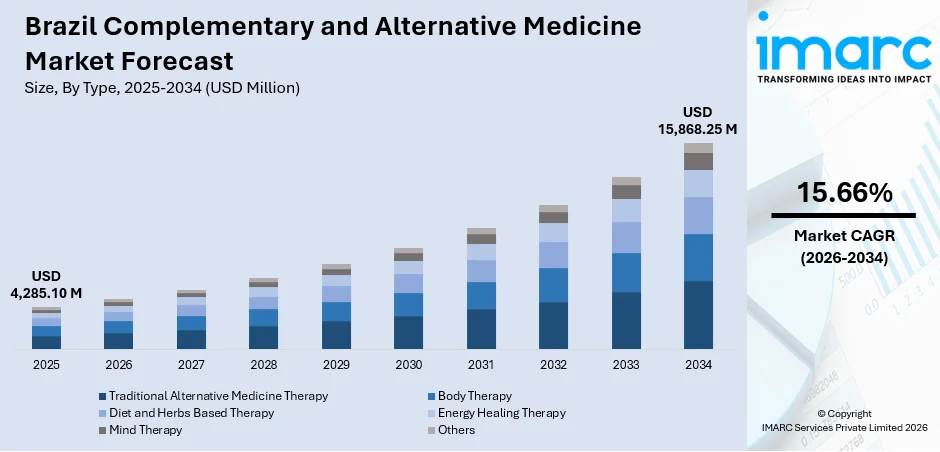
The Brazil Complementary and Alternative Medicine market size was valued at USD 4,285.10 Million in 2025 and is projected to reach USD 15,868.25 Million by 2034, growing at a compound annual growth rate of 15.66% from 2026-2034.
The Brazil complementary and alternative medicine market is experiencing robust growth, driven by the widespread cultural acceptance of holistic healing traditions, deep-rooted use of Amazonian medicinal plants, and active policy support from the government. Brazil’s unique biodiversity, combined with the integration of complementary therapies into its public health system, positions the country as one of the most dynamic markets for alternative medicine in Latin America. These structural drivers are creating sustained momentum, expanding the Brazil complementary and alternative medicine market share across diverse population segments nationwide.
Key Takeaways and Insights:
- By Type: Traditional alternative medicine therapy dominates the market with a share of 34.7% in 2025, owing to deep cultural roots in Amazonian healing traditions, government-backed recognition under Brazil’s Unified Health System, and widespread consumer trust in ancestral remedies including acupuncture, homeopathy, and herbal formulations.
- By Disease Indications: Arthritis leads the market with a share of 22.9% in 2025, driven by the high and rising incidence of musculoskeletal disorders in Brazil’s aging population and strong patient preference for non-pharmacological, low-side-effect complementary interventions such as acupuncture and phytotherapy.
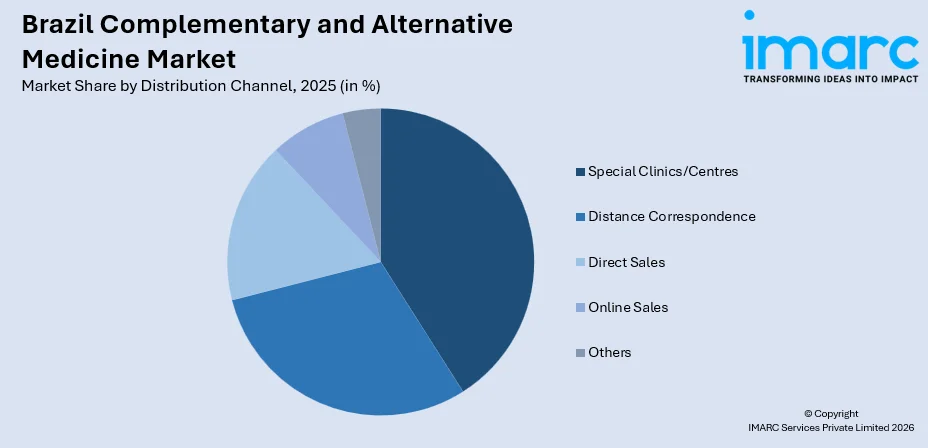
- By Distribution Channel: Special clinics/centres are the leading segment with a market share of 41.3% in 2025, reflecting consumer preference for supervised, patient-centered CAM delivery and the expanding network of integrative health centers operating across Brazil’s metropolitan and secondary cities.
- By Region: Southeast comprises the largest region with 49.6% share in 2025, driven by the concentration of Brazil’s healthcare infrastructure in São Paulo and Rio de Janeiro, higher per capita income, and greater availability of specialized CAM practitioners and facilities.
- Key Players: The market is highly fragmented, featuring domestic clinics, wellness centers, and international brands. Competition is driven by service diversification, certification standards, and consumer trust, with key players leveraging innovation, holistic offerings, and strategic partnerships to gain market share.
To get more information on this market Request Sample
The Brazil complementary and alternative medicine market is shaped by a convergence of favorable regulatory developments, cultural legitimacy, and rising healthcare awareness. Brazil implemented the National Policy on Integrative and Complementary Practices (PNPIC) through its Unified Health System in 2006, making it one of the few countries globally to offer complementary therapies free of charge to the general public. The SUS currently covers over 203 million Brazilians, representing the largest government-run public health system in the world by beneficiary count. CAM therapies including acupuncture, homeopathy, herbal medicine, and reiki are formally recognized and delivered through primary care facilities nationwide. This institutional backing, combined with Brazil harboring approximately 20% of the world’s plant species, over 50,000 documented species, provides an unparalleled biodiversity advantage for the development of plant-based therapeutics. Women, middle-aged individuals, and patients with chronic conditions such as arthritis and depression represent the most active CAM user demographics, fueling consistent demand across the Brazil complementary and alternative medicine market share.
Brazil Complementary and Alternative Medicine Market Trends:
Integration of Digital Platforms in CAM Service Delivery
The adoption of digital and telehealth platforms is transforming CAM service delivery in Brazil. Virtual consultations for acupuncture guidance, herbal therapy counseling, and meditation coaching are gaining traction, supported by rapid telemedicine infrastructure expansion across the country. Growing smartphone penetration in secondary cities is enabling practitioners to reach underserved populations. As such, in 2025, iHerb expanded its global fulfillment capabilities and broadened its herbal supplement portfolio, reinforcing the growing importance of digital and e-commerce channels in complementary medicine accessibility across Brazilian markets.
Rising Government Support and Regulatory Modernization
Brazil’s regulatory landscape for complementary medicine is undergoing significant modernization. For instance, in February 2025, the National Health Surveillance Agency (ANVISA) held a public hearing to review comprehensive updates to the herbal medicine regulatory framework under Resolution RDC No. 26/2014, aligning safety and efficacy standards with European Medicines Agency benchmarks. These reforms are expected to improve product quality and consumer confidence while expanding market formalization. The move signals a strengthening institutional ecosystem supporting CAM, encouraging broader participation from pharmaceutical companies and creating a more transparent environment for herbal medicine manufacturers and distributors nationwide.
Expanding Academic and International Collaboration in Traditional Medicine Research
International collaboration is elevating the scientific credibility of complementary medicine in Brazil. For example, in June 2025, the Pan American Health Organization (PAHO), in collaboration with the WHO Global Traditional Medicine Centre, held a Regional Consultation on research prioritization in traditional, complementary, and integrative medicine in São Paulo, attended by government ministers from nine countries across the Americas. The event established research priorities aligned with the WHO Global Traditional Medicine Strategy 2025–2034, reinforcing Brazil’s role as a regional hub for evidence-based integrative health innovation and academic collaboration.
Market Outlook 2026-2034:
The Brazil complementary and alternative medicine market is positioned for sustained and robust expansion throughout the forecast period, underpinned by deepening institutional support, a growing chronic disease burden, and evolving consumer preferences toward holistic health management. A study conducted by Unicamp in Campinas, São Paulo, indicates that 45% of Brazilian adults aged 18 and older are affected by chronic noncommunicable diseases. Similarly, rising awareness of the side effects associated with long-term pharmacological treatments is prompting a growing segment of the population, particularly patients managing arthritis, diabetes, and cardiovascular conditions, to explore CAM therapies as effective and safer adjuncts to conventional care. The ongoing integration of digital platforms, ANVISA’s modernized herbal medicine regulatory framework, and Brazil’s unparalleled biodiversity provide structural tailwinds that are expected to attract new investments and expand service delivery across both urban centers and underserved regions. Additionally, Brazil’s growing academic ecosystem for integrative medicine research, supported by partnerships with PAHO and WHO, is strengthening evidence-based frameworks that will further legitimate CAM adoption across diverse healthcare settings throughout the country. The market generated a revenue of USD 4,285.10 Million in 2025 and is projected to reach a revenue of USD 15,868.25 Million by 2034, growing at a compound annual growth rate of 15.66% from 2026-2034.
Brazil Complementary and Alternative Medicine Market Report Segmentation:
|
Segment Category |
Leading Segment |
Market Share |
|
Type |
Traditional Alternative Medicine Therapy |
34.7% |
|
Disease Indications |
Arthritis |
22.9% |
|
Distribution Channel |
Special Clinics/Centres |
41.3% |
|
Region |
Southeast |
49.6% |
Type Insights:
- Traditional Alternative Medicine Therapy
- Body Therapy
- Diet and Herbs Based Therapy
- Energy Healing Therapy
- Mind Therapy
- Others
Traditional alternative medicine therapy dominates the market with a market share of 34.7% of the total Brazil Complementary and Alternative Medicine market in 2025.
Brazilian healthcare systems use traditional alternative medicine therapies which combine Amazonian ethnobotanical healing methods with African spiritual traditions and indigenous medicinal practices. Brazil's National Policy on Integrative and Complementary Practices (PNPIC) through the Unified Health System formalizes acupuncture homeopathy herbal medicine and reiki as primary care treatment methods. The policy requires that SUS beneficiaries receive free access to these services which results in traditional alternative therapy becoming the most common and easily available complementary alternative medicine practice throughout Brazil's various economic classes.
Brazilian biodiversity serves as the foundation for traditional alternative medicine practices that maintain their research work across the country. The country possesses an extensive collection of indigenous and cultivated plants which contain medicinal properties and stem from indigenous knowledge that forms the basis for herbal medicine practices. The current regulatory framework seeks to update plant-based medicine registration procedures and their regulatory processes to create better market access and support fresh product development efforts. The upcoming changes will enable wider access to traditional alternative treatment methods while they assist product advancement and strengthen Brazil's status as a worldwide authority in herbal and natural medicine markets.
Disease Indications Insights:
- Arthritis
- Cancer
- Asthma
- Diabetes
- Cardiology
- Neurology
- Others
Arthritis leads the market with a share of 22.9% of the total Brazil Complementary and Alternative Medicine market in 2025.
Arthritis represents the largest disease indication driving demand for complementary and alternative medicine in Brazil, reflecting the country’s significant musculoskeletal disease burden. Brazil has been identified as having one of the highest incidences of rheumatoid arthritis among young adults globally, with a recorded incidence of 14.64 per 100,000 population among adolescents and young adults, the highest of any nation globally according to a study published in PLOS One (2024). Patients with arthritis and rheumatic conditions are substantially more likely than other demographic groups to seek integrative therapies such as acupuncture, herbal phytotherapy, and body-based treatments as complementary approaches to managing chronic pain and inflammation.
Brazil’s rapidly aging population is an important structural driver reinforcing arthritis-linked demand for CAM therapies. The 2019 Brazilian National Health Survey, a nationally representative study of 64,194 participants, confirmed that individuals with arthritis and rheumatism are significantly more likely to use integrative and complementary health practices compared to the general population. As musculoskeletal disorders rank among the leading causes of disability nationwide, patients with arthritis are increasingly turning to CAM as a cost-effective complement to pharmacological management, supporting consistent growth in this disease indication segment across multiple CAM therapy types and distribution channels throughout Brazil.
Distribution Channel Insights:
Access the comprehensive market breakdown Request Sample
- Special Clinics/Centres
- Distance Correspondence
- Direct Sales
- Online Sales
- Others
Special clinics/centres represent the leading segment with a market share of 41.3% of the total Brazil Complementary and Alternative Medicine market in 2025.
Special clinics and centres occupy a dominant position in the distribution landscape of Brazil’s complementary and alternative medicine market, reflecting patients’ strong preference for supervised, in-person therapeutic interactions. Specialized CAM facilities provide structured treatment environments where practitioners tailor therapies, including acupuncture, craniosacral therapy, reiki, and herbal consultations, to individual patient needs. In June 2025, representatives from the Pan American Health Organization (PAHO) and the WHO Global Traditional Medicine Centre visited a Reference Center for Integrative and Complementary Health Practices in São Paulo, recognizing its role in advancing evidence-based practice and serving as a regional model for integrative care delivery.
The expansion of special clinics and centres across Brazil is also driven by government-supported infrastructure under the SUS framework. Brazil’s Ministry of Health’s National Policy on Integrative and Complementary Practices (PNPIC) has actively encouraged municipalities to establish dedicated facilities for CAM service delivery, creating a publicly accessible network of integrative health centers. Simultaneously, the private sector is investing in premium wellness centers and integrative health clinics in urban markets, particularly in São Paulo, Rio de Janeiro, and Brasília. These developments reflect a broadening institutional and consumer foundation that is expected to sustain this distribution channel’s market leadership throughout the forecast period.
Region Insights:
- Southeast
- South
- Northeast
- North
- Central-West
Southeast exhibits a clear dominance with a 49.6% share of the total Brazil Complementary and Alternative Medicine market in 2025.
The Southeast region is the dominant market for complementary and alternative medicine in Brazil, underpinned by its status as the country’s economic and healthcare hub. The states of São Paulo and Rio de Janeiro together account for a disproportionate share of the nation’s healthcare infrastructure, disposable income, and medically trained populations. São Paulo alone is home to the Latin American and Caribbean Center on Health Sciences Information (BIREME/PAHO/WHO), a key institution coordinating integrative medicine research across the Americas. The concentration of specialized CAM practitioners, integrative health centers, and wellness facilities in major Southeast metropolitan areas provides consumers with unmatched access to a full spectrum of alternative therapies.
The Southeast region also benefits from higher consumer awareness and purchasing power, enabling households to invest in both public and private CAM services. Research from the 2019 Brazilian National Health Survey confirmed a positive gradient between income, educational attainment, and CAM utilization, patterns most pronounced in the affluent urban centers of Southeast Brazil. In October 2025, the 3rd World Congress on Traditional, Complementary and Integrative Medicine was held in Rio de Janeiro, cementing Southeast Brazil’s position as a leading center for integrative medicine knowledge exchange, policy development, and clinical research, further reinforcing the region’s commanding market leadership.
Market Dynamics:
Growth Drivers:
Why is the Brazil Complementary and Alternative Medicine Market Growing?
Rising Chronic Disease Burden Fueling Demand for Holistic Therapies
Brazil’s escalating burden of chronic non-communicable diseases is a primary driver of growth in the complementary and alternative medicine market. Conditions such as arthritis, diabetes, cardiovascular disease, and neurodegenerative disorders are becoming increasingly prevalent, reflecting demographic aging and sedentary urban lifestyles. Research shows that type 2 diabetes affects an estimated 9.2% of Brazil’s population, with prevalence varying regionally, from 6.3% in the North to 12.8% in the Southeast. Patients managing these long-term conditions frequently experience inadequate relief from conventional medications or are deterred by associated side effects and rising costs, driving them toward CAM as a complementary or integrative option. Among individuals with arthritis and rheumatism, utilization of integrative and complementary health practices is significantly elevated compared to the general population. This pattern of demand, anchored in therapeutic need rather than discretionary preference, provides the CAM market with a durable and growing consumer base across Brazil’s urban and rural regions.
Government Integration Through SUS and Supportive Regulatory Frameworks
Brazil’s Unified Health System (SUS) offers one of the world’s most comprehensive government-backed frameworks for complementary and alternative medicine. Through the National Policy on Integrative and Complementary Practices (PNPIC), therapies such as acupuncture, homeopathy, herbal medicine, and reiki are provided free of charge, ensuring broad public access. Recent regulatory initiatives by ANVISA aim to modernize oversight of herbal medicines, aligning safety and efficacy standards with international benchmarks. This regulatory reform is designed to enhance product quality, foster innovation, and attract new market participants. By creating a more structured and competitive environment, these developments are expected to benefit both service providers and consumers, further strengthening Brazil’s complementary and alternative medicine market and supporting its long-term growth and sustainability.
Brazil’s Unparalleled Biodiversity and Ethnocultural Heritage
Brazil’s exceptional position as the world’s most biodiverse country provides a structurally unique competitive advantage for its complementary and alternative medicine market. The country is home to a vast diversity of plant species, many of which possess well-established medicinal properties rooted in generations of indigenous knowledge. This biological wealth is amplified by Brazil’s rich ethnocultural diversity, encompassing Amazonian healing traditions, African-influenced practices, and integrations from Japanese, European, and Chinese medical systems. In September 2024, Brazilian researchers developed a mineral-prebiotic-herbal supplement that may improve mood and sleep quality by supporting gut health, showing potential to counter cognitive decline associated with mood disorders linked to unhealthy lifestyles, illustrating the growing scientific validation of Brazilian plant-based therapeutics expected to accelerate market expansion throughout the forecast period.
Market Restraints:
What Challenges the Brazil Complementary and Alternative Medicine Market is Facing?
Inconsistent Practitioner Qualifications and Absence of Unified Standards
The lack of standardized training pathways and nationally unified certification requirements for CAM practitioners in Brazil remains a significant barrier to market growth. Wide variation in practitioner competency levels across regions undermines consumer confidence and creates safety concerns that discourage first-time adoption. Without harmonized credentialing frameworks, regulatory oversight of service quality is difficult to enforce consistently across the country’s diverse healthcare landscape, limiting the market’s ability to gain mainstream clinical acceptance and inhibiting integration with conventional healthcare providers at scale.
Limited Clinical Evidence and Scientific Validation for Many CAM Modalities
A substantial proportion of complementary and alternative medicine therapies available in Brazil lack robust clinical evidence establishing their safety and efficacy under rigorous scientific standards. The absence of well-designed randomized controlled trials for many traditional and energy-based therapies restricts their acceptance by mainstream medical practitioners and health insurers. This evidential gap also complicates ANVISA’s regulatory processes, creating uncertainty for manufacturers and practitioners, and slowing the formal market registration of new products and treatment protocols that would otherwise expand the market’s accessibility and credibility.
Out-of-Pocket Cost Burden and Inconsistent Insurance Reimbursement
While the SUS provides free access to select CAM therapies, the majority of private and specialized CAM services in Brazil require out-of-pocket payment, creating access barriers for lower- and middle-income populations. Supplementary health insurance plans rarely offer comprehensive reimbursement for the full range of complementary therapies, meaning many patients face prohibitive costs when seeking services from specialized clinics and private practitioners. This financial constraint significantly limits market penetration among lower-income demographic segments, effectively concentrating growth within higher-income urban populations and restricting the broader democratization of CAM access.
Competitive Landscape:
The Brazil complementary and alternative medicine market features a moderately fragmented competitive landscape, comprising specialized CAM clinics, integrative health centers, herbal medicine manufacturers, and digital wellness platforms. Market participants compete on practitioner expertise, product quality, and regulatory compliance. Key strategic priorities include expanding service portfolios through partnerships with conventional healthcare providers, investing in evidence-based herbal formulations aligned with ANVISA’s evolving regulatory standards, and leveraging Brazil’s rich biodiversity to develop differentiated plant-based products. The growing institutionalization of CAM through the SUS framework is attracting new entrants and intensifying competition across both urban and emerging regional markets.
Recent Developments:
- In October 2025, BIREME/PAHO pre-launched the WHO Traditional Medicine Global Library (WHO TMGL) in Rio de Janeiro, creating a collaborative digital platform connecting traditional, complementary, and integrative medicine knowledge with national health systems. The library integrates scientific evidence and ancestral practices, featuring thematic pages like Traditional Birth Attendants, promoting research, cultural preservation, and intercultural health policy development globally.
- In August 2025, Research on the Amazonian plant jambu highlights its medicinal and culinary value, with spilanthol offering pain relief, anti-inflammatory, and cardiovascular benefits. Brazilian scientists are developing bio-innovations, oral films, cosmetics, functional foods, supporting sustainable smallholder farming, empowering Indigenous and local communities, and advancing the Amazon’s bioeconomy while preserving biodiversity and traditional knowledge.
Brazil Complementary and Alternative Medicine Market Report Coverage:
|
Report Features |
Details |
|
Base Year of the Analysis |
2025 |
|
Historical Period |
2020-2025 |
|
Forecast Period |
2026-2034 |
|
Units |
Million USD |
|
Scope of the Report |
Exploration of Historical Trends and Market Outlook, Industry Catalysts and Challenges, Segment-Wise Historical and Future Market Assessment:
|
|
Types Covered |
Traditional Alternative Medicine Therapy, Body Therapy, Diet and Herbs Based Therapy, Energy Healing Therapy, Mind Therapy, Others |
|
Disease Indications Covered |
Arthritis, Cancer, Asthma, Diabetes, Cardiology, Neurology, Others |
|
Distribution Channels Covered |
Special Clinics/Centres, Distance Correspondence, Direct Sales, Online Sales, Others |
|
Regions Covered |
Southeast, South, Northeast, North, Central-West |
|
Customization Scope |
10% Free Customization |
|
Post-Sale Analyst Support |
10-12 Weeks |
|
Delivery Format |
PDF and Excel through Email (We can also provide the editable version of the report in PPT/Word format on special request) |
Frequently Asked Questions About the Brazil Complementary and Alternative Medicine Market Report
The Brazil Complementary and Alternative Medicine market size was valued at USD 4,285.10 Million in 2025.
The Brazil Complementary and Alternative Medicine market is expected to grow at a compound annual growth rate of 15.66% from 2026-2034 to reach USD 15,868.25 Million by 2034.
Traditional alternative medicine therapy dominated the market with a share of 34.7%, reflecting its deep cultural roots and formal integration into Brazil’s public healthcare system through the National Policy on Integrative and Complementary Practices (PNPIC) since 2006.
Key factors driving the Brazil Complementary and Alternative Medicine market include rising chronic disease prevalence, government integration of CAM through the SUS framework, Brazil’s exceptional biodiversity supporting herbal medicine development, growing consumer awareness of holistic wellness, and ANVISA’s ongoing modernization of the herbal medicine regulatory environment.
Major challenges include inconsistent practitioner qualifications and the absence of unified certification standards, limited clinical evidence for many CAM modalities, and inadequate insurance reimbursement coverage restricting affordability for lower-income consumer segments.
Need more help?
- Speak to our experienced analysts for insights on the current market scenarios.
- Include additional segments and countries to customize the report as per your requirement.
- Gain an unparalleled competitive advantage in your domain by understanding how to utilize the report and positively impacting your operations and revenue.
- For further assistance, please connect with our analysts.
 Request Customization
 Speak to an Analyst
 Request Brochure
 Inquire Before Buying
Benefits of Customization
- Personalize this research
- Triangulate with your data
- Get data as per your format and definition
- Gain a deeper dive into a specific application, geography, customer, or competitor
- Any level of personalization
Get in Touch With Us
UNITED STATES
Phone: +1-201-971-6302
INDIA
Phone: +91-120-433-0800
UNITED KINGDOM
Phone: +44-753-714-6104
Email: [email protected]
Client Testimonials




.webp)




.webp)













Related Reports

Choose your plan
*Please note that the prices mentioned below are starting prices for each bundle type. Kindly contact our team for further details.*
Single User License
- 1 User License, Access on 2 Devices
- PDF Report + Excel Dataset (Password Protected)
- Lifetime Access
- No Printing Rights
- 10% Free Report Customization
- 10–12 Weeks of Analyst Support
Five User License
- Access for 5 Users, 2 Devices per User
- PDF Report + Excel Dataset (Password Protected)
- Lifetime Access
- Dedicated Account Manager
- 12–14 Weeks of Analyst Support
- No Printing Rights
- 15% Free Report Customization
- 25% Discount on Your Next Purchase
Corporate User License
- Unlimited User Access (Within Your Organization)
- PDF Report + Excel Dataset
- Lifetime Access
- Dedicated Account Manager
- 14–20 Weeks of Analyst Support
- No Printing Rights
- 20% Free Report Customization
- 30% Discount on Your Next Purchase
Essential Insights
What's included:
3 reports
- Lifetime Access
- PDF Reports
- Excel Datasets
- 2 Weeks of Free Analyst Support
- 2 User Licenses
- Access on 2 Devices
- Printing Rights
- Complimentary PowerPoint (PPT) Version
- Complimentary License Upgrade
Professional Access
What's included:
5 reports
- Lifetime Access
- PDF Reports
- Excel Datasets
- 8 Weeks of Free Analyst Support
- 2 User Licenses
- Access on 2 Devices
- Printing Rights
- Complimentary PowerPoint (PPT) Version
- Complimentary License Upgrade
Business Advantage
What's included:
8 reports
- Lifetime Access
- PDF Reports
- Excel Datasets
- 14 Weeks of Free Analyst Support
- 2 User Licenses
- Access on 2 Devices
- Printing Rights
- Complimentary PowerPoint (PPT) Version
- Complimentary License Upgrade
Enterprise Intelligence
What's included:
10 reports
- Lifetime Access
- PDF Reports
- Excel Datasets
- 20 Weeks of Free Analyst Support
- 2 User Licenses
- Access on 2 Devices
- Printing Rights
- Complimentary PowerPoint (PPT) Version
- Complimentary License Upgrade