
Brazil In Vitro Fertilization (IVF) Market Size, Share, Trends and Forecast by Product, Procedure Type, Cycle Type, End User, and Region, 2026-2034
Brazil In Vitro Fertilization (IVF) Market Summary:
The Brazil in vitro fertilization (IVF) market size was valued at USD 185.06 Million in 2025 and is projected to reach USD 447.47 Million by 2034, growing at a compound annual growth rate of 10.31% from 2026-2034.
The Brazil in vitro fertilization market is experiencing robust expansion driven by shifting demographic patterns and evolving societal attitudes toward assisted reproduction. Increasing rates of delayed parenthood, rising infertility prevalence, and growing acceptance of fertility treatments among diverse population groups are accelerating demand for IVF services. Technological advancements in embryology, improved success rates, and the expansion of specialized fertility clinics across major metropolitan areas are strengthening market accessibility. Additionally, regulatory reforms by the Federal Council of Medicine have broadened access to assisted reproductive technologies regardless of marital status or family configuration, supporting continued growth in the Brazil in vitro fertilization market share.
Key Takeaways and Insights:
- By Product: Instrument dominates the market with a share of 51% in 2025, driven by escalating demand for advanced embryology equipment including imaging systems, incubators, and micromanipulator systems that enhance procedural precision and treatment outcomes across fertility clinics nationwide.
- By Procedure Type: Frozen non-donor leads the market with a share of 40% in 2025, reflecting the growing preference for cryopreservation techniques that offer greater flexibility in treatment timing while maintaining high embryo viability and pregnancy success rates.
- By Cycle Type: IVF with ICSI holds the largest segment with a market share of 46% in 2025, owing to its superior effectiveness in addressing male factor infertility and its established position as the preferred fertilization technique in Brazilian reproductive medicine practices.
- By End User: Fertility clinics represent the largest segment with 59% market share in 2025, attributable to specialized expertise, personalized treatment protocols, and comprehensive reproductive care services that distinguish these facilities from general hospital settings.
- By Region: Southeast exhibits a clear dominance with 55% market share in 2025, driven by the concentration of advanced healthcare infrastructure in São Paulo and Rio de Janeiro, higher disposable incomes, and greater awareness of fertility treatment options among the population.
- Key Players: Leading participants in the Brazil IVF market are expanding their operational footprint through strategic acquisitions, technological modernization, and service portfolio diversification. Companies are investing in advanced laboratory equipment, AI-powered diagnostic tools, and enhanced patient support systems to improve treatment outcomes and strengthen competitive positioning.
The Brazil in vitro fertilization market is witnessing transformational growth as fertility care becomes increasingly mainstream amid declining natural fertility rates. Brazil's total fertility rate has fallen substantially below replacement level, prompting greater reliance on assisted reproductive technologies. The market ecosystem is evolving through private equity consolidation, with major investment firms establishing fertility clinic networks and acquiring multiple facilities across São Paulo, Rio de Janeiro, and other major cities. Brazil now operates a significantly expanded network of assisted reproduction centers, representing substantial growth compared to previous decades. This infrastructure expansion, combined with regulatory modernization and rising medical tourism from neighboring countries, positions Brazil as a regional hub for fertility services. The integration of artificial intelligence in oocyte assessment and embryo selection is further enhancing treatment precision and success rates, supporting continued market expansion throughout the Brazil in vitro fertilization market growth trajectory.
Brazil In Vitro Fertilization (IVF) Market Trends:
Integration of Artificial Intelligence in Fertility Diagnostics
The adoption of artificial intelligence technologies is reshaping fertility care delivery across Brazilian clinics. Advanced machine learning algorithms are being deployed for oocyte quality assessment, embryo grading, and treatment protocol optimization. In April 2024, FertGroup partnered with Future Fertility to implement AI-powered oocyte assessment software across its clinic network, utilizing the VIOLET and MAGENTA platforms that leverage comprehensive datasets to provide data-driven insights for clinical decision-making. This technological integration enables embryologists to make more informed decisions regarding cryopreservation timing and fertilization approaches.
Rising Demand for Fertility Preservation Services
Egg freezing procedures are experiencing substantial growth as women increasingly opt for fertility preservation to align parenthood with career and personal goals. Brazil's National Health Surveillance Agency data indicates significant increases in oocyte cryopreservation cycles in recent years. Leading fertility networks report a growing proportion of retrieval cycles are now dedicated to egg freezing, representing a notable shift from previous patterns. This trend reflects evolving social attitudes toward reproductive autonomy and growing accessibility of vitrification technologies that preserve oocyte viability.
Private Equity Consolidation Transforming Market Structure
Strategic consolidation through private equity investment is fundamentally restructuring Brazil's fertility services landscape. Financial investors are acquiring independent clinics to build integrated networks capable of achieving operational efficiencies and standardized care protocols. Leading consolidated fertility platforms exemplify this trend by assembling multiple clinics across major Brazilian states under unified management structures. These networks are investing in centralized electronic medical records, time-lapse incubation systems, and quality assurance frameworks to deliver consistent treatment outcomes across geographically dispersed facilities, enhancing both scalability and patient care quality.
Market Outlook 2026-2034:
The Brazil in vitro fertilization market is poised for sustained expansion as demographic, technological, and regulatory factors converge to support continued growth. Rising infertility awareness, expanding clinic infrastructure, and increasing acceptance of assisted reproductive technologies across diverse population segments are driving market momentum. Technological innovations including laboratory automation, advanced genetic screening, and AI-enhanced embryo selection are expected to improve treatment success rates while reducing costs over the forecast period. The market generated a revenue of USD 185.06 Million in 2025 and is projected to reach a revenue of USD 447.47 Million by 2034, growing at a compound annual growth rate of 10.31% from 2026-2034.
Brazil In Vitro Fertilization (IVF) Market Report Segmentation:
|
Segment Category |
Leading Segment |
Market Share |
|
Product |
Instrument |
51% |
|
Procedure Type |
Frozen Non-donor |
40% |
|
Cycle Type |
IVF with ICSI |
46% |
|
End User |
Fertility Clinics |
59% |
|
Region |
Southeast |
55% |
Product Insights:
To get more information on this market, Request Sample
- Reagent
- Cryopreservation Media
- Embryo Culture Media
- Ovum Processing Media
- Sperm Processing Media
- Instrument
- Imaging Systems
- Incubators
- Cryosystems
- IVF Cabinet
- Ovum Aspiration Pump
- Sperm Separation Systems
- Micromanipulator Systems
- Others
- Accessories
Instrument dominates with a market share of 51% of the total Brazil in vitro fertilization (IVF) market in 2025.
The instrument segment maintains commanding market leadership due to the critical role advanced equipment plays in achieving successful treatment outcomes. Sophisticated imaging systems enable embryologists to assess embryo development with unprecedented precision, while modern incubators provide optimized environmental conditions essential for embryo viability. The integration of time-lapse monitoring technology across Brazilian fertility networks has accelerated instrument adoption, with major groups reporting acquisition of multiple embryoscope systems to enhance laboratory capabilities and standardize observation protocols across their clinic portfolios.
Micromanipulator systems represent a particularly significant component within the instrument category, enabling the precise cellular manipulation required for intracytoplasmic sperm injection procedures. Brazilian clinics are increasingly investing in next-generation micromanipulation platforms that combine enhanced optical systems with robotic precision, reflecting the industry's movement toward automated laboratory workflows. This investment pattern is supported by growing patient volumes and the need for consistent procedural outcomes across expanding clinic networks.
Procedure Type Insights:
- Fresh Donor
- Frozen Donor
- Fresh Non-donor
- Frozen Non-donor
Frozen non-donor leads with a share of 40% of the total Brazil in vitro fertilization (IVF) market in 2025.
The frozen non-donor procedure category has emerged as the preferred approach due to advances in vitrification technology that have dramatically improved embryo survival rates following cryopreservation. This technique enables fertility specialists to optimize transfer timing independent of stimulation cycles, allowing for better endometrial preparation and reducing the risk of ovarian hyperstimulation syndrome. Data from Brazil's National Embryo Production System confirms substantial growth in frozen embryo transfers over recent years, reflecting widespread adoption of this methodology across fertility clinics nationwide.
The preference for frozen non-donor procedures also reflects evolving patient preferences for treatment flexibility and the growing practice of elective single embryo transfer. By cryopreserving supernumerary embryos, patients maintain reproductive options for future cycles without undergoing additional ovarian stimulation. Brazilian clinics report that this approach supports improved cumulative pregnancy rates while reducing multiple pregnancy risks, aligning with international best practices in reproductive medicine.
Cycle Type Insights:
- Conventional IVF
- IVF with ICSI
- IVF with Donor Eggs
IVF with ICSI exhibits a clear dominance with a 46% share of the total Brazil in vitro fertilization (IVF) market in 2025.
Intracytoplasmic sperm injection has established itself as the predominant fertilization technique in Brazilian reproductive medicine, extending well beyond its original indication for male factor infertility. The procedure's standardization, reproducibility, and consistent fertilization rates have made it the default approach across most clinical scenarios. Research conducted at Brazilian institutions including the University of São Paulo has contributed significantly to understanding ICSI applications and optimizing procedural protocols for diverse patient populations.
The technical precision required for ICSI has driven substantial investment in laboratory infrastructure and embryologist training across Brazilian fertility centers. Advanced micromanipulation systems enable single sperm selection and injection with exceptional accuracy, providing specialists with enhanced capabilities for addressing complex male factor infertility cases. Emerging AI-assisted sperm selection technologies promise further refinement of gamete quality assessment and procedural optimization. This technological evolution supports continued ICSI adoption and contributes to improving clinical outcomes for patients nationwide.
End User Insights:
- Fertility Clinics
- Hospitals
- Others
Fertility clinics hold the leading segment with a 59% share of the total Brazil in vitro fertilization (IVF) market in 2025.
Specialized fertility clinics maintain dominant market positioning through their focused expertise, dedicated laboratory facilities, and comprehensive patient support services. These establishments have cultivated strong reputations for personalized care approaches that address the emotional and medical complexities of infertility treatment. The concentration of reproductive endocrinologists and experienced embryologists within these settings enables delivery of technically sophisticated procedures with optimal success rates. Additionally, clinics offer counseling services and patient education programs that guide individuals through treatment journeys with compassion and clinical excellence.
The private clinic model has proven particularly well-suited to Brazil's evolving healthcare landscape, where assisted reproductive technologies remain largely outside public health system coverage. Leading clinic networks are actively differentiating through sustained technological investment, with facilities deploying advanced equipment including time-lapse incubation systems and AI-powered diagnostic platforms. This significant infrastructure advantage, combined with established patient referral networks and strategic marketing capabilities, reinforces the competitive position of dedicated fertility centers while enabling continuous service enhancement and improved overall patient experience outcomes.
Regional Insights:
To get more information on this market, Request Sample
- Southeast
- South
- Northeast
- North
- Central-West
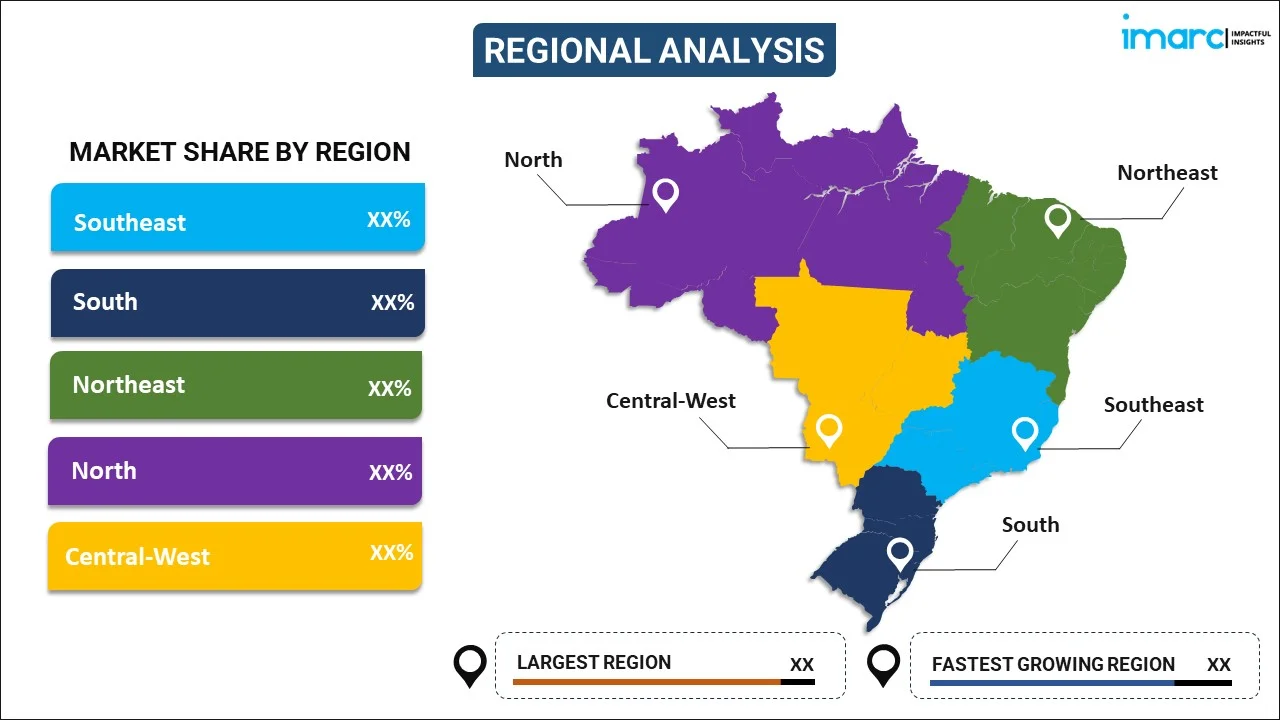
Southeast represents the largest region with a 55% share of the total Brazil in vitro fertilization (IVF) market in 2025.
The Southeast region commands decisive market leadership, anchored by São Paulo's position as Brazil's primary hub for reproductive medicine. The state hosts the highest concentration of assisted reproduction centers nationwide, with additional clusters in Minas Gerais and Rio de Janeiro. The region's advanced healthcare infrastructure, higher socioeconomic development, and concentration of specialized medical professionals create favorable conditions for IVF service delivery and innovation adoption. Leading academic institutions and research centers further strengthen the Southeast's prominence in reproductive medicine advancement.
The Southeast's dominance extends to embryo cryopreservation volumes, with the region accounting for the vast majority of all frozen embryos nationally. Major fertility networks have established their headquarters and flagship facilities in São Paulo, enabling access to the largest patient populations and attracting medical tourism from other Brazilian states and neighboring South American countries. This geographic concentration creates a self-reinforcing cycle of expertise development, talent attraction, infrastructure investment, and market share consolidation across the reproductive healthcare sector.
Market Dynamics:
Growth Drivers:
Why is the Brazil In Vitro Fertilization (IVF) Market Growing?
Increasing Delayed Parenthood and Declining Natural Fertility Rates
Brazil is experiencing a fundamental demographic transformation characterized by declining birth rates and postponed family formation. Women are increasingly prioritizing educational attainment and career development before pursuing parenthood, leading to first pregnancies at later maternal ages when natural conception becomes more challenging. Brazil's total fertility rate has declined to 1.57 children per woman in 2023, substantially below the replacement level of 2.1, creating sustained demand for assisted reproductive interventions. This demographic reality is compounded by lifestyle factors including urbanization, rising living costs, and evolving relationship patterns that further delay childbearing decisions. The biological constraints associated with advancing maternal age, including diminished ovarian reserve and reduced oocyte quality, make IVF an increasingly necessary pathway to parenthood for growing segments of the population.
Expanding Fertility Clinic Infrastructure and Network Consolidation
The Brazilian fertility services landscape is undergoing significant expansion and professionalization through clinic proliferation and network consolidation. The country has experienced substantial growth in registered assisted reproduction centers according to National Health Surveillance Agency records. Private equity investment is accelerating this transformation, with consolidated fertility networks emerging as pioneering platforms that aggregate multiple independent clinics under unified operational structures. These consolidated networks are investing in standardized protocols, centralized electronic medical records, and advanced laboratory equipment including time-lapse incubation systems. The resulting infrastructure improvements enhance treatment accessibility, operational efficiency, and clinical outcome consistency across geographically dispersed populations.
Regulatory Modernization and Expanded Access Pathways
Regulatory evolution by Brazil's Federal Council of Medicine has progressively expanded access to assisted reproductive technologies across diverse population groups. Updated guidelines now permit IVF access regardless of marital status or sexual orientation, enabling single individuals, same-sex couples, and diverse family configurations to pursue fertility treatment. These regulatory reforms, combined with legal recognition of civil unions and expanded parental rights frameworks, have removed significant barriers that previously limited market participation. The modernized regulatory environment has particularly impacted demand among female same-sex couples and single women seeking parenthood through donor insemination or IVF procedures. Additionally, clearer guidelines for embryo cryopreservation, genetic testing, and altruistic surrogacy arrangements have provided greater certainty for both providers and patients navigating complex reproductive decisions.
Market Restraints:
What Challenges the Brazil In Vitro Fertilization (IVF) Market is Facing?
High Treatment Costs and Limited Insurance Coverage
The substantial financial burden associated with IVF treatment remains a significant barrier to market expansion in Brazil. Average treatment costs per cycle, excluding medications and ancillary procedures, place fertility services beyond reach for many prospective patients seeking assisted reproduction. Brazilian private health insurance plans do not provide coverage for assisted reproductive technologies, requiring patients to fund treatments entirely through personal resources or specialized financing arrangements that may create additional economic strain for families.
Geographic Disparities in Service Accessibility
Pronounced regional imbalances in fertility clinic distribution create significant access barriers for patients outside major metropolitan areas. The Southeast region concentrates the vast majority of assisted reproduction centers while northern and northeastern states have minimal infrastructure. This geographic disparity forces patients from underserved regions to travel substantial distances or relocate temporarily for treatment, adding logistical complexity and additional costs that further limit accessibility.
Limited Public Healthcare System Integration
Brazil's public healthcare system offers extremely limited fertility treatment options, leaving assisted reproductive technologies predominantly within the private sector. University-affiliated public programs have restricted capacity and face resource constraints that limit their ability to serve broader populations. This structural limitation perpetuates socioeconomic disparities in access to fertility care, effectively restricting IVF availability to higher-income population segments.
Competitive Landscape:
The Brazil in vitro fertilization market features an increasingly competitive environment characterized by consolidation among major networks and continued presence of independent clinics. Market participants are pursuing differentiation through technological advancement, service quality enhancement, and geographic expansion. Private equity-backed networks are investing in standardized care protocols, advanced laboratory equipment, and digital patient engagement platforms to establish competitive advantages. Strategic partnerships with international technology providers enable access to cutting-edge diagnostic and treatment tools. Independent clinics compete through specialized expertise, personalized patient relationships, and localized market knowledge. The competitive landscape is expected to intensify as consolidated networks pursue additional acquisitions while emerging players explore market entry opportunities.
Brazil In Vitro Fertilization (IVF) Market Report Coverage:
| Report Features | Details |
|---|---|
| Base Year of the Analysis | 2025 |
| Historical Period | 2020-2025 |
| Forecast Period | 2026-2034 |
| Units | Million USD |
| Scope of the Report | Exploration of Historical Trends and Market Outlook, Industry Catalysts and Challenges, Segment-Wise Historical and Future Market Assessment:
|
| Products Covered |
|
| Procedure Types Covered | Fresh Donor, Frozen Donor, Fresh Non-donor, Frozen Non-donor |
| Cycle Types Covered | Conventional IVF, IVF with ICSI, IVF with Donor Eggs |
| End Users Covered | Fertility Clinics, Hospitals, Others |
| Regions Covered | Southeast, South, Northeast, North, Central-West |
| Customization Scope | 10% Free Customization |
| Post-Sale Analyst Support | 9-11 Weeks |
| Delivery Format | PDF and Excel through Email (We can also provide the editable version of the report in PPT/Word format on special request) |
Frequently Asked Questions About the Brazil In Vitro Fertilization (IVF) Market Report
The Brazil in vitro fertilization (IVF) market size was valued at USD 185.06 Million in 2025.
The Brazil in vitro fertilization (IVF) market is expected to grow at a compound annual growth rate of 10.31% from 2026-2034 to reach USD 447.47 Million by 2034.
Instrument dominated the market with a share of 51%, driven by escalating demand for advanced embryology equipment including imaging systems, incubators, and micromanipulator systems that enhance procedural precision and treatment outcomes.
Key factors driving the Brazil in vitro fertilization (IVF) market include increasing delayed parenthood, declining natural fertility rates, expanding fertility clinic infrastructure, regulatory modernization enabling broader access, and technological advancements in embryology and diagnostics.
Major challenges include high treatment costs per cycle, limited insurance coverage for assisted reproductive technologies, geographic disparities in clinic distribution, restricted public healthcare system integration, and socioeconomic barriers limiting access for lower-income populations.
Need more help?
- Speak to our experienced analysts for insights on the current market scenarios.
- Include additional segments and countries to customize the report as per your requirement.
- Gain an unparalleled competitive advantage in your domain by understanding how to utilize the report and positively impacting your operations and revenue.
- For further assistance, please connect with our analysts.
 Request Customization
 Speak to an Analyst
 Request Brochure
 Inquire Before Buying
Benefits of Customization
- Personalize this research
- Triangulate with your data
- Get data as per your format and definition
- Gain a deeper dive into a specific application, geography, customer, or competitor
- Any level of personalization
Get in Touch With Us
UNITED STATES
Phone: +1-201-971-6302
INDIA
Phone: +91-120-433-0800
UNITED KINGDOM
Phone: +44-753-714-6104
Email: [email protected]
Client Testimonials




.webp)




.webp)













Related Reports

Choose your plan
*Please note that the prices mentioned below are starting prices for each bundle type. Kindly contact our team for further details.*
Single User License
- 1 User License, Access on 2 Devices
- PDF Report + Excel Dataset (Password Protected)
- Lifetime Access
- No Printing Rights
- 10% Free Report Customization
- 10–12 Weeks of Analyst Support
Five User License
- Access for 5 Users, 2 Devices per User
- PDF Report + Excel Dataset (Password Protected)
- Lifetime Access
- Dedicated Account Manager
- 12–14 Weeks of Analyst Support
- No Printing Rights
- 15% Free Report Customization
- 25% Discount on Your Next Purchase
Corporate User License
- Unlimited User Access (Within Your Organization)
- PDF Report + Excel Dataset
- Lifetime Access
- Dedicated Account Manager
- 14–20 Weeks of Analyst Support
- No Printing Rights
- 20% Free Report Customization
- 30% Discount on Your Next Purchase
Essential Insights
What's included:
3 reports
- Lifetime Access
- PDF Reports
- Excel Datasets
- 2 Weeks of Free Analyst Support
- 2 User Licenses
- Access on 2 Devices
- Printing Rights
- Complimentary PowerPoint (PPT) Version
- Complimentary License Upgrade
Professional Access
What's included:
5 reports
- Lifetime Access
- PDF Reports
- Excel Datasets
- 8 Weeks of Free Analyst Support
- 2 User Licenses
- Access on 2 Devices
- Printing Rights
- Complimentary PowerPoint (PPT) Version
- Complimentary License Upgrade
Business Advantage
What's included:
8 reports
- Lifetime Access
- PDF Reports
- Excel Datasets
- 14 Weeks of Free Analyst Support
- 2 User Licenses
- Access on 2 Devices
- Printing Rights
- Complimentary PowerPoint (PPT) Version
- Complimentary License Upgrade
Enterprise Intelligence
What's included:
10 reports
- Lifetime Access
- PDF Reports
- Excel Datasets
- 20 Weeks of Free Analyst Support
- 2 User Licenses
- Access on 2 Devices
- Printing Rights
- Complimentary PowerPoint (PPT) Version
- Complimentary License Upgrade