
Brazil Spices and Seasonings Market Size, Share, Trends and Forecast by Product, Application, and Region, 2026-2034
Brazil Spices and Seasonings Market Summary:
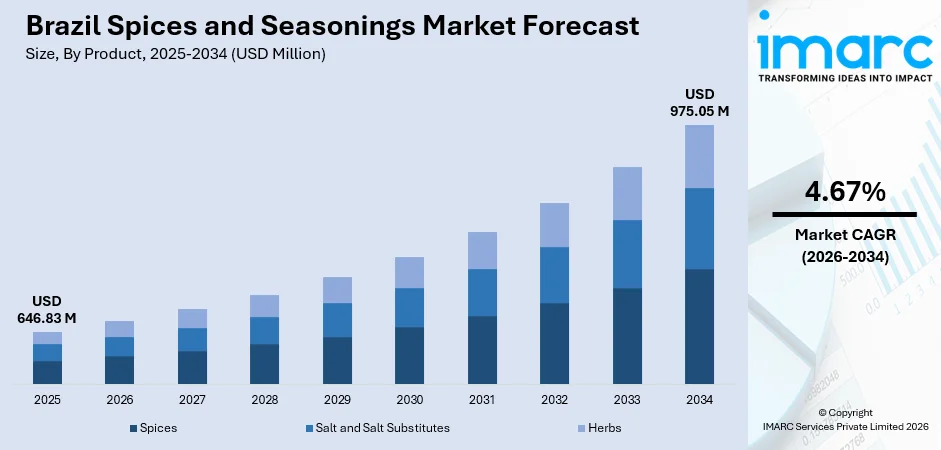
The Brazil spices and seasonings market size was valued at USD 646.83 Million in 2025 and is projected to reach USD 975.05 Million by 2034, growing at a compound annual growth rate of 4.67% during 2026-2034.
Brazil's rich culinary heritage, a burgeoning food and beverage industry, and evolving consumer preferences for bold and health-oriented flavors are shaping the trajectory of the spices and seasonings market. Rising demand for processed and convenience foods, increasing penetration of modern retail and e-commerce channels, and a thriving domestic meat production ecosystem are collectively creating sustained growth opportunities and broadening the Brazil spices and seasonings market share.
Key Takeaways and Insights:
- By Product: Spices dominate the market with a share of 46.2% in 2025, owing to the widespread culinary use of pepper, cinnamon, and cardamom across Brazil's diverse regional cuisines and large food processing sector.
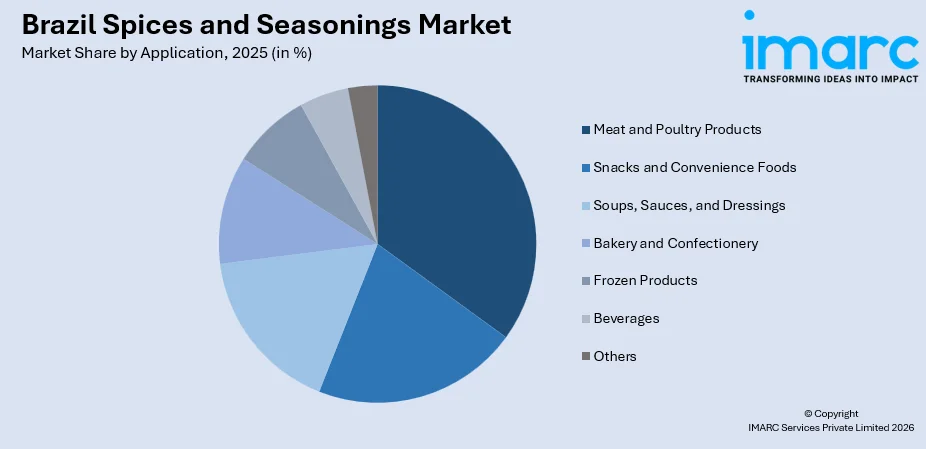
- By Application: Meat and poultry products represent the largest segment with a market share of 28.8% in 2025, driven by Brazil's position as a global beef and poultry powerhouse and the high seasoning intensity required in processed, marinated, and exported meat products.
- By Region: Southeast leads the market with a share of 42.5% in 2025, fueled by higher urbanization, greater purchasing power, a well-developed foodservice ecosystem, and the concentration of major food processing industries in São Paulo and Rio de Janeiro.
- Key Players: The Brazil spices and seasonings market is moderately competitive, with established multinational food ingredient companies operating alongside domestic producers and regional cooperatives, competing across product premiumization, clean-label innovation, and regional distribution depth.
To get more information on this market Request Sample
The Brazil spices and seasonings market is driven by strong culinary traditions, rising demand for flavorful foods, and expanding food processing activities. Increasing urbanization and changing lifestyles are encouraging the use of convenient and ready to cook seasoning products. Growth in retail infrastructure is also supporting market demand, as highlighted by the Brazilian Supermarket Association (ABRAS) reporting supermarket sales of USD 197 billion in 2024 across 424,120 stores serving 30 million consumers daily, reflecting wide product accessibility. Additionally, rising health awareness is boosting demand for natural and clean label spices. Increasing disposable incomes and exposure to global cuisines are further encouraging experimentation with diverse flavors. The rapid growth of e-commerce, along with strong agricultural production and export activities, continues to strengthen supply chains and drive consistent demand for spices and seasonings across Brazil.
Brazil Spices and Seasonings Market Trends:
Growth in E-commerce and Digital Retail Channels
The rapid expansion of e-commerce platforms is significantly enhancing the accessibility of spices and seasonings in Brazil by offering a wide range of products, including niche and premium variants. Consumers benefit from convenience, competitive pricing, and detailed product information, which support informed purchasing decisions. This shift is reinforced by strong digital adoption, as the Associação Brasileira de Comércio Eletrônico (ABCOMM) projected Brazil’s e-commerce sector to generate USD 36.3 Billion in revenue in 2025, with approximately 94 Million online shoppers. The growing online engagement also enables direct interaction between brands and consumers, strengthening visibility and loyalty, thereby positively influencing the market.
Rising Disposable Income and Premium Product Demand
The increasing disposable income levels in Brazil are enabling consumers to spend more on high quality and premium food products, including spices and seasonings. This shift is encouraging greater demand for organic, specialty, and imported varieties that offer enhanced flavor and perceived health benefits. Supporting this trend, the Brazilian Institute of Geography and Statistics reported that per capita household income reached BRL 2,069 in 2024, with significant regional variation, indicating improving purchasing power across segments. As consumers gain financial flexibility, they are increasingly experimenting with diverse cuisines and cooking styles. This growing willingness to invest in superior ingredients continues to drive the demand for premium spices and seasonings in Brazil.
Advancements in Packaging Enhancing Product Shelf Life and Usability
Innovations in packaging technologies are contributing to the growth of the spices and seasonings market in Brazil by improving product quality and convenience. Advanced packaging solutions help preserve aroma, flavor, and freshness, extending shelf life and reducing wastage. User friendly packaging formats, such as resealable pouches, grinders, and portion controlled packs, enhance ease of use for consumers. Improved packaging also supports better storage and transportation, maintaining product integrity across distribution channels. These advancements increase consumer confidence and encourage repeat purchases, thereby supporting consistent demand for spices and seasonings.
Market Outlook 2026-2034:
The Brazil spices and seasonings market is on a consistent upward trajectory throughout the forecast period, anchored by structural demand from the country's large food and beverage manufacturing base and evolving retail landscape. The market generated a revenue of USD 646.83 Million in 2025 and is projected to reach a revenue of USD 975.05 Million by 2034, growing at a compound annual growth rate of 4.67% from 2026-2034. Expanding e-commerce channels, premiumization trends, sustained growth in processed meat output, and ongoing investment in spice cultivation are expected to support strong revenue generation across the forecast horizon.
Brazil Spices and Seasonings Market Report Segmentation:
|
Segment Category |
Leading Segment |
Market Share |
|
Product |
Spices |
46.2% |
|
Application |
Meat and Poultry Products |
28.8% |
|
Region |
Southeast |
42.5% |
Product Insights:
- Salt and Salt Substitutes
- Herbs
- Thyme
- Basil
- Oregano
- Parsley
- Others
- Spices
- Pepper
- Cardamom
- Cinnamon
- Clove
- Nutmeg
- Others
Spices lead with a market share of 46.2% of the total Brazil spices and seasonings market in 2025.
Spices dominate the market due to their extensive use across traditional cuisine and processed food applications. Their ability to enhance flavor, aroma, and color makes them essential in daily consumption. This dominance is supported by strong domestic production and trade activity, as CEIC reported Brazil’s daily average spice export volume reached 646.507 tons, significantly increasing from 345.191 tons recorded on March 8, 2026. Such growth reflects rising demand and supply strength. Additionally, increasing use in packaged foods and preference for natural flavoring agents continue to reinforce their leading position in the market.
The segment benefits from increasing health consciousness and a consumer demand for natural, clean label ingredients. Spices are seen as healthier options because of their antioxidant and healing qualities, promoting their addition to everyday meals. The growth of the food processing sector and the rise of foodservice establishments have led to higher bulk spice consumption throughout Brazil. Furthermore, advancements in spice combinations and practical packaging designs improve usability and longevity, appealing to both home cooks and commercial consumers. Robust distribution networks and export prospects enhance ongoing demand, solidifying spices as the top product category in Brazil's spices and seasonings market.
Application Insights:
Access the comprehensive market breakdown Request Sample
- Meat and Poultry Products
- Snacks and Convenience Foods
- Soups, Sauces, and Dressings
- Bakery and Confectionery
- Frozen Products
- Beverages
- Others
Meat and poultry products dominate with a market share of 28.8% of the total Brazil spices and seasonings market in 2025.
Meat and poultry products represent the largest segment attributed to their important role in the nation's eating habits and cooking customs. Brazilian cooking prominently features beef, chicken, and pork, necessitating a range of spices and seasonings to improve flavor, tenderness, and scent. Typical dishes, such as grilled meats and barbecues, depend significantly on spice rubs, marinades, and seasoning mixes. The increased intake of processed meat products further promotes the use of spices for maintaining flavor consistency and preservation. This robust cultural and industrial demand keeps meat and poultry as the leading application segment in the market.
The use of natural spice-based preservatives in the processing of poultry and beef is increasing as producers react to consumer and regulatory demands to minimize synthetic chemical additives. Herbs and spices like rosemary, thyme, pepper, and garlic are being used more frequently for their antimicrobial effects, prolonging product shelf life and fulfilling clean-label standards. Brazilian beef exports hit 3.63 million metric tons in 2024 based on USDA statistics, maintaining strong and steady spice demand in meat processing and export preparation across the country.
Regional Insights:
- Southeast
- South
- Northeast
- North
- Central-West
Southeast exhibits a clear dominance with a 42.5% share of the total Brazil spices and seasonings market in 2025.
Southeast holds the biggest market share because of its substantial population, high level of urbanization, and significant presence of food processing industries. Large cities like São Paulo and Rio de Janeiro significantly influence spice consumption among households, restaurants, and packaged food producers. The region's advanced retail infrastructure, comprising supermarkets and hypermarkets, guarantees easy access to a diverse array of spice products. Moreover, increased disposable incomes and changing food preferences motivate consumers to explore a variety of flavors and cuisines. This blend of robust demand and supply abilities reinforces the region's top standing in the market.
The region’s supremacy is further backed by the existence of significant foodservice chains, industrial kitchens, and export-focused food enterprises that demand reliable and high-quality seasoning options. The rising need for convenience foods and ready-to-eat (RTE) meals boosts the use of standardized spice mixtures in manufacturing. Additionally, ongoing product innovation, featuring premium and organic spices, draws health-minded consumers in metropolitan regions. Effective logistics systems and closeness to key ports also enable distribution and trading operations. These elements together enhance Southeast Brazil's position as the main center for spices and seasonings use and business operations in the nation.
Market Dynamics:
Growth Drivers:
Why is the Brazil Spices and Seasonings Market Growing?
Rising Demand for Clean-Label Products
Brazilian consumers are increasingly shifting toward clean label spices that are free from artificial additives and synthetic preservatives, reflecting a growing focus on health and natural food choices. This preference is influencing manufacturers to adopt transparent labeling and use minimally processed ingredients. Supporting this transition, in 2024, Brazil introduced updated food and packaging regulations under RDC No. 843/2024 and IN No. 281/2024, establishing clear approval pathways based on product risk categories. These regulations enhance safety, compliance, and regulatory clarity, encouraging the production of cleaner products. As a result, there is a rise in the demand for natural and high-quality spices across the country.
Increasing Urbanization and Changing Dietary Patterns
Rising urbanization in Brazil is significantly shaping dietary habits and catalyzing the demand for spices and seasonings, as urban consumers increasingly prefer convenient and quick meal solutions. Time constraints and evolving lifestyles are encouraging the use of pre mixed spices and ready to use seasoning products, reducing reliance on traditional cooking practices. This trend is further supported by demographic shifts, as the World Bank estimated Brazil’s urban population reached 186,592,664 in 2024, highlighting the scale of urban consumption. Greater exposure to diverse cuisines in metropolitan areas is also encouraging experimentation with new flavors, thereby expanding the adoption of varied spice products and supporting the market growth.
Growth of the Foodservice Sector and Culinary Innovation
The expansion of Brazil’s foodservice industry is significantly driving the demand for spices and seasonings. Restaurants, quick service outlets, and catering services rely on diverse seasoning profiles to enhance menu offerings and attract customers. Increasing competition within the sector encourages culinary innovation, leading to the use of unique spice combinations and flavors. The growing popularity of dining out and food delivery services further supports consumption. Foodservice operators require consistent and high-quality spices to maintain taste standards, contributing to steady demand. This continuous innovation and expansion strengthen the role of spices and seasonings in Brazil’s evolving food landscape.
Market Restraints:
What Challenges the Brazil Spices and Seasonings Market is Facing?
Price Volatility in Key Spice Commodities
Uncertain changes in the prices of essential spices like black pepper, cinnamon, and cardamom impose cost burdens on producers in Brazil. Disruptions in supply due to climate variations, geopolitical conflicts, and inventory shortages heighten uncertainty. Firms with set prices experience pressure on margins during increases, whereas smaller businesses find it challenging to handle procurement risks efficiently.
Supply Chain Fragmentation and Distribution Gaps in Remote Regions
Brazil's extensive geographical area poses considerable logistical challenges for the reliable and economical distribution of spices and seasonings throughout various consumer markets. Remote and rural areas in the North and Central-West encounter increased transportation expenses, extended delivery times, and inadequate cold-chain facilities. These distribution gaps limit product accessibility, diminish shelf diversity, and elevate spoilage risks for delicate spice items.
Competition from Informal and Unbranded Spice Products
A substantial portion of Brazil's spice consumption flows through informal channels, particularly in lower-income and rural segments, where unbranded loose spices are purchased from local traders or open-air markets. These informal products undercut branded seasonings on price, limiting market penetration for packaged and quality-certified spice products. The prevalence of unregulated sourcing also raises food safety concerns, complicating the compliance environment for certified processors and constraining overall formalization of the market.
Competitive Landscape:
The Brazil spices and seasonings market exhibits a moderately fragmented competitive structure, with large multinational food ingredient manufacturers operating alongside domestic producers and regional cooperatives. Competition is driven by product innovation, flavor diversification, clean-label positioning, and distribution network breadth. Key strategies include investment in natural and organic product lines, e-commerce channel expansion, and the development of proprietary spice blend formulations tailored to specific foodservice and industrial applications. The growing trend toward premium and artisanal seasoning products is reshaping competitive dynamics and creating differentiation opportunities for both large-scale manufacturers and specialist regional brands committed to quality sourcing.
Recent Developments:
- July 2025: Solina Foods, a French savory ingredients company, completed the acquisition of New Max, a Brazilian manufacturer of flavoring systems, savory solutions, and natural colorants. The transaction marked Solina's inaugural market entry into Latin America and is expected to expand its manufacturing and formulation capabilities across the Brazilian food ingredients and seasonings sector.
Brazil Spices and Seasonings Market Report Coverage:
|
Report Features |
Details |
|
Base Year of the Analysis |
2025 |
|
Historical Period |
2020-2025 |
|
Forecast Period |
2026-2034 |
|
Units |
USD Million |
|
Scope of the Report |
Exploration of Historical Trends and Market Outlook, Industry Catalysts and Challenges, Segment-Wise Historical and Future Market Assessment:
|
|
Products Covered |
|
|
Applications Covered |
Meat and Poultry Products, Snacks and Convenience Foods, Soups, Sauces, and Dressings, Bakery and Confectionery, Frozen Products, Beverages, Others |
|
Regions Covered |
Southeast, South, Northeast, North, Central-West |
|
Customization Scope |
10% Free Customization |
|
Post-Sale Analyst Support |
10-12 Weeks |
|
Delivery Format |
PDF and Excel through Email (We can also provide the editable version of the report in PPT/Word format on special request) |
Frequently Asked Questions About the Brazil Spices and Seasonings Market Report
The Brazil spices and seasonings market size was valued at USD 646.83 Million in 2025.
The Brazil spices and seasonings market is expected to grow at a compound annual growth rate of 4.67% during 2026-2034 to reach USD 975.05 Million by 2034.
Spices segment holds the largest share at 46.2% in 2025, driven by the extensive use of pepper, cinnamon, cardamom, and other spices across Brazil's food processing, household cooking, and foodservice applications.
Key factors driving the Brazil spices and seasonings market include rapid e-commerce expansion improving product accessibility, supported by digital adoption, with Brazil’s e-commerce projected to reach USD 36.3 billion in 2025 and around 94 million online shoppers, enhancing visibility, convenience, and consumer engagement.
Major challenges include price volatility in key commodity spices, logistical and distribution barriers in remote and rural regions, and competition from informal unbranded spice products that constrain formal market penetration and quality standardization efforts.
Need more help?
- Speak to our experienced analysts for insights on the current market scenarios.
- Include additional segments and countries to customize the report as per your requirement.
- Gain an unparalleled competitive advantage in your domain by understanding how to utilize the report and positively impacting your operations and revenue.
- For further assistance, please connect with our analysts.
 Request Customization
 Speak to an Analyst
 Request Brochure
 Inquire Before Buying
Benefits of Customization
- Personalize this research
- Triangulate with your data
- Get data as per your format and definition
- Gain a deeper dive into a specific application, geography, customer, or competitor
- Any level of personalization
Get in Touch With Us
UNITED STATES
Phone: +1-201-971-6302
INDIA
Phone: +91-120-433-0800
UNITED KINGDOM
Phone: +44-753-714-6104
Email: [email protected]
Client Testimonials




.webp)




.webp)













Related Reports

Choose your plan
*Please note that the prices mentioned below are starting prices for each bundle type. Kindly contact our team for further details.*
Single User License
- 1 User License, Access on 2 Devices
- PDF Report + Excel Dataset (Password Protected)
- Lifetime Access
- No Printing Rights
- 10% Free Report Customization
- 10–12 Weeks of Analyst Support
Five User License
- Access for 5 Users, 2 Devices per User
- PDF Report + Excel Dataset (Password Protected)
- Lifetime Access
- Dedicated Account Manager
- 12–14 Weeks of Analyst Support
- No Printing Rights
- 15% Free Report Customization
- 25% Discount on Your Next Purchase
Corporate User License
- Unlimited User Access (Within Your Organization)
- PDF Report + Excel Dataset
- Lifetime Access
- Dedicated Account Manager
- 14–20 Weeks of Analyst Support
- No Printing Rights
- 20% Free Report Customization
- 30% Discount on Your Next Purchase
Essential Insights
What's included:
3 reports
- Lifetime Access
- PDF Reports
- Excel Datasets
- 2 Weeks of Free Analyst Support
- 2 User Licenses
- Access on 2 Devices
- Printing Rights
- Complimentary PowerPoint (PPT) Version
- Complimentary License Upgrade
Professional Access
What's included:
5 reports
- Lifetime Access
- PDF Reports
- Excel Datasets
- 8 Weeks of Free Analyst Support
- 2 User Licenses
- Access on 2 Devices
- Printing Rights
- Complimentary PowerPoint (PPT) Version
- Complimentary License Upgrade
Business Advantage
What's included:
8 reports
- Lifetime Access
- PDF Reports
- Excel Datasets
- 14 Weeks of Free Analyst Support
- 2 User Licenses
- Access on 2 Devices
- Printing Rights
- Complimentary PowerPoint (PPT) Version
- Complimentary License Upgrade
Enterprise Intelligence
What's included:
10 reports
- Lifetime Access
- PDF Reports
- Excel Datasets
- 20 Weeks of Free Analyst Support
- 2 User Licenses
- Access on 2 Devices
- Printing Rights
- Complimentary PowerPoint (PPT) Version
- Complimentary License Upgrade