
Cashew Market Size, Share, Trends and Forecast by Form, Distribution Channel, Application, and Region, 2026-2034
Cashew Market Size and Share:
The global cashew market size was valued at USD 7.98 Billion in 2025. Looking forward, IMARC Group estimates the market to reach USD 11.08 Billion by 2034, exhibiting a CAGR of 3.6% from 2026-2034. Asia-Pacific currently dominates the market, holding a market share of 41% in 2025. The region benefits from extensive cashew cultivation, large-scale processing capabilities, rising domestic consumption driven by growing health awareness, and strong export infrastructure that supports both raw and processed cashew trade, all contributing to the cashew market share.
The global cashew market is being driven by the rising consumer inclination toward nutrient-dense and protein-rich snack options that align with health-conscious dietary patterns. The increasing adoption of plant-based diets and veganism has significantly expanded the use of cashews as functional ingredients in dairy-free alternatives, including cashew milk, cheese, yogurt, and cream-based products. Additionally, the growing demand for premium and value-added cashew products, such as roasted, flavored, and organic variants, is bolstering cashew market growth across both retail and foodservice channels. The expansion of modern retail infrastructure and e-commerce platforms has improved product accessibility and visibility, enabling wider consumer reach. Furthermore, government initiatives in major producing countries that support cashew cultivation, processing, and export are strengthening global supply chains. The ongoing advancements in mechanized processing technologies are enhancing kernel recovery rates and reducing operational costs, further stimulating industry expansion.
The United States has emerged as a major region in the cashew market owing to many factors. The country represents one of the largest consumer markets for cashew nuts globally, driven by growing health awareness and a significant shift toward natural, protein-rich snacking alternatives. The increasing incorporation of cashews in plant-based food formulations, including vegan cheese, butter, and milk products, is amplifying demand across multiple food segments. The expanding retail network of supermarkets and hypermarkets, along with the rapid growth of online grocery platforms, is further facilitating cashew market outlook. Rising consumer preference for clean-label and organic food products also continues to sustain robust demand for premium cashew offerings in the American market. The growing foodservice sector adoption of cashew-based ingredients in vegan and health-focused menus is creating additional consumption avenues. Furthermore, the increasing availability of flavored and value-added cashew variants through both traditional and digital retail channels is supporting sustained market penetration across diverse consumer demographics in the country.
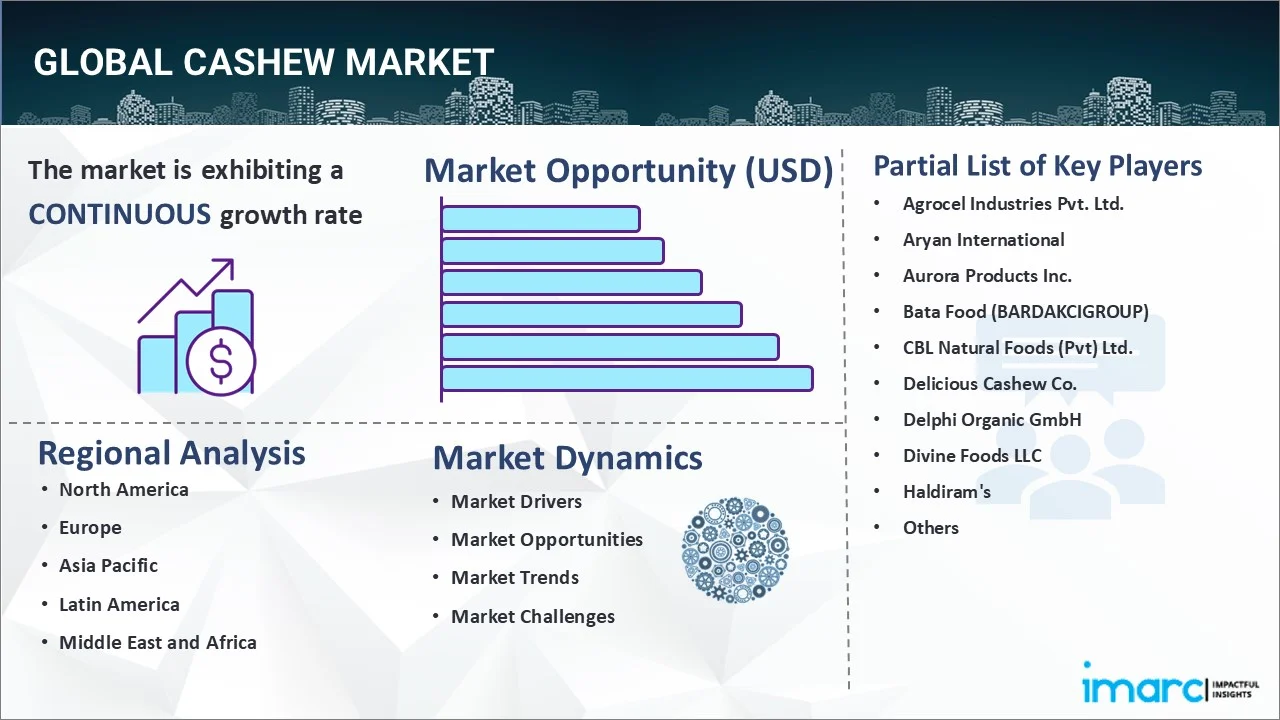
To get more information on this market Request Sample
Cashew Market Trends:
Rising Health-Conscious Snacking Demand
The growing consumer awareness regarding the health benefits of cashew nuts is significantly propelling the market forward. Cashews are a rich source of plant-based protein, healthy monounsaturated fats, essential minerals such as magnesium and zinc, and antioxidants that support cardiovascular health and immune function. As dietary patterns shift toward natural, minimally processed food choices, cashews are increasingly replacing traditional processed snacks in consumer baskets. The rising prevalence of lifestyle-related health conditions, including obesity and heart disease, is encouraging individuals to seek nutritious snacking options, driving steady demand for whole and roasted cashews. For instance, according to the IMARC Group, the global healthy snacks market was valued at USD 95.8 billion in 2025, with nuts, seeds, and trail mixes holding 36.8% of the total share. This broader health-food movement continues to position cashews as a preferred option within the rapidly expanding premium snack segment globally.
Expansion of Plant-Based Food Applications
The accelerating global shift toward plant-based diets and veganism is catalyzing significant growth in the cashew market forecast. Cashew nuts possess a naturally creamy texture and mild flavor profile that makes them an ideal base ingredient for dairy-free alternatives, including cashew milk, vegan cheese, yogurt, ice cream, and butter products. The growing population of flexitarian and vegan consumers, particularly in North America and Europe, is creating sustained demand for cashew-based formulations across the food and beverage industry. Manufacturers are increasingly leveraging cashews to create clean-label products free from artificial stabilizers, emulsifiers, and preservatives. For example, in August 2025, UMYUM, a Vancouver-based plant-based dairy company, expanded its cashew-based dairy alternatives, including soft cheeses and gourmet butters made from whole cashews,into the United States retail market. This trend underscores the growing intersection between cashew consumption and innovative plant-based food development worldwide.
Investment in Cashew Processing Infrastructure
The increasing investment in cashew processing facilities, particularly across major producing regions in Africa and Asia, is positively influencing the cashew market trends. Governments and international development agencies are channeling resources toward modernizing processing capabilities, improving kernel recovery rates, and expanding value addition in cashew-producing countries. This shift from raw nut exports to processed kernel production is enhancing supply chain efficiencies and enabling countries to capture higher margins from international trade. Mechanized shelling, optical sorting, and deep-learning grading systems are being adopted in processing hubs, significantly boosting productivity and quality standards. For example, in 2025, Ivory Coast's locally processed cashew exports were projected to reach approximately USD 623 million, representing a 67% increase from the previous year. The strategic development of agro-industrial processing zones and supportive policy frameworks is strengthening the global cashew industry's infrastructure foundation.
Cashew Industry Segmentation:
IMARC Group provides an analysis of the key trends in each segment of the global cashew market, along with forecast at the global, regional, and country levels from 2026-2034. The market has been categorized based on form, distribution channel, and application.
Analysis by Form:
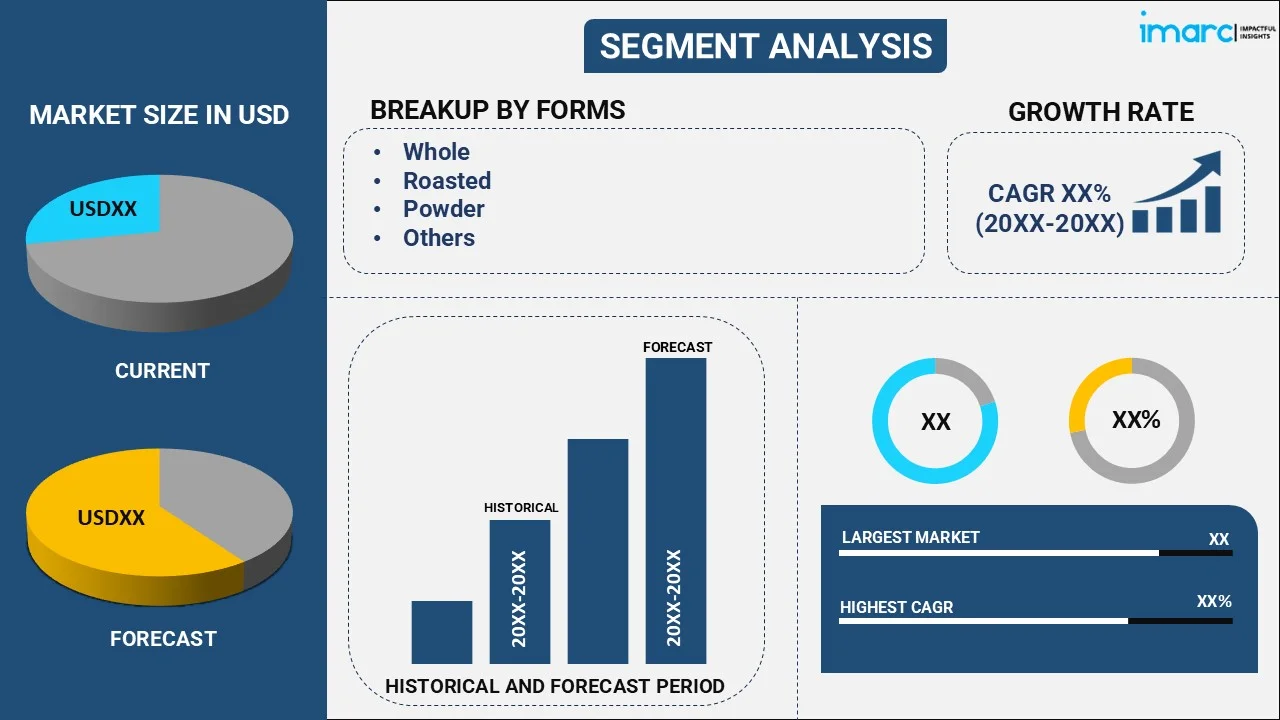
To get detailed segment analysis of this market Request Sample
- Whole
- Roasted
- Powder
- Paste
- Splits
Whole holds 57% of the market share. Whole cashew nuts, commonly referred to as whole white kernels, represent the most widely consumed and commercially traded form in the global cashew market. Whole cashews are valued for their uniform size, intact shape, and superior visual appeal, making them the preferred choice for premium snacking, gifting, and direct retail consumption. The consistent demand from both domestic and international markets for various premium grade whole kernels sustains the segment's dominant position. Furthermore, the whole form serves as a versatile ingredient across bakery, confectionery, and culinary applications, where intact kernel appearance enhances product aesthetics and perceived quality. Ongoing improvements in automated shelling and grading technologies are enhancing the yield of premium whole kernels, reinforcing segment growth. The increasing consumer preference for minimally processed and natural food products further strengthens the demand for whole cashew kernels across global retail and foodservice channels.
Analysis by Distribution Channel:
- Supermarkets
- Retailers
- Online Stores
- Others
Supermarkets lead the market with a share of 43%. Because of their wide product selections, aggressive price tactics, and well-organized retail spaces that provide easy customer access, supermarkets and hypermarkets are the main distribution channel for cashew products worldwide. To satisfy a variety of consumer tastes under one roof, these big-format retail establishments provide a huge selection of cashew varieties, including raw, roasted, salted, flavored, and organic alternatives. Cashew products are strategically positioned in snack aisles and health food areas to increase product exposure and encourage impulsive purchases. Supermarkets also regularly provide private-label cashew products, bulk-buy discounts, and promotional pricing to draw in budget-conscious customers. The dominating position of this channel is being further solidified by the ongoing growth of organized retail networks throughout emerging nations. Recurring business and a wider consumer acceptance of cashew products are also being aided by the increasing integration of loyalty programs and in-store promotions centered on healthy snacking categories.
Analysis by Application:
- Dairy Products
- Bakery Products
- Snacks and Bars
- Confectionaries
- Cereals
- Desserts
- Beverages
- Cosmetic Products
- Others
Snacks and bars dominate the market, with a share of 34%. Due to consumers' growing need for wholesome, practical, and ready-to-eat snack options, snacks and bars make up the largest application sector in the worldwide cashew market. Cashew nuts are commonly eaten as roasted or flavored snacks on their own, but they are also being used more and more as main ingredients in granola, energy bars, protein bars, and trail mixes. Cashew-based snack products are well-positioned among health-conscious consumers of all ages due to the expanding health and wellness trend and the growing need for plant-based protein sources. Additionally, the consumer base is growing as a result of the rise of high-end and artisanal snack products that provide unique flavor profiles such cashews that are honey-roasted, spiced, or coated in chocolate. Convenience-driven consumption is being further enhanced by continuous innovation in package formats, such as single-serve and resealable pouches. Wider market penetration and accessibility across a range of consumer demographics are also being supported by the growing availability of cashew-based snack products through online retail platforms.
Regional Analysis:
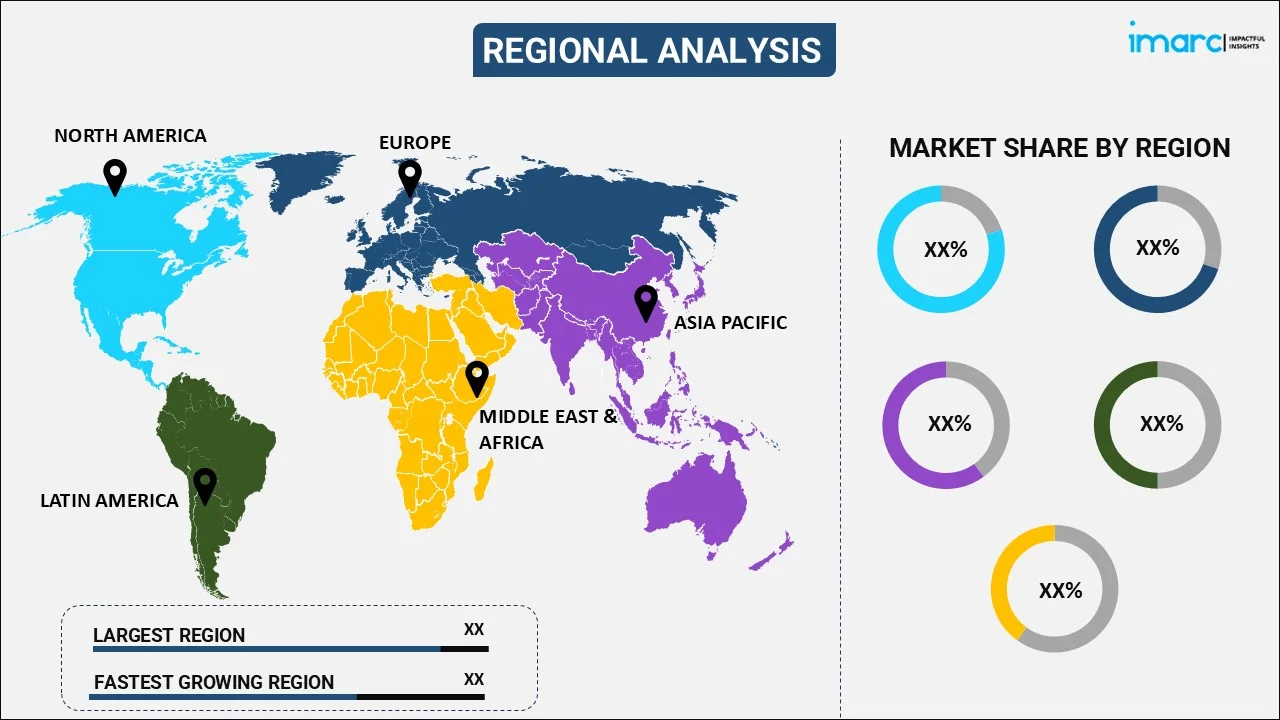
To get more information on the regional analysis of this market Request Sample
- North America
- United States
- Canada
- Asia-Pacific
- China
- Japan
- India
- South Korea
- Australia
- Indonesia
- Others
- Europe
- Germany
- France
- United Kingdom
- Italy
- Spain
- Russia
- Others
- Latin America
- Brazil
- Mexico
- Others
- Middle East and Africa
Asia-Pacific, accounting for 41% of the share, enjoys the leading position in the market. India and Vietnam are the world's biggest cashew processors and major consumers, and the region's vast cashew producing base supports its dominance. Increased domestic consumption of cashew products is being driven by rising disposable incomes, burgeoning urban populations, and growing consumer health consciousness throughout the region. India continues to be the world's top consumer of cashews, and demand is only expected to increase due to changing dietary habits and the growth of contemporary retail outlets. Additionally, China is the region's fastest-growing import market, which reflects the growing demand from its increasingly health-conscious customer base for roasted and flavored cashew goods. Together with government assistance for cashew farming in nations like Indonesia, Vietnam's well-established processing infrastructure is bolstering the region's production and export capacities and solidifying its dominant market position in the global cashew business.
Key Regional Takeaways:
United States Cashew Market Analysis
Due to the robust and expanding demand for natural, plant-based, and healthful snack products, the United States is one of the world's largest consumer markets for cashew nuts. Both raw and processed cashew kernels are mostly sourced from Vietnam and India, making the nation's cashew sector largely dependent on imports. Cashews' growing integration into commonplace dietary patterns, such as their use as plant-based food ingredients, trail mix ingredients, and protein-rich standalone snacks, are maintaining high levels of consumption. The market is growing as more premium, organic, and clean-label cashew products are sold in supermarkets, specialized health stores, and online shopping platforms. Additional consumption channels are being created by the growing demand in the restaurant industry for cashew-based products in gourmet dishes, vegan menus, and artisanal snack options. Furthermore, household acceptance of cashew products across a range of demographic sectors is still encouraged by the increasing awareness of the nutritional and cardiovascular benefits linked to regular nut consumption, which is reinforced by health organizations' recommendations. Another factor supporting the market's steady growth is the growing availability of flavored and value-added cashew varieties through conventional and online retail channels.
North America Cashew Market Analysis
Due to consumers' increasing desire for plant-based, high-protein, and healthful snack options, the cashew nut market in North America is sizable and continuously growing. The United States and Canada mostly import processed cashew kernels from Vietnam, India, and up-and-coming African processors, making the region's cashew market largely dependent on imports. Strong consumption increase is being maintained throughout the region by the growing integration of cashews into common dietary patterns, such as their use in energy bars, trail mixes, vegan dairy alternatives, and gourmet culinary preparations. Supermarkets, specialist health food stores, and online grocery platforms are all part of the growing retail infrastructure that is improving consumer reach and product accessibility. Household acceptance is still being driven by growing awareness of the nutritional and cardiovascular advantages of regular nut consumption, which is reinforced by endorsements from health organizations. Additionally, new channels of consumption are being created by the expanding demand in the restaurant industry for cashew-based ingredients in plant-based menus and high-end snack options. Consumer participation across a range of demographic categories in the region is being further strengthened by the growing availability of cashew products that are organic, clean-label, and sourced sustainably.
Europe Cashew Market Analysis
Germany and the Netherlands are the main import and distribution hubs for cashew nuts in Europe, which is a sizable and continuously expanding consumer market. Demand for cashews is rising throughout the continent due to consumer preferences for snack foods that are ethically sourced, sustainable, and healthful. Cashews are becoming more and more popular as ingredients in high-end confections, vegan dairy substitutes, and healthy snack bars, broadening their use beyond conventional eating habits. Additionally, the European market's supplier relationships and procurement practices are being impacted by the growing demand for cashew goods that are sustainably sourced and certified fair trade. With its established trade infrastructure, Germany serves as a key import and re-export hub, making it easier to distribute cashew products to other European markets. Import requirements are being shaped and quality-focused procurement from certified producers is being encouraged by the continuous regulatory emphasis on food safety, traceability, and supply chains free of deforestation. Cashews' growing application in plant-based food innovations and high-end retail sectors supports the continent's consistent consumption rise.
Latin America Cashew Market Analysis
Brazil is a major producer and consumer of cashews in Latin America, which is an important cashew market. The cashew tree is indigenous to northeastern Brazil, where cashew processing and cultivation continue to have a significant cultural and economic impact. The expanded usage of cashew-based ingredients in regional food and beverage formulations, along with the rising domestic demand for healthier snack options, are driving market expansion. For instance, Brazil produced approximately 127,931 metric tons of cashews in 2023, maintaining its position among the top ten global producers. The increasing export opportunities and investments in processing infrastructure are further strengthening the region's cashew industry.
Middle East and Africa Cashew Market Analysis
The growing demand for high-end nut-based snacks in Gulf nations and the growing production base in West and East Africa are driving the cashew market's notable expansion in the Middle East and Africa area. The world's largest producer of raw cashew nuts is Ivory Coast, but Ghana, Tanzania, and Benin are all becoming significant production hubs. More value addition and export diversification are made possible by the growing investments made in local processing facilities throughout African countries. More chances for consumption are being created by the rising demand for cashews in Middle Eastern retail and catering channels. West African countries' role in the global cashew supply chain is being further strengthened by government measures that assist cashew planting, farmer training, and the construction of processing zones.
Competitive Landscape:
The competitive structure of the worldwide cashew market is somewhat fragmented, with several regional processors, exporters, and branded consumer product companies competing at different stages of the value chain. For improving kernel quality and operational efficiency, major market players are implementing strategic approaches such as vertical integration across production and processing, product diversification into flavored and value-added cashew variants, geographic expansion into high-growth consumer markets, and investment in cutting-edge processing technologies. In order to satisfy the growing demand from consumers in North America and Europe who are concerned about sustainability and health, businesses are also concentrating on organic and fair-trade certifications. Digitalization of the supply chain, direct-to-consumer distribution channels, and strategic alliances with agricultural cooperatives are becoming significant differentiators in the cashew market.
The report provides a comprehensive analysis of the competitive landscape in the cashew market with detailed profiles of all major companies, including:
- Agrocel Industries Pvt. Ltd.
- Aryan International
- Aurora Products Inc.
- Bata Food (BARDAKCIGROUP)
- CBL Natural Foods (Pvt) Ltd.
- Delicious Cashew Co.
- Delphi Organic GmbH
- Divine Foods LLC
- Haldiram's
- Kalbavi Cashews
- Lafooco (PAN Group)
- Nutty Yogi
- Royal Dry Fruits
- Wonderland Foods
Cashew Market Report Scope:
| Report Features | Details |
|---|---|
| Base Year of the Analysis | 2025 |
| Historical Period | 2020-2025 |
| Forecast Period | 2026-2034 |
| Units | Billion USD |
| Scope of the Report |
Exploration of Historical Trends and Market Outlook, Industry Catalysts and Challenges, Segment-Wise Historical and Future Market Assessment:
|
| Forms Covered | Whole, Roasted, Powder, Paste, Splits |
| Distribution Channels Covered | Supermarkets, Retailers, Online Stores, Others |
| Applications Covered | Dairy Products, Bakery Products, Snacks and Bars, Confectionaries, Cereals, Desserts, Beverages, Cosmetic Products, Others |
| Region Covered | North America, Asia-Pacific, Europe, Latin America, Middle East and Africa |
| Countries Covered | United States, Canada, China, Japan, India, South Korea, Australia, Indonesia, Germany, France, United Kingdom, Italy, Spain, Russia, Brazil, Mexico |
| Companies Covered | Agrocel Industries Pvt. Ltd., Aryan International, Aurora Products Inc., Bata Food (BARDAKCIGROUP), CBL Natural Foods (Pvt) Ltd., Delicious Cashew Co., Delphi Organic GmbH, Divine Foods LLC, Haldiram's, Kalbavi Cashews, Lafooco (PAN Group), Nutty Yogi, Royal Dry Fruits, Wonderland Foods, etc. |
| Customization Scope | 10% Free Customization |
| Post-Sale Analyst Support | 10-12 Weeks |
| Delivery Format | PDF and Excel through Email (We can also provide the editable version of the report in PPT/Word format on special request) |
Key Benefits for Stakeholders:
- IMARC’s report offers a comprehensive quantitative analysis of various market segments, historical and current market trends, market forecasts, and dynamics of the cashew market from 2020-2034.
- The research study provides the latest information on the market drivers, challenges, and opportunities in the global cashew market.
- The study maps the leading, as well as the fastest-growing, regional markets. It further enables stakeholders to identify the key country-level markets within each region.
- Porter’s Five Forces analysis assists stakeholders in assessing the impact of new entrants, competitive rivalry, supplier power, buyer power, and the threat of substitution. It helps stakeholders to analyze the level of competition within the cashew industry and its attractiveness.
- Competitive landscape allows stakeholders to understand their competitive environment and provides an insight into the current positions of key players in the market.
Frequently Asked Questions About the Cashew Market Report
The cashew market was valued at USD 7.98 Billion in 2025.
The cashew market is projected to exhibit a CAGR of 3.6% during 2026-2034, reaching a value of USD 11.08 Billion by 2034.
The cashew market is primarily driven by rising health consciousness among consumers seeking nutrient-dense snacking alternatives, the growing adoption of plant-based diets fueling demand for cashew-based dairy alternatives, increasing investment in processing infrastructure across producing regions, and the expanding retail and e-commerce networks enhancing product accessibility worldwide.
Asia-Pacific currently dominates the cashew market, accounting for a share of 41%. The region benefits from extensive production and processing capabilities in India and Vietnam, rising domestic consumption driven by growing disposable incomes and health awareness, and strong export infrastructure.
Some of the major players in the cashew market include Agrocel Industries Pvt. Ltd., Aryan International, Aurora Products Inc., Bata Food (BARDAKCIGROUP), CBL Natural Foods (Pvt) Ltd., Delicious Cashew Co., Delphi Organic GmbH, Divine Foods LLC, Haldiram's, Kalbavi Cashews, Lafooco (PAN Group), Nutty Yogi, Royal Dry Fruits, Wonderland Foods, etc.
Need more help?
- Speak to our experienced analysts for insights on the current market scenarios.
- Include additional segments and countries to customize the report as per your requirement.
- Gain an unparalleled competitive advantage in your domain by understanding how to utilize the report and positively impacting your operations and revenue.
- For further assistance, please connect with our analysts.
 Request Customization
 Speak to an Analyst
 Request Brochure
 Inquire Before Buying
Benefits of Customization
- Personalize this research
- Triangulate with your data
- Get data as per your format and definition
- Gain a deeper dive into a specific application, geography, customer, or competitor
- Any level of personalization
Get in Touch With Us
UNITED STATES
Phone: +1-201-971-6302
INDIA
Phone: +91-120-433-0800
UNITED KINGDOM
Phone: +44-753-714-6104
Email: [email protected]
Client Testimonials




.webp)




.webp)













Related Reports

Choose your plan
*Please note that the prices mentioned below are starting prices for each bundle type. Kindly contact our team for further details.*
Single User License
- 1 User License, Access on 2 Devices
- PDF Report + Excel Dataset (Password Protected)
- Lifetime Access
- No Printing Rights
- 10% Free Report Customization
- 10–12 Weeks of Analyst Support
Five User License
- Access for 5 Users, 2 Devices per User
- PDF Report + Excel Dataset (Password Protected)
- Lifetime Access
- Dedicated Account Manager
- 12–14 Weeks of Analyst Support
- No Printing Rights
- 15% Free Report Customization
- 25% Discount on Your Next Purchase
Corporate User License
- Unlimited User Access (Within Your Organization)
- PDF Report + Excel Dataset
- Lifetime Access
- Dedicated Account Manager
- 14–20 Weeks of Analyst Support
- No Printing Rights
- 20% Free Report Customization
- 30% Discount on Your Next Purchase
Essential Insights
What's included:
3 reports
- Lifetime Access
- PDF Reports
- Excel Datasets
- 2 Weeks of Free Analyst Support
- 2 User Licenses
- Access on 2 Devices
- Printing Rights
- Complimentary PowerPoint (PPT) Version
- Complimentary License Upgrade
Professional Access
What's included:
5 reports
- Lifetime Access
- PDF Reports
- Excel Datasets
- 8 Weeks of Free Analyst Support
- 2 User Licenses
- Access on 2 Devices
- Printing Rights
- Complimentary PowerPoint (PPT) Version
- Complimentary License Upgrade
Business Advantage
What's included:
8 reports
- Lifetime Access
- PDF Reports
- Excel Datasets
- 14 Weeks of Free Analyst Support
- 2 User Licenses
- Access on 2 Devices
- Printing Rights
- Complimentary PowerPoint (PPT) Version
- Complimentary License Upgrade
Enterprise Intelligence
What's included:
10 reports
- Lifetime Access
- PDF Reports
- Excel Datasets
- 20 Weeks of Free Analyst Support
- 2 User Licenses
- Access on 2 Devices
- Printing Rights
- Complimentary PowerPoint (PPT) Version
- Complimentary License Upgrade