
Cattle Healthcare Market Size, Share, Trends and Forecast by Product Type, End User, and Region, 2026-2034
Cattle Healthcare Market Size and Share:
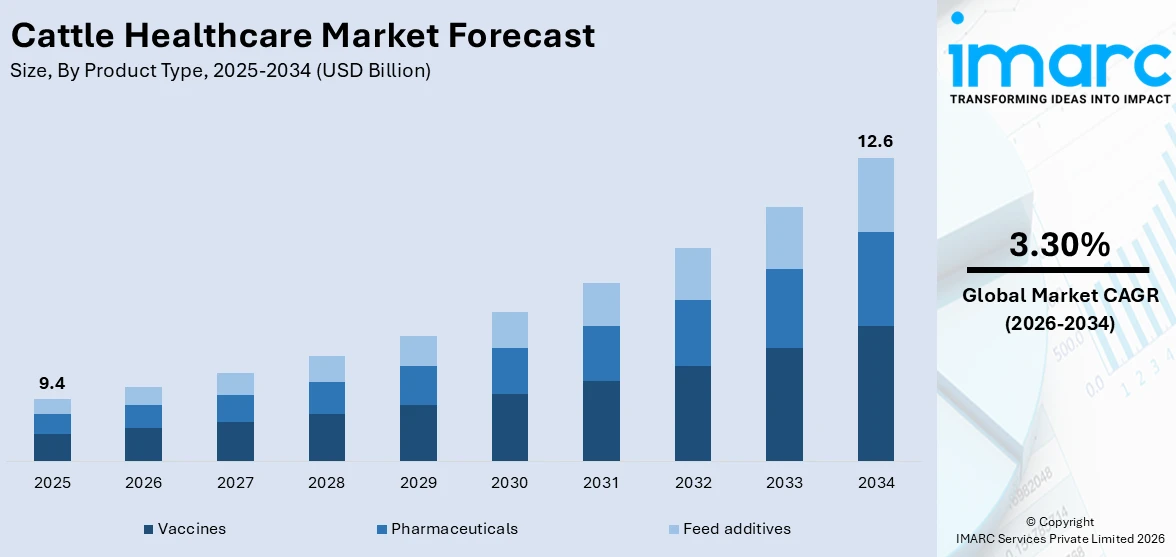
The global cattle healthcare market size was valued at USD 9.4 Billion in 2025. Looking forward, IMARC Group estimates the market to reach USD 12.6 Billion by 2034, exhibiting a CAGR of 3.30% during 2026-2034. North America currently dominates the market, holding a significant market share of over 36.7% in 2025. Rising disease prevalence, such as mastitis, bovine respiratory disease, and H5N1; growing demand for premium dairy and meat products worldwide; government initiatives funding veterinary programs, vaccination campaigns, and disease surveillance systems; and technological developments in veterinary medicine, such as AI-driven monitoring, precision diagnostics, and novel vaccine platforms that improve disease prevention and treatment efficiency, are the main factors driving the cattle healthcare market.
|
Report Attribute
|
Key Statistics
|
|---|---|
|
Base Year
|
2025
|
|
Forecast Years
|
2026-2034
|
|
Historical Years
|
2020-2025
|
|
Market Size in 2025
|
USD 9.4 Billion |
|
Market Forecast in 2034
|
USD 12.6 Billion |
| Market Growth Rate (2026-2034) | 3.30% |
The market for cattle healthcare is driven by several key factors, including the rising demand for high-quality dairy and meat products, increasing incidences of cattle diseases, and growing awareness of animal welfare. Market expansion in the veterinary sector depends significantly on technological developments in veterinary pharmaceuticals along with diagnostic tools and vaccines. Government support initiatives for livestock health receive additional funding for veterinary research to prevent and treat farm animal diseases. The rising demand for healthcare solutions stems from both extensive large-scale commercial cattle farm developments and enhanced biosecurity practices. Additionally, the adoption of precision livestock farming, improved nutrition, and preventive healthcare strategies play a crucial role in market growth. The rising global population and the need for sustainable livestock production further propel advancements in cattle healthcare.
To get more information on this market Request Sample
The market for cattle healthcare in the United States is influenced by the rising prevalence of infectious cattle diseases, advancements in veterinary medicine, and increasing demand for high-quality meat and dairy products. Government programs that focus on animal health and welfare advancement create beneficial conditions for market expansion. The adoption of precision livestock farming improved diagnostic technologies, and the availability of advanced vaccines and pharmaceuticals enhanced disease prevention and treatment. The market expansion results from elevated research investment combined with commercial farm growth and farmer increasing knowledge about preventive healthcare practices. The drive for sustainable livestock production serves as an important factor to develop innovative healthcare solutions for cattle. For instance, in May 2024, The U.S. Department of Agriculture announced implementing several more measures to guarantee the health and sustainability of the country’s livestock and poultry. In the two months following the first discovery of H5N1 in dairy cattle, the USDA acted swiftly and in collaboration with federal and state partners to gain a deeper understanding of the virus and control the disease.
Cattle Healthcare Market Trends:
Rising Prevalence of Cattle Diseases
The increasing incidence of infectious and metabolic diseases in cattle drives substantial demand for advanced healthcare interventions. Diseases such as mastitis, bovine respiratory disease, and lumpy skin disease continue to challenge livestock producers globally, necessitating comprehensive vaccination programs and therapeutic solutions. The emergence of zoonotic diseases like H5N1 avian influenza in dairy cattle has heightened biosecurity concerns, prompting governments and industry stakeholders to invest heavily in disease surveillance systems. Climate change is exacerbating disease transmission patterns by altering vector populations and environmental conditions favorable for pathogen spread. Farmers increasingly recognize that preventive healthcare measures prove more cost-effective than treating disease outbreaks, driving adoption of regular veterinary consultations and immunization schedules. Antimicrobial resistance concerns have intensified research into alternative treatments including bacteriophages, immunomodulators, and precision medicine approaches. The economic impact of cattle diseases on milk production, meat quality, and reproductive performance compels producers to prioritize herd health management through integrated disease control strategies combining vaccination, biosecurity protocols, and early diagnostic interventions.
Government Initiatives and Regulatory Frameworks
Governments worldwide are implementing comprehensive livestock health programs that significantly influence cattle healthcare market dynamics. Regulatory authorities establish mandatory vaccination protocols, disease reporting systems, and livestock traceability frameworks to contain outbreaks and facilitate safe international trade. Financial incentives including subsidized veterinary services, vaccine procurement programs, and insurance schemes reduce the economic burden on farmers while promoting preventive healthcare adoption. Public-private partnerships between government agencies, research institutions, and pharmaceutical companies accelerate the development and deployment of innovative veterinary solutions. Emergency funding mechanisms enable rapid response to emerging disease threats, with governments allocating substantial budgets for outbreak control and eradication programs. Veterinary infrastructure development initiatives expand access to quality animal health services in rural and underserved regions. Regulatory harmonization efforts streamline approval processes for veterinary medicines and biologics, encouraging innovation while maintaining safety standards. Educational campaigns raising awareness about animal welfare, food safety, and sustainable farming practices drive behavioral changes among livestock producers, fostering greater investment in cattle health management systems and professional veterinary care.
Technological Advancements in Veterinary Medicine
Innovation in veterinary technology is revolutionizing cattle healthcare through precision diagnostics, digital monitoring systems, and next-generation therapeutics. Artificial intelligence and machine learning algorithms analyze behavioral patterns, physiological parameters, and environmental data to enable early disease detection and predictive health management. Wearable sensors and Internet of Things devices provide real-time monitoring of vital signs, activity levels, and rumination patterns, allowing farmers to identify health issues before clinical symptoms manifest. Advanced diagnostic technologies including polymerase chain reaction, immunoassays, and genomic testing deliver rapid, accurate results that guide targeted treatment decisions. Biotechnology innovations have produced more effective vaccines utilizing recombinant DNA, vector-based, and mRNA platforms that offer improved efficacy and safety profiles. Telemedicine platforms connect farmers with veterinary specialists, overcoming geographical barriers and ensuring timely expert consultation. Automated systems for vaccine administration, data management, and treatment scheduling improve operational efficiency and reduce human error. Blockchain technology enhances supply chain transparency and product authentication, building trust in veterinary pharmaceuticals. These technological advances collectively improve animal welfare, optimize resource utilization, and enhance the sustainability of cattle production systems.
Cattle Healthcare Industry Segmentation:
IMARC Group provides an analysis of the key trends in each segment of the global cattle healthcare market, along with forecasts at the global, regional, and country levels from 2026-2034. The market has been categorized based on product type and end user.
Analysis by Product Type:
- Vaccines
- Pharmaceuticals
- Analgesics
- Anti-infective
- Anti-inflammatory
- Parasiticides
- Others
- Feed additives
- Medicinal
- Nutritional
Vaccines stand as the largest component in 2025, holding around 55.2% of the market due to their crucial role in preventing infectious diseases, reducing mortality rates, and improving overall herd productivity. Widespread vaccination programs help control major cattle diseases like bovine respiratory disease, foot-and-mouth disease, and mastitis, minimizing economic losses for farmers. Government initiatives and mandatory immunization programs further drive vaccine adoption. Additionally, advancements in biotechnology have led to the development of more effective and targeted vaccines, ensuring better disease management. As demand for high-quality meat and dairy rises, vaccines remain the most cost-effective and sustainable solution for maintaining cattle health and productivity.
Analysis by End User:
Access the comprehensive market breakdown Request Sample
- Dairy farms
- Veterinary hospitals
- Others
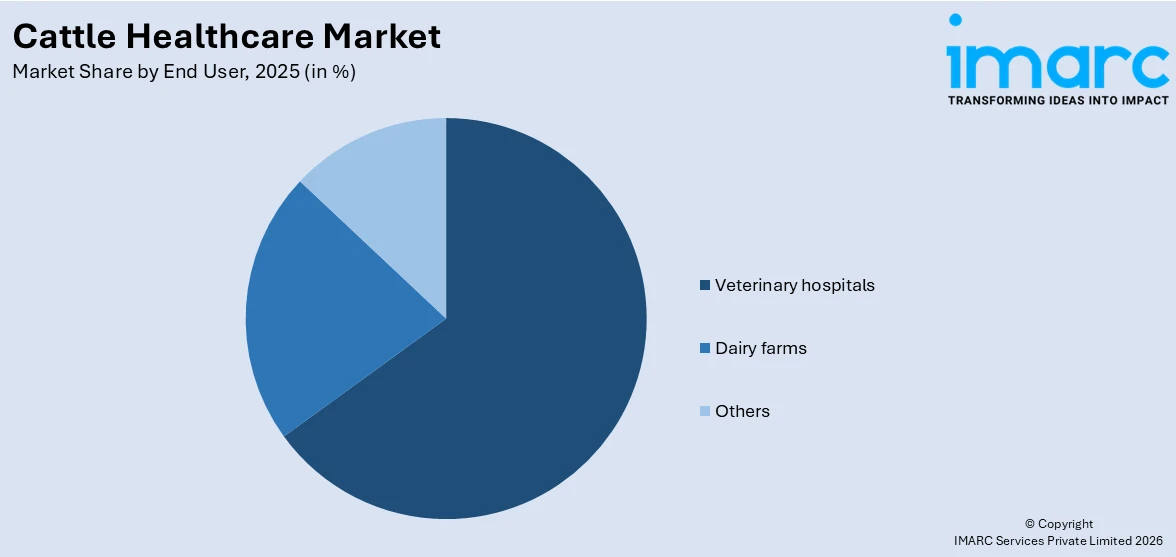
Veterinary hospitals lead the market with around 65.0% of the market share in 2025 due to their comprehensive services, including disease diagnosis, treatment, surgery, and preventive care. They provide specialized facilities, advanced diagnostic tools, and expert veterinary care, ensuring effective disease management. Government regulations and increasing awareness about cattle health drive farmers to seek professional veterinary services. Additionally, veterinary hospitals play a crucial role in vaccination programs, emergency care, and research on emerging diseases. As livestock farming expands and disease risks grow, the demand for well-equipped veterinary hospitals continues to rise, making them a dominant segment of the market.
Regional Analysis:
To get more information on the regional analysis of this market Request Sample
- North America
- United States
- Canada
- Asia Pacific
- China
- Japan
- India
- South Korea
- Australia
- Indonesia
- Others
- Europe
- Germany
- France
- United Kingdom
- Italy
- Spain
- Russia
- Others
- Latin America
- Brazil
- Mexico
- Others
- Middle East and Africa
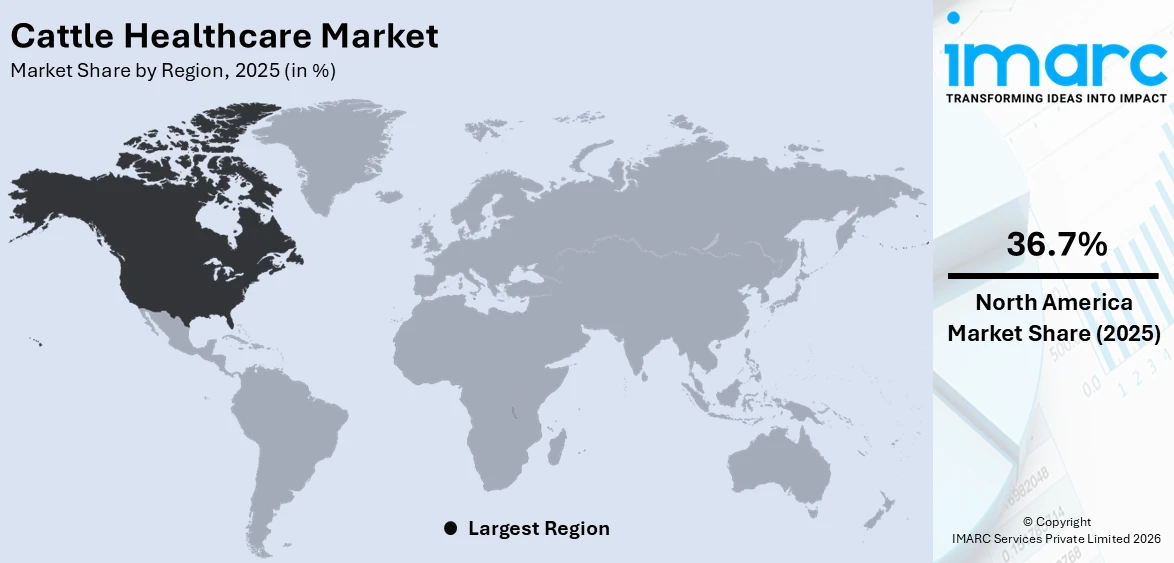
In 2025, North America accounted for the largest market share of over 36.7%. The cattle healthcare demand in North America is driven by increasing disease prevalence, rising demand for high-quality meat and dairy, and advancements in veterinary medicine. Government regulations and funding initiatives, such as USDA programs, promote vaccination, disease surveillance, and biosecurity measures. Technological advancements, including precision livestock farming, digital monitoring, and innovative veterinary pharmaceuticals, further enhance cattle health management. Large-scale commercial farming and growing awareness of preventive healthcare also boost market growth. Additionally, the presence of major veterinary service providers and research institutions supports ongoing innovations, ensuring better disease control, productivity, and sustainability in the region’s cattle industry.
Key Regional Takeaways:
United States Cattle Healthcare Market Analysis
The United States cattle healthcare market benefits from advanced veterinary infrastructure, substantial research investment, and comprehensive government support programs. The government addresses critical workforce shortages through strategic initiatives that enhance veterinary service accessibility in underserved agricultural communities. The prevalence of cattle diseases necessitates continuous healthcare investment, with emergency funding demonstrating commitment to livestock health protection. Precision livestock farming technologies including AI-driven monitoring systems and automated diagnostic tools are widely adopted across commercial operations, improving disease detection efficiency and treatment outcomes. Strong regulatory frameworks enforced by federal agencies ensure product safety and efficacy standards. The integration of biosecurity measures, mandatory vaccination programs, and sophisticated disease surveillance systems positions the United States as a global leader in cattle health management, supporting both domestic food security and international trade competitiveness. The country's focus on innovation and technology adoption drives continuous improvement in veterinary care delivery and animal health outcomes.
Europe Cattle Healthcare Market Analysis
Europe's cattle healthcare market is characterized by stringent regulatory frameworks, advanced research capabilities, and strong emphasis on sustainable agriculture and animal welfare. The European Union's comprehensive veterinary regulations mandate rigorous standards for disease control, antibiotic usage, and livestock welfare, driving adoption of alternative therapies including probiotics, herbal supplements, and immunomodulators. The region's commitment to reducing antimicrobial resistance has accelerated development of innovative preventive healthcare solutions and precision diagnostic technologies. Digital monitoring systems, wearable health trackers, and automated disease detection tools are increasingly integrated into European farming operations, enhancing herd management efficiency and enabling early intervention. Government initiatives supporting organic farming and antibiotic-free livestock production create opportunities for natural feed additives and nutritional supplement manufacturers. Countries including Germany, France, and the Netherlands lead in veterinary research and development, with substantial public and private investment fostering innovation. Collaborative networks between research institutions, veterinary schools, and industry partners facilitate knowledge exchange and accelerate technology adoption, strengthening Europe's position as a key market for advanced cattle healthcare solutions.
Asia Pacific Cattle Healthcare Market Analysis
The Asia Pacific region's cattle healthcare market is experiencing rapid expansion driven by substantial livestock populations, increasing protein consumption, and government-led health improvement initiatives. Government commitments to livestock health infrastructure enhancement, preventive vaccination programs, and veterinary service strengthening demonstrate strong public sector support for the industry. The region faces diverse disease challenges influenced by varying climatic conditions, requiring tailored healthcare solutions adapted to local pathogen profiles and farming practices. Technological adoption is accelerating, with farmers increasingly utilizing diagnostic tools, nutritional supplements, and modern breeding techniques to optimize productivity. However, infrastructure limitations, cold chain challenges, and veterinary workforce shortages in rural areas present ongoing obstacles. Government investments in veterinary education, research facilities, and service delivery networks are gradually addressing these gaps, supporting market development and enhanced livestock health outcomes across the region. The growing middle class and rising disposable incomes drive increased demand for dairy and meat products, necessitating improved cattle health management to ensure food safety and supply chain reliability.
Latin America Cattle Healthcare Market Analysis
Latin America's cattle healthcare market is underpinned by the region's massive livestock industry and strategic importance in global meat and dairy trade. Government-supported vaccination campaigns targeting foot-and-mouth disease, brucellosis, and other endemic conditions demonstrate public sector commitment to livestock health protection and trade facilitation. Biosecurity measures are increasingly prioritized as producers recognize their critical role in preventing disease introduction and spread within herds. The adoption of feed additives, probiotics, and nutritional supplements is rising as farmers seek to enhance productivity, improve animal welfare, and meet export market requirements. The region's favorable climate and extensive grazing lands support large-scale cattle operations, though disease pressure from tropical pathogens necessitates continuous veterinary interventions. Veterinary infrastructure development and improved access to healthcare products in rural areas are gradually addressing service delivery challenges. The region's focus on sustainable livestock farming practices, combined with growing consumer demand for quality meat products in domestic and international markets, drives investment in cattle health management systems and modern veterinary technologies that optimize production efficiency while ensuring food safety.
Middle East and Africa Cattle Healthcare Market Analysis
The Middle East and Africa cattle healthcare market is evolving rapidly as governments prioritize food security, agricultural development, and livestock productivity enhancement. The region's growing population and rising protein consumption necessitate expanded cattle production capacity supported by improved veterinary services and healthcare infrastructure. Government initiatives promoting disease control, biosecurity implementation, and veterinary workforce development create favorable conditions for market growth. The adoption of modern vaccines, diagnostic technologies, and nutritional supplements is increasing as farmers recognize the economic benefits of preventive healthcare investment. Veterinary service accessibility is expanding through public-private partnerships and mobile veterinary units reaching remote pastoral communities. Climate challenges including heat stress and drought conditions impact cattle health and productivity, driving demand for specialized healthcare solutions including thermostable vaccines, heat stress management products, and adaptive feeding strategies. The region's diverse agricultural systems—ranging from intensive dairy operations to extensive pastoral grazing—require flexible healthcare approaches tailored to specific production contexts and disease risks. International development programs and technology transfer initiatives support knowledge sharing and capacity building in veterinary sectors. Regional meat market growth underscores the importance of enhanced livestock healthcare for maintaining product quality, ensuring food safety, and supporting agricultural sector sustainability and economic development across Middle Eastern and African nations.
Competitive Landscape:
The cattle healthcare market is highly competitive, with key players focusing on innovation, strategic partnerships, and expanding product portfolios. Major companies such as Zoetis, Boehringer Ingelheim, Elanco, Merck Animal Health, and Bayer dominate the market, offering vaccines, pharmaceuticals, and diagnostic solutions. Increasing investments in R&D drive advancements in precision livestock farming, digital monitoring, and biotechnology-based treatments. Government regulations and disease outbreaks further influence market dynamics, pushing companies to enhance biosecurity solutions. Regional and local players compete by providing cost-effective and specialized healthcare products. The market's growth is fueled by rising demand for preventive care, sustainable livestock management, and technological innovations.
The report provides a comprehensive analysis of the competitive landscape in the cattle healthcare market with detailed profiles of all major companies, including:
- BioZyme Inc.
- Boehringer Ingelheim International GmbH (C.H. Boehringer Sohn AG & Co. KG)
- Ceva Santé Animale
- Elanco Animal Health Incorporated
- Merck & Co. Inc.
- Virbac
- Zoetis Inc.
Latest News and Developments:
- October 2025: Sachin D. Sharma joins Gomini, a platform for managed cow care services, as a co-founder. Sachin offers a lot of strategic and operational experience to Gomini, having led the development and expansion of high-performance supply chain and fulfilment operations for more than 15 years in the automotive, retail, D2C, e-commerce, FMCG, and FMCD industries.
- November 2024: Boehringer Ingelheim launched a next-generation Marek disease vaccine in India, offering improved protection for poultry through controlled attenuation. The vaccine aimed to reduce disease outbreaks, enhance flock health and support food security. Experts highlighted its role in preventing immunosuppression, improving productivity, and addressing challenges in India's poultry industry.
- November 2024: Ceva Animal Health launched Ceva Genesys, an automated broiler gender-sorting technology, to improve flock homogeneity and poultry production efficiency. Installed in multiple commercial projects since Q3 2024, it was officially introduced at Eurotier and Ovum. Ceva aimed to optimize poultry meat production while addressing sustainability and industry challenges.
- August 2024: Elanco Animal Health announced a USD 130 million expansion of its Elwood, Kansas biologics facility, adding 25,000 sq ft by 2026. The project supports monoclonal antibody production, including canine parvovirus treatment, and aims to create 70 jobs. It includes a pilot plant, a quality control lab, and enhanced processing equipment.
- February 2024: Merck Animal Health announced a $1.3 billion acquisition of Elanco’s aqua business, including medicines, vaccines, and facilities in Canada, Vietnam, and Chile. The deal strengthens Merck’s position in aquaculture and is expected to close by mid-2024, pending regulatory approval. This acquisition enhances Merck’s portfolio in fish health and sustainability.
- January 2025: Virbac launched ZENIFEL Pheromone Products to help reduce feline stress and improve well-being. Available as a gel diffuser and spray, the products use feline facial pheromones and catnip extracts. A study found that ZENIFEL’s diffuser lasted longer than a competitor’s. Virbac will showcase the products at veterinary conferences in 2025.
Cattle Healthcare Market Report Scope:
| Report Features | Details |
|---|---|
| Base Year of the Analysis | 2025 |
| Historical Period | 2020-2025 |
| Forecast Period | 2026-2034 |
| Units | Billion USD |
| Scope of the Report |
Exploration of Historical Trends and Market Outlook, Industry Catalysts and Challenges, Segment-Wise Historical and Future Market Assessment:
|
| Product Types Covered |
|
| End Users Covered | Dairy farms, Veterinary hospitals, Others |
| Regions Covered | Asia Pacific, Europe, North America, Latin America, Middle East and Africa |
| Countries Covered | United States, Canada, Germany, France, United Kingdom, Italy, Spain, Russia, China, Japan, India, South Korea, Australia, Indonesia, Brazil, Mexico |
| Companies Covered | BioZyme Inc., Boehringer Ingelheim International GmbH (C.H. Boehringer Sohn AG & Co. KG), Ceva Sante Animate, Elanco Animal Health Incorporated, Merck & Co. Inc., Virbac, Zoetis Inc., etc. |
| Customization Scope | 10% Free Customization |
| Post-Sale Analyst Support | 10-12 Weeks |
| Delivery Format | PDF and Excel through Email (We can also provide the editable version of the report in PPT/Word format on special request) |
Key Benefits for Stakeholders:
- IMARC’s report offers a comprehensive quantitative analysis of various market segments, historical and current market trends, market forecasts, and dynamics of the cattle healthcare market from 2020-2034.
- The research study provides the latest information on the market drivers, challenges, and opportunities in the global cattle healthcare market.
- The study maps the leading, as well as the fastest-growing, regional markets. It further enables stakeholders to identify the key country-level markets within each region.
- Porter's Five Forces analysis assists stakeholders in assessing the impact of new entrants, competitive rivalry, supplier power, buyer power, and the threat of substitution. It helps stakeholders to analyze the level of competition within the cattle healthcare industry and its attractiveness.
- Competitive landscape allows stakeholders to understand their competitive environment and provides an insight into the current positions of key players in the market.
Frequently Asked Questions About the Cattle Healthcare Market Report
The cattle healthcare market was valued at USD 9.4 Billion in 2025.
The cattle healthcare market is projected to exhibit a CAGR of 3.30% during 2026-2034, reaching a value of USD 12.6 Billion by 2034.
The cattle healthcare market is driven by rising disease prevalence including mastitis, bovine respiratory disease, and H5N1; increasing global demand for high-quality dairy and meat products; government initiatives providing funding for veterinary programs, mandatory vaccination campaigns, and disease surveillance systems; and technological advancements in veterinary medicine including AI-driven monitoring, precision diagnostics, and innovative vaccine platforms that enhance disease prevention and treatment efficiency.
North America currently dominates the cattle healthcare market due to the rising cattle diseases, advanced veterinary care, government support, increased meat and dairy demand, and technological advancements drive North America's market.
Some of the major players in the cattle healthcare market include BioZyme Inc., Boehringer Ingelheim International GmbH (C.H. Boehringer Sohn AG & Co. KG), Ceva Sante Animate, Elanco Animal Health Incorporated, Merck & Co. Inc., Virbac, Zoetis Inc., etc.
Need more help?
- Speak to our experienced analysts for insights on the current market scenarios.
- Include additional segments and countries to customize the report as per your requirement.
- Gain an unparalleled competitive advantage in your domain by understanding how to utilize the report and positively impacting your operations and revenue.
- For further assistance, please connect with our analysts.
 Request Customization
 Speak to an Analyst
 Request Brochure
 Inquire Before Buying
Benefits of Customization
- Personalize this research
- Triangulate with your data
- Get data as per your format and definition
- Gain a deeper dive into a specific application, geography, customer, or competitor
- Any level of personalization
Get in Touch With Us
UNITED STATES
Phone: +1-201-971-6302
INDIA
Phone: +91-120-433-0800
UNITED KINGDOM
Phone: +44-753-714-6104
Email: [email protected]
Client Testimonials




.webp)




.webp)













Related Reports

Choose your plan
*Please note that the prices mentioned below are starting prices for each bundle type. Kindly contact our team for further details.*
Single User License
- 1 User License, Access on 2 Devices
- PDF Report + Excel Dataset (Password Protected)
- Lifetime Access
- No Printing Rights
- 10% Free Report Customization
- 10–12 Weeks of Analyst Support
Five User License
- Access for 5 Users, 2 Devices per User
- PDF Report + Excel Dataset (Password Protected)
- Lifetime Access
- Dedicated Account Manager
- 12–14 Weeks of Analyst Support
- No Printing Rights
- 15% Free Report Customization
- 25% Discount on Your Next Purchase
Corporate User License
- Unlimited User Access (Within Your Organization)
- PDF Report + Excel Dataset
- Lifetime Access
- Dedicated Account Manager
- 14–20 Weeks of Analyst Support
- No Printing Rights
- 20% Free Report Customization
- 30% Discount on Your Next Purchase
Essential Insights
What's included:
3 reports
- Lifetime Access
- PDF Reports
- Excel Datasets
- 2 Weeks of Free Analyst Support
- 2 User Licenses
- Access on 2 Devices
- Printing Rights
- Complimentary PowerPoint (PPT) Version
- Complimentary License Upgrade
Professional Access
What's included:
5 reports
- Lifetime Access
- PDF Reports
- Excel Datasets
- 8 Weeks of Free Analyst Support
- 2 User Licenses
- Access on 2 Devices
- Printing Rights
- Complimentary PowerPoint (PPT) Version
- Complimentary License Upgrade
Business Advantage
What's included:
8 reports
- Lifetime Access
- PDF Reports
- Excel Datasets
- 14 Weeks of Free Analyst Support
- 2 User Licenses
- Access on 2 Devices
- Printing Rights
- Complimentary PowerPoint (PPT) Version
- Complimentary License Upgrade
Enterprise Intelligence
What's included:
10 reports
- Lifetime Access
- PDF Reports
- Excel Datasets
- 20 Weeks of Free Analyst Support
- 2 User Licenses
- Access on 2 Devices
- Printing Rights
- Complimentary PowerPoint (PPT) Version
- Complimentary License Upgrade