
Clarithromycin Prices, Trend, Chart, Demand, Market Analysis, News, Historical and Forecast Data Report 2025 Edition
Clarithromycin Price Trend, Index and Forecast
Track the latest insights on clarithromycin price trend and forecast with detailed analysis of regional fluctuations and market dynamics across North America, Latin America, Central Europe, Western Europe, Eastern Europe, Middle East, North Africa, West Africa, Central and Southern Africa, Central Asia, Southeast Asia, South Asia, East Asia, and Oceania.
Clarithromycin Prices Outlook Q3 2025
- Mexico: USD 274/KG
- China: USD 186/KG
- India: USD 200/KG
- Brazil: USD 233/KG
- South Korea: USD 238/KG
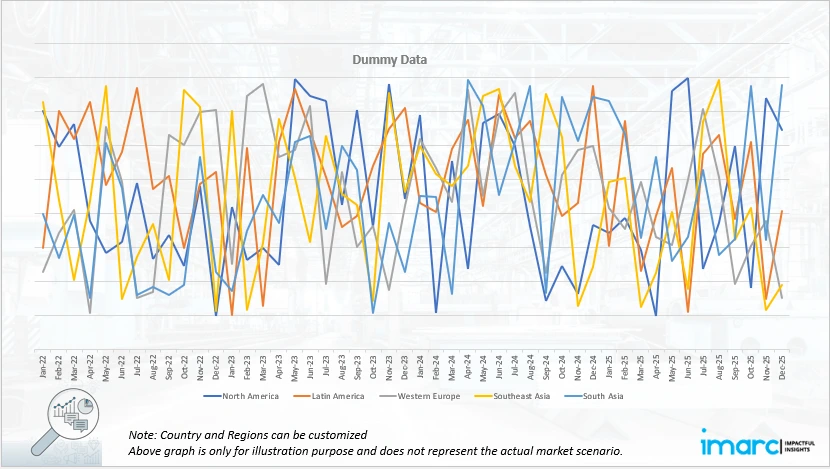
Clarithromycin Price Chart
Get real-time access to monthly/quarterly/yearly prices Request Sample
During the third quarter of 2025, the clarithromycin prices in Mexico reached 274 USD/KG in September. Prices moved upward as local formulation units increased purchases to ensure uninterrupted production schedules. Importers experienced longer handling times at key ports, while sustained demand from large generics manufacturers supported firmer pricing. These factors collectively contributed to the upward trend during this quarter.
During the third quarter of 2025, the clarithromycin prices in China reached 186 USD/KG in September. Prices edged lower as strong output from major production hubs contributed to a well-supplied market. Downstream consumption was measured, while more competitive export offerings increased price sensitivity among buyers. Efficient availability of intermediates further supported downward movement in domestic quotations.
During the third quarter of 2025, the clarithromycin prices in India reached 200 USD/KG in September. Prices slipped as suppliers recorded consistent operating levels and steady access to critical inputs. Pharmaceutical manufacturers adopted cautious procurement strategies, and stable export activity reduced pressure on domestic supply chains. These combined influences encouraged softer pricing across the quarter.
During the third quarter of 2025, the clarithromycin prices in Brazil reached 233 USD/KG in September. Prices moved lower as distributors received adequate shipments from external origins, enabling buyers to negotiate more competitively. Exchange rate fluctuations influenced import timing, while consistent inventory positions at major logistics nodes reduced urgency in purchasing, reinforcing the downward direction.
During the third quarter of 2025, the clarithromycin prices in South Korea reached 238 USD/KG in September. Prices declined as domestic formulators maintained sufficient inventories and suppliers operated with stable production cycles. Downstream demand showed moderation, while predictable inbound shipments ensured comfortable availability. These factors collectively contributed to the downward shift observed in this market.
Clarithromycin Prices Outlook Q2 2025
- Mexico: USD 270/KG
- China: USD 188/KG
- India: USD 202/KG
- Brazil: USD 236/KG
- South Korea: USD 247/KG
During the second quarter of 2025, the clarithromycin prices in Mexico reached 270 USD/KG in June. Prices recorded an upward movement as pharmaceutical manufacturers increased their intake ahead of anticipated seasonal requirements. Slight delays in customs processing and moderate import-related expenses contributed to tighter supply conditions. As a result, sentiment strengthened during this quarter.
During the second quarter of 2025, the clarithromycin prices in China reached 188 USD/KG in June. Prices moved higher as strong interest from formulation plants supported steady buying. Producers maintained consistent operations, while exporters observed more active inquiries from international markets. These factors provided upward pressure through the quarter despite stable inventories.
During the second quarter of 2025, the clarithromycin prices in India reached 202 USD/KG in June. Prices edged lower as domestic suppliers sustained reliable output levels and downstream manufacturers remained selective in their purchases. Improving accessibility to essential intermediates contributed to cost efficiency, helping maintain softer pricing across major distribution channels.
During the second quarter of 2025, the clarithromycin prices in Brazil reached 236 USD/KG in June. Prices moved lower as buyers extended procurement cycles and importers brought in regular volumes from offshore producers. Stable availability across warehousing networks reduced urgency for replenishment, reinforcing a downward pricing environment throughout the period.
During the second quarter of 2025, the clarithromycin prices in South Korea reached 247 USD/KG in June. Prices decreased as consistent supply from domestic production minimized the need for aggressive buying activity. Ample inventories allowed formulation units to adopt measured procurement strategies, limiting opportunities for upward adjustments during this quarter.
Clarithromycin Prices Outlook Q1 2025
- Mexico: USD 266/KG
- China: USD 185/KG
- India: USD 205/KG
- Brazil: USD 240/KG
- South Korea: USD 253/KG
Regional Coverage
The report provides a detailed analysis of the market across different regions, each with unique pricing dynamics influenced by localized market conditions, supply chain intricacies, and geopolitical factors. This includes price trends, price forecast and supply and demand trends for each region, along with spot prices by major ports. The report also provides coverage of FOB and CIF prices, as well as the key factors influencing the clarithromycin prices.
Europe Clarithromycin Price Trend
Q3 2025:
As per the clarithromycin price index, Europe’s quarterly market behavior was shaped primarily by its dependence on imported antibiotic APIs, rather than internal price signals. Since the region does not house major clarithromycin producers, pricing discussions were driven by regulatory requirements for batch documentation, extended quality audits, and longer-than-usual verification cycles at major ports. These administrative layers created uneven delivery rhythms, prompting distributors to adjust procurement timing and reorder frequencies despite the absence of clear regional price direction.
Q2 2025:
European market conditions reflected evolving healthcare procurement policies and increasingly stringent compliance protocols. Several countries implemented updated antibiotic stewardship frameworks, influencing the pace of institutional purchases. Ports handling pharmaceutical cargo continued refining cross-border checks, which affected shipment turnaround times. With regional supply tied almost entirely to external producers, Europe’s pricing environment during the quarter was shaped by procedural and policy-driven dynamics rather than internal price movement patterns.
This analysis can be extended to include detailed clarithromycin price information for a comprehensive list of countries.
| Region | Countries Covered |
|---|---|
| Europe | Germany, France, United Kingdom, Italy, Spain, Russia, Turkey, Netherlands, Poland, Sweden, Belgium, Austria, Ireland, Switzerland, Norway, Denmark, Romania, Finland, Czech Republic, Portugal, and Greece, among other European countries. |
North America Clarithromycin Price Trend
Q3 2025:
As per the clarithromycin price index, North America’s regional direction followed Mexico’s upward trend, and this translated into broader tightening across its supply ecosystem. The region’s integrated distributor networks experienced firmer procurement from major manufacturing hubs in Mexico, leading to shorter stock cycles among wholesalers. Cross-border coordination between Mexican suppliers and US-based formulation clusters increased transit demand along primary trucking lanes, intensifying pressure on inventory buffers. This upward momentum became the defining regional trend despite North America having only a single price-contributing country this quarter.
Q2 2025:
North America’s pricing environment aligned with Mexico’s upward movement and was reinforced by the region’s consolidated pharmaceutical distribution model. Contract manufacturers across the region brought forward their purchasing windows, anticipating higher seasonal consumption. The alignment of cross-border freight schedules with formulation planning cycles resulted in disciplined inventory positioning among wholesalers. These region-level behaviors strengthened the upward trajectory, shaping a unified pricing direction across North America during the quarter.
Specific clarithromycin historical data within the United States and Canada can also be provided.
| Region | Countries Covered |
|---|---|
| North America | United States and Canada |
Middle East and Africa Clarithromycin Price Trend
Q3 2025:
As per clarithromycin price chart, the prices in the Middle East and Africa fluctuated due to a complex interplay of factors, primarily driven by supply chain disruptions, seasonal demand shifts, and geopolitical influences.
Q2 2025:
The report explores the clarithromycin pricing trends and clarithromycin price chart in the Middle East and Africa, considering factors like regional industrial growth, the availability of natural resources, and geopolitical tensions that uniquely influence market prices.
In addition to region-wise data, information on clarithromycin prices for countries can also be provided.
| Region | Countries Covered |
|---|---|
| Middle East & Africa | Saudi Arabia, UAE, Israel, Iran, South Africa, Nigeria, Oman, Kuwait, Qatar, Iraq, Egypt, Algeria, and Morocco, among other Middle Eastern and African countries. |
Asia Pacific Clarithromycin Price Trend
Q3 2025:
Asia Pacific registered a downward regional trend, but the forces behind it were distinctly regional rather than just country-driven. As the world’s largest clarithromycin manufacturing corridor, the region benefited from sustained operating efficiencies across major synthesis hubs, which created a surplus that filtered into intra-regional trade. Competitive pressures between API producers intensified, pushing formulators in Southeast Asia to negotiate more aggressively. Additionally, currency conditions in several import-reliant economies improved the appeal of lower-priced regional cargo. These Asia-wide structural and competitive dynamics, not just individual country movements, shaped the region’s downward trajectory.
Q2 2025:
Asia Pacific displayed a mixed pricing direction due to its unique blend of strong manufacturing bases and diverse import dependencies. China’s firmer sentiment influenced Northeast Asian trade flows, supporting higher-priced contractual discussions with nearby formulation clusters. Conversely, the easing seen in India and South Korea created favorable benchmarks for bulk buyers across South and Southeast Asia. Regional logistics corridors, especially those linking the Indian subcontinent to ASEAN ports, played a decisive role in balancing opposing pressures. As a result, the region’s mixed movement emerged from competing supply anchors and varied procurement behaviors across the Asia Pacific landscape.
This clarithromycin price analysis can be expanded to include a comprehensive list of countries within the region.
| Region | Countries Covered |
|---|---|
| Asia Pacific | China, India, Indonesia, Pakistan, Bangladesh, Japan, Philippines, Vietnam, Thailand, South Korea, Malaysia, Nepal, Taiwan, Sri Lanka, Hongkong, Singapore, Australia, and New Zealand, among other Asian countries. |
Latin America Clarithromycin Price Trend
Q3 2025:
Latin America trended downward, but the regional mechanics behind this movement were broader than Brazil’s price decline alone. Many countries in the region continue to rely heavily on Brazilian distributors for API redistribution, which amplified the regional spread of softer prices. At the same time, importers in the Southern Cone leveraged more competitive Asian quotations to renegotiate contracts. Structural bottlenecks at several Latin American ports temporarily influenced availability, but these constraints were not strong enough to offset the regionwide adoption of lower-priced supply channels.
Q2 2025:
Latin America also reflected a downward regional tendency, shaped by Brazil’s influence as a major clarithromycin market. The region’s strong orientation toward centralized procurement in public healthcare systems encouraged bulk buyers to time purchases in alignment with declining supplier offers. Import-reliant countries in Central America followed Brazil’s lead, seeking more favorable shipments from Asian origins. While inland transport inefficiencies introduced localized inconsistencies, the overarching trend remained shaped by Brazil’s downward movement and coordinated procurement strategies across the broader region.
This comprehensive review can be extended to include specific countries within the region.
| Region | Countries Covered |
|---|---|
| Latin America | Brazil, Mexico, Argentina, Columbia, Chile, Ecuador, and Peru, among other Latin American countries. |
Clarithromycin Pricing Report, Market Analysis, and News
IMARC's latest publication, “Clarithromycin Prices, Trend, Chart, Demand, Market Analysis, News, Historical and Forecast Data Report 2025 Edition,” presents a detailed examination of the clarithromycin market, providing insights into both global and regional trends that are shaping prices. This report delves into the spot price of clarithromycin at major ports and analyzes the composition of prices, including FOB and CIF terms. It also presents detailed clarithromycin prices trend analysis by region, covering North America, Europe, Asia Pacific, Latin America, and Middle East and Africa. The factors affecting clarithromycin pricing, such as the dynamics of supply and demand, geopolitical influences, and sector-specific developments, are thoroughly explored. This comprehensive report helps stakeholders stay informed with the latest market news, regulatory updates, and technological progress, facilitating informed strategic decision-making and forecasting.
Clarithromycin Industry Analysis
The global clarithromycin industry size reached USD 1.63 Billion in 2025. By 2034, IMARC Group expects the market to reach USD 2.34 Billion, at a projected CAGR of 4.06% during 2026-2034. The market is supported by the persistent need for macrolide antibiotics, broader adoption of advanced formulations, rising respiratory infection management, and expanding accessibility of generics across emerging healthcare systems, collectively strengthening global growth prospects.
Latest News and Developments:
- October 2025: A multi-center Indian study reported that clarithromycin extended-release 500 mg once daily was effective and well tolerated for acute bacterial upper respiratory tract infections. Most patients achieved clinical cure or clear improvement within seven days, with no serious adverse events. The findings supported clarithromycin as a reliable treatment option.
Product Description
Clarithromycin is a broad-spectrum macrolide antibiotic commonly used to treat various bacterial infections. It is particularly effective against respiratory tract infections such as bronchitis, pneumonia, and sinusitis, as well as skin infections, ear infections, and Helicobacter pylori-associated peptic ulcers. Clarithromycin works by inhibiting bacterial protein synthesis, thereby stopping the growth and reproduction of bacteria. Its mechanism of action involves binding to the 50S ribosomal subunit of the bacteria, blocking the translocation of peptides. The antibiotic is available in both immediate-release and extended-release formulations, allowing flexibility in dosing and enhancing patient compliance. Clarithromycin is also used in combination with other medications to treat specific infections, like H. pylori eradication in peptic ulcer disease. It is generally well-tolerated, but potential side effects can include gastrointestinal disturbances, headaches, and taste disturbances. Due to its efficacy and versatility, clarithromycin is a widely prescribed antibiotic in clinical practice.
Report Coverage
| Key Attributes | Details |
|---|---|
| Product Name | Clarithromycin |
| Report Features | Exploration of Historical Trends and Market Outlook, Industry Demand, Industry Supply, Gap Analysis, Challenges, Clarithromycin Price Analysis, and Segment-Wise Assessment. |
| Currency/Units | US$ (Data can also be provided in local currency) or Metric Tons |
| Region/Countries Covered | The current coverage includes analysis at the global and regional levels only. Based on your requirements, we can also customize the report and provide specific information for the following countries: Asia Pacific: China, India, Indonesia, Pakistan, Bangladesh, Japan, Philippines, Vietnam, Thailand, South Korea, Malaysia, Nepal, Taiwan, Sri Lanka, Hongkong, Singapore, Australia, and New Zealand* Europe: Germany, France, United Kingdom, Italy, Spain, Russia, Turkey, Netherlands, Poland, Sweden, Belgium, Austria, Ireland, Switzerland, Norway, Denmark, Romania, Finland, Czech Republic, Portugal and Greece* North America: United States and Canada Latin America: Brazil, Mexico, Argentina, Columbia, Chile, Ecuador, and Peru* Middle East & Africa: Saudi Arabia, UAE, Israel, Iran, South Africa, Nigeria, Oman, Kuwait, Qatar, Iraq, Egypt, Algeria, and Morocco* *The list of countries presented is not exhaustive. Information on additional countries can be provided if required by the client. |
| Information Covered for Key Suppliers |
|
| Customization Scope | The report can be customized as per the requirements of the customer |
| Report Price and Purchase Option |
Plan A: Monthly Updates - Annual Subscription
Plan B: Quarterly Updates - Annual Subscription
Plan C: Biannually Updates - Annual Subscription
|
| Post-Sale Analyst Support | 360-degree analyst support after report delivery |
| Delivery Format | PDF and Excel through email (We can also provide the editable version of the report in PPT/Word format on special request) |
Key Benefits for Stakeholders:
- IMARC’s report presents a detailed analysis of clarithromycin pricing, covering global and regional trends, spot prices at key ports, and a breakdown of Ex Works, FOB, and CIF prices.
- The study examines factors affecting clarithromycin price trend, including raw material costs, supply-demand shifts, geopolitical impacts, and industry developments, offering insights for informed decision-making.
- The competitive landscape review equips stakeholders with crucial insights into the latest market news, regulatory changes, and technological advancements, ensuring a well-rounded, strategic overview for forecasting and planning.
- IMARC offers various subscription options, including monthly, quarterly, and biannual updates, allowing clients to stay informed with the latest market trends, ongoing developments, and comprehensive market insights. The clarithromycin price charts ensure our clients remain at the forefront of the industry.
Need more help?
- Speak to our experienced analysts for insights on the current market scenarios.
- Include additional segments and countries to customize the report as per your requirement.
- Gain an unparalleled competitive advantage in your domain by understanding how to utilize the report and positively impacting your operations and revenue.
- For further assistance, please connect with our analysts.
 Request Customization
 Inquire Before Buying
 Speak to an Analyst
 Request Brochure
Benefits of Customization
- Personalize this research
- Triangulate with your data
- Get data as per your format and definition
- Gain a deeper dive into a specific application, geography, customer, or competitor
- Any level of personalization
Get in Touch With Us
UNITED STATES
Phone: +1-201-971-6302
INDIA
Phone: +91-120-433-0800
UNITED KINGDOM
Phone: +44-753-714-6104
Email: [email protected]
Client Testimonials




.webp)




.webp)













Related Reports

Why Choose Us
IMARC offers trustworthy, data-centric insights into commodity pricing and evolving market trends, enabling businesses to make well-informed decisions in areas such as procurement, strategic planning, and investments. With in-depth knowledge spanning more than 1000 commodities and a vast global presence in over 150 countries, we provide tailored, actionable intelligence designed to meet the specific needs of diverse industries and markets.
1000
+Commodities
150
+Countries Covered
3000
+Clients
20
+Industry

Robust Methodologies & Extensive Resources
IMARC delivers precise commodity pricing insights using proven methodologies and a wealth of data to support strategic decision-making.

Subscription-Based Databases
Our extensive databases provide detailed commodity pricing, import-export trade statistics, and shipment-level tracking for comprehensive market analysis.

Primary Research-Driven Insights
Through direct supplier surveys and expert interviews, we gather real-time market data to enhance pricing accuracy and trend forecasting.

Extensive Secondary Research
We analyze industry reports, trade publications, and market studies to offer tailored intelligence and actionable commodity market insights.
Trusted by 3000+ industry leaders worldwide to drive data-backed decisions. From global manufacturers to government agencies, our clients rely on us for accurate pricing, deep market intelligence, and forward-looking insights.