
Compact Slant Board Manufacturing Plant Project Report 2026: Industry Trends, Plant Setup, Machinery, Raw Materials, Investment Opportunities, Cost and Revenue
Report Overview:
IMARC Group’s report, titled “Compact Slant Board Manufacturing Plant Project Report 2026: Industry Trends, Plant Setup, Machinery, Raw Materials, Investment Opportunities, Cost and Revenue,” provides a complete roadmap for setting up a compact slant board manufacturing plant. It covers a comprehensive market overview to micro-level information such as unit operations involved, raw material requirements, utility requirements, infrastructure requirements, machinery and technology requirements, manpower requirements, packaging requirements, transportation requirements, etc. The compact slant board project report provides detailed insights into project economics, including capital investments, project funding, operating expenses, income and expenditure projections, fixed costs vs. variable costs, direct and indirect costs, expected ROI and net present value (NPV), profit and loss account, financial analysis, etc.
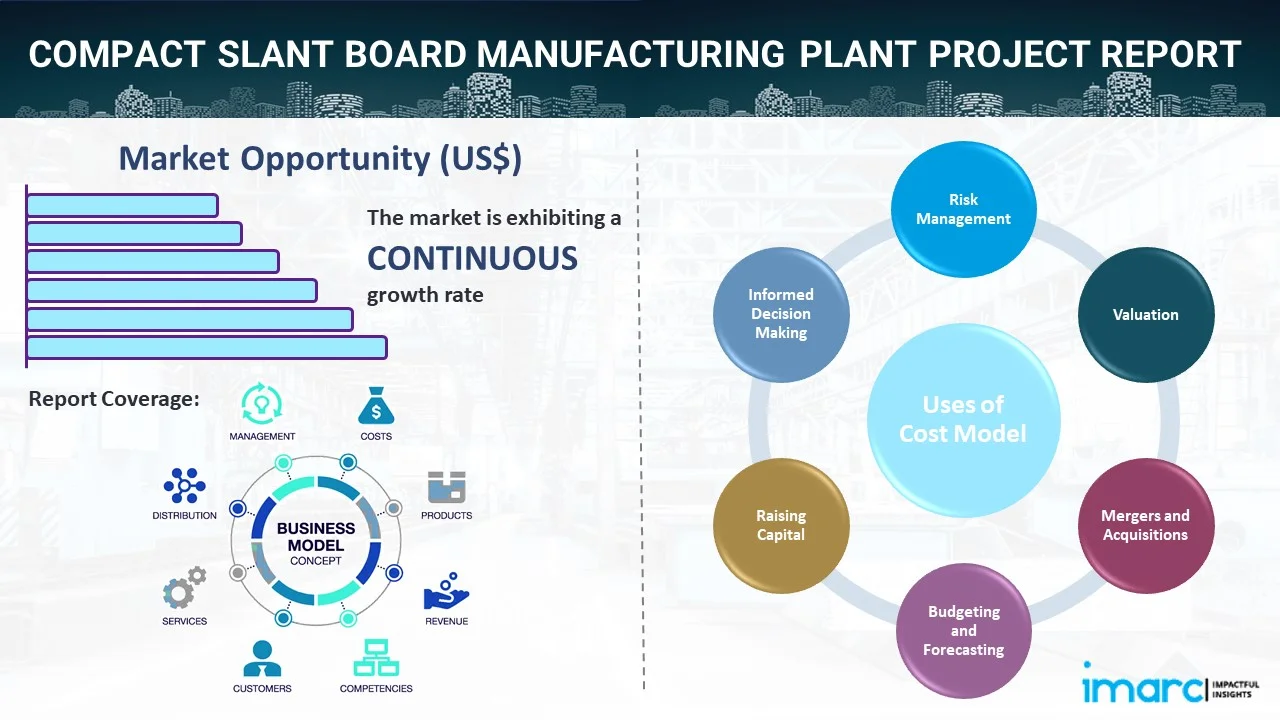
Compact Slant Board Market Analysis:
The primary factors driving the demand for compact slant boards are the current trend encouraging people to exercise and focus on maintaining ergonomic health. Consequently, these boards are being used more frequently for stretching and strengthening exercises. The all-in-one nature and portability of these boards make them ideal for use in home gyms and for active fitness enthusiasts, aligning with the trend of convenient and easily performed workouts.
Moreover, the growing understanding and recognition of the importance of good body mechanics and injury prevention are driving the adoption of these technologies. Design improvements and material innovations that enhance durability and performance significantly boost their appeal. Additionally, the rapidly increasing focus on health and wellness across all demographics is further fueling market growth. According to an article published in the Economic Times, India's health and wellness Industry is set to soar, forecasting a staggering valuation of $1.3 Trillion by 2024.
Compact Slant Board Market Trends:
Increased Awareness of Fitness and Ergonomics
The increasing importance of fitness and ergonomics across the world is driving the sales of compact slant boards. Moreover, by systematically reducing ergonomic risk factors, costly injuries and other loss of payments can be prevented. For instance, according to a blog, ergonomics results in 59% average reduction of musculoskeletal disorders, 65% average reduction in incidence rate, 75% reduction in lost workdays, 53% reduction in restricted days, 68% reduction in worker’s compensation costs, 39% reduction in cost per claim, and 43% decrease in labour costs. Consumers are increasingly interested in good body mechanics and injury prevention, which these boards facilitate through improved stretching and muscle strengthening exercises. This trend is further amplified by the growing focus on health and wellness across all age groups.
Versatility and Portability in Exercise Equipment
Versatility and portability in exercise equipment are key drivers for the compact slant board market because they cater to the increasing demand for convenient, multifaceted fitness solutions. Compact slant boards allow users to perform a variety of exercises, including stretching and muscle strengthening, while being easy to store and transport. This makes them ideal for home gyms and fitness enthusiasts who need adaptable workout tools that fit into their busy, mobile lifestyles, thereby boosting their popularity and market growth. The home fitness market is the largest segment accounting for 84%. The fitness equipment industry is worth $14.3 billion and is predicted to reach $14.8 billion in 2025. It’s growing at 3.7% per year.
The following aspects have been covered in the compact slant board manufacturing plant report:
- Market Analysis:
- Market Trends
- Market Breakup by Segment
- Market Breakup by Region
- Price Analysis
- Impact of COVID-19
- Market Forecast
The report provides insights into the landscape of the compact slant board industry at the global level. The report also provides a segment-wise and region-wise breakup of the global compact slant board industry. Additionally, it also provides the price analysis of feedstocks used in the manufacturing of compact slant board, along with the industry profit margins.
- Detailed Process Flow:
- Product Overview
- Unit Operations Involved
- Mass Balance and Raw Material Requirements
- Quality Assurance Criteria
- Technical Tests
The report also provides detailed information related to the compact slant board manufacturing process flow and various unit operations involved in a manufacturing plant. Furthermore, information related to mass balance and raw material requirements has also been provided in the report with a list of necessary quality assurance criteria and technical tests.
- Project Details, Requirements and Costs Involved:
- Land, Location and Site Development
- Plant Layout
- Machinery Requirements and Costs
- Raw Material Requirements and Costs
- Packaging Requirements and Costs
- Transportation Requirements and Costs
- Utility Requirements and Costs
- Human Resource Requirements and Costs
The report provides a detailed location analysis covering insights into the land location, selection criteria, location significance, environmental impact, expenditure, and other compact slant board manufacturing plant costs. Additionally, the report provides information related to plant layout and factors influencing the same. Furthermore, other requirements and expenditures related to machinery, raw materials, packaging, transportation, utilities, and human resources have also been covered in the report.
- Project Economics:
- Capital Investments
- Operating Costs
- Expenditure Projections
- Revenue Projections
- Taxation and Depreciation
- Profit Projections
- Financial Analysis
The report also covers a detailed analysis of the project economics for setting up a compact slant board manufacturing plant. This includes the analysis and detailed understanding of compact slant board manufacturing plant costs, including capital expenditure (CapEx), operating expenditure (OpEx), income projections, taxation, depreciation, liquidity analysis, profitability analysis, payback period, NPV, uncertainty analysis, and sensitivity analysis. Furthermore, the report also provides a detailed analysis of the regulatory procedures and approvals, information related to financial assistance, along with a comprehensive list of certifications required for setting up a compact slant board manufacturing plant.
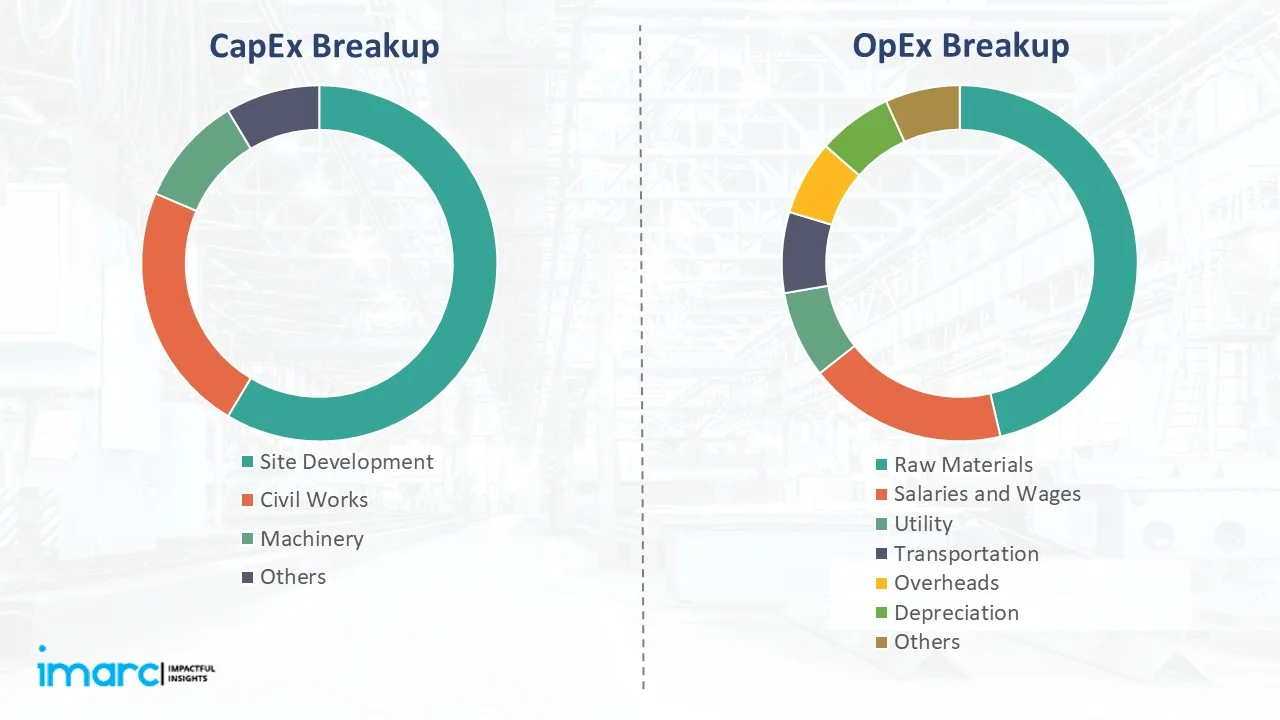
Capital Expenditure Breakdown:
| Particulars | Cost (in US$) |
|---|---|
| Land and Site Development Costs | XX |
| Civil Works Costs | XX |
| Machinery Costs | XX |
| Other Capital Costs | XX |
Operational Expenditure Breakdown:
| Particulars | In % |
|---|---|
| Raw Material Cost | XX |
| Utility Cost | XX |
| Transportation Cost | XX |
| Packaging Cost | XX |
| Salaries and Wages | XX |
| Depreciation | XX |
| Other Expenses | XX |
Profitability Analysis:
| Particulars | Unit | Year 1 | Year 2 | Year 3 | Year 4 | Year 5 |
|---|---|---|---|---|---|---|
| Total Income | US$ | XX | XX | XX | XX | XX |
| Total Expenditure | US$ | XX | XX | XX | XX | XX |
| Gross Profit | US$ | XX | XX | XX | XX | XX |
| Gross Margin | % | XX | XX | XX | XX | XX |
| Net Profit | US$ | XX | XX | XX | XX | XX |
| Net Margin | % | XX | XX | XX | XX | XX |
Report Coverage:
| Report Features | Details |
|---|---|
| Product Name | Compact Slant Board |
| Report Coverage | Detailed Process Flow: Unit Operations Involved, Quality Assurance Criteria, Technical Tests, Mass Balance, and Raw Material Requirements Land, Location and Site Development: Selection Criteria and Significance, Location Analysis, Project Planning and Phasing of Development, Environmental Impact, Land Requirement and Costs Plant Layout: Importance and Essentials, Layout, Factors Influencing Layout Plant Machinery: Machinery Requirements, Machinery Costs, Machinery Suppliers (Provided on Request) Raw Materials: Raw Material Requirements, Raw Material Details and Procurement, Raw Material Costs, Raw Material Suppliers (Provided on Request) Packaging: Packaging Requirements, Packaging Material Details and Procurement, Packaging Costs, Packaging Material Suppliers (Provided on Request) Other Requirements and Costs: Transportation Requirements and Costs, Utility Requirements and Costs, Energy Requirements and Costs, Water Requirements and Costs, Human Resource Requirements and Costs Project Economics: Capital Costs, Techno-Economic Parameters, Income Projections, Expenditure Projections, Product Pricing and Margins, Taxation, Depreciation Financial Analysis: Liquidity Analysis, Profitability Analysis, Payback Period, Net Present Value, Internal Rate of Return, Profit and Loss Account, Uncertainty Analysis, Sensitivity Analysis, Economic Analysis Other Analysis Covered in The Report: Market Trends and Analysis, Market Segmentation, Market Breakup by Region, Price Trends, Competitive Landscape, Regulatory Landscape, Strategic Recommendations, Case Study of a Successful Venture |
| Currency | US$ (Data can also be provided in the local currency) |
| Customization Scope | The report can also be customized based on the requirement of the customer |
| Post-Sale Analyst Support | 10-12 Weeks |
| Delivery Format | PDF and Excel through email (We can also provide the editable version of the report in PPT/Word format on special request) |
Report Customization
While we have aimed to create an all-encompassing compact slant board plant project report, we acknowledge that individual stakeholders may have unique demands. Thus, we offer customized report options that cater to your specific requirements. Our consultants are available to discuss your business requirements, and we can tailor the report's scope accordingly. Some of the common customizations that we are frequently requested to make by our clients include:
- The report can be customized based on the location (country/region) of your plant.
- The plant’s capacity can be customized based on your requirements.
- Plant machinery and costs can be customized based on your requirements.
- Any additions to the current scope can also be provided based on your requirements.
Why Buy IMARC Reports?
- The insights provided in our reports enable stakeholders to make informed business decisions by assessing the feasibility of a business venture.
- Our extensive network of consultants, raw material suppliers, machinery suppliers and subject matter experts spans over 100+ countries across North America, Europe, Asia Pacific, South America, Africa, and the Middle East.
- Our cost modeling team can assist you in understanding the most complex materials. With domain experts across numerous categories, we can assist you in determining how sensitive each component of the cost model is and how it can affect the final cost and prices.
- We keep a constant track of land costs, construction costs, utility costs, and labor costs across 100+ countries and update them regularly.
- Our client base consists of over 3000 organizations, including prominent corporations, governments, and institutions, who rely on us as their trusted business partners. Our clientele varies from small and start-up businesses to Fortune 500 companies.
- Our strong in-house team of engineers, statisticians, modeling experts, chartered accountants, architects, etc. has played a crucial role in constructing, expanding, and optimizing sustainable manufacturing plants worldwide.
Need more help?
- Speak to our experienced analysts for insights on the current market scenarios.
- Include additional segments and countries to customize the report as per your requirement.
- Gain an unparalleled competitive advantage in your domain by understanding how to utilize the report and positively impacting your operations and revenue.
- For further assistance, please connect with our analysts.


Factory Setup Services
IMARC Group's factory setup services streamline the entire establishment process, ensuring efficient planning, seamless execution, and optimal operational readiness for your manufacturing facility.


Site Selection Services
IMARC Group's site selection services optimize location choices for businesses, ensuring strategic, cost-effective, and efficient manufacturing operations.


Factory Audit Services
IMARC Group's plant audit services offer comprehensive evaluations of your industrial facility's health, efficiency, and regulatory compliance.


Regulatory Approvals, and Licensing Services
IMARC Group's regulatory approval and licensing services ensure businesses meet all compliance requirements, facilitating smooth and timely market entry.
 Inquire Before Buying
 Speak to an Analyst
 Request Brochure
 Request Customization
Related Reports

Frequently Asked Questions
Capital requirements generally include land acquisition, construction, equipment procurement, installation, pre-operative expenses, and initial working capital. The total amount varies with capacity, technology, and location.
To start a compact slant board manufacturing business, one needs to conduct a market feasibility study, secure required licenses, arrange funding, select suitable land, procure equipment, recruit skilled labor, and establish a supply chain and distribution network.
Compact slant board manufacturing requires raw materials such as wood particles (like sawdust, chips, or shavings), an organic binder (a phenol-formaldehyde or urea-formaldehyde resin), and additives like wax. Other options include using agricultural waste like corn cob or sugarcane bagasse, which are then processed with a binder.
A compact slant board factory typically requires cutting machines, CNC routers, and drilling machines for shaping wooden or metal parts. Additional equipment includes sanding and polishing tools, painting or coating units, assembly tools, and testing equipment to ensure stability and quality.
The main steps generally include:
-
Selection of high-quality wood or metal
-
Cutting materials to required dimensions
-
Drilling and shaping for adjustability features
-
Sanding and surface finishing for smoothness
-
Assembling parts with hinges and fasteners
-
Applying protective coating or paint layer
-
Quality testing and packaging for distribution
Usually, the timeline can range from 12 to 24 months to start a compact slant board manufacturing plant, depending on factors like site development, machinery installation, environmental clearances, safety measures, and trial runs.
Challenges may include high capital requirements, securing regulatory approvals, ensuring raw material supply, competition, skilled manpower availability, and managing operational risks.
Typical requirements include business registration, environmental clearances, factory licenses, fire safety certifications, and industry-specific permits. Local/state/national regulations may apply depending on the location.
The top compact slant board manufacturers are:
-
StrongTek
-
Slant Board Guy
-
Shogun Sports
-
Yes4All
-
Wolf Wedge
Profitability depends on several factors including market demand, manufacturing efficiency, pricing strategy, raw material cost management, and operational scale. Profit margins usually improve with capacity expansion and increased capacity utilization rates.
Cost components typically include:
-
Land and Infrastructure
-
Machinery and Equipment
-
Building and Civil Construction
-
Utilities and Installation
-
Working Capital
Break even in a compact slant board manufacturing business typically range from 3 to 6 years, depending on scale, regulatory compliance costs, raw material pricing, and market demand. Efficient manufacturing and export opportunities can help accelerate returns.
Governments may offer incentives such as capital subsidies, tax exemptions, reduced utility tariffs, export benefits, or interest subsidies to promote manufacturing under various national or regional industrial policies.
Financing can be arranged through term loans, government-backed schemes, private equity, venture capital, equipment leasing, or strategic partnerships. Financial viability assessments help identify optimal funding routes.
Choose your plan
*Please note that the prices mentioned below are starting prices for each bundle type. Kindly contact our team for further details.*
Single User License
- 1 User License, Access on 2 Devices
- PDF Report + Excel Dataset (Password Protected)
- Lifetime Access
- No Printing Rights
- 10% Free Report Customization
- 10–12 Weeks of Analyst Support
Five User License
- Access for 5 Users, 2 Devices per User
- PDF Report + Excel Dataset (Password Protected)
- Lifetime Access
- Dedicated Account Manager
- 12–14 Weeks of Analyst Support
- No Printing Rights
- 15% Free Report Customization
- 25% Discount on Your Next Purchase
Corporate User License
- Unlimited User Access (Within Your Organization)
- PDF Report + Excel Dataset
- Lifetime Access
- Dedicated Account Manager
- 14–20 Weeks of Analyst Support
- No Printing Rights
- 20% Free Report Customization
- 30% Discount on Your Next Purchase
Essential Insights
What's included:
3 reports
- Lifetime Access
- PDF Reports
- Excel Datasets
- 2 Weeks of Free Analyst Support
- 2 User Licenses
- Access on 2 Devices
- Printing Rights
- Complimentary PowerPoint (PPT) Version
- Complimentary License Upgrade
Professional Access
What's included:
5 reports
- Lifetime Access
- PDF Reports
- Excel Datasets
- 8 Weeks of Free Analyst Support
- 2 User Licenses
- Access on 2 Devices
- Printing Rights
- Complimentary PowerPoint (PPT) Version
- Complimentary License Upgrade
Business Advantage
What's included:
8 reports
- Lifetime Access
- PDF Reports
- Excel Datasets
- 14 Weeks of Free Analyst Support
- 2 User Licenses
- Access on 2 Devices
- Printing Rights
- Complimentary PowerPoint (PPT) Version
- Complimentary License Upgrade
Enterprise Intelligence
What's included:
10 reports
- Lifetime Access
- PDF Reports
- Excel Datasets
- 20 Weeks of Free Analyst Support
- 2 User Licenses
- Access on 2 Devices
- Printing Rights
- Complimentary PowerPoint (PPT) Version
- Complimentary License Upgrade