
Data Warehousing Market Size, Share, Trends and Forecast by Offering, Data Type, Deployment Model, Enterprise Size, End User, and Region, 2026-2034
Data Warehousing Market Size and Share:
The global data warehousing market size was valued at USD 37.4 Billion in 2025. Looking forward, IMARC Group estimates the market to reach USD 81.15 Billion by 2034, exhibiting a CAGR of 8.20% from 2026-2034. North America currently dominates the market, holding a market share of 41.2% in 2025. The region benefits from an advanced technology infrastructure, widespread adoption of cloud computing and big data analytics solutions, substantial investments in digital transformation initiatives by enterprises across sectors, and robust regulatory frameworks mandating data governance and compliance, all contributing to the data warehousing market share.
The data warehousing market is being driven by the escalating volume of data generated across industries, necessitating robust storage, integration, and analytics solutions. The proliferation of Internet of Things (IoT) devices and connected systems is generating vast quantities of structured and unstructured data that require efficient warehousing capabilities. Additionally, the rising emphasis on data-driven decision-making across organizations is fueling demand for advanced extract, transform, and load (ETL) tools, real-time analytics platforms, and integrated data management solutions. The increasing adoption of artificial intelligence (AI) and machine learning (ML) technologies is also augmenting the need for centralized data repositories that support complex analytical workloads, contributing to the data warehousing market growth.
The United States has emerged as a major region in the data warehousing market owing to many factors. The country is home to a highly developed technology ecosystem, with enterprises across banking, financial services, healthcare, and government sectors investing substantially in data infrastructure modernization. In December 2025, Snowflake reported that its transactions through the AWS Marketplace more than doubled year‑over‑year and surpassed $2 billion in sales in the calendar year, underscoring strong enterprise demand for cloud‑based data platforms and analytics solutions. The growing regulatory requirements surrounding data privacy and security, including compliance with federal and state data governance mandates, are prompting organizations to adopt sophisticated data warehousing platforms.
To get more information on this market Request Sample
Data Warehousing Market Trends:
Cloud-Based Data Warehousing Adoption
Migration toward cloud-based data warehousing platforms is gaining significant momentum as organizations seek scalable, flexible, and cost-efficient alternatives to traditional on-premises infrastructure. Cloud-based solutions enable enterprises to store and process massive volumes of data without the burden of maintaining physical hardware, thereby reducing capital expenditure and operational overhead. In October 2025, global retailer Gap announced a partnership with Google Cloud to advance its AI and analytics strategy by integrating BigQuery and Vertex AI to unify data and accelerate insights across finance, supply chain, and customer analytics, demonstrating real‑world enterprise adoption of cloud data warehousing for advanced analytics. These platforms also offer seamless integration with modern analytics tools, enabling real-time data processing and insights generation that support agile decision-making.
Integration of AI and ML
The integration of artificial intelligence (AI) and machine learning (ML) capabilities within data warehousing platforms is transforming how organizations manage, analyze, and derive value from their data assets. Modern data warehousing solutions are increasingly embedding AI-powered automation for tasks such as data classification, quality monitoring, anomaly detection, and query optimization, significantly reducing manual intervention and improving operational efficiency. In December 2025, Qlik debuted its new agentic experience in Qlik Cloud, uniting conversational AI, structured data analytics, and reasoning‑powered insights in a governed environment to help enterprises accelerate analytics and AI‑driven decision‑making. The growing demand for intelligent data management is shaping the data warehousing market outlook, as enterprises prioritize platforms that seamlessly combine storage, processing, and AI-driven analytics to maximize the value extracted from increasingly complex data ecosystems.
Real-Time Data Processing Demand
The growing demand for real-time data processing and analytics is significantly influencing the evolution of data warehousing solutions. Traditional batch processing approaches are being supplemented or replaced by streaming data architectures that enable continuous data ingestion, transformation, and analysis within warehousing environments. As per sources, Confluent Cloud announced enhancements to its Tableflow streaming data service, including enterprise‑grade support for Delta Lake and Unity Catalog on Microsoft Azure, enabling operational data to be materialized instantly into analytics engines for real‑time query and analytics workloads. The data warehousing market forecast also indicates this shift, as the event-driven architecture and data warehousing platforms are integrating to provide platforms that can handle historical and real-time data to support quick responses to changing business environments.
Data Warehousing Industry Segmentation:
IMARC Group provides an analysis of the key trends in each segment of the global data warehousing market, along with forecast at the global, regional, and country levels from 2026-2034. The market has been categorized based on offering, data type, deployment model, enterprise size, and end user.
Analysis by Offering:
To get detailed segment analysis of this market Request Sample
- ETL Solutions
- Statistical Analysis
- Data Mining
- Others
ETL Solutions holds 33.7% of the market share, serving as a foundational component of data warehousing infrastructure, enabling organizations to collect data from diverse sources, transform it into a consistent format, and load it into centralized repositories for analysis. These solutions are critical for ensuring data quality, consistency, and accessibility across enterprise environments. The growing complexity of data ecosystems, driven by the proliferation of cloud applications, IoT devices, and third-party integrations, is amplifying the need for robust ETL capabilities that can handle heterogeneous data formats and large-scale data volumes. Furthermore, the evolution of ETL solutions toward real-time and near-real-time processing is aligning with the increasing demand for timely insights, supporting agile business operations and reducing the latency between data generation and actionable intelligence.
Analysis by Data Type:
- Unstructured Data
- Semi-Structured and Structured Data
Semi-structured and structured data leads the market with a share of 58.9%, encompassing data that adheres to predefined schemas or possesses partial organizational frameworks, making it readily amenable to storage, querying, and analysis within traditional and modern data warehousing environments. Structured data originating from enterprise resource planning systems, customer relationship management platforms, financial databases, and transactional systems forms the backbone of organizational analytics and reporting capabilities. In November 2025, Amazon Redshift expanded support for the SUPER data type with case‑insensitive collation, allowing enterprises to run advanced analytics that combine structured SQL data with semi‑structured JSON and nested formats directly within the warehouse. Semi-structured data, including formats such as JSON, XML, and log files, is increasingly being integrated into warehousing platforms as organizations seek to unify disparate data sources for comprehensive analysis.
Analysis by Deployment Model:
- On-premises
- Cloud-based
- Hybrid
On-premises dominates the market, with a share of 46.8%, these involve the deployment of data infrastructure within an organization’s own physical facilities, providing direct control over data storage, security, and processing capabilities. This deployment model remains highly relevant for industries with stringent data sovereignty requirements, regulatory compliance obligations, and security-sensitive operations, including banking, financial services, government, defense, and healthcare sectors. On-premises environments enable organizations to maintain full ownership of their data assets and implement customized security protocols tailored to their specific operational needs. Additionally, enterprises with existing investments in physical infrastructure continue to leverage on-premises solutions to maximize the return on their capital expenditure while gradually integrating hybrid architectures that connect local systems with cloud-based capabilities for enhanced scalability and flexibility.
Analysis by Enterprise Size:
- Large Enterprises
- Small and Medium-sized Enterprises
Large enterprises represent the leading segment, with a market share of 62.4%, these are the primary consumers of data warehousing solutions due to their extensive data generation, complex operational structures, and substantial analytical requirements. These organizations manage vast quantities of data originating from multiple business units, geographic locations, customer touchpoints, and operational systems, necessitating centralized repositories that enable unified reporting and analytics. In February 2025, SAP and Databricks jointly launched the SAP Business Data Cloud, a fully managed data and analytics platform that unifies enterprise SAP data with Databricks’ cloud data intelligence solutions, helping large organizations harmonize and analyse their business‑critical data at scale. The need for regulatory compliance across multiple jurisdictions further drives large enterprises to invest in sophisticated data warehousing platforms that ensure data integrity, auditability, and governance.

Analysis by End User:
- BFSI
- IT and Telecom
- Government
- Manufacturing
- Retail
- Healthcare
- Media and Entertainment
- Others
BFSI accounts for 29.7% of the market share, it is the largest end user of data warehousing solutions, driven by the immense volume of transactional data, customer information, and regulatory reporting requirements inherent to financial operations. Data warehousing solutions help BFSI companies integrate data from disparate sources such as core banking systems, trading systems, insurance systems, and customer interaction systems into a repository that supports comprehensive analytics. The need for fraud detection solutions, risk management solutions, anti-money laundering solutions, and customer experience management solutions is creating a need for advanced data warehousing solutions with support for real-time processing and analysis. The digital transformation wave currently sweeping through the BFSI industry, which includes the evolution of digital banking, the rise of fintech partnerships, and the emergence of open banking solutions, is also creating a need for advanced data warehousing solutions.
Regional Analysis:
To get more information on the regional analysis of this market Request Sample
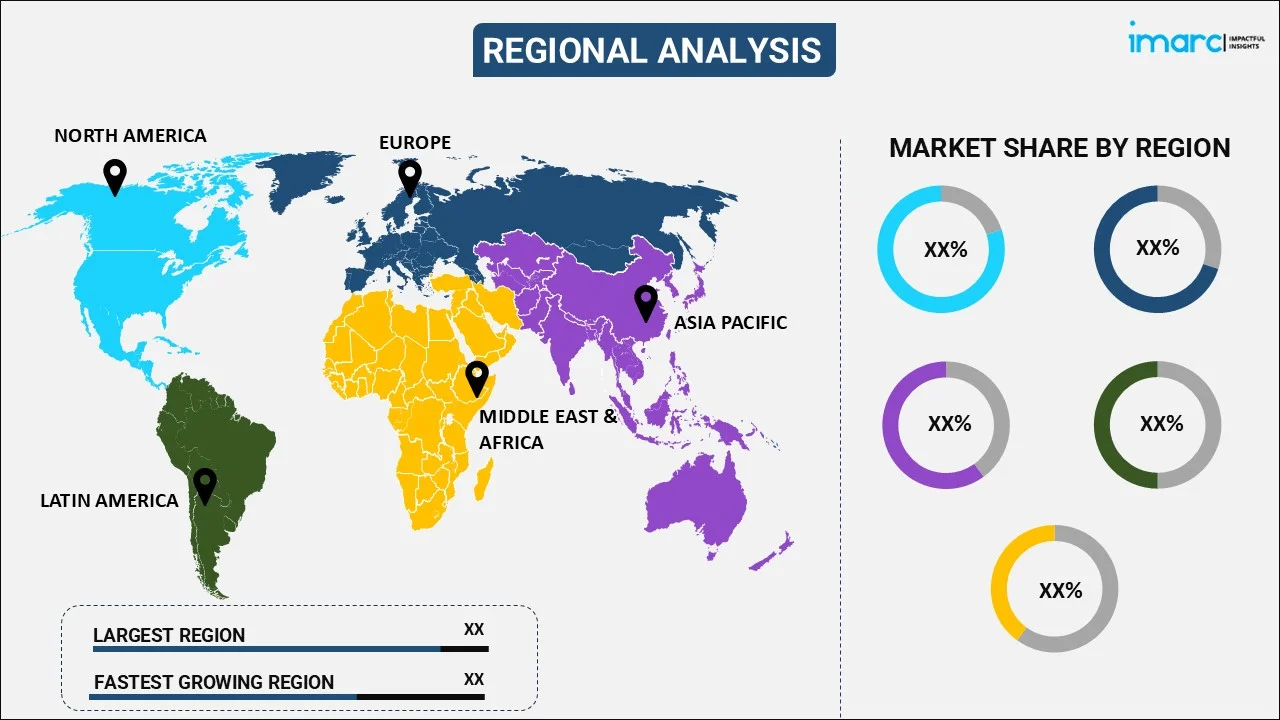
- North America
- United States
- Canada
- Asia-Pacific
- China
- Japan
- India
- South Korea
- Australia
- Indonesia
- Others
- Europe
- Germany
- France
- United Kingdom
- Italy
- Spain
- Russia
- Others
- Latin America
- Brazil
- Mexico
- Others
- Middle East and Africa
North America, accounting for 41.2% of the share, maintaining the leading position in the market. The region’s dominance is due to the mature technology environment, the presence of major tech firms, and the adoption of advanced data management solutions by enterprises. The region’s focus on digital transformation across industries such as finance, healthcare, and retail is creating a strong need for investing in data warehousing infrastructure. In addition, the region’s strict regulatory policies that require data governance, privacy, and transparency are creating a need for adopting advanced and sophisticated data warehousing solutions. Furthermore, the region’s mature cloud computing environment is enabling the quick deployment of data warehousing solutions. In addition, the region’s focus on adopting artificial intelligence, machine learning, and advanced analytics is creating a need for adopting complex and sophisticated data warehousing solutions. Moreover, the region’s highly skilled and qualified workforce and mature venture capital environment are supporting the innovation of data warehousing solutions.
Key Regional Takeaways:
United States Data Warehousing Market Analysis
The United States represents the most significant national market for data warehousing within North America, driven by the country’s advanced technological infrastructure, large enterprise base, and strong emphasis on data-driven business strategies. The proliferation of digital platforms, e-commerce operations, and connected devices across industries is generating unprecedented volumes of data that require efficient storage, integration, and analysis capabilities. Federal and state-level regulatory requirements related to data privacy, cybersecurity, and financial reporting are compelling organizations to invest in robust data warehousing solutions that ensure compliance and governance. The rapid adoption of cloud computing services is further transforming the data warehousing landscape, as enterprises migrate from legacy systems to modern cloud-native and hybrid platforms that offer enhanced scalability and cost efficiency. The expanding application of artificial intelligence and machine learning across sectors such as healthcare, financial services, and retail is increasing the demand for centralized data repositories capable of supporting advanced analytical workloads and predictive modeling initiatives.
Europe Data Warehousing Market Analysis
Europe represents a significant market for data warehousing solutions, driven by the region’s strong regulatory environment, emphasis on data governance, and growing digital transformation initiatives across industries. The implementation of stringent data protection regulations has compelled organizations to adopt advanced data warehousing platforms that ensure compliance, transparency, and data integrity. The region’s banking and financial services sector is a major driver of data warehousing adoption, as institutions invest in centralized repositories to support regulatory reporting, risk management, and customer analytics. The manufacturing and automotive sectors are also contributing to market expansion through the integration of industrial IoT data and supply chain analytics into warehousing environments. The evolving data warehousing market trends indicate that the increasing adoption of cloud-based solutions across European enterprises is accelerating, supported by the development of regional cloud infrastructure and data sovereignty frameworks that address localization requirements for sensitive data management.
Asia-Pacific Data Warehousing Market Analysis
Asia-Pacific is emerging as a rapidly growing market for data warehousing solutions, fueled by the region’s accelerating digital transformation, expanding internet penetration, and increasing enterprise adoption of cloud technologies. Countries across the region are witnessing substantial growth in data generation driven by the proliferation of mobile devices, e-commerce platforms, and digital payment systems. Government-led digitization initiatives and smart city projects are further driving demand for scalable data infrastructure capable of supporting large-scale data management and analytics. The banking, financial services, telecommunications, and retail sectors are among the primary adopters of data warehousing solutions, seeking to optimize operations, enhance customer engagement, and ensure regulatory compliance. The growing availability of cloud computing services from both global and regional providers is enabling enterprises of varying sizes to access modern data warehousing capabilities.
Latin America Data Warehousing Market Analysis
Latin America is witnessing a steady expansion in the adoption of data warehousing solutions, supported by the region’s growing digital economy and increasing enterprise investments in data infrastructure. The banking and financial services sector is driving adoption as institutions seek centralized platforms for regulatory compliance, risk analytics, and customer data management. The expansion of e-commerce and digital services across the region is generating increasing volumes of data that require efficient storage and processing. Government digitization efforts and the growing availability of cloud computing services are enabling organizations across various industries to modernize their data management capabilities and adopt scalable warehousing solutions.
Middle East and Africa Data Warehousing Market Analysis
The Middle East and Africa region is experiencing growing adoption of data warehousing solutions, driven by digital transformation initiatives, smart city developments, and expanding financial services sectors. Government-led technology investment programs are facilitating the development of data infrastructure and encouraging enterprises to adopt modern analytics and data management platforms. The banking, oil and gas, and telecommunications sectors are among the early adopters of data warehousing solutions in the region. The increasing availability of cloud services and data center infrastructure is supporting the transition from legacy data management approaches to scalable, cloud-based and hybrid warehousing architectures that enhance operational efficiency and data accessibility.
Competitive Landscape:
The competitive landscape of the data warehousing market is characterized by the presence of established technology companies, specialized data management providers, and emerging cloud-native vendors competing to deliver comprehensive and differentiated solutions. Market participants are focusing on expanding their product portfolios through the integration of artificial intelligence, machine learning, and automation capabilities into their data warehousing platforms. Strategic partnerships, mergers, and acquisitions are being pursued to strengthen technological capabilities and expand geographic reach. Vendors are also investing in enhancing cloud-native architectures, serverless processing options, and multi-cloud deployment models to address the evolving requirements of enterprises seeking flexible and scalable data infrastructure. The emphasis on improving data security, governance, and compliance features is further shaping competitive strategies as organizations prioritize platforms that offer robust protection for sensitive data assets.
The report provides a comprehensive analysis of the competitive landscape in the data warehousing market with detailed profiles of all major companies, including:
- Actian Corporation (HCL Technologies Limited)
- Amazon Web Services Inc. (Amazon.com Inc)
- Cloudera Inc.
- Dell Technologies Inc.
- Google LLC (Alphabet Inc.)
- Hewlett Packard Enterprise Development LP
- International Business Machines Corporation
- Microsoft Corporation
- Oracle Corporation
- SAP SE
- Snowflake Inc
- Teradata Corporation
Latest News and Developments:
- In November 2025, Google Cloud announced the expansion of its BigQuery Data Transfer Service with new GA connectors for Oracle, Salesforce, ServiceNow, and GA4, alongside preview connectors for Stripe, PayPal, and Snowflake migration, plus enhanced compliance support including FedRAMP High and EU Data Boundary.
- In November 2025, Astera Software announced the launch of Astera DW Builder, a metadata-driven data warehouse automation solution enabling rapid development and deployment of on-premises and cloud data warehouses through a no-code interface, accelerating dimensional modeling, SQL generation, and enterprise analytics delivery.
Data Warehousing Market Report Scope:
| Report Features | Details |
|---|---|
| Base Year of the Analysis | 2025 |
| Historical Period | 2020-2025 |
| Forecast Period | 2026-2034 |
| Units | Billion USD |
| Scope of the Report |
Exploration of Historical Trends and Market Outlook, Industry Catalysts and Challenges, Segment-Wise Historical and Future Market Assessment:
|
| Offerings Covered | ETL Solutions, Statistical Analysis, Data Mining, Others |
| Data Types Covered | Unstructured Data, Semi-Structured and Structured Data |
| Deployment Models Covered | On-premises, Cloud-based, Hybrid |
| Enterprise Sizes Covered | Large Enterprises, Small and Medium-sized Enterprises |
| End Users Covered | BFSI, IT and Telecom, Government, Manufacturing, Retail, Healthcare, Media and Entertainment, Others |
| Region Covered | North America, Asia-Pacific, Europe, Latin America, Middle East and Africa |
| Countries Covered | United States, Canada, China, Japan, India, South Korea, Australia, Indonesia, Germany, France, United Kingdom, Italy, Spain, Russia, Brazil, Mexico |
| Companies Covered | Actian Corporation (HCL Technologies Limited), Amazon Web Services Inc. (Amazon.com Inc), Cloudera Inc., Dell Technologies Inc., Google LLC (Alphabet Inc.), Hewlett Packard Enterprise Development LP, International Business Machines Corporation, Microsoft Corporation, Oracle Corporation, SAP SE, Snowflake Inc, Teradata Corporation, etc. |
| Customization Scope | 10% Free Customization |
| Post-Sale Analyst Support | 10-12 Weeks |
| Delivery Format | PDF and Excel through Email (We can also provide the editable version of the report in PPT/Word format on special request) |
Key Benefits for Stakeholders:
- IMARC’s report offers a comprehensive quantitative analysis of various market segments, historical and current market trends, market forecasts, and dynamics of the data warehousing market from 2020-2034.
- The research study provides the latest information on the market drivers, challenges, and opportunities in the global data warehousing market.
- The study maps the leading, as well as the fastest-growing, regional markets. It further enables stakeholders to identify the key country-level markets within each region.
- Porter's Five Forces analysis assists stakeholders in assessing the impact of new entrants, competitive rivalry, supplier power, buyer power, and the threat of substitution. It helps stakeholders to analyze the level of competition within the data warehousing industry and its attractiveness.
- Competitive landscape allows stakeholders to understand their competitive environment and provides an insight into the current positions of key players in the market.
Frequently Asked Questions About the Data Warehousing Market Report
The data warehousing market was valued at USD 37.4 Billion in 2025.
The data warehousing market is projected to exhibit a CAGR of 8.20% during 2026-2034, reaching a value of USD 81.15 Billion by 2034.
The data warehousing market is driven by the exponential growth in data generation across industries, rising adoption of cloud computing and advanced analytics platforms, increasing regulatory requirements for data governance and compliance, growing integration of artificial intelligence and machine learning in enterprise data management, and the expanding emphasis on real-time data processing capabilities.
North America currently dominates the data warehousing market, accounting for a share of 41.2%. The region benefits from a mature technology ecosystem, high enterprise adoption of cloud and analytics solutions, substantial investments in digital transformation, and strong regulatory frameworks driving data governance.
Some of the major players in the data warehousing market include Actian Corporation (HCL Technologies Limited), Amazon Web Services Inc. (Amazon.com Inc), Cloudera Inc., Dell Technologies Inc., Google LLC (Alphabet Inc.), Hewlett Packard Enterprise Development LP, International Business Machines Corporation, Microsoft Corporation, Oracle Corporation, SAP SE, Snowflake Inc, Teradata Corporation, etc.
Need more help?
- Speak to our experienced analysts for insights on the current market scenarios.
- Include additional segments and countries to customize the report as per your requirement.
- Gain an unparalleled competitive advantage in your domain by understanding how to utilize the report and positively impacting your operations and revenue.
- For further assistance, please connect with our analysts.
 Request Customization
 Speak to an Analyst
 Request Brochure
 Inquire Before Buying
Benefits of Customization
- Personalize this research
- Triangulate with your data
- Get data as per your format and definition
- Gain a deeper dive into a specific application, geography, customer, or competitor
- Any level of personalization
Get in Touch With Us
UNITED STATES
Phone: +1-201-971-6302
INDIA
Phone: +91-120-433-0800
UNITED KINGDOM
Phone: +44-753-714-6104
Email: [email protected]
Client Testimonials




.webp)




.webp)













Related Reports

Choose your plan
*Please note that the prices mentioned below are starting prices for each bundle type. Kindly contact our team for further details.*
Single User License
- 1 User License, Access on 2 Devices
- PDF Report + Excel Dataset (Password Protected)
- Lifetime Access
- No Printing Rights
- 10% Free Report Customization
- 10–12 Weeks of Analyst Support
Five User License
- Access for 5 Users, 2 Devices per User
- PDF Report + Excel Dataset (Password Protected)
- Lifetime Access
- Dedicated Account Manager
- 12–14 Weeks of Analyst Support
- No Printing Rights
- 15% Free Report Customization
- 25% Discount on Your Next Purchase
Corporate User License
- Unlimited User Access (Within Your Organization)
- PDF Report + Excel Dataset
- Lifetime Access
- Dedicated Account Manager
- 14–20 Weeks of Analyst Support
- No Printing Rights
- 20% Free Report Customization
- 30% Discount on Your Next Purchase
Essential Insights
What's included:
3 reports
- Lifetime Access
- PDF Reports
- Excel Datasets
- 2 Weeks of Free Analyst Support
- 2 User Licenses
- Access on 2 Devices
- Printing Rights
- Complimentary PowerPoint (PPT) Version
- Complimentary License Upgrade
Professional Access
What's included:
5 reports
- Lifetime Access
- PDF Reports
- Excel Datasets
- 8 Weeks of Free Analyst Support
- 2 User Licenses
- Access on 2 Devices
- Printing Rights
- Complimentary PowerPoint (PPT) Version
- Complimentary License Upgrade
Business Advantage
What's included:
8 reports
- Lifetime Access
- PDF Reports
- Excel Datasets
- 14 Weeks of Free Analyst Support
- 2 User Licenses
- Access on 2 Devices
- Printing Rights
- Complimentary PowerPoint (PPT) Version
- Complimentary License Upgrade
Enterprise Intelligence
What's included:
10 reports
- Lifetime Access
- PDF Reports
- Excel Datasets
- 20 Weeks of Free Analyst Support
- 2 User Licenses
- Access on 2 Devices
- Printing Rights
- Complimentary PowerPoint (PPT) Version
- Complimentary License Upgrade