
Dermal Facial Fillers Market Size, Share, Trends and Forecast by Material Type, Product Origin, and Region, 2026-2034
Dermal Facial Fillers Market Size and Share:
The global dermal facial fillers market size was valued at USD 3.91 Billion in 2025. Looking forward, IMARC Group estimates the market to reach USD 7.16 Billion by 2034, exhibiting a CAGR of 6.36% from 2026-2034. North America currently dominates the market, holding a market share of 39.8% in 2025. The region benefits from well-established healthcare infrastructure, high consumer awareness regarding aesthetic procedures, a strong presence of leading market players, and favorable reimbursement policies that collectively support the dermal facial fillers market share.
The rising demand for minimally invasive cosmetic procedures is a primary driver fueling the global market growth. As populations age worldwide, there is an increasing preference for non-surgical facial rejuvenation treatments that offer visible results with minimal downtime and recovery. The growing influence of social media platforms and digital beauty culture has normalized aesthetic enhancements, encouraging a broader demographic to pursue dermal filler treatments. Technological advancements in filler formulations, including the development of biocompatible and biodegradable materials with improved safety profiles and longer-lasting results, continue to expand the treatment landscape. Additionally, the expanding middle-class population in developing regions, combined with increasing disposable incomes, is widening the consumer base for aesthetic procedures. The proliferation of specialized aesthetic clinics and medical spas across major metropolitan areas is further enhancing accessibility and convenience for patients seeking facial filler treatments.
The United States has emerged as a major region in the dermal facial fillers market owing to many factors. Comprehensive dermal filler services are offered by the nation's well-established network of dermatology clinics, medical spas, and cosmetic surgery facilities, therefore fueling the dermal facial fillers market outlook. The normalization of aesthetic treatments through celebrity endorsements and influencer culture has significantly increased consumer demand for injectable procedures. Moreover, the US Food and Drug Administration continues to approve new filler products, expanding treatment options for practitioners and patients alike. For instance, in February 2025, the FDA approved Evolysse Form and Evolysse Smooth injectable hyaluronic acid gels, marking the first two products in the Evolysse collection and expanding the total addressable US dermal filler market. The availability of flexible financing options and the rising acceptance of preventative aesthetics among younger demographics further contribute to sustained market expansion.
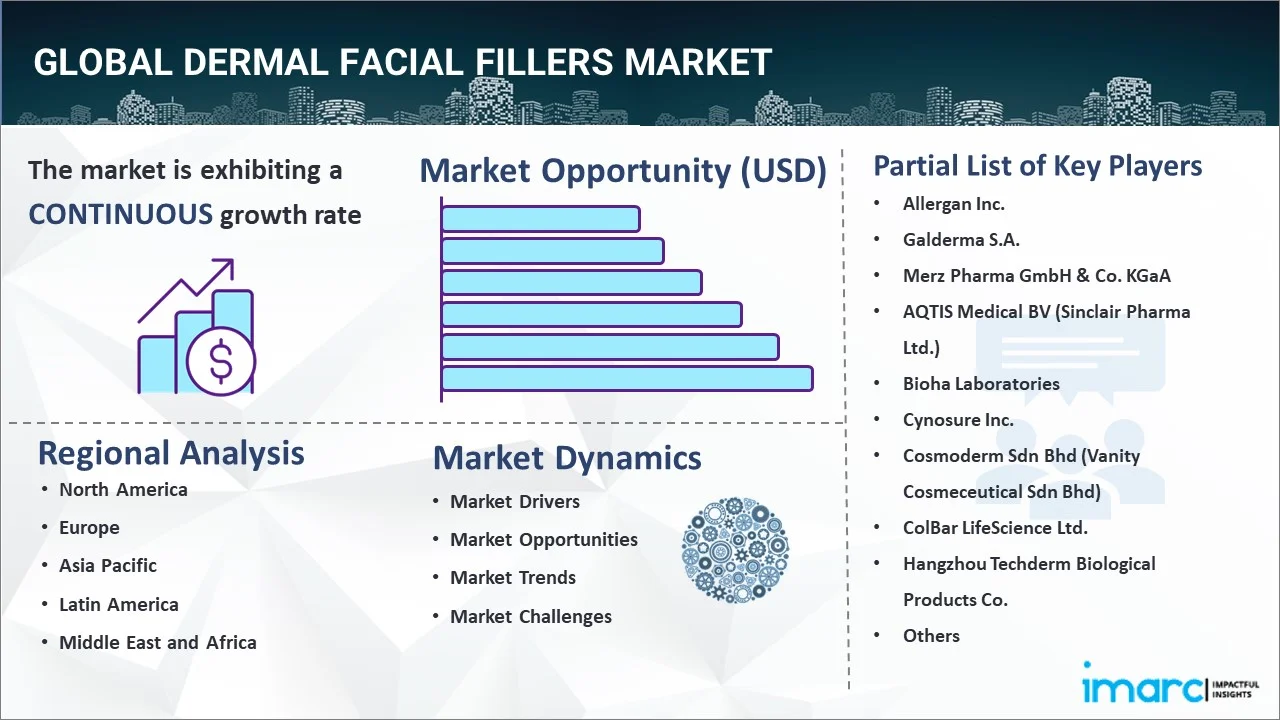
To get more information on this market Request Sample
Dermal Facial Fillers Market Trends:
Rising Preference for Non-Surgical Procedures
The escalating preference for non-surgical aesthetic treatments is significantly impelling the growth of the dermal facial fillers market. Consumers across diverse age groups are increasingly choosing injectable fillers over surgical alternatives, driven by factors such as lower cost, reduced recovery time, and minimal procedural risk. The shift toward non-invasive solutions is particularly pronounced among millennials and Generation Z individuals who seek subtle, preventative enhancements to maintain youthful facial contours. This demographic shift has expanded the traditional patient base beyond older adults seeking corrective treatments. The convenience of lunchtime procedures that allow patients to resume daily activities immediately has further popularized these treatments. The growing number of certified aesthetic practitioners and the increasing availability of advanced filler products are additionally supporting the broader adoption of non-surgical facial enhancement treatments worldwide. Moreover, the rising acceptance of aesthetic procedures within mainstream wellness culture has diminished the stigma historically associated with cosmetic interventions, encouraging a wider demographic to explore dermal filler treatments as part of routine self-care regimens.
Advancements in Hyaluronic Acid Formulations
The continuous innovation in hyaluronic acid-based filler formulations is playing a pivotal role in driving the dermal facial fillers market forecast. In order to develop next-generation products with improved injection properties, longer duration of effect, and increased biocompatibility, manufacturers are making significant investments in research and development. The development of fillers that more closely resemble natural tissue while preserving structural integrity is made possible by sophisticated cross-linking technologies. Treatment options have increased and patient outcomes have improved with the creation of specialized formulations intended for certain facial regions, such as the lips, cheeks, jawline, and temples. For instance, in November 2025, Galderma received US FDA approval for Restylane Lyft with Lidocaine for augmentation of the chin region, making it the only hyaluronic acid injectable approved to treat the midface, facial folds, wrinkles, back of hands, and chin. The emergence of biostimulatory fillers that promote natural collagen production and hybrid products combining hyaluronic acid with regenerative compounds represents a significant advancement in treatment efficacy.
Growing Influence of Digital Beauty Culture
The expanding influence of social media and digital beauty culture is creating robust demand for dermal facial filler treatments across global markets. Platforms such as Instagram, TikTok, and YouTube have democratized access to information about aesthetic procedures, enabling consumers to research treatments, view before-and-after results, and connect with certified practitioners. The phenomenon of prejuvenation, whereby younger individuals seek early interventions to delay visible aging signs, has emerged as a significant dermal facial fillers market trends driver. Digital technologies including artificial intelligence-powered facial mapping and augmented reality-based consultation tools are enhancing treatment personalization and building patient confidence. For instance, in September 2025, the US FDA approved Obagi saypha MagIQ, an injectable hyaluronic acid gel, with Waldencast projecting that this approval would double the total addressable market to approximately $4.2 billion by 2029. The growing acceptance of aesthetic treatments among male consumers, driven by shifting societal norms and increased visibility of male grooming practices, is additionally expanding the market demographic.
Dermal Facial Fillers Industry Segmentation:
IMARC Group provides an analysis of the key trends in each segment of the global dermal facial fillers market, along with forecast at the global and regional levels from 2026-2034. The market has been categorized based on material type and product origin.
Analysis by Material Type:
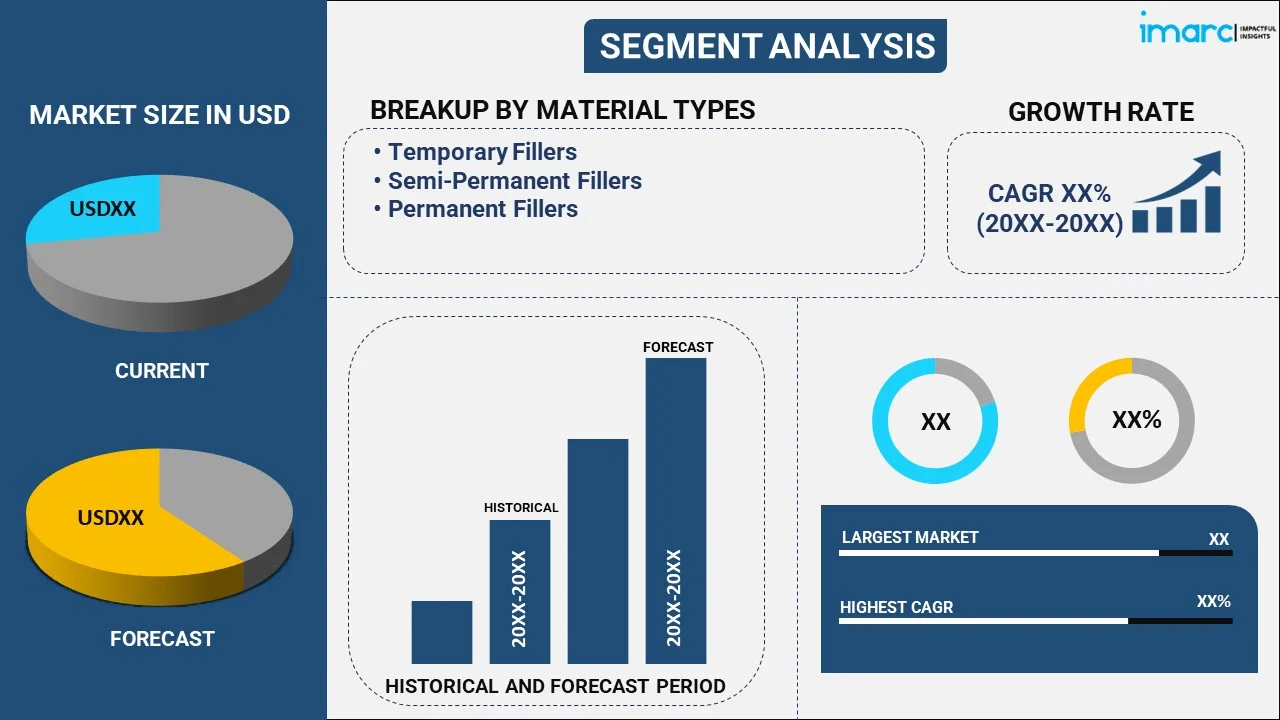
To get detailed segment analysis of this market Request Sample
- Temporary Fillers
- Collagen
- HA
- Collagen Stimulators
- Semi-Permanent Fillers
- CaHa
- Permanent Fillers
- PMMA
- PAAG
Temporary fillers hold 58.6% of the market share. Due to their well-established safety profiles and consistent treatment results, temporary fillers, which include hyaluronic acid-based solutions, collagen, and collagen stimulators, are the most often used type of dermal face fillers. since of their versatility and reversibility, these fillers are favored since they enable professionals to customize procedures to patients' changing tastes and aesthetic objectives. Temporary filler materials' biocompatibility, especially that of hyaluronic acid, guarantees few side effects and permits the integration of natural tissue, which promotes wrinkle reduction and facial volume restoration. Clinicians have access to a wide variety of formulations that are tailored to various facial zones and tissue depths, giving them flexible instruments for all-encompassing facial rejuvenation. Their dominant position in the industry is strengthened by the ongoing release of better temporary filler solutions with longer lifespans and fewer injections. Additionally, clinical proficiency and patient satisfaction outcomes have improved in international markets because to the broad availability of practitioner training programs centered on temporary filler administration procedures.

Analysis by Product Origin:
- Natural
- Synthetic
Natural leads the market with a share of 61.7%. Because of their excellent safety record and patient acceptance, natural dermal fillers, which are made from biocompatible materials like collagen and hyaluronic acid that are naturally present in the human body, hold the top spot in the product origin market. Compared to synthetic substitutes, these fillers blend in perfectly with biological tissues, lowering the possibility of allergic responses, inflammation, and other negative outcomes. The wellness movement as a whole, which emphasizes biocompatibility and the introduction of few foreign substances, is in line with the growing consumer preference for therapies that use ingredients sourced from natural sources. Because natural fillers have predictable degradation pathways and may be dissolved with hyaluronidase in the event of difficulties, they are preferred by healthcare providers. For instance, in April 2025, Galderma introduced Sculptra in China, representing the first validated regenerative biostimulator featuring a distinctive poly-L-lactic acid formulation in the country. The ongoing development of next-generation natural fillers with extended efficacy durations and enhanced tissue integration properties continues to strengthen the segment dominance.
Regional Analysis:
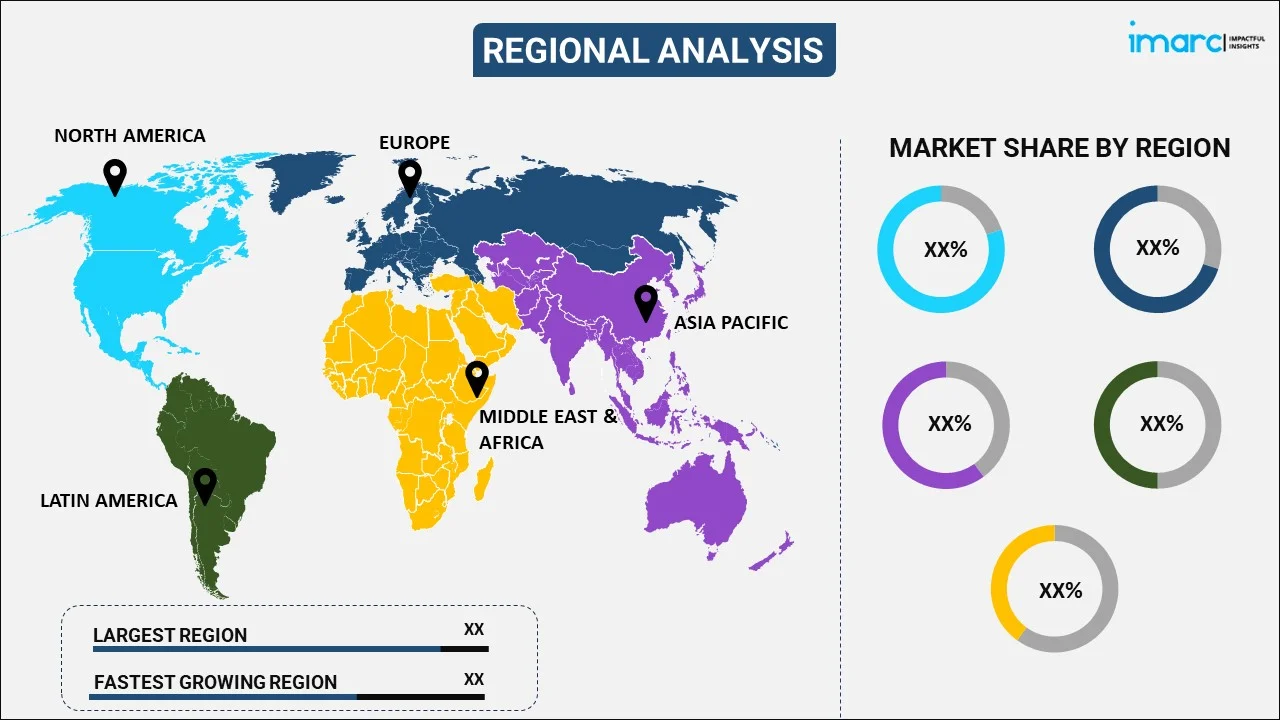
To get more information on the regional analysis of this market Request Sample
- North America
- Europe
- Asia Pacific
- Middle East and Africa
- Latin America
North America, accounting for 39.8% of the share, enjoys the leading position in the market. A well-established healthcare system, a vast network of beauty clinics and medical spas, and a well-educated consumer base with substantial disposable wealth devoted to wellness and personal appearance all contribute to the region's advantages. Strong product innovation and quick market release of cutting-edge filler technologies are ensured by the presence of significant industry players with headquarters in the area. Consumer trust in dermal filler treatments is fostered by robust regulatory frameworks enforced by organizations like the US Food and Drug Administration, which guarantee product safety and efficacy. The number of patients who can be served and the volume of procedures performed are both being driven by the growing range of approved treatment indications across various facial areas. The region's dominant position is further supported by the increasing acceptance of cosmetic operations across a variety of demographics, including increased male adoption and the expanding trend of preventative treatments among younger people.
Key Regional Takeaways:
United States Dermal Facial Fillers Market Analysis
Because of a combination of favorable demographic trends, sophisticated healthcare infrastructure, and high consumer demand for aesthetic enhancement procedures, the United States leads the North American dermal facial fillers industry. Due to the nation's highest concentration of board-certified dermatologists, plastic surgeons, and aesthetic practitioners in the world, high-quality filler treatments are widely available in both urban and suburban locations. The stigma attached to injectable treatments has been greatly diminished by the growing normalcy of cosmetic operations through social media impact and mainstream media exposure, which has encouraged first-time patients to pursue face rejuvenation services. With growing treatment indications across various face areas, the FDA's strong regulatory environment guarantees a steady stream of new, safety-tested filler products to enter the market, increasing the number of patients who may be served and increasing procedure volumes. Dermal fillers are now more widely available to a wider range of consumers thanks to the growing number of medical spas that provide easy appointment scheduling, affordable prices, and combo treatment packages. Furthermore, the growing adoption of telemedicine consultations for initial aesthetic assessments and the increasing interest in age-preventative treatments among individuals in their twenties and thirties contribute to sustained dermal facial fillers market growth.
Europe Dermal Facial Fillers Market Analysis
A sophisticated healthcare system, strict regulatory scrutiny, and a strong aesthetic medicine culture in important markets like Germany, France, the United Kingdom, Italy, and Spain all contribute to the steady growth of the European dermal face fillers industry. Dermal fillers now meet stricter safety requirements according to the European Union Medical Device Regulation, which also places them under stringent conformance evaluation processes that improve product quality assurance and consumer protection. Due to the region's sophisticated practitioner training infrastructure, both local and foreign patients are drawn to the highly qualified injectors who provide superior treatment outcomes. Product acceptance throughout the region is being driven by ongoing innovation in hyaluronic acid-based formulations with enhanced cross-linking technology and longer-lasting benefits. The patient base is developing as a result of the expanding medical tourism sector in nations like Poland and Turkey, where cutting-edge cosmetic procedures are affordable. Furthermore, the growing demand for modifications that look natural and the growing acceptance of aesthetic operations among male consumers are propelling growth in all European regions.
Asia-Pacific Dermal Facial Fillers Market Analysis
Rapid urbanization, rising disposable incomes, and an expanding middle class with growing interest in aesthetic procedures are driving the Asia-Pacific dermal facial fillers market, which is now the fastest-growing geographical category. With the help of sophisticated medical facilities and robust beauty cultures, nations like South Korea, Japan, China, and India are leading the way in regional development. Market penetration is being accelerated by the expansion of specialized cosmetic clinics in urban areas and the growing influence of Korean beauty trends worldwide. Demand is also being increased by the growth of medical tourism in the area, when patients visit for premium but reasonably cost aesthetic procedures. Additionally, the introduction of foreign brands and creative domestic producers is increasing consumer choice and promoting competitive pricing.
Latin America Dermal Facial Fillers Market Analysis
The market for dermal face fillers in Latin America is expanding significantly, supported by the region's growing accessibility to aesthetic operations and a strong cultural emphasis on physical beauty. Brazil has the biggest market in the region thanks to a strong cultural tradition of cosmetic procedures and a huge number of highly qualified aestheticians. The market for dermal filler treatments is growing due to the growing medical tourism sector in nations like Mexico and Colombia as well as rising disposable incomes. Regional market expansion is also being supported by the expanding supply of sophisticated filler materials and the growing number of qualified injectors in urban areas.
Middle East and Africa Dermal Facial Fillers Market Analysis
The market for dermal facial fillers in the Middle East and Africa is growing at an accelerated rate thanks to growing healthcare spending, developing medical tourism infrastructure, and shifting cultural perceptions on cosmetic surgery. Due to their high per capita income levels and the existence of top-notch aesthetic clinics, Saudi Arabia and the United Arab Emirates are two of the region's major marketplaces. Large expenditures in cutting-edge aesthetic medicine facilities and practitioner training programs have been spurred by regional government-led healthcare modernization projects. Demand is rising throughout the region as a result of both male and female customers' growing acceptance of cosmetic procedures and the growing impact of social media-driven beauty standards.
Competitive Landscape:
The presence of numerous well-established pharmaceutical and medical device firms alongside up-and-coming niche competitors characterizes the competitive landscape of the global dermal facial fillers market. To improve their competitive positions, market leaders are concentrating on developing new products, making smart acquisitions, and growing their distribution networks. In order to launch next-generation filler formulations with enhanced safety profiles, longer-lasting effects, and a wider range of treatment indications, companies are making significant investments in research and development. Evidence-based treatment techniques are being promoted and practitioner education is being improved through strategic partnerships between aesthetic training institutions and manufacturers. Numerous businesses have obtained regulatory clearances in important areas, and the market has seen a notable surge in the approval and introduction of new products. In order to increase their geographic reach and meet the rising demand for aesthetic procedures, industry players are increasingly looking into prospects in emerging countries through collaborations with regional distributors and healthcare providers.
The report provides a comprehensive analysis of the competitive landscape in the dermal facial fillers market with detailed profiles of all major companies, including:
- Allergan Inc.
- Galderma S.A.
- Merz Pharma GmbH & Co. KGaA
- AQTIS Medical BV (Sinclair Pharma Ltd.)
- Bioha Laboratories
- Cynosure Inc.
- Cosmoderm Sdn Bhd (Vanity Cosmeceutical Sdn Bhd)
- ColBar LifeScience Ltd.
- Hangzhou Techderm Biological Products Co.
- Regenerative Medical System
- Suneva Medical Inc.
- Sanofi S.A.
- SciVision Biotech Inc.
- Speciality European Pharma Limited (Contura International Ltd.)
- Syneron Medical Ltd. (Candela Laser Corporation)
- Ulthera Inc.
- Visionmed Ltd.
Dermal Facial Fillers Report Scope:
| Report Features | Details |
|---|---|
| Base Year of the Analysis | 2025 |
| Historical Period | 2020-2025 |
| Forecast Period | 2026-2034 |
| Units | Billion USD |
| Scope of the Report |
Exploration of Historical Trends and Market Outlook, Industry Catalysts and Challenges, Segment-Wise Historical and Future Market Assessment:
|
| Material Types Covered |
|
| Product Origins Covered | Natural, Synthetic |
| Region Covered | North America, Europe, Asia Pacific, Middle East and Africa, Latin America |
| Companies Covered | Allergan Inc., Galderma S.A., Merz Pharma GmbH & Co. KGaA, AQTIS Medical BV (Sinclair Pharma Ltd.), Bioha Laboratories, Cynosure Inc., Cosmoderm Sdn Bhd (Vanity Cosmeceutical Sdn Bhd), ColBar LifeScience Ltd., Hangzhou Techderm Biological Products Co., Regenerative Medical System, Suneva Medical Inc., Sanofi S.A., SciVision Biotech Inc., Speciality European Pharma Limited (Contura International Ltd.), Syneron Medical Ltd. (Candela Laser Corporation), Ulthera Inc., Visionmed Ltd., etc. |
| Customization Scope | 10% Free Customization |
| Post-Sale Analyst Support | 10-12 Weeks |
| Delivery Format | PDF and Excel through Email (We can also provide the editable version of the report in PPT/Word format on special request) |
Key Benefits for Stakeholders:
- IMARC's report offers a comprehensive quantitative analysis of various market segments, historical and current market trends, market forecasts, and dynamics of the dermal facial fillers market from 2020-2034.
- The research study provides the latest information on the market drivers, challenges, and opportunities in the global dermal facial fillers market.
- The study maps the leading, as well as the fastest-growing, regional markets.
- Porter's Five Forces analysis assists stakeholders in assessing the impact of new entrants, competitive rivalry, supplier power, buyer power, and the threat of substitution. It helps stakeholders to analyze the level of competition within the dermal facial fillers industry and its attractiveness.
- Competitive landscape allows stakeholders to understand their competitive environment and provides an insight into the current positions of key players in the market.
Frequently Asked Questions About the Dermal Facial Fillers Market Report
The dermal facial fillers market was valued at USD 3.91 Billion in 2025.
The dermal facial fillers market is projected to exhibit a CAGR of 6.36% during 2026-2034, reaching a value of USD 7.16 Billion by 2034.
The rising demand for minimally invasive cosmetic procedures, growing aging populations seeking facial rejuvenation, technological advancements in hyaluronic acid-based filler formulations, increasing social media influence driving beauty consciousness, and expanding medical tourism across key regions are the primary factors driving the market.
North America currently dominates the dermal facial fillers market, accounting for a share of 39.8%. The region benefits from advanced healthcare infrastructure, strong consumer awareness, a robust regulatory framework, and a high concentration of aesthetic practitioners and medical spas.
Some of the major players in the dermal facial fillers market include Allergan Inc., Galderma S.A., Merz Pharma GmbH & Co. KGaA, AQTIS Medical BV (Sinclair Pharma Ltd.), Bioha Laboratories, Cynosure Inc., Cosmoderm Sdn Bhd (Vanity Cosmeceutical Sdn Bhd), ColBar LifeScience Ltd., Hangzhou Techderm Biological Products Co., Regenerative Medical System, Suneva Medical Inc., Sanofi S.A., SciVision Biotech Inc., Speciality European Pharma Limited (Contura International Ltd.), Syneron Medical Ltd. (Candela Laser Corporation), Ulthera Inc., Visionmed Ltd., etc.
Need more help?
- Speak to our experienced analysts for insights on the current market scenarios.
- Include additional segments and countries to customize the report as per your requirement.
- Gain an unparalleled competitive advantage in your domain by understanding how to utilize the report and positively impacting your operations and revenue.
- For further assistance, please connect with our analysts.
 Request Customization
 Speak to an Analyst
 Request Brochure
 Inquire Before Buying
Benefits of Customization
- Personalize this research
- Triangulate with your data
- Get data as per your format and definition
- Gain a deeper dive into a specific application, geography, customer, or competitor
- Any level of personalization
Get in Touch With Us
UNITED STATES
Phone: +1-201-971-6302
INDIA
Phone: +91-120-433-0800
UNITED KINGDOM
Phone: +44-753-714-6104
Email: [email protected]
Client Testimonials




.webp)




.webp)













Related Reports

Choose your plan
*Please note that the prices mentioned below are starting prices for each bundle type. Kindly contact our team for further details.*
Single User License
- 1 User License, Access on 2 Devices
- PDF Report + Excel Dataset (Password Protected)
- Lifetime Access
- No Printing Rights
- 10% Free Report Customization
- 10–12 Weeks of Analyst Support
Five User License
- Access for 5 Users, 2 Devices per User
- PDF Report + Excel Dataset (Password Protected)
- Lifetime Access
- Dedicated Account Manager
- 12–14 Weeks of Analyst Support
- No Printing Rights
- 15% Free Report Customization
- 25% Discount on Your Next Purchase
Corporate User License
- Unlimited User Access (Within Your Organization)
- PDF Report + Excel Dataset
- Lifetime Access
- Dedicated Account Manager
- 14–20 Weeks of Analyst Support
- No Printing Rights
- 20% Free Report Customization
- 30% Discount on Your Next Purchase
Essential Insights
What's included:
3 reports
- Lifetime Access
- PDF Reports
- Excel Datasets
- 2 Weeks of Free Analyst Support
- 2 User Licenses
- Access on 2 Devices
- Printing Rights
- Complimentary PowerPoint (PPT) Version
- Complimentary License Upgrade
Professional Access
What's included:
5 reports
- Lifetime Access
- PDF Reports
- Excel Datasets
- 8 Weeks of Free Analyst Support
- 2 User Licenses
- Access on 2 Devices
- Printing Rights
- Complimentary PowerPoint (PPT) Version
- Complimentary License Upgrade
Business Advantage
What's included:
8 reports
- Lifetime Access
- PDF Reports
- Excel Datasets
- 14 Weeks of Free Analyst Support
- 2 User Licenses
- Access on 2 Devices
- Printing Rights
- Complimentary PowerPoint (PPT) Version
- Complimentary License Upgrade
Enterprise Intelligence
What's included:
10 reports
- Lifetime Access
- PDF Reports
- Excel Datasets
- 20 Weeks of Free Analyst Support
- 2 User Licenses
- Access on 2 Devices
- Printing Rights
- Complimentary PowerPoint (PPT) Version
- Complimentary License Upgrade