
Dried Soup Market Size, Share, Trends and Forecast by Product Type, Type, Preparation, Packaging Type, Distribution Channel, and Region, 2026-2034
Dried Soup Market Size and Share:
The global dried soup market size was valued at USD 13.27 Billion in 2025. Looking forward, IMARC Group estimates the market to reach USD 17.39 Billion by 2034, exhibiting a CAGR of 2.78% from 2026-2034. Europe currently dominates the market, holding a market share of 33.9% in 2025. The region benefits from well-established retail infrastructure, high consumer awareness of convenient meal solutions, and a deep-rooted culinary tradition that incorporates soups as dietary staples across diverse household types, sustaining a commanding dried soup market share.
Accelerating urbanization and demanding work schedules have intensified consumer need for convenient, shelf-stable meal solutions requiring minimal preparation time, such as dried soups. Rising health consciousness has fueled demand for nutritionally balanced soups enriched with plant-based proteins and dietary fiber, prompting manufacturers to expand clean-label and fortified product ranges. The proliferation of e-commerce platforms and modern retail channels has improved product accessibility, enabling brands to reach wider consumer segments across diverse geographies. Growing disposable incomes in emerging markets across Asia-Pacific, Latin America, and the Middle East are generating new consumption opportunities for packaged convenience foods. Strategic product diversification, including the introduction of ethnic flavors, organic variants, and premium packaging innovations, continues to propel the dried soup market growth.
The United States has emerged as a major region in the dried soup market owing to many factors. The country’s extensive retail ecosystem, encompassing supermarkets, hypermarkets, and rapidly growing online grocery platforms, ensures broad product availability across urban and suburban markets. American consumers increasingly prioritize convenient meal solutions amid busy professional schedules and evolving household structures. The growing prevalence of health-oriented eating habits has boosted demand for soups formulated with reduced sodium, natural ingredients, and enriched nutritional profiles. The multicultural character of the American population has also stimulated interest in globally inspired flavors, expanding product variety and consumer reach. By July 1, 2024, approximately 294 Million individuals (around 86% of the entire United States population) resided in a metropolitan area, reflecting a sizeable consumer base with strong preference for convenient packaged food products, including dried soups, as part of everyday meal routines.
To get more information on this market Request Sample
Dried Soup Market Trends:
Rising Demand for Health and Wellness Products
The growing consumer focus on health and wellness is significantly influencing purchasing decisions within the dried soup category. According to IMARC Group, the global health and wellness market size was valued at USD 3,939.3 Billion in 2025. As awareness of diet-related chronic conditions rises globally, consumers are actively seeking food products that deliver functional nutritional benefits while aligning with clean-eating philosophies. Dried soups, traditionally perceived as convenient but nutrition-neutral, are being repositioned by manufacturers through the incorporation of high-fiber legumes, protein-rich grains, and reduced-sodium formulations. This shift is particularly evident in Europe and North America, where regulatory focus on food labeling transparency has raised consumer expectations for ingredient quality and nutritional clarity. Brands are responding by reformulating existing products to eliminate artificial preservatives and flavor enhancers, while introducing fortified variants targeting specific dietary needs, such as heart health, digestive wellness, and weight management.
Innovations in Product Formats and Convenience
The acceleration of product format innovations is reshaping competitive dynamics within the dried soup category. Manufacturers are introducing diverse single-serve formats, portable cups, and resealable pouches to cater to on-the-go consumption patterns among urban professionals and students. Advancements in freeze-drying and dehydration technologies have enabled preservation of richer flavors and improved nutrient retention, narrowing the quality gap between dried and fresh soup variants. Co-creation strategies with foodservice operators and retail partners are yielding limited-edition and region-specific flavor launches that stimulate consumer curiosity and trial purchasing behavior. Manufacturers are also experimenting with premium ingredients and functional formulations to align with evolving wellness preferences among modern consumers. These product development activities are positively influencing the dried soup market outlook by broadening category appeal beyond traditional household usage to include office lunches, travel, and outdoor activities.
Growth of Plant-Based and Sustainable Sourcing
The growing adoption of plant-based diets and heightened consumer sensitivity to environmental sustainability are driving a fundamental transformation in dried soup formulations. Manufacturers are increasingly sourcing plant-derived proteins, incorporating legumes, lentils, mushrooms, and ancient grains as primary ingredients to meet the preferences of vegan, vegetarian, and flexitarian consumers. This transition aligns with broader sustainability imperatives, as plant-based sourcing generally exhibits lower environmental footprints relative to animal-derived ingredient supply chains. Transparent sourcing practices, ethical certifications, and environmentally responsible packaging are becoming competitive differentiators in premium market segments globally. Private-label brands and specialty producers are capitalizing on this trend by offering certified organic and non genetically modified organism (GMO) soup varieties at accessible price points, widening consumer inclusivity. In January 2025, a joint study by YouGov and Veganuary revealed that around 25.8 Million individuals worldwide attempted veganism. Expanding retail shelf space for plant-based options and growing flexitarian dietary adoption are further reinforcing mainstream acceptance of these formulations internationally.
Dried Soup Industry Segmentation:
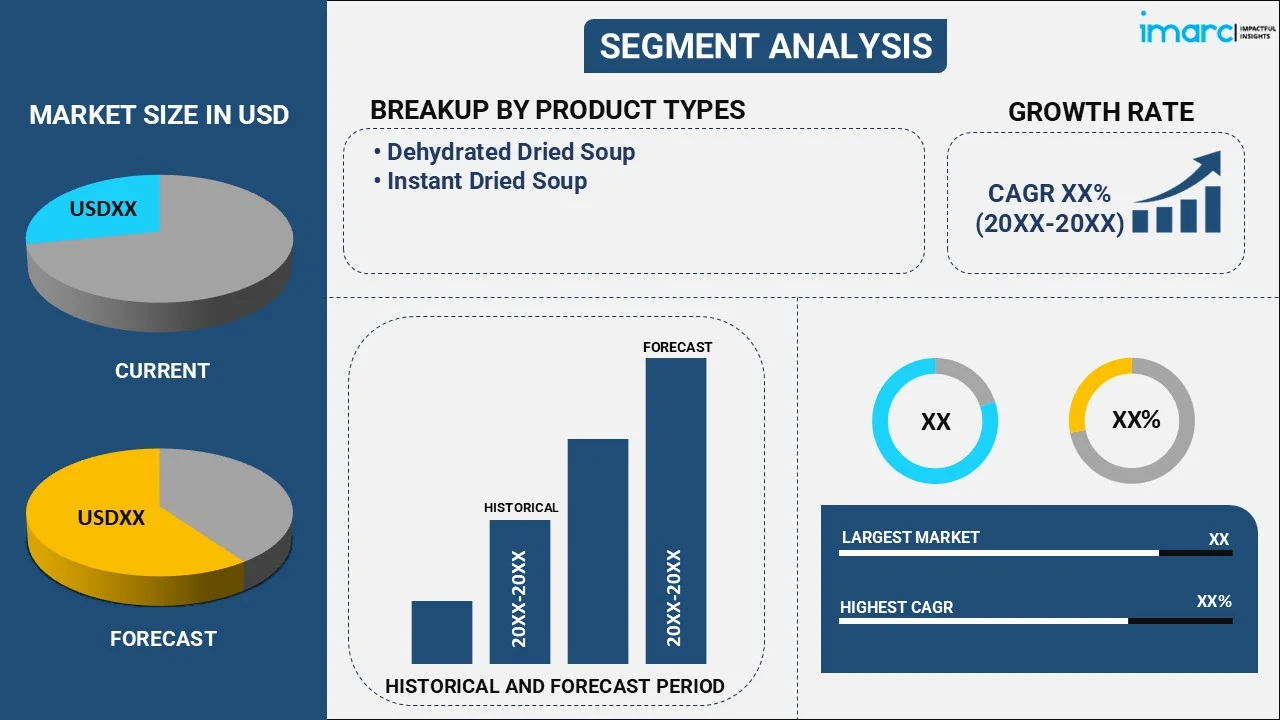
IMARC Group provides an analysis of the key trends in each segment of the global dried soup market, along with forecast at the global and regional levels from 2026-2034. The market has been categorized based on product type, type, preparation, packaging type, and distribution channel.
Analysis by Product Type:
To get detailed segment analysis of this market Request Sample
- Dehydrated Dried Soup
- Instant Dried Soup
Dehydrated dried soup holds 58.7% of the market share. Dehydrated dried soups have concentrated taste profiles and a longer shelf life since they are made by carefully removing moisture from ingredients using heat or freeze-drying methods. Due to their cost-effectiveness, simplicity of storage, and adaptability as compared to canned or fresh alternatives, these soups are popular with homes and institutional consumers. The product type category appeals to a wide range of consumers, from outdoor enthusiasts in need of lightweight, high-energy provisions to cost-conscious households looking for affordable meal alternatives. Important end use channels for dehydrated dried soup products include foodservice facilities and disaster preparedness initiatives. The market's dominance is a result of consumers' long-standing need for practical, shelf-stable items that offer reliable quality and culinary adaptability for a variety of use cases.
Analysis by Type:
- Vegetarian Soup
- Non-Vegetarian Soup
Non-vegetarian soup leads the market with a share of 52.4%. Non-vegetarian dried soups, which incorporate meat, poultry, seafood, and bone broth derivatives as primary flavor components, command broad consumer preference due to their rich umami profiles and perceived protein richness. Shrimp bisque, beef broth, and chicken noodles continue to be among the best-selling taste variations in Western countries because of a strong consumer base and a long history of brand recognition. Working households looking for wholesome, high-protein meal options with little preparatory work especially appreciate these items' convenience. Demand for non-vegetarian formulations strengthened with extra protein sources has been further encouraged by growing interest in high-protein dietary regimens. In order to maintain segment growth and promote premiumization tendencies within the category, manufacturers are launching high-end variations using artisan broths, heritage breed proteins, and international culinary influences.
Analysis by Preparation:
- Regular
- Organic
Regular dominates the market, with a share of 67.1%. Regular dried soups, produced using conventional food processing methods without organic certification requirements, are gaining traction, driven by broad affordability and universal retail availability. These products are sold via wide-ranging retail networks that include supermarkets, convenience stores, and internet platforms, guaranteeing steady access for a variety of global income groups. Retailer shelf-space allocation is strengthened and recurrent purchasing behavior is reinforced when consumers are familiar with well-known mainstream brands in this market. The scope of the segment includes a wide range of flavors, textures, and formats that satisfy different regional dietary needs and taste preferences without premium pricing barriers. Ongoing formulation innovations aimed at salt reduction and clean-label component transparency continue to help the segment growth.

Analysis by Packaging Type:
- Cups
- Pouches
- Others
Pouches represent the leading segment, with a market share of 49.5%, owing to their lightweight construction, superior barrier properties, and adaptability across single-serve and family-size variants. The format’s capacity to preserve flavor, aroma, and nutritional integrity over extended shelf periods has resonated strongly with both manufacturers and consumers seeking premium product quality. Pouches offer significant logistical advantages, including reduced transportation costs relative to rigid containers, and accommodate high-quality surface printing for premium brand presentation. The rise of portion-controlled and on-the-go consumption formats has further elevated demand for resealable and single-serving pouch variants. Their flexible structure also allows efficient storage and shelf placement in retail environments, improving product visibility and inventory management. Additionally, growing advancements in recyclable and eco-friendly pouch materials are encouraging wider adoption among sustainability-conscious brands and consumers.
Analysis by Distribution Channel:
- Supermarkets and Hypermarkets
- Convenience Stores
- Grocery Stores
- Direct Sales
- Online Stores
- Others
Supermarkets and hypermarkets account for 38.2% of the market share, representing the leading distribution channel in the market. The expansive floor space, diverse product assortments, and competitive promotional activities characteristic of these retail formats create favorable conditions for dried soup category sales. Prominent shelf placement, in-store promotional campaigns, and bundled pricing strategies enable large-format retailers to drive high-volume sales across both premium and value-priced product tiers. The ability to stock extensive flavor variety and multiple packaging formats under a single roof enhances consumer convenience and encourages cross-category purchasing behavior. Robust logistics infrastructure supporting these networks ensures consistent product freshness and reliable replenishment cycles. Digital integration through loyalty programs and click-and-collect services is further strengthening customer retention across this distribution channel.
Regional Analysis:
To get more information on the regional analysis of this market Request Sample
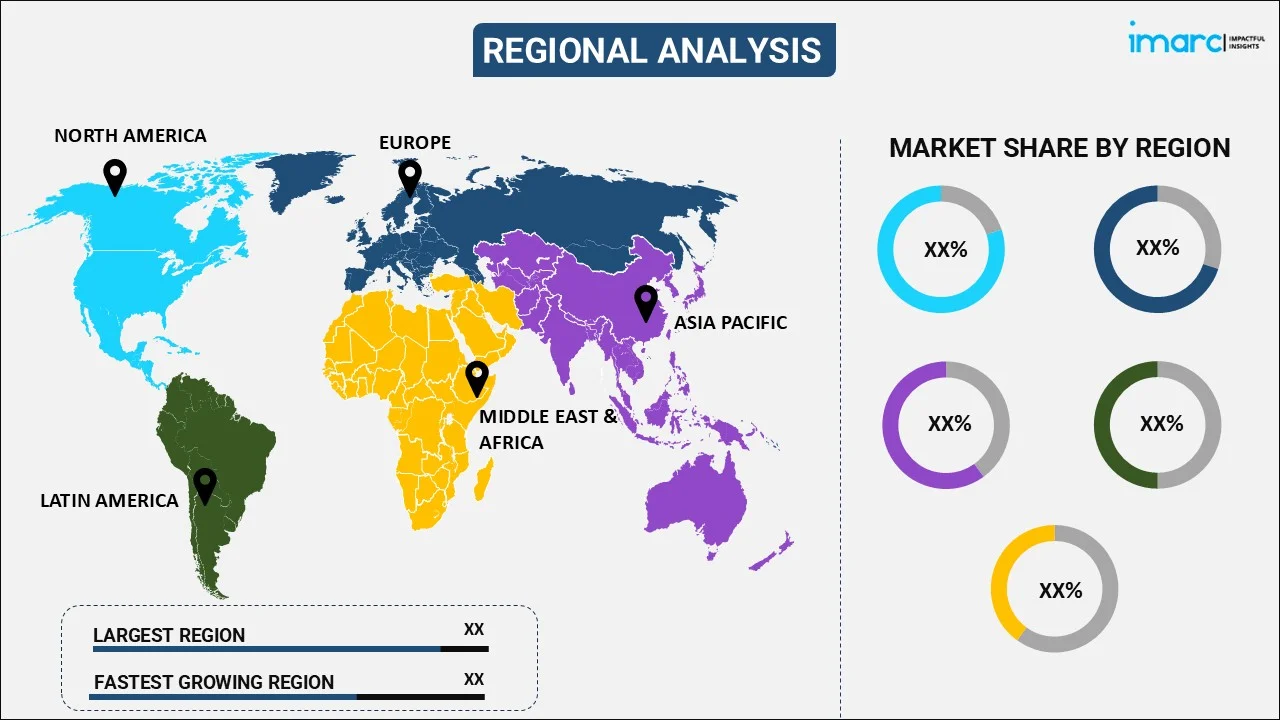
- Europe
- Asia-Pacific
- North America
- Middle East and Africa
- Latin America
Europe, accounting for 33.9% of the share, enjoys the leading position in the market. The region benefits from advanced food processing infrastructure, strong retail modernization, and well-established private-label categories that drive accessible pricing and broad consumer adoption. Health and wellness trends prevalent among European consumers have spurred significant reformulation activity, with manufacturers introducing reduced-sodium, high-fiber, and organic soup variants to meet evolving dietary preferences. Regulatory frameworks promoting transparent food labeling further reinforce consumer confidence and purchasing engagement across the region. The widespread presence of major supermarket chains and efficient cold and dry food distribution networks further supports consistent product availability. Additionally, rising demand for convenient meal solutions among busy urban households and working professionals continues to strengthen dried soup consumption across the region.
Key Regional Takeaways:
North America Dried Soup Market Analysis
The dried soup market in North America is experiencing steady growth, supported by rising demand for convenient, shelf-stable meal solutions among busy households and working professionals. North America’s advanced retail infrastructure, spanning specialty health food retailers, mass merchandise outlets, and rapidly growing e-commerce platforms, ensures comprehensive product availability and enables manufacturers to implement targeted promotional strategies. Consumer interest in clean-label formulations, reduced-sodium products, and plant-based soup variants is accelerating product innovation cycles, compelling both established and emerging brands to invest in reformulation and new product development. Canadian market dynamics further complement regional growth, with increasing multicultural demographics generating demand for diverse international soup flavors and specialty product varieties. Trade partnerships and cross-border distribution efficiencies support consistent product flow, maintain competitive pricing structures, and sustain broad consumer accessibility throughout the North American region. Additionally, strong brand presence and continuous marketing initiatives by leading food companies further reinforce consumer awareness and category expansion across the region.
United States Dried Soup Market Analysis
The dried soup market in the United States reflects a mature yet dynamically evolving consumer landscape shaped by shifting dietary priorities and ongoing retail innovation. American consumers demonstrate strong affinity for convenient, shelf-stable meal solutions that accommodate demanding lifestyles, with dried soups occupying a well-established position within the broader packaged food category. A key structural driver is the high prevalence of dual-income and single-person households, which creates sustained need for time-efficient, nutritionally adequate meal solutions. According to the United States Bureau of Labor Statistics 2024 data, in roughly half (49.6 percent) of all families with married couples, both partners were working, reflecting the significant time constraints that elevate demand for convenient packaged food categories throughout the region. The proliferation of e-commerce grocery platforms and direct-to-consumer (D2C) channels has significantly broadened the market reach of both national and specialty soup brands, enabling targeted engagement with health-conscious, premium-oriented, and ethnically diverse consumer segments. Demand for clean-label formulations, including soups free from artificial additives and enriched with functional ingredients, such as plant-based proteins and dietary fiber, continues to grow strongly, driving reformulation initiatives across the industry.
Europe Dried Soup Market Analysis
Europe maintains its dominant position in the global dried soup market, driven by cultural affinity for soup-based meals, sophisticated retail infrastructure, and progressive health and wellness consumer trends. The region’s regulatory emphasis on food labeling transparency and nutritional quality has catalyzed significant product reformulation activity, with manufacturers prioritizing low-sodium, additive-free, and organically certified formulations. The growing plant-based movement is reinforcing demand for vegan and vegetarian dried soup variants throughout the continent. A positive market outlook is supported by rising per-capita food expenditure, favorable retailer shelf allocation, and ongoing product premiumization trends that consistently expand the category’s value proposition for European consumers. These factors collectively shape evolving dried soup market trends across the region, encouraging continuous product innovation and diversification across retail channels.
Asia-Pacific Dried Soup Market Analysis
The Asia-Pacific region represents a significant and rapidly expanding market for dried soups, propelled by shifting demographic patterns, rapid urbanization, and increasing consumer openness to convenient packaged food products. According to the Economic Survey 2023-24, it is projected that over 40% of India's population will reside in urban regions by 2030. China, Japan, South Korea, and India demonstrate strong market participation, with culturally adapted flavors, such as miso, chicken broth, and vegetable varieties driving category appeal among diverse consumer segments. The proliferation of modern retail formats and rapidly growing e-commerce channels is enhancing product accessibility across both densely urbanized metropolitan areas and secondary markets. Rising disposable incomes are further sustaining market expansion, as manufacturers introduce locally tailored flavors and competitive pricing strategies to broaden consumer adoption.
Latin America Dried Soup Market Analysis
The dried soup market in Latin America is gaining momentum, supported by accelerating urbanization, a rapidly expanding middle class, and increasing consumer preference for convenient, affordable meal solutions. Brazil and Mexico represent the region’s primary demand centers, with expanding modern retail networks and growing e-commerce platforms improving product availability across major urban areas. Rising dual-income household prevalence and time constraints associated with urban employment are driving consumer adoption of quick-preparation packaged food products. Ongoing organized retail penetration and favorable consumer demographics support the region’s long-term growth outlook.
Middle East and Africa Dried Soup Market Analysis
The Middle East and Africa region presents a significant growth opportunity for the dried soup market, underpinned by rising urbanization rates, expanding organized retail infrastructure, and increasing per-capita consumer spending. In November 2025, consumer expenditure in Saudi Arabia increased by 11% to SAR 129.1 Billion, up from approximately SAR 116.7 Billion in November 2024. A favorable dried soup market forecast is supported by ongoing demographic growth, retail modernization, and growing consumer exposure to international food brands and flavors across the region.
Competitive Landscape:
The global dried soup market is characterized by moderate-to-high competitive consolidation, with multinational conglomerates and regional specialty brands competing for market share through differentiated product portfolios, pricing strategies, and distribution network strength. Dominant market participants leverage established brand equity, wide-ranging flavor portfolios, and well-entrenched retail partnerships to maintain category leadership. Competition has intensified in premium and health-focused segments, where artisanal brands and private-label offerings challenge major players through clean-label positioning and direct-to-consumer digital channels. Strategic priorities across the industry increasingly center on product premiumization, sustainability commitments, and digital commerce capabilities. Investments in packaging innovation and reformulation to address evolving clean-label expectations represent a key competitive battleground within the global dried soup category.
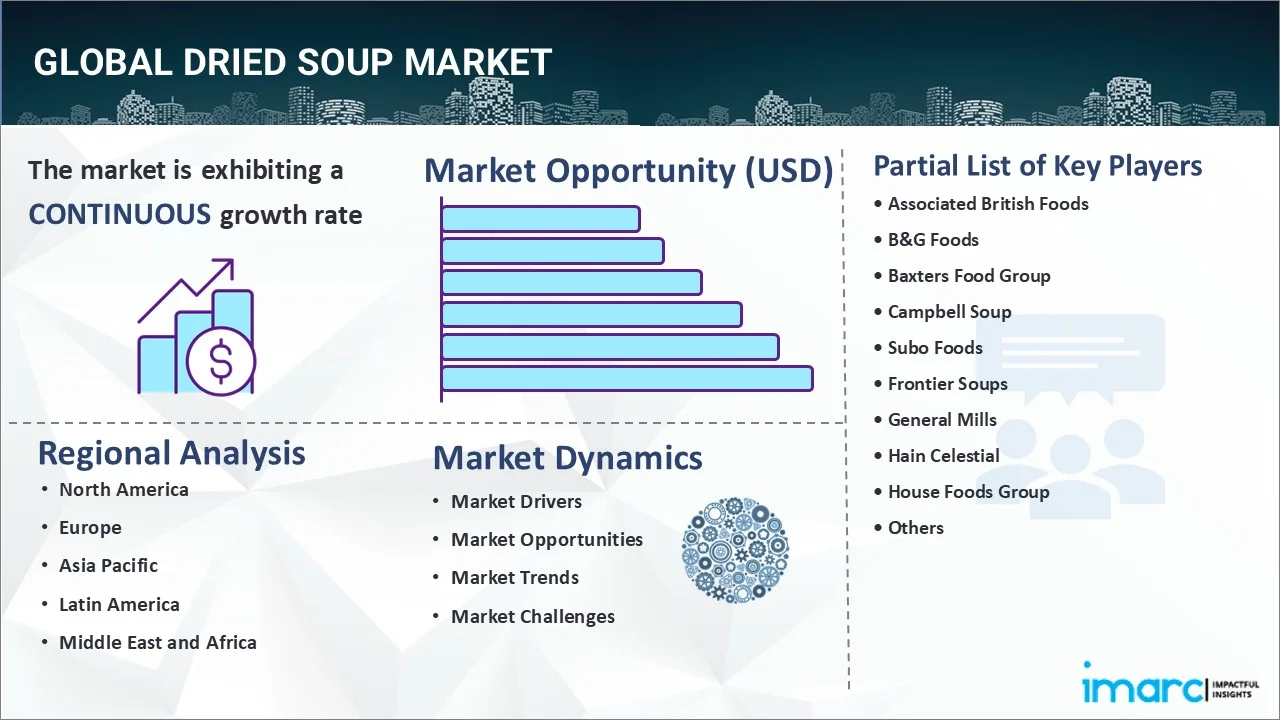
The report provides a comprehensive analysis of the competitive landscape in the dried soup market with detailed profiles of all major companies, including:
- Associated British Foods
- B&G Foods
- Baxters Food Group
- Campbell Soup
- Subo Foods
- Frontier Soups
- General Mills
- Hain Celestial
- House Foods Group
- Kraft Heinz
- Kroger
- Nestlé
- Nissin Foods
- NK Hurst Company
- Unilever
- Premier Foods
Dried Soup Market Report Scope:
| Report Features | Details |
|---|---|
| Base Year of the Analysis | 2025 |
| Historical Period | 2020-2025 |
| Forecast Period | 2026-2034 |
| Units | Billion USD |
| Scope of the Report |
Exploration of Historical Trends and Market Outlook, Industry Catalysts and Challenges, Segment-Wise Historical and Future Market Assessment:
|
| Product Types Covered | Dehydrated Dried Soup, Instant Dried Soup |
| Types Covered | Vegetarian Soup, Non-Vegetarian Soup |
| Preparations Covered | Regular, Organic |
| Packaging Types Covered | Cups, Pouches, Others |
| Distribution Channels Covered | Supermarkets and Hypermarkets, Convenience Stores, Online Stores, Others |
| Region Covered | Europe, Asia-Pacific, North America, Middle East and Africa, Latin America |
| Companies Covered | Associated British Foods, B&G Foods, Baxters Food Group, Campbell Soup, Subo Foods, Frontier Soups, General Mills, Hain Celestial, House Foods Group, Kraft Heinz, Kroger, Nestlé, Nissin Foods, NK Hurst Company, Unilever, Premier Foods, etc. |
| Customization Scope | 10% Free Customization |
| Post-Sale Analyst Support | 10-12 Weeks |
| Delivery Format | PDF and Excel through Email (We can also provide the editable version of the report in PPT/Word format on special request) |
Key Benefits for Stakeholders:
- IMARC’s report offers a comprehensive quantitative analysis of various market segments, historical and current market trends, market forecasts, and dynamics of the dried soup market from 2020-2034.
- The research study provides the latest information on the market drivers, challenges, and opportunities in the global dried soup market.
- The study maps the leading, as well as the fastest-growing, regional markets.
- Porter’s Five Forces analysis assists stakeholders in assessing the impact of new entrants, competitive rivalry, supplier power, buyer power, and the threat of substitution. It helps stakeholders to analyze the level of competition within the dried soup industry and its attractiveness.
- Competitive landscape allows stakeholders to understand their competitive environment and provides an insight into the current positions of key players in the market.
Frequently Asked Questions About the Dried Soup Market Report
The dried soup market was valued at USD 13.27 Billion in 2025.
The dried soup market is projected to exhibit a CAGR of 2.78% during 2026-2034, reaching a value of USD 17.39 Billion by 2034.
The dried soup market is driven by rising consumer demand for convenient and shelf-stable meal solutions, growing health awareness spurring demand for clean-label and nutritionally enriched formulations, expanding modern retail and e-commerce channels improving product accessibility, and increasing urbanization in emerging economies generating new consumption opportunities across Asia-Pacific, Latin America, and the Middle East and Africa.
Europe currently dominates the dried soup market, accounting for a share of 33.9%. The region’s long-standing cultural affinity for soup consumption, combined with advanced retail infrastructure, high consumer awareness of wellness-oriented formulations, and a strong preference for organic and plant-based varieties across major European economies, collectively sustain its commanding position in the market.
Some of the major players in the dried soup market include Associated British Foods, B&G Foods, Baxters Food Group, Campbell Soup, Subo Foods, Frontier Soups, General Mills, Hain Celestial, House Foods Group, Kraft Heinz, Kroger, Nestlé, Nissin Foods, NK Hurst Company, Unilever, Premier Foods, etc.
Need more help?
- Speak to our experienced analysts for insights on the current market scenarios.
- Include additional segments and countries to customize the report as per your requirement.
- Gain an unparalleled competitive advantage in your domain by understanding how to utilize the report and positively impacting your operations and revenue.
- For further assistance, please connect with our analysts.
 Request Customization
 Speak to an Analyst
 Request Brochure
 Inquire Before Buying
Benefits of Customization
- Personalize this research
- Triangulate with your data
- Get data as per your format and definition
- Gain a deeper dive into a specific application, geography, customer, or competitor
- Any level of personalization
Get in Touch With Us
UNITED STATES
Phone: +1-201-971-6302
INDIA
Phone: +91-120-433-0800
UNITED KINGDOM
Phone: +44-753-714-6104
Email: [email protected]
Client Testimonials




.webp)




.webp)













Related Reports

Choose your plan
*Please note that the prices mentioned below are starting prices for each bundle type. Kindly contact our team for further details.*
Single User License
- 1 User License, Access on 2 Devices
- PDF Report + Excel Dataset (Password Protected)
- Lifetime Access
- No Printing Rights
- 10% Free Report Customization
- 10–12 Weeks of Analyst Support
Five User License
- Access for 5 Users, 2 Devices per User
- PDF Report + Excel Dataset (Password Protected)
- Lifetime Access
- Dedicated Account Manager
- 12–14 Weeks of Analyst Support
- No Printing Rights
- 15% Free Report Customization
- 25% Discount on Your Next Purchase
Corporate User License
- Unlimited User Access (Within Your Organization)
- PDF Report + Excel Dataset
- Lifetime Access
- Dedicated Account Manager
- 14–20 Weeks of Analyst Support
- No Printing Rights
- 20% Free Report Customization
- 30% Discount on Your Next Purchase
Essential Insights
What's included:
3 reports
- Lifetime Access
- PDF Reports
- Excel Datasets
- 2 Weeks of Free Analyst Support
- 2 User Licenses
- Access on 2 Devices
- Printing Rights
- Complimentary PowerPoint (PPT) Version
- Complimentary License Upgrade
Professional Access
What's included:
5 reports
- Lifetime Access
- PDF Reports
- Excel Datasets
- 8 Weeks of Free Analyst Support
- 2 User Licenses
- Access on 2 Devices
- Printing Rights
- Complimentary PowerPoint (PPT) Version
- Complimentary License Upgrade
Business Advantage
What's included:
8 reports
- Lifetime Access
- PDF Reports
- Excel Datasets
- 14 Weeks of Free Analyst Support
- 2 User Licenses
- Access on 2 Devices
- Printing Rights
- Complimentary PowerPoint (PPT) Version
- Complimentary License Upgrade
Enterprise Intelligence
What's included:
10 reports
- Lifetime Access
- PDF Reports
- Excel Datasets
- 20 Weeks of Free Analyst Support
- 2 User Licenses
- Access on 2 Devices
- Printing Rights
- Complimentary PowerPoint (PPT) Version
- Complimentary License Upgrade