
Egypt Leisure Travel Market Size, Share, Trends and Forecast by Traveler Type, Age Group, Expenditure Type, Sales Channel, and Region, 2026-2034
Egypt Leisure Travel Market Summary:
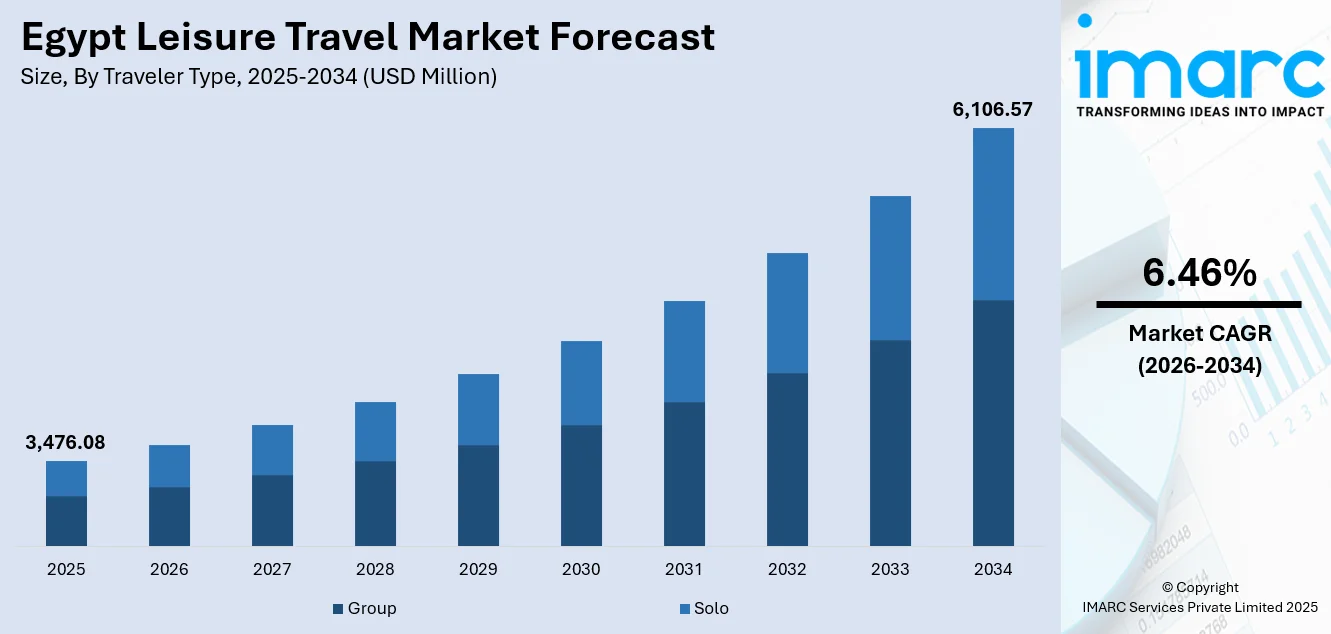
The Egypt leisure travel market size was valued at USD 3,476.08 Million in 2025 and is projected to reach USD 6,106.57 Million by 2034, growing at a compound annual growth rate of 6.46% from 2026-2034.
The Egypt leisure travel market is registering strong growth due to the country’s incomparable cultural heritage, developing tourism infrastructure, and rising interest among domestic and international travelers. The rising disposable income, varied leisure experiences offered in beach and heritage sites, and growing adoption of digital technologies for travel planning are further strengthening the market’s growth trajectory. The efforts of the government to develop the hospitality sector, enhance air connectivity, and promote sustainable tourism are further fueling the demand and making Egypt a preferred destination for leisure travel in the Middle East and North Africa region.
Key Takeaways and Insights:
- By Traveler Type: Group dominates the market with a share of 55% in 2025, driven by the strong preference for organized tour packages that provide curated cultural and historical experiences across Egypt’s iconic destinations.
- By Age Group: Millennial leads the market with a share of 36% in 2025, driven by an increasing demand for experiential and adventure-focused travel, along with greater digital engagement in trip planning and booking.
- By Expenditure Type: Lodging accounts for the largest share of 30% in 2025, reflecting the expanding availability of diverse accommodation options ranging from luxury resorts to budget-friendly hotels across popular Egyptian destinations.
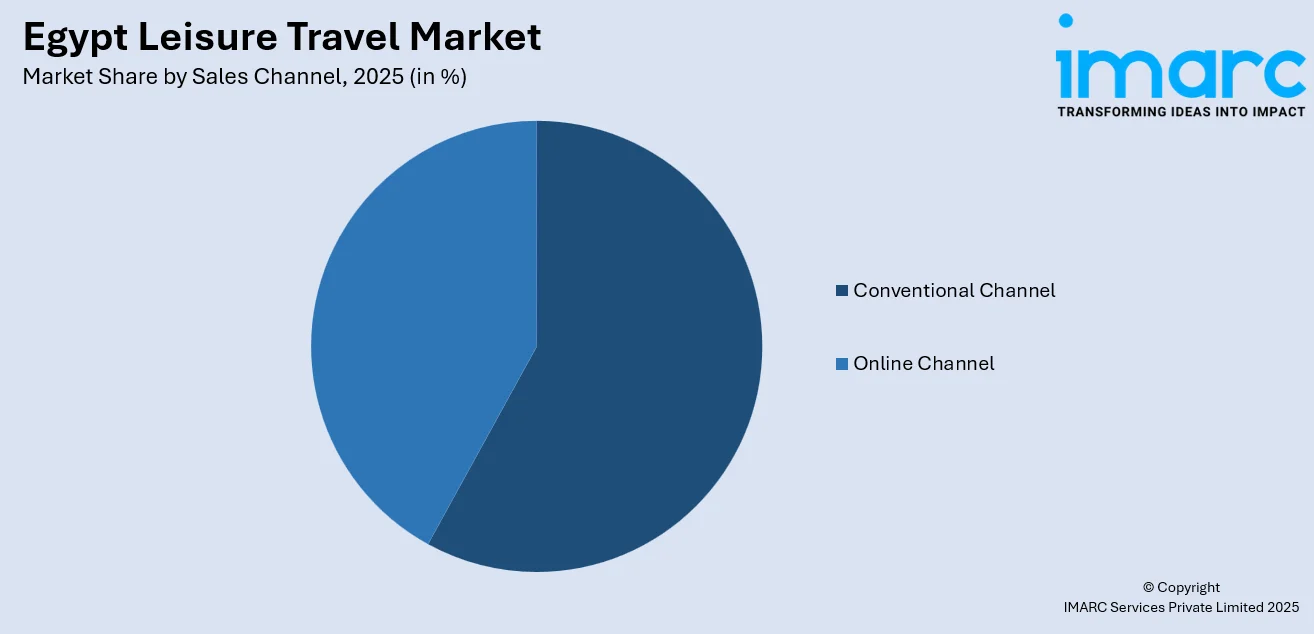
- By Sales Channel: Conventional channel dominates the market with a share of 58% in 2025, driven by the continued reliance on travel agencies and tour operators that offer comprehensive itinerary management and personalized travel advisory services.
- By Region: Greater Cairo leads the market with a 40% share in 2025, reflecting its position as the primary gateway for both domestic and international leisure travelers accessing Egypt’s most renowned historical and cultural attractions.
- Key Players: The Egypt leisure travel market features a mix of established domestic tour operators and international hospitality groups competing across premium and value segments to capture growing demand from diverse traveler demographics.
To get more information on this market Request Sample
The Egypt leisure travel market is advancing steadily as the country leverages its rich archaeological heritage, pristine coastal landscapes, and vibrant urban experiences to attract a growing base of domestic and international tourists. Strengthening air connectivity through expanded flight routes and modernized airport infrastructure is improving accessibility to key leisure destinations across the Nile Valley, Red Sea coast, and Mediterranean shores. In October 2025 Egypt accelerated its tourism revival with the opening of the Grand Egyptian Museum near the Giza Pyramids, featuring over 50,000 artifacts and establishing the museum as a premier cultural destination aimed at boosting visitor engagement and international tourism appeal. The hospitality sector is undergoing a significant transformation with the development of world-class resorts, eco-friendly accommodations, and diversified entertainment offerings that cater to evolving traveler preferences. Increasing government commitment to sustainable tourism practices and cultural preservation is reinforcing Egypt’s appeal as a year-round leisure destination. Additionally, the rising adoption of digital platforms for travel planning and booking is enhancing the overall visitor experience, broadening market participation, and strengthening the Egypt leisure travel market share.
Egypt Leisure Travel Market Trends:
Rising Demand for Cultural and Heritage Tourism
Egypt is witnessing a growing preference among leisure travelers for culturally immersive experiences that go beyond traditional sightseeing. Visitors are increasingly seeking guided archaeological excursions, heritage walking tours, and museum-centered itineraries that offer deeper engagement with the country’s ancient civilizations. In 2025, Egypt reopened the tomb of Amenhotep III in Luxor’s Valley of the Kings after more than 20 years of restoration, enhancing access to one of the most historically significant royal burial sites and strengthening the country’s cultural tourism offerings. This trend is encouraging tourism stakeholders to develop curated heritage-focused travel packages that blend historical exploration with modern comfort, supporting the Egypt leisure travel market growth.
Growth of Coastal and Adventure-Based Leisure Activities
Leisure travelers are increasingly drawn to Egypt’s coastal destinations for diverse recreational activities including diving, snorkeling, desert safaris, and water sports. Red Sea and Sinai resorts are expanding their experiential offerings to attract younger demographics and adventure-seeking tourists. In July 2024, Egypt’s Talaat Moustafa Group announced a major tourism-focused development on the Mediterranean coast featuring luxury resorts, marinas, recreational facilities, and entertainment zones, highlighting growing private-sector investment in coastal leisure infrastructure. This shift toward activity-based leisure travel is encouraging operators to diversify their portfolios, blending relaxation with adrenaline-fueled experiences across emerging and established seaside destinations.
Expansion of Digital Travel Platforms and Smart Tourism Solutions
The adoption of digital platforms for travel planning, booking, and on-ground navigation is reshaping Egypt’s leisure travel landscape. Mobile applications, virtual tour previews, and AI-powered itinerary recommendations are gaining traction among tech-savvy travelers. In 2025, Egypt’s Prime Minister directed the nationwide expansion of the electronic visa (e-Visa) system across all airports and ports of entry, aiming to fully digitize tourist entry procedures and reduce processing times as part of a broader smart tourism modernization initiative. Tourism authorities and service providers are investing in smart tourism infrastructure to enhance visitor convenience, streamline booking processes, and deliver personalized travel experiences that align with modern expectations.
Market Outlook 2026-2034:
The Egypt leisure travel market is expected to grow at a steady pace over the coming years, driven by continued development of infrastructure, diversification of tourism, and increasing interest in the country from international visitors. The continued development of transportation infrastructure, development of accommodation capacity, and promotion of new leisure destinations in the Nile Valley are expected to positively influence the growth trajectory of the market. In addition, the development of the market by the government through initiatives such as cultural tourism and sustainability is expected to positively influence the growth of the market. The market generated a revenue of USD 3,476.08 Million in 2025 and is projected to reach a revenue of USD 6,106.57 Million by 2034, growing at a compound annual growth rate of 6.46% from 2026-2034.
Egypt Leisure Travel Market Report Segmentation:
|
Segment Category |
Leading Segment |
Market Share |
|
Traveler Type |
Group |
55% |
|
Age Group |
Millennial |
36% |
|
Expenditure Type |
Lodging |
30% |
|
Sales Channel |
Conventional Channel |
58% |
|
Region |
Greater Cairo |
40% |
Traveler Type Insights:
- Solo
- Group
The group dominates with a market share of 55% of the total Egypt leisure travel market in 2025.
Group travel remains the most preferred option for leisure tourists in Egypt, as it allows them to access the geographically dispersed attractions of the country in a well-structured manner through tour packages. Whether it is a Nile River cruise from Luxor to Aswan or a trip to Cairo, the Red Sea, and the desert oases, group travel remains the most convenient and economical option for both domestic and international tourists.
The preference for group travel is further supported by the social benefits it offers, especially to families and senior citizens who value safety and organized travel. The travel companies are also innovating their group travel packages by adding new themes such as archaeological discovery tours, wellness retreats, and culinary exploration programs, which are widening the appeal of group travel for leisure.
Age Group Insights:
- Baby Boomers
- Generation X
- Millennial
- Generation Z
The millennial leads with a share of 36% of the total Egypt leisure travel market in 2025.
Millennials are fueling growth in Egypt's leisure travel market by prioritizing experiential and digitally enabled journeys. This demographic is attracted to the country's unique combination of ancient heritage and contemporary adventure, seeking authentic cultural experiences, visually compelling destinations suited for social media sharing, and customizable itineraries that seamlessly integrate historical exploration with recreational pursuits across diverse coastal, desert, and urban environments throughout the country.
The increasing purchasing power of millennial travelers, along with their willingness to spend a larger share of their disposable income on travel experiences, is boosting the demand for varied leisure experiences. The millennial travelers' preference for mobile booking platforms, personalized recommendations, and sustainable travel experiences is encouraging service providers to modify their digital and sustainability strategies to appeal to this influential group of consumers.
Expenditure Type Insights:
- Lodging
- Transportation
- Food and Beverages
- Events and Entertainment
- Others
The lodging dominates with a market share of 30% of the total Egypt leisure travel market in 2025.
Lodging expenditure leads the market as travelers increasingly seek quality accommodations that enhance their overall leisure experience. The expansion of hospitality infrastructure across Egypt’s key tourist destinations, including luxury resorts along the Red Sea, boutique hotels in historic Cairo districts, and all-inclusive coastal properties, is driving higher spending on accommodations among both domestic and international visitors.
The growing diversification of lodging options, from premium five-star resorts to eco-friendly desert lodges and heritage guesthouses, is enabling travelers to select accommodations that align with their preferences and budgets. Rising tourist arrivals and extended average stays are further contributing to the dominance of lodging expenditure, as visitors seek comfortable bases from which to explore Egypt’s diverse leisure attractions.
Sales Channel Insights:
Access the comprehensive market breakdown Request Sample
- Conventional Channel
- Online Channel
The conventional channel leads with a share of 58% of the total Egypt leisure travel market in 2025.
The conventional sales channels, such as travel agencies, tour operators, and physical booking offices, remain the most prominent in the Egyptian leisure travel distribution market. This is because many travelers, especially those in the group and mature markets, value the personalized advice and complete itinerary handling provided by the conventional sales channels, especially for multi-destination travel to Egypt’s varied geographical attractions.
The continued popularity of the conventional sales channels is also linked to the trust and reliability that come with established travel operators who have strong connections with the hospitality industry, transport services, and local guides. These sales channels are ideal for high-end leisure travel products, such as Nile cruises, desert adventures, and cultural tours that require special handling beyond the capabilities of online booking systems.
Regional Insights:
- Greater Cairo
- Alexandria
- Suez Canal
- Delta
- Others
Greater Cairo exhibits a clear dominance with a 40% share of the total Egypt leisure travel market in 2025.
The Greater Cairo area is the main hub for Egypt’s leisure travel market, thanks to its proximity to the Pyramids of Giza, the Sphinx, and the newly opened Grand Egyptian Museum. The area has a large hospitality infrastructure, international airport connectivity, and a range of cultural and entertainment offerings, making it the main entry point and hub for both domestic and international leisure travelers visiting Egypt.
The development of new urban tourism experiences, shopping, and dining destinations, as well as improved transportation networks, in the Greater Cairo area is further cementing its position as the leading leisure travel destination. The area has a range of accommodation offerings, entertainment options, and is close to historical sites that attract visitors who are looking for both cultural and modern urban leisure experiences.
Market Dynamics:
Growth Drivers:
Why is the Egypt Leisure Travel Market Growing?
Expanding Tourism Infrastructure and Hospitality Capacity
The Egypt leisure travel market is benefiting significantly from large-scale investments in tourism infrastructure that are enhancing the country’s capacity to accommodate growing visitor volumes. The ongoing expansion of hotel supply across key leisure destinations, including the Red Sea coast, North Coast, and Nile Valley, is creating a more diverse and competitive hospitality landscape. In 2025, Egypt signed a tourism investment agreement with Hyatt Hotels Corporation to develop new hotel rooms and branded hospitality projects across major tourist destinations, supporting the government’s strategy to expand accommodation capacity and attract international travelers. New luxury resorts, boutique hotels, and eco-friendly accommodations are being developed to cater to varying traveler preferences and budgets. Simultaneously, improvements in airport infrastructure, road connectivity, and public transportation networks are making it easier for travelers to access remote and emerging tourist destinations.
Government Initiatives Promoting Cultural and Sustainable Tourism
Government-led efforts to position Egypt as a premier cultural and sustainable tourism destination are playing a pivotal role in driving leisure travel demand. National strategies focused on preserving archaeological sites, developing museum infrastructure, and promoting lesser-known heritage destinations are broadening the country’s tourism appeal beyond traditional landmarks. In December 2025, Egypt’s iconic street food dish koshary was added to UNESCO’s Intangible Cultural Heritage list, reinforcing the nation’s cultural identity on the global stage and supporting promotional efforts to attract culturally curious travelers. Regulatory reforms, including streamlined visa processes and tourism-friendly policies, are reducing barriers to entry for international visitors and encouraging greater inbound travel flows. Sustainability-focused initiatives, such as the development of eco-resorts and the integration of green technologies at heritage sites, are attracting environmentally conscious travelers. These government efforts are complemented by international marketing campaigns and participation in global tourism exhibitions that enhance Egypt’s visibility as a diverse and dynamic leisure destination.
Growing Millennial and Youth Demand for Experiential Travel
The rising influence of millennial and younger demographics in the travel market is driving significant growth in Egypt’s leisure travel sector. These traveler segments prioritize experiential and immersive travel over conventional sightseeing, seeking authentic cultural encounters, adventure activities, and social media-worthy destinations that Egypt offers in abundance. In 2025, the viral social media trend “EgyptIsCalling” emerged as a top global travel buzz on platforms like TikTok and Instagram, ranking among the most popular hashtags worldwide and highlighting Egypt’s appeal to Gen Z and millennial travelers sharing their experiences online. The increasing purchasing power of younger consumers, combined with their comfort with digital booking platforms and independent travel planning, is expanding the addressable market for leisure travel services. Operators are responding by developing curated experience-based itineraries that blend archaeological exploration with adventure sports, culinary tourism, and wellness retreats.
Market Restraints:
What Challenges the Egypt Leisure Travel Market is Facing?
Geopolitical Instability and Regional Security Concerns
The ever-present geopolitical uncertainties in the wider Middle East and North Africa region from time to time affect tourist confidence and travel to Egypt. Security issues, travel warnings issued by foreign governments, and the instability of the region can cause a temporary reduction in the number of visitors and cancellations of bookings, thus affecting tourism operators and the hospitality sector that depends on a steady flow of visitors.
Currency Volatility and Inflationary Pressures
The changes in the Egyptian pound and the inflationary pressures that the country is facing may pose challenges to the leisure travel market, as the costs of doing business in the tourism sector may be affected. The rising costs of hospitality services, transportation, and food and beverages may affect the spending habits of travelers and make Egypt a less competitive destination in terms of value for money.
Seasonal Demand Concentration and Infrastructure Gaps
The Egyptian leisure travel market is challenged by seasonality in terms of demand concentration, where the peak tourist season is during the cooler months, and the summer months record low tourist arrivals due to the high temperatures. The seasonality of the market hinders the potential for diversification of the market geographically, as infrastructure in emerging markets is limited in terms of accommodation and connectivity.
Competitive Landscape:
The Egypt leisure travel market is marked by a competitive and ever-changing landscape, with a wide range of domestic and foreign companies competing in different segments of the tourism value chain. Companies in the tour operating, hotel, online travel agency, and transportation sectors are actively competing to tap into the growing demand from domestic and foreign leisure travelers. Companies are competing based on the quality of their service offerings, technology, pricing, and the capacity to provide unique and customized travel experiences. Companies are adopting technology, diversifying their product offerings, and forging partnerships to improve their market positioning. The rise in hotel capacity, development of specialized tourism products, and improvement in customer engagement through digital channels are changing the competitive landscape of the market, pushing companies to innovate and improve their services to attract more leisure travelers.
Recent Developments:
- In March 2025, Wego renewed and expanded its partnership with the Egyptian Tourism Authority to boost Egypt’s global leisure travel appeal. The campaign promotes cultural tourism, Red Sea beach resorts, wellness retreats, and adventure experiences, targeting international and GCC travelers to strengthen inbound tourism demand and destination visibility in key global markets.
Egypt Leisure Travel Market Report Coverage:
| Report Features | Details |
|---|---|
| Base Year of the Analysis | 2025 |
| Historical Period | 2020-2025 |
| Forecast Period | 2026-2034 |
| Units | Million USD |
| Scope of the Report |
Exploration of Historical Trends and Market Outlook, Industry Catalysts and Challenges, Segment-Wise Historical and Future Market Assessment:
|
| Traveler Types Covered | Solo, Group |
| Age Groups Covered | Baby Boomers, Generation X, Millennial, Generation Z |
| Expenditure Types Covered | Lodging, Transportation, Food and Beverages, Events and Entertainment, Others |
| Sales Channels Covered | Conventional Channel, Online Channel |
| Regions Covered | Greater Cairo, Alexandria, Suez Canal, Delta, Others |
| Customization Scope | 10% Free Customization |
| Post-Sale Analyst Support | 10-12 Weeks |
| Delivery Format | PDF and Excel through Email (We can also provide the editable version of the report in PPT/Word format on special request) |
Frequently Asked Questions About the Egypt Leisure Travel Market Report
The Egypt leisure travel market size was valued at USD 3,476.08 Million in 2025.
The Egypt leisure travel market is expected to grow at a compound annual growth rate of 6.46% from 2026-2034 to reach USD 6,106.57 Million by 2034.
Group holds the largest revenue share of 55%, driven by sustained demand for organized and curated multi-destination tour packages that provide cost-effective and comprehensive leisure experiences across Egypt’s diverse attractions.
Key factors driving the Egypt leisure travel market include expanding tourism infrastructure, government-led cultural preservation and promotion initiatives, rising millennial travel demand, growing digital platform adoption, and increasing international air connectivity to key leisure destinations.
Major challenges include geopolitical instability and regional security concerns, currency volatility and inflationary pressures affecting operational costs, seasonal demand concentration, infrastructure gaps in emerging destinations, and competition from alternative regional leisure travel markets.
Need more help?
- Speak to our experienced analysts for insights on the current market scenarios.
- Include additional segments and countries to customize the report as per your requirement.
- Gain an unparalleled competitive advantage in your domain by understanding how to utilize the report and positively impacting your operations and revenue.
- For further assistance, please connect with our analysts.
 Request Customization
 Speak to an Analyst
 Request Brochure
 Inquire Before Buying
Benefits of Customization
- Personalize this research
- Triangulate with your data
- Get data as per your format and definition
- Gain a deeper dive into a specific application, geography, customer, or competitor
- Any level of personalization
Get in Touch With Us
UNITED STATES
Phone: +1-201-971-6302
INDIA
Phone: +91-120-433-0800
UNITED KINGDOM
Phone: +44-753-714-6104
Email: [email protected]
Client Testimonials




.webp)




.webp)













Related Reports

Choose your plan
*Please note that the prices mentioned below are starting prices for each bundle type. Kindly contact our team for further details.*
Single User License
- 1 User License, Access on 2 Devices
- PDF Report + Excel Dataset (Password Protected)
- Lifetime Access
- No Printing Rights
- 10% Free Report Customization
- 10–12 Weeks of Analyst Support
Five User License
- Access for 5 Users, 2 Devices per User
- PDF Report + Excel Dataset (Password Protected)
- Lifetime Access
- Dedicated Account Manager
- 12–14 Weeks of Analyst Support
- No Printing Rights
- 15% Free Report Customization
- 25% Discount on Your Next Purchase
Corporate User License
- Unlimited User Access (Within Your Organization)
- PDF Report + Excel Dataset
- Lifetime Access
- Dedicated Account Manager
- 14–20 Weeks of Analyst Support
- No Printing Rights
- 20% Free Report Customization
- 30% Discount on Your Next Purchase
Essential Insights
What's included:
3 reports
- Lifetime Access
- PDF Reports
- Excel Datasets
- 2 Weeks of Free Analyst Support
- 2 User Licenses
- Access on 2 Devices
- Printing Rights
- Complimentary PowerPoint (PPT) Version
- Complimentary License Upgrade
Professional Access
What's included:
5 reports
- Lifetime Access
- PDF Reports
- Excel Datasets
- 8 Weeks of Free Analyst Support
- 2 User Licenses
- Access on 2 Devices
- Printing Rights
- Complimentary PowerPoint (PPT) Version
- Complimentary License Upgrade
Business Advantage
What's included:
8 reports
- Lifetime Access
- PDF Reports
- Excel Datasets
- 14 Weeks of Free Analyst Support
- 2 User Licenses
- Access on 2 Devices
- Printing Rights
- Complimentary PowerPoint (PPT) Version
- Complimentary License Upgrade
Enterprise Intelligence
What's included:
10 reports
- Lifetime Access
- PDF Reports
- Excel Datasets
- 20 Weeks of Free Analyst Support
- 2 User Licenses
- Access on 2 Devices
- Printing Rights
- Complimentary PowerPoint (PPT) Version
- Complimentary License Upgrade