
Electric Boat and Ship Market Size, Share, Trends and Forecast by Propulsion Type, Battery Type, Carriage Type, and Region, 2026-2034
Electric Boat and Ship Market Size and Share:
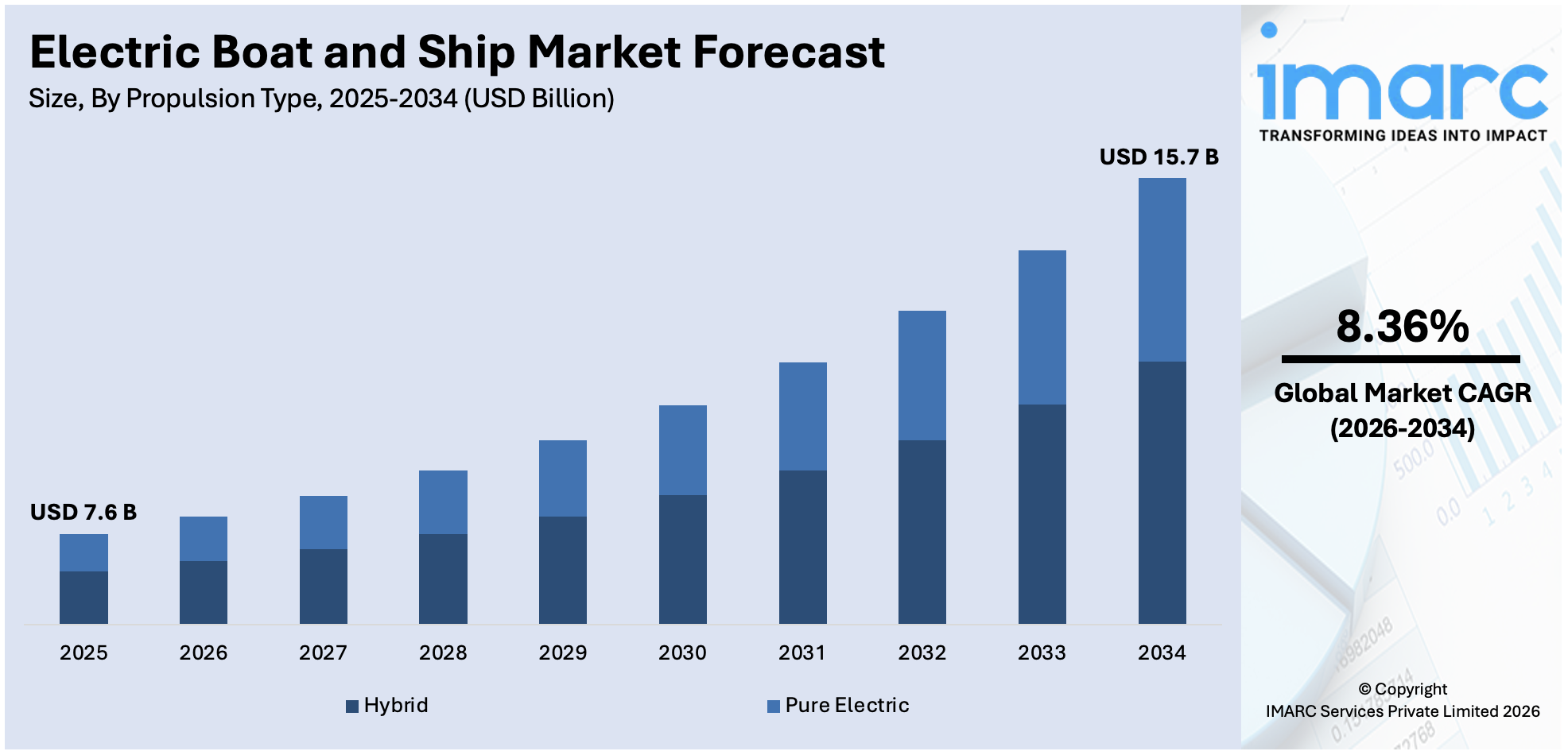
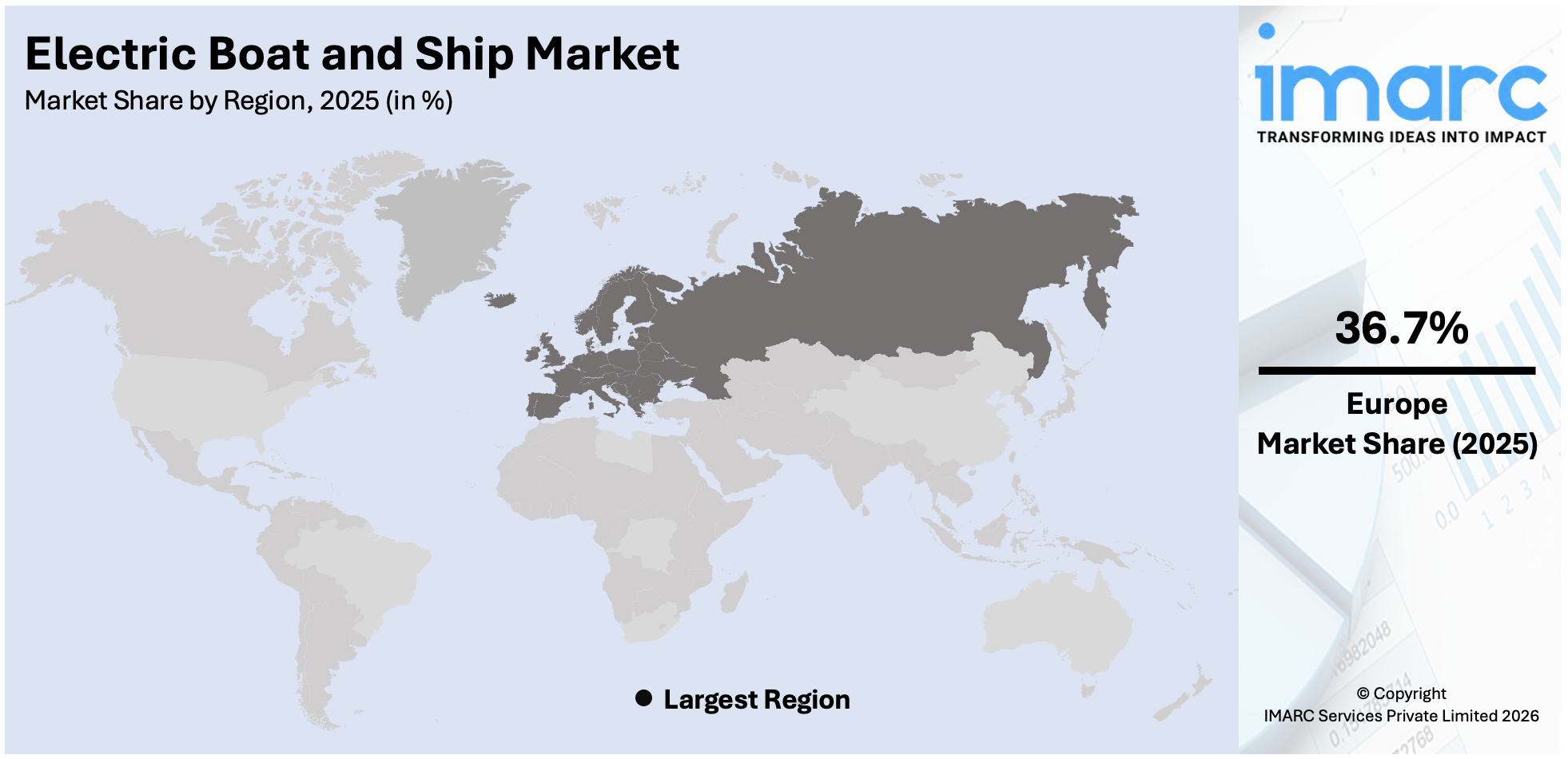
The global electric boat and ship market size was valued at USD 7.6 Billion in 2025. Looking forward, IMARC Group estimates the market to reach USD 15.7 Billion by 2034, exhibiting a CAGR of 8.36% from 2026-2034. Europe currently dominated the market with a share of 36.7% due to growing advanced battery technologies, electric propulsion systems, and government initiatives promoting sustainable maritime practices, driving growth and innovation in eco-friendly watercraft.
|
Report Attribute
|
Key Statistics
|
|---|---|
|
Base Year
|
2025
|
|
Forecast Years
|
2026-2034
|
|
Historical Years
|
2020-2025
|
|
Market Size in 2025
|
USD 7.6 Billion |
|
Market Forecast in 2034
|
USD 15.7 Billion |
| Market Growth Rate (2026-2034) | 8.36% |
One major driver in the electric boat and ship market is the growing emphasis on environmental sustainability. With increasing concerns over marine pollution and carbon emissions, the adoption of electric propulsion systems is becoming a priority. Electric boats and ships offer a cleaner, quieter alternative to traditional diesel-powered vessels, helping reduce greenhouse gas (GHG) emissions and minimize water contamination. Stricter environmental regulations introduced by governments and regulatory bodies are driving the demand for eco-friendly maritime solutions. This trend is gaining traction as industries aim to meet sustainability objectives and minimize their environmental impact in the maritime sector.
To get more information on this market Request Sample
The U.S. plays a significant role in the electric boat and ship market, driven by increasing demand for sustainable maritime solutions and the nation's focus on reducing carbon emissions. Government incentives and regulatory frameworks, such as the Clean Waterways Act, are encouraging the development of electric vessels. The U.S. is investing in electric boat and ship technologies for both commercial and recreational purposes. However, the U.S. Department of Energy announced $43 million in funding for projects advancing electric vehicle technologies, including marine applications. Additionally, the rise of green tourism and eco-friendly boating is spurring market growth. Major players in the U.S. are focusing on advanced battery technologies and charging infrastructure to enhance the adoption of electric vessels across various sectors.
Electric Boat and Ship Market Trends:
Rising Environmental Regulations and Shift Towards Green Maritime Solutions
The growing stringency of environmental regulations aimed at reducing marine pollution and greenhouse gas emissions is a major factor propelling the market expansion. With rising maritime trading activities, government agencies and international maritime organizations are setting stringent limits on carbon and nitrogen oxide emissions, encouraging shipowners to adopt cleaner propulsion systems. According to the seaborne trade statistics published by UN Trade and Development (UNCTAD) on April 15, maritime transport served as the foundation of international trade, handling more than 80% of goods exchanged globally by volume. Electric vessels eliminate exhaust emissions, minimizing their environmental footprint compared to traditional diesel-powered ships. Additionally, coastal and inland waterways with stringent emission zones are increasingly favoring electric propulsion. As public and political pressure is mounting to decarbonize the shipping industry, companies are investing in battery-powered, hybrid, and hydrogen-based marine systems.
Advancements in Battery Technology and Charging Infrastructure
Continuous improvements in battery technology and the expansion of marine charging infrastructure are fueling the growth of the market. In July 2025, Taiga Motors joined forces with marine charging network Aqua superPower to expedite the deployment of scalable, high-speed electric charging facilities throughout marine settings. According to the agreement, Taiga’s electric personal watercraft (PWC) and other vehicles would work with Aqua superPower’s expanding network of marine fast chargers, which included 59 locations throughout North America and Europe. The development of rapid charging stations at ports and marinas enables more convenient recharging for commercial and recreational vessels. Innovations in energy management systems also optimize power usage and storage, increasing vessel efficiency. Modern lithium-ion and solid-state batteries offer higher energy density, faster charging, and longer lifespans, making them more suitable for maritime applications.
Growing Demand for Sustainable Marine Tourism and Leisure Activities
The increasing popularity of sustainable marine tourism and recreational boating is propelling the market expansion. As per the IMARC Group, the global recreational boating market size reached USD 24.3 Billion in 2024. Tour operators, resorts, and yacht manufacturers are adopting electric propulsion systems to offer eco-friendly and quiet boating experiences. Electric boats produce minimal noise and vibration, preserving marine ecosystems and enhancing passenger comfort. Consumers are becoming more environmentally conscious and prefer operators who align with sustainability values. Electric ferries and small passenger boats are also being introduced in lakes, rivers, and coastal zones to minimize environmental disruption. Moreover, luxury yacht buyers are increasingly drawn to electric models for their combination of innovation, performance, and green credentials.
Electric Boat and Ship Industry Segmentation:
IMARC Group provides an analysis of the key trends in each segment of the global electric boat and ship market, along with forecast at the global, regional, and country levels from 2026-2034. The market has been categorized based on propulsion type, battery type, and carriage type.
Analysis by Propulsion Type:
- Hybrid
- Pure Electric
Hybrid stands as the largest component in 2025 as it combine traditional fuel-powered systems with electric propulsion, offering a versatile and transitional solution toward fully electric alternatives. They provide a balanced approach by reducing fuel consumption, cutting emissions, and extending range compared to purely electric vessels, which may have limited battery life. Hybrid systems are increasingly preferred for commercial and large-scale vessels that require longer operational hours or travel over vast distances. Hybrid technology, on the other hand, is helping vessel operators meet strict environmental regulations while maintaining operational efficiency. The growing demand for eco-friendly solutions and government incentives further drive the adoption of hybrid boats and ships, making them a dominant choice in the market for 2024.
Analysis by Battery Type:
Access the comprehensive market breakdown Request Sample
- Lead-acid
- Lithium-ion
- Nickel-based Batteries
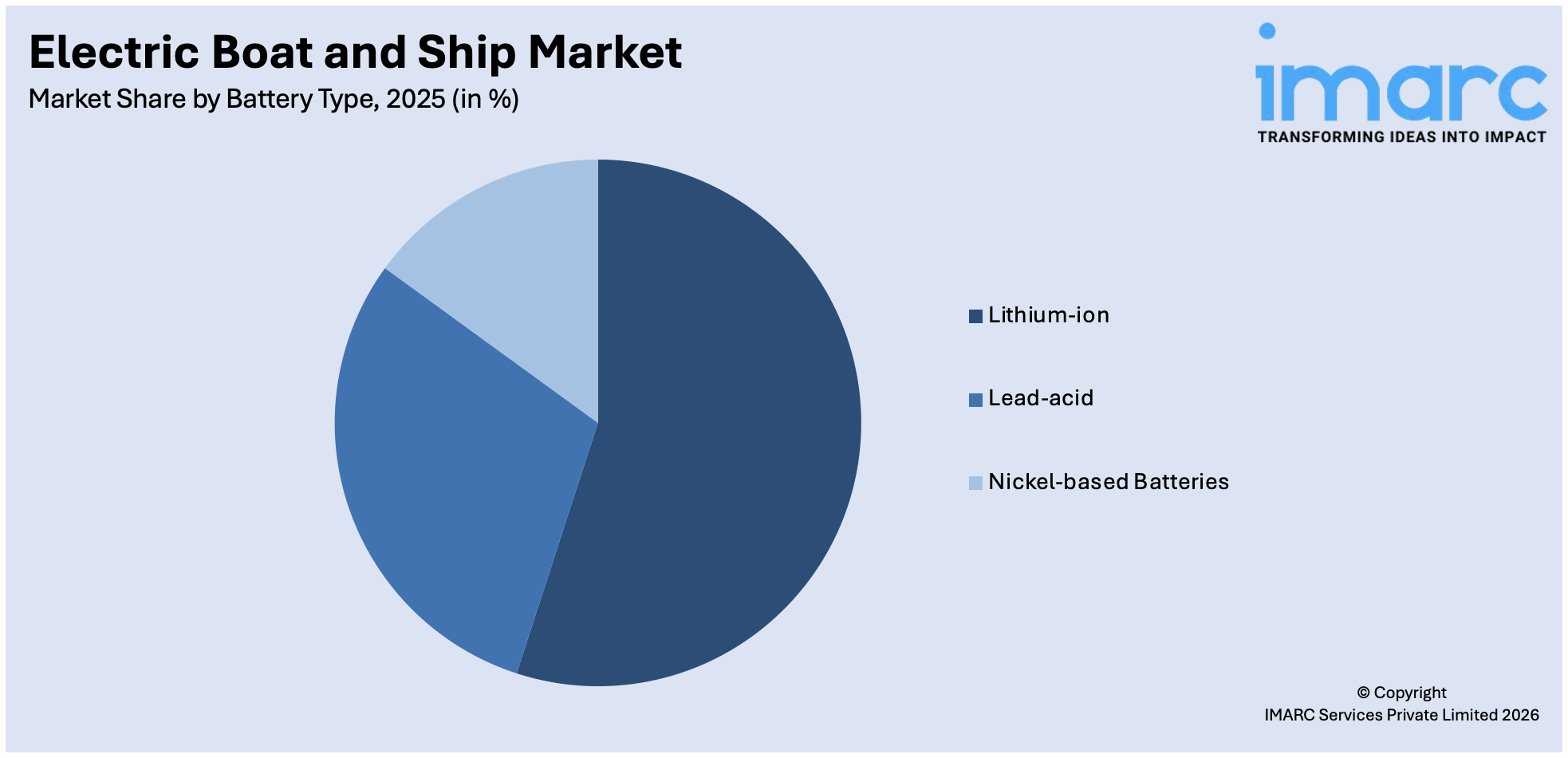
The market is dominated by lithium-ion because of the superior energy density, longer lifespan, and faster charging capabilities of these batteries compared with other types. Lithium-ion batteries are lightweight and compact, ideal for electric vessels that require efficient energy storage without sacrificing performance. Moreover, the technology in battery systems has improved further to make lithium-ion batteries more efficient and cost-effective, which is why they are used in both commercial and recreational maritime applications. Now, with the ever-increasing emphasis on sustainability and the increasing demand for clean energy solutions, lithium-ion has firmly entrenched itself as the leading battery technology in the marine sector. Rising numbers of electric vessels promote growth in the lithium-ion battery market.

Analysis by Carriage Type:
- Passenger
- Cargo
In 2025, passenger accounts for the majority of the market driven by increasing consumer demand for sustainable and eco-friendly recreational vessels, such as electric boats for leisure activities, cruises, and short-distance travel. As environmental awareness rises, passengers are increasingly choosing greener alternatives to traditional fuel-powered vessels. Additionally, the rise of green tourism and leisure activities focusing on sustainability is fueling market growth. Government incentives, environmental regulations, and advancements in electric propulsion technology are driving increased investments in electric passenger vessels. As electric vessels become more accessible and efficient, the demand for passenger boats and ships is expected to rise significantly, solidifying their dominance in the market in 2024.
Regional Analysis:
To get more information on the regional analysis of this market Request Sample
- North America
- United States
- Canada
- Asia Pacific
- China
- Japan
- India
- South Korea
- Australia
- Indonesia
- Others
- Europe
- Germany
- France
- United Kingdom
- Italy
- Spain
- Russia
- Others
- Latin America
- Brazil
- Mexico
- Others
- Middle East and Africa
In 2025, Europe accounted for the largest market share driven by the region’s strong regulatory push toward environmental sustainability, with stringent emissions reduction targets and green transport initiatives. European governments are offering incentives, subsidies, and tax credits to promote the adoption of electric vessels, especially in recreational boating and inland waterways. The region’s well-established maritime industry, combined with advancements in electric propulsion technology, further accelerates market growth. Countries such as Norway, the Netherlands, and Germany are at the forefront, making significant investments in electric ferry services and sustainable marine transportation. The growing consumer demand for eco-friendly leisure and tourism options, along with a focus on reducing carbon footprints, solidifies Europe’s position as the leader in the electric boat and ship market in 2024.
Key Regional Takeaways:
North America Electric Boat and Ship Market Analysis
The North America electric boat and ship market is being driven by a strong focus on reducing carbon emissions, improving energy efficiency, and shifting towards sustainable maritime transportation solutions across both commercial and recreational sectors. The growing environmental awareness, particularly in coastal states and provinces, is encouraging marinas, ferry operators, and shipbuilders to adopt clean propulsion alternatives, supported by governmental incentives that encourage electrification of marine fleets. Technological advancements in battery capacity, fast-charging systems, and hybrid propulsion are enabling longer travel ranges and higher performance, making electric vessels more practical for coastal tourism, passenger transport, and inland waterway operations. Additionally, increasing investments in marine infrastructure modernization, such as electric charging docks, smart ports, and green harbor development, are creating a favorable environment for the market growth. In February 2025, Halifax Port obtained USD 22.5 Million to develop green shipping route with Hamburg, featuring hydrogen projects. This investment enhanced environmental sustainability and supply chain efficiency, while also promoting decarbonization initiatives in the transportation sector and reinforcing infrastructure resilience in Canada. The rising popularity of electric recreational boats among private consumers reflects changing lifestyle preferences, where silent cruising, lower maintenance costs, and enhanced onboard digital systems are proving attractive. Defense and research institutions are also beginning to explore electric and hybrid naval systems for stealth operations and lower operational costs, benefiting the wider market. Moreover, large-scale replacement of aging diesel-powered fleets and corporate sustainability commitments from ferry, cargo, and tourism companies are accelerating the procurement of electric watercraft across North America.
United States Electric Boat and Ship Market Analysis
The United States holds 82.00% of the market share in North America. The United States electric boat and ship market is driven by a combination of environmental regulations, clean-energy policy support, and rising demand for sustainable marine mobility across commercial, defense, and leisure segments. The growing concerns about air and water pollution in marine ecosystems are encouraging federal and state authorities to introduce stricter emissions standards for vessels, which is prompting fleet operators to shift to electric and hybrid propulsion. Investments in renewable energy and electrification under government programs are increasing incentives, grants, and pilot projects for electric ferries, harbor vessels, and patrol boats, particularly in states with strong climate action plans like California, New York, and Washington. As per the IMARC Group, the US renewable energy market size reached USD 237.2 Billion in 2024. Rapid advancements in marine battery technology, including improved energy density, faster charging, and safer thermal management, are enabling electric vessels to achieve greater range and performance suitable for tourism, lake cruising, and short-distance passenger transport. The recreational boating sector, one of the world’s largest in the US, is witnessing rising interest in electric pontoon boats, day cruisers, and fishing boats due to benefits like low operating noise, minimal fuel costs, and modern smart-boat features. Ports and marinas are increasingly investing in electrified infrastructure, including shore-to-ship charging systems, while corporate sustainability commitments are encouraging commercial operators to pilot or adopt clean electric fleets, further expanding the US market.
Europe Electric Boat and Ship Market Analysis
Europe's goal of cutting GHG emissions is transforming the electric boat and ship market. At the conclusion of the second quarter of 2024, it was reported that estimated GHG emissions from the EU economy would be approximately 790 Million Tons of CO2-equivalents. Tighter environmental regulations and goals for carbon neutrality pave the way for the increasing use of electric ships in shipping companies to reduce carbon emissions. These elements are influenced by policies like emission reduction goals and monetary incentives for eco-friendly technologies that promote the adoption of electric-powered vessels and ships. Moreover, various European nations are putting resources into the essential infrastructure to facilitate electric maritime transport, including charging facilities and sustainable ports. This trend is also driven by the rising popularity of electric boats in leisure markets, where eco-friendliness and sustainability are vital. With Europe prioritizing its climate objectives, the need for electric boats and ships is projected to increase, offering a more eco-friendly option compared to conventional fuel-powered vessels.
Asia-Pacific Electric Boat and Ship Market Analysis
In the Asia-Pacific region, the widespread use of electric boats and ships is being driven by the extensive coastal regions and the growing worries about environmental sustainability. According to PIB, as of November 2024, India's maritime heritage was as extensive and vibrant as its 7,500 Kilometer coastline, which anchored 12 major ports and more than 200 minor ones. The vast coastlines throughout the area offer excellent prospects for electric boats, which can decrease reliance on fossil fuels and reduce the environmental effects of maritime transport. As numerous coastal cities in this area undergo swift urban expansion, the need for more environmentally friendly and serene options for conventional marine transport has increased. Electric boats are appealing due to their ability to lower carbon emissions while maintaining necessary operational efficiency. Additionally, increasing government backing and financial support for green technologies are boosting the use of electric boats and ships in maritime operations, propelling the market growth.
Latin America Electric Boat and Ship Market Analysis
The Latin America electric boat and ship market is driven by the need for cleaner water transport, particularly in ecologically sensitive river and coastal regions. The growth in tourism, especially eco-tourism in the Caribbean, Amazon basin, and coastal hotspots, is encouraging the adoption of low-emission electric vessels. Government interest in improving air quality and reducing fuel dependency is leading to pilot projects for electric ferries and small commercial boats. Advancements in battery affordability and rising awareness about sustainable transport benefits are boosting the adoption of short-distance passenger services, water taxis, and recreational boating, gradually supporting the region’s shift towards greener marine mobility.
Middle East and Africa Electric Boat and Ship Market Analysis
The Middle East and Africa region is witnessing an increase in the uptake of electric boats and ships, fueled by progress in marine technology and the expansion of tourism. For instance, Dubai saw a significant 14.96 Million overnight guests from January to October 2024, marking an 8% rise from the corresponding timeframe in 2023, underscoring the expansion of tourism. With tourism becoming an essential part of the local economy, particularly along the coastlines, electric boats are demonstrating a superior option for sea travel compared to conventional methods. These electric boats aim at people seeking a sustainable travel experience and are encouraging the region's broader shift towards enhancing eco-tourism. Improvements in battery longevity, energy efficiency, and boat and ship design are driving the transition to electrically powered vessels.
Competitive Landscape:
The electric boat and ship market features a diverse competitive landscape, with key players ranging from established maritime manufacturers to emerging startups and technology innovators. Key competitors are focused on advancing electric propulsion systems, battery technologies, and charging infrastructure as demand for more sustainable vessels is increasing. Companies have differentiated themselves in innovations in terms of energy efficiency, performance, and reducing operation costs. There is always strategic partnering, collaboration, or acquisition by a business looking to expand its technological capabilities and its market reach. Moreover, rising regulatory pressure in terms of emission and greener solutions is also forcing companies to adapt at warp speed. It is also an investment in the research and development of improving the design of an electric vessel, increasing the lifespan of batteries, and optimizing the power management systems.
The report provides a comprehensive analysis of the competitive landscape in the electric boat and ship market with detailed profiles of all major companies, including:
- ABB Ltd
- Arc
- Candela
- Duffy Electric Boat Company
- ElectraCraft
- Ganz Boats GmbH (Schweiz)
- Navalt
- Ruban Bleu
- Vision Marine Technologies Inc.
- Wärtsilä
- X Shore
Latest News and Developments:
- May 2025: The ICAR-Central Institute of Fisheries Technology's Mumbai Research Centre successfully inaugurated ‘Vikalpika,’ the country's first electric fishing boat at Gorai Creek, Mumbai. This groundbreaking advancement represented an essential move towards reducing carbon emissions in marine activities, consistent with India’s dedication to sustainable and climate-resilient growth.
- May 2025: Incat introduced the largest battery-operated vessel globally, Hull 096. It would function as China Zorrilla, with a capacity for approximately 2,100 passengers and 225 vehicles.
- January 2025: Indian shipbuilder Garden Reach Shipbuilders and Engineers (GRSE) delivered a newly constructed battery-operated electric ferry to the West Bengal government. The vessel featured an aluminum hull and a fiberglass reinforced plastic superstructure. The catamaran ferry was capable of holding as many as 150 passengers on board.
Electric Boat and Ship Market Report Scope:
| Report Features | Details |
|---|---|
| Base Year of the Analysis | 2025 |
| Historical Period | 2020-2025 |
| Forecast Period | 2026-2034 |
| Units | Billion USD |
| Scope of the Report | Exploration of Historical Trends and Market Outlook, Industry Catalysts and Challenges, Segment-Wise Historical and Future Market Assessment:
|
| Propulsion Types Covered | Hybrid, Pure Electric |
| Battery Types Covered | Lead-acid, Lithium-ion, Nickel-based Batteries |
| Carriage Types Covered | Passenger, Cargo |
| Regions Covered | Asia Pacific, Europe, North America, Latin America, Middle East and Africa |
| Countries Covered | United States, Canada, Germany, France, United Kingdom, Italy, Spain, Russia, China, Japan, India, South Korea, Australia, Indonesia, Brazil, Mexico |
| Companies Covered | ABB Ltd, Arc, Candela, Duffy Electric Boat Company, ElectraCraft, Ganz Boats GmbH (Schweiz), Navalt, Ruban Bleu, Vision Marine Technologies Inc., Wärtsilä, X Shore, etc. |
| Customization Scope | 10% Free Customization |
| Post-Sale Analyst Support | 10-12 Weeks |
| Delivery Format | PDF and Excel through Email (We can also provide the editable version of the report in PPT/Word format on special request) |
Key Benefits for Stakeholders:
- IMARC’s report offers a comprehensive quantitative analysis of various market segments, historical and current market trends, market forecasts, and dynamics of the electric boat and ship market from 2020-2034.
- The research study provides the latest information on the market drivers, challenges, and opportunities in the global electric boat and ship market.
- The study maps the leading, as well as the fastest-growing, regional markets. It further enables stakeholders to identify the key country-level markets within each region.
- Porter's Five Forces analysis assists stakeholders in assessing the impact of new entrants, competitive rivalry, supplier power, buyer power, and the threat of substitution. It helps stakeholders to analyze the level of competition within the electric boat and ship industry and its attractiveness.
- Competitive landscape allows stakeholders to understand their competitive environment and provides an insight into the current positions of key players in the market.
Frequently Asked Questions About the Electric Boat and Ship Market Report
Electric boats and ships are vessels powered by electric propulsion systems, using batteries or fuel cells as their primary energy source. These vessels offer an eco-friendly alternative to traditional diesel-powered boats, reducing emissions, noise, and environmental impact, while providing efficient and sustainable solutions for marine transportation.
The electric boat and ship market was valued at USD 7.6 Billion in 2025.
IMARC estimates the electric boat and ship market to exhibit a CAGR of 8.36% during 2026-2034.
Key factors driving the electric boat and ship market include increasing environmental regulations, demand for sustainable transportation, advancements in battery technology, cost efficiency, and rising consumer interest in eco-friendly solutions. Additionally, government incentives and growing awareness of reducing carbon emissions are fueling the adoption of electric marine vessels.
In 2025, hybrid represented the largest segment by propulsion type, driven by its balance between fuel efficiency, extended range, and reduced emissions for both commercial and recreational vessels.
Lithium-ion leads the market by battery type owing to their high energy density, long lifespan, and fast charging capabilities, making them ideal for electric vessels.
The passenger is the leading segment by carriage type, due to rising demand for eco-friendly recreational boating, green tourism, and government incentives promoting sustainable maritime transport.
On a regional level, the market has been classified into North America, Asia Pacific, Europe, Latin America, and Middle East and Africa, wherein Europe currently dominates the global market.
Some of the major players in the global electric boat and ship market include ABB Ltd, Arc, Candela, Duffy Electric Boat Company, ElectraCraft, Ganz Boats GmbH (Schweiz), Navalt, Ruban Bleu, Vision Marine Technologies Inc., Wärtsilä, X Shore, etc.
Need more help?
- Speak to our experienced analysts for insights on the current market scenarios.
- Include additional segments and countries to customize the report as per your requirement.
- Gain an unparalleled competitive advantage in your domain by understanding how to utilize the report and positively impacting your operations and revenue.
- For further assistance, please connect with our analysts.
 Request Customization
 Speak to an Analyst
 Request Brochure
 Inquire Before Buying
Benefits of Customization
- Personalize this research
- Triangulate with your data
- Get data as per your format and definition
- Gain a deeper dive into a specific application, geography, customer, or competitor
- Any level of personalization
Get in Touch With Us
UNITED STATES
Phone: +1-201-971-6302
INDIA
Phone: +91-120-433-0800
UNITED KINGDOM
Phone: +44-753-714-6104
Email: [email protected]
Client Testimonials




.webp)




.webp)













Related Reports

Choose your plan
*Please note that the prices mentioned below are starting prices for each bundle type. Kindly contact our team for further details.*
Single User License
- 1 User License, Access on 2 Devices
- PDF Report + Excel Dataset (Password Protected)
- Lifetime Access
- No Printing Rights
- 10% Free Report Customization
- 10–12 Weeks of Analyst Support
Five User License
- Access for 5 Users, 2 Devices per User
- PDF Report + Excel Dataset (Password Protected)
- Lifetime Access
- Dedicated Account Manager
- 12–14 Weeks of Analyst Support
- No Printing Rights
- 15% Free Report Customization
- 25% Discount on Your Next Purchase
Corporate User License
- Unlimited User Access (Within Your Organization)
- PDF Report + Excel Dataset
- Lifetime Access
- Dedicated Account Manager
- 14–20 Weeks of Analyst Support
- No Printing Rights
- 20% Free Report Customization
- 30% Discount on Your Next Purchase
Essential Insights
What's included:
3 reports
- Lifetime Access
- PDF Reports
- Excel Datasets
- 2 Weeks of Free Analyst Support
- 2 User Licenses
- Access on 2 Devices
- Printing Rights
- Complimentary PowerPoint (PPT) Version
- Complimentary License Upgrade
Professional Access
What's included:
5 reports
- Lifetime Access
- PDF Reports
- Excel Datasets
- 8 Weeks of Free Analyst Support
- 2 User Licenses
- Access on 2 Devices
- Printing Rights
- Complimentary PowerPoint (PPT) Version
- Complimentary License Upgrade
Business Advantage
What's included:
8 reports
- Lifetime Access
- PDF Reports
- Excel Datasets
- 14 Weeks of Free Analyst Support
- 2 User Licenses
- Access on 2 Devices
- Printing Rights
- Complimentary PowerPoint (PPT) Version
- Complimentary License Upgrade
Enterprise Intelligence
What's included:
10 reports
- Lifetime Access
- PDF Reports
- Excel Datasets
- 20 Weeks of Free Analyst Support
- 2 User Licenses
- Access on 2 Devices
- Printing Rights
- Complimentary PowerPoint (PPT) Version
- Complimentary License Upgrade