
Europe Dietary Supplements Market Size, Share, Trends and Forecast by Product Type, Form, Distribution Channel, Application, End-Use, and Region, 2026-2034
Europe Dietary Supplements Market Size, Share, Trends & Forecast (2026-2034)
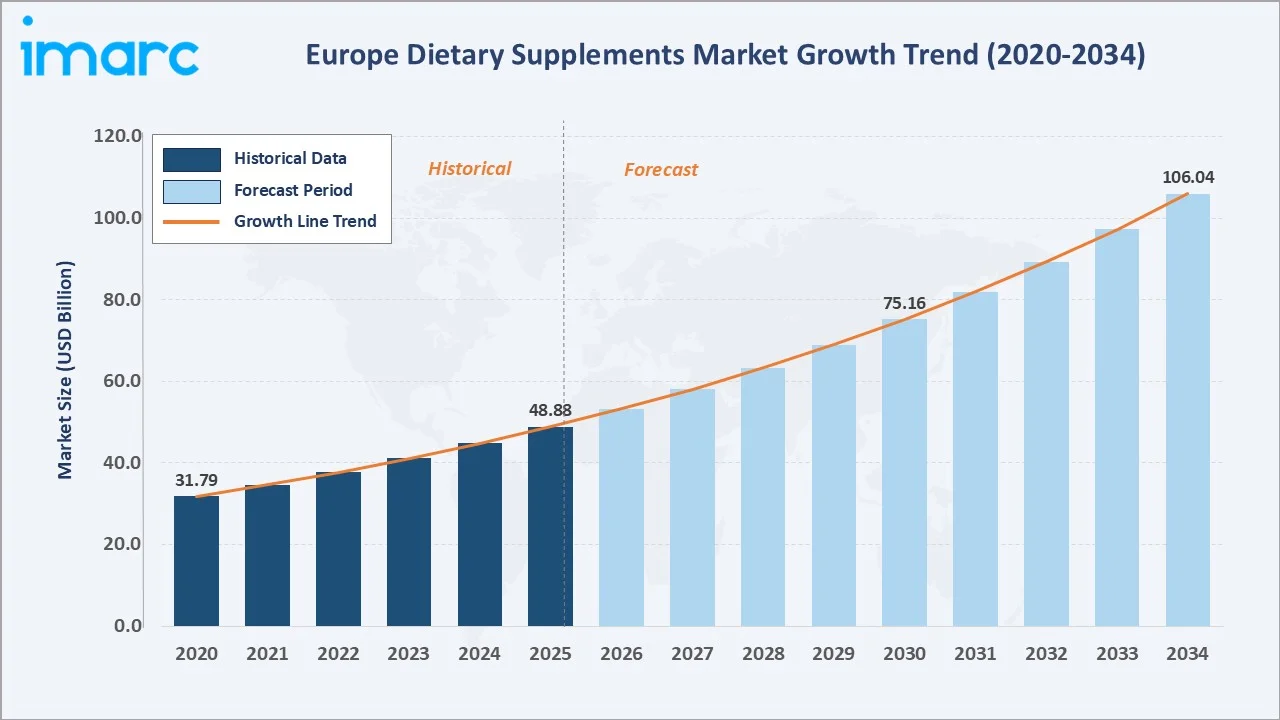
The Europe dietary supplements market grew from USD 48.88 Billion in 2025 to USD 53.28 Billion in 2026 and is projected to reach USD 106.04 Billion by 2034, growing at a CAGR of 8.99% during 2026-2034. Mounting health-consciousness, aging populations, and rising demand for preventive healthcare products are primary growth drivers.
Market Snapshot
|
Metric |
Value |
|
Base Year Market Size (2025) |
USD 48.88 Billion |
| Market Size (2026) | USD 53.28 Billion |
|
Forecast Market Size (2034) |
USD 106.04 Billion |
|
CAGR (2026-2034) |
8.99% |
|
Base Year |
2025 |
|
Historical Period |
2020-2025 |
|
Forecast Period |
2026-2034 |
|
Leading Country |
Germany (25.0% share, 2025) |
To get more information on this market, Request Sample
Consumer adoption of wellness and nutritional supplementation as essential lifestyle components is accelerating across all demographic groups. Supportive government policies ensuring product quality and safety, alongside the rapid expansion of e-commerce distribution channels, further underpin market growth.
Germany leads the market with a 25.0% country share in 2025, while vitamin and mineral dietary supplements dominate the product type segment at 28.12%. Capsules lead the form segment at 34.09%. Key players include Bayer AG, Haleon plc, Procter & Gamble, Perrigo Company plc, Amway Corp., and Reckitt.
Executive Summary
The Europe dietary supplements market is on a sustained growth trajectory, underpinned by rising health awareness, demographic aging, and structural shifts in consumer purchasing behavior toward preventive wellness. The market expanded from USD 48.88 Billion in 2025 to an estimated USD 53.28 Billion in 2026 and further to USD 106.04 Billion by 2034, reflecting a CAGR of 8.99%.
Germany leads country contributions with a 25.0% share (2025), supported by its mature healthcare infrastructure, high health literacy, and strong pharmacy retail network. The United Kingdom (18.4%) benefits from a well-established sports nutrition culture and NHS-supported vitamin supplementation programs. France (14.6%), Italy (12.3%), Russia (10.2%), and Spain (8.4%) contribute growing shares, each shaped by unique dietary supplement regulatory frameworks and consumer preference profiles.
Vitamins and mineral dietary supplements dominate the product type landscape at 28.12%, while capsules represent the most preferred delivery form at 34.09%. Leading companies, Bayer AG, Haleon plc, Procter & Gamble, Perrigo Company plc, Amway Corp., and Reckitt, are actively investing in personalized nutrition, clean-label reformulation, and digital-first distribution to capitalize on accelerating demand across the region.
Key Market Insights
|
Insight |
Data |
|
Largest Product Type Segment |
Vitamins & Minerals – 28.12% share (2025) |
|
Largest Form Segment |
Capsules – 34.09% share (2025) |
|
Leading Country |
Germany – 25.0% revenue share (2025) |
|
Fastest Growing Segment |
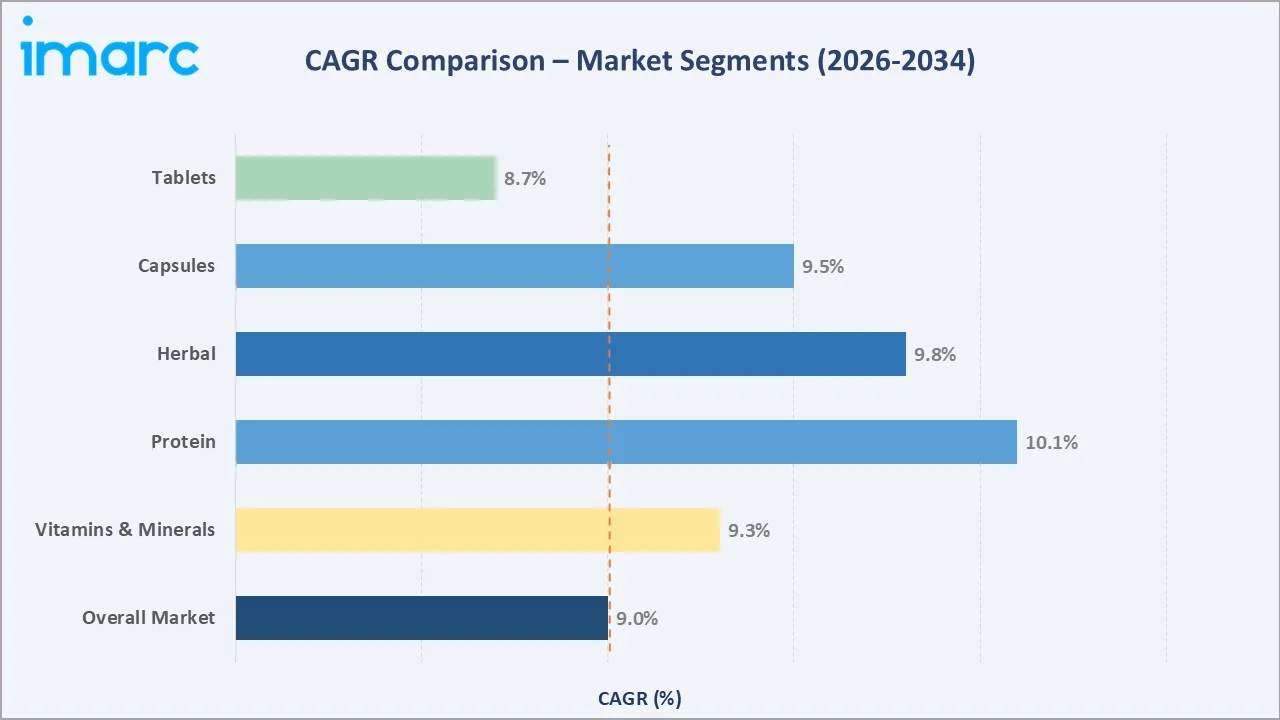
Protein Supplements & Personalized Nutrition (CAGR ~10.1%) |
|
Top Companies |
Bayer AG, Haleon plc, Procter & Gamble, Perrigo Company plc, Amway Corp., and Reckitt |
|
Key Market Opportunity |
Personalized DNA-based supplements projected at USD 4.2 Billion by 2034 |
Key Analytical Observations Supporting the Above Data:
- Vitamins and mineral dietary supplements account for 28.12% of the market in 2025, reflecting widespread awareness of micronutrient deficiencies across Europe, strong scientific evidence for Vitamin D, B12, and iron supplementation, and physician-recommended supplementation programs targeting the 65+ demographic.
- Protein Dietary Supplements hold a 24.63% share (2025), propelled by the expanding sports nutrition segment, rising gym membership across Europe (increased by 3.9 million from 2023 to 2024), and the growing consumer trend of protein-enriched dietary management among weight-conscious adults.
- Capsules dominate the form segment at 34.09% (2025), preferred for precision dosing, ease of swallowing, neutral taste profile, and extended shelf stability compared to liquid and powder alternatives.
- Germany generates 25.0% of regional revenues (2025), supported by approximately 18,000 pharmacies, a EUR 538.2 billion health expenditure (2024), and strong consumer willingness to pay premium prices for clinically validated supplement formulations.
- The United Kingdom accounts for 18.4% of market share (2025), anchored by NHS-endorsed Vitamin D supplementation programs, a mature sports nutrition retail sector, and post-Brexit flexibility for UK supplement brands to diverge from EU regulatory constraints.
- In April 2025, Romanian supplement producer Cosmo Pharm opened a EUR 2 million research and production laboratory aimed at increasing output by up to 40%, reflecting broader regional manufacturing capacity expansion across Eastern Europe.
Europe Dietary Supplements Market Overview
Dietary supplements constitute a broad and diverse product category encompassing vitamins, minerals, herbal and botanical extracts, proteins, amino acids, fatty acids, probiotics, and specialized nutritional formulations intended to supplement dietary intake. In Europe, the market operates within a well-defined regulatory framework governed primarily by Directive 2002/46/EC on food supplements, national food safety authority oversight, and EFSA health claim evaluation processes.
The European dietary supplements ecosystem is characterized by strong multi-channel distribution spanning pharmacies and drug stores (36.05% share), health and specialty retail stores, supermarkets and hypermarkets, and rapidly expanding e-commerce platforms. Consumer adoption spans all age cohorts, from children's multivitamins to senior bone and joint health formulations, creating a broad and resilient addressable market.
Macroeconomic and demographic tailwinds are structural growth catalysts. Europe's over-80 population is projected to reach 34.7 million by 2030, creating sustained demand for age-specific nutritional products. Simultaneously, rising disposable incomes in Eastern European markets are broadening the supplement consumer base beyond Western Europe's historically dominant position, driving geographic market diversification through 2034.
Market Dynamics
To evaluate market opportunities, Request Sample
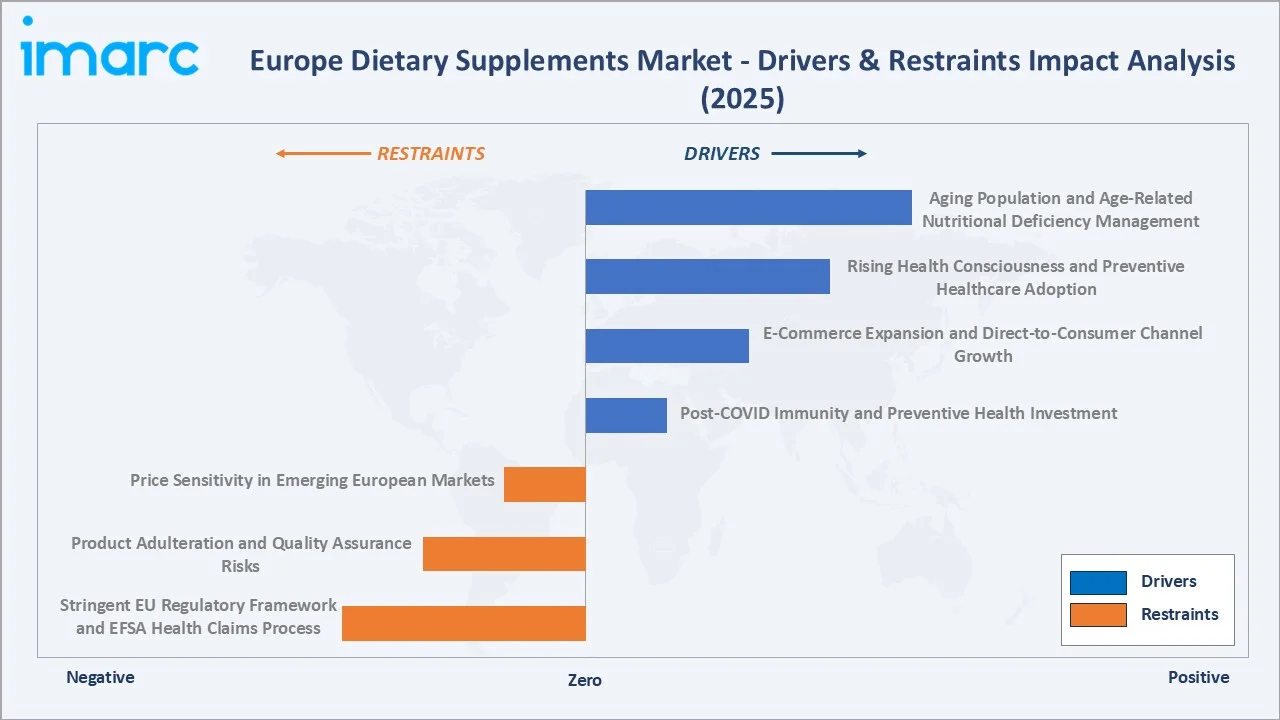
Market Drivers
- Aging Population and Age-Related Nutritional Deficiency Management: Europe's rapidly aging population, with 22.0% people aged 65+ in 2025, creates structural, recurring demand for bone health (calcium, Vitamin D), cognitive support (omega-3, B vitamins), and immunity supplements. Geriatric nutritional management is a primary revenue driver, particularly in Germany, Italy, France, and Spain.
- Rising Health Consciousness and Preventive Healthcare Adoption: A significant majority (82%) of consumers expressed that food supplements are essential for their health, with sustained engagement driven by ongoing interest in immune support, energy enhancement, and mental wellness.
- E-Commerce Expansion and Direct-to-Consumer Channel Growth: Online supplement sales grew at approximately 18% CAGR between 2020 and 2024 across Europe. Subscription-based supplement services, personalized supplement bundles, and AI-driven nutritional recommendation tools are expanding consumer engagement and repeat purchase rates.
- Post-COVID Immunity and Preventive Health Investment: Consumer spending on immunity-focused supplements (Vitamin C, Vitamin D, Zinc, probiotics) grew significantly between 2019 and 2022 across Europe and has remained elevated.
These drivers collectively reinforce a sustainable growth cycle, aging demographics sustain base demand, rising health awareness expands the addressable consumer population, and digital distribution channels reduce purchase friction, collectively accelerating market velocity.
Market Restraints
- Stringent EU Regulatory Framework and EFSA Health Claims Process: The European Food Safety Authority's rigorous health claim assessment process, with a rejection rate exceeding 80% for submitted health claims, constrains marketing differentiation strategies available to supplement manufacturers, increasing time-to-market and clinical validation costs.
- Product Adulteration and Quality Assurance Risks: High-profile adulteration incidents, including undisclosed pharmaceutical ingredients in sports supplements and inaccurate label declarations for herbal extracts, erode consumer trust and prompt regulatory responses that increase compliance costs across the industry.
- Price Sensitivity in Emerging European Markets: Price sensitivity in Eastern European markets (Poland, Czech Republic, Romania, Bulgaria) limits premium supplement penetration, constraining revenue growth in the fastest-growing geographic segment.
Market Opportunities
- Personalized Nutrition and DNA-Based Supplementation: Consumer interest in personalized supplement plans based on genetic profiling, microbiome analysis, and biomarker testing is creating a premium-priced sub-segment. Companies including Novogenia (Austria) and Vitl (UK) are pioneering DNA-based supplement customization, with the personalized nutrition market in Europe projected at USD 4.2 billion by 2034.
- Plant-Based and Clean-Label Product Innovation: Vitafoods Europe 2025 highlighted plant-based ingredients, vegan capsule formats, and transparent supply chain certification as the dominant innovation themes. Clean-label supplements command a 15–22% price premium over conventional formulations.
- Sports and Active Nutrition Segment Expansion: European gym memberships are estimated to reach 100 million by 2030, with protein supplements, BCAAs, and pre-workout formulations representing the fastest-growing category sub-segment at approximately 10.1% CAGR.
Market Challenges
- Regulatory Divergence Post-Brexit: The UK's departure from the EU has created a bifurcated regulatory environment, with UK supplement companies navigating both MHRA and EU regulations for pan-European distribution, increasing compliance complexity and market entry costs for cross-border supplement brands.
- Supply Chain Disruptions and Raw Material Price Volatility: Key raw material inputs, including vitamin precursors, marine omega-3 oils, and botanical extracts, experienced significant price increases (15–30%) between 2021 and 2023, compressing manufacturer margins and creating product reformulation pressures.
Emerging Market Trends
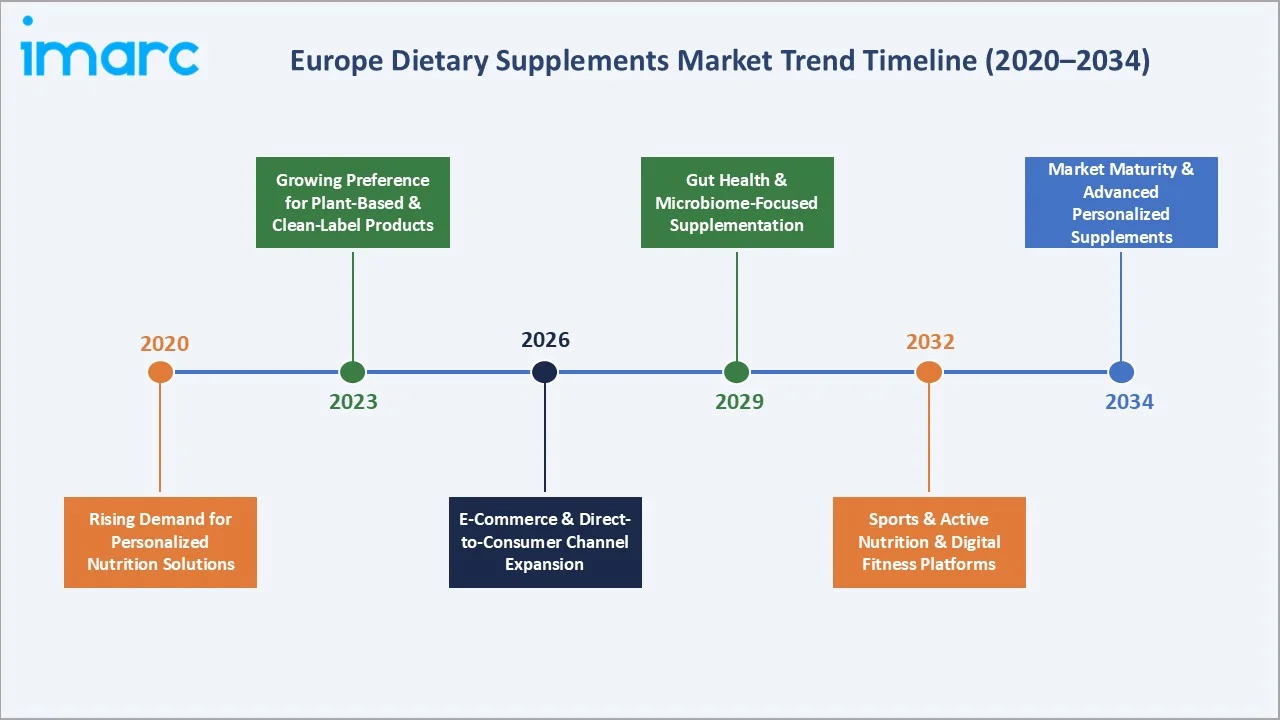
1. Rising Demand for Personalized Nutrition Solutions
Austrian biotech Novogenia combines genetic testing with tailor-made micronutrient formulations, while UK-based Vitl integrates blood test results with supplement subscription plans. The personalized nutrition sub-segment is growing at approximately 18% CAGR in Europe (2024), with consumer willingness to pay a 25–40% premium for individualized formulations expanding the revenue opportunity substantially.
2. Growing Preference for Plant-Based and Clean-Label Products
Vitafoods Europe 2025 was dominated by plant-based ingredients, vegan-certified delivery formats (cellulose capsules replacing gelatin), and ethically sourced botanical raw materials. A survey conducted on behalf of Food Supplements Europe revealed that 56% of respondents deem organic, natural, or non-GMO labeling important when buying supplements.
3. Expansion of E-Commerce and Direct-to-Consumer Channels
Digital transformation is accelerating market accessibility through subscription-based supplement services and AI-powered nutritional assessment tools. In 2023, 22% of individuals in the EU-27 purchased medicine and dietary supplements online. Subscription models, offering personalized monthly supplement packs with home delivery, demonstrate 35–45% higher consumer lifetime value compared to single-purchase retail transactions.
4. Gut Health and Microbiome-Focused Supplementation
Probiotic, prebiotic, and postbiotic supplement demand is growing at approximately 12% annually in Europe, driven by increasing consumer understanding of the gut-brain axis and clinical evidence supporting microbiome management for metabolic and mental health outcomes. France and Germany lead European probiotic supplement adoption, with branded microbiome testing services increasingly bundled with targeted probiotic supplement recommendations.
5. Sports and Active Nutrition Integration with Digital Fitness Platforms
European sports supplement brands are increasingly partnering with fitness influencers, athletic clubs, and gym chains to build brand authenticity and drive DTC sales. The sports nutrition segment is the fastest-growing application category, growing at approximately 10.1% CAGR through 2034.
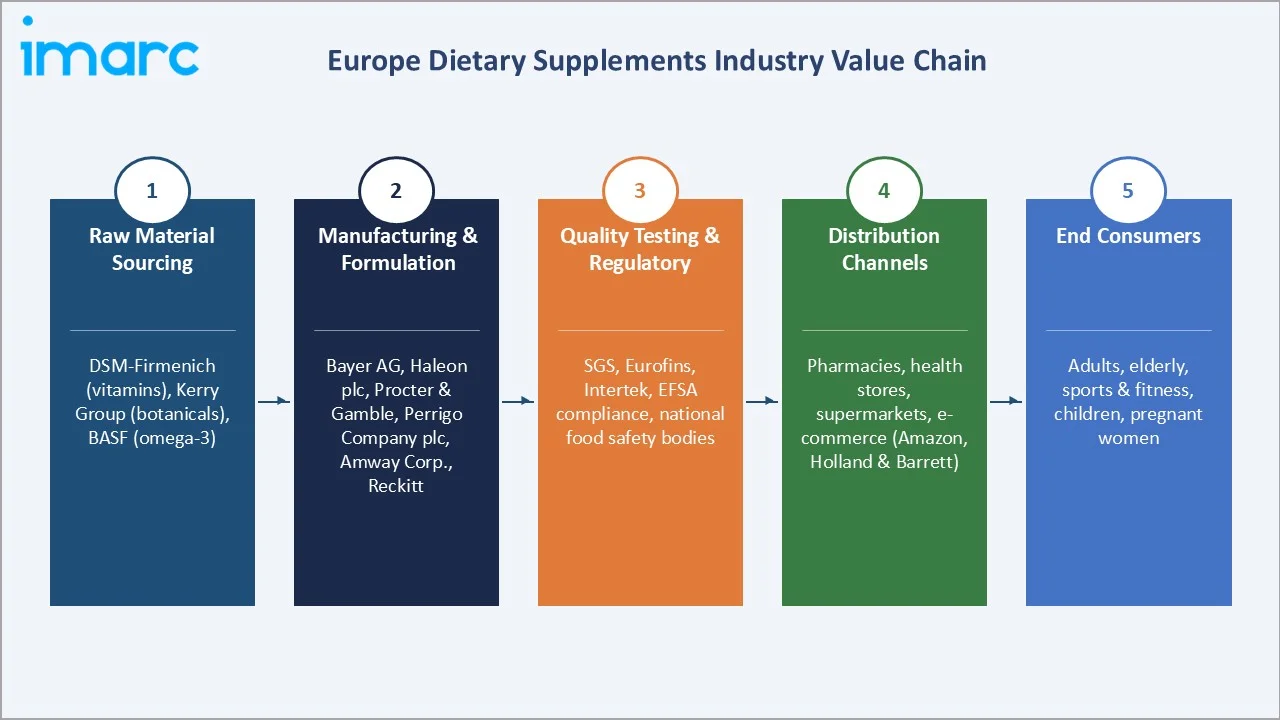
Industry Value Chain Analysis
|
Stage |
Key Players / Examples |
|
Raw Material Sourcing |
dsm-firmenich (vitamins), Kerry Group (botanicals), BASF (omega-3) |
|
Manufacturing & Formulation |
Bayer AG, Haleon plc, Procter & Gamble, Perrigo Company plc, Amway Corp., and Reckitt |
|
Quality Testing & Regulatory |
SGS, Eurofins, Intertek; EFSA health claim compliance; national food safety bodies |
|
Distribution Channels |
Pharmacies (36.05%), health stores, supermarkets, e-commerce (Amazon, Holland & Barrett) |
|
End Consumers |
Adults (62.03%), elderly (bone/joint/immunity), sports & fitness, children, pregnant women |
Technology Landscape in the Europe Dietary Supplements Industry
Advanced Bioavailability Enhancement Technologies
Liposomal encapsulation, nanoemulsion delivery systems, and microencapsulation technologies are significantly improving the bioavailability of fat-soluble vitamins, curcumin, and omega-3 fatty acids. Liposomal Vitamin C formulations demonstrate up to 1.77x higher bioavailability than standard ascorbic acid tablets.
AI-Driven Personalization and Nutrigenomics Platforms
AI-powered nutritional assessment platforms are enabling mass-market personalized supplement recommendations based on dietary intake analysis, genetic test results, blood biomarker data, and lifestyle factors. UK-based Vitl, Germany's Lykon, and Austria's Novogenia represent European pioneers in this space. Machine learning algorithms analyzing microbiome sequencing data are increasingly being incorporated into probiotic supplement personalization platforms.
Sustainable and Green Manufacturing Innovation
Solvent-free botanical extraction methods, cold-press processing for sensitive phytonutrients, and bio-fermentation-derived vitamin production are increasingly adopted by premium European supplement manufacturers. Green manufacturing supports clean-label claims and provides a regulatory buffer against future EU restrictions on synthetic processing aids in supplement production.
Market Segmentation Analysis
The report covers the following segments:
|
Segment Category |
Leading Segment |
Market Share |
Year |
|
Product Type |
Vitamin and Mineral Dietary Supplements |
28.12% |
2025 |
|
Form |
Capsules |
34.09% |
2025 |
|
Distribution Channel |
(Pharmacies and Drug Stores |
36.05% |
2025 |
|
Application |
Additional Supplements |
45.0% |
2025 |
|
End User |
Adults |
62.03% |
2025 |
|
Country |
Germany |
25.0% |
2025 |

By Product Type
To access detailed market analysis, Request Sample
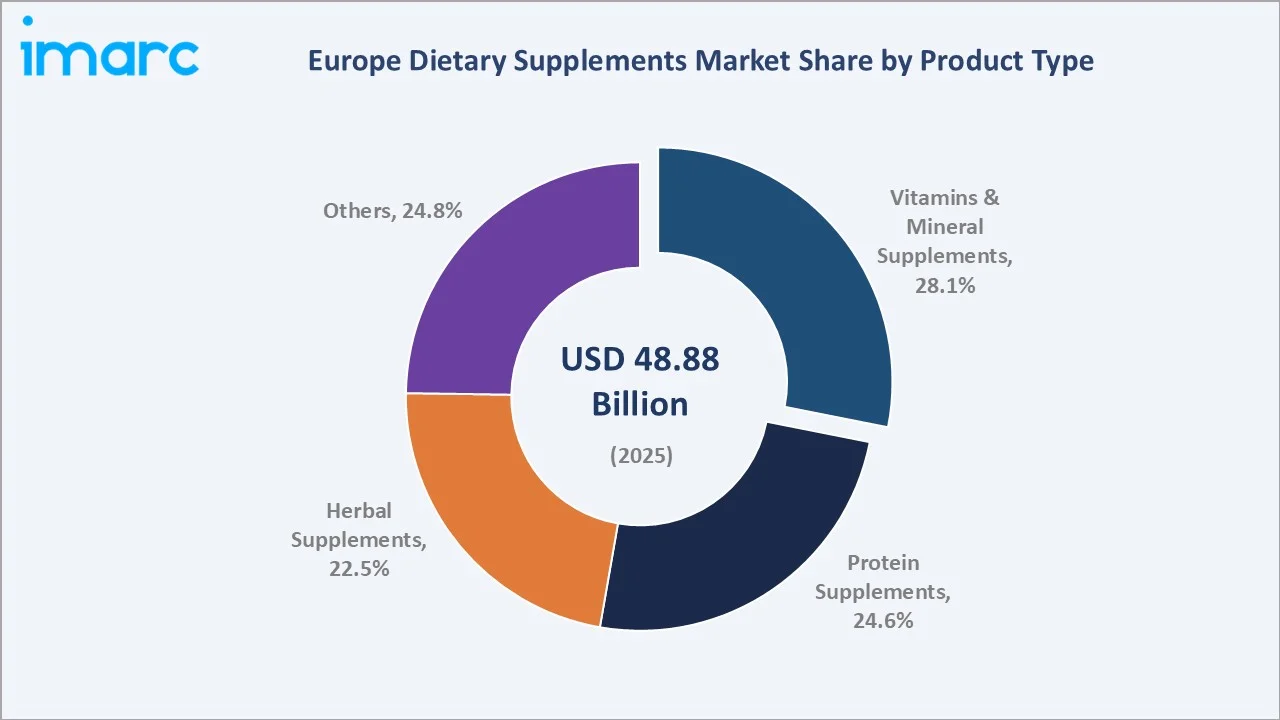
Vitamin and mineral dietary supplements dominate the product type segment with a 28.12% share in 2025, reflecting entrenched consumer habits, physician recommendation patterns, and the broad addressable market spanning children's multivitamins to senior-focused formulations. Vitamin D supplementation is particularly prevalent across Northern European markets, where insufficient sunlight exposure creates a structural deficiency.
Protein dietary supplements hold 24.63% of the market, driven by the expanding sports and active nutrition consumer base and rising protein intake prioritization among weight management and muscle preservation-focused adults. Herbal dietary supplements account for 22.48%, reflecting strong tradition-based adoption of plant medicine in Germany, France, and Central/Eastern European markets.
By Form
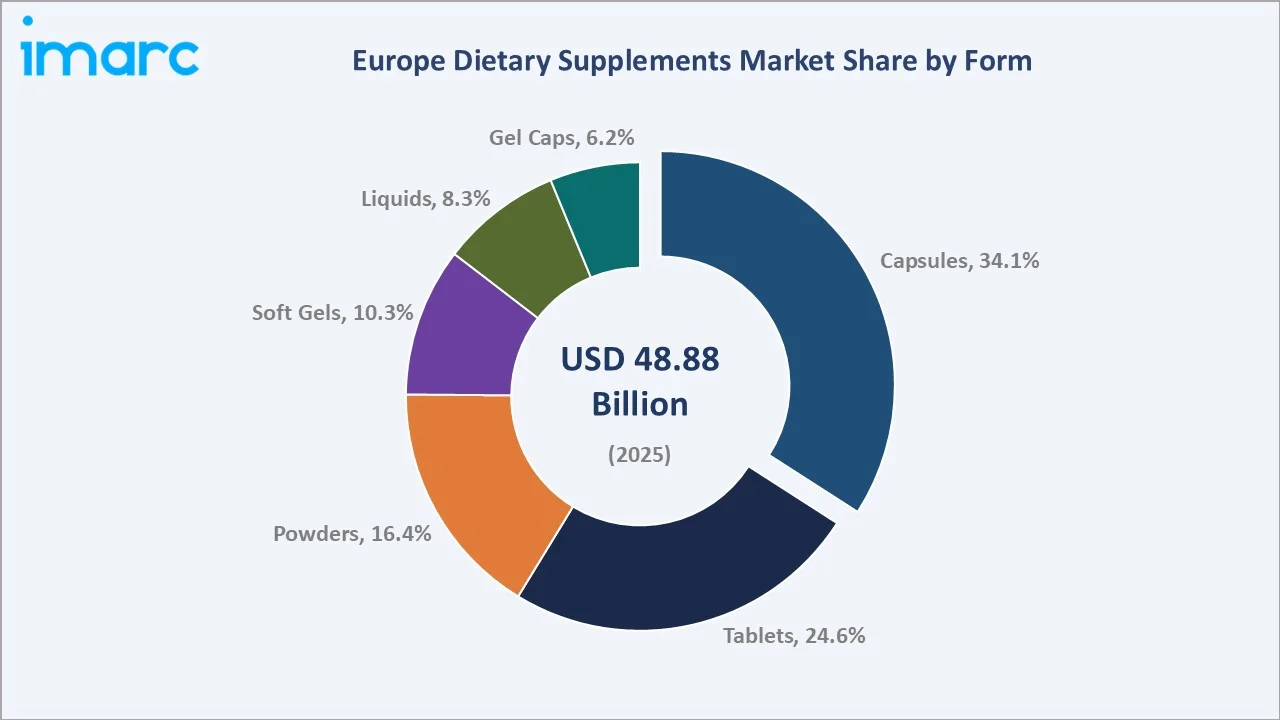
Capsules lead the form segment with a 34.09% share, reflecting strong consumer preference for precise dosing, convenience, and compatibility with a wide range of supplement ingredients, including botanicals, probiotics, and oil-soluble vitamins. The shift from gelatin to plant-based (HPMC) capsules is accelerating, driven by vegan consumer demand and clean-label positioning requirements.
Tablets hold 24.63%, offering high manufacturing efficiency and extended shelf stability. Powders account for 16.42%, predominantly in the protein supplement and sports nutrition category. Soft gels (10.28%), liquids (8.34%), and gel caps (6.24%) serve specialized applications, including omega-3 oils, children's supplements, and premium liposomal formulations, respectively.
Regional Market Insights
Germany leads the European dietary supplements market with a 25.0% share in 2025, underpinned by a deeply embedded phytotherapy and supplement culture, high pharmacy density, and a healthcare-literate consumer base. Bayer AG and other German-headquartered supplement brands command significant domestic market share through trusted pharmaceutical heritage and broad pharmacy distribution networks.
|
Country |
Share (2025) |
Key Growth Drivers |
|
Germany |
25.0% |
Phytotherapy tradition, aging population, premium pharmacy channel |
|
United Kingdom |
18.4% |
NHS Vitamin D program, sports nutrition culture, DTC e-commerce |
|
France |
14.6% |
Herbal medicine tradition, pharmacy-led distribution, gut health focus |
|
Italy |
12.3% |
Mediterranean diet supplements, aging population, sports nutrition |
|
Russia |
10.2% |
Rising middle class, domestic supplement industry, urban wellness |
|
Spain |
8.4% |
Active lifestyle, Mediterranean diet supplements, e-commerce adoption |
|
Netherlands |
4.8% |
High health literacy, premium supplement adoption, DTC channel growth |
|
Switzerland |
3.2% |
Premium supplement market, luxury wellness, clinical nutrition |
|
Poland |
1.8% |
Fast-growing middle class, rising health consciousness, pharmacy expansion |
|
Others |
1.3% |
Nordics, Austria, Belgium, Portugal, Czech Republic |
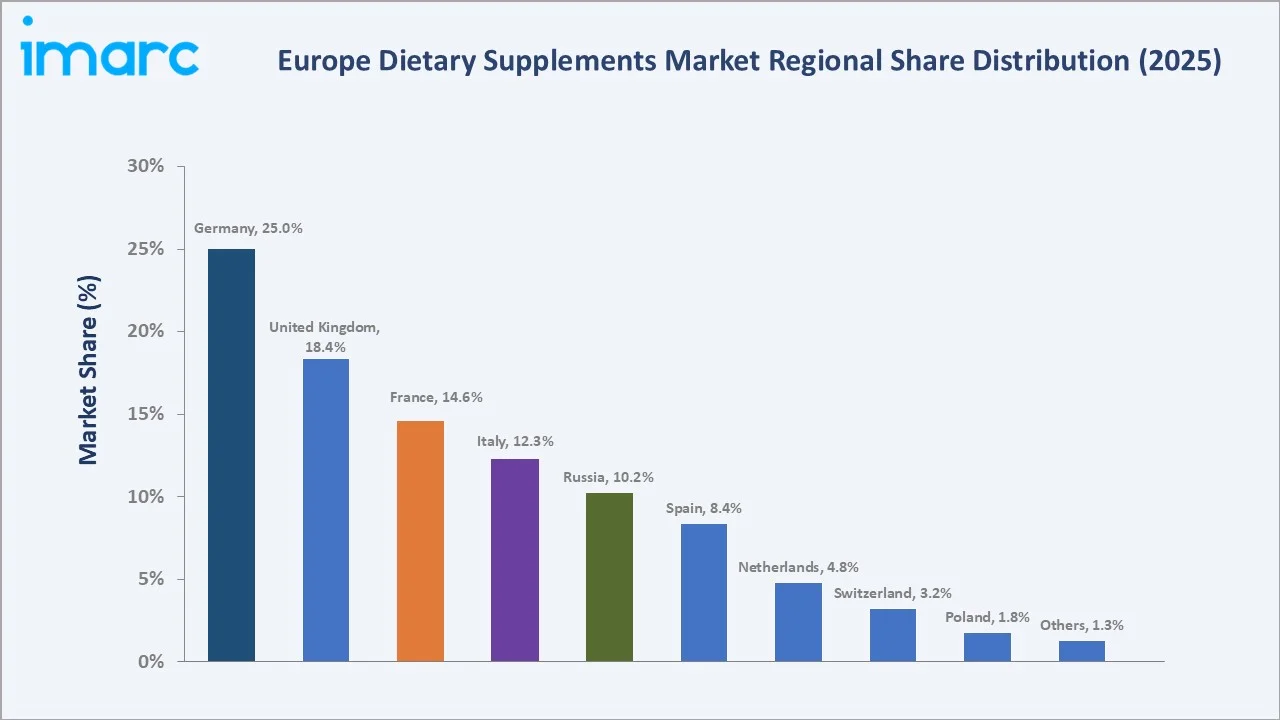
The United Kingdom's 18.4% share (2025) is anchored by one of Europe's most mature dietary supplement markets, characterized by high per capita supplement expenditure, a thriving health food retail sector, and rapid growth of premium DTC supplement brands, including Wolfson Brands. France's 14.6% reflects a strong tradition of plant-based supplement consumption through the pharmacy channel, with herbal and botanical products benefiting from France's phytomedicine heritage.
Competitive Landscape
The Europe dietary supplements market demonstrates a moderately consolidated competitive structure, with established multinational health and consumer goods companies competing alongside regional specialists, pharmacy private labels, and digital-native DTC supplement brands. The top five players collectively hold approximately 35–42% of European supplement revenues in 2025.
|
Company |
Brand Name |
Market Position |
Core Strength |
|
Bayer AG |
Berocca; Elevit; Supradyn |
Market Leader |
Berocca, Elevit, Supradyn; pharmaceutical heritage; European pharmacy dominance |
|
Haleon plc. |
Centrum; Caltrate; Emergen-C |
Market Leader |
Centrum, Caltrate, Emergen-C; global vitamins & supplements leadership |
|
Procter & Gamble |
Seven Seas |
Strong Challenger |
Premium organic supplement positioning |
|
Perrigo Company plc |
Own-label / store-brand vitamins & supplements |
Strong Challenger |
Store-brand and own-label supplement manufacturing; European private label leader |
|
Amway Corp. |
Nutriway |
Challenger |
Nutrilite brand; organic farming to supplement integration |
|
Reckitt |
Schiff; MegaRed; Move Free |
Challenger |
Schiff supplements; MegaRed omega-3; Move Free joint health |
Emerging digital‑first and niche brands (including regional players focused on clean‑label, plant‑based, or sport‑nutrition supplements) are gaining traction by targeting specific consumer segments and leveraging e‑commerce and personalised nutrition trends.
Key Company Profiles
Bayer AG
Bayer AG is one of the largest European dietary supplement companies by market share, leveraging its pharmaceutical heritage and trusted brand portfolio to dominate the pharmacy channel across Germany, Switzerland, Austria, and Southern Europe.
- Product Portfolio: Berocca, Elevit, Supradyn, Redoxon (Vitamin C).
- Recent Developments: In November 2024, the company launched Berocca Mind, a new effervescent supplement featuring Spanish sage extract and essential vitamins and minerals in the UK.
- Strategic Focus: Pharmacy channel deepening, direct-to-consumer digital expansion, and science-backed health claim leadership.
Haleon plc
Haleon plc is the global leader in consumer healthcare, including vitamins and supplements. Its Centrum brand is the world's largest multivitamin brand, generating USD 1.6 billion in global annual revenues.
- Product Portfolio: Centrum (multivitamins), Caltrate (calcium), Emergen-C (Vitamin C).
- Recent Developments: In January 2026, the company announced creating new operating units, with one being Europe.
- Strategic Focus: Science-backed formulation, personalized supplement positioning, and pharmacy-to-DTC channel diversification.
Reckitt
Reckitt's supplement portfolio, anchored by the Schiff brand, includes MegaRed omega-3 supplements and Move Free joint health. Reckitt operates across pharmacy, grocery, and online channels in the UK, Germany, and Western Europe.
- Product Portfolio: MegaRed (omega-3), Move Free (joint supplements), Airborne (immunity), Schiff Digestive Advantage (probiotics).
- Recent Developments: In 2025, Reckitt reported core net revenue growth of about 5.2 % and adjusted operating profit growth of roughly 5.3 %.
- Strategic Focus: Omega-3 and joint health category leadership, DTC subscription growth, and probiotic segment expansion.
Market Concentration Analysis
The European dietary supplements market exhibits moderate concentration at the multinational brand level, with Bayer AG, Haleon plc, Procter & Gamble, Perrigo Company plc, Amway Corp., and Reckitt collectively holding approximately 35–42% of market revenues in 2025. The remainder is distributed among hundreds of regional supplement manufacturers, pharmacy private labels, and DTC digital-native brands.
Consolidation activity is accelerating, driven by regulatory compliance costs and quality certification requirements that create barriers to entry for smaller operators. Between 2020 and 2024, several significant M&A transactions reshaped the competitive landscape, including Haleon's spin-off from GSK and Perrigo's strategic divestments of non-core assets. Private equity interest remains elevated, targeting mid-tier supplement manufacturers with diversified product portfolios and established distribution networks across multiple European markets.
Investment & Growth Opportunities
Fastest Growing Segments
Protein supplements (CAGR ~10.1%), personalized nutrition platforms (CAGR ~18%), and probiotic/gut health supplements (CAGR ~12%) represent the three highest-growth investment vectors in the European dietary supplements market through 2034. These segments collectively address an estimated total addressable market of USD 35+ billion within Europe by 2034, with premium pricing dynamics supporting superior margin profiles.
Emerging Market Expansion
Eastern Europe and the broader CIS region collectively represent an incremental USD 8.2 billion dietary supplement opportunity by 2034, driven by rapidly growing health consciousness, rising disposable incomes, and underpenetrated supplement retail infrastructure. Poland, Czech Republic, Romania, and Ukraine are the primary growth frontier markets. Entry via pharmacy chain partnerships, local contract manufacturing, and digital-first DTC platforms aligned with mobile e-commerce adoption is the preferred investment modality.
Venture and Institutional Investment Trends
- Key investment themes include personalized nutrition technology, liposomal and nano-delivery bioavailability enhancement, sports nutrition platform integrations, and gut microbiome-targeted probiotic brands with clinically validated efficacy claims.
- ESG-aligned investors are targeting clean-label, organic, and sustainably sourced supplement brands, a segment commanding premium pricing and growing consumer loyalty among the 25–44 demographic.
- Institutional PE and sovereign wealth fund interest is concentrated in pharmacy chain consolidation, premium supplement brand roll-ups, and digital-first supplement businesses with subscription model economics.
Future Market Outlook (2026-2034)
The Europe dietary supplements market is poised for robust, broad-based growth through 2034, anchored by irreversible demographic trends (aging population, rising health consciousness), accelerating personalization technology, and expanding e-commerce penetration. From USD 48.88 Billion in 2025 to USD 53.28 Billion in 2026, the market will reach USD 106.04 Billion by 2034, the market represents a compelling long-term investment opportunity across the entire dietary supplement value chain.
Regulatory evolution, particularly EFSA's evolving health claim framework, the EU's updated food supplement Directive, and potential harmonization of maximum permitted levels for vitamins and minerals, will drive significant product reformulation investment through 2027. Manufacturers that achieve certification-ready, science-backed formulations compliant with the EU AI Act's implications for AI-driven health claims are positioned to capture a disproportionate share of institutional pharmacy procurement budgets.
Long-term (2031–2034), the convergence of nutrigenomics, AI-driven dietary management, and wearable health monitoring is expected to create entirely new supplement product categories and subscription service models. By 2030, the market will have transitioned from mass-market multivitamin commoditization to a heterogeneous landscape of personalized supplement solutions, clinical nutrition products, and functional food-supplement hybrids, reshaping how European consumers engage with dietary supplementation.
Research Methodology
Primary Research
Primary research for this report comprised structured interviews and surveys with over 180 industry participants in 2024–2025, including dietary supplement manufacturers, contract manufacturers, pharmacy chain buyers, sports nutrition brand managers, nutritionists and dietitians, regulatory affairs specialists, and end consumers across Germany, the UK, France, Italy, and Russia.
Secondary Research
Secondary research encompassed a systematic review of company annual reports, regulatory filings with EFSA and national food safety authorities, industry databases (Euromonitor, SPINS, GNPD), trade publications (Nutraceuticals World, NutritionInsight, Vitafoods Insights), and publicly available financial and consumer survey data. Over 320 secondary sources were reviewed and triangulated to validate market sizing and segmentation findings.
Forecasting Models
Market size estimations and growth projections were derived using a combination of top-down and bottom-up forecasting approaches, incorporating macroeconomic indicators, demographic aging data, per capita supplement expenditure trends, e-commerce penetration rates, and historical market evolution patterns. A base-case CAGR of 8.99% reflects consensus analyst estimates validated against reported manufacturer revenue growth rates and category scanner data across key European markets.
Europe Dietary Supplements Market Report Coverage:
| Report Features | Details |
|---|---|
| Base Year of the Analysis | 2025 |
| Historical Period | 2020-2025 |
| Forecast Period | 2026-2034 |
| Units | Billion USD |
| Scope of the Report | Exploration of Historical and Forecast Trends, Industry Catalysts and Challenges, Segment-Wise Historical and Predictive Market Assessment:
|
| Product Types Covered | Vitamin and Mineral Dietary Supplements, Herbal Dietary Supplements, Protein Dietary Supplements, Others |
| Forms Covered | Tablets, Capsules, Powders, Liquids, Soft Gels, Gel Caps |
| Distribution Channels Covered | Pharmacies and Drug Stores, Supermarkets and Hypermarkets, Online Channels, Others |
| Applications Covered | Additional Supplements, Medicinal Supplement, Sports Nutrition |
| End-Uses Covered | Infant, Children, Adults, Pregnant Women, Old-Aged |
| Regions Covered | Germany, United Kingdom, France, Italy, Russia, Spain, Netherlands, Switzerland, Poland, Others |
| Companies Covered | Bayer AG, Haleon plc., Procter & Gamble, Perrigo Company plc, Amway Corp., Reckitt, etc. |
| Customization Scope | 10% Free Customization |
| Post-Sale Analyst Support | 10-12 Weeks |
| Delivery Format | PDF and Excel through Email (We can also provide the editable version of the report in PPT/Word format on special request) |
Frequently Asked Questions About the Europe Dietary Supplements Market Report
The Europe dietary supplements market size is estimated at USD 53.28 Billion in 2026.
The Europe dietary supplements market is expected to grow at a CAGR of 8.99% during the forecast period from 2026-2034, supported by consistent demand from aging populations, rising health awareness, and expanding e-commerce distribution channels.
Germany leads the market with a 25.0% revenue share in 2025, driven by an established phytotherapy culture, high pharmacy density, and strong consumer willingness to invest in scientifically validated supplement formulations.
Vitamin and mineral dietary supplements dominate the product type segment with a 28.12% share in 2025. Their dominance is driven by widespread micronutrient deficiency awareness and physician-recommended supplementation programs.
Capsules lead the form segment with a 34.09% share in 2025, preferred for their precise dosage control, convenience of consumption, neutral taste profile, and compatibility with the broadest range of supplement ingredients.
Key players include Bayer AG, Haleon plc, Procter & Gamble, Perrigo Company plc, Amway Corp., and Reckitt.
E-commerce is a major growth accelerator, with online supplement sales growing at approximately 18% CAGR (2020–2024). Digital platforms offer subscription-based supplement services, AI-driven personalized recommendations, and convenient home delivery, attracting younger demographics and expanding the addressable consumer base significantly.
Key challenges include EFSA's stringent health claims approval process (80%+ rejection rate), product adulteration and quality assurance risks, supply chain disruptions for key raw materials (vitamins, botanicals, omega-3), and regulatory divergence post-Brexit creating compliance complexity for pan-European supplement brands.
Significant investment opportunities exist in personalized nutrition technology (DNA-based supplements), Eastern European market expansion (Poland, Czech Republic, Romania), plant-based and clean-label product development, gut microbiome-targeted probiotics, and digital DTC supplement subscription platforms.
Need more help?
- Speak to our experienced analysts for insights on the current market scenarios.
- Include additional segments and countries to customize the report as per your requirement.
- Gain an unparalleled competitive advantage in your domain by understanding how to utilize the report and positively impacting your operations and revenue.
- For further assistance, please connect with our analysts.
 Request Customization
 Speak to an Analyst
 Request Brochure
 Inquire Before Buying
Benefits of Customization
- Personalize this research
- Triangulate with your data
- Get data as per your format and definition
- Gain a deeper dive into a specific application, geography, customer, or competitor
- Any level of personalization
Get in Touch With Us
UNITED STATES
Phone: +1-201-971-6302
INDIA
Phone: +91-120-433-0800
UNITED KINGDOM
Phone: +44-753-714-6104
Email: [email protected]
Client Testimonials




.webp)




.webp)













Related Reports

Choose your plan
*Please note that the prices mentioned below are starting prices for each bundle type. Kindly contact our team for further details.*
Single User License
- 1 User License, Access on 2 Devices
- PDF Report + Excel Dataset (Password Protected)
- Lifetime Access
- No Printing Rights
- 10% Free Report Customization
- 10–12 Weeks of Analyst Support
Five User License
- Access for 5 Users, 2 Devices per User
- PDF Report + Excel Dataset (Password Protected)
- Lifetime Access
- Dedicated Account Manager
- 12–14 Weeks of Analyst Support
- No Printing Rights
- 15% Free Report Customization
- 25% Discount on Your Next Purchase
Corporate User License
- Unlimited User Access (Within Your Organization)
- PDF Report + Excel Dataset
- Lifetime Access
- Dedicated Account Manager
- 14–20 Weeks of Analyst Support
- No Printing Rights
- 20% Free Report Customization
- 30% Discount on Your Next Purchase
Essential Insights
What's included:
3 reports
- Lifetime Access
- PDF Reports
- Excel Datasets
- 2 Weeks of Free Analyst Support
- 2 User Licenses
- Access on 2 Devices
- Printing Rights
- Complimentary PowerPoint (PPT) Version
- Complimentary License Upgrade
Professional Access
What's included:
5 reports
- Lifetime Access
- PDF Reports
- Excel Datasets
- 8 Weeks of Free Analyst Support
- 2 User Licenses
- Access on 2 Devices
- Printing Rights
- Complimentary PowerPoint (PPT) Version
- Complimentary License Upgrade
Business Advantage
What's included:
8 reports
- Lifetime Access
- PDF Reports
- Excel Datasets
- 14 Weeks of Free Analyst Support
- 2 User Licenses
- Access on 2 Devices
- Printing Rights
- Complimentary PowerPoint (PPT) Version
- Complimentary License Upgrade
Enterprise Intelligence
What's included:
10 reports
- Lifetime Access
- PDF Reports
- Excel Datasets
- 20 Weeks of Free Analyst Support
- 2 User Licenses
- Access on 2 Devices
- Printing Rights
- Complimentary PowerPoint (PPT) Version
- Complimentary License Upgrade