
Europe Flaxseeds Market Size, Share, Trends and Forecast by Seed Type, Product Type, Application, and Country, 2026-2034
Europe Flaxseeds Market Size and Share:
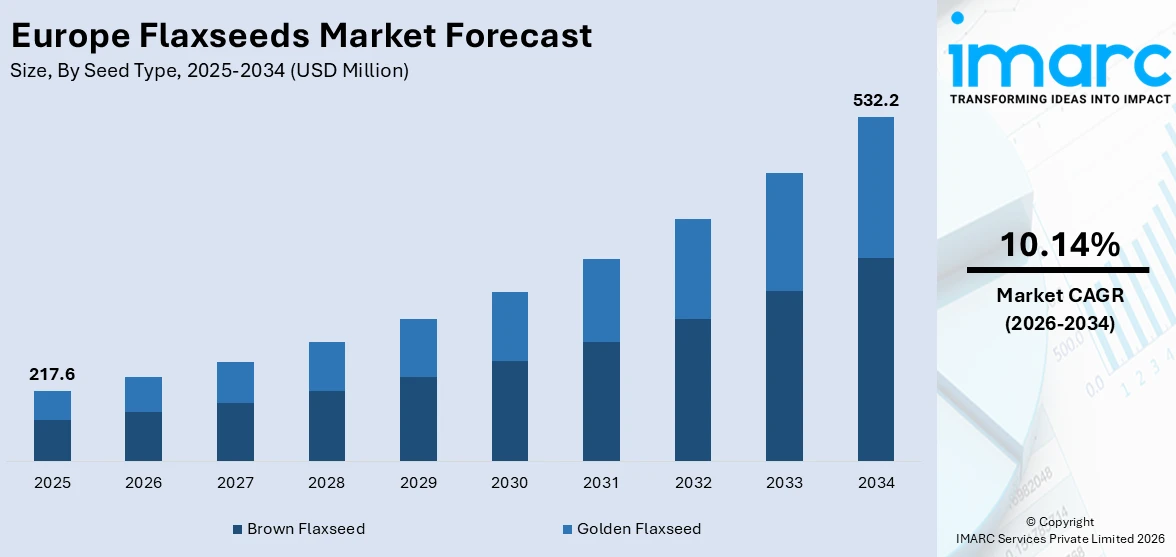
The Europe flaxseeds market size was valued at USD 217.6 Million in 2025. The market is projected to reach USD 532.2 Million by 2034, exhibiting a CAGR of 10.14% from 2026-2034. Germany dominates the European flaxseed market, due to high consumer demand for plant-based, organic, and functional food. The market is driven by rising health consciousness, growing use of milled flaxseed in bakery, snacks, and beverage, and popularity of vegan and clean-label offerings. Convenience formats with a high degree of flexibility and multipurpose applications add to demand, with rising innovation in fortified and ready-to-eat formats bolstering adoption. Increased retail and online presence facilitate broader consumer access. These factors together lead to the growth of Europe flaxseed market share.
|
Report Attribute
|
Key Statistics
|
|---|---|
|
Base Year
|
2025 |
|
Forecast Years
|
2026-2034
|
|
Historical Years
|
2020-2025
|
| Market Size in 2025 | USD 217.6 Million |
| Market Forecast in 2034 | USD 532.2 Million |
| Market Growth Rate 2026-2034 | 10.14% |
Rising demand for functional foods and dietary supplements is highly driving demand for Europe's flaxseeds. People are demanding more ingredients that help achieve multiple health advantages, including improving gastrointestinal health, lowering cholesterol levels, and maintaining cardiovascular health. Flaxseeds, which are high in omega-3 fatty acids, lignans, and dietary fiber, are known as a very versatile superfood, and it is very easy to add them to daily foods, drinks, and snacks. This is complemented by the health-conscious lifestyle trend, where people focus on nutrient-rich foods rather than processed foods. The presence of flaxseeds in different forms, such as oils, powders, capsules, and whole seeds, also assists in their uptake in various diet-related applications. As a result, functional nutrition and preventive health perspectives are likely to drive the Europe flaxseed market growth during the forecast period, promoting both product innovation and varied consumption habits among a wide consumer base.
To get more information on this market Request Sample
Growing use of plant-based foods and clean-label food products is one of the major drivers of the European flaxseed market. The demand for vegan, vegetarian, and flexitarian diets is growing as more consumers seek alternative sources of protein, fiber, and essential nutrients. Flaxseeds provide an easy and sustainable means of satisfying these dietary needs and hence are in high demand among health-conscious consumers. Further, the need for naturally sourced and organic ingredients has risen due to food safety concerns, environmental concerns, and the need for minimally processed products. This has resulted in increased usage of organic flaxseeds in baking, snacks, smoothies, and dietary supplements. The integration of plant-based diet trends with clean-label, natural product emphasis is presenting huge market opportunities, prompting manufacturers to build up product lines and position high-quality flaxseed products. Such a shifting consumer trend is anticipated to fuel ongoing growth in the Europe flaxseed market.
Europe Flaxseeds Market Trends:
Increasing Health Consciousness Fuelling Demand for Flaxseed
In Europe, the rise in lifestyle disorders such as diabetes, obesity, high blood pressure, and chronic indigestion is driving consumers towards healthier diets, aggressively increasing the demand for flaxseeds. The estimated diabetes rate of 9.8%, which is impacting about 66 million people, is likely to boost by 10% by 2050, highlighting the rising demand for preventive nutrition. Flaxseeds, high in dietary fiber, protein, and omega-3 fatty acids, are being increasingly incorporated into everyday food, drinks, and snacks to promote general well-being. Consumers are also becoming more aware of natural and functional food ingredients that help maintain well-being and lower disease risk. This heightened health consciousness is not merely fueling product uptake but also promoting diversified usage across different forms, including whole seeds, powdered flax, oils, and capsules. Generally, the Europe flaxseed market trends depict a continued trend towards health-oriented consumption that is favouring consistent growth throughout the forecast period.
Urbanization and Ready-to-Eat Nutrition Trends
Urbanization and changing lifestyles in Europe are revolutionizing eating patterns, especially among European millennials, who numbered about 20% of the overall population in 2025, about 148 million people. This group increasingly favors convenient, ready-to-use nutritional foods, which has fueled flaxseed-based snack foods, energy bars, baked foods, and healthy beverages popularity. The presence of varied product forms—whole seeds, powders, oils, and capsules—also makes it easy to incorporate them into everyday diets. Growing interest in balanced nutrition and functional food promotes consumers to embrace flaxseeds due to their protein, fiber, and omega-3 status. Demand for convenient, healthy, and adaptable meal solutions is part of wider lifestyle trends, where convenience comes without sacrificing health gain. Therefore, such urbanization-led food reforms and the choice of convenient-to-eat dense nutritional products are major drivers for sustained growth in the Europe flaxseed market, solidifying its position in functional and health-oriented food segments.
Plant-Based and Organic Food Adoption
The move towards plant-based diets and organic foods is dramatically influencing the uptake of flaxseeds in Europe. The growth of veganism, especially in Germany, has created more than half the population cutting back on meat intake and turning to plant protein sources such as flaxseeds. Flaxseeds are prized not only for protein content but also for omega-3 fatty acids, fiber, and antioxidants, tapping into ethical, environmental, and health-related motivations. At the same time, increasing consumer interest in clean-label and organic products is driving the use of non-GMO and pesticide-free flaxseed varieties. This trend enables product diversification, such as functional food ingredients, supplements, and oils, to meet growing expectations for natural and sustainable nutrition. In general, the interplay between veganism, organic affinity, and health-oriented consumer behavior keeps pushing the Europe flaxseed market forward, echoing changing dietary trends and increasing demand for nutrient-dense, plant-based options.
Europe Flaxseeds Industry Segmentation:
IMARC Group provides an analysis of the key trends in each segment of the Europe flaxseeds market, along with forecasts at the country and regional levels from 2026-2034. The market has been categorized based on seed type, product type, and application.
Analysis by Seed Type:
- Brown Flaxseed
- Golden Flaxseed
Brown flaxseed is grown and consumed extensively throughout Europe because of its rich fiber and omega-3 properties. Rich in flavor, it is used as a common ingredient in bread, cereals, and snack foods. Its health benefits coupled with the fact that it can be consumed whole or milled make it the most sought-after product among consumers looking for health foods.
Golden flaxseed is prized for its delicate flavor and desirable color, making it suitable for blending into foods and beverages without affecting flavor and appearance. It is high in omega-3 fatty acids and lignans and promotes heart health and digestive function. Its increase in popularity in Europe indicates the need for visually desirable, functional, and nutrient-rich ingredients.
Analysis by Product Type:
- Milled (Ground) Flaxseed
- Whole Flaxseed
- Flaxseed Oil
Ground, or milled, flaxseed is increasingly used in Europe because it is more digestible and nutrient-absorbing than whole seeds. Grinding seeds shatters the tough outer coating, making it easier for the body to use critical nutrients like omega-3 fatty acids, dietary fiber, and lignans. This ground form is convenient and can be easily incorporated into normal diets through smoothies, cereals, baked foods, and energy bars. In addition, milled flaxseed is also popular among consumers looking for functional foods to promote heart health, digestive health, and overall nutritional equilibrium. Busy lifestyles are addressed with the convenience of pre-ground flaxseed, a ready-to-use ingredient that suits contemporary consumption habits. Food manufacturers are also tapping into milled flaxseed for value-added product forms, such as fortified snack foods and health supplements, accelerating market uptake. The increasing consumer interest in wellness and nutrient-rich diets is likely to continue propelling the demand for milled flaxseed throughout Europe.
Analysis by Application:
Access the comprehensive market breakdown Request Sample
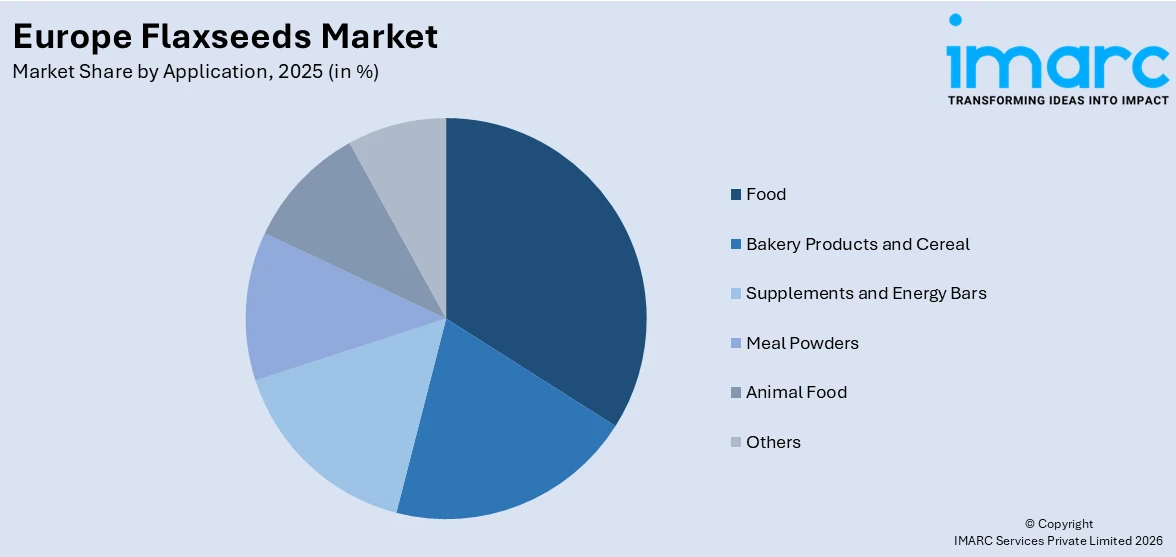
- Food
- Bakery Products and Cereal
- Supplements and Energy Bars
- Meal Powders
- Animal Food
- Others
Flaxseeds are widely used throughout the food industry in Europe because of their functional and nutritional attributes. Specifically, their use in bakery, breakfast cereals, energy bars, snacks, smoothies, and plant protein preparations has been widely gaining ground. The high levels of omega-3 fatty acids, fiber, and antioxidants in flaxseeds add both nutritional value and perceived health benefits to these products. Consumers are looking for healthier, more nutrient-dense products, and food companies are answering this call through product formulations that include flaxseeds as an active ingredient, frequently sold under functional or clean-label categories. Moreover, the multifaceted nature of flaxseeds enables innovation in product texture, flavor, and formulation, making them adaptable for both mass market and specialty food uses. The rising consciousness about diet-related lifestyle diseases and preventive nutrition keeps on increasing the incorporation of flaxseeds in everyday diets, reinforcing their position in Europe's functional foods market.
Country Analysis:
- United Kingdom
- Germany
- France
- Italy
- Spain
- Rest of Europe
Germany is a prime market for flaxseeds in Europe because of its high consumer interest in health, nutrition, and sustainable food behavior. Germany's consumers increasingly prefer plant-based, organic, and functional foods, and flaxseeds have become a commonly consumed ingredient for heart health, digestive comfort, and preventive nutrition. The highly developed retail and e-commerce environment in Germany guarantees comprehensive availability of flaxseed products in all common forms, such as whole, milled, oils, and supplements. Moreover, German consumers are particularly sensitive to clean-label and natural offerings, stimulating demand for organic and sustainably produced flaxseed offerings. The trend of convenience foods, including fortified snacks, breakfast cereals, and ready-to-eat healthy foods, also adds momentum to market growth. With an expanding focus on plant-based foods and functional nutrition, Germany remains at the forefront of flaxseed product adoption in Europe, accounting for most of the total market growth and stimulating both product innovation and distribution channels.
Competitive Landscape:
The European flaxseed market is highly competitive and is fueled by growing consumer interest in functional, plant-based, and organic products. Major industry players concentrate on product diversification, providing whole seeds, milled flax, flax oil, and supplements to appeal to a variety of consumer tastes. Invention within ready-to-eat and fortified foods is another important strategy, with manufacturers highlighting clean-label, non-GMO, and sustainably sourced ingredients to stand out. Strategic partnerships with retailers and online companies further strengthen market exposure and brand presence. Also, promotional campaigns emphasizing the nutritional value of flaxseeds, such as heart health, digestive health, and omega-3 content, are extensively used to appeal to health-conscious consumers. Focus on research and development to enhance product quality and increase application forms also boosts competition. With such dynamics, the Europe flaxseed market is set for stable growth, and the Europe flaxseed market projection shows sustained growth based on innovation, consumer literacy, and diversified products.
The report provides a comprehensive analysis of the competitive landscape in the Europe flaxseeds market with detailed profiles of all major companies, including:
- AgMotion, Inc.
- Archer-Daniels-Midland Company
- Bioriginal Food & Science Corporation
- CanMar Foods
- Cargill Incorporated
- Dicks’ Seed, LLC
- Farmers Elevator Grain and Supply Association of New Bavaria
- Grain Millers, Inc
- Healthy Food Ingredients, LLC
- Healthy Oilseeds, LLC
- Linwoods (NI) Limited (John Woods (Lisglyn) Limited)
- Richardson International Limited (Richardson, James & Sons, Limited)
- Simosis International
- Sunnyville Farms Ltd
- TA Foods Ltd
Latest News and Developments:
- August 2025: Russia’s largest flax processing and flaxseed oil production plant worth 3 Billion RUB was launched in 2025 in the Azov district of the Rostov region by “ASVA” of the “Aston” group, with capacity to process approx. 150,000 tons of flax annually and export most of its flaxseed oil and flax cake to China, Turkey, and the Middle East.
- July 2025: LT Foods inaugurated an organic food processing facility in Rotterdam with an initial investment of USD 2.29 Million, where its Nature Bio Foods arm processed organic rice, pulses, superfoods, and oilseeds including flaxseed to strengthen its direct presence in the European consumer market.
- June 2025: French FoodTech startup Fungu’it, based in Dijon, announced it had raised USD 4.34 Million to accelerate its fungi fermentation technology, which transformed agricultural by-products like flaxseed into sustainable natural flavorings and supported the launch of its industrial pilot plant.
- June 2025: UK farmers were offered record USD 780/t winter linseed contracts as Premium Crops and French partner Valorex responded to soaring global demand, positioning flaxseed as a profitable and sustainable break crop with strong economic returns and long-term market security.
- January 2025: Devan Chemicals launched two bio-based textile solutions at Heimtextil in Frankfurt, highlighting its commitment to natural sustainability, with BI-OME® Natural using flaxseed-derived linseed oil and chrysanthemum as key antimicrobial ingredients to enhance freshness and hygiene.
- December 2024: Graine de lin 28 offered contracts for the 2025 harvest of flaxseed in Eure-et-Loir with a guaranteed minimum price of €650 per tonne, while highlighting its agronomic and economic benefits and providing technical and economic support to farmers.
Europe Flaxseeds Market Report Scope:
| Report Features | Details |
|---|---|
| Base Year of the Analysis | 2025 |
| Historical Period | 2020-2025 |
| Forecast Period | 2026-2034 |
| Units | Million USD |
| Scope of the Report |
Exploration of Historical Trends and Market Outlook, Industry Catalysts and Challenges, Segment-Wise Historical and Future Market Assessment:
|
| Seed Types Covered | Brown Flaxseed, Golden Flaxseed |
| Product Types Covered | Milled (Ground) Flaxseed, Whole Flaxseed, Flaxseed Oil |
| Applications Covered | Food, Bakery Products and Cereal, Supplements and Energy Bars, Meal Powders, Animal Food, and Others |
| Countries Covered | United Kingdom, Germany, France, Italy, Spain, Rest of Europe |
| Companies Covered | AgMotion, Inc., Archer-Daniels-Midland Company, Bioriginal Food & Science Corporation, CanMar Foods, Cargill Incorporated, Dicks’ Seed, LLC, Farmers Elevator Grain and Supply Association of New Bavaria, Grain Millers, Inc, Healthy Food Ingredients, LLC, Healthy Oilseeds, LLC, Linwoods (NI) Limited (John Woods (Lisglyn) Limited), Richardson International Limited (Richardson, James & Sons, Limited), Simosis International, Sunnyville Farms Ltd and TA Foods Ltd |
| Customization Scope | 10% Free Customization |
| Post-Sale Analyst Support | 10-12 Weeks |
| Delivery Format | PDF and Excel through Email (We can also provide the editable version of the report in PPT/Word format on special request) |
Key Benefits for Stakeholders:
- IMARC’s report offers a comprehensive quantitative analysis of various market segments, historical and current market trends, market forecasts, and dynamics of the Europe flaxseeds market from2020-2034.
- The research study provides the latest information on the market drivers, challenges, and opportunities in the Europe flaxseeds market.
- Porter's Five Forces analysis assists stakeholders in assessing the impact of new entrants, competitive rivalry, supplier power, buyer power, and the threat of substitution. It helps stakeholders to analyze the level of competition within the flaxseeds industry and its attractiveness.
- Competitive landscape allows stakeholders to understand their competitive environment and provides an insight into the current positions of key players in the market.
Frequently Asked Questions About the Europe Flaxseeds Market Report
The flaxseeds market in Europe was valued at USD 217.6 Million in 2025.
The Europe flaxseeds market is projected to exhibit a CAGR of 10.14% during 2026-2034, reaching a value of USD 532.2 Million by 2034.
The market is fueled by heightening consumer awareness about health and wellness, especially in avoiding lifestyle disorders. Increasing popularity of plant-based diets, clean-label offerings, and functional foods further supports demand. Moreover, the abundance of uses of flaxseeds in bakery, snacks, beverages, and dietary supplements facilitates extensive consumption, driving long-term market growth across various segments of consumers.
Germany accounts for the largest share in the Europe flaxseeds market on account of high consumer demand for organic, plant-based, and functional foods. Mature retail and internet networks of the country provide convenient availability of flaxseed products in different forms such as whole, milled, and oil. Strong health consciousness and high convenience-oriented, nutrient-dense product adoption also add to Germany's dominance in the European region.
Some of the major players in the Europe flaxseeds market include AgMotion, Inc., Archer-Daniels-Midland Company, Bioriginal Food & Science Corporation, CanMar Foods, Cargill Incorporated, Dicks’ Seed, LLC, Farmers Elevator Grain and Supply Association of New Bavaria, Grain Millers, Inc, Healthy Food Ingredients, LLC, Healthy Oilseeds, LLC, Linwoods (NI) Limited (John Woods (Lisglyn) Limited), Richardson International Limited (Richardson, James & Sons, Limited), Simosis International, Sunnyville Farms Ltd and TA Foods Ltd, etc.
Need more help?
- Speak to our experienced analysts for insights on the current market scenarios.
- Include additional segments and countries to customize the report as per your requirement.
- Gain an unparalleled competitive advantage in your domain by understanding how to utilize the report and positively impacting your operations and revenue.
- For further assistance, please connect with our analysts.
 Request Customization
 Speak to an Analyst
 Request Brochure
 Inquire Before Buying
Benefits of Customization
- Personalize this research
- Triangulate with your data
- Get data as per your format and definition
- Gain a deeper dive into a specific application, geography, customer, or competitor
- Any level of personalization
Get in Touch With Us
UNITED STATES
Phone: +1-201-971-6302
INDIA
Phone: +91-120-433-0800
UNITED KINGDOM
Phone: +44-753-714-6104
Email: [email protected]
Client Testimonials




.webp)




.webp)













Related Reports

Choose your plan
*Please note that the prices mentioned below are starting prices for each bundle type. Kindly contact our team for further details.*
Single User License
- 1 User License, Access on 2 Devices
- PDF Report + Excel Dataset (Password Protected)
- Lifetime Access
- No Printing Rights
- 10% Free Report Customization
- 10–12 Weeks of Analyst Support
Five User License
- Access for 5 Users, 2 Devices per User
- PDF Report + Excel Dataset (Password Protected)
- Lifetime Access
- Dedicated Account Manager
- 12–14 Weeks of Analyst Support
- No Printing Rights
- 15% Free Report Customization
- 25% Discount on Your Next Purchase
Corporate User License
- Unlimited User Access (Within Your Organization)
- PDF Report + Excel Dataset
- Lifetime Access
- Dedicated Account Manager
- 14–20 Weeks of Analyst Support
- No Printing Rights
- 20% Free Report Customization
- 30% Discount on Your Next Purchase
Essential Insights
What's included:
3 reports
- Lifetime Access
- PDF Reports
- Excel Datasets
- 2 Weeks of Free Analyst Support
- 2 User Licenses
- Access on 2 Devices
- Printing Rights
- Complimentary PowerPoint (PPT) Version
- Complimentary License Upgrade
Professional Access
What's included:
5 reports
- Lifetime Access
- PDF Reports
- Excel Datasets
- 8 Weeks of Free Analyst Support
- 2 User Licenses
- Access on 2 Devices
- Printing Rights
- Complimentary PowerPoint (PPT) Version
- Complimentary License Upgrade
Business Advantage
What's included:
8 reports
- Lifetime Access
- PDF Reports
- Excel Datasets
- 14 Weeks of Free Analyst Support
- 2 User Licenses
- Access on 2 Devices
- Printing Rights
- Complimentary PowerPoint (PPT) Version
- Complimentary License Upgrade
Enterprise Intelligence
What's included:
10 reports
- Lifetime Access
- PDF Reports
- Excel Datasets
- 20 Weeks of Free Analyst Support
- 2 User Licenses
- Access on 2 Devices
- Printing Rights
- Complimentary PowerPoint (PPT) Version
- Complimentary License Upgrade