
Europe Lingerie Market Size, Share, Trends and Forecast by Product Type, Material, Price Range, Distribution Channel, and Country, 2026-2034
Europe Lingerie Market Summary:
The Europe lingerie market size was valued at USD 16.3 Billion in 2025 and is projected to reach USD 25.7 Billion by 2034, growing at a compound annual growth rate of 5.04% from 2026-2034.
The mainstreaming of body positivity movements, the quick growth of internet retail channels, and changing customer tastes toward comfortable intimate apparel are all contributing to the lingerie market's strong expansion in Europe. The competitive environment is changing as a result of increased demand for sustainable and adaptable materials as well as rising fashion consciousness in major nations. Innovation in materials like organic cotton and recycled fibers, premiumization trends, and inclusive sizing initiatives are all bolstering adoption and establishing the area as a sophisticated but vibrant center for intimate clothing, which helps to increase the lingerie market share in Europe.
Key Takeaways and Insights:
- By Product Type: Brassiere dominates the market with a share of 40% in 2025, because of its practical requirement, regular replacement cycles, and ongoing design innovation that combines comfort and support in daily life. Sustained demand is being fueled by expanding size ranges and comfort-enhancing technology.
- By Material: Cotton leads the market with a share of 35% in 2025, driven by customer demand for everyday-use textiles that are hypoallergenic, breathable, and skin-friendly. The dominance of this market is being strengthened by growing demand for cotton varieties that are obtained responsibly and organically.
- By Price Range: Economy represents the largest segment with a market share of 56% in 2025, reflecting the widespread desire across a variety of European populations for reasonably priced, high-quality intimate wear. This leadership is supported by value-driven buying habits among customers on a tight budget.
- By Distribution Channel: Online stores represent the largest segment with a market share of 35% in 2025, driven by e-commerce platforms' ease, privacy, and range of products. Online adoption is being accelerated by influencer-driven marketing and digital customisation technologies.
- Key Players: The lingerie industry in Europe is driven by major companies who broaden their product lines, make investments in environmentally friendly production methods, increase their omnichannel retail presence, and establish strategic partnerships with fashion designers. Their emphasis on comfort innovation, inclusive sizing, and digital interaction boosts market penetration and brand loyalty among a variety of customer categories.
As customers place a greater emphasis on comfort, sustainability, and inclusive representation when selecting intimate items, the European lingerie business is expanding. The region's increasing focus on ethical sourcing and environmentally sustainable production methods, which complement the EU's circular textile strategy, is a key driver of this development. Manufacturers of lingerie are being encouraged by changing regulatory frameworks to embrace circular supply chain processes, use materials sourced sustainably, and use greener production techniques. Intimate clothing design and production are changing throughout the area due to the growing use of sustainable materials including bio-based fibers, recycled polyamide, and organic cotton. A favorable climate for market development is also being created by growing e-commerce ecosystems, rising disposable incomes, and changing fashion dynamics in both Eastern and Western European nations.
Europe Lingerie Market Trends:
Rising Demand for Sustainable and Eco-Friendly Intimate Apparel
Europe is witnessing a significant shift toward environmentally responsible lingerie as consumers demand transparency, ethical sourcing, and reduced environmental impact in intimate wear. Brands are increasingly adopting organic cotton, recycled nylon, and plant-based fibers to meet evolving expectations. For example, in February 2025, Victoria’s Secret introduced its Digital Product Passport on select bra collections, featuring QR codes providing material information and supply chain details, reflecting the broader industry move toward transparency-driven sustainable practices supporting Europe lingerie market growth.
Expansion of Inclusive Sizing and Body-Positive Collections
The body positivity movement has transitioned from a social media trend to a core business strategy across European lingerie brands, prompting wider size ranges and diverse representation in marketing campaigns. Consumers are seeking intimate apparel that accommodates various body types without compromising on style or comfort. For instance, in January 2025, British lingerie brand Boux Avenue launched a limited-edition collaboration with London Fashion Week designer Dilara Findikoglu, featuring 10 designer lingerie looks in sizes 6 to 16 with select bras available up to a G-cup, emphasizing empowered femininity and inclusive design.
Integration of Technology in Online Lingerie Retail
With businesses using artificial intelligence, virtual fitting tools, and personalized recommendation engines to improve the online shopping experience, the digital transformation of lingerie retail in Europe is speeding up. On all e-commerce platforms, influencer-led promotions and social media marketing are increasing customer engagement and conversion rates. In order to increase fit accuracy, top online shops are expanding their selection of intimate clothing while using cutting-edge sizing algorithms and augmented reality capabilities. Digital channel adoption among European lingerie buyers is being further accelerated by the growing popularity of mobile shopping, discreet delivery alternatives, and easy return policies.
.webp)
Market Outlook 2026-2034:
The Europe lingerie market is poised for sustained growth over the forecast period, underpinned by rising consumer spending on intimate apparel, expanding digital retail ecosystems, and continued innovation in sustainable materials and comfort-driven designs. The market generated a revenue of USD 16.3 Billion in 2025 and is projected to reach a revenue of USD 25.7 Billion by 2034, growing at a compound annual growth rate of 5.04% from 2026-2034. Higher income streams are anticipated as a result of premiumization trends, the growing popularity of inclusive sizing, and the expanding impact of fashion partnerships between mainstream lingerie firms and designers. The region's lingerie market is expected to become more competitive, inventive, and customer-focused as a result of regulatory changes that encourage circular textile processes, the growth of direct-to-consumer business models, and omnichannel retail tactics.
Europe Lingerie Market Report Segmentation:
|
Segment Category |
Leading Segment |
Market Share |
|
Product Type |
Brassiere |
40% |
|
Material |
Cotton |
35% |
|
Price Range |
Economy |
56% |
|
Distribution Channel |
Online Stores |
35% |
Product Type Insights:
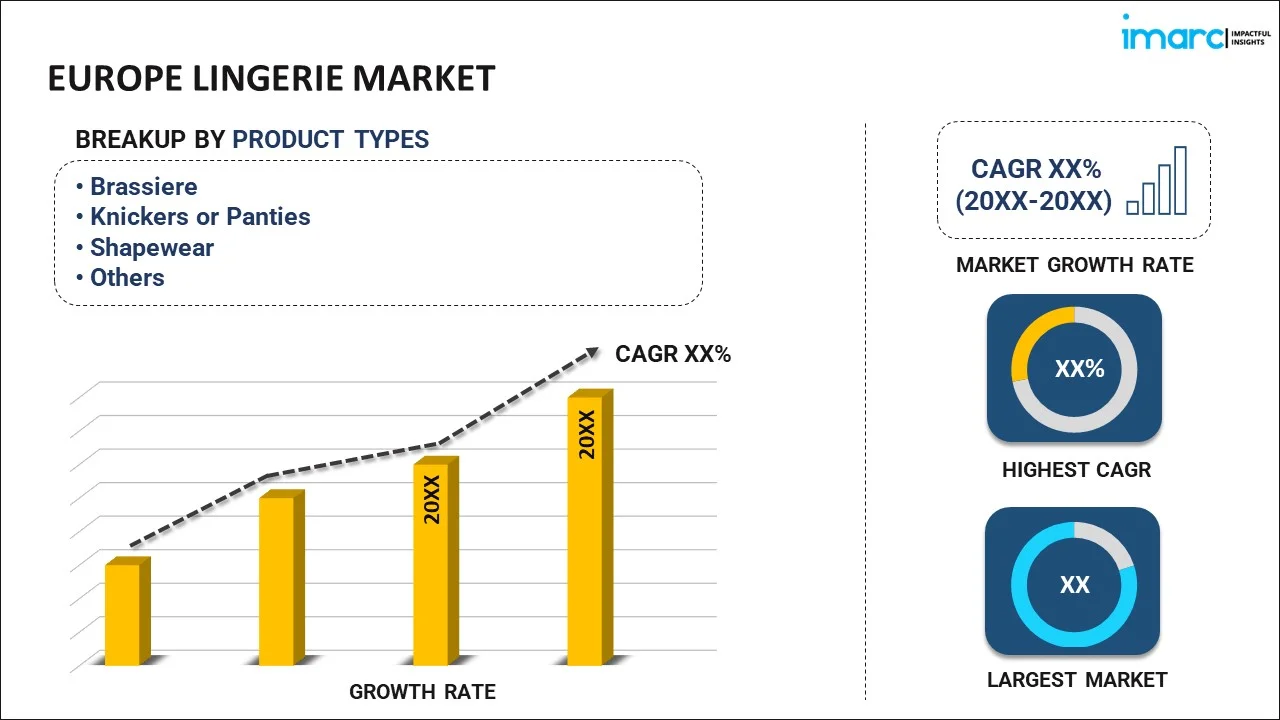
To get detailed segment analysis of this market Request Sample
- Brassiere
- Knickers or Panties
- Shapewear
- Others
Brassiere dominates with a market share of 40% of the total Europe lingerie market in 2025.
Because of its indispensable function as a daily wear item and the ongoing cycle of product replacement brought on by shifting customer tastes and body modifications, the brassiere category continues to hold its dominant position in the European lingerie market. With businesses investing in comfort-enhancing technology like wire-free constructions, seamless engineering, and memory-foam padding that suit modern lifestyles, design innovation has been essential to the success of this market. Demand is being further bolstered by the growing appeal of sports bras and multifunctional designs in European nations.
The addressable market for brassieres has grown throughout Europe as a result of the increased focus on inclusive sizing, with manufacturers now providing a wider range of sizes to reach previously underserved customers. Demand for supporting and posture-correcting brassieres is rising due to wellness and health-conscious trends, especially among customers who lead active lifestyles and work. Because brassiere collections are cornerstone items in lingerie portfolios, retailers are investing a lot of floor space and marketing resources in them. Throughout the projected period, this category is positioned for ongoing domination across all major European markets thanks to the confluence of fashion, function, and sustainability in brassiere design.
Material Insights:
- Cotton
- Silk
- Satin
- Nylon
- Others
Cotton leads the market with a share of 35% of the total Europe lingerie market in 2025.
Cotton continues to be the preferred material in the Europe lingerie market, valued for its natural breathability, hypoallergenic properties, and superior comfort for everyday wear. European consumers increasingly favor cotton-based intimate apparel due to its softness, moisture-absorption capabilities, and suitability for sensitive skin, particularly in foundational garments worn throughout the day. The growing demand for organic and sustainably sourced cotton is further strengthening this segment’s position. Numerous European lingerie brands including Germany-based Albero Natur and Danish brand Organic Basics have adopted GOTS-certified organic cotton across their collections, aligning with rising consumer demand for environmentally responsible intimate apparel.
The cotton segment benefits from strong alignment with the European Union’s sustainability agenda, as consumers and regulators alike push for natural, biodegradable, and responsibly produced textile materials. Cotton’s versatility allows manufacturers to create diverse product styles ranging from everyday basics to fashion-forward designs, supporting broad market appeal across economy and premium price segments. Innovation in cotton blending techniques, combining organic cotton with elastane or modal for enhanced stretch and fit, is enabling brands to deliver performance-oriented comfort without compromising on sustainability credentials, driving sustained preference across the region.
Price Range Insights:
- Economy
- Premium
Economy is the largest segment, accounting for 56% of the total Europe lingerie market in 2025.
The economy price segment commands the largest share of the Europe lingerie market, reflecting the strong preference among European consumers for affordable yet quality intimate apparel that meets everyday functional needs. Mass-market retailers and fast-fashion chains have expanded their lingerie offerings with improved fabric quality, inclusive sizing, and trend-responsive designs, making comfortable and stylish options accessible to a broad consumer base. The growth of e-commerce platforms offering competitive pricing, frequent promotions, and subscription-based models has further accelerated the economy segment’s penetration across diverse demographics.
Budget-conscious purchasing behavior, particularly among younger consumers and value-oriented shoppers, continues to underpin the economy segment’s dominance across major European markets. The segment benefits from efficient supply chain management and economies of scale achieved by large retailers, enabling the delivery of quality intimate wear at accessible price points. Rising cost-of-living pressures across several European economies have reinforced the consumer shift toward value-driven purchases, with shoppers seeking optimal quality-to-price ratios in their lingerie selections without compromising on comfort, fit, or contemporary design aesthetics.
Distribution Channel Insights:
- Mass Merchandizers
- Specialized Stores
- Online Stores
- Others
Online stores hold the largest share at 35% of the total Europe lingerie market in 2025.
Online stores have emerged as the leading distribution channel in the Europe lingerie market, driven by the convenience, privacy, and extensive product variety that digital platforms offer to consumers purchasing intimate apparel. The integration of advanced technologies such as virtual fitting tools, AI-powered size recommendations, and personalized shopping experiences has significantly enhanced consumer confidence in online lingerie purchases. Social media marketing and influencer collaborations are amplifying brand visibility and driving conversion rates across platforms like ASOS, Zalando, and brand-specific e-commerce portals throughout Europe.
The rapid expansion of direct-to-consumer business models has enabled emerging and established lingerie brands to reach consumers directly, bypassing traditional retail intermediaries and offering competitive pricing alongside curated shopping experiences. Mobile commerce, subscription-based lingerie delivery services, and seamless return policies have lowered barriers to online purchasing, particularly among digitally native younger demographics. The growing sophistication of logistics infrastructure across European markets ensures faster delivery times and reliable order fulfillment, reinforcing consumer trust and repeat purchasing behavior in the online lingerie retail segment.
Country Insights:
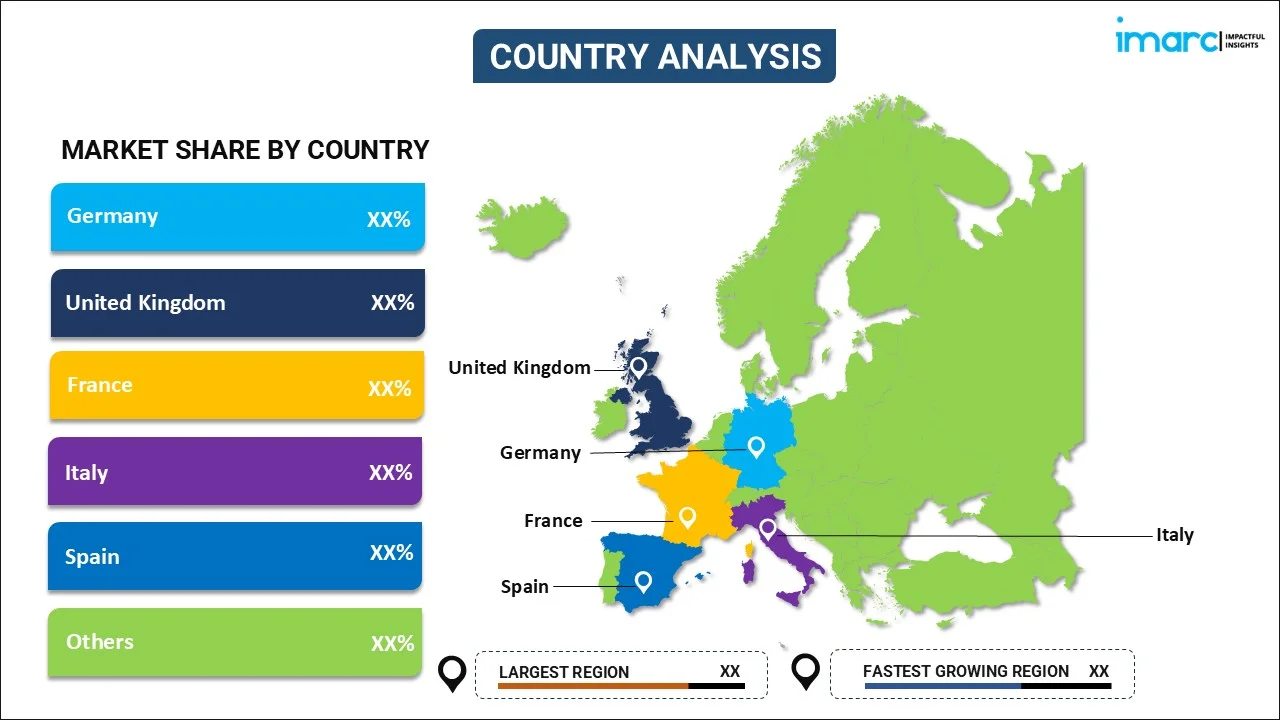
To get detailed regional analysis of this market Request Sample
- Germany
- France
- United Kingdom
- Italy
- Spain
- Others
Germany holds a prominent position in the European lingerie market, driven by pragmatic consumerism, strong environmental consciousness, and a preference for functional, comfort-oriented designs. The country’s engineering-focused approach favors seamless, no-wire bras and moisture-wicking fabrics, with domestic brands investing significantly in research and development for innovative adaptive closures and breathable materials.
France remains a dominant contributor to the European lingerie market, leveraging its long-standing reputation for luxury fashion, craftsmanship, and innovation in intimate apparel. French consumers demonstrate sophisticated taste and high brand awareness, with strong domestic brands such as Etam driving trends in inclusive sizing and sustainable material sourcing across the continent.
The United Kingdom lingerie market benefits from early adoption of body positivity initiatives and advanced e-commerce sophistication. London serves as a hub for innovative lingerie startups focused on adaptive and inclusive designs, while established high-street brands continue expanding their digital presence and designer collaboration strategies to attract fashion-conscious consumers.
Italy contributes meaningfully to the European lingerie market through its mastery of luxury materials, artisanal craftsmanship, and strong brand heritage. Italian consumers exhibit high brand loyalty toward domestic labels for special occasion and premium intimate apparel, sustaining demand for high-quality, design-led lingerie products across both domestic and export markets.
Spain’s lingerie market is characterized by growing fashion consciousness, increasing adoption of online shopping platforms, and expanding demand for affordable yet stylish intimate wear. The country’s warm climate supports year-round demand for lightweight and breathable lingerie, while the presence of international and domestic retail brands drives competitive product diversity and consumer accessibility.
Market Dynamics:
Growth Drivers:
Why is the Europe Lingerie Market Growing?
Expanding E-Commerce and Digital Retail Ecosystem
The rapid proliferation of online retail platforms is fundamentally transforming how European consumers discover, evaluate, and purchase intimate apparel. Digital channels offer unmatched convenience, product variety, and privacy that are particularly valued in the lingerie category. The integration of artificial intelligence and virtual fitting technologies is addressing longstanding challenges of size selection and fit accuracy in online lingerie purchases, significantly reducing return rates and enhancing consumer satisfaction. Brands are leveraging social media marketing, influencer partnerships, and data-driven personalization strategies to engage digitally native consumers and drive conversion. Direct-to-consumer models are enabling both established and emerging lingerie brands to build deeper consumer relationships while optimizing pricing strategies. The maturation of logistics infrastructure across European markets ensures reliable delivery and seamless returns, reinforcing consumer confidence in online purchasing and supporting the sustained migration of lingerie sales toward digital channels.
Rising Influence of Body Positivity and Inclusive Sizing
The body positivity movement has emerged as a transformative force in the European lingerie market, compelling brands to expand their product ranges to accommodate diverse body types, abilities, and consumer preferences. This cultural shift is driving the development of extended-size collections, adaptive lingerie designs, and marketing campaigns that celebrate authentic representation and self-expression. Brands that embrace inclusivity are unlocking previously underserved market segments and building stronger emotional connections with consumers. The normalization of diverse body representation in advertising and product development is creating a more equitable and consumer-responsive market environment across Europe.
Growing Consumer Preference for Sustainable and Eco-Friendly Materials
European consumers are increasingly prioritizing sustainability in their purchasing decisions, driving demand for lingerie made from organic cotton, recycled fibers, and bio-based materials that minimize environmental impact. Regulatory developments are reinforcing this trend, with the European Union implementing comprehensive textile sustainability frameworks that mandate greater producer responsibility and transparency. These evolving policy measures are encouraging lingerie manufacturers to adopt greener production methods, invest in circular supply chains, and integrate environmentally certified materials into their product lines. As sustainability transitions from a niche preference to a mainstream expectation, brands that align with eco-conscious values are gaining stronger consumer trust and loyalty. The convergence of regulatory pressure, shifting consumer attitudes, and industry innovation is positioning sustainable lingerie as a defining growth driver across European markets, reshaping how intimate apparel is designed, produced, and consumed throughout the region.
Market Restraints:
What Challenges the Europe Lingerie Market is Facing?
Intensifying Competition and Market Fragmentation
The European lingerie market faces heightened competitive pressure from a proliferation of domestic and international brands, fast-fashion retailers, and digital-native startups vying for consumer attention. This fragmentation compresses profit margins and forces established players to continuously invest in product differentiation, marketing innovation, and operational efficiency. Smaller manufacturers struggle to achieve economies of scale, while pricing pressures from value-oriented competitors challenge premium positioning strategies across the market.
Rising Production Costs and Supply Chain Complexities
Increasing costs of raw materials, labor, and compliance with evolving regulatory requirements are placing upward pressure on production expenses for European lingerie manufacturers. Supply chain disruptions, geopolitical uncertainties, and the rising costs associated with sourcing sustainable and certified materials further compound these challenges. These cost pressures can limit the ability of brands to maintain competitive pricing while investing in quality improvements and sustainability initiatives, particularly affecting small and mid-sized manufacturers.
Consumer Hesitancy in Online Fit and Size Selection
Despite the rapid growth of e-commerce, lingerie remains a product category where fit accuracy and tactile experience significantly influence purchasing decisions. Many consumers continue to experience uncertainty about sizing, fabric feel, and comfort when buying intimate apparel online, contributing to elevated return rates and associated logistical costs. While virtual fitting technologies and enhanced size guides are improving, they have not yet fully replicated the in-store trial experience, creating a barrier to complete digital migration for certain consumer segments.
Competitive Landscape:
The Europe lingerie market presents a highly competitive and fragmented landscape characterized by the presence of established multinational brands, heritage luxury labels, and emerging direct-to-consumer players. Companies are differentiating through product innovation, sustainability commitments, inclusive sizing strategies, and designer collaborations that elevate brand positioning. Investment in digital retail capabilities, omnichannel integration, and personalized shopping experiences is intensifying as brands seek to capture the growing online consumer base. Strategic partnerships, acquisitions, and expansion into new product categories such as ready-to-wear and athleisure are reshaping the competitive dynamics and driving market consolidation across the region.
Europe Lingerie Market Report Coverage:
| Report Features | Details |
|---|---|
| Base Year of the Analysis | 2025 |
| Historical Period | 2020-2025 |
| Forecast Period | 2026-2034 |
| Units | Billion USD |
| Scope of the Report | Exploration of Historical and Forecast Trends, Industry Catalysts and Challenges, Segment-Wise Historical and Predictive Market Assessment:
|
| Product Types Covered | Brassiere, Knickers or Panties, Shapewear, Others |
| Materials Covered | Cotton, Silk, Satin, Nylon, Others |
| Price Ranges Covered | Economy, Premium |
| Distribution Channels Covered | Mass Merchandizers, Specialized Stores, Online Stores, Others |
| Countries Covered | Germany, France, United Kingdom, Italy, Spain, Others |
| Customization Scope | 10% Free Customization |
| Post-Sale Analyst Support | 10-12 Weeks |
| Delivery Format | PDF and Excel through Email (We can also provide the editable version of the report in PPT/Word format on special request) |
Frequently Asked Questions About the Europe Lingerie Market Report
The Europe lingerie market size was valued at USD 16.3 Billion in 2025.
The Europe lingerie market is expected to grow at a compound annual growth rate of 5.04% from 2026-2034 to reach USD 25.7 Billion by 2034.
Brassiere dominated the market with a share of 40%, driven by its essential functionality, continuous design innovation in comfort-enhancing technologies, expanding inclusive sizing ranges, and strong consumer replacement cycles across all major European markets.
Key factors driving the Europe lingerie market include expanding e-commerce ecosystems, rising body positivity movements promoting inclusive sizing, growing consumer preference for sustainable materials, increasing fashion consciousness, and continuous product innovation in comfort-driven designs.
Major challenges include intensifying competition and market fragmentation, rising production costs and supply chain complexities, consumer hesitancy in online fit selection, regulatory compliance burdens, and pricing pressures from fast-fashion and value-oriented competitors.
Need more help?
- Speak to our experienced analysts for insights on the current market scenarios.
- Include additional segments and countries to customize the report as per your requirement.
- Gain an unparalleled competitive advantage in your domain by understanding how to utilize the report and positively impacting your operations and revenue.
- For further assistance, please connect with our analysts.
 Request Customization
 Speak to an Analyst
 Request Brochure
 Inquire Before Buying
Benefits of Customization
- Personalize this research
- Triangulate with your data
- Get data as per your format and definition
- Gain a deeper dive into a specific application, geography, customer, or competitor
- Any level of personalization
Get in Touch With Us
UNITED STATES
Phone: +1-201-971-6302
INDIA
Phone: +91-120-433-0800
UNITED KINGDOM
Phone: +44-753-714-6104
Email: [email protected]
Client Testimonials




.webp)




.webp)













Related Reports

Choose your plan
*Please note that the prices mentioned below are starting prices for each bundle type. Kindly contact our team for further details.*
Single User License
- 1 User License, Access on 2 Devices
- PDF Report + Excel Dataset (Password Protected)
- Lifetime Access
- No Printing Rights
- 10% Free Report Customization
- 10–12 Weeks of Analyst Support
Five User License
- Access for 5 Users, 2 Devices per User
- PDF Report + Excel Dataset (Password Protected)
- Lifetime Access
- Dedicated Account Manager
- 12–14 Weeks of Analyst Support
- No Printing Rights
- 15% Free Report Customization
- 25% Discount on Your Next Purchase
Corporate User License
- Unlimited User Access (Within Your Organization)
- PDF Report + Excel Dataset
- Lifetime Access
- Dedicated Account Manager
- 14–20 Weeks of Analyst Support
- No Printing Rights
- 20% Free Report Customization
- 30% Discount on Your Next Purchase
Essential Insights
What's included:
3 reports
- Lifetime Access
- PDF Reports
- Excel Datasets
- 2 Weeks of Free Analyst Support
- 2 User Licenses
- Access on 2 Devices
- Printing Rights
- Complimentary PowerPoint (PPT) Version
- Complimentary License Upgrade
Professional Access
What's included:
5 reports
- Lifetime Access
- PDF Reports
- Excel Datasets
- 8 Weeks of Free Analyst Support
- 2 User Licenses
- Access on 2 Devices
- Printing Rights
- Complimentary PowerPoint (PPT) Version
- Complimentary License Upgrade
Business Advantage
What's included:
8 reports
- Lifetime Access
- PDF Reports
- Excel Datasets
- 14 Weeks of Free Analyst Support
- 2 User Licenses
- Access on 2 Devices
- Printing Rights
- Complimentary PowerPoint (PPT) Version
- Complimentary License Upgrade
Enterprise Intelligence
What's included:
10 reports
- Lifetime Access
- PDF Reports
- Excel Datasets
- 20 Weeks of Free Analyst Support
- 2 User Licenses
- Access on 2 Devices
- Printing Rights
- Complimentary PowerPoint (PPT) Version
- Complimentary License Upgrade