
Europe Probiotic Supplements Market Size, Share, Trends and Forecast by Ingredient, Form, Application, Distribution Channel, and Country, 2026-2034
Europe Probiotic Supplements Market Size, Share, Trends & Forecast (2026-2034)
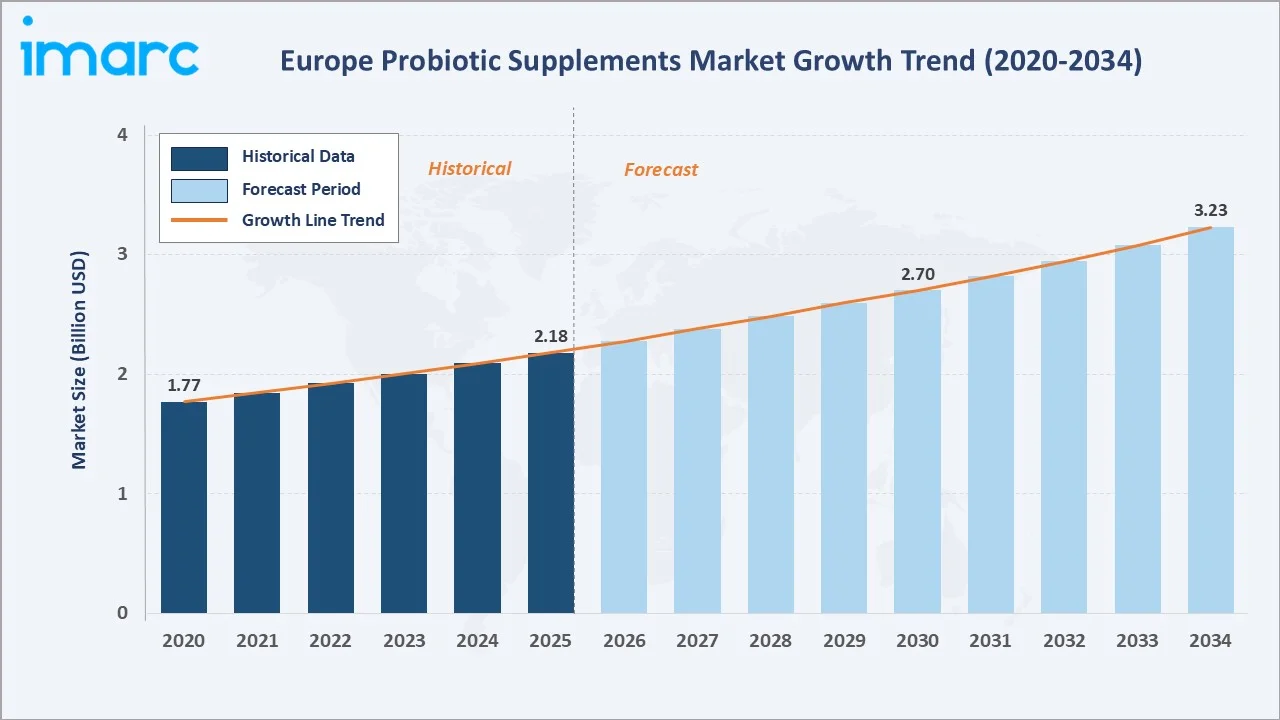
The Europe probiotic supplements market grew from USD 2.18 Billion in 2025 to USD 2.28 Billion in 2026 and is projected to reach USD 3.23 Billion by 2034, growing at a CAGR of 4.32% during 2026-2034. The market is driven by growing consumer awareness of gut health, the expanding microbiome science research base, and increasing adoption of preventive healthcare across European demographics. Bacteria lead at 86.4% by ingredient, liquid dominates at 34.8% by form, and Italy commands the largest country share at 20.8% in 2025.
Market Snapshot
|
Metric |
Value |
|
Base Year Market Size (2025) |
USD 2.18 Billion |
|
Market Size (2026) |
USD 2.28 Billion |
|
Forecast Market Size (2034) |
USD 3.23 Billion |
|
CAGR (2026-2034) |
4.32% |
|
Base Year |
2025 |
|
Historical Period |
2020-2025 |
|
Forecast Period |
2026-2034 |
|
Dominant Ingredient |
Bacteria (86.4%, 2025) |
|
Dominant Form |
Liquid (34.8%, 2025) |
|
Leading Country |
Italy (20.8%, 2025) |
The Europe probiotic supplements market grew from USD 1.77 Billion in 2020 to USD 2.18 Billion in 2025, and further to USD 2.28 Billion in 2026, reflecting sustained consumer demand, pharmacy channel expansion, and the progressive mainstreaming of microbiome health across European consumer health spending. The market is projected to reach USD 2.70 Billion by 2030 before reaching USD 3.23 Billion by 2034.
To get more information on this market, Request Sample
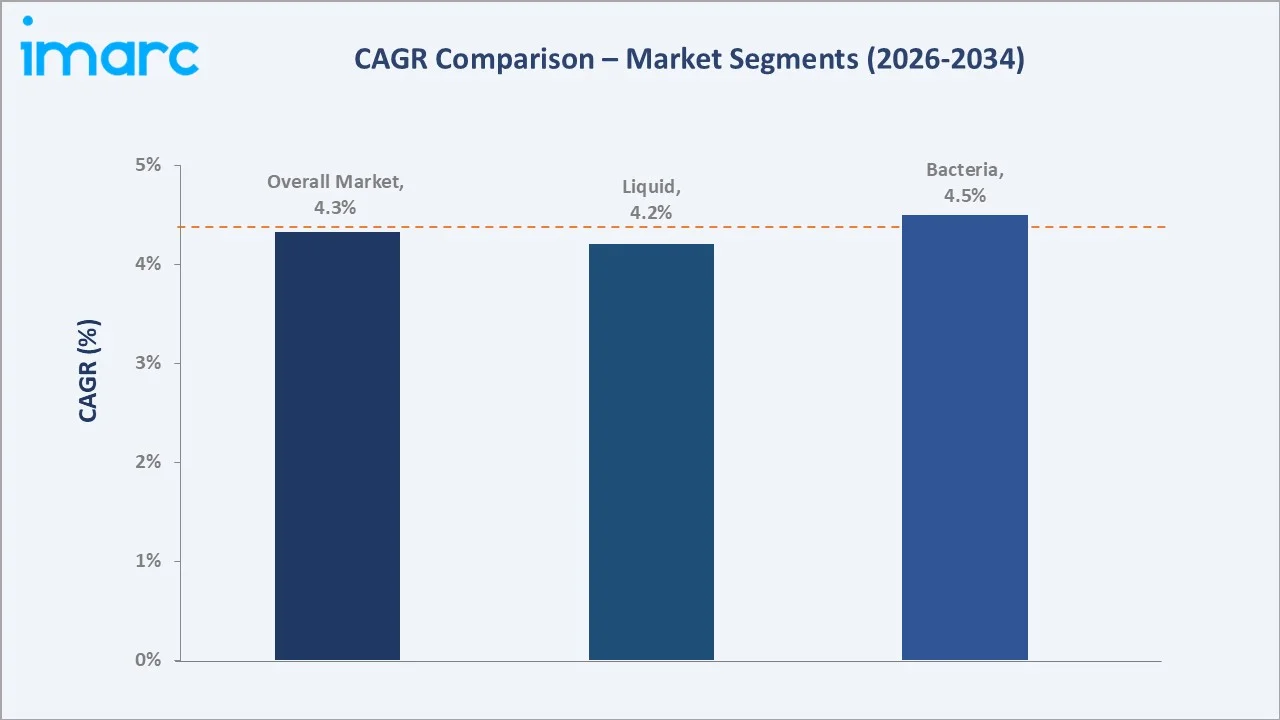
Bacteria-based probiotic supplements are projected to grow at a 4.5% CAGR, driven by the continued strength of Lactobacillus and Bifidobacterium strains in digestive health and immunity applications. Liquid probiotic formulations at 4.2% CAGR reflect the growing consumer preference for easy-to-administer, high-CFU formats across pediatric and adult segments in Southern Europe.
Executive Summary
The Europe probiotic supplements market is on a consistent growth trajectory, driven by structural shifts in consumer health behavior toward preventive nutrition, expanding clinical evidence linking gut microbiome health to systemic outcomes, and the growing availability of probiotic products across pharmacy, online, and specialist retail channels. The market has expanded steadily, supported by post-COVID immunity awareness driving supplement adoption, growing scientific literacy around microbiome health, and the progressive differentiation of probiotic products from generic supplements toward clinically positioned health solutions.
Bacteria at 86.4% constitutes the overwhelming majority of ingredient demand, reflecting the dominance of Lactobacillus and Bifidobacterium strains that are supported by the most extensive clinical validation across digestive health, immune function, and infant health applications in the European market. Liquid leads the form at 34.8%. Italy leads among European markets at 20.8%, reflecting the country's strong pharmacy culture, high per-capita probiotic supplement consumption, and the established consumer habit of purchasing probiotics alongside antibiotic prescriptions.
Key Market Insights
|
Insight |
Data |
|
Dominant Ingredient |
Bacteria - 86.4% share (2025) |
|
Dominant Form |
Liquid - 34.8% share (2025) |
|
Leading Country |
Italy - 20.8% (2025) |
|
Key Market Opportunity |
Personalized microbiome-based probiotic recommendations and psychobiotic formulations targeting stress, sleep, and cognitive health in premium supplement channels |
Key Analytical Observations Supporting the Above Data:
- Bacteria at 86.4%: Bacterial strains dominate because Lactobacillus and Bifidobacterium species collectively represent the most clinically validated, regulatory-approved, and consumer-trusted microorganism categories in European probiotic supplements. These strains underpin the broadest range of health benefit claims covering digestion, immunity, oral health, women's health, and infant health that drive retail supplement purchasing across all European markets.
- Liquid at 34.8%: Liquid probiotic supplements lead because they offer the highest CFU delivery with minimal manufacturing degradation, easy administration across pediatric and elderly populations, and the consumer perception of superior potency compared to tablet forms. Italy and France in particular have strong pharmacy-based liquid probiotic traditions where drops and vials are the preferred format for physician-recommended probiotic use.
- Italy at 20.8%: Italy leads European probiotic supplement consumption because of its deeply embedded pharmacy culture where probiotics are routinely recommended and purchased alongside antibiotic prescriptions, high consumer health awareness in the category, strong physician endorsement of probiotics across gastroenterology and pediatrics, and the presence of an active domestic pharmaceutical supplement industry developing proprietary probiotic formulations.
Europe Probiotic Supplements Market Overview
The Europe probiotic supplements market encompasses all dietary and nutritional supplement products containing live microorganisms, primarily bacterial strains and yeasts, that are sold in formats including liquids, powders, tablets, capsules, and gummies for consumer self-administration to support health outcomes. Product categories include digestive health probiotics, immunity-support formulations, infant and pediatric probiotics, women's health probiotics, oral health probiotics, and emerging psychobiotic formulations targeting mental health and stress response.
Market Dynamics
To evaluate market opportunities, Request Sample
Market Drivers
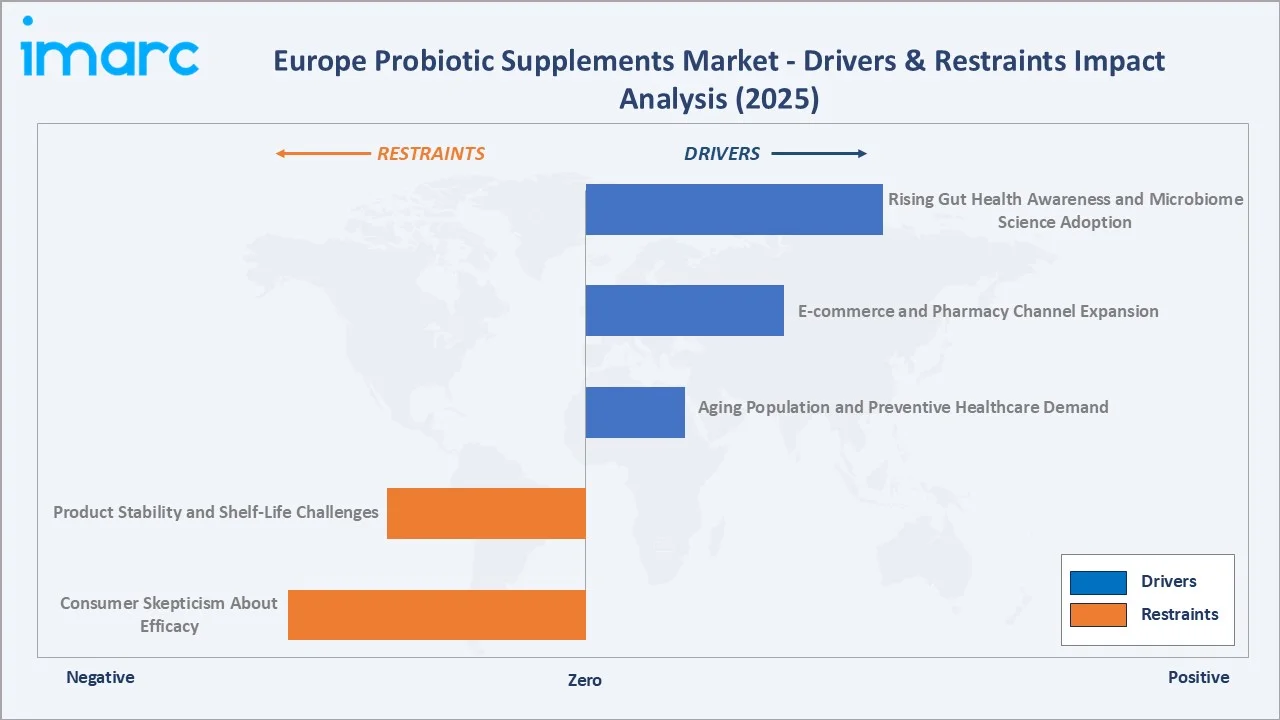
- Rising Gut Health Awareness and Microbiome Science Adoption: Consumer awareness of the gut-brain-immune axis and the role of the microbiome in systemic health has expanded significantly, driven by mainstream media coverage of microbiome research, healthcare professional communication, and growing availability of consumer microbiome testing services.
- E-commerce and Pharmacy Channel Expansion: The pharmacy channel remains the dominant probiotic supplement distribution channel in Southern Europe, while e-commerce is the fastest-growing channel across all European markets. Online D2C brands are expanding accessibility to personalized probiotic supplements outside traditional pharmacy reach.
- Aging Population and Preventive Healthcare Demand: People aged 80 and above represent the fastest-growing age group, with approximately 1 in 5 people in the European Union now aged 65 or older. Europe aging population is driving demand for preventive health supplements, including probiotics, as older consumers increasingly invest in maintaining digestive comfort, immune function, and overall wellbeing. Older demographic groups are among the highest per-capita spenders on dietary supplements in Germany, Italy, and France, making them a significant and growing driver of premium probiotic supplement demand.
Market Restraints
- Consumer Skepticism About Efficacy: A meaningful segment of European consumers remains skeptical about the health benefits of probiotic supplements, particularly given the regulatory inability to communicate specific health claims in most markets. Without clear permitted benefit communication, some consumers view probiotics as an unsubstantiated category, constraining market penetration in the more evidence-demanding Northern European markets.
- Product Stability and Shelf-Life Challenges: Maintaining viable live bacterial counts through manufacturing, distribution, and retail shelf life requires significant cold chain investment and specialized packaging technology, particularly for liquid formats. These constraints add manufacturing and distribution costs that are reflected in retail pricing, limiting accessibility for price-sensitive consumer segments and creating a competitive disadvantage versus Asian imports.
Market Opportunities
- Psychobiotic and Mental Health Probiotic Innovation: Growing consumer interest in the gut-brain axis is creating demand for probiotic formulations targeting stress, anxiety, sleep quality, and cognitive function, a category known as psychobiotics. European clinical research institutions and specialty probiotic companies are developing validated psychobiotic strains that represent a high-premium growth opportunity in the mental wellness supplement category.
- Personalized Microbiome Testing and Probiotic Recommendation: The convergence of direct-to-consumer microbiome testing services and personalized probiotic recommendation platforms is creating a premium market segment where consumers receive customized strain recommendations based on their individual microbiome profile. In January 2026, Metagenics announced the acquisition of Symprove, a UK-based probiotic company, from bd-capital, reflecting corporate investment in the personalization opportunity.
Market Challenges
- Market Fragmentation and Brand Proliferation: The European probiotic supplement market is becoming increasingly fragmented as hundreds of own-label, D2C, and private label brands enter the market alongside established pharmaceutical and FMCG players. This fragmentation creates consumer confusion at the retail level and intensifies price competition, making it difficult for mid-tier brands to maintain differentiation without significant clinical evidence investment.
- Supply Chain Complexity for Live Culture Products: The requirement to maintain cold chain integrity for live bacterial strains across diverse European distribution networks creates logistics complexity and cost that constrains distribution channel expansion for smaller probiotic supplement producers.
Emerging Market Trends
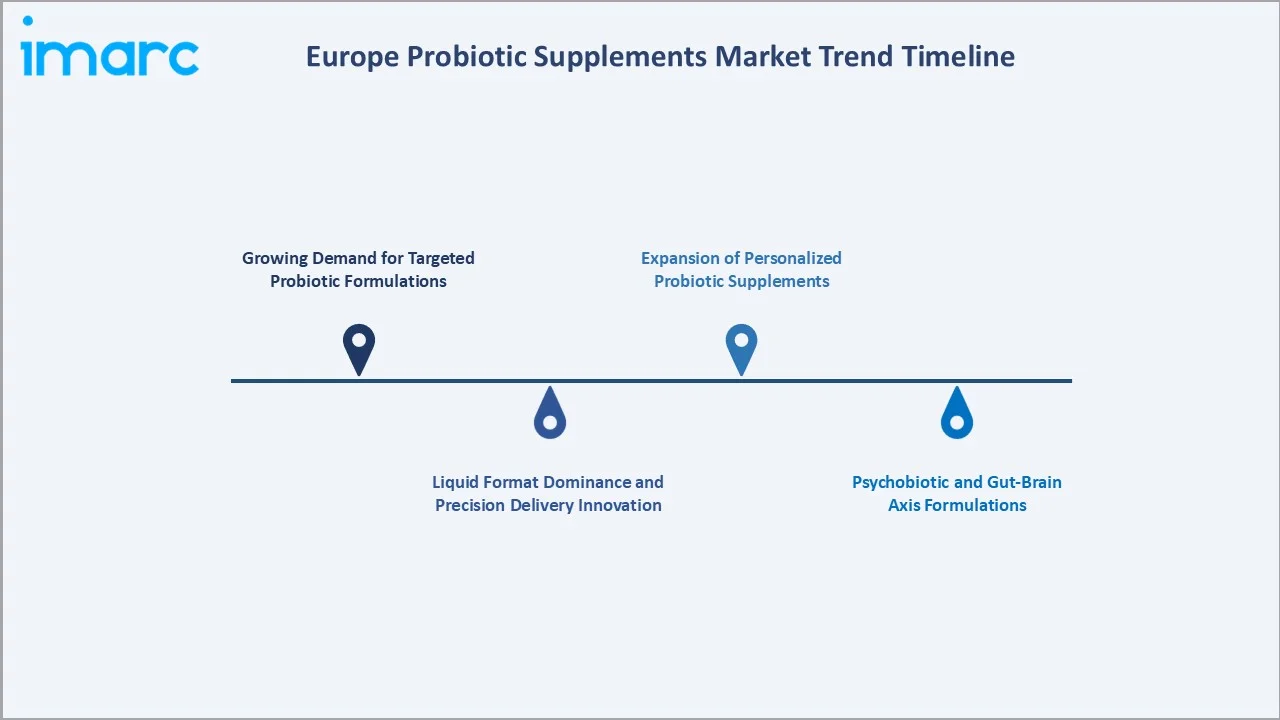
1. Growing Demand for Targeted Probiotic Formulations
In September 2026, Kerry introduced its Bio-K+ probiotic brand in the UK and Ireland, expanding access to its extensively researched probiotic products across the British Isles. The Bio-K+ range includes four capsule-based formulations aimed at supporting digestive health. The launch highlights a growing trend toward specialized probiotic products tailored to specific digestive health needs. Brands are increasingly offering different CFU strengths and formulations to provide more personalized digestive-health support.
2. Liquid Format Dominance and Precision Delivery Innovation
Liquid probiotic formats at 34.8% market share reflect the European pharmacy tradition of vial and drop-based probiotic administration, particularly in Italy, France, and Spain, where physician-recommended liquid probiotics are a well-established category. Brands are innovating in precision delivery formats including single-serve sachets, metered-dose dropper bottles, and refrigerated liquid cultures that maximize CFU viability while improving convenience. The liquid format advantage in pediatric and elderly consumer segments is driving sustained format preference that is expected to maintain leadership through the forecast period.
3. Expansion of Personalized Probiotic Supplements
In November 2024, Nestlé Health Science expanded Garden of Life’s microbiome supplement range across the UK and Ireland through Holland & Barrett. The six high-potency products offer up to 50 billion CFU and 15 probiotic strains per capsule, with formulations tailored for general, men’s, women’s, prenatal, and mood-related microbiome support. The launch reflects a growing trend toward personalized microbiome solutions, with probiotic products formulated for specific consumer groups such as men, women, and pregnant women. High-potency, multi-strain formulas and convenient once-daily capsules are also gaining traction in the market.
4. Psychobiotic and Gut-Brain Axis Formulations
European research institutions and specialist probiotic companies are investing in clinical development of psychobiotic strains, probiotics that demonstrably influence brain function and psychological health through the gut-brain axis, targeting stress resilience, sleep quality, anxiety reduction, and cognitive performance. These formulations command premium retail positioning and are gaining traction in Scandinavian and German markets where evidence-based supplement purchasing is most prevalent, representing the next high-value product frontier for the European probiotic supplements market.
Industry Value Chain Analysis
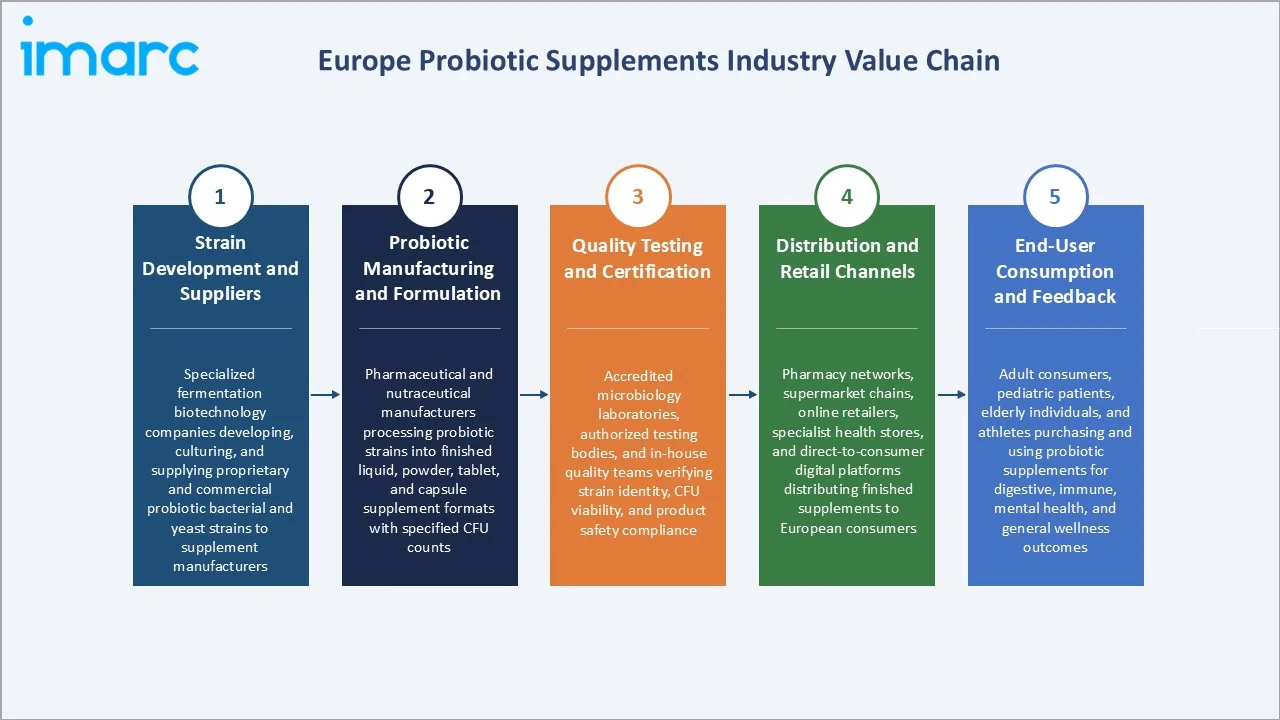
The Europe probiotic supplements value chain spans five integrated stages from strain development through consumer feedback loops. The probiotic manufacturing and formulation stage captures the highest value addition in the chain, as proprietary bacterial strains protected by patents, clinical validation investment, and strain-specific manufacturing know-how create durable competitive advantages that sustain premium pricing and preferred specification by healthcare professionals across European markets.
|
Stage |
Key Participants |
|
Strain Development and Suppliers |
Specialized fermentation biotechnology companies developing, culturing, and supplying proprietary and commercial probiotic bacterial and yeast strains to supplement manufacturers. |
|
Probiotic Manufacturing and Formulation |
Pharmaceutical and nutraceutical manufacturers processing probiotic strains into finished liquid, powder, tablet, and capsule supplement formats with specified CFU counts. |
|
Quality Testing and Certification |
Accredited microbiology laboratories, authorized testing bodies, and in-house quality teams verifying strain identity, CFU viability, and product safety compliance. |
|
Distribution and Retail Channels |
Pharmacy networks, supermarket chains, online retailers, specialist health stores, and direct-to-consumer digital platforms distributing finished supplements to European consumers. |
|
End-User Consumption and Feedback |
Adult consumers, pediatric patients, elderly individuals, and athletes purchasing and using probiotic supplements for digestive, immune, mental health, and general wellness outcomes. |
The probiotic manufacturing and formulation stage is the highest value-added stage in the value chain. Companies holding proprietary strains with clinical validation data, submission experience, and specialized cryoprotection and encapsulation manufacturing technology command premium brand positioning with healthcare professionals and pharmacy buyers that commodity strain distributors cannot replicate.
Technology Landscape in the Europe Probiotic Supplements Industry
Encapsulation and Stability Technology
Microencapsulation technologies including lipid encapsulation, alginate bead coating, and polymer matrix entrapment are critical to maintaining probiotic viability through manufacturing, distribution, and gastric transit. Advanced encapsulation enables ambient-temperature storage of high-CFU products that previously required refrigeration, expanding retail distribution options and improving consumer convenience. These technologies are progressively reducing the cold chain dependency that constrains probiotic supplement distribution in certain European markets.
Precision Fermentation and Bioprocess Optimization
Industrial-scale precision fermentation technology enables the consistent, high-yield production of probiotic bacterial strains at CFU concentrations and viability rates required for commercial supplement manufacturing. Continuous fermentation processes, advanced bioreactor monitoring, and AI-optimized growth condition management are enabling leading manufacturers to improve production efficiency, reduce batch variability, and lower per-unit production costs, progressively making clinically effective probiotic supplements available at more accessible price points.
Digital Health Integration and Microbiome Analytics
Consumer microbiome testing platforms using 16S rRNA sequencing and shotgun metagenomics are enabling personalized probiotic recommendations based on individual microbiome composition. Digital platforms combining testing, AI-powered recommendation algorithms, and personalized product subscription models are creating a new premium market segment that commands 3-5x the average retail price of standard probiotic supplements while building strong consumer loyalty through monthly subscription revenue models.
Market Segmentation Analysis
The report covers the following segments:
|
Segment Category |
Leading Segment |
Market Share |
Year |
|
Ingredient |
Bacteria |
86.4% |
2025 |
|
Form |
Liquid |
34.8% |
2025 |
|
Application |
🔒 |
🔒 |
2025 |
|
Distribution Channel |
Supermarkets and Hypermarkets |
🔒 |
2025 |
|
Country |
Italy |
20.8% |
2025 |

By Ingredient
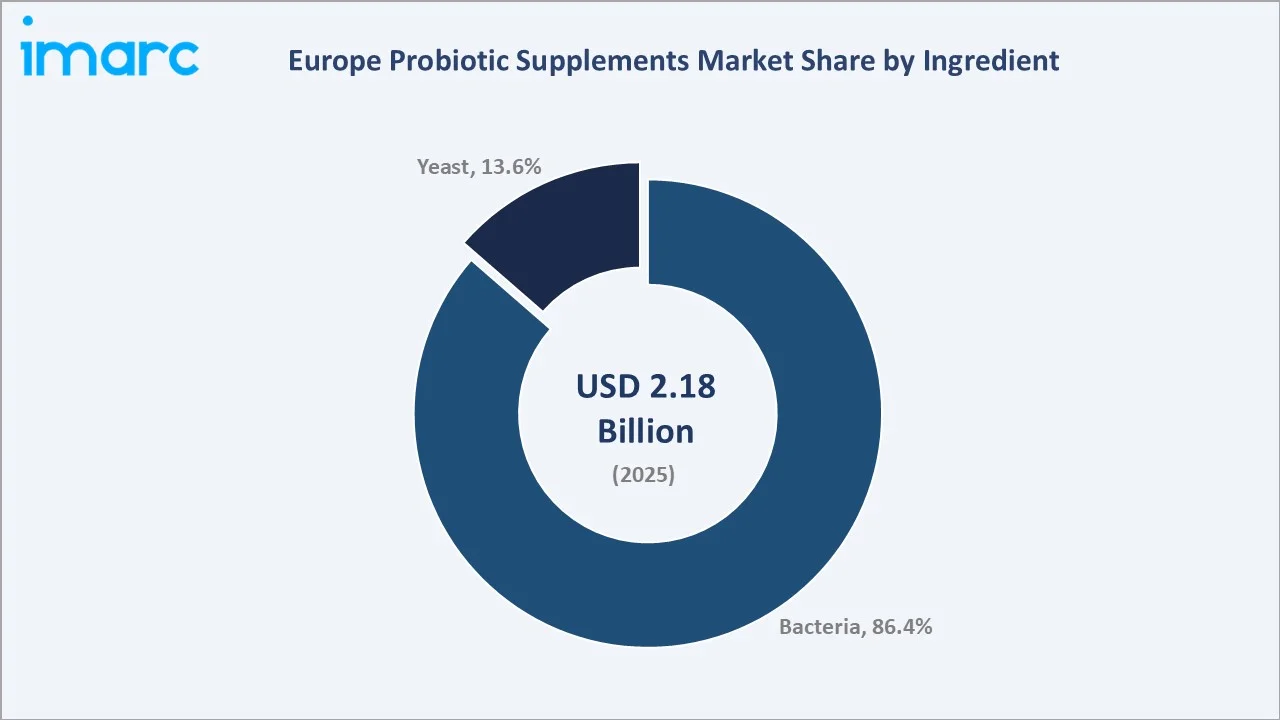
Bacteria dominate at 86.4% in 2025, reflecting the long-established clinical evidence base and consumer familiarity with Lactobacillus and Bifidobacterium species across digestive health, immunity, women's health, and infant health applications. Lactobacillus acidophilus, L. rhamnosus, L. reuteri, Bifidobacterium longum, and B. bifidum are among the most widely used strains in European commercial probiotic supplements, supported by extensive dossier submissions and academic clinical research across multiple health indication areas.
To access detailed market analysis, Request Sample
Yeast at 13.6%, primarily Saccharomyces boulardii, serves targeted clinical applications including antibiotic-associated diarrhea prevention, Clostridium difficile infection management, and traveler diarrhea treatment that are strongly endorsed by gastroenterologists across France, Germany, and Southern Europe. S. boulardii supplements benefit from particularly robust clinical evidence and physician recommendation support that sustains premium pricing in the pharmacy channel.
By Form
Liquid leads at 34.8% in 2025, reflecting the dominance of Italian and French pharmacy distribution models where liquid vials, drops, and oral suspensions are the preferred physician-recommended format for both adult and pediatric probiotic administration. Liquid formats provide the highest bioavailability, enable precise dosing for pediatric applications, and are associated with premium clinical positioning that sustains above-average consumer price acceptance in Southern European markets.
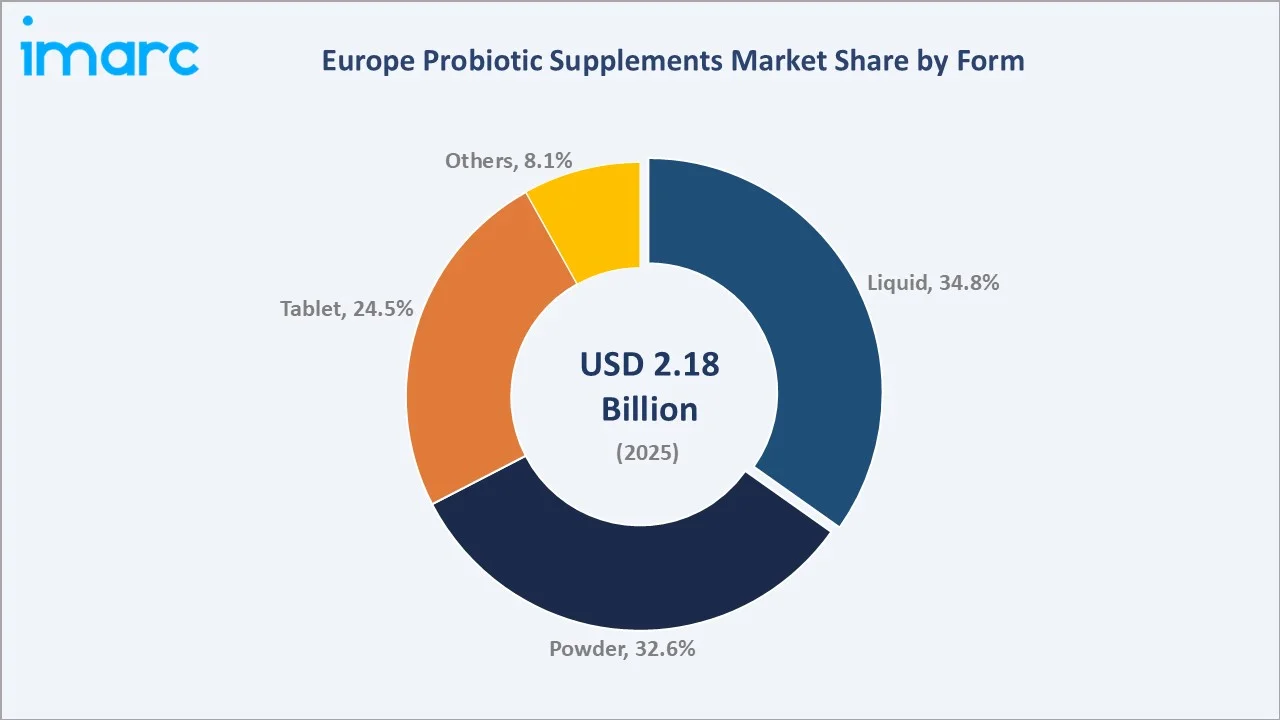
Powder at 32.6% is the second-largest form, particularly popular in Germany and Northern Europe, where sachet-format probiotic powders are conveniently added to food and drinks. Tablets at 24.5% serve the Northern European preference for standardized, convenient supplement formats, while others at 8.1% include gummies, strips, and emerging functional food formats that are growing with younger consumer demographics seeking experiential supplement formats.
Regional Market Insights
|
Country |
Share (2025) |
Key Europe Probiotic Supplements Market Drivers & Characteristics |
|
Italy |
20.8% |
Reflecting Europe highest per-capita probiotic supplement consumption driven by deeply embedded pharmacy culture, routine physician recommendation of probiotics alongside antibiotic prescriptions, strong gastroenterology and pediatrics endorsement, and an active domestic pharmaceutical supplement industry developing proprietary probiotic formulations. |
|
Germany |
19.6% |
Reflecting evidence-based consumer demand for clinically documented supplements, strong pharmacist recommendation culture, growing online health supplement retail, and the presence of leading probiotic manufacturers including consumer health divisions that support strong category education and distribution. |
|
France |
17.8% |
Reflecting established medical tradition of S. boulardii yeast probiotic prescription alongside antibiotics, strong pharmacy channel probiotic sales, growing consumer wellness market, and the presence of major industry players and institutional advocates for gut health nutrition. |
|
United Kingdom |
15.7% |
Reflecting a maturing consumer supplement market with growing awareness of microbiome health, strong online supplement retail growth for specific clinical applications, and strategic investment in the UK probiotic segment. |
|
Spain |
10.9% |
Reflecting growing pharmacy-based probiotic supplement adoption, increasing consumer health consciousness, gastroenterologist support for probiotic use in IBS and digestive management, and a growing sports nutrition probiotic segment among active Spanish consumers. |
|
Russia |
8.4% |
Reflecting a growing consumer health supplement market with expanding pharmacy distribution of imported European probiotic brands and growing domestic supplement manufacturing. |
|
Others |
6.8% |
Reflecting probiotic supplement market development across other European markets where pharmacy and e-commerce adoption is growing as microbiome health awareness expands beyond the established Southern European consumption centers. |
Italy commanding 20.8% reflects both cultural and clinical factors that have made Italy one of the highest per-capita probiotic-consuming countries. The Italian practice of routinely purchasing probiotic supplements concurrently with antibiotic prescriptions has created a large, habitual consumer base that maintains probiotic consumption across diverse health occasions beyond antibiotic adjunct use.
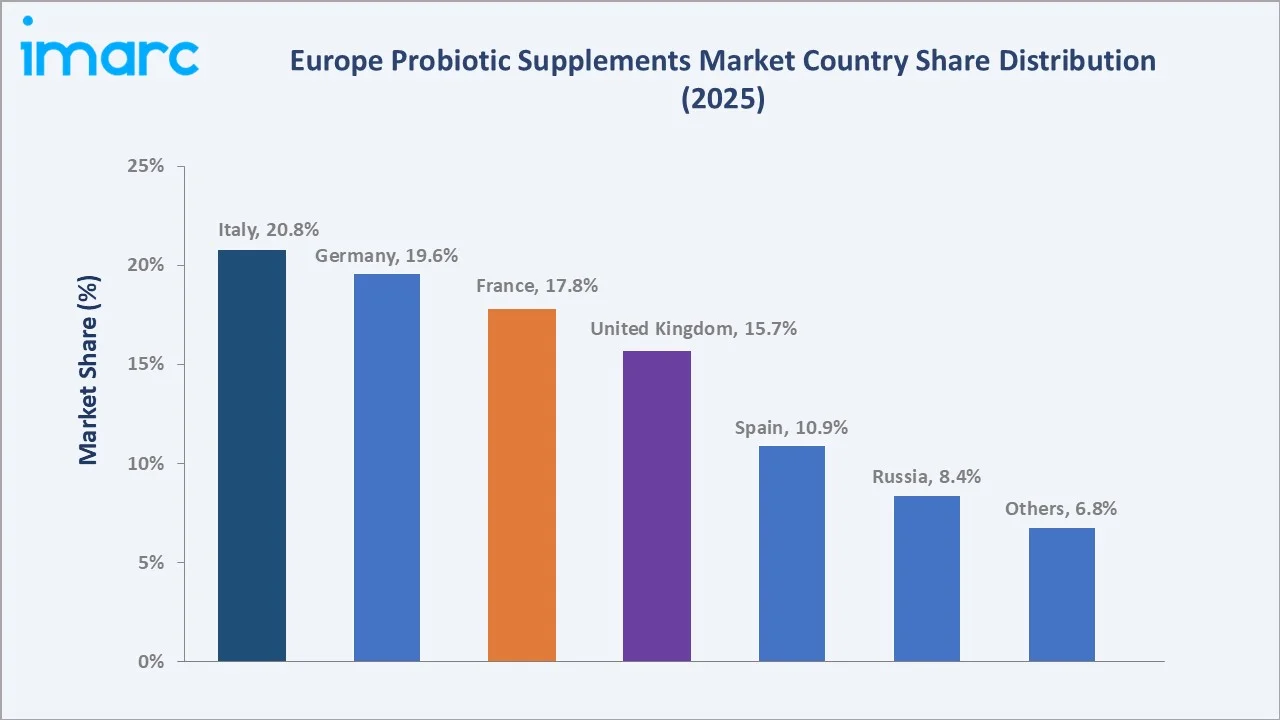
Germany at 19.6% reflects a different but equally robust market dynamic where evidence-based consumer demand, strong pharmacist expertise, and growing e-commerce channel penetration sustain consistent above-average supplement spending. France at 17.8% benefits from both the established S. boulardii clinical tradition and the institutional influence of Danone on gut health nutrition awareness. The UK at 15.7% is a growing market where D2C digital brands are gaining share, with recent acquisitions signaling corporate confidence in continued market development. Spain at 10.9%, Russia at 8.4%, and Others at 6.8%.
Competitive Landscape
The Europe probiotic supplements market features a competitive landscape combining global FMCG and pharmaceutical majors, specialist probiotic companies with proprietary strain portfolios, and a growing ecosystem of D2C digital health supplement brands. Competition is increasingly centered on clinical documentation, regulatory expertise, delivery technology, and personalized nutrition positioning.
|
Company |
Key Brands |
Market Position |
Core Strength |
|
Nestlé |
Nature's Bounty, Garden of Life, NAN CARE |
Market Leader |
Nestlé acts as a major market leader and scientific innovator in the European probiotics and dietary supplements sector. |
|
BioGaia |
BioGaia |
Innovator |
BioGaia is a leading company that shapes the European probiotic market through clinically documented strains and prominent market share in pediatric supplements. |
|
Yakult Honsha Co., Ltd. |
Yakult |
Established Player |
Yakult Honsha Co., Ltd. plays a pioneering and foundational role in the European probiotic market through its introduction of science-backed fermented dairy drinks and localized research. |
|
ADM |
Bio-Kult, Deerland |
Challenger |
ADM acts as a major global supplier and manufacturer of science-backed probiotics and postbiotics for the European health and wellness market. |
|
Procter & Gamble |
Align Probiotics |
Established Player |
Procter & Gamble (P&G) plays a major role in the European and global probiotic supplements market primarily through its flagship digestive health brand, Align Probiotic. |
The competitive landscape is evolving toward greater polarization between scale-driven FMCG players competing on brand awareness and retail distribution and specialist innovation companies competing on strain-specific clinical evidence and premium healthcare professional positioning.
Key Company Profiles
Nestlé
Nestlé is a major global nutrition and health company with a broad portfolio of vitamins, minerals, supplements, and consumer health products. Through Nestlé Health Science, the company participates in the probiotic supplements segment through brands such as Garden of Life, which offers high-potency, multi-strain probiotic formulations. Its focus on science-based nutrition, product innovation, and gut health supports its presence in the European probiotic supplements market. The company also adapts its products to regional consumer needs and European regulatory requirements.
- Key Brands: Nature's Bounty, Garden of Life, NAN CARE.
- Strategic Focus: Expanding its probiotic portfolio through science-backed, high-potency, and targeted microbiome formulations addressing diverse consumer health needs. Its strategy also emphasizes product innovation, brand expansion, and wider retail and healthcare distribution across European markets.
BioGaia
BioGaia is a Swedish specialist probiotic company and the global leader in Lactobacillus reuteri-based probiotic products, holding patents on L. reuteri strains supported by one of the most extensive clinical evidence portfolios of any single probiotic organism. BioGaia products are distributed through pharmacy, healthcare professional, and online channels, with particularly strong positions in the Italian, German, and Scandinavian markets.
- Key Brands: BioGaia.
- Strategic Focus: Focuses on science-backed probiotic innovation, developing products based on well-researched and patented probiotic strains for specific health needs. The company also emphasizes expanding its product portfolio, strengthening distribution, and increasing consumer awareness of probiotic health benefits across European markets.
Market Concentration Analysis
The Europe probiotic supplements market is moderately concentrated, with a small group of specialist probiotic companies collectively accounting for the majority of branded consumer product revenue. However, the market is becoming progressively more fragmented at the retail level as hundreds of own-labels, D2C digital brands, and pharmacy private-label products compete for consumer spending in the growing supplement category.
The probiotic ingredient supply layer is more concentrated, with a small number of other fermentation specialists supplying the proprietary strains that underpin the majority of European commercial probiotic products. This ingredient layer concentration gives leading strain suppliers significant influence over product innovation and quality standards across the European market. Market concentration at the brand level is expected to increase through strategic acquisitions as larger wellness and pharmaceutical companies acquire specialist European probiotic brands with established clinical credentials and loyal consumer bases, progressively consolidating the fragmented D2C and specialist market into larger portfolio companies.
Investment & Growth Opportunities
Highest Growth Segments
Psychobiotic formulations targeting the gut-brain axis represent the highest-premium growth opportunity in the European probiotic supplements market, commanding 3-5x the average retail price of general digestive health probiotics and growing significantly faster than the overall market among younger, wellness-conscious European consumers. Personalized microbiome-based probiotic recommendations represent the highest subscription revenue opportunity. Pediatric probiotic drops and powders represent the most reliable recurring purchase revenue opportunity with above-average consumer willingness to pay.
Investment Themes
- Clinical Evidence Investment for Healthcare Professional Recommendation: European probiotic brands that invest in rigorous clinical trials generating condition-specific efficacy data for pharmacist and physician recommendation programs capture premium pricing and superior consumer retention compared to brands relying on general wellness positioning. Clinical validation investment is the primary enabler of pharmacy channel leadership in Italy, Germany, and France.
- Personalized Supplement Platform Development: Investment in consumer microbiome testing infrastructure combined with AI-powered personalized probiotic recommendation and subscription commerce platforms creates a high-margin, recurring revenue model that is significantly more defensible than branded commodity probiotic supplement retail.
- Liquid and Precision Delivery Format Innovation: Investment in advanced liquid probiotic delivery formats, including single-serve refrigerated vials, ambient-stable microencapsulated liquid formulas, and metered-dose precision dropper systems that improve both consumer experience and clinical dosing accuracy, addresses the format preference of the dominant Southern European pharmacy market while expanding accessibility to broader retail and online distribution channels.
Future Market Outlook (2026-2034)
The Europe probiotic supplements market stood at USD 2.18 Billion in 2025 and is projected to grow from USD 2.28 Billion in 2026 to USD 3.23 Billion by 2034, exhibiting a CAGR of 4.32% during the forecast period. The market is expected to reach an intermediate milestone of approximately USD 2.70 Billion by 2030, as personalized nutrition platforms scale, psychobiotic formulations enter mainstream retail, and the Italy-led pharmacy supplement model extends to growing markets in Spain, Poland, and other European countries with developing probiotic supplement consumption habits.
Three structural forces will define the Europe probiotic supplements market through 2034. First, the progressive scientific validation of the gut-brain axis and the expansion of clinical indications for probiotic use beyond digestion into mental health, immune modulation, metabolic support, and healthy aging will systematically expand the consumer market for probiotic supplements from the current digestive health and immunity base toward a broader preventive health positioning that attracts new consumer segments previously unengaged with probiotic products.
Second, digital health integration through consumer microbiome testing, AI-powered recommendation engines, and subscription probiotic programs will create a new premium distribution channel operating outside traditional pharmacy and retail models, capturing the growing segment of health-engaged European consumers who are willing to pay significantly more for personalized, evidence-backed nutrition recommendations than for standard shelf supplements. Third, regulatory evolution will progressively improve the environment for evidence-based marketing communication that currently constrains consumer education and brand differentiation in the European probiotic supplement market.
Research Methodology
Primary Research
Primary research comprised structured consultations with probiotic supplement brand managers and innovation directors, pharmacy channel buyers and category managers, gastroenterology and clinical nutrition specialists, regulatory affairs consultants, consumer health market researchers, and e-commerce supplement retail executives across Italy, Germany, France, the UK, and Spain. These discussions validated market sizing, assessed country-level demand dynamics, identified emerging product trends, and provided competitive intelligence on brand strategy and distribution channel evolution.
Secondary Research
Secondary research drew on IMARC Group market data, scientific opinion publications, EU health supplement market reports, company investor presentations and annual reports, consumer health supplement industry association data, clinical trial databases covering probiotic efficacy research, and trade publications covering European nutraceutical and functional food markets. Historical market data spanning 2020 through 2025 was cross-validated across multiple commercial and academic data sources.
Forecasting Models
Market forecasts incorporated historical revenue growth trend analysis, country-level supplement spending trajectory modeling, segment growth projections based on clinical pipeline development and consumer trend indicators, distribution channel evolution forecasts for pharmacy versus e-commerce share shifts, personalized nutrition adoption scenarios, demographic aging impact modeling, and macroeconomic indicators including European consumer health expenditure growth rates through 2034.
Europe Probiotic Supplements Market Report Coverage:
| Report Features | Details |
|---|---|
| Base Year of the Analysis | 2025 |
| Historical Period | 2020-2025 |
| Forecast Period | 2026-2034 |
| Units | Billion USD |
| Scope of the Report | Exploration of Historical Trends and Market Outlook, Industry Catalysts and Challenges, Segment-Wise Historical and Future Market Assessment:
|
| Ingredients Covered | Bacteria, Yeast |
| Forms Covered | Powder, Tablet, Liquid, and Others |
| Applications Covered | Food Supplements, Nutritional Supplements, Speciality Nutrients, Infant Formula, and Others |
| Distribution Channels Covered | Supermarkets and Hypermarkets, Hospitals & Clinics, Pharmacies, Online, and Others |
| Countries Covered | Germany, France, United Kingdom, Russia, Italy, Spain, Others |
| Companies Covered | Nestlé, BioGaia, Yakult Honsha Co., Ltd., ADM, Procter & Gamble, etc. |
| Customization Scope | 10% Free Customization |
| Post-Sale Analyst Support | 10-12 Weeks |
| Delivery Format | PDF and Excel through Email (We can also provide the editable version of the report in PPT/Word format on special request) |
Frequently Asked Questions About the Europe Probiotic Supplements Market Report
The Europe probiotic supplements market reached USD 2.28 Billion in 2026, driven by growing gut health awareness, aging population preventive health spending, pharmacy channel expansion, and innovation in clinical-grade probiotic formulations.
The market is projected to grow at a CAGR of 4.32% during 2026-2034, supported by expanding clinical evidence for gut-brain axis health claims, personalized microbiome supplement platforms, psychobiotic formulation growth, and progressive market development in emerging European probiotic markets.
The market is projected to reach approximately USD 2.70 Billion by 2030, driven by the mainstreaming of psychobiotic and precision probiotic categories, D2C digital channel scaling, and the extension of the Italy-led pharmacy probiotic consumption model to additional European markets.
Bacteria lead with an 86.4% share in 2025, reflecting the clinical dominance of Lactobacillus and Bifidobacterium species across digestive health, immunity, infant health, and women's health applications that underpin the vast majority of European probiotic supplement product formulations.
Liquid leads with a 34.8% share in 2025, reflecting the Southern European pharmacy tradition of vial and drop-based probiotic administration, pediatric probiotic drop products, and the consumer perception of superior CFU delivery and bioavailability compared to tablet or powder alternatives.
Italy leads with a 20.8% share in 2025, driven by Europe highest per-capita probiotic supplement consumption supported by embedded pharmacy culture, routine physician recommendation alongside antibiotic prescriptions, strong gastroenterology endorsement, and established domestic supplement formulation capability.
Key players include Nestlé, BioGaia, Yakult Honsha Co., Ltd., ADM, and Procter & Gamble, among others.
The market is projected to reach USD 3.23 Billion by 2034, driven by psychobiotic and gut-brain axis product expansion, personalized microbiome supplement platforms, regulatory evolution enabling improved health claim communication, and progressive market penetration across developing European probiotic markets.
Need more help?
- Speak to our experienced analysts for insights on the current market scenarios.
- Include additional segments and countries to customize the report as per your requirement.
- Gain an unparalleled competitive advantage in your domain by understanding how to utilize the report and positively impacting your operations and revenue.
- For further assistance, please connect with our analysts.
 Request Customization
 Speak to an Analyst
 Request Brochure
 Inquire Before Buying
Benefits of Customization
- Personalize this research
- Triangulate with your data
- Get data as per your format and definition
- Gain a deeper dive into a specific application, geography, customer, or competitor
- Any level of personalization
Get in Touch With Us
UNITED STATES
Phone: +1-201-971-6302
INDIA
Phone: +91-120-433-0800
UNITED KINGDOM
Phone: +44-753-714-6104
Email: [email protected]
Client Testimonials




.webp)




.webp)













Related Reports

Choose your plan
*Please note that the prices mentioned below are starting prices for each bundle type. Kindly contact our team for further details.*
Single User License
- 1 User License, Access on 2 Devices
- PDF Report + Excel Dataset (Password Protected)
- Lifetime Access
- No Printing Rights
- 10% Free Report Customization
- 10–12 Weeks of Analyst Support
Five User License
- Access for 5 Users, 2 Devices per User
- PDF Report + Excel Dataset (Password Protected)
- Lifetime Access
- Dedicated Account Manager
- 12–14 Weeks of Analyst Support
- No Printing Rights
- 15% Free Report Customization
- 25% Discount on Your Next Purchase
Corporate User License
- Unlimited User Access (Within Your Organization)
- PDF Report + Excel Dataset
- Lifetime Access
- Dedicated Account Manager
- 14–20 Weeks of Analyst Support
- No Printing Rights
- 20% Free Report Customization
- 30% Discount on Your Next Purchase
Essential Insights
What's included:
3 reports
- Lifetime Access
- PDF Reports
- Excel Datasets
- 2 Weeks of Free Analyst Support
- 2 User Licenses
- Access on 2 Devices
- Printing Rights
- Complimentary PowerPoint (PPT) Version
- Complimentary License Upgrade
Professional Access
What's included:
5 reports
- Lifetime Access
- PDF Reports
- Excel Datasets
- 8 Weeks of Free Analyst Support
- 2 User Licenses
- Access on 2 Devices
- Printing Rights
- Complimentary PowerPoint (PPT) Version
- Complimentary License Upgrade
Business Advantage
What's included:
8 reports
- Lifetime Access
- PDF Reports
- Excel Datasets
- 14 Weeks of Free Analyst Support
- 2 User Licenses
- Access on 2 Devices
- Printing Rights
- Complimentary PowerPoint (PPT) Version
- Complimentary License Upgrade
Enterprise Intelligence
What's included:
10 reports
- Lifetime Access
- PDF Reports
- Excel Datasets
- 20 Weeks of Free Analyst Support
- 2 User Licenses
- Access on 2 Devices
- Printing Rights
- Complimentary PowerPoint (PPT) Version
- Complimentary License Upgrade