
Eye Care Surgical Market Size, Share, Trends and Forecast by Product, Application, End User, and Region, 2026-2034
Eye Care Surgical Market Size and Share:
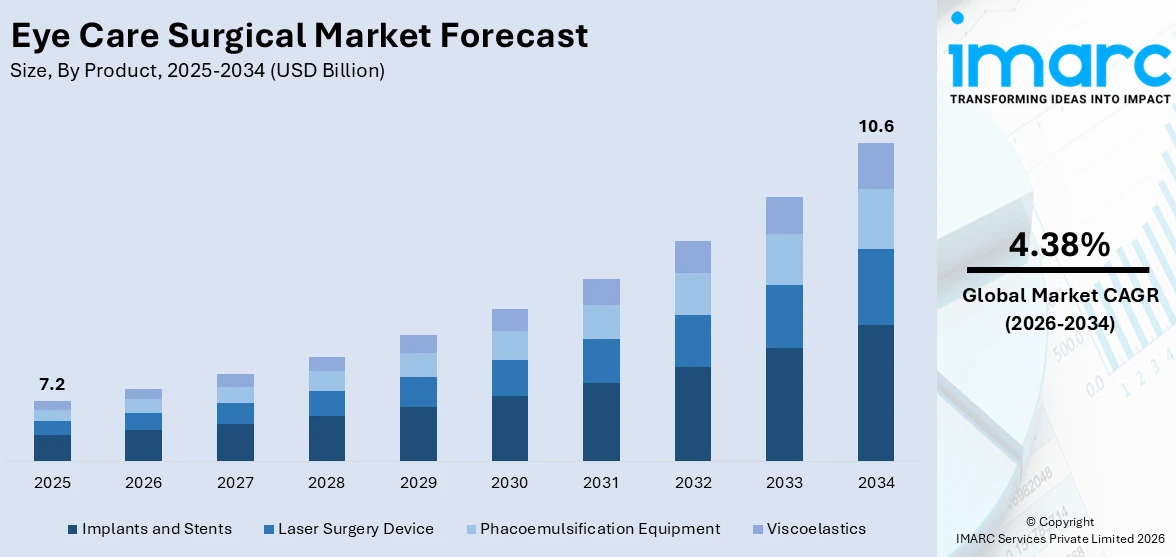
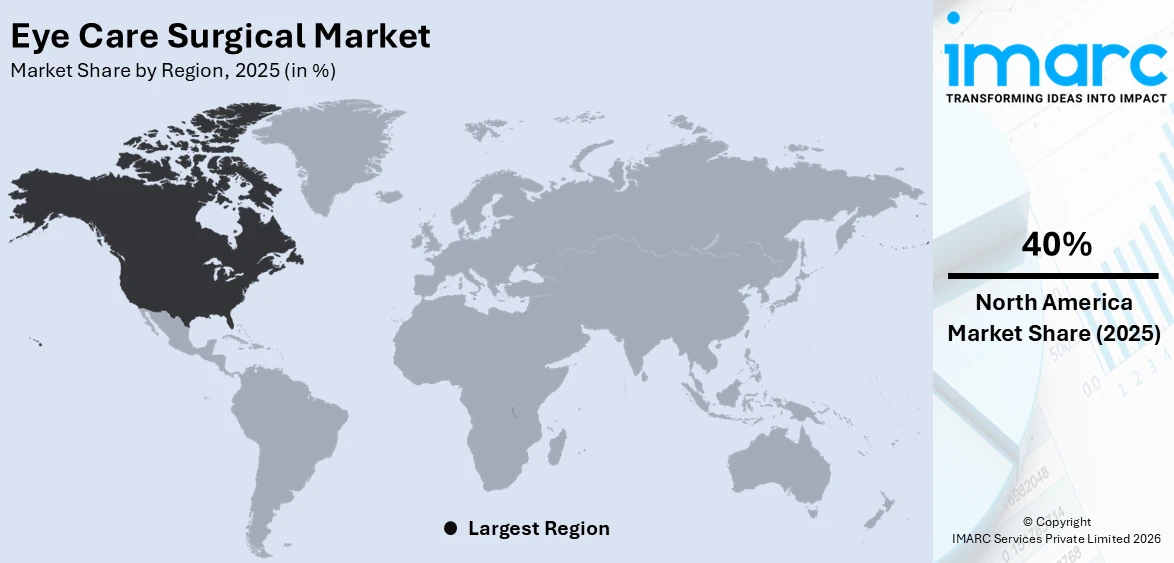
The global eye care surgical market size was valued at USD 7.2 Billion in 2025. Looking forward, IMARC Group estimates the market to reach USD 10.6 Billion by 2034, exhibiting a CAGR of 4.38% from 2026-2034. North America currently dominates the market, holding a market share of 40%. The encompasses advanced procedures and medical technologies designed to address various ocular conditions and restore optimal visual function. This dynamic sector includes corrective surgeries for refractive errors, comprehensive treatment of age-related conditions, and specialized interventions for complex ocular diseases. Ongoing technological innovations continue to enhance surgical precision and improve patient outcomes while expanding access to vision restoration services globally. Rising consumer awareness and aging populations drive sustained expansion in the eye care surgical market share.
|
Report Attribute
|
Key Statistics
|
|---|---|
|
Base Year
|
2025
|
|
Forecast Years
|
2026-2034
|
|
Historical Years
|
2020-2025
|
|
Market Size in 2025
|
USD 7.2 Billion |
|
Market Forecast in 2034
|
USD 10.6 Billion |
| Market Growth Rate 2026-2034 | 4.38% |
The global expansion of the eye care surgical market reflects increasing prevalence of vision disorders coupled with advancing surgical technologies. Aging demographics worldwide contribute to higher incidence of age-related ocular conditions requiring surgical intervention. Innovations in minimally invasive techniques enable faster recovery times and improved patient experiences, encouraging greater adoption of surgical solutions. Enhanced diagnostic capabilities allow earlier detection of conditions, facilitating timely treatment and better outcomes. Amid this growth, Alcon announced in August 2025 its agreement to acquire STAAR Surgical Company — including its EVO ICL implantable lens technology — for around USD 1.5 billion, strengthening its surgical vision‑correction portfolio and illustrating how larger players are integrating complementary technologies. Growing middle-class populations in emerging economies improve access to specialized eye care services. Digital eye strain from prolonged screen exposure increases demand for corrective procedures. Medical tourism for affordable quality eye care drives cross-border patient flows. Professional collaborations and knowledge sharing accelerate adoption of best practices globally. Government initiatives promoting vision health awareness contribute to market expansion. Continuous research and development yield newer, safer surgical options that address previously untreatable conditions, broadening the market's therapeutic scope.
To get more information on this market Request Sample
The United States maintains a commanding position representing approximately 88% of the regional market, driven by robust healthcare infrastructure and widespread insurance coverage for vision correction procedures. Advanced research institutions continuously develop innovative surgical techniques that set global standards. High consumer awareness regarding vision health encourages proactive seeking of surgical solutions. Well-established networks of specialized eye care facilities ensure broad geographic access to services. Aging baby boomer demographics create sustained demand for age-related surgical interventions. Premium lens options and personalized treatment approaches appeal to quality-conscious consumers. Regulatory frameworks support rapid commercialization of breakthrough technologies. Strong emphasis on preventive healthcare drives early intervention strategies. Partnerships between academic medical centers and industry accelerate clinical adoption of innovations. Digital health integration improves patient monitoring and post-operative care management. Growing acceptance of elective procedures for lifestyle enhancement further expands the addressable market within the United States.
Eye Care Surgical Market Trends:
Technological Advancement in Surgical Precision
Advanced imaging systems and computer-assisted surgical platforms revolutionize precision in ocular procedures. Femtosecond laser technology enables bladeless techniques that enhance accuracy and consistency. Real-time intraoperative monitoring systems provide surgeons with detailed feedback, optimizing procedural outcomes. Integration of artificial intelligence assists in surgical planning and execution, reducing variability. Enhanced visualization tools allow surgeons to navigate complex anatomical structures with greater confidence. Robotic assistance platforms emerge to augment human capabilities in delicate maneuvers. Wavefront-guided approaches enable highly customized treatments tailored to individual eye characteristics. Digital surgical microscopes with integrated data displays streamline workflow efficiency. Augmented reality overlays provide surgeons with critical information without diverting attention. Continuous innovation in surgical instrumentation reduces tissue trauma and accelerates healing. These technological refinements collectively improve patient safety profiles while expanding the range of treatable conditions, making surgical interventions more accessible, predictable, and effective for diverse patient populations.
Patient-Centric Care Models
Contemporary eye care surgical market trends emphasize personalized treatment pathways that prioritize individual patient needs and preferences. Comprehensive preoperative consultations ensure patients understand all available options and expected outcomes. Enhanced communication tools facilitate shared decision-making between clinicians and patients. Reflecting the digital transition in surgical care, ZEISS recently announced that its VERACITY Surgery Planner has been used in over 2 million digitally‑planned cataract surgery cases in the U.S., signalling a strong shift toward integrated digital workflows in ophthalmology. Flexible scheduling accommodations recognize diverse lifestyle demands. Post-operative support programs provide continuous guidance through recovery phases. Digital platforms enable remote monitoring and virtual follow-up consultations. Patient education initiatives demystify surgical procedures, reducing anxiety and improving satisfaction. Transparent pricing models help patients make informed financial decisions. Concierge services streamline administrative processes, enhancing overall experience. Feedback mechanisms allow continuous service improvement based on patient insights. Multidisciplinary care teams coordinate comprehensive management of complex cases. These patient-focused approaches foster trust and encourage timely seeking of necessary surgical interventions, ultimately improving population-level vision health outcomes.
Expansion of Ambulatory Surgical Centers
The proliferation of specialized ambulatory surgical centers transforms delivery of eye care services, contributing significantly to eye care surgical market growth. These dedicated facilities optimize workflows specifically for ophthalmological procedures, enhancing efficiency and throughput. Streamlined operational models reduce costs compared to traditional hospital settings while maintaining high quality standards. For example, Eye Health America recently expanded its network through acquisition of the Eye Center of Central Georgia, joining it into its 14 ambulatory surgical centers (ASCs) and reinforcing its footprint in Georgia—illustrating how major players are scaling dedicated ophthalmology‑centric ASCs to capture growing demand. Convenient locations improve patient access, particularly in underserved areas. Specialized staffing with concentrated expertise in eye care ensures optimal patient outcomes. Advanced infection control protocols tailored to ophthalmic procedures minimize risk profiles. Efficient scheduling systems reduce wait times, improving patient convenience. Investment in cutting-edge equipment specific to eye surgery enhances procedural capabilities. Comfortable, patient-friendly environments alleviate stress associated with surgical interventions. Partnerships with multiple surgeon networks expand service offerings. These facilities enable scalable capacity expansion to meet growing demand while delivering cost-effective care that broadens market accessibility.
Eye Care Surgical Industry Segmentation:
IMARC Group provides an analysis of the key trends in each segment of the global eye care surgical market, along with forecast at the global, regional, and country levels from 2026-2034. The market has been categorized based on product, application, and end user.
Analysis by Product:
- Implants and Stents
- Laser Surgery Device
- Phacoemulsification Equipment
- Viscoelastics
Implants and stents constitute a critical segment representing approximately 28% share, addressing pressure management in glaucoma and providing structural support in various procedures. Minimally invasive glaucoma surgery devices gain traction as alternatives to traditional filtration procedures. Drainage implants offer solutions for refractory cases where conventional medical management proves insufficient. Technological innovations yield biocompatible materials that minimize inflammatory responses and improve long-term success rates. Micro-stent platforms enable angle-based procedures with favorable safety profiles. Sustained-release drug delivery systems integrated into implants provide continuous therapeutic benefit. Regulatory approvals for novel devices expand treatment options for complex cases. Growing recognition of glaucoma as a leading cause of irreversible vision loss drives adoption of preventive surgical approaches. Combination procedures incorporating implants with cataract surgery streamline patient management. Enhanced surgical training programs improve clinician comfort with implant technologies. These devices address unmet clinical needs, securing sustained growth within the broader surgical market landscape.
Analysis by Application:
Access the comprehensive market breakdown Request Sample
- Cataract Surgery
- Oculoplastic Surgery
- Vitreo-Retinal Surgery
- Corneal Surgery
- Refractive Surgery
- Glaucoma Surgery
- Others
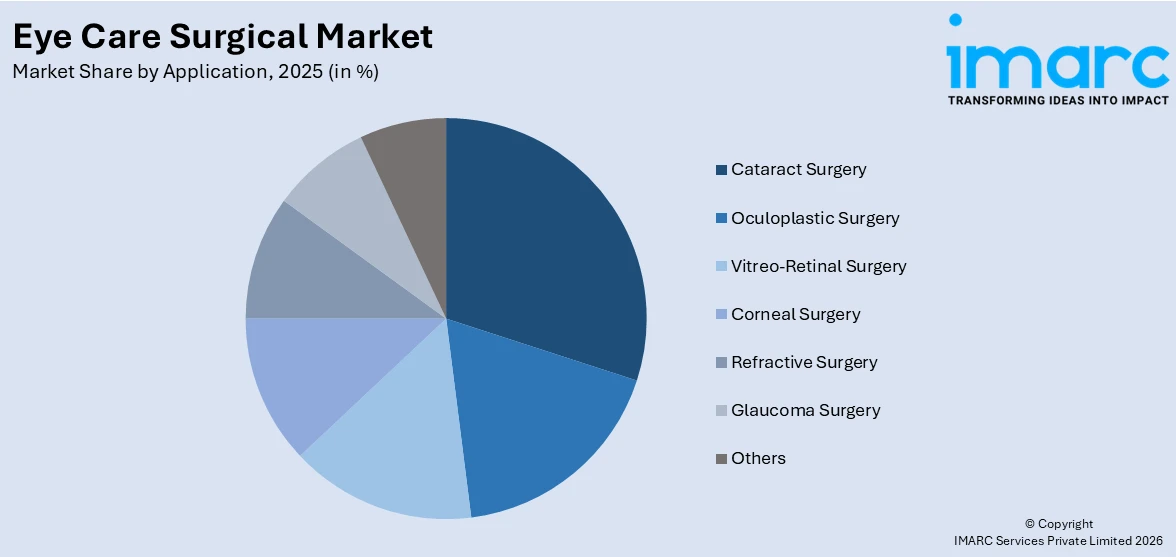
Cataract surgery represents the dominant procedural segment, commanding approximately 45%. Age-related lens opacity affects millions globally, creating substantial demand for surgical correction. Modern phacoemulsification techniques enable minimally invasive lens removal with rapid visual recovery. Premium intraocular lens options provide patients with enhanced visual outcomes including astigmatism correction and multifocal capabilities. Increasing life expectancy worldwide expands the population at risk for cataract development. Early intervention strategies gain acceptance as awareness of quality-of-life benefits grows. Surgical advancements reduce procedural complexity, enabling treatment of increasingly advanced cases. Favorable reimbursement policies in many markets support broad patient access. Bilateral procedures performed sequentially drive repeated service utilization. Technological refinements in lens materials and designs continuously improve long-term outcomes. Growing acceptance of premium lens upgrades enhances revenue potential. Outreach programs targeting underserved populations expand the addressable market. Cataract surgery's established clinical efficacy and safety profile sustain its market-leading position.
Analysis by End User:
- Hospitals
- Ophthalmology Clinics
- Eye Research Institutes
- Ambulatory Surgical Centers
Hospitals maintain the largest end-user segment share at approximately 55%, providing comprehensive infrastructure for complex surgical cases. Integrated healthcare systems offer multidisciplinary support essential for managing patients with comorbidities. Advanced diagnostic capabilities within hospital settings enable thorough preoperative assessments. Emergency department access facilitates management of acute ocular conditions requiring immediate surgical intervention. Teaching hospitals contribute to surgical innovation through research initiatives and clinical trials. Sophisticated anesthesiology services support procedures requiring general anesthesia or specialized monitoring. Intensive care capabilities address rare but serious complications. Established credentialing processes ensure surgeon competency and patient safety. Hospital-based programs often serve as referral centers for complex cases beyond ambulatory facility scope. Infrastructure investments in surgical suites accommodate latest technological platforms. Comprehensive medical records systems support coordinated care across specialties. Insurance contracting relationships facilitate patient access through established networks. This segment's breadth of capabilities positions hospitals as essential components of the eye care surgical ecosystem.
Regional Analysis:
To get more information on the regional analysis of this market Request Sample
- North America
- United States
- Canada
- Asia Pacific
- China
- Japan
- India
- South Korea
- Australia
- Indonesia
- Others
- Europe
- Germany
- France
- United Kingdom
- Italy
- Spain
- Russia
- Others
- Latin America
- Brazil
- Mexico
- Others
- Middle East and Africa
North America commands leading regional position with approximately 40% market share, reflecting advanced healthcare infrastructure and favorable economic conditions. Cross-border medical tourism between member nations facilitates patient mobility for specialized procedures. Harmonized regulatory frameworks support efficient market entry for innovative technologies. Strong pharmaceutical industry presence accelerates development of adjunctive therapeutic agents. Academic medical centers drive clinical research that establishes evidence-based practice standards. Professional societies promote knowledge dissemination through conferences and continuing education. Insurance models generally provide favorable coverage for medically necessary procedures. Cultural emphasis on active aging encourages pursuit of vision correction to maintain lifestyle quality. Well-developed supply chains ensure reliable access to surgical consumables and equipment. Technology transfer from research institutions to commercial applications occurs efficiently. Government health initiatives address disparities in underserved populations. Growing Hispanic populations diversify patient demographics and service needs. Regional market maturity drives focus on outcome optimization and patient experience enhancement rather than merely procedural volume growth.
Key Regional Takeaways:
United States Eye Care Surgical Market Analysis
The United States exhibits exceptional market maturity characterized by widespread adoption of advanced surgical technologies and comprehensive patient access. Extensive insurance coverage including Medicare benefits ensures broad affordability for age-eligible populations. High consumer awareness drives proactive seeking of corrective procedures even for mild visual impairments. Competitive market dynamics foster continuous innovation as providers differentiate through technology adoption and service quality. Robust physician training infrastructure produces highly skilled surgical workforce. Regulatory pathways balance innovation encouragement with patient safety priorities. Direct-to-consumer marketing raises public awareness of available treatment options. Geographic distribution of facilities ensures reasonable access across urban and rural areas. Strong preference for outpatient settings aligns with cost-efficiency objectives. Integration of telemedicine enhances preoperative screening and post-operative monitoring. Research funding supports development of next-generation therapies. Demographic trends including aging baby boomers sustain long-term demand growth. Premium service segments flourish as consumers invest in quality-of-life enhancements.
Asia Pacific Eye Care Surgical Market Analysis
Asia Pacific presents dynamic growth opportunities with favorable eye care surgical market outlook driven by large populations and economic development. Rising disposable incomes enable greater healthcare spending including elective procedures. Rapid urbanization concentrates populations in areas with better healthcare access. Government investments in healthcare infrastructure expand service delivery capacity. Medical education initiatives increase supply of trained ophthalmologists. Growing middle class exhibits increasing awareness of available treatment options. High prevalence of myopia in certain populations creates substantial demand for corrective procedures. Technology adoption accelerates as cost-effective solutions become available. Medical tourism destinations offer quality care at competitive prices, attracting international patients. Digital health platforms extend specialist consultation reach into remote areas. Public-private partnerships address infrastructure gaps in underserved regions. Cultural shift toward preventive healthcare encourages earlier intervention. Aging populations in developed markets within the region sustain demand growth. These factors collectively position Asia Pacific as a high-growth region for coming years.
Europe Eye Care Surgical Market Analysis
Europe demonstrates mature market characteristics with emphasis on evidence-based medicine and standardized care protocols. Comprehensive national health systems ensure equitable access across socioeconomic groups. Strong regulatory oversight through regional authorities establishes high safety and efficacy standards. Academic institutions maintain leadership in clinical research and surgical innovation. Professional training programs produce consistently skilled surgical workforce. Cross-national healthcare agreements facilitate patient mobility for specialized procedures. Aging demographics create sustained demand for age-related surgical interventions. Preventive health policies emphasize early detection and timely treatment. Technology assessment frameworks evaluate clinical and economic value of innovations. Patient advocacy groups influence policy development and coverage decisions. Growing private healthcare sector complements public system capacity. Cultural diversity necessitates multilingual patient education materials. Sustainability initiatives drive adoption of environmentally responsible practices. Collaborative research networks accelerate clinical evidence generation. Market evolution focuses on optimizing outcomes and patient satisfaction while managing healthcare expenditure pressures within constrained budgets.
Latin America Eye Care Surgical Market Analysis
Latin America exhibits expanding market potential driven by improving economic conditions and healthcare system development. Growing urban middle class gains access to previously unavailable surgical services. Government initiatives aim to reduce preventable blindness through subsidized programs. Medical tourism attracts international patients seeking quality care at favorable prices. Regional manufacturing of certain products improves cost competitiveness and supply reliability. Professional societies strengthen clinical education and practice standardization. Mobile surgical units extend services to remote and underserved areas. International partnerships facilitate technology transfer and knowledge exchange. Cultural emphasis on family health motivates seeking treatment for vision problems. Economic stabilization in key markets encourages healthcare infrastructure investment. Private clinic networks expand to meet growing consumer demand. Telemedicine pilots address geographic barriers to specialist consultation. Regulatory frameworks evolve to balance market access with safety oversight. Demographic transition toward aging populations foreshadows increased future demand. Market development focuses on expanding basic service availability while gradually introducing advanced technologies.
Middle East and Africa Eye Care Surgical Market Analysis
Middle East and Africa represents an emerging market with significant unmet needs and growth potential. High prevalence of preventable blindness creates substantial opportunity for basic surgical interventions. Wealthy nations in the Gulf region establish world-class facilities attracting international patients. Investment in healthcare infrastructure expands service delivery capacity across diverse geographies. International humanitarian organizations conduct outreach programs addressing vision health in underserved communities. Medical education partnerships with established institutions build local clinical capacity. Cultural and religious considerations influence patient care approaches and facility design. Economic disparities create distinct market tiers from premium to basic service levels. Mobile health initiatives leverage technology to overcome infrastructure limitations. Government recognition of vision health importance drives policy development and resource allocation. Private sector investment grows in markets demonstrating economic stability. Regional manufacturing initiatives emerge to improve product affordability and availability. Diaspora professionals return with advanced training, enhancing local capabilities. Market development emphasizes expanding access to fundamental services while selected centers advance sophisticated capabilities.
Competitive Landscape:
The competitive landscape features diverse participants ranging from specialized surgical facilities to integrated healthcare systems and technology manufacturers. Differentiation strategies emphasize clinical expertise, technological capabilities, patient experience, and outcome optimization. Consolidation trends create larger organizations achieving economies of scale and broader geographic reach. Strategic partnerships between providers and technology developers accelerate innovation adoption. Investment in surgeon education programs builds brand loyalty and clinical advocacy. Digital marketing initiatives raise consumer awareness and drive patient acquisition. Value-based care models align reimbursement with quality metrics. Ambulatory surgery centers compete on convenience and cost efficiency. Academic medical centers leverage research credentials and complex case capabilities. International expansion strategies target high-growth emerging markets. Positive eye care surgical market forecast encourages continued investment in capacity expansion and technological advancement. Competitive dynamics drive continuous improvement in clinical outcomes and patient satisfaction, ultimately benefiting consumers through enhanced access to high-quality vision restoration services.
The report provides a comprehensive analysis of the competitive landscape in the eye care surgical market with detailed profiles of all major companies, including:
- Alcon Inc.
- Bausch + Lomb (Bausch Health Companies Inc.)
- BVI Holding Limited
- Carl Zeiss Meditec AG (Carl Zeiss AG)
- Glaukos Corporation
- iSTAR Medical
- Lumenis Be Ltd.
- Nidek Co. Ltd.
- Sight Sciences
- Ziemer Ophthalmic Systems AG
Latest News and Developments:
- In October 2025, Zeiss launched its Research Data Platform (RDP), a cloud‑based, AI-driven solution for ophthalmic research workflows. At the AAO 2025 conference, the company highlighted OCT‑A imaging enhancements, advanced surgical instrumentation (subretinal cannulae, endoillumination probes), and upgraded ZEISS ARTEVO 850/750 visualization software, emphasising integrated diagnostics-to-surgery workflows for more personalised eye care.
- In September 2025, Alcon unveiled major innovations at the ESCRS 2025 conference, including UNITY VCS, Clareon Vivity, and Voyager DSLT systems. The company also highlighted refractive surgery upgrades, such as wavelight plus LASIK vs SMILE Pro, improving outcomes for patients with irregular corneas or astigmatism. Alcon emphasised integrated diagnostics, planning, and surgery, advancing a connected surgical workflow beyond standalone devices.
Eye Care Surgical Market Report Scope:
| Report Features | Details |
|---|---|
| Base Year of the Analysis | 2025 |
| Historical Period | 2020-2025 |
| Forecast Period | 2026-2034 |
| Units | Billion USD |
| Scope of the Report | Exploration of Historical Trends and Market Outlook, Industry Catalysts and Challenges, Segment-Wise Historical and Future Market Assessment:
|
| Products Covered | Implants and Stents, Laser Surgery Device, Phacoemulsification Equipment, Viscoelastics |
| Applications Covered | Cataract Surgery, Oculoplastic Surgery, Vitreo-Retinal Surgery, Corneal Surgery, Refractive Surgery, Glaucoma Surgery, Others |
| End Users Covered | Hospitals, Ophthalmology Clinics, Eye Research Institutes, Ambulatory Surgical Centers |
| Regions Covered | Asia Pacific, Europe, North America, Latin America, Middle East and Africa |
| Countries Covered | United States, Canada, Germany, France, United Kingdom, Italy, Spain, Russia, China, Japan, India, South Korea, Australia, Indonesia, Brazil, Mexico |
| Companies Covered | Alcon Inc., Bausch + Lomb (Bausch Health Companies Inc.), BVI Holding Limited, Carl Zeiss Meditec AG (Carl Zeiss AG), Glaukos Corporation, iSTAR Medical, Lumenis Be Ltd., Nidek Co. Ltd., Sight Sciences, Ziemer Ophthalmic Systems AG, etc. |
| Customization Scope | 10% Free Customization |
| Post-Sale Analyst Support | 10-12 Weeks |
| Delivery Format | PDF and Excel through Email (We can also provide the editable version of the report in PPT/Word format on special request) |
Key Benefits for Stakeholders:
- IMARC’s report offers a comprehensive quantitative analysis of various market segments, historical and current market trends, market forecasts, and dynamics of the eye care surgical market from 2020-2034.
- The research study provides the latest information on the market drivers, challenges, and opportunities in the global eye care surgical market.
- The study maps the leading, as well as the fastest-growing, regional markets. It further enables stakeholders to identify the key country-level markets within each region.
- Porter's five forces analysis assist stakeholders in assessing the impact of new entrants, competitive rivalry, supplier power, buyer power, and the threat of substitution. It helps stakeholders to analyze the level of competition within the eye care surgical industry and its attractiveness.
- Competitive landscape allows stakeholders to understand their competitive environment and provides an insight into the current positions of key players in the market.
Frequently Asked Questions About the Eye Care Surgical Market Report
The eye care surgical market was valued at USD 7.2 Billion in 2025.
The eye care surgical market is projected to exhibit a CAGR of 4.38% during 2026-2034, reaching a value of USD 10.6 Billion by 2034.
Key drivers include aging global populations experiencing higher incidence of age-related vision conditions, continuous technological innovations improving surgical precision and patient outcomes, expanding middle-class populations in emerging economies gaining healthcare access, growing awareness of vision health importance, favorable reimbursement policies supporting patient affordability, and increasing prevalence of lifestyle-related vision problems from prolonged digital device usage.
North America currently dominates the eye care surgical market, accounting for a share of 40%. This leadership position reflects the region's advanced healthcare infrastructure, comprehensive insurance coverage, high consumer awareness regarding vision health, robust physician training programs, favorable regulatory environment supporting innovation, and strong economic conditions enabling investment in cutting-edge surgical technologies and facility development.
Some of the major players in the eye care surgical market include Alcon Inc., Bausch + Lomb (Bausch Health Companies Inc.), BVI Holding Limited, Carl Zeiss Meditec AG (Carl Zeiss AG), Glaukos Corporation, iSTAR Medical, Lumenis Be Ltd., Nidek Co. Ltd., Sight Sciences, Ziemer Ophthalmic Systems AG, etc.
Need more help?
- Speak to our experienced analysts for insights on the current market scenarios.
- Include additional segments and countries to customize the report as per your requirement.
- Gain an unparalleled competitive advantage in your domain by understanding how to utilize the report and positively impacting your operations and revenue.
- For further assistance, please connect with our analysts.
 Request Customization
 Speak to an Analyst
 Request Brochure
 Inquire Before Buying
Benefits of Customization
- Personalize this research
- Triangulate with your data
- Get data as per your format and definition
- Gain a deeper dive into a specific application, geography, customer, or competitor
- Any level of personalization
Get in Touch With Us
UNITED STATES
Phone: +1-201-971-6302
INDIA
Phone: +91-120-433-0800
UNITED KINGDOM
Phone: +44-753-714-6104
Email: [email protected]
Client Testimonials




.webp)




.webp)













Related Reports

Choose your plan
*Please note that the prices mentioned below are starting prices for each bundle type. Kindly contact our team for further details.*
Single User License
- 1 User License, Access on 2 Devices
- PDF Report + Excel Dataset (Password Protected)
- Lifetime Access
- No Printing Rights
- 10% Free Report Customization
- 10–12 Weeks of Analyst Support
Five User License
- Access for 5 Users, 2 Devices per User
- PDF Report + Excel Dataset (Password Protected)
- Lifetime Access
- Dedicated Account Manager
- 12–14 Weeks of Analyst Support
- No Printing Rights
- 15% Free Report Customization
- 25% Discount on Your Next Purchase
Corporate User License
- Unlimited User Access (Within Your Organization)
- PDF Report + Excel Dataset
- Lifetime Access
- Dedicated Account Manager
- 14–20 Weeks of Analyst Support
- No Printing Rights
- 20% Free Report Customization
- 30% Discount on Your Next Purchase
Essential Insights
What's included:
3 reports
- Lifetime Access
- PDF Reports
- Excel Datasets
- 2 Weeks of Free Analyst Support
- 2 User Licenses
- Access on 2 Devices
- Printing Rights
- Complimentary PowerPoint (PPT) Version
- Complimentary License Upgrade
Professional Access
What's included:
5 reports
- Lifetime Access
- PDF Reports
- Excel Datasets
- 8 Weeks of Free Analyst Support
- 2 User Licenses
- Access on 2 Devices
- Printing Rights
- Complimentary PowerPoint (PPT) Version
- Complimentary License Upgrade
Business Advantage
What's included:
8 reports
- Lifetime Access
- PDF Reports
- Excel Datasets
- 14 Weeks of Free Analyst Support
- 2 User Licenses
- Access on 2 Devices
- Printing Rights
- Complimentary PowerPoint (PPT) Version
- Complimentary License Upgrade
Enterprise Intelligence
What's included:
10 reports
- Lifetime Access
- PDF Reports
- Excel Datasets
- 20 Weeks of Free Analyst Support
- 2 User Licenses
- Access on 2 Devices
- Printing Rights
- Complimentary PowerPoint (PPT) Version
- Complimentary License Upgrade