
Ferrosilicon Prices, Trend, Chart, Demand, Market Analysis, News, Historical and Forecast Data Report 2026 Edition
Ferrosilicon Price Trend, Index and Forecast
Track the latest insights on ferrosilicon price trend and forecast with detailed analysis of regional fluctuations and market dynamics across North America, Latin America, Central Europe, Western Europe, Eastern Europe, Middle East, North Africa, West Africa, Central and Southern Africa, Central Asia, Southeast Asia, South Asia, East Asia, and Oceania.
Ferrosilicon Prices Outlook Q3 2026
- China: USD 866/MT
- USA: USD 1,352/MT
- Canada: USD 1,487/MT
- France: USD 1,126/MT
- Germany: USD 1,160/MT
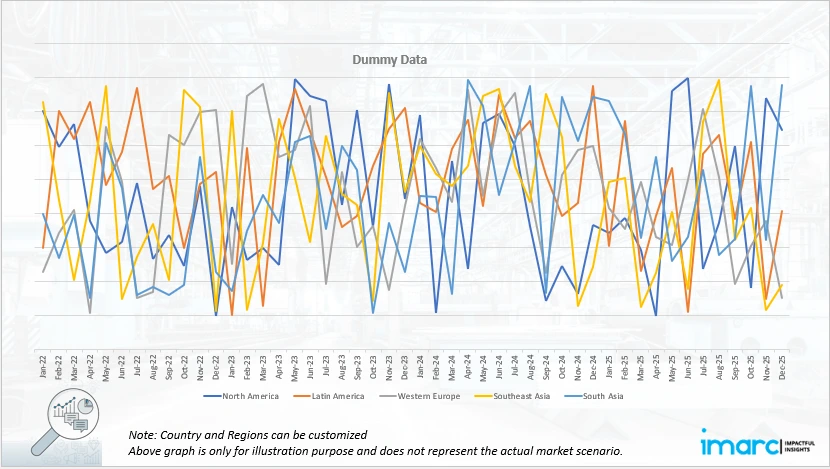
Ferrosilicon Price Chart
Get real-time access to monthly/quarterly/yearly prices Request Sample
During the third quarter of 2026, the ferrosilicon prices in China reached 866 USD/MT in September. Prices firmed as smelters raised operating rates to meet sustained orders from steelmaking and casting customers through the quarter. Producers in major production provinces held offers steady as feedstock costs for quartz and coke based inputs edged higher. Export oriented sellers kept pace with the stronger pace of enquiries from overseas buyers through the period.
During the third quarter of 2026, the ferrosilicon prices in the USA reached 1,352 USD/MT in September. Prices climbed as domestic steel mills increased consumption of ferrosilicon for deoxidation and alloying through the period. Producers prioritized existing contract volumes over fresh spot placements as enquiries picked up across the quarter. Buyers accepted the firmer offers to secure uninterrupted supply ahead of the fourth quarter planning cycle.
During the third quarter of 2026, the ferrosilicon prices in Canada reached 1,487 USD/MT in September. Prices advanced as foundries and steel producers maintained steady offtake while domestic smelters balanced output against rising feedstock costs. Importers faced firmer replacement costs on cargoes sourced from overseas suppliers, which fed into higher local offers. Sellers held firm on quotations given the consistent pace of enquiries from downstream converters.
During the third quarter of 2026, the ferrosilicon prices in France reached 1,126 USD/MT in September. Prices rose as European steelmakers sustained orders for deoxidation grade material while regional smelters managed measured operating rates. Importers encountered firmer replacement costs on cargoes arriving from overseas suppliers, supporting higher local quotations. Producers limited spot allocations in favor of existing commitments, leaving less material for prompt buyers.
During the third quarter of 2026, the ferrosilicon prices in Germany reached 1,160 USD/MT in September. Prices increased as regional steel and casting industries maintained steady consumption of ferrosilicon through the quarter. Producers across the region faced firmer feedstock costs for raw material inputs, which fed through into revised offers. Distributors accepted the higher levels to maintain uninterrupted supply through the period.
Regional Coverage
The report provides a detailed analysis of the market across different regions, each with unique pricing dynamics influenced by localized market conditions, supply chain intricacies, and geopolitical factors. This includes price trends, price forecast and supply and demand trends for each region, along with spot prices by major ports. The report also provides coverage of FOB and CIF prices, as well as the key factors influencing ferrosilicon prices.
Europe Ferrosilicon Price Trend
Q3 2026:
The Europe ferrosilicon market witnessed a bullish trend through the third quarter of 2026, led by firmer quotations in France and Germany. European steelmakers sustained orders for deoxidation and alloying grade material while regional smelters managed measured operating rates against rising input costs. Importers faced firmer replacement costs on cargoes sourced from overseas suppliers, which fed through into higher local offers across converting hubs. Producers across the region prioritized existing commitments over spot sale, leaving a narrower pool of material for prompt buyers. Casting and foundry customers maintained steady offtake, reinforcing the firmer pricing environment through the period. Distributors held firm on quotations given the consistent pace of enquiries from downstream processors. Feedstock costs for raw material inputs continued to support the upward direction through the closing weeks of the quarter.
Detailed price information for ferrosilicon can also be provided for an extensive list of European countries.
| Region | Countries Covered |
|---|---|
| Europe | Germany, France, United Kingdom, Italy, Spain, Russia, Turkey, Netherlands, Poland, Sweden, Belgium, Austria, Ireland, Switzerland, Norway, Denmark, Romania, Finland, Czech Republic, Portugal, and Greece, among other European countries. |
North America Ferrosilicon Price Trend
Q3 2026:
The North America ferrosilicon market registered a bullish trend during the third quarter of 2026, led by firmer quotations in the USA and Canada. Domestic steel mills increased consumption of ferrosilicon for deoxidation and alloying purposes, giving producers room to raise offers through the period. Canadian buyers paid firmer replacement costs on cargoes sourced from overseas suppliers, adding to the regional upward tone. Foundries and steel producers maintained steady offtake despite the higher cost environment across the quarter. Producers prioritized existing contract volumes over fresh spot placements as enquiries picked up. Sellers showed limited willingness to discount given the steady pace of orders from downstream converters. The firmer pricing tone extended through the final weeks of the period.
Specific ferrosilicon historical data within the United States and Canada can also be provided.
| Region | Countries Covered |
|---|---|
| North America | United States and Canada |
Middle East and Africa Ferrosilicon Price Trend
Q3 2026:
The study includes ferrosilicon price trends across the Middle East and Africa, taking into consideration variables that have a direct impact on market prices, such as regional industrial expansion, natural resource availability, and geopolitical conflicts.
Region-wise data and information on specific countries within these regions can also be provided.
| Region | Countries Covered |
|---|---|
| Middle East & Africa | Saudi Arabia, UAE, Israel, Iran, South Africa, Nigeria, Oman, Kuwait, Qatar, Iraq, Egypt, Algeria, and Morocco, among other Middle Eastern and African countries. |
Asia Pacific Ferrosilicon Price Trend
Q3 2026:
The Asia Pacific ferrosilicon market witnessed a bullish trend through the third quarter of 2026, led by firmer quotations in China. Smelters in major production provinces raised operating rates to meet sustained orders from steelmaking and casting customers through the period. Feedstock costs for quartz and coke based inputs edged higher, prompting producers to hold offers steady rather than discount. Export oriented sellers kept pace with the stronger pace of enquiries from overseas buyers across the quarter. Domestic steel producers maintained consistent intake of ferrosilicon for deoxidation and alloying applications. Buyers across the region accepted the firmer levels given the limited availability of discounted spot cargoes. The upward tone held through the closing weeks of the quarter as production costs stayed elevated.
This ferrosilicon price analysis can be expanded to include a comprehensive list of countries within the region.
| Region | Countries Covered |
|---|---|
| Asia Pacific | China, India, Indonesia, Pakistan, Bangladesh, Japan, Philippines, Vietnam, Thailand, South Korea, Malaysia, Nepal, Taiwan, Sri Lanka, Hongkong, Singapore, Australia, and New Zealand, among other Asian countries. |
Latin America Ferrosilicon Price Trend
Q3 2026:
The ferrosilicon market in Latin America is primarily shaped by regional import dependency and downstream industrial demand across steelmaking, foundry and casting, and construction material applications. However, due to logistics constraints and varying regulatory regimes, ferrosilicon prices might fluctuate dynamically across the region.
This comprehensive review can be extended to include specific countries within Latin America.
| Region | Countries Covered |
|---|---|
| Latin America | Brazil, Mexico, Argentina, Columbia, Chile, Ecuador, and Peru, among other Latin American countries. |
Ferrosilicon Pricing Report, Market Analysis, and News
IMARC's latest publication, “Ferrosilicon Prices, Trend, Chart, Demand, Market Analysis, News, Historical and Forecast Data Report 2026 Edition,” presents a detailed examination of the ferrosilicon market, providing insights into both global and regional trends that are shaping prices. This report delves into the spot price of ferrosilicon at major ports and analyzes the composition of prices, including FOB and CIF terms. It also presents detailed ferrosilicon prices trend analysis by region, covering North America, Europe, Asia Pacific, Latin America, and Middle East and Africa. The factors affecting ferrosilicon pricing, such as the dynamics of supply and demand, geopolitical influences, and sector specific developments, are thoroughly explored. This comprehensive report helps stakeholders stay informed with the latest market news, regulatory updates, and technological progress, facilitating informed strategic decision-making and forecasting.
Ferrosilicon Industry Analysis
The global ferrosilicon market size reached USD 12.8 Billion in 2025. By 2034, IMARC Group expects the market to reach USD 15.4 Billion, at a projected CAGR of 2.00% during 2026-2034. Market growth is being driven by sustained consumption of ferrosilicon as a deoxidizing and alloying agent in steel and stainless steel production, expanding use in cast iron and ductile iron foundry applications requiring inoculation and nodularization, and steady demand from silicon alloy manufacturing supporting infrastructure, automotive and heavy engineering industries worldwide.
Latest News and Developments:
- August 2026: Definitive anti-dumping duties on ferrosilicon from China and Russia were recorded as active in the EU tariff database on 18 August. They cover HS codes 7202210000, 7202291000 and 7202299000, with rates as high as 31.2% for China and 22.7% for Russia.
- November 2026: The EU’s definitive safeguard on ferrosilicon imports, which applies from 18 November 2025 to 17 November 2028, raises its duty-free quota volumes by a small step on 18 November 2026 and again in 2027. The quotas are set by country. Volumes within the quota enter without safeguard duty, and volumes above it are charged duty unless priced above a set minimum.
Product Description
Ferrosilicon is a ferroalloy manufactured by the reduction of silica with carbon in the presence of iron, and it is traded in granular or lump form in various silicon-content grades rather than as a single refined compound. As an alloy rather than a pure substance, it has no single molecular formula; it mainly consists of iron silicides together with free silicon, with minor amounts of carbon, aluminum, calcium and manganese depending on the ore and reductant used. It typically appears as a hard, dense, silvery-gray to dark gray crystalline lump material with a metallic luster, is insoluble in water, and is stable under normal storage conditions. Its principal functional properties are its strong deoxidizing action and its ability to supply silicon as an alloying element, which improves strength, fluidity and magnetic performance in finished metal products. Industrial applications include steel and stainless steel manufacturing, cast iron and ductile iron foundry operations, and silicon alloy and electrical steel production. In end use, ferrosilicon functions as a deoxidizer during steelmaking to remove dissolved oxygen, as an alloying addition that introduces silicon into steel and iron melts, and as an inoculant and nodularizer in foundries that promotes graphite formation in cast iron. It is obtained by the carbothermic reduction of quartz (silica) with coke or coal in an electric arc furnace in the presence of iron or steel scrap.
Report Coverage
| Key Attributes | Details |
|---|---|
| Product Name | Ferrosilicon |
| Report Features | Exploration of Historical Trends and Market Outlook, Industry Demand, Industry Supply, Gap Analysis, Challenges, Ferrosilicon Price Analysis, and Segment-Wise Assessment. |
| Currency/Units | US$ (Data can also be provided in local currency) or Metric Tons |
| Region/Countries Covered | The current coverage includes analysis at the global and regional levels only. Based on your requirements, we can also customize the report and provide specific information for the following countries: Asia Pacific: China, India, Indonesia, Pakistan, Bangladesh, Japan, Philippines, Vietnam, Thailand, South Korea, Malaysia, Nepal, Taiwan, Sri Lanka, Hongkong, Singapore, Australia, and New Zealand Europe: Germany, France, United Kingdom, Italy, Spain, Russia, Turkey, Netherlands, Poland, Sweden, Belgium, Austria, Ireland, Switzerland, Norway, Denmark, Romania, Finland, Czech Republic, Portugal and Greece North America: United States and Canada Latin America: Brazil, Mexico, Argentina, Columbia, Chile, Ecuador, and Peru Middle East & Africa: Saudi Arabia, UAE, Israel, Iran, South Africa, Nigeria, Oman, Kuwait, Qatar, Iraq, Egypt, Algeria, and Morocco The list of countries presented is not exhaustive. Information on additional countries can be provided if required by the client. |
| Information Covered for Key Suppliers |
|
| Customization Scope | The report can be customized as per the requirements of the customer |
| Report Price and Purchase Option |
Plan A: Monthly Updates - Annual Subscription
Plan B: Quarterly Updates - Annual Subscription
Plan C: Biannually Updates - Annual Subscription
|
| Post-Sale Analyst Support | 360-degree analyst support after report delivery |
| Delivery Format | PDF and Excel through email (We can also provide the editable version of the report in PPT/Word format on special request) |
Key Benefits for Stakeholders:
- IMARC’s report presents a detailed analysis of ferrosilicon pricing, covering global and regional trends, spot prices at key ports, and a breakdown of ex-works, FOB, and CIF prices.
- The study examines factors affecting ferrosilicon price trend, including supply-demand shifts and geopolitical impacts, offering insights for informed decision-making.
- The competitive landscape review equips stakeholders with crucial insights into the latest market news, regulatory changes, and technological advancements, ensuring a well-rounded, strategic overview for forecasting and planning.
- IMARC offers various subscription options, including monthly, quarterly, and biannual updates, allowing clients to stay informed with the latest market trends, ongoing developments, and comprehensive market insights. The ferrosilicon price charts ensure our clients remain at the forefront of the industry.
Need more help?
- Speak to our experienced analysts for insights on the current market scenarios.
- Include additional segments and countries to customize the report as per your requirement.
- Gain an unparalleled competitive advantage in your domain by understanding how to utilize the report and positively impacting your operations and revenue.
- For further assistance, please connect with our analysts.
 Request Customization
 Inquire Before Buying
 Speak to an Analyst
 Request Brochure
Benefits of Customization
- Personalize this research
- Triangulate with your data
- Get data as per your format and definition
- Gain a deeper dive into a specific application, geography, customer, or competitor
- Any level of personalization
Get in Touch With Us
UNITED STATES
Phone: +1-201-971-6302
INDIA
Phone: +91-120-433-0800
UNITED KINGDOM
Phone: +44-753-714-6104
Email: [email protected]
Client Testimonials























Related Reports

Why Choose Us
IMARC offers trustworthy, data-centric insights into commodity pricing and evolving market trends, enabling businesses to make well-informed decisions in areas such as procurement, strategic planning, and investments. With in-depth knowledge spanning more than 1000 commodities and a vast global presence in over 150 countries, we provide tailored, actionable intelligence designed to meet the specific needs of diverse industries and markets.
1000
+Commodities
150
+Countries Covered
3000
+Clients
20
+Industry

Robust Methodologies & Extensive Resources
IMARC delivers precise commodity pricing insights using proven methodologies and a wealth of data to support strategic decision-making.

Subscription-Based Databases
Our extensive databases provide detailed commodity pricing, import-export trade statistics, and shipment-level tracking for comprehensive market analysis.

Primary Research-Driven Insights
Through direct supplier surveys and expert interviews, we gather real-time market data to enhance pricing accuracy and trend forecasting.

Extensive Secondary Research
We analyze industry reports, trade publications, and market studies to offer tailored intelligence and actionable commodity market insights.
Trusted by 3000+ industry leaders worldwide to drive data-backed decisions. From global manufacturers to government agencies, our clients rely on us for accurate pricing, deep market intelligence, and forward-looking insights.