
GCC CPVC Pipes Market Size, Share, Trends and Forecast by Application, and Region, 2026-2034
GCC CPVC Pipes Market Summary:
The GCC CPVC pipes market size was valued at USD 563.68 Million in 2025 and is projected to reach USD 791.25 Million by 2034, growing at a compound annual growth rate of 3.84% from 2026-2034.
The GCC CPVC pipes market is experiencing sustained expansion, driven by accelerating construction activities across the residential, commercial, and industrial sectors throughout the region. Economic diversification initiatives, particularly Saudi Vision 2030 and similar development programs across Gulf nations, are catalyzing unprecedented infrastructure investments. The inherent advantages of CPVC pipes, including superior heat resistance, corrosion immunity, and extended service life compared to conventional metallic piping systems, are positioning CPVC as the preferred material for modern plumbing applications. Growing awareness regarding hygiene, sanitation standards, and efficient wastewater management is further amplifying demand for lightweight, durable, and sustainable drainage solutions in the GCC CPVC pipes market share.
Key Takeaways and Insights:
-
By Application: Plumbing dominates the market with a share of 45% in 2025, owing to its extensive utilization in residential and commercial building construction for hot and cold water distribution systems. The superior temperature tolerance and resistance to scaling make CPVC pipes the preferred choice for modern plumbing infrastructure across the GCC region.
-
By Region: Saudi Arabia leads the market with a share of 37% in 2025, driven by massive infrastructure development projects under Vision 2030, including NEOM, Jeddah Waterfront, and Entertainment City. The Kingdom's commitment to economic diversification and expanding residential construction is generating substantial demand for reliable plumbing systems.
-
Key Players: Leading manufacturers drive the GCC CPVC pipes market by expanding production capacities, enhancing product quality through advanced manufacturing technologies, and strengthening distribution networks across the region. Strategic partnerships with construction contractors and compliance with international standards reinforce their competitive positioning. Some of the key players operating in the market include IKK Group, AGM, SAPPCO, and MMT Group.
The GCC CPVC pipes market is witnessing robust growth trajectory, supported by unprecedented government investments in construction activities, infrastructure modernization, and urban development initiatives. The Saudi Arabia construction market size was valued at USD 101.4 Billion in 2025 and is set to reach USD 138.4 Billion by 2034, underscoring the substantial demand for reliable piping solutions. The hospitality sector's vigorous growth, fueled by rising tourism, religious pilgrimages, and the proliferation of hotels, restaurants, and entertainment facilities, presents lucrative opportunities for CPVC pipe manufacturers. Government investments in water distribution, sanitation infrastructure, and wastewater management systems are creating sustained demand, positioning CPVC pipes as essential components in achieving regional development objectives. Rising adoption of CPVC pipes in high-temperature plumbing, fire sprinkler systems, and chemical-resistant industrial applications is further accelerating market expansion across residential, commercial, and industrial construction projects in the GCC region.
GCC CPVC Pipes Market Trends:
Accelerated Construction and Urban Expansion
Rapid urbanization across GCC countries is driving sustained demand for CPVC pipes in residential, commercial, and mixed-use developments. The urban population in Qatar was recorded at 2,840,304 in 2024, as per the World Bank's database of development indicators. Large-scale housing projects, high-rise buildings, and smart city initiatives require durable and heat-resistant piping systems. CPVC pipes are preferred for hot and cold water applications due to corrosion resistance and long service life. Their lightweight structure enables faster installation, helping contractors meet tight project timelines. Continuous investments in urban infrastructure ensure consistent consumption of CPVC piping solutions across the region.
Growth of Hospitality and Healthcare Facilities
The expansion of hotels, resorts, hospitals, and healthcare centers significantly boosts CPVC pipe demand. These facilities require reliable plumbing capable of handling high temperatures, heavy usage, and strict hygiene standards. CPVC pipes support safe water delivery, fire sprinkler systems, and heating, ventilation, and air conditioning (HVAC) networks. Their smooth interiors limit bacterial buildup, making them ideal for healthcare environments. Tourism growth and healthcare investments continue to support CPVC consumption across service infrastructure. In 2024, tourism in the GCC region added USD 247.1 Billion to the regional economy, reflecting an increase of almost 32% compared to 2019, according to official statistics.
Shift Towards Cost-Effective and Low-Maintenance Materials
Construction stakeholders across the GCC region increasingly prefer CPVC pipes over metal alternatives due to lower lifecycle costs. CPVC eliminates corrosion-related failures, reduces repair frequency, and withstands harsh climatic conditions. Ease of installation lowers labor expenses and project delays. Developers value CPVC for long-term reliability, compliance with building standards, and compatibility with modern construction techniques. This shift towards efficient materials is consistently fueling the market growth across the region.
Market Outlook 2026-2034:
The GCC CPVC pipes market outlook remains positive, supported by sustained infrastructure investments, economic diversification programs, and expanding construction activities across the region. Government initiatives targeting improved water security, sanitation coverage, and urban modernization are expected to maintain robust demand throughout the forecast period. The market generated a revenue of USD 563.68 Million in 2025 and is projected to reach a revenue of USD 791.25 Million by 2034, growing at a compound annual growth rate of 3.84% from 2026-2034. Technological advancements in manufacturing processes and increasing awareness regarding CPVC's advantages over conventional piping materials will further accelerate market expansion.
GCC CPVC Pipes Market Report Segmentation:
|
Segment Category |
Leading Segment |
Market Share |
|
Application |
Plumbing |
45% |
|
Region |
Saudi Arabia |
37% |
Application Insights:
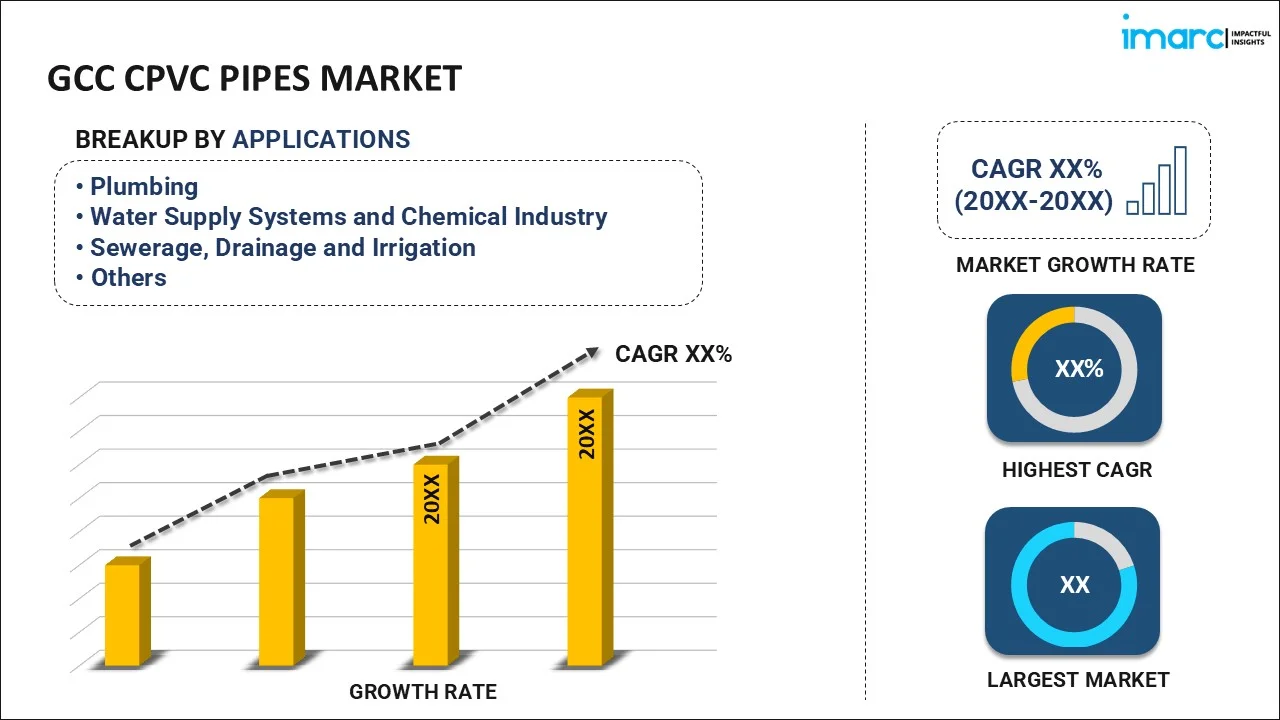
- Plumbing
- Water Supply Systems and Chemical Industry
- Sewerage, Drainage and Irrigation
- Others
Plumbing dominates with a market share of 45% of the total GCC CPVC pipes market in 2025.
The plumbing segment maintains market leadership, driven by extensive utilization in residential, commercial, and institutional construction projects throughout the GCC region. CPVC pipes demonstrate exceptional performance in hot and cold water distribution systems, offering superior temperature resistance and immunity to scaling, corrosion, and biological growth that commonly affects metallic alternatives. In May 2024, the Saudi Arabian National Water Company (NWC) commenced implementation of water and sanitation projects worth SAR 3.6 Billion across Riyadh, Madinah, and the Eastern Province, underscoring the substantial infrastructure investments fueling plumbing segment demand.
The segment benefits from accelerating residential construction activities and modernization of existing water distribution networks across GCC nations. CPVC's lightweight nature facilitates easier handling and faster installation compared to conventional metallic piping, reducing labor costs and project timelines. The material's smooth internal surface minimizes friction losses and prevents biofilm formation, ensuring consistent water quality and compliance with stringent hygiene standards mandated in healthcare facilities, hospitality establishments, and residential developments throughout the region.
Regional Insights:
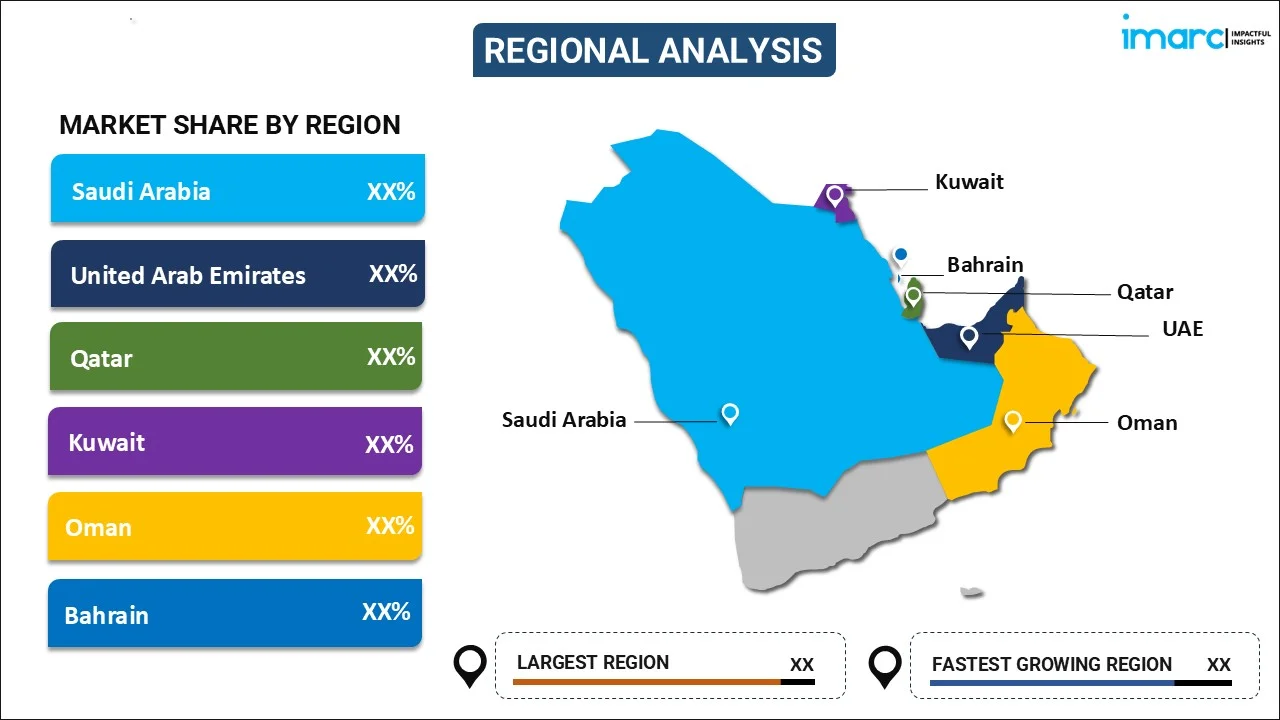
- Saudi Arabia
- UAE
- Kuwait
- Bahrain
- Oman
- Qatar
Saudi Arabia leads with a share of 37% of the total GCC CPVC pipes market in 2025.
Saudi Arabia maintains dominant market position, driven by unprecedented infrastructure development under the Vision 2030 economic diversification program. Mega-projects, including NEOM, the Red Sea development, Qiddiya entertainment city, and the Mukaab project, are generating sustained demand for reliable plumbing infrastructure, positioning CPVC pipes as essential components in achieving the nation's ambitious development objectives.
The Kingdom's commitment to expanding water infrastructure is catalyzing CPVC pipe adoption across residential, commercial, and industrial applications. In April 2025, Saudi Arabia's NWC announced plans to award 15 sewage infrastructure projects worth over SAR 2.3 Billion to enhance wastewater services and operational efficiency across the country. The expanding hospitality sector, driven by religious tourism to Makkah and Madinah alongside recreational tourism developments, requires advanced plumbing systems that CPVC pipes deliver through superior durability, temperature resistance, and compliance with international quality standards.
Market Dynamics:
Growth Drivers:
Why is the GCC CPVC Pipes Market Growing?
Large-Scale Construction and Urban Development Projects
Massive construction activities across the GCC remain the primary growth engine for the CPVC pipes market. Governments are investing heavily in residential housing, commercial complexes, airports, metros, industrial parks, and smart city developments to support economic diversification and population growth. In May 2024, Dubai announced a USD 35 Billion initiative to develop the world's largest airport from the emirate’s second largest airfield, Al Maktoum International Airport. CPVC pipes are increasingly specified for hot and cold water plumbing, fire sprinkler systems, and HVAC applications due to their durability, corrosion resistance, and long service life. Rapid urbanization and rising demand for high-rise buildings favor CPVC over traditional metal pipes, as it reduces maintenance costs and installation time. Mega projects, such as new economic cities, tourism destinations, and mixed-use developments, require reliable piping solutions that can withstand high pressure and temperature fluctuations. Contractors prefer CPVC pipes because of their lightweight nature, ease of jointing, and compatibility with modern construction techniques.
Growth of Hospitality, Healthcare, and Commercial Facilities
The GCC's demand for CPVC pipe is mostly catalyzed by the fast growth of the hospitality, healthcare, and commercial industries. As per IMARC Group, the UAE hospitality market size reached USD 23.9 Billion in 2024. Construction of hotels, resorts, and shopping and entertainment complexes is being driven by increased tourism, religious pilgrimages, and corporate travel. Large plumbing networks that can manage hot water demands and stringent hygienic requirements are necessary for these institutions. Because of the smooth inside surfaces, resistance to bacterial growth, and thermal stability of CPVC pipes, they are perfect for these kinds of settings. In order to comply with strict cleanliness and safety rules, CPVC pipes are being used more frequently in healthcare institutions, such as hospitals, clinics, and diagnostic centers. The fire resistance and sprinkler system compatibility of CPVC offer advantages to commercial structures. The benefits of CPVC are well matched with the demand for dependable, low-maintenance plumbing systems that save downtime.
Regulatory Support and Focus on Sustainable Infrastructure
The GCC's use of CPVC pipe is being positively impacted by supportive building rules and a growing emphasis on sustainable construction methods. The use of materials that improve water efficiency, lower leakage, and promote long service life is being encouraged by regulatory bodies. By limiting water loss and lowering the need for frequent replacements, CPVC pipes help achieve sustainability goals by conserving resources. CPVC's performance and environmental advantages are increasingly acknowledged by green construction standards and certifications. Additionally, governments are supporting certified and dependable piping systems and encouraging quality-driven procurement processes in public infrastructure projects. CPVC pipes are gaining traction in sprinkler applications, as fire safety regulations are becoming more stringent. Continued market expansion is ensured by the alignment of CPVC performance characteristics with changing regulatory frameworks and environmental goals, which are bolstered by policy-driven infrastructure upgrading throughout the GCC region.
Market Restraints:
What Challenges the GCC CPVC Pipes Market is Facing?
Competition from Alternative Piping Materials
Alternative piping materials, such as polyethylene, polypropylene random copolymer, and conventional metallic pipes that have clear advantages in particular applications, put pressure on the GCC CPVC pipe market. Due to the flexibility and simplicity of joining of PE pipes, they dominate the water supply and irrigation segments, whereas PPR pipes are becoming more popular in few plumbing applications because of their competitive cost and fusion welding capabilities.
Raw Material Price Volatility
For CPVC pipe makers, fluctuations in PVC resin prices, which are impacted by changes in the price of crude oil and the dynamics of the global supply chain, put pressure on margins. During times of high raw material costs, the chlorination process adds extra cost components that might increase price volatility and perhaps impact market competitiveness against alternative materials.
Technical Limitations in Extreme Conditions
Although CPVC performs remarkably well in the majority of applications, specialized metallic or composite alternatives may be required in some harsh industrial settings that call for extremely high pressure ratings or exposure to harsh chemicals. These technological limitations restrict the use of CPVC in certain heavy industrial and petrochemical applications that are common throughout the GCC region.
Competitive Landscape:
The GCC CPVC pipes market exhibits a moderately consolidated competitive landscape, characterized by the presence of established regional manufacturers alongside international material suppliers. Key players emphasize product quality enhancement, manufacturing capacity expansion, and distribution network strengthening to capture market opportunities arising from infrastructure development programs. Strategic collaborations with construction contractors, compliance with international quality standards, and localization of production facilities are prominent competitive strategies. Companies are investing in advanced manufacturing technologies to improve production efficiency and product consistency while expanding product portfolios to address diverse application requirements across plumbing, fire protection, and industrial segments.
Some of the key players include:
- IKK Group
- AGM
- SAPPCO
- MMT Group
GCC CPVC Pipes Market Report Coverage:
| Report Features | Details |
|---|---|
| Base Year of the Analysis | 2025 |
| Historical Period | 2020-2025 |
| Forecast Period | 2026-2034 |
| Units | ‘000 Tons, Million USD |
| Scope of the Report |
Exploration of Historical Trends and Market Outlook, Industry Catalysts and Challenges, Segment-Wise Historical and Future Market Assessment:
|
| Application Covered | Plumbing, Water Supply Systems and Chemical Industry, Sewerage, Drainage and Irrigation, Others |
| Region Covered | Saudi Arabia, UAE, Kuwait, Bahrain, Oman, Qatar |
| Companies Covered | IKK Group, AGM, SAPPCO and MMT Group |
| Customization Scope | 10% Free Customization |
| Post-Sale Analyst Support | 10-12 Weeks |
| Delivery Format | PDF and Excel through Email (We can also provide the editable version of the report in PPT/Word format on special request) |
Frequently Asked Questions About the GCC CPVC Pipes Market Report
The GCC CPVC pipes market size was valued at USD 563.68 Million in 2025.
The GCC CPVC pipes market is expected to grow at a compound annual growth rate of 3.84% from 2026-2034 to reach USD 791.25 Million by 2034.
Plumbing dominated the market with a share of 45%, driven by extensive utilization in residential and commercial construction for hot and cold water distribution systems across the GCC region.
Key factors driving the GCC CPVC pipes market include accelerating infrastructure development under economic diversification programs, expanding water and sanitation networks, growing hospitality and tourism sector investments, and increasing adoption of sustainable construction materials.
Major challenges include competition from alternative piping materials, raw material price volatility influenced by crude oil markets, technical limitations in extreme industrial applications, and evolving regulatory requirements regarding plastic material usage and disposal.
Need more help?
- Speak to our experienced analysts for insights on the current market scenarios.
- Include additional segments and countries to customize the report as per your requirement.
- Gain an unparalleled competitive advantage in your domain by understanding how to utilize the report and positively impacting your operations and revenue.
- For further assistance, please connect with our analysts.
 Request Customization
 Speak to an Analyst
 Request Brochure
 Inquire Before Buying
Benefits of Customization
- Personalize this research
- Triangulate with your data
- Get data as per your format and definition
- Gain a deeper dive into a specific application, geography, customer, or competitor
- Any level of personalization
Get in Touch With Us
UNITED STATES
Phone: +1-201-971-6302
INDIA
Phone: +91-120-433-0800
UNITED KINGDOM
Phone: +44-753-714-6104
Email: [email protected]
Client Testimonials




.webp)




.webp)













Related Reports

Choose your plan
*Please note that the prices mentioned below are starting prices for each bundle type. Kindly contact our team for further details.*
Single User License
- 1 User License, Access on 2 Devices
- PDF Report + Excel Dataset (Password Protected)
- Lifetime Access
- No Printing Rights
- 10% Free Report Customization
- 10–12 Weeks of Analyst Support
Five User License
- Access for 5 Users, 2 Devices per User
- PDF Report + Excel Dataset (Password Protected)
- Lifetime Access
- Dedicated Account Manager
- 12–14 Weeks of Analyst Support
- No Printing Rights
- 15% Free Report Customization
- 25% Discount on Your Next Purchase
Corporate User License
- Unlimited User Access (Within Your Organization)
- PDF Report + Excel Dataset
- Lifetime Access
- Dedicated Account Manager
- 14–20 Weeks of Analyst Support
- No Printing Rights
- 20% Free Report Customization
- 30% Discount on Your Next Purchase
Essential Insights
What's included:
3 reports
- Lifetime Access
- PDF Reports
- Excel Datasets
- 2 Weeks of Free Analyst Support
- 2 User Licenses
- Access on 2 Devices
- Printing Rights
- Complimentary PowerPoint (PPT) Version
- Complimentary License Upgrade
Professional Access
What's included:
5 reports
- Lifetime Access
- PDF Reports
- Excel Datasets
- 8 Weeks of Free Analyst Support
- 2 User Licenses
- Access on 2 Devices
- Printing Rights
- Complimentary PowerPoint (PPT) Version
- Complimentary License Upgrade
Business Advantage
What's included:
8 reports
- Lifetime Access
- PDF Reports
- Excel Datasets
- 14 Weeks of Free Analyst Support
- 2 User Licenses
- Access on 2 Devices
- Printing Rights
- Complimentary PowerPoint (PPT) Version
- Complimentary License Upgrade
Enterprise Intelligence
What's included:
10 reports
- Lifetime Access
- PDF Reports
- Excel Datasets
- 20 Weeks of Free Analyst Support
- 2 User Licenses
- Access on 2 Devices
- Printing Rights
- Complimentary PowerPoint (PPT) Version
- Complimentary License Upgrade