
GCC Cyber Insurance Market Size, Share, Trends and Forecast by Component, Insurance Type, Organization Size, End Use Industry, and Country, 2026-2034
GCC Cyber Insurance Market Summary:
The GCC cyber insurance market size was valued at USD 327.97 Million in 2025 and is projected to reach USD 1,782.87 Million by 2034, growing at a compound annual growth rate of 19.95% from 2026-2034.
The GCC cyber insurance market is experiencing substantial momentum driven by rapid digital transformation across the region's key economic sectors. Government-backed initiatives including Saudi Arabia's Vision 2030 and the UAE's Digital Government Strategy are compelling organizations to adopt comprehensive cyber risk management frameworks. The escalating frequency and sophistication of cyber attacks targeting financial institutions, energy infrastructure, and government entities have positioned cyber insurance as a strategic necessity for business continuity. Rising regulatory requirements mandating data protection compliance and incident reporting protocols are further propelling demand, as enterprises seek to transfer residual cyber risks while meeting stringent governance standards. The integration of cloud computing, artificial intelligence, and IoT technologies across critical industries continues expanding the attack surface, reinforcing the essential role of cyber insurance in the GCC cyber insurance market share.
Key Takeaways and Insights:
- By Component: Solution dominates the market with a share of 58.09% in 2025, owing to the comprehensive protection capabilities including risk assessment platforms, threat detection systems, and incident response tools. Growing enterprise demand for integrated cybersecurity solutions continues strengthening this segment's market position.
- By Insurance Type: Stand-alone leads the market with a share of 68.35% in 2025. This dominance is driven by specialized coverage requirements that address unique cyber exposures, enabling organizations to obtain tailored protection with dedicated policy limits separate from traditional insurance portfolios.
- By Organization Size: Large enterprises represent the biggest segment with a market share of 73.88% in 2025, reflecting their extensive digital infrastructure, substantial data assets, and heightened regulatory scrutiny requiring comprehensive cyber risk transfer mechanisms.
- By End Use Industry: BFSI exhibits a clear dominance in the market with 28.3% share in 2025, driven by stringent regulatory mandates, high-value transaction processing, and the sector's status as a primary target for sophisticated cyber attacks.
- By Country: Saudi Arabia is the largest region with 33% share in 2025, propelled by Vision 2030 digital transformation initiatives, mandatory SAMA cybersecurity framework compliance for financial institutions, and substantial investments in critical infrastructure protection.
- Key Players: Key players drive the GCC cyber insurance market by developing region-specific coverage solutions, expanding distribution networks, and forging strategic partnerships with cybersecurity firms to provide integrated risk management services.
The GCC cyber insurance market is witnessing accelerated adoption driven by escalating cyber threats and regulatory imperatives. Regional financial institutions face mandatory compliance with frameworks such as SAMA's cybersecurity requirements in Saudi Arabia and the UAE Central Bank's data protection regulations, compelling enterprises to secure adequate cyber coverage. The UAE Cyber Security Council has reported more than 200,000 daily cyber attacks targeting strategic sectors, underscoring the critical need for comprehensive risk transfer mechanisms. Digital banking expansion, fintech proliferation, and cloud migration across government services are exponentially increasing exposure to ransomware, data breaches, and business interruption incidents. Insurance providers are responding by developing specialized products addressing regional threat landscapes, while incorporating pre-breach services including vulnerability assessments and incident response planning to enhance policyholder resilience.
GCC Cyber Insurance Market Trends:
Rising Integration of AI-Powered Risk Assessment Tools
Insurance providers across the GCC are nowadays increasingly deploying artificial intelligence and machine learning algorithms to enhance underwriting accuracy and risk evaluation. These technologies analyze vast datasets, which encompass threat intelligence, organizational security postures, and industry-specific vulnerabilities to deliver customized premium structures. The adoption of predictive analytics enables insurers to identify emerging threat patterns and adjust coverage parameters proactively, while providing policyholders with actionable insights to strengthen their cybersecurity defenses.
Expansion of Parametric Cyber Insurance Products
Parametric insurance solutions are gaining considerable traction in the GCC market, which is offering predetermined payouts triggered by specific cyber events without requiring extensive claims assessment processes. This innovation addresses the challenge of quantifying cyber losses, providing policyholders with rapid financial recovery following incidents. Regional enterprises are increasingly attracted to the certainty and speed of parametric products, particularly for covering business interruption losses stemming from ransomware attacks or system outages.
Growing Emphasis on Third-Party and Supply Chain Coverage
Organizations across the GCC are recognizing the interconnected nature of cyber risks, which is pushing demand beyond traditional first-party loss coverage. Cyber insurance offerings are now expanding to include third-party liabilities, vendor-related incidents, and supply chain breaches. As digital integration deepens across sectors like banking, energy, and utilities, insurers are responding with policies that address cascading impacts. These include operational disruption, data exposure, and regulatory penalties arising from cyber incidents affecting partners, platforms, and outsourced service providers.
Market Outlook 2026-2034:
The GCC cyber insurance market is positioned for robust expansion as regional economies accelerate digital transformation while confronting an increasingly sophisticated threat landscape. Regulatory frameworks mandating cyber resilience and data protection compliance are creating sustained demand for comprehensive insurance coverage across all economic sectors. The market generated a revenue of USD 327.97 Million in 2025 and is projected to reach a revenue of USD 1,782.87 Million by 2034, growing at a compound annual growth rate of 19.95% from 2026-2034. Insurance providers are developing innovative products tailored to regional requirements, incorporating pre-breach services, incident response capabilities, and coverage for emerging risks including cloud vulnerabilities and IoT exposures. Strategic partnerships between insurers and cybersecurity firms are enhancing value propositions, while government initiatives promoting cyber awareness and resilience continue driving market penetration across enterprise segments.
GCC Cyber Insurance Market Report Segmentation:
|
Segment Category |
Leading Segment |
Market Share |
|
Component |
Solution |
58.09% |
|
Insurance Type |
Stand-alone |
68.35% |
|
Organization Size |
Large Enterprises |
73.88% |
|
End Use Industry |
BFSI |
28.3% |
|
Country |
Saudi Arabia |
33% |
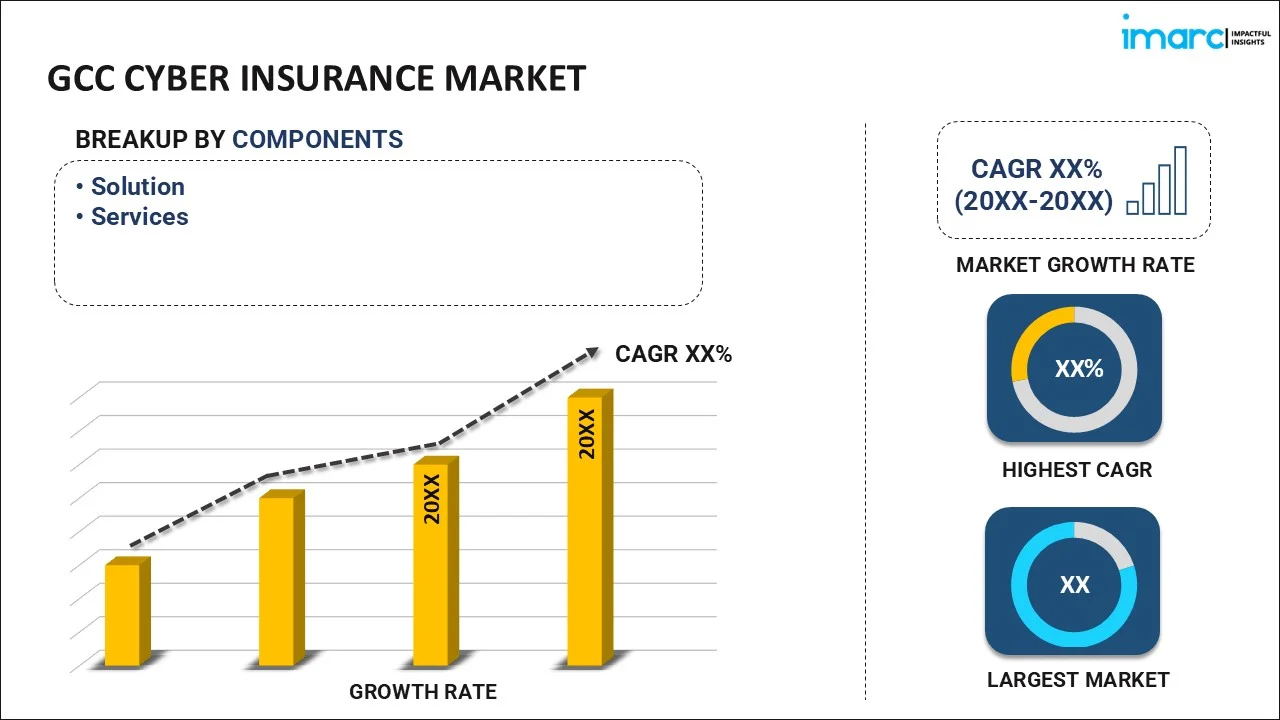
Component Insights:
To get detailed analysis of this market, RequestSample
- Solution
- Services
Solution dominates with a market share of 58.09% of the total GCC cyber insurance market in 2025.
The solution segment encompasses comprehensive cyber risk management platforms, threat detection systems, and incident response tools that form the foundation of effective cyber insurance coverage. Organizations across the GCC are prioritizing integrated solution-based coverage that combines real-time monitoring capabilities with automated threat response mechanisms. The rising complexity of cyber threats has driven enterprises to seek solution packages that provide end-to-end protection spanning vulnerability assessment, network security monitoring, and data breach prevention functionalities. These solutions increasingly incorporate cloud security features and regulatory compliance modules aligned with regional frameworks including SAMA requirements.
Insurance providers are enhancing their solution offerings by incorporating advanced analytics and artificial intelligence capabilities to deliver proactive risk mitigation and predictive threat intelligence. The BFSI sector's adoption of solution-centric cyber insurance products has been particularly strong, with major financial institutions in Saudi Arabia and the UAE deploying comprehensive platforms that integrate with existing security infrastructure. This segment's dominance reflects the market preference for holistic protection frameworks that address multiple threat vectors while enabling seamless claims processing, incident management, and post-breach recovery coordination services.
Insurance Type Insights:
- Packaged
- Stand-alone
Stand-alone leads with a share of 68.35% of the total GCC cyber insurance market in 2025.
Stand-alone cyber insurance policies have emerged as the preferred choice among GCC enterprises seeking dedicated coverage with specialized terms tailored to unique cyber exposures. These policies offer distinct advantages including higher coverage limits, customizable deductibles, and comprehensive protection against evolving threats without the constraints of bundled insurance products. Large corporations particularly favor stand-alone policies that provide dedicated incident response teams and pre-breach services including security assessments, employee training programs, and vulnerability scanning. The flexibility to negotiate specific coverage terms enables enterprises to align protection with their unique risk profiles.
The regulatory environment across the GCC has reinforced stand-alone policy adoption, as compliance frameworks increasingly require organizations to demonstrate specific cyber coverage parameters. Financial institutions subject to SAMA cybersecurity requirements in Saudi Arabia have driven substantial demand for stand-alone products that clearly delineate cyber-specific coverage from traditional commercial insurance. This segment benefits from the ability to adapt policy terms to rapidly evolving threat landscapes, providing policyholders with flexibility to address emerging risks including ransomware attacks, cloud vulnerabilities, third-party vendor exposures, and regulatory penalty coverage.

Organization Size Insights:
- Small and Medium Enterprises
- Large Enterprises
Large enterprises represent the leading segment with a 73.88% share of the total GCC cyber insurance market in 2025.
Large enterprises dominate the GCC cyber insurance market owing to their extensive digital infrastructure, substantial data assets, and heightened exposure to sophisticated cyber attacks. These organizations maintain complex IT ecosystems spanning multiple jurisdictions, requiring comprehensive coverage that addresses cross-border regulatory compliance and multi-layered security vulnerabilities. The significant financial resources of large enterprises enable procurement of high-limit policies incorporating advanced features including cyber extortion coverage, business interruption protection, and regulatory defense costs.
Regulatory mandates across the GCC specifically target large enterprises operating in critical sectors, compelling these organizations to maintain robust cyber insurance coverage as part of broader risk management frameworks. According to the World Bank's Gulf Economic Update, GCC countries now boast advanced telecom networks with 5G coverage exceeding 90%, significantly expanding the digital footprint and cyber exposure of large enterprises. Major corporations in energy, financial services, and telecommunications sectors have established dedicated cyber risk management functions that coordinate closely with insurance providers to ensure adequate coverage aligned with evolving threat landscapes.
End Use Industry Insights:
- BFSI
- Healthcare
- IT and Telecom
- Retail
- Others
BFSI exhibits a clear dominance with a 28.3% share of the total GCC cyber insurance market in 2025.
The banking, financial services, and insurance sector commands the largest share of the GCC cyber insurance market driven by stringent regulatory requirements, high-value transaction processing, and continuous exposure to targeted cyber attacks. Financial institutions across the region operate under mandatory cybersecurity frameworks including SAMA's comprehensive requirements in Saudi Arabia and the UAE Central Bank's data protection regulations, necessitating robust insurance coverage to address compliance obligations. The sector's digitalization initiatives encompassing mobile banking, digital payments, and fintech integration have substantially expanded attack surfaces requiring enhanced protection.
Research from the UAE Cyber Security Council and CPX revealed that 21% of cyber incidents in the region during 2024 targeted the BFSI sector, making it the second-most attacked industry after government services. Financial institutions have responded by procuring comprehensive cyber insurance policies covering first-party losses, third-party liabilities, and regulatory penalties. The proliferation of ransomware attacks specifically targeting banks and payment processors has accelerated insurance adoption, with institutions seeking coverage for business interruption, data restoration, and customer notification expenses.
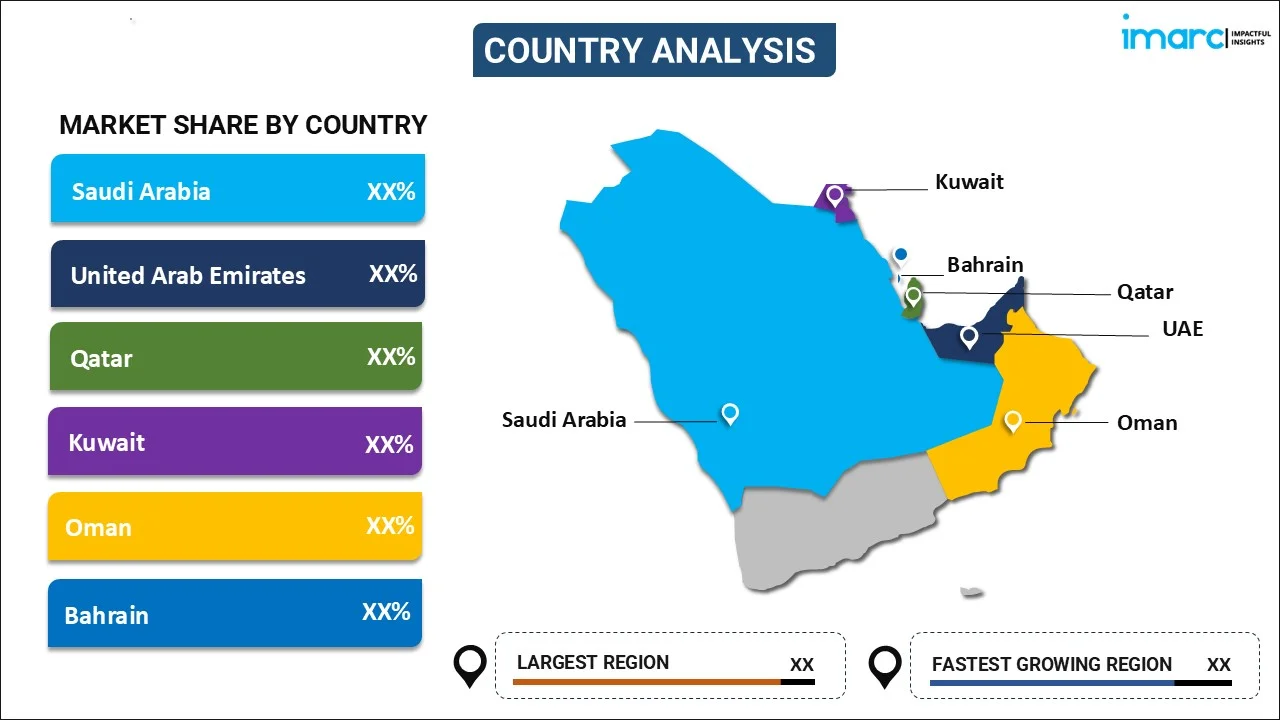
Country Insights:
To get detailed analysis of this market, RequestSample
- Saudi Arabia
- UAE
- Qatar
- Bahrain
- Kuwait
- Oman
Saudi Arabia dominates with a market share of 33% of the total GCC cyber insurance market in 2025.
Saudi Arabia's leadership in the GCC cyber insurance market stems from the Kingdom's ambitious Vision 2030 digital transformation agenda and comprehensive regulatory frameworks governing cyber risk management. The National Cybersecurity Authority has established the Essential Cybersecurity Controls requiring organizations across critical sectors to implement robust security measures and maintain adequate insurance coverage. Financial institutions operating under SAMA supervision must comply with the Cybersecurity Framework mandating specific controls, incident reporting protocols, and evidence of adequate cyber risk transfer mechanisms that align with international best practices and regional compliance standards.
The Kingdom's substantial investments in digital infrastructure including data centers, cloud services, and smart city initiatives have expanded cyber exposures requiring comprehensive insurance protection. Government entities and public sector organizations are increasingly procuring cyber coverage as digital government services expand citizen-facing platforms. Major enterprises across energy, financial services, and telecommunications sectors are driving premium growth through procurement of high-limit policies addressing complex cross-border exposures. The concentration of regional headquarters and multinational operations in Saudi Arabia further amplifies demand for sophisticated cyber insurance solutions.
Market Dynamics:
Growth Drivers:
Why is the GCC Cyber Insurance Market Growing?
Accelerating Digital Transformation Across Critical Sectors
The GCC region is witnessing unprecedented digital transformation driven by government initiatives and private sector investments that are fundamentally reshaping economic activities across all sectors. Saudi Arabia's Vision 2030, the UAE's Digital Government Strategy, and Qatar's National Vision 2030 have catalyzed widespread adoption of cloud computing, artificial intelligence, and Internet of Things technologies throughout critical infrastructure, financial services, and government operations. This digital expansion has substantially increased organizational cyber exposures, creating compelling demand for comprehensive insurance coverage that addresses emerging risks. Enterprises are recognizing that traditional security measures alone cannot fully protect against sophisticated threats, necessitating risk transfer mechanisms that provide financial protection following incidents. The integration of digital technologies into core business processes has elevated cybersecurity from an IT concern to a board-level strategic priority, driving executive engagement with cyber insurance solutions that complement technical defenses.
Escalating Cyber Threat Landscape and Attack Sophistication
The GCC region has emerged as a primary target for sophisticated cyber threat actors including nation-state sponsored groups, organized criminal enterprises, and hacktivist organizations seeking financial gain or geopolitical advantage. Distributed denial-of-service attacks now account for more than two-thirds of reported incidents across the Gulf, while ransomware, phishing campaigns, and data breaches increasingly target financial institutions, government agencies, and critical infrastructure operators. The UAE Cyber Security Council has documented approximately two hundred thousand daily attacks against strategic sectors, underscoring the relentless pressure organizations face in defending their digital assets. This intensifying threat environment has fundamentally altered corporate risk perceptions, with enterprises increasingly viewing cyber insurance as essential protection rather than optional coverage. The financial implications of major cyber incidents, including operational disruption, regulatory penalties, and reputational damage, have compelled organizations to secure robust insurance coverage that ensures business continuity.
Strengthening Regulatory Frameworks and Compliance Mandates
Regulatory authorities across the GCC have implemented comprehensive cybersecurity frameworks that create mandatory compliance obligations driving cyber insurance adoption. Saudi Arabia's SAMA Cybersecurity Framework requires all regulated financial entities to maintain specific security controls, conduct regular assessments, and demonstrate adequate cyber risk management capabilities. The UAE Central Bank's Insurance Brokers' Regulation, effective February 2025, mandates heightened cybersecurity standards and data protection measures for the insurance sector. Qatar's National Cyber Security Strategy 2024-2030 outlines roadmaps for enhanced cyber resilience across government and private sectors. These regulatory developments have transformed cyber insurance from voluntary risk transfer to essential compliance requirement for organizations operating across multiple GCC jurisdictions. Personal data protection laws including Saudi Arabia's PDPL impose significant penalties for data breaches, compelling organizations to secure insurance coverage that addresses potential regulatory fines and notification expenses.
Market Restraints:
What Challenges the GCC Cyber Insurance Market is Facing?
Limited Historical Data for Accurate Risk Pricing
The relatively nascent nature of cyber insurance in the GCC region presents significant challenges for underwriters seeking to accurately price risk exposures. Unlike established insurance lines with decades of actuarial data, cyber insurance relies on limited historical loss information that may not adequately reflect rapidly evolving threat landscapes. The dynamic nature of cyber risks, combined with infrequent but high-severity loss events, complicates traditional pricing models and creates uncertainty for both insurers and policyholders regarding appropriate premium levels.
Low Awareness Among Small and Medium Enterprises
Small and medium enterprises across the GCC frequently underestimate their cyber risk exposures and lack awareness regarding the availability and benefits of cyber insurance coverage. Many smaller organizations perceive cyber threats as primarily affecting large corporations, failing to recognize their own vulnerabilities as attractive targets for financially motivated attackers. This awareness gap is compounded by limited cybersecurity expertise within SME leadership teams and resource constraints that prioritize immediate operational needs over risk transfer investments.
Complex Policy Terms and Coverage Exclusions
Cyber insurance policies often contain complex terminology, extensive exclusions, and ambiguous coverage provisions that create uncertainty regarding claim outcomes. Organizations may discover coverage gaps following incidents when specific attack vectors or loss types fall outside policy scope. The evolving nature of cyber threats means policy language may not adequately address emerging risks including AI-powered attacks, supply chain compromises, or state-sponsored intrusions that insurers may classify as acts of war.
Competitive Landscape:
The GCC cyber insurance market features a competitive landscape comprising global insurance leaders, regional carriers, and specialized insurtech providers developing innovative coverage solutions. Major international insurers have established strong regional presence through partnerships with local brokers and direct operations in financial centers including Dubai, Riyadh, and Doha. These providers leverage global underwriting expertise and claims experience to deliver comprehensive products addressing regional threat landscapes. Regional insurers are increasingly developing cyber-specific capabilities through technology investments and strategic alliances with cybersecurity firms, enabling differentiated offerings that combine insurance coverage with risk management services. The market is witnessing product innovation including parametric coverage, pre-breach services, and integrated incident response solutions that enhance value propositions beyond traditional indemnity protection. Distribution channels are evolving with digital platforms enabling streamlined quote-to-bind processes for SME segments.
GCC Cyber Insurance Market Report Coverage:
| Report Features | Details |
|---|---|
| Base Year of the Analysis | 2025 |
| Historical Period | 2020-2025 |
| Forecast Period | 2026-2034 |
| Units | Million USD |
| Scope of the Report | Exploration of Historical and Forecast Trends, Industry Catalysts and Challenges, Segment-Wise Historical and Predictive Market Assessment:
|
| Components Covered | Solution, Services |
| Insurance Types Covered | Packaged, Stand-alone |
| Organization Sizes Covered | Small and Medium-sized Enterprises, Large Enterprises |
| End Use Industries Covered | BFSI, Healthcare, IT and Telecom, Retail, Others |
| Countries Covered | Saudi Arabia, UAE, Qatar, Bahrain, Kuwait, Oman |
| Customization Scope | 10% Free Customization |
| Post-Sale Analyst Support | 10-12 Weeks |
| Delivery Format | PDF and Excel through Email (We can also provide the editable version of the report in PPT/Word format on special request) |
Frequently Asked Questions About the GCC Cyber Insurance Market Report
The GCC cyber insurance market size was valued at USD 327.97 Million in 2025.
The GCC cyber insurance market is expected to grow at a compound annual growth rate of 19.95% from 2026-2034 to reach USD 1,782.87 Million by 2034.
Solution dominated the market with a share of 58.09%, driven by comprehensive risk management platforms, threat detection systems, and integrated incident response capabilities preferred by enterprises.
Key factors driving the GCC cyber insurance market include accelerating digital transformation initiatives, escalating cyber threats targeting critical infrastructure, stringent regulatory compliance mandates, and growing enterprise awareness of cyber risk transfer benefits.
Major challenges include limited historical data for accurate risk pricing, low awareness among small and medium enterprises, complex policy terms and coverage exclusions, shortage of specialized cyber underwriting expertise, and difficulties in quantifying systemic cyber risks.
Need more help?
- Speak to our experienced analysts for insights on the current market scenarios.
- Include additional segments and countries to customize the report as per your requirement.
- Gain an unparalleled competitive advantage in your domain by understanding how to utilize the report and positively impacting your operations and revenue.
- For further assistance, please connect with our analysts.
 Request Customization
 Speak to an Analyst
 Request Brochure
 Inquire Before Buying
Benefits of Customization
- Personalize this research
- Triangulate with your data
- Get data as per your format and definition
- Gain a deeper dive into a specific application, geography, customer, or competitor
- Any level of personalization
Get in Touch With Us
UNITED STATES
Phone: +1-201-971-6302
INDIA
Phone: +91-120-433-0800
UNITED KINGDOM
Phone: +44-753-714-6104
Email: [email protected]
Client Testimonials




.webp)




.webp)













Related Reports

Choose your plan
*Please note that the prices mentioned below are starting prices for each bundle type. Kindly contact our team for further details.*
Single User License
- 1 User License, Access on 2 Devices
- PDF Report + Excel Dataset (Password Protected)
- Lifetime Access
- No Printing Rights
- 10% Free Report Customization
- 10–12 Weeks of Analyst Support
Five User License
- Access for 5 Users, 2 Devices per User
- PDF Report + Excel Dataset (Password Protected)
- Lifetime Access
- Dedicated Account Manager
- 12–14 Weeks of Analyst Support
- No Printing Rights
- 15% Free Report Customization
- 25% Discount on Your Next Purchase
Corporate User License
- Unlimited User Access (Within Your Organization)
- PDF Report + Excel Dataset
- Lifetime Access
- Dedicated Account Manager
- 14–20 Weeks of Analyst Support
- No Printing Rights
- 20% Free Report Customization
- 30% Discount on Your Next Purchase
Essential Insights
What's included:
3 reports
- Lifetime Access
- PDF Reports
- Excel Datasets
- 2 Weeks of Free Analyst Support
- 2 User Licenses
- Access on 2 Devices
- Printing Rights
- Complimentary PowerPoint (PPT) Version
- Complimentary License Upgrade
Professional Access
What's included:
5 reports
- Lifetime Access
- PDF Reports
- Excel Datasets
- 8 Weeks of Free Analyst Support
- 2 User Licenses
- Access on 2 Devices
- Printing Rights
- Complimentary PowerPoint (PPT) Version
- Complimentary License Upgrade
Business Advantage
What's included:
8 reports
- Lifetime Access
- PDF Reports
- Excel Datasets
- 14 Weeks of Free Analyst Support
- 2 User Licenses
- Access on 2 Devices
- Printing Rights
- Complimentary PowerPoint (PPT) Version
- Complimentary License Upgrade
Enterprise Intelligence
What's included:
10 reports
- Lifetime Access
- PDF Reports
- Excel Datasets
- 20 Weeks of Free Analyst Support
- 2 User Licenses
- Access on 2 Devices
- Printing Rights
- Complimentary PowerPoint (PPT) Version
- Complimentary License Upgrade