
Germany Soft Skills Training Market Report by Soft Skill Type (Management and Leadership, Administration and Secretarial, Communication and Productivity, Personal Development, Teamwork, and Others), Channel Provider (Corporate/Enterprise, Academic/Education, Government), Sourcing (In-house, Outsourced), Delivery Mode (Online, Offline), End Use Industry (BFSI, Hospitality, Healthcare, Retail, Media and Entertainment, and Others), and Region 2026-2034
Germany Soft Skills Training Market Overview:
The Germany soft skills training market size reached USD 1.7 Billion in 2025. Looking forward, IMARC Group expects the market to reach USD 4.9 Billion by 2034, exhibiting a growth rate (CAGR) of 12.64% during 2026-2034. The rising demand for professional development courses, supportive government policies and educational reforms, and funding for adult education and lifelong learning programs represent some of the key factors driving the growth of the market.
|
Report Attribute
|
Key Statistics
|
|---|---|
|
Base Year
|
2025 |
|
Forecast Years
|
2026-2034
|
|
Historical Years
|
2020-2025
|
| Market Size in 2025 | USD 1.7 Billion |
| Market Forecast in 2034 | USD 4.9 Billion |
| Market Growth Rate (2026-2034) | 12.64% |
Access the full market insights report Request Sample
Germany Soft Skills Training Market Trends:
Rise in the Demand for Professional Development Courses
An important factor for the growth of the soft skills training market is the need for professional development programs in Germany. In November 2023, 2U, Inc., the company behind global online learning platform edX, welcomed more than a dozen leading organizations as partners. These organizations join more than 250 university and corporate partners committed to expanding access to affordable, high-quality online education for millions of learners worldwide. Soft skills like communication, leadership, and teamwork are increasingly recognized as valuable and necessary for enhancing employee productivity and overall organizational performance in today’s workplaces. Since organizations seek to sustain themselves and grow in the face of an increasingly competitive world market, there has been an increased emphasis on training programs that target the soft skills of their workforce. Moreover, the shift towards remote and hybrid work environments has highlighted the relevance of skills, such as digital communication and remote collaboration, which, in turn, has contributed to the necessity of developing extensive training programs that address these issues.
Government Policies and Educational Reform
The soft skills market is set to grow due to the support of the government and the education sector in Germany. For instance, in January 2023, the German government passed a law – Citizen’s Income Act, the law targets a further enhancement of the vocational training, while putting an emphasis on the basic skills the learners need to attain, including literacy, numeracy, and information communication technology skills. There is an increasing focus on the part of the policymakers on the need to include soft skills in the national education system and in vocational training. The idea of this strategic approach is to prepare the future workforce for successful professional cooperation with other people at the beginning of their careers. Additionally, the government and the public have offered more support and funding for the adult education and lifelong learning programs, which means that people are more likely to invest in their personal and professional development. These initiatives show the complex attempts to create a versatile and versatile population of workers who can effectively function in various and challenging conditions.
Germany Soft Skills Training Market News:
- In November 2023, Global Knowledge, a worldwide leader in technology and professional training, announced its recognition as Cisco’s distinguished 2023 Global Learning Partner of the Year. This accolade marks the company’s ninth triumph in securing this prestigious award, following their previous win in 2018, and the first time Cisco has honored winners after a five-year hiatus.
- In April 2024, Skillsoft, a leading platform for transformative learning experiences, announced that it has been named a "Leader" in enterprise learning by three industry analyst firms. Constellation Research, Aragon Research, and Fosway Group have all positioned Skillsoft as a learning category leader highlighting the company's continued efforts toward innovation, depth and breadth of learning offerings, and customer satisfaction.
.webp)
Germany Soft Skills Training Market Segmentation:
IMARC Group provides an analysis of the key trends in each segment of the market, along with forecasts at the country level for 2026-2034. Our report has categorized the market based on soft skill type, channel provider, sourcing, delivery mode, and end use industry.
Soft Skill Type Insights:
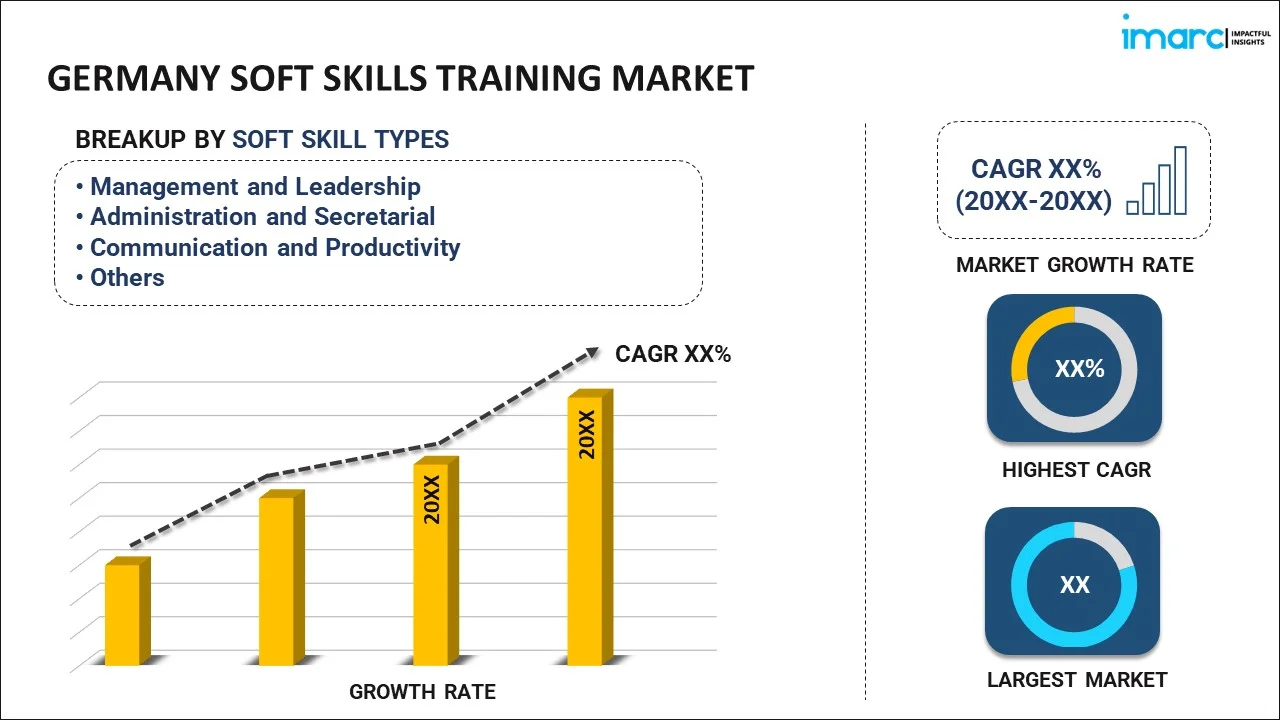
To get detailed segment analysis of this market Request Sample
- Management and Leadership
- Administration and Secretarial
- Communication and Productivity
- Personal Development
- Teamwork
- Others
The report has provided a detailed breakup and analysis of the market based on the soft skill type. This includes management and leadership, administration and secretarial, communication and productivity, personal development, teamwork, and others.
Channel Provider Insights:
- Corporate/Enterprise
- Academic/Education
- Government
A detailed breakup and analysis of the market based on the channel provider have also been provided in the report. This includes corporate/enterprise, academic/education, and government.
Sourcing Insights:
- In-house
- Outsourced
The report has provided a detailed breakup and analysis of the market based on the sourcing. This includes in-house and outsourced.
Delivery Mode Insights:
- Online
- Offline
A detailed breakup and analysis of the market based on the delivery mode have also been provided in the report. This includes online and offline.
End Use Industry Insights:
- BFSI
- Hospitality
- Healthcare
- Retail
- Media and Entertainment
- Others
The report has provided a detailed breakup and analysis of the market based on the end use industry. This includes BFSI, hospitality, healthcare, retail, media and entertainment, and others.
Regional Insights:
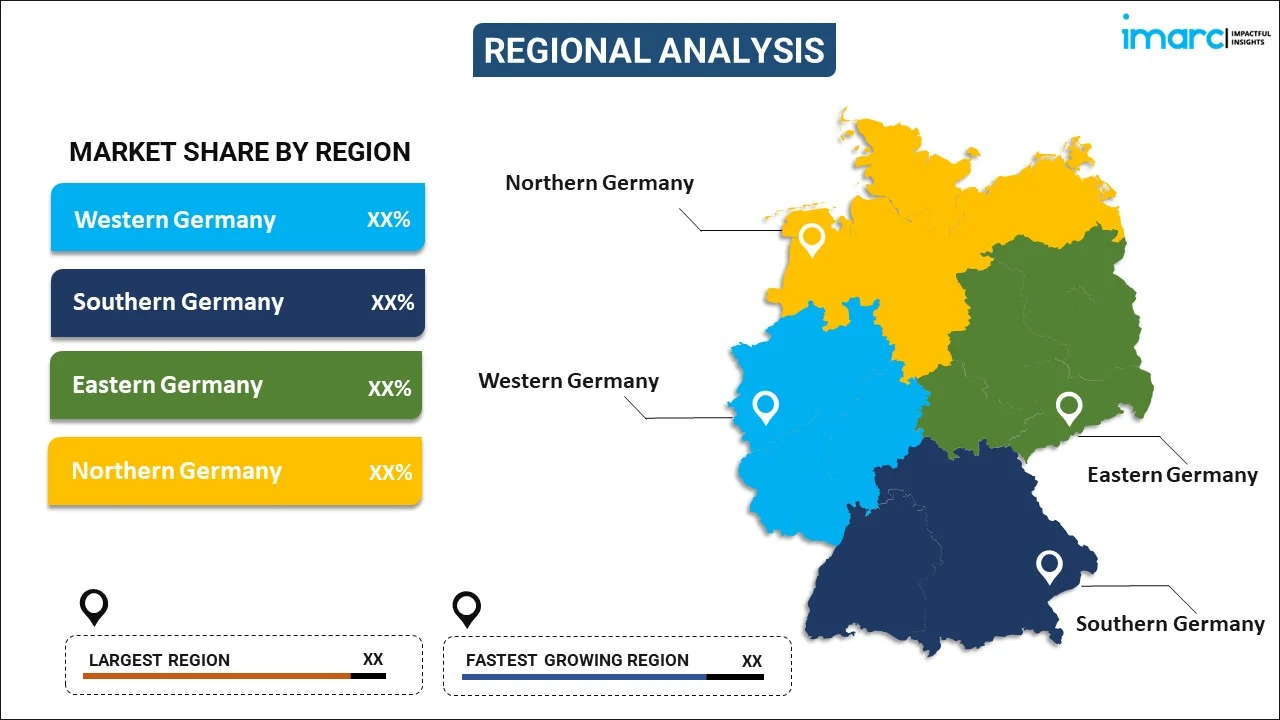
To get detailed regional analysis of this market Request Sample
- Western Germany
- Southern Germany
- Eastern Germany
- Northern Germany
The report has also provided a comprehensive analysis of all the major regional markets, which include Western Germany, Southern Germany, Eastern Germany, and Northern Germany.
Competitive Landscape:
The market research report has also provided a comprehensive analysis of the competitive landscape. Competitive analysis such as market structure, key player positioning, top winning strategies, competitive dashboard, and company evaluation quadrant has been covered in the report. Also, detailed profiles of all major companies have been provided.
Germany Soft Skills Training Market Report Coverage:
| Report Features | Details |
|---|---|
| Base Year of the Analysis | 2025 |
| Historical Period | 2020-2025 |
| Forecast Period | 2026-2034 |
| Units | Billion USD |
| Scope of the Report | Exploration of Historical Trends and Market Outlook, Industry Catalysts and Challenges, Segment-Wise Historical and Future Market Assessment:
|
| Soft Skill Types Covered | Management and Leadership, Administration and Secretarial, Communication and Productivity, Personal Development, Teamwork, Others |
| Channel Providers Covered | Corporate/Enterprise, Academic/Education, Government |
| Sourcings Covered | In-house, Outsourced |
| Delivery Modes Covered | Online, Offline |
| End Use Industries Covered | BFSI, Hospitality, Healthcare, Retail, Media and Entertainment, Others |
| Regions Covered | Western Germany, Southern Germany, Eastern Germany, Northern Germany |
| Customization Scope | 10% Free Customization |
| Post-Sale Analyst Support | 10-12 Weeks |
| Delivery Format | PDF and Excel through Email (We can also provide the editable version of the report in PPT/Word format on special request) |
Key Benefits for Stakeholders:
- IMARC’s industry report offers a comprehensive quantitative analysis of various market segments, historical and current market trends, market forecasts, and dynamics of the Germany soft skills training market from 2020-2034.
- The research report provides the latest information on the market drivers, challenges, and opportunities in the Germany soft skills training market.
- Porter's five forces analysis assist stakeholders in assessing the impact of new entrants, competitive rivalry, supplier power, buyer power, and the threat of substitution. It helps stakeholders to analyze the level of competition within the Germany soft skills training industry and its attractiveness.
- Competitive landscape allows stakeholders to understand their competitive environment and provides an insight into the current positions of key players in the market.
Frequently Asked Questions About the Germany Soft Skills Training Market Report
The Germany soft skills training market reached a value of USD 1.7 Billion in 2025.
The market is projected to grow at a CAGR of 12.64% during 2026-2034, reaching USD 4.9 Billion by 2034.
Key growth drivers include rising corporate demand for professional development, remote work communication needs, government educational reforms, and increased funding for adult lifelong learning.
The report covers segmentation by soft skill type, channel provider, sourcing, delivery mode, end use industry, and region. Each segment includes detailed market size and forecast analysis.
Key trends include online and hybrid delivery adoption, government-backed vocational training initiatives, heightened corporate investment in leadership skills, and rising e-learning platform usage.
Need more help?
- Speak to our experienced analysts for insights on the current market scenarios.
- Include additional segments and countries to customize the report as per your requirement.
- Gain an unparalleled competitive advantage in your domain by understanding how to utilize the report and positively impacting your operations and revenue.
- For further assistance, please connect with our analysts.
 Request Customization
 Speak to an Analyst
 Request Brochure
 Inquire Before Buying
Benefits of Customization
- Personalize this research
- Triangulate with your data
- Get data as per your format and definition
- Gain a deeper dive into a specific application, geography, customer, or competitor
- Any level of personalization
Get in Touch With Us
UNITED STATES
Phone: +1-201-971-6302
INDIA
Phone: +91-120-433-0800
UNITED KINGDOM
Phone: +44-753-714-6104
Email: [email protected]
Client Testimonials




.webp)




.webp)













Related Reports

Choose your plan
*Please note that the prices mentioned below are starting prices for each bundle type. Kindly contact our team for further details.*
Single User License
- 1 User License, Access on 2 Devices
- PDF Report + Excel Dataset (Password Protected)
- Lifetime Access
- No Printing Rights
- 10% Free Report Customization
- 10–12 Weeks of Analyst Support
Five User License
- Access for 5 Users, 2 Devices per User
- PDF Report + Excel Dataset (Password Protected)
- Lifetime Access
- Dedicated Account Manager
- 12–14 Weeks of Analyst Support
- No Printing Rights
- 15% Free Report Customization
- 25% Discount on Your Next Purchase
Corporate User License
- Unlimited User Access (Within Your Organization)
- PDF Report + Excel Dataset
- Lifetime Access
- Dedicated Account Manager
- 14–20 Weeks of Analyst Support
- No Printing Rights
- 20% Free Report Customization
- 30% Discount on Your Next Purchase
Essential Insights
What's included:
3 reports
- Lifetime Access
- PDF Reports
- Excel Datasets
- 2 Weeks of Free Analyst Support
- 2 User Licenses
- Access on 2 Devices
- Printing Rights
- Complimentary PowerPoint (PPT) Version
- Complimentary License Upgrade
Professional Access
What's included:
5 reports
- Lifetime Access
- PDF Reports
- Excel Datasets
- 8 Weeks of Free Analyst Support
- 2 User Licenses
- Access on 2 Devices
- Printing Rights
- Complimentary PowerPoint (PPT) Version
- Complimentary License Upgrade
Business Advantage
What's included:
8 reports
- Lifetime Access
- PDF Reports
- Excel Datasets
- 14 Weeks of Free Analyst Support
- 2 User Licenses
- Access on 2 Devices
- Printing Rights
- Complimentary PowerPoint (PPT) Version
- Complimentary License Upgrade
Enterprise Intelligence
What's included:
10 reports
- Lifetime Access
- PDF Reports
- Excel Datasets
- 20 Weeks of Free Analyst Support
- 2 User Licenses
- Access on 2 Devices
- Printing Rights
- Complimentary PowerPoint (PPT) Version
- Complimentary License Upgrade