
Glycerol Market Size, Share, Trends and Forecast by Source, Type, End-Use Industry, and Region, 2026-2034
Glycerol Market Size and Share:
The global glycerol market size was valued at USD 5.28 Billion in 2025. Looking forward, IMARC Group estimates the market to reach USD 7.38 Billion by 2034, exhibiting a CAGR of 3.36% from 2026-2034. Asia-Pacific currently dominates the market, holding a market share of 36.9% in 2025. The region benefits from expansive oleochemical and biodiesel production infrastructure, a large and growing consumer base in personal care and pharmaceutical sectors, and strong government support for renewable energy mandates, reinforcing the glycerol market share.
The global glycerol market is driven by a confluence of factors spanning multiple end-use industries. The rapid expansion of biodiesel production worldwide has significantly increased the availability of crude glycerol as a key byproduct, thereby stimulating downstream refining and processing activities. Additionally, mounting consumer preference for natural, plant-derived ingredients in personal care and cosmetics formulations is amplifying demand for pharmaceutical- and food-grade refined glycerol. The pharmaceutical sector's continued reliance on glycerol as a solvent, humectant, and excipient in drug formulations further supports sustained consumption. Increasing adoption of glycerol as a functional ingredient in food and beverage (F&B) processing, including its role as a sweetener, stabilizer, and preservative, is also a notable contributor. Moreover, the glycerol market growth is underpinned by advancements in refining technologies that improve product purity and open access to high-value application segments across the chemical intermediates and green chemistry verticals.
The United States has emerged as a major region in the glycerol market owing to many factors. The country maintains a substantial biodiesel manufacturing base that generates significant volumes of crude glycerol as a byproduct, creating a reliable domestic feedstock supply for downstream refining. As per IMARC Group, the United States biodiesel market size reached USD 15.2 Billion in 2024. The pharmaceutical industry is a major consumer of United States Pharmacopeia (USP)-grade refined glycerol, utilizing the compound extensively in oral formulations, injectable excipients, and personal care products. The expanding clean-label and organic personal care segment continues to drive demand for plant-derived glycerol.
To get more information on this market Request Sample
Glycerol Market Trends:
Rising Biodiesel Production Volumes
The global transition towards renewable energy sources is significantly intensifying biodiesel production, directly increasing the supply of crude glycerol as a manufacturing byproduct. As governments across the world enforce stricter carbon emission regulations and introduce mandated blending requirements, biodiesel manufacturers are scaling up their output to meet compliance obligations. This expansion creates a consistent and growing upstream supply of crude glycerol that, once refined, feeds into the personal care, pharmaceutical, food, and chemical sectors. The increasing valorization of crude glycerol through advanced purification and conversion technologies is enabling manufacturers to derive higher economic value from what was once considered a low-value byproduct. Refining innovations, such as membrane filtration, ion exchange, and vacuum distillation, are improving product purity grades at lower costs. The growing preference for bio-based inputs in industrial chemistry is also expanding the addressable market.
Surging Demand in Personal Care Industry
The personal care and cosmetics industry represents one of the most dynamic demand centers for refined glycerol, driven by the compound's exceptional moisturizing, humectant, and emollient properties. As consumers globally shift towards natural, biodegradable, and dermatologically safe formulations, glycerol derived from plant-based sources has become a preferred ingredient in skincare lotions, shampoos, serums, soaps, and oral care products. In 2023, 85% of shoppers consistently utilized cosmetics that were cruelty-free and vegan. The premiumization of skincare and haircare product lines, particularly in developed markets, is driving formulators to specify high-purity USP-grade glycerol that complies with international safety and regulatory standards. The glycerol market outlook in this segment is further brightened by the growing influence of clean-label and sustainability certifications in consumer purchasing decisions.
Expanding Applications in Pharmaceuticals
The pharmaceutical industry is emerging as a pivotal long-term growth driver for the glycerol market, underpinned by glycerol's multifunctional role as a solvent, sweetener, stabilizer, and excipient in a wide range of drug formulations. As the global population ages and chronic disease prevalence rises, the demand for oral liquids, cough syrups, expectorants, topical preparations, suppositories, and injectable carriers continues to expand. As per the WHO, by the year 2030, one out of every six individuals globally will be 60 years old or more. Glycerol's biocompatibility, non-toxicity, and hygroscopic nature make it indispensable in formulations that require consistent moisture retention and active ingredient stability. The glycerol market forecast reflects continued momentum as biosimilar drug production, vaccine formulation, and advanced drug delivery systems increasingly incorporate glycerol in their manufacturing processes. Investments in pharmaceutical-grade production capacity across Asia-Pacific, Europe, and North America are expected to keep pace with rising formulation demand through the forecast horizon.
Glycerol Industry Segmentation:
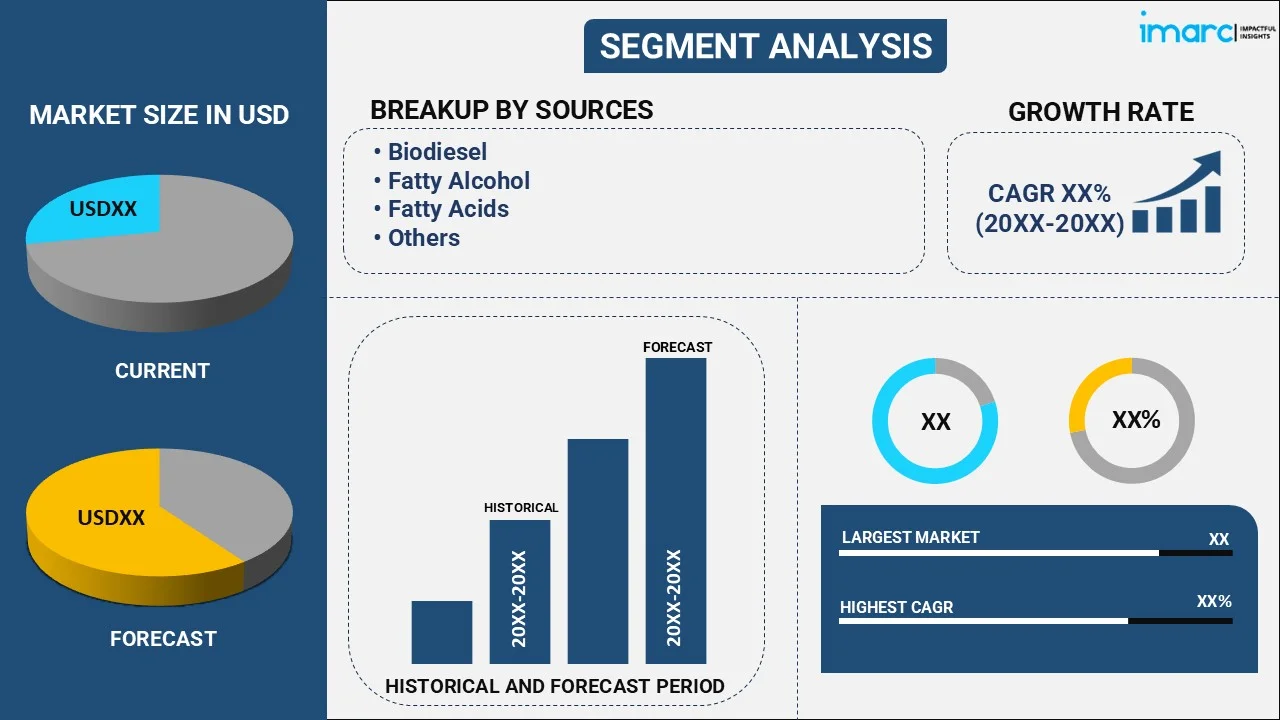
IMARC Group provides an analysis of the key trends in each segment of the global glycerol market, along with forecast at the global, regional, and country levels from 2026-2034. The market has been categorized based on source, type, and end-use industry.
Analysis by Source:
To get detailed segment analysis of this market Request Sample
- Biodiesel
- Fatty Alcohol
- Fatty Acids
- Others
Biodiesel holds 38.6% of the market share. Biodiesel-derived glycerol is produced during the transesterification process in which vegetable oils or animal fats react with an alcohol, generating fatty acid methyl esters alongside crude glycerol as a byproduct. As biodiesel production has increased significantly, in response to renewable energy policy demands, this manufacturing process has emerged as the primary source of the world's glycerol supply. To reach the purity levels required by food-grade, pharmaceutical, and personal care uses, crude glycerol from this process needs to be further refined. Biodiesel is utilized as the primary feedstock for downstream glycerol processors due to its scalability and dependability as a glycerol source. In June 2025, the United States Environmental Protection Agency proposed increasing biomass-based diesel obligations under the Renewable Fuel Standard to 7.12 Billion Renewable Identification Numbers for 2026, indicating sustained strong increase in the production of biodiesel, which will maintain correspondingly high levels of crude glycerol supply. Supply chains are becoming more efficient and cost-effective throughout the value chain, as a result of the integration of biodiesel producers with glycerol refiners.
Analysis by Type:
- Crude
- Refined
Refined leads the market with a share of 61.7%. Refined glycerol is processed to remove impurities, salts, methanol, and other organic matter from crude glycerol, yielding a high-purity product that meets the stringent quality specifications of pharmaceutical, personal care, and food manufacturers. Distillation, ion exchange, and activated carbon treatment are common steps in the refining process, which yield purity ratings ranging from technical to USP. Refined glycerol is the most popular type in the market due to consumer and regulatory preferences for safe, premium ingredients. The need for certified safety profiles and consistent composition from regulated industries is growing. Furthermore, refined glycerol provides excellent stability and compatibility in a variety of formulations, making it appropriate for use in processed foods, medications, and cosmetics. In order to attain greater purity levels and increased production efficiency, manufacturers are also investing more in cutting-edge purification technology. The refined glycerol market is developing due to the growing demand for multipurpose ingredients in personal care, wellness, and health products.

Analysis by End-Use Industry:
- Food and Beverages
- Pharmaceuticals
- Personal Care and Cosmetics
- Chemical Intermediates
- Others
Personal care and cosmetics dominate the glycerol market, with a share of 29.8%, motivated by the compound's proven humectant, softening, and moisturizing qualities, which make it a key component of skincare, haircare, and dental care products. Glycerol is used by formulators to promote the transport of active ingredients across the skin barrier, preserve moisture, and improve product texture. The demand for high-purity glycerol generated from plants has increased due to the strong rise of premium natural and clean-label cosmetic products in both developed and emerging markets. Glycerol's application scope in this industry is further expanded by its growing use in sun care, anti-aging, and dermatological formulations. Its broad application across a variety of personal care product categories is further supported by its compatibility with a broad range of cosmetic components and formulation types.
Regional Analysis:
To get more information on the regional analysis of this market Request Sample
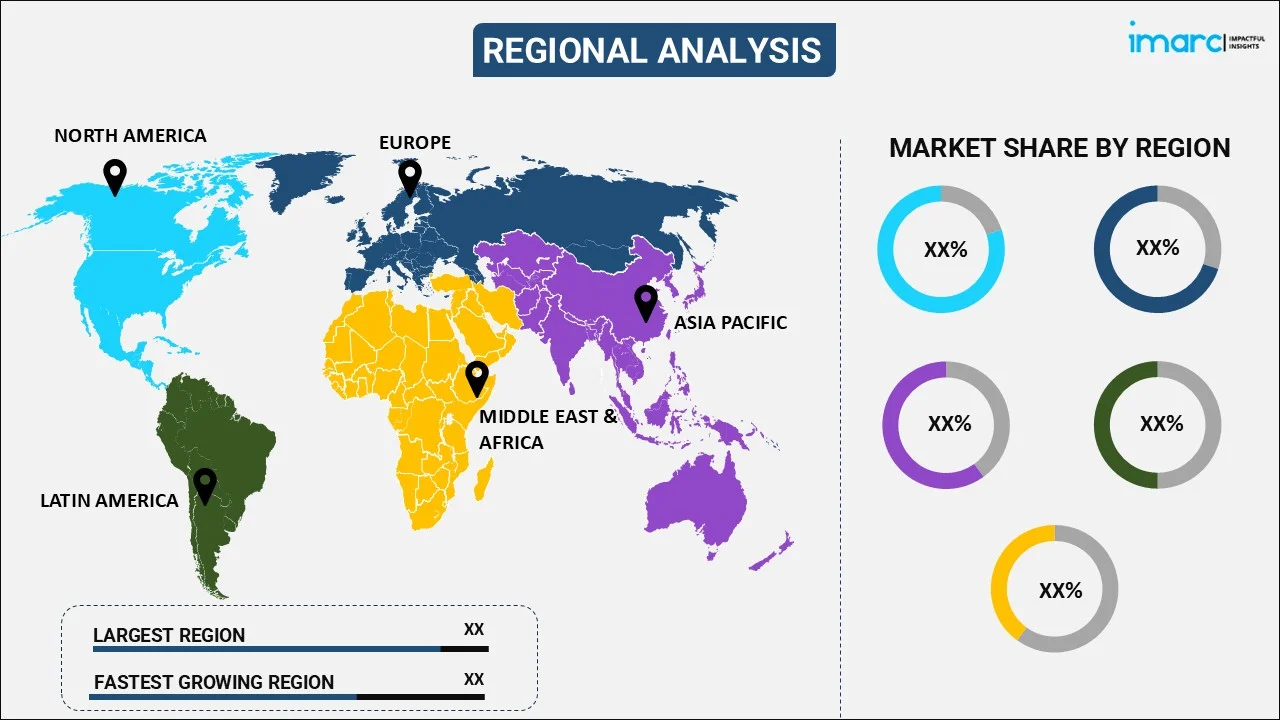
- North America
- United States
- Canada
- Asia-Pacific
- China
- Japan
- India
- South Korea
- Australia
- Indonesia
- Others
- Europe
- Germany
- France
- United Kingdom
- Italy
- Spain
- Russia
- Others
- Latin America
- Brazil
- Mexico
- Others
- Middle East and Africa
Asia-Pacific, accounting for 36.9% of the share, enjoys the leading position in the market. Asia-Pacific's dominance is attributable to its status as the world's foremost hub for biodiesel and oleochemical production, with Indonesia, Malaysia, China, and India collectively accounting for the majority of global palm oil and soybean-based biodiesel output. This translates into an abundant and cost-competitive supply of crude glycerol that supports extensive domestic refining infrastructure. Simultaneously, rapid urbanization, rising disposable incomes, and growing consumer expenditure on personal care, pharmaceuticals, and packaged foods are stimulating end use demand for refined glycerol across the region. In Malaysia, the average monthly disposable household income grew by 3.2% to RM7,584 in 2024. The region’s strong manufacturing ecosystem and expanding chemical processing capacity further support large-scale glycerol refining and downstream product development.
Key Regional Takeaways:
North America Glycerol Market Analysis
North America represents a significant and mature market for glycerol, characterized by robust demand from the pharmaceutical, personal care, and F&B industries, as well as a well-developed biodiesel sector that generates a domestic crude glycerol supply. The United States anchors regional demand, benefiting from a well-established oleochemical refining industry and a strong culture of innovation in green chemistry and bio-based materials. Canada contributes meaningfully to regional supply through its canola-based biodiesel output, which produces crude glycerol as a byproduct. In September 2025, the Canadian government declared it was set to implement measures to aid the nation’s canola and agriculture producers by launching a new biofuel production incentive and revising the Clean Fuel Regulations to bolster the domestic biofuels sector. The incentive will be given on a per-liter basis to Canadian biodiesel and renewable diesel producers, available from January 2026 to December 2027 for a maximum of 300 Million Liters (79.25 Million Gallons) per facility. Stringent quality standards enforced by the Food and Drug Administration and Health Canada have elevated demand for pharmaceutical-grade and food-grade refined glycerol across the region, reinforcing premium product positioning.
United States Glycerol Market Analysis
The United States glycerol market is supported by a combination of upstream biodiesel production, substantial pharmaceutical manufacturing activity, and a dynamic personal care and food processing sector. The country's extensive soybean and animal fat-based biodiesel industry serves as a primary domestic source of crude glycerol, which is subsequently refined for diverse downstream applications. The pharmaceutical sector relies heavily on pharmaceutical-grade glycerol as a key excipient in oral formulations, cough syrups, topical preparations, and suppositories, driving consistent high-purity product demand. In the personal care segment, the nationwide trend of employing organic and clean-label skincare and haircare products has heightened demand for traceable, plant-derived glycerol. The F&B industry utilizes glycerol as a humectant, preservative, and low-calorie sweetener. The glycerol market trends in the US reflect increasing vertical integration by biodiesel producers seeking to capture value from glycerol as a co-product, as well as growing investment in refining technologies that enhance product consistency and purity grades to serve regulated end use applications.
Europe Glycerol Market Analysis
Europe represents a key market for glycerol, underpinned by its position as one of the world's largest biodiesel producers and a major consumer across pharmaceuticals, personal care, and food processing applications. In 2024, approximately 25% of biodiesel generated in the United Kingdom was provided to the United Kingdom road transport sector, while 61% was sent abroad. Countries, such as Germany, France, and the Netherlands, are home to large oleochemical and biodiesel manufacturing facilities that produce substantial volumes of crude glycerol annually. European regulatory frameworks enforced by the European Food Safety Authority and European Medicines Agency establish rigorous quality standards that drive demand for high-purity refined glycerol in regulated industries. Consumer preference for biodegradable, sustainably sourced ingredients has made glycerol a favored component in clean-label cosmetics and personal care formulations.
Asia-Pacific Glycerol Market Analysis
Asia-Pacific dominates the global glycerol market, owing to its massive oleochemical and biodiesel production base, particularly in Indonesia, Malaysia, China, and India. The region benefits from an abundant supply of palm oil and other vegetable oil feedstocks that sustain high crude glycerol output. Simultaneously, rapid economic development, growing middle-class population, and rising health and hygiene consciousness are propelling demand for refined glycerol in pharmaceuticals, personal care, and F&B applications. Indonesia's national B35 biodiesel blending mandate continues to support high biodiesel production volumes, ensuring a consistent and cost-competitive crude glycerol supply. Additionally, expanding manufacturing capacities and strengthening regional export networks are further reinforcing Asia-Pacific’s position as a key global supplier of refined glycerol.
Latin America Glycerol Market Analysis
Latin America is an emerging market for glycerol, primarily driven by the region's sizeable and growing biodiesel industry, particularly in Brazil and Argentina. Brazil, as one of the world's foremost biodiesel producers leveraging its extensive soybean cultivation base, generates significant volumes of crude glycerol as a manufacturing byproduct. The country's national biodiesel program, which mandates blending targets, sustains high production levels and ensures a reliable domestic glycerol feedstock supply. Expanding pharmaceutical, personal care, and food processing sectors in Brazil and Mexico are absorbing increasing volumes of refined glycerol as consumer demand for healthcare, wellness, and premium packaged goods intensifies across the region.
Middle East and Africa Glycerol Market Analysis
The Middle East and Africa glycerol market is at an early but growing stage, supported by expanding pharmaceutical, personal care, and F&B industries across key economies, including Saudi Arabia, the UAE, Egypt, South Africa, and Nigeria. Rising urbanization and increasing consumer expenditure on health and beauty products are stimulating demand for refined glycerol in the region. The Middle East's expanding pharmaceutical manufacturing ambitions, driven by government initiatives to reduce reliance on imported medicines, are creating new demand centers for pharmaceutical-grade glycerol.
Competitive Landscape:
The global glycerol market exhibits a moderately concentrated competitive structure dominated by large multinational oleochemical and agribusiness corporations with integrated biodiesel and refining operations. Key players leverage extensive production capacities, diverse geographic footprints, and established distribution networks to maintain market leadership across multiple application segments. Strategic priorities among leading competitors include capacity expansion in high-growth regions, such as Asia-Pacific, investment in refining technology to achieve higher purity grades, and vertical integration to capture greater value from the biodiesel-to-glycerol production chain. The market is also witnessing increased focus on sustainability certifications to satisfy growing buyer demand for traceable and eco-friendly inputs. Competitive differentiation is increasingly shaped by the ability to supply consistent USP-grade and food-grade glycerol to regulated industries. Smaller, specialized refiners serve niche application segments, while major players continue to consolidate market share through mergers, acquisitions, and strategic partnerships across the value chain.
The report provides a comprehensive analysis of the competitive landscape in the glycerol market with detailed profiles of all major companies, including:
- ADM
- Aemetis Inc.
- BASF SE
- Cargill Incorporated
- CREMER OLEO GmbH & Co. KG
- Dow Inc.
- Emery Oleochemicals
- Fine Chemicals & Scientific Co.
- Godrej Industries Limited
- Kao Corporation
- KLK OLEO
- KPL International Limited
- P&G Chemicals
Glycerol Market Report Scope:
| Report Features | Details |
|---|---|
| Base Year of the Analysis | 2025 |
| Historical Period | 2020-2025 |
| Forecast Period | 2026-2034 |
| Units | Billion USD |
| Scope of the Report | Exploration of Historical Trends and Market Outlook, Industry Catalysts and Challenges, Segment-Wise Historical and Future Market Assessment:
|
| Sources Covered | Biodiesel, Fatty Alcohol, Fatty Acids, Others |
| Types Covered | Crude, Refined |
| End Use Industries Covered | Food and Beverages, Pharmaceuticals, Personal Care and Cosmetics, Chemical Intermediates, Others |
| Regions Covered | North America, Asia-Pacific, Europe, Latin America, Middle East and Africa |
| Countries Covered | United States, Canada, China, Japan, India, South Korea, Australia, Indonesia, Germany, France, United Kingdom, Italy, Spain, Russia, Brazil, Mexico |
| Companies Covered | ADM, Aemetis Inc., BASF SE, Cargill Incorporated, CREMER OLEO GmbH & Co. KG, Dow Inc., Emery Oleochemicals, Fine Chemicals & Scientific Co., Godrej Industries Limited, Kao Corporation, KLK OLEO, KPL International Limited, P&G Chemicals, etc. |
| Customization Scope | 10% Free Customization |
| Post-Sale Analyst Support | 10-12 Weeks |
| Delivery Format | PDF and Excel through Email (We can also provide the editable version of the report in PPT/Word format on special request) |
Key Benefits for Stakeholders:
- IMARC's report offers a comprehensive quantitative analysis of various market segments, historical and current market trends, market forecasts, and dynamics of the glycerol market from 2020-2034.
- The research study provides the latest information on the market drivers, challenges, and opportunities in the global glycerol market.
- The study maps the leading, as well as the fastest-growing, regional markets. It further enables stakeholders to identify the key country-level markets within each region.
- Porter's Five Forces analysis assists stakeholders in assessing the impact of new entrants, competitive rivalry, supplier power, buyer power, and the threat of substitution. It helps stakeholders to analyze the level of competition within the glycerol industry and its attractiveness.
- Competitive landscape allows stakeholders to understand their competitive environment and provides an insight into the current positions of key players in the market.
Frequently Asked Questions About the Glycerol Market Report
The glycerol market was valued at USD 5.28 Billion in 2025.
The glycerol market is projected to exhibit a CAGR of 3.36% during 2026-2034, reaching a value of USD 7.38 Billion by 2034.
The glycerol market is driven by rising biodiesel production that generates abundant crude glycerol as a byproduct, growing consumer preference for natural and bio-based ingredients in personal care and cosmetics, expanding pharmaceutical applications where glycerol serves as a solvent, humectant, and excipient, and increasing utilization as a functional additive in F&B processing.
Asia-Pacific currently dominates the glycerol market, accounting for a share of 36.9%. The region benefits from extensive oleochemical and biodiesel production infrastructure in Indonesia, Malaysia, China, and India, alongside rapidly expanding consumer demand across pharmaceutical, personal care, and food processing applications.
Some of the major players in the glycerol market include ADM, Aemetis Inc., BASF SE, Cargill Incorporated, CREMER OLEO GmbH & Co. KG, Dow Inc., Emery Oleochemicals, Fine Chemicals & Scientific Co., Godrej Industries Limited, Kao Corporation, KLK OLEO, KPL International Limited, P&G Chemicals, etc.
Need more help?
- Speak to our experienced analysts for insights on the current market scenarios.
- Include additional segments and countries to customize the report as per your requirement.
- Gain an unparalleled competitive advantage in your domain by understanding how to utilize the report and positively impacting your operations and revenue.
- For further assistance, please connect with our analysts.
 Request Customization
 Speak to an Analyst
 Request Brochure
 Inquire Before Buying
Benefits of Customization
- Personalize this research
- Triangulate with your data
- Get data as per your format and definition
- Gain a deeper dive into a specific application, geography, customer, or competitor
- Any level of personalization
Get in Touch With Us
UNITED STATES
Phone: +1-201-971-6302
INDIA
Phone: +91-120-433-0800
UNITED KINGDOM
Phone: +44-753-714-6104
Email: [email protected]
Client Testimonials




.webp)




.webp)













Related Reports

Choose your plan
*Please note that the prices mentioned below are starting prices for each bundle type. Kindly contact our team for further details.*
Single User License
- 1 User License, Access on 2 Devices
- PDF Report + Excel Dataset (Password Protected)
- Lifetime Access
- No Printing Rights
- 10% Free Report Customization
- 10–12 Weeks of Analyst Support
Five User License
- Access for 5 Users, 2 Devices per User
- PDF Report + Excel Dataset (Password Protected)
- Lifetime Access
- Dedicated Account Manager
- 12–14 Weeks of Analyst Support
- No Printing Rights
- 15% Free Report Customization
- 25% Discount on Your Next Purchase
Corporate User License
- Unlimited User Access (Within Your Organization)
- PDF Report + Excel Dataset
- Lifetime Access
- Dedicated Account Manager
- 14–20 Weeks of Analyst Support
- No Printing Rights
- 20% Free Report Customization
- 30% Discount on Your Next Purchase
Essential Insights
What's included:
3 reports
- Lifetime Access
- PDF Reports
- Excel Datasets
- 2 Weeks of Free Analyst Support
- 2 User Licenses
- Access on 2 Devices
- Printing Rights
- Complimentary PowerPoint (PPT) Version
- Complimentary License Upgrade
Professional Access
What's included:
5 reports
- Lifetime Access
- PDF Reports
- Excel Datasets
- 8 Weeks of Free Analyst Support
- 2 User Licenses
- Access on 2 Devices
- Printing Rights
- Complimentary PowerPoint (PPT) Version
- Complimentary License Upgrade
Business Advantage
What's included:
8 reports
- Lifetime Access
- PDF Reports
- Excel Datasets
- 14 Weeks of Free Analyst Support
- 2 User Licenses
- Access on 2 Devices
- Printing Rights
- Complimentary PowerPoint (PPT) Version
- Complimentary License Upgrade
Enterprise Intelligence
What's included:
10 reports
- Lifetime Access
- PDF Reports
- Excel Datasets
- 20 Weeks of Free Analyst Support
- 2 User Licenses
- Access on 2 Devices
- Printing Rights
- Complimentary PowerPoint (PPT) Version
- Complimentary License Upgrade