
Humidifiers Market Size, Share, Trends and Forecast by Product Type, Distribution Channel, Application, and Region, 2026-2034
Humidifiers Market Size, Share, Trends & Forecast (2026-2034)
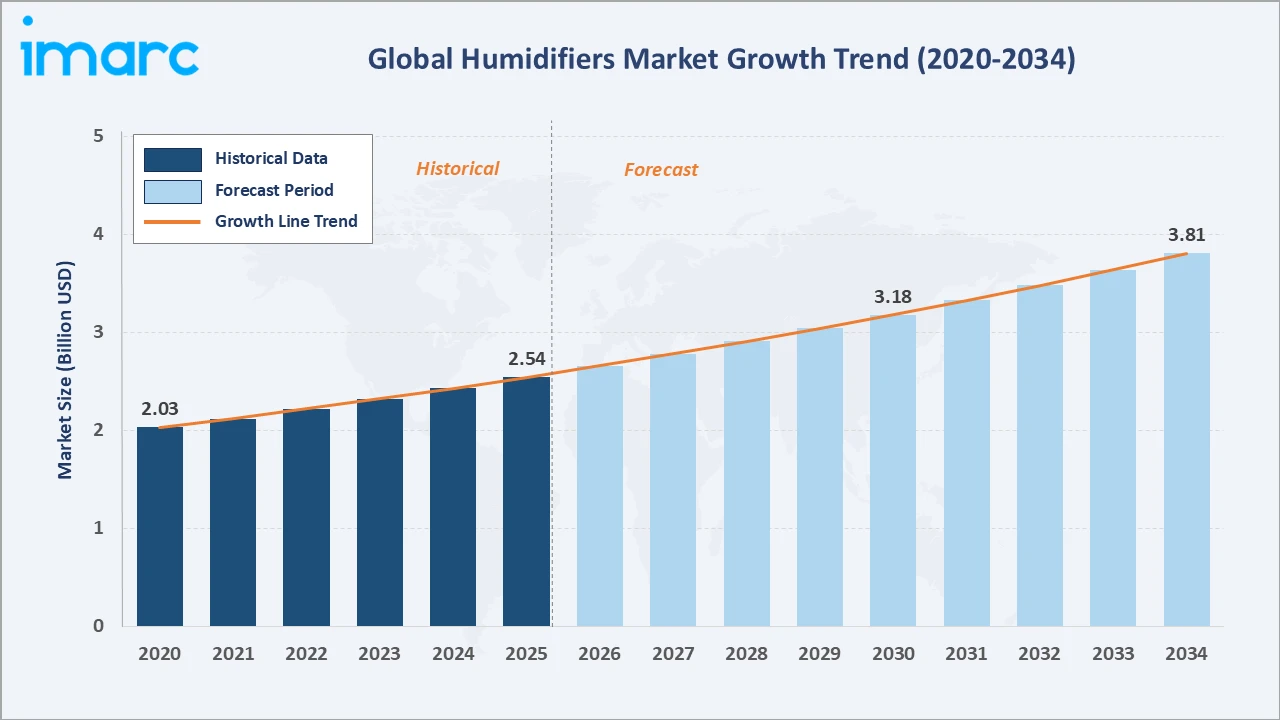
The global humidifiers market reached USD 2.54 Billion in 2025 and is projected to reach USD 3.81 Billion by 2034, exhibiting a CAGR of 4.58% during 2026-2034. Growing consumer awareness of indoor air quality and respiratory health, rapid adoption of smart home technologies, and sustained heating-season demand are the primary growth catalysts. Every year, approximately 2.9 million premature deaths are linked to illnesses caused by household air pollution resulting from the incomplete combustion of solid fuels and kerosene used for cooking. As households become more focused on creating healthier indoor environments, demand for humidifiers is increasing. Warm-mist humidifiers lead the product type at 35.0%, offline dominates the distribution channel at 75.4%, and North America accounts for the largest regional share at 45.1%.
Market Snapshot
|
Metric |
Value |
|
Market Size (2025) |
USD 2.54 Billion |
|
Forecast Market Size (2034) |
USD 3.81 Billion |
|
CAGR (2026-2034) |
4.58% |
|
Base Year |
2025 |
|
Historical Period |
2020-2025 |
|
Forecast Period |
2026-2034 |
|
Dominant Product Type |
Warm-Mist Humidifiers (35.0%, 2025) |
|
Dominant Distribution Channel |
Offline (75.4%, 2025) |
|
Leading Region |
North America (45.1%, 2025) |
The global humidifiers market grew from USD 2.03 Billion in 2020 to USD 2.54 Billion in 2025, driven by COVID-19-accelerated consumer focus on home health and indoor air quality, a growing body of clinical evidence linking optimal indoor humidity to reduced respiratory virus transmission and improved respiratory comfort, and the rapid expansion of smart home ecosystems incorporating humidity sensing and automated humidifier control. The market is projected to reach USD 3.18 Billion by 2030 and USD 3.81 Billion by 2034.
To get more information on this market, Request Sample
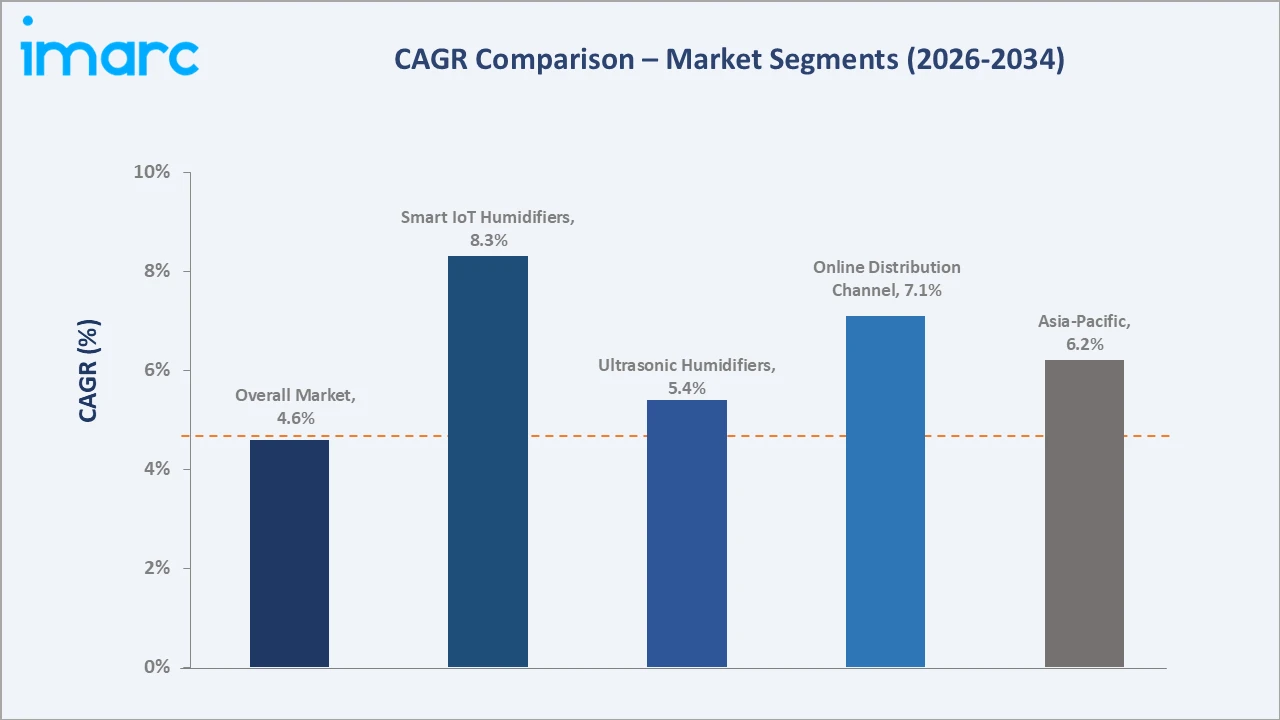
Online distribution channel grows at ~7.1% CAGR through e-commerce platform expansion, brand direct-to-consumer websites, and subscription replenishment models for replacement filters and wicks. Ultrasonic humidifiers grow at ~5.4% CAGR through silent operation preference, low energy consumption, and integration with smart home IoT ecosystems. Asia-Pacific leads regional growth at ~6.2% CAGR through China and India urban expansion, rising middle-class disposable income, and growing awareness of humidity health benefits.
Executive Summary
The global humidifiers market occupies a resilient position at the intersection of home health, indoor air quality, and smart home technology, serving consumers and businesses seeking to maintain optimal relative humidity levels that support respiratory comfort, protect furnishings and instruments from dry-air damage, and reduce the transmission of airborne pathogens in enclosed spaces. The market spans a broad product spectrum from basic warm-mist tabletop units available at mass-market retailers through commercial whole-house evaporative systems to industrial-grade humidification infrastructure installed in pharmaceutical manufacturing cleanrooms, semiconductor fabrication facilities, and large commercial buildings at costs reaching hundreds of thousands of dollars per installation. Market value stood at USD 2.54 Billion in 2025 and is forecast to reach USD 3.81 Billion by 2034, reflecting steady compound growth anchored by structural demand from cold-climate residential heating seasons, health-conscious consumer spending on indoor environment quality, and accelerating smart home adoption.
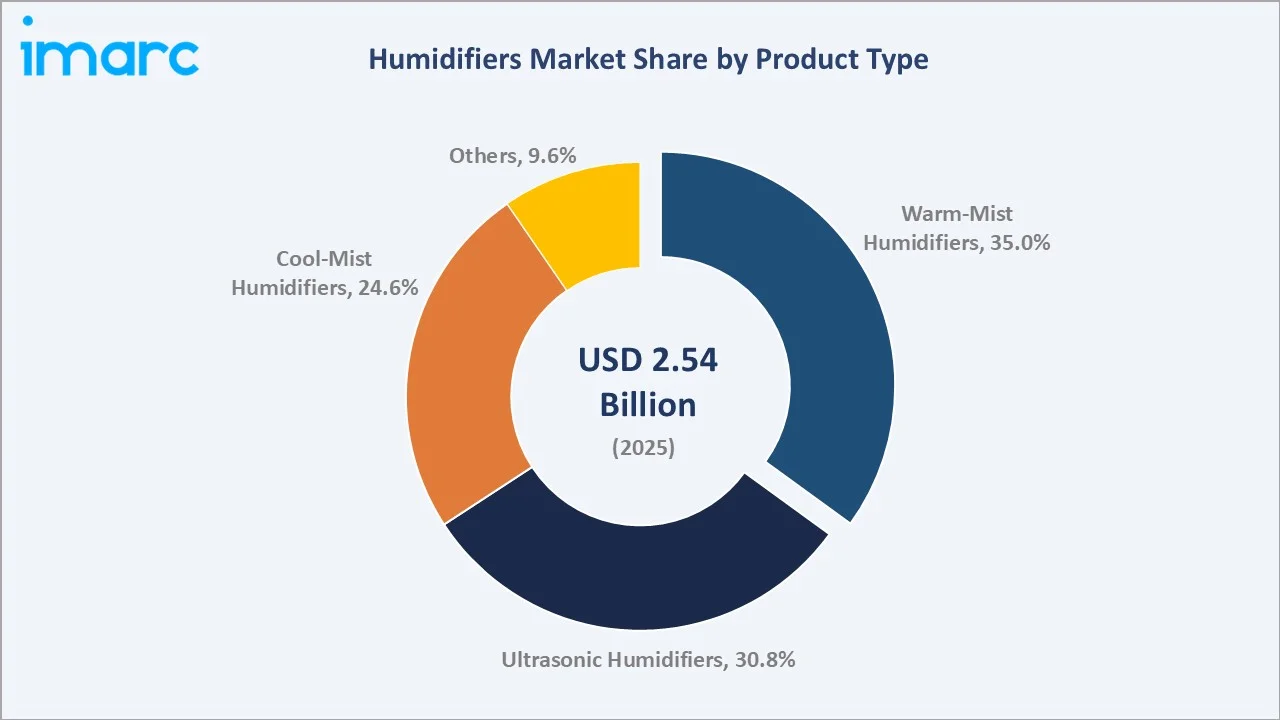
Warm-mist humidifiers lead product type at 35.0% (2025), commanding the largest share through their clinical connotation, the boiling-based sterilization of water that eliminates bacteria and mold from mist, and strong seasonal demand during cold and flu season in North America and Europe. Offline distribution commands 75.4% (2025) through the strong retail footprint of home improvement stores, mass merchandisers, and specialty health/wellness retailers where consumers seek humidifier guidance from knowledgeable staff and can evaluate products in person. North America commands 45.1% (2025) through its combination of severe cold winters requiring heating that dramatically reduces indoor humidity to 10-20% RH (versus the optimal 40-60%), the highest per-capita disposable income enabling premium humidifier purchases, and the deepest smart home ecosystem penetration globally.
Key Market Insights
|
Insight |
Data |
|
Dominant Product Type |
Warm-Mist Humidifiers – 35.0% share (2025) |
|
Dominant Distribution Channel |
Offline – 75.4% share (2025) |
|
Leading Region |
North America – 45.1% share (2025) |
|
Market Opportunity |
Smart/IoT humidifiers; combo air purifier-humidifier; industrial data center humidification; Asia-Pacific residential expansion |
Key Analytical Observations:
- Warm-Mist Humidifiers at 35.0% (2025): Warm-mist humidifiers command the largest product type share through their established clinical association with respiratory relief and the critical advantage of producing sterile, mineral-free steam. The boiling process eliminates the risk of dispersing waterborne pathogens that have periodically created public health concerns with cool-mist and ultrasonic humidifiers using standing water reservoirs. In households with young children, infants, or immunocompromised family members, warm-mist models are often specifically recommended by pediatricians and allergists for their inherently sterile mist output.
- Offline Distribution at 75.4% (2025): Offline retail dominates humidifier distribution through the combination of seasonal impulse purchase patterns, the need for physical product evaluation, and the in-store guidance of knowledgeable retail staff who can recommend appropriate models for specific room size and use case requirements.
- North America at 45.1% (2025): North America leads due to high consumer awareness of indoor air quality, widespread adoption of HVAC systems, and strong demand for respiratory wellness and home comfort products. The region also benefits from higher disposable incomes and broad availability of smart and premium humidifier technologies.
Humidifiers Market Overview
The global humidifiers market encompasses portable and whole-house residential units, commercial building humidification systems, and industrial-grade humidity management infrastructure that collectively maintain relative humidity within the 40-60% RH range that maximizes human comfort, respiratory health, and material preservation outcomes. The market's clinical relevance has grown substantially as epidemiological research has linked low indoor humidity (<30% RH) to increased airborne viral transmission, worsened asthmatic and allergic respiratory symptoms, increased incidence of dry skin and mucosal irritation, and accelerated moisture loss from wooden furniture, musical instruments, and hardwood flooring. Macroeconomic factors include rising urbanization, increasing disposable incomes, and growing healthcare expenditure.
Market Dynamics
To evaluate market opportunities, Request Sample
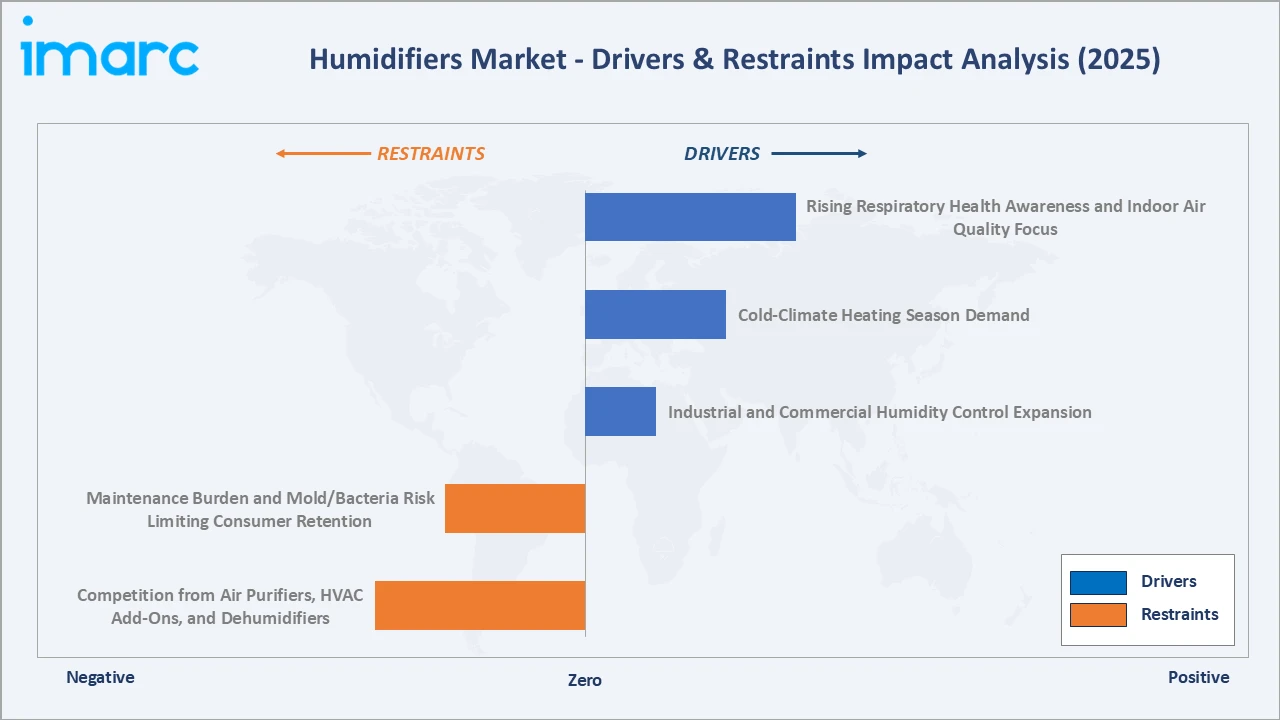
Market Drivers
- Rising Respiratory Health Awareness and Indoor Air Quality Focus: Growing consumer and institutional awareness of the relationship between indoor humidity and respiratory health has fundamentally expanded the perceived value proposition of humidifiers beyond simple dry-air discomfort relief toward active health infrastructure investment. Approximately 2.1 billion people worldwide, representing nearly one-quarter of the global population, continue to rely on open fires or inefficient stoves powered by kerosene, biomass, and coal for cooking, leading to significant household air pollution. At the current pace of progress, only 78% of the global population is projected to have access to clean cooking by 2030, leaving nearly 1.8 billion people without clean cooking solutions. Post-COVID research quantifying the relationship between low relative humidity and viral aerosol persistence in indoor air has prompted public health guidance endorsing indoor humidity maintenance as a respiratory infection prevention measure.
- Cold-Climate Heating Season Demand: The physics of home heating during cold seasons creates an inescapable structural driver for humidifier demand in temperate and cold climates: when outdoor air at 30°F (-1°C) and 70% relative humidity is heated to 70°F (21°C) indoors without moisture addition, its relative humidity drops to approximately 10-15% – far below the 40-60% optimal range. Every winter heating season recreates this structural indoor humidity deficit across North America (US and Canada), Northern Europe, Japan, South Korea, and Northern China, generating recurring seasonal consumer demand for humidification that is independent of economic cycles.
- Industrial and Commercial Humidity Control Expansion: Electronics and semiconductor manufacturing facilities require highly precise environmental control to minimize electrostatic discharge and maintain cleanroom standards. These facilities generally maintain relative humidity at 45–55%, often within a tight ±1% tolerance, to safeguard sensitive components, reduce production defects, and preserve manufacturing yields. The industrial humidification segment is growing through the expansion of manufacturing and technology sector activities requiring precision humidity control.
Market Restraints
- Maintenance Burden and Mold/Bacteria Risk Limiting Consumer Retention: Consumer research consistently identifies maintenance burden as the primary barrier to sustained humidifier use and repeat purchase, with filter replacement costs, daily tank cleaning requirements to prevent biofilm growth, descaling of mineral deposits in warm-mist heating chambers, and the periodic replacement of wicking pads creating a total cost of ownership substantially above the device purchase price. The risk of bacterial and mold growth in inadequately maintained ultrasonic and cool-mist humidifier reservoirs has generated media coverage of humidifier-associated respiratory illness that creates category-level consumer concern.
- Competition from Air Purifiers, HVAC Add-Ons, and Dehumidifiers: Humidifiers compete within a broader indoor air quality product category where consumers may choose between standalone humidifiers, combination air purifier-humidifier units (growing premium segment), whole-house HVAC-integrated humidifier bypasses, or portable air purifiers that address different but overlapping consumer IAQ concerns. The rapid growth of the air purifier market during COVID-19 has created a consumer segment investing in IAQ appliances that may perceive air purification as sufficient for respiratory health without additional humidification investment.
Market Opportunities
- Combination Air Purifier-Humidifier Premium Segment: The convergence of air purification and humidification into single premium devices addresses the consumer insight that indoor air quality management requires both particle removal and optimal humidity, outcomes that separate devices achieve individually but that combination units deliver simultaneously with reduced space, noise, and visual clutter footprint. In July 2026, Xiaomi launched the Mijia Purifying Humidifier 3 Pro, a dual-function home appliance that integrates air purification and humidification into a single device. The product was introduced on Xiaomi's Youpin crowdfunding platform.
- Whole-House and HVAC-Integrated Humidification Systems: The growing adoption of central HVAC systems in residential and commercial buildings is creating opportunities for whole-house humidification systems that provide consistent humidity control across multiple rooms. These integrated solutions offer greater convenience, improved energy efficiency, and enhanced indoor comfort compared to portable units. Rising demand for smart homes and healthy indoor environments is further accelerating the adoption of HVAC-integrated humidification systems.
Market Challenges
- White Dust Issue with Ultrasonic Humidifiers in Hard Water Areas: Ultrasonic humidifiers operating with hard tap water (high mineral content) disperse calcium and magnesium particles into the air as mist evaporates, leaving a fine white mineral dust on surfaces that is an aesthetic nuisance and a potential respiratory irritant. This white dust issue reduces the appeal of ultrasonic humidifiers in geographic markets with hard water, creating a maintenance and cost concern that limits market penetration in the ultrasonic segment's highest-potential markets.
- Energy Efficiency Standards and Regulatory Pressure on Warm-Mist Humidifiers: Warm-mist humidifiers consume significantly more electricity than ultrasonic or evaporative alternatives due to the energy required to continuously boil water, creating increasing regulatory and consumer pressure as energy costs rise and sustainability awareness grows. Manufacturers are responding with improved thermal insulation, more efficient heating elements, and hybrid warm-cool mist technologies that reduce energy consumption while preserving the sterilization benefits.
Emerging Market Trends
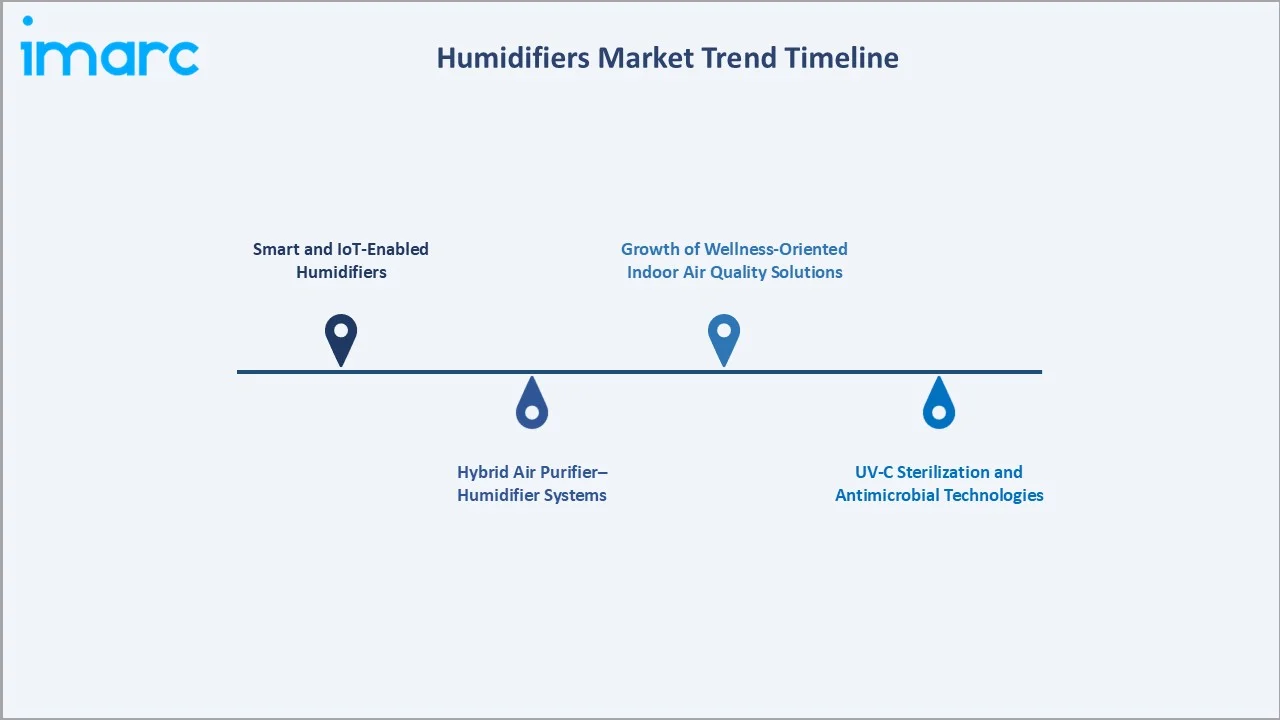
1. Smart and IoT-Enabled Humidifiers
The integration of Wi-Fi, Bluetooth, and IoT technologies is transforming humidifiers into connected home appliances. In June 2026, Grafito Innovations launched its IoT-controlled humidifier, or mist generator, featuring a smart four-channel mist management system designed for nurseries, greenhouses, hydroponic farms, and indoor cultivation facilities. The compact solution integrates precise environmental sensing, remote smartphone control, and automated scheduling to enable efficient and accurate humidity managemen. Features including automatic humidity adjustment, scheduling, filter replacement alerts, and real-time air quality monitoring are enhancing user convenience and driving premium product adoption.
2. Hybrid Air Purifier–Humidifier Systems
Manufacturers are introducing multifunctional devices that combine humidification with air purification to address multiple indoor air quality concerns simultaneously. These products help maintain optimal humidity while filtering airborne particles, allergens, and pollutants. Growing consumer preference for space-saving and multifunctional appliances is accelerating demand for integrated systems.
3. UV-C Sterilization and Antimicrobial Technologies
Manufacturers are increasingly incorporating UV-C sterilization, antimicrobial water tanks, and self-cleaning technologies into humidifiers to reduce bacterial and mold growth. These features improve hygiene and minimize maintenance requirements while addressing consumer concerns regarding microbial contamination. The trend is particularly strong in healthcare settings and households with children and elderly occupants.
4. Growth of Wellness-Oriented Indoor Air Quality Solutions
Consumers are placing greater emphasis on respiratory health and overall wellness, increasing demand for humidifiers as part of comprehensive indoor air quality management. Humidifiers are increasingly used alongside air purifiers, ventilation systems, and air quality monitors to create healthier indoor environments. In June 2025, Carepod introduced its premium Cube Plus stainless steel humidifier in Australia, strengthening its portfolio of wellness-focused home humidification solutions. Featuring a sleek, minimalist design, the device helps address dry indoor air while offering enhanced hygiene through an integrated heat-sanitization system. Its patented pasteurization cycle can be activated at the touch of a button and is designed to eliminate up to 99.9% of certain harmful bacteria in the water tank, supporting cleaner and healthier indoor air. This trend is supported by rising awareness of allergies, dry air discomfort, and seasonal respiratory conditions.
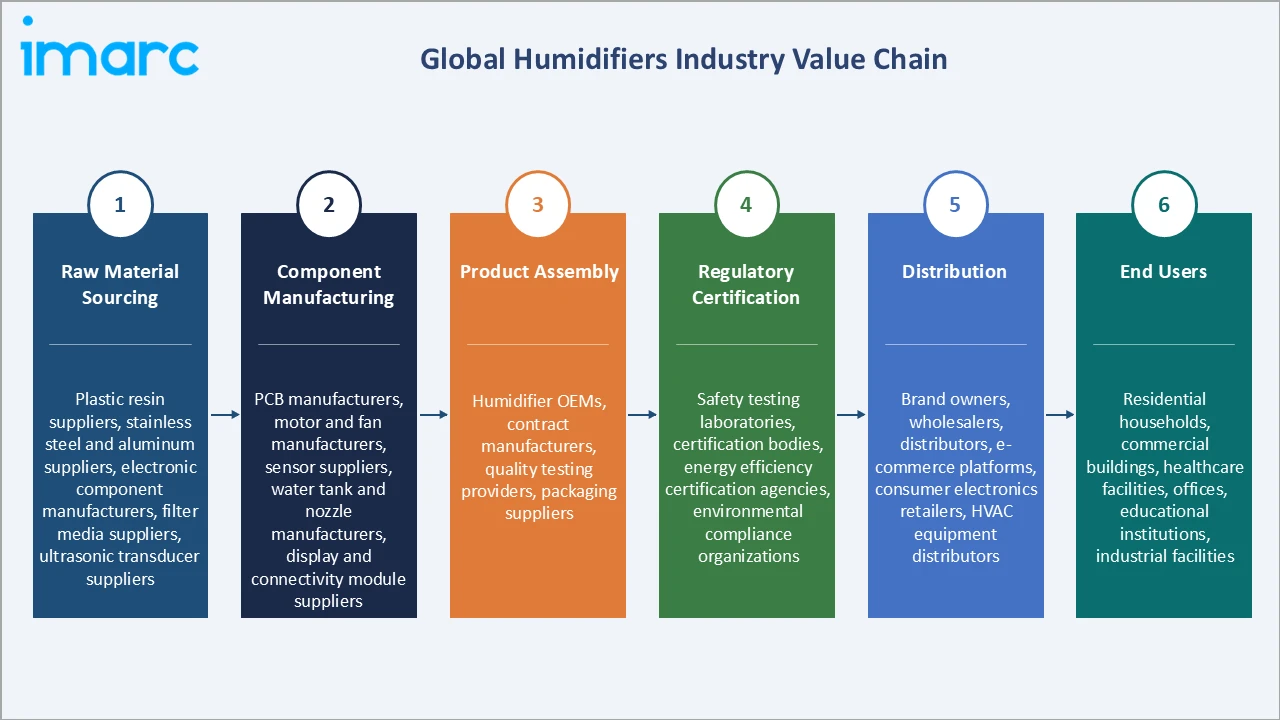
Industry Value Chain Analysis
The humidifiers market value chain integrates raw material sourcing, component manufacturing, product assembly, regulatory certification, multi-channel distribution, and end-use deployment across residential, commercial, and industrial application segments.
|
Stage |
Key Participants |
|
Raw Material Sourcing |
Plastic resin suppliers, stainless steel and aluminum suppliers, electronic component manufacturers, filter media suppliers, ultrasonic transducer suppliers. |
|
Component Manufacturing |
PCB manufacturers, motor and fan manufacturers, sensor suppliers, water tank and nozzle manufacturers, display and connectivity module suppliers. |
|
Product Assembly |
Humidifier OEMs, contract manufacturers, quality testing providers, packaging suppliers. |
|
Regulatory Certification |
Safety testing laboratories, certification bodies, energy efficiency certification agencies, environmental compliance organizations. |
|
Distribution |
Brand owners, wholesalers, distributors, e-commerce platforms, consumer electronics retailers, HVAC equipment distributors. |
|
End Users |
Residential households, commercial buildings, healthcare facilities, offices, educational institutions, industrial facilities. |
Product assembly is the most value-added stage in the humidifiers value chain, as it integrates core components such as sensors, control systems, motors, and humidification technologies into the final product. Product differentiation through smart features, quality assurance, energy efficiency, and design largely occurs at this stage, significantly influencing brand value and profit margins.
Technology Landscape in the Humidifiers Industry
Ultrasonic Humidification Technology
Ultrasonic humidification technology has become the dominant technology for premium consumer humidifiers through its advantages of silent operation, low energy consumption, cool mist output safe for infant and child environments, and design flexibility enabling compact and aesthetically sophisticated form factors. In January 2026, KENT introduced the KENT Dew Ultrasonic Humidifier to help counteract dry indoor conditions created by air conditioners during summer and heating systems in winter. Designed for modern homes, the compact appliance supports balanced humidity levels to enhance indoor comfort and air quality. Using ultrasonic mist technology, the device produces a fine, droplet-free mist and operates for up to 35 hours on a single fill.
Evaporative Wicking Technology and Air Washing Innovation
Evaporative humidification represents the most energy-efficient and self-regulating humidification technology, as evaporation rate naturally decreases as room humidity approaches 100% relative humidity, preventing over-humidification without electronic humidity sensing. Evaporative wicking technology's annual wick replacement requirement provides a monetization advantage over ultrasonic models where consumables are limited to demineralization cartridges. The wick's natural self-regulation also eliminates over-humidification risk that can promote mold growth on walls and windows in tightly sealed homes.
Industrial Adiabatic and Isothermal Humidification Systems
Industrial humidification employs two fundamentally different physical processes: isothermal humidification (steam generation through electric or gas-fired boilers, providing precise humidity control independent of air temperature) and adiabatic humidification (evaporative cooling through high-pressure water atomization, ultrasonic nebulization, or wetted media that simultaneously cools and humidifies supply air).
Market Segmentation Analysis
The report covers the following segments:
|
Segment Category |
Leading Segment |
Market Share |
Year |
|
Product Type |
Warm-Mist Humidifiers |
35.0% |
2025 |
|
Distribution Channel |
Offline |
75.4% |
2025 |
|
Application |
Residential |
60.0% |
2025 |
|
Region |
North America |
45.1% |
2025 |

By Product Type
Warm-mist humidifiers lead at 35.0% (2025) through their clinical association with respiratory symptom relief, the thermal sterilization advantage of boiling-based mist production, and the established seasonal purchase pattern driven by cold and flu season in North American and European markets. Ultrasonic humidifiers at 30.8%, growing at ~5.4% CAGR, represent the smart home era's preferred humidifier technology through silent operation, low energy consumption, and IoT integration capability.
To access detailed market analysis, Request Sample
Cool-mist humidifiers at 24.6% serve the safety-conscious and energy-efficient segment with self-regulating humidity output. Others at 9.6% encompass combination air purifier-humidifiers, whole-house HVAC bypass humidifiers, steam vaporizers, and specialty humidification products for musical instruments, wine cellars, and cigar storage.
By Distribution Channel
Offline distribution leads at 75.4% (2025) through the deeply embedded seasonal retail purchase pattern where heating season promotional displays at specialty retailers convert consumer awareness into purchase through in-store availability. The offline channel's advantages in humidifier retail include the ability to evaluate physical product dimensions and noise levels before purchase, immediate same-day product availability during acute dry-air discomfort episodes, and the perception of retail return and service support that some consumers prefer for home appliance purchases.
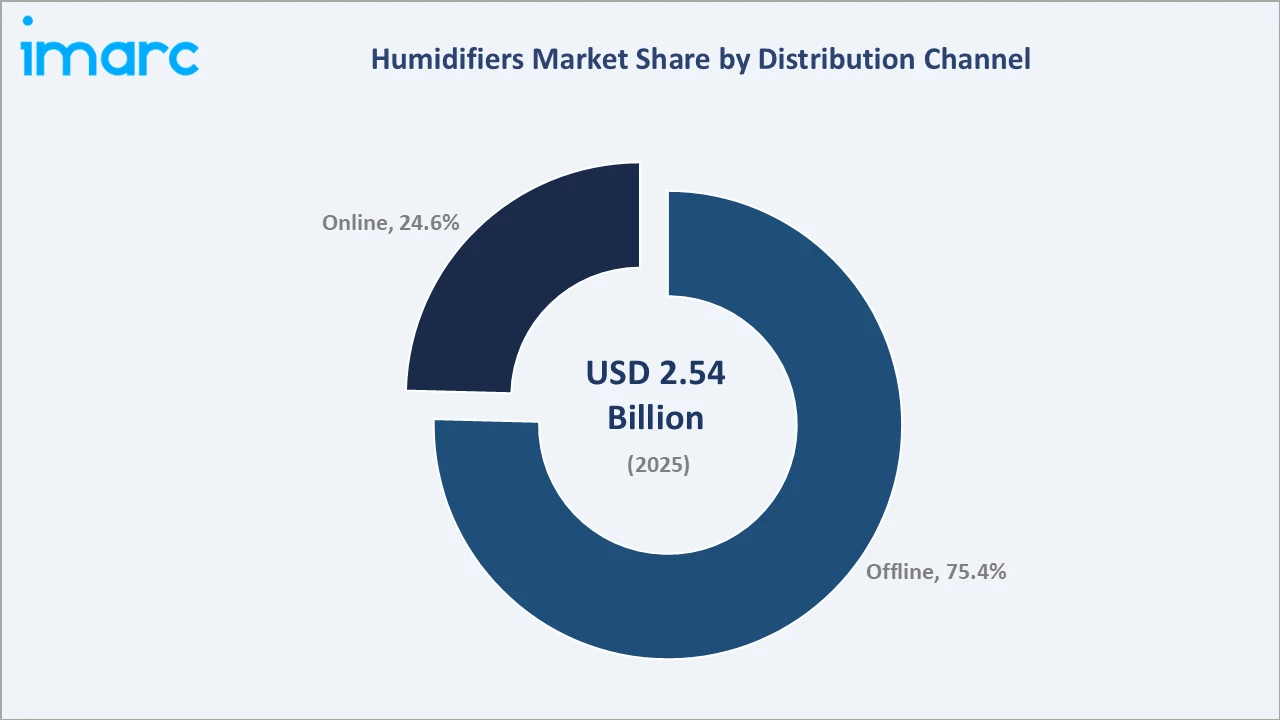
Online at 24.6%, growing at ~7.1% CAGR, represents the fastest-growing distribution channel through the structural shift in consumer home appliance purchasing behavior toward e-commerce research and purchase.
Regional Market Insights
|
Region |
Share (2025) |
Key Humidifiers Market Drivers & Characteristics |
|
North America |
45.1% |
High consumer awareness of indoor air quality, widespread HVAC adoption, strong demand for smart humidifiers, and higher healthcare spending support market leadership. |
|
Europe |
24.3% |
Cold climates, energy-efficient building standards, and increasing focus on indoor comfort and respiratory health drive steady humidifier adoption. |
|
Asia-Pacific |
20.8% |
Rapid urbanization, rising disposable incomes, expanding middle-class population, and growing smart home adoption are accelerating market growth. |
|
Latin America |
5.3% |
Rising urban housing development, improving consumer purchasing power, and increasing awareness of indoor air quality are supporting gradual market expansion. |
|
Middle East and Africa |
4.5% |
Growing use of air conditioning, expanding residential and commercial infrastructure, and rising demand for healthier indoor environments are contributing to market growth. |
North America's dominant 45.1% share is supported by high consumer awareness of indoor air quality, widespread HVAC adoption, and strong demand for smart home appliances. Europe’s 24.3% driven by its colder climate, stringent energy-efficiency standards, and growing emphasis on respiratory health and indoor comfort.
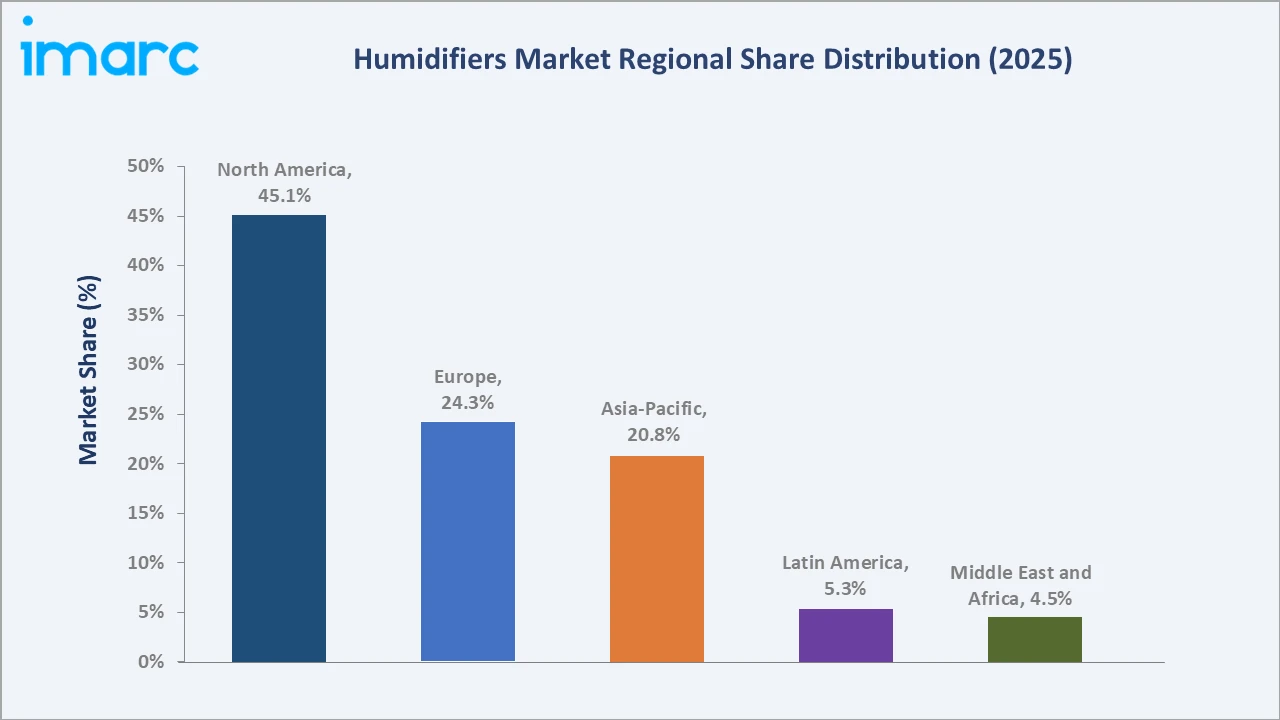
Asia-Pacific at 20.8%, growing at ~6.2% CAGR, driven by rapid urbanization, rising disposable incomes, expanding middle-class populations, and increasing penetration of smart home technologies. Latin America’s 5.3% is witnessing steady growth as awareness of indoor wellness improves alongside residential construction activities. The Middle East and Africa’s 4.5% are also experiencing gradual market expansion, supported by increasing air-conditioner usage, infrastructure development, and demand for healthier indoor environments.
Competitive Landscape
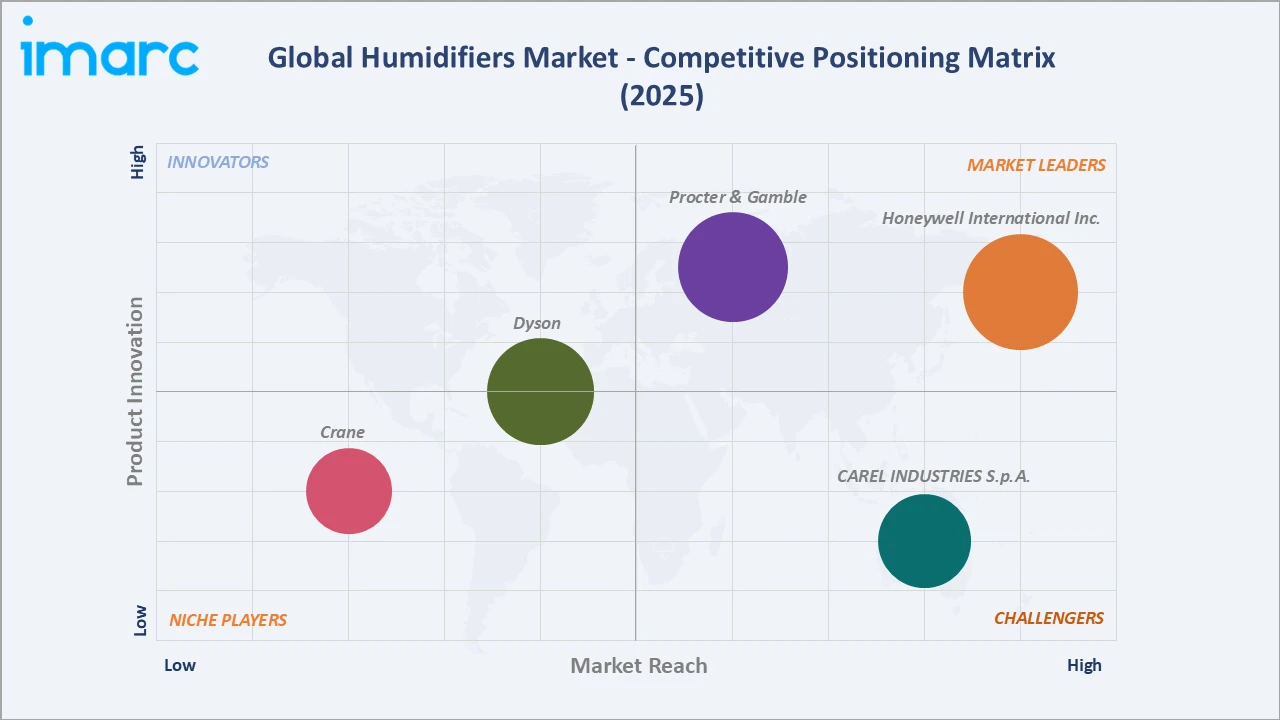
The global humidifiers market features a tiered competitive structure: premium technology innovators competing on smart connectivity, air quality integration, and design differentiation; established home appliance brands competing on channel breadth, seasonal retail execution, and value-for-performance; industrial specialists competing on engineering expertise and precision humidity control; and mass-market Asian manufacturers competing on price in the commodity segment.
|
Company |
Key Products |
Market Position |
Core Strength |
|
Honeywell International Inc. |
Honeywell Quiet Comfort Cool Moisture Humidifier, Honeywell Top Fill Cool Moisture Humidifier with Digital Humidistat, Honeywell Top Fill Cool Moisture Tower Humidifiers, Honeywell Designer Series Cool Mist Humidifiers, Honeywell Dual Comfort Cool + Warm Mist Humidifiers |
Market Leader |
Honeywell International Inc. occupies a major footprint in the humidifier market, operating through specialized licensing agreements. They are well-known for both portable, single-room units and whole-home HVAC systems. |
|
Dyson |
Dyson Purifier Humidify+Cool PH03, Dyson Purifier Humidify + Cool PH2 De-NOx Nickel/Gold |
Established Player |
Dyson’s role in the humidifier market is to merge air humidification with intelligent purification and circulation. |
|
Procter & Gamble |
Filter Free Plus Cool Mist Humidifier, 3-In-1 SleepyTime Humidifier, Starry Night Cool Moisture Humidifier, Embrace Cool Mist Humidifier, EasyCare+ TopFill Ultrasonic Cool Mist Humidifier, Cool Moisture Humidifier with UV Technology, Cool Mist Filter Free Ultrasonic Humidifier, Mini Filter Free Cool Mist Humidifier, Warm Mist Humidifier, CoolRelief Filter Free Cool Mist Humidifier |
Market Leader |
Procter & Gamble plays a role in the humidifier market primarily through a licensing partnership. Rather than manufacturing the physical appliances themselves, P&G licenses their trusted Vicks trademark to Helen of Troy Limited, which designs, produces, and distributes Vicks-branded humidifiers and vaporizers. |
|
CAREL INDUSTRIES S.p.A. |
Pressurised water humidifiers, Ultrasonic humidifiers, Centrifugal humidifiers |
Challenger |
CAREL INDUSTRIES S.p.A. engineers and manufactures highly precise isothermal and adiabatic humidification systems used across commercial, industrial, and mission-critical applications. |
|
Crane |
Drop Shape Cool Mist Humidifier, 2 Gal. Ultrasonic Cool Mist Tower Humidifier with Germicidal UV-A Light, Crane Top Fill Warm & Cool Mist Humidifier, Evaporative Cool Mist Humidifier, 0.5 Gallon Warm Mist Humidifier, Top Fill 0.5 Gallon Humidifier With Night Light & Aroma Diffuser, Personal Ultrasonic Cool Mist Humidifier |
Innovator |
Crane plays a highly specialized role in the humidifiers market, leading the pediatric, design-centric, and portable segments. Renowned for its signature Drop-shaped designs, Crane acts as a bridge between functional health equipment and stylish home decor, focusing heavily on filter-free and antimicrobial solutions. |
The humidifiers competitive landscape is experiencing accelerating polarization between premium technology-integrated products and competitively priced commodity products, while the mid-market brands must navigate between these tiers through differentiated features that justify prices above commodity without reaching premium smart device levels.
Key Company Profiles
Honeywell International Inc.
Honeywell International Inc. is a diversified multinational technology company that offers a broad portfolio of indoor air quality solutions, including portable and whole-house humidifiers, air purifiers, dehumidifiers, and HVAC controls for residential and commercial applications. Honeywell's humidifier portfolio includes cool mist, warm mist, evaporative, and ultrasonic models designed to improve indoor comfort and maintain optimal humidity levels. Leveraging its strong global distribution network, trusted brand reputation, and expertise in smart building technologies, Honeywell maintains a significant presence in the global humidifiers market.
- Key Products: Honeywell Quiet Comfort Cool Moisture Humidifier, Honeywell Top Fill Cool Moisture Humidifier with Digital Humidistat, Honeywell Top Fill Cool Moisture Tower Humidifiers, Honeywell Designer Series Cool Mist Humidifiers, Honeywell Dual Comfort Cool + Warm Mist Humidifiers.
- Strategic Focus: Expanding its indoor air quality portfolio by offering energy-efficient and smart humidification solutions integrated with HVAC systems and connected home technologies. The company emphasizes product innovation, reliable performance, and user convenience through advanced humidity controls, while leveraging its strong global distribution network and brand recognition to strengthen its presence across residential and commercial markets.
Dyson
Dyson is a global technology company, recognized for its premium household appliances and air treatment solutions. The company offers advanced humidifier and air purifier-humidifier products to improve indoor air quality and maintain optimal humidity levels. Dyson primarily targets the premium residential segment, emphasizing engineering innovation, sleek design, and intelligent environmental sensing. Its strong global brand presence and continuous investment in research and development position it as a key player in the global humidifiers market.
- Key Products: Dyson Purifier Humidify+Cool PH03, Dyson Purifier Humidify + Cool PH2 De-NOx Nickel/Gold.
- Strategic Focus: Developing premium humidification solutions that integrate air purification, intelligent sensing, and advanced hygiene technologies. The company emphasizes continuous product innovation, smart connectivity, energy-efficient operation, and sleek product design while expanding its presence in the high-end indoor air quality segment through research and development and global retail channels.
Market Concentration Analysis
The global humidifiers market is moderately fragmented, with no single company holding a dominant share across all segments and geographies. The residential consumer segment is the most fragmented, with dozens of competing brands at all price points, including a large number of Asian OEM manufacturers competing at commodity price levels. Market concentration is expected to increase modestly in the premium smart device segment as technology investment creates competitive moats, while the commodity segment remains highly competitive and fragmented through low-barrier Asian OEM manufacturing supply.
Investment & Growth Opportunities
Highest Growth Segments
Online distribution channel (~7.1% CAGR), smart IoT-connected humidifiers (~8.3% CAGR niche), combination air purifier-humidifier (~8%+ CAGR premium niche), Asia-Pacific region (~6.2% CAGR), and industrial data center humidification (above-market CAGR) represent the humidifiers market's highest-growth investment vectors through 2034.
Investment Themes
- Smart home ecosystem humidifier-as-a-service subscription models: Growing adoption of connected smart homes is creating opportunities for subscription-based humidification services that bundle devices with filter replacements, predictive maintenance, software updates, and remote monitoring. This recurring revenue model enhances customer retention while enabling manufacturers to expand long-term service offerings.
- Data center industrial humidification for AI infrastructure buildout: Rapid expansion of AI data centers is increasing demand for precision industrial humidification systems that control electrostatic discharge and maintain optimal operating conditions for sensitive IT equipment. Investments in next-generation digital infrastructure are creating new growth opportunities for high-performance humidification solution providers.
Future Market Outlook (2026-2034)
The global humidifiers market is projected to grow from USD 2.54 Billion in 2025 to USD 3.81 Billion by 2034, delivering a 4.58% CAGR, reflecting the structural demand created by cold-climate residential heating seasons, the technology-driven premiumization of consumer humidifier products through smart home integration and combination IAQ functionality, and the extraordinary industrial humidification demand expansion associated with AI data center infrastructure buildout and pharmaceutical manufacturing growth. The anchor value of USD 3.18 Billion in 2030 is driven primarily by the three structural forces that will define the market through the forecast period.
First, smart home ecosystem adoption will transform the residential humidifier market from a predominantly single-function appliance category into an integrated indoor environment management component, driving average selling price increases that contribute value growth above unit volume growth rates. Second, the combination air purifier-humidifier product category will continue growing at above-market rates as consumers increasingly recognize that optimal indoor air quality requires both particle filtration and humidity management. Third, Asia-Pacific's rising middle-class household formation and growing urban IAQ awareness will progressively increase the region's market share toward a more proportional representation of the world's largest consumer population.
Research Methodology
Primary Research
Primary research comprised in-depth interviews with humidifier brand product managers and commercial executives, retail category buyers at major home improvement and mass merchandise chains, HVAC contractors installing whole-house humidification systems, industrial purchasing managers at pharmaceutical and data center facilities, smart home platform partnership managers, and independent home appliance and consumer electronics market analysts. These discussions validated market size estimates, assessed product type and channel share trends, evaluated smart home integration adoption trajectories, and provided insights into regional market dynamics and industrial segment demand drivers.
Secondary Research
Secondary research encompassed product launch documentation, launch materials, data center contract announcements, annual product line updates, humidifier certification database, indoor humidity guidelines, consumer home appliance market data, and credible market intelligence sources.
Forecasting Models
Forecasting models were developed using historical humidifiers market data, smart home ecosystem adoption rate projections, cold-climate residential heating season demand modeling across North American and European geographic markets, industrial humidification demand projections based on announced hyperscale data center construction pipelines, pharmaceutical manufacturing GMP facility expansion programs, combination air purifier-humidifier category adoption curves, Asia-Pacific middle-class household formation rates, and online channel growth trajectories by region. Both top-down and bottom-up approaches were validated through primary research.
Humidifiers Market Report Coverage:
| Report Features | Details |
|---|---|
| Base Year of the Analysis | 2025 |
| Historical Period | 2020-2025 |
| Forecast Period | 2026-2034 |
| Units | Billion USD |
| Scope of the Report |
Exploration of Historical Trends and Hot Melts Adhesive Market Outlook, Industry Catalysts and Challenges, Segment-Wise Historical and Future Market Assessment:
|
| Product Types Covered | Warm-Mist Humidifiers, Ultrasonic Humidifiers, Cool-Mist Humidifiers, Others |
| Distribution Channels Covered | Offline, Online |
| Applications Covered | Industrial, Residential, Commercial |
| Regions Covered | Asia Pacific, Europe, North America, Latin America, Middle East and Africa |
| Companies Covered | Honeywell International Inc., Dyson, Procter & Gamble, CAREL INDUSTRIES S.p.A., Crane, etc. |
| Customization Scope | 10% Free Customization |
| Post-Sale Analyst Support | 10-12 Weeks |
| Delivery Format | PDF and Excel through Email (We can also provide the editable version of the report in PPT/Word format on special request) |
Frequently Asked Questions About the Humidifiers Market Report
The global humidifiers market reached USD 2.54 Billion in 2025, driven by smart humidifier expansion, data center industrial humidification contracts, growing respiratory health awareness post-COVID, and smart home ecosystem adoption driving upgrade purchases from basic to connected humidifiers.
The market grows at 4.58% CAGR during 2026-2034, reaching USD 3.81 Billion by 2034. The CAGR reflects the combination of air purifier-humidifier category growing above market through competitive market development.
Warm-mist humidifiers lead at 35.0% (2025) through thermal sterilization advantage, clinical respiratory relief association, and strong North American heating-season seasonal demand.
Offline dominates at 75.4% (2025) through heating-season retail display driving impulse purchase; in-store product evaluation for size, noise, and tank capacity assessment; and immediate product availability for acute dry-air discomfort resolution.
North America leads at 45.1% (2025) through structural cold-climate heating season demand reducing indoor RH to 10-20% (requiring humidification), highest per-capita smart home adoption, and highest global per-capita disposable income enabling premium smart humidifier purchase.
Leading companies include Honeywell International Inc., Dyson, Procter & Gamble, CAREL INDUSTRIES S.p.A., and Crane, among others.
The market is projected to reach approximately USD 3.18 Billion by 2030, driven by smart home-connected humidifier mass-market adoption, combination air purifier-humidifier segment expansion through competitive responses, Asia-Pacific urban household middle-class expansion, hyperscale AI data center industrial humidification demand, and residential whole-house HVAC bypass humidification growth through home renovation programs.
Top opportunities include the smart IoT humidifier segment, development of the combination air purifier-humidifier premium segment, AI data center industrial humidification, Asia-Pacific first-time residential adoption in cold-climate Chinese cities and the Indian urban air quality market, e-commerce DTC subscription models for filter/wick replacement creating recurring revenue, and whole-house HVAC bypass humidifier growth through HVAC contractor specification programs.
Need more help?
- Speak to our experienced analysts for insights on the current market scenarios.
- Include additional segments and countries to customize the report as per your requirement.
- Gain an unparalleled competitive advantage in your domain by understanding how to utilize the report and positively impacting your operations and revenue.
- For further assistance, please connect with our analysts.
 Request Customization
 Speak to an Analyst
 Request Brochure
 Inquire Before Buying
Benefits of Customization
- Personalize this research
- Triangulate with your data
- Get data as per your format and definition
- Gain a deeper dive into a specific application, geography, customer, or competitor
- Any level of personalization
Get in Touch With Us
UNITED STATES
Phone: +1-201-971-6302
INDIA
Phone: +91-120-433-0800
UNITED KINGDOM
Phone: +44-753-714-6104
Email: [email protected]
Client Testimonials




.webp)




.webp)













Related Reports

Choose your plan
*Please note that the prices mentioned below are starting prices for each bundle type. Kindly contact our team for further details.*
Single User License
- 1 User License, Access on 2 Devices
- PDF Report + Excel Dataset (Password Protected)
- Lifetime Access
- No Printing Rights
- 10% Free Report Customization
- 10–12 Weeks of Analyst Support
Five User License
- Access for 5 Users, 2 Devices per User
- PDF Report + Excel Dataset (Password Protected)
- Lifetime Access
- Dedicated Account Manager
- 12–14 Weeks of Analyst Support
- No Printing Rights
- 15% Free Report Customization
- 25% Discount on Your Next Purchase
Corporate User License
- Unlimited User Access (Within Your Organization)
- PDF Report + Excel Dataset
- Lifetime Access
- Dedicated Account Manager
- 14–20 Weeks of Analyst Support
- No Printing Rights
- 20% Free Report Customization
- 30% Discount on Your Next Purchase
Essential Insights
What's included:
3 reports
- Lifetime Access
- PDF Reports
- Excel Datasets
- 2 Weeks of Free Analyst Support
- 2 User Licenses
- Access on 2 Devices
- Printing Rights
- Complimentary PowerPoint (PPT) Version
- Complimentary License Upgrade
Professional Access
What's included:
5 reports
- Lifetime Access
- PDF Reports
- Excel Datasets
- 8 Weeks of Free Analyst Support
- 2 User Licenses
- Access on 2 Devices
- Printing Rights
- Complimentary PowerPoint (PPT) Version
- Complimentary License Upgrade
Business Advantage
What's included:
8 reports
- Lifetime Access
- PDF Reports
- Excel Datasets
- 14 Weeks of Free Analyst Support
- 2 User Licenses
- Access on 2 Devices
- Printing Rights
- Complimentary PowerPoint (PPT) Version
- Complimentary License Upgrade
Enterprise Intelligence
What's included:
10 reports
- Lifetime Access
- PDF Reports
- Excel Datasets
- 20 Weeks of Free Analyst Support
- 2 User Licenses
- Access on 2 Devices
- Printing Rights
- Complimentary PowerPoint (PPT) Version
- Complimentary License Upgrade