
India Aluminium Cans Market Size, Share, Trends and Forecast by Application, and Region, 2026-2034
India Aluminium Cans Market Summary:
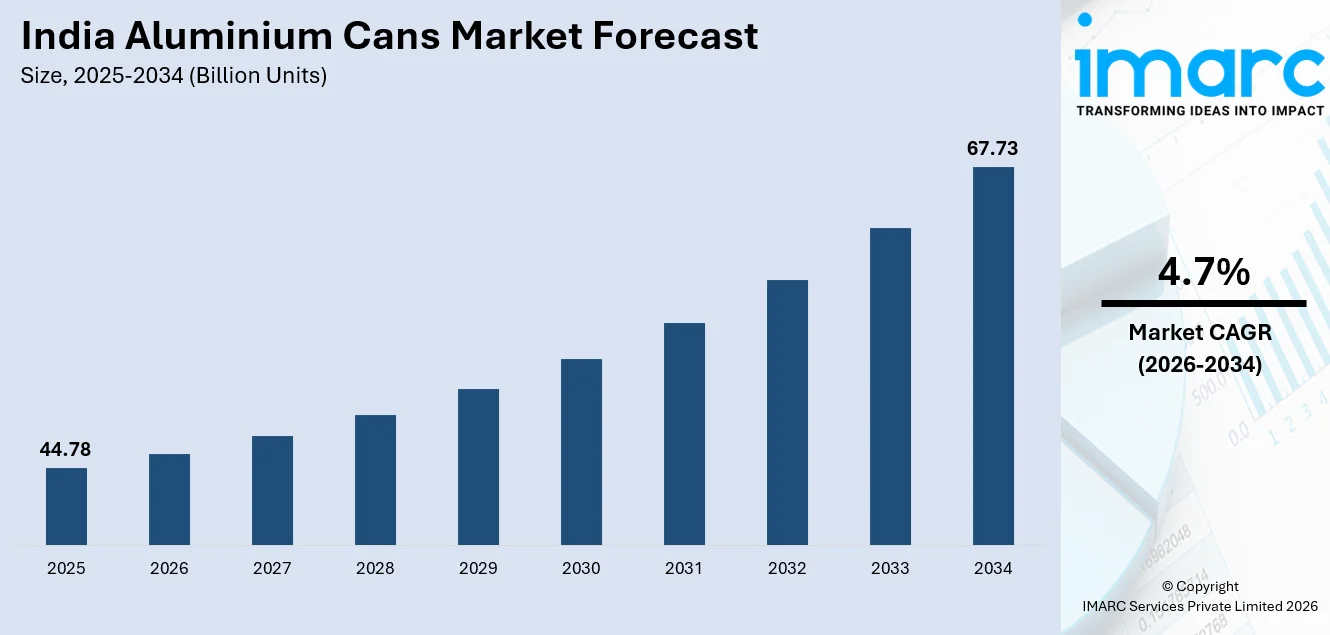
The India aluminium cans market size reached 44.78 Billion Units in 2025 and is projected to reach 67.73 Billion Units by 2034, growing at a compound annual growth rate of 4.7% from 2026-2034.
The factors that propel the market in the future would be the increasing consumer preference for eco-friendly and recyclable packaging solutions, along with the escalating beverage market due to the increase in urbanization of the population and the changing lifestyle ethos. Moreover, the increasing presence of ready-to-drink beverages, in addition to the lightweight, durable, and cost-effective nature of the material, help boost the usage of the material in the various end-user industries in the country, propelling India aluminium cans market share.
Key Takeaways and Insights:
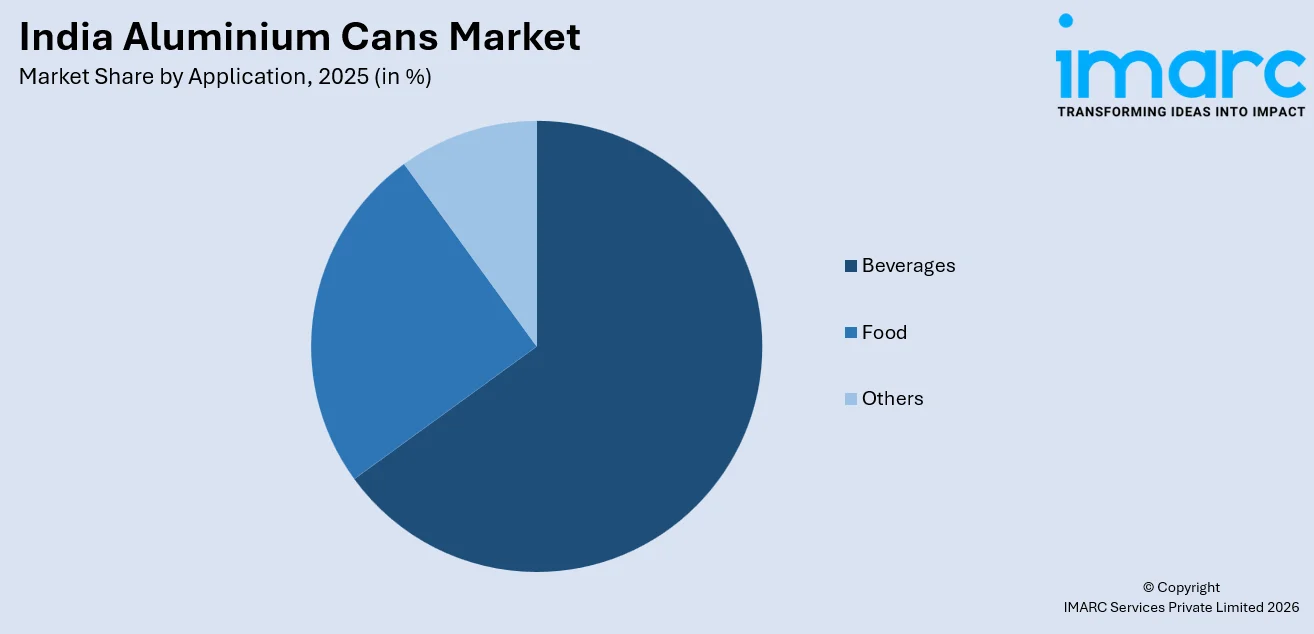
- By Application: Beverages dominate the market with a share of 65% in 2025, driven by rising consumption of carbonated drinks, energy drinks, alcoholic beverages, and ready-to-drink products across the country.
- Key Players: The India aluminium cans market exhibits a moderately consolidated competitive landscape, with a mix of multinational packaging corporations and domestic manufacturers competing across production capacity, technology adoption, and regional distribution networks to capture growing demand from the beverage and food sectors.
To get more information on this market Request Sample
The India aluminium cans market is experiencing robust growth propelled by a confluence of favorable factors. Rapid urbanization and an expanding middle-class population are significantly boosting the consumption of packaged beverages, creating substantial demand for aluminium can packaging. As per sources, Ball Corporation announced a $60 million investment to expand its aluminium beverage can manufacturing facility in Andhra Pradesh, strengthening domestic production and supply capacity. Moreover, the government’s strong push toward eliminating single-use plastics through Extended Producer Responsibility mandates and stricter waste management regulations is accelerating the transition from plastic to aluminium packaging. Furthermore, the growing environmental consciousness among Indian consumers is driving preference for infinitely recyclable aluminium cans over conventional packaging materials. The expansion of modern retail infrastructure, the proliferation of e-commerce delivery channels, and the rising popularity of craft beverages and energy drinks are also creating incremental demand.
India Aluminium Cans Market Trends:
Rising Adoption of Lightweight and Sustainable Packaging Solutions
Growing environmental awareness among Indian consumers and manufacturers is driving a significant shift toward sustainable packaging, with aluminium cans emerging as a preferred choice due to their infinite recyclability without quality degradation. Beverage brands are increasingly transitioning from plastic and glass containers to aluminium cans, aligning with evolving eco-friendly consumer preferences. In August 2024, Hindalco announced a $10 billion investment to expand aluminium and recycling capacity, including downstream and refinery projects, supporting sustainable metal supply and circular packaging initiatives in India. The circular economy potential of aluminium supports closed-loop recycling and reduces reliance on virgin raw materials.
Expansion of the Craft Beverage and Ready-to-Drink Segment
India's beverage landscape is transforming with the rapid emergence of craft breweries, specialty beverages, and ready-to-drink products, all heavily relying on aluminium can packaging for product differentiation and shelf appeal. As per sources in 2025, United Breweries announced a ₹90 crore investment to establish a canned beer production facility in Telangana to meet rising demand for convenient, recyclable packaging. Younger urban consumers are gravitating toward premium and artisanal beverages emphasizing unique flavor profiles and distinctive packaging, creating significant demand for customized aluminium cans. The convenience and portability of canned beverages align with on-the-go consumption habits of India's urban workforce.
Technological Advancements in Manufacturing and Design
Innovation in the manufacture of aluminium cans is bringing radical transformation to the industry landscape of India. The ability of technology to offer lightweight materials without compromising durability is greatly benefiting companies, thereby raising the industry's efficiency and production capacity. The adoption of innovative printing techniques, including thermochromic, possesses immense potential for companies seeking to harness the capabilities of aluminium cans as a branding tool. The availability of specialized can formats, including sleek, slim, and embossed cans, helps companies differentiate their products from competitors in the market.
Market Outlook 2026-2034:
The India aluminium cans market is poised for sustained revenue growth over the forecast period, supported by expanding beverage consumption, favorable regulatory frameworks promoting recyclable packaging, and increasing investments in domestic manufacturing capacity. The revenue trajectory is expected to benefit from the growing penetration of aluminium cans in emerging beverage categories, including functional drinks, flavored water, and non-alcoholic craft beverages. Additionally, the strengthening of recycling infrastructure and the rising adoption of circular economy principles across the packaging value chain are anticipated to further enhance the revenue potential of the market through the forecast period. The market size was estimated at 44.78 Billion Units in 2025 and is expected to reach 67.73 Billion Units by 2034, reflecting a compound annual growth rate of 4.7% over the forecast period 2026-2034.
India Aluminium Cans Market Report Segmentation:
|
Segment Category |
Leading Segment |
Market Share |
|
Application |
Beverages |
65% |
Application Insights:
Access the comprehensive market breakdown Request Sample
- Beverages
- Food
- Others
Beverages dominates with a market share of 65% of the total India aluminium cans market in 2025.
The beverages lead the India aluminium cans market, driven by the rising consumption of carbonated soft drinks, energy drinks, alcoholic beverages, and ready-to-drink products across the country. According to reports, in January 2026, beverage firms doubled aluminium can imports as BIS certification delays strained supply, cans now account for over 25% of soft drink and beer sales in India, reflecting strong beverage-led demand. Moreover, growing urbanization and evolving lifestyle preferences fuel demand for convenient, portable, and visually appealing packaging solutions.
The predominance of the segment is further emphasized by the overriding trend of the expanding craft brewery culture, premiumization, and the rising popularity of younger consumers favoring canned drinks as they provide in-cupboard convenience on the go. Among the major beverage companies, they are investing in aluminum can formats to boost brand profiles as well as product differentiation in the competitive retail landscape, in addition to the sustainability of the aluminum can, which aligns with the changing demand profile of consumers for more environmental packaging.
Regional Insights:
- North India
- West and Central India
- South India
- East India
North India represents a significant market for aluminium cans, driven by rapid urbanization, expanding retail infrastructure, and growing beverage consumption across major metropolitan cities like Delhi and Chandigarh. The region's thriving hospitality and tourism sectors, coupled with rising disposable incomes and increasing preference for premium canned beverages among young urban consumers, are fueling sustained demand for aluminium can packaging.
West and Central India leads the aluminium cans market, supported by the concentration of major beverage manufacturing hubs and a large urban consumer base in cities like Mumbai, Pune, and Ahmedabad. Thriving tourism in states like Goa and Maharashtra, along with strong demand for alcoholic and craft beverages, significantly drives aluminium can adoption across the region.
South India holds a prominent position in the aluminium cans market, driven by a well-established beverage manufacturing ecosystem and growing consumer preference for canned products in cities like Bangalore, Chennai, and Hyderabad. The region's expanding craft brewery culture, rising health-conscious consumption trends, and increasing penetration of ready-to-drink beverages are contributing to sustained demand for aluminium can packaging.
East India is an emerging market for aluminium cans, driven by growing urbanization, rising disposable incomes, and expanding beverage distribution networks across cities like Kolkata and Bhubaneswar. The region's developing retail infrastructure, increasing exposure to premium beverage brands, and gradual shift toward sustainable packaging alternatives are creating new growth opportunities for aluminium can manufacturers and beverage companies.

Market Dynamics:
Growth Drivers:
Why is the India Aluminium Cans Market Growing?
Increasing Penetration of Organised Retail and E-Commerce Channels
The rapid expansion of organised retail outlets, supermarkets, hypermarkets, and online grocery platforms across India is significantly boosting the demand for aluminium cans. These channels prioritize shelf-ready, visually appealing, and tamper-proof packaging, making aluminium cans an ideal choice for beverage brands seeking enhanced product visibility. In September 2025, Coca-Cola bottlers committed ₹25,760 crore to expand food-processing and beverage distribution infrastructure across nine Indian states, strengthening organised retail supply chains and packaged beverage availability. The growing consumer preference for purchasing beverages through modern retail and e-commerce platforms, particularly in tier-two and tier-three cities, is widening the distribution reach and accelerating the adoption of aluminium can packaging across diverse consumer demographics and geographic markets.
Rising Foreign Direct Investment and Strategic Partnerships in the Packaging Sector
The Indian aluminium can market is benefiting from increasing foreign direct investment and strategic collaborations between global packaging giants and domestic manufacturers. International companies are establishing manufacturing facilities and forming joint ventures in India to capitalize on the country's growing beverage consumption and favorable business environment. In January 2025, CANPACK invested $150M (INR 13 billion) to build a greenfield aluminium beverage can plant in Uttar Pradesh, its third in India, strengthening foreign investment and domestic can manufacturing capacity expansion. These investments are enabling the transfer of advanced manufacturing technologies, expanding domestic production capacities, and improving supply chain efficiency.
Growing Health and Wellness Beverage Consumption Trends
The rising need for health and wellness drinks, functional drinks, infused water, probiotic drinks, and plant-based drinks is presenting large opportunities for manufacturers of aluminum cans in the country. Today, health-conscious consumers prefer canned beverages because of the benefits that the packaging material offers in maintaining the health and purity of the products. With the creation of innovative products in the health and wellness category in cans, beverage manufacturers have started to capitalize on the increasing consumer need, thereby creating incremental revenues in the Indian market.
Market Restraints:
What Challenges the India Aluminium Cans Market is Facing?
High Raw Material Price Volatility and Supply Chain Disruptions
The aluminium cans market faces significant challenges from fluctuating aluminium prices driven by global commodity market dynamics, geopolitical uncertainties, and supply chain disruptions. These price variations directly impact manufacturing costs, squeezing profit margins for can producers. Manufacturers often struggle to maintain competitive pricing while absorbing raw material cost increases, limiting market expansion particularly among smaller beverage companies and emerging brands across India.
Limited Recycling Infrastructure and Collection Inefficiencies
Despite aluminium's high recyclability, India's underdeveloped waste collection and recycling infrastructure poses a notable restraint on market growth. Inadequate segregation practices, insufficient recycling facilities, and low consumer awareness regarding proper disposal methods result in suboptimal aluminium recovery rates. The absence of a well-organized, nationwide collection network limits the circular economic potential of aluminium cans, undermining the sustainability advantages that drive their adoption over alternative packaging materials.
Intense Competition of Alternative Packaging Formats
The aluminium cans market faces strong competition from established packaging alternatives including PET bottles, glass containers, and tetra packs, which dominate significant portions of India's beverage packaging landscape. These alternatives often offer lower upfront costs, established supply chains, and widespread consumer familiarity. The deeply entrenched preference for returnable glass bottles in certain beverage categories and the cost advantage of flexible plastic packaging continue to restrain aluminium can penetrate across various market segments.
Competitive Landscape:
The India aluminium cans market features a moderately consolidated competitive structure characterized by the presence of both multinational packaging corporations and established domestic manufacturers. Key market participants are focusing on expanding their production capacities through greenfield and brownfield investments to meet the growing demand across the country. Strategic emphasis is being placed on technological innovation, including lightweighting, advanced printing capabilities, and energy-efficient manufacturing processes, to maintain competitive differentiation. The market is witnessing increased collaboration between can manufacturers and beverage brands for customized packaging solutions, while sustainability-focused initiatives such as closed-loop recycling partnerships are becoming important competitive differentiators.
India Aluminium Cans Market Report Coverage:
| Report Features | Details |
|---|---|
| Base Year of the Analysis | 2025 |
| Historical Period | 2020-2025 |
| Forecast Period | 2026-2034 |
| Units | Billion Units |
| Segment Coverage |
Exploration of Historical Trends and Market Outlook, Industry Catalysts and Challenges, Segment-Wise Historical and Future Market Assessment:
|
| Applications Covered | Beverages, Food, Others |
| Region Covered | North India, West and Central India, South India, East India |
| Customization Scope | 10% Free Customization |
| Post-Sale Analyst Support | 10-12 Weeks |
| Delivery Format | PDF and Excel through Email (We can also provide the editable version of the report in PPT/Word format on special request) |
Frequently Asked Questions About the India Aluminium Cans Market Report
The India aluminium cans market reached a volume of 44.78 Billion Units in 2025.
The India aluminium cans market is expected to grow at a compound annual growth rate of 4.7% from 2026-2034 to reach 67.73 Billion Units by 2034.
Beverages held the largest India aluminium cans market share, driven by rising consumption of carbonated soft drinks, energy drinks, alcoholic beverages, and ready-to-drink products. The lightweight, portable, and carbonation-preserving properties of aluminium cans make them the preferred packaging choice across the beverage industry.
Key factors driving the India aluminium cans market include stringent government regulations against single-use plastics, rapid urbanization and evolving consumer lifestyles, growing environmental consciousness, expansion of the craft beverage segment, and increasing investments in domestic manufacturing capacity.
Major challenges include volatility in global aluminium raw material prices, inadequate recycling infrastructure in rural and semi-urban areas, competition from alternative packaging materials such as glass and PET plastics, high initial capital requirements for manufacturing setup, and supply chain constraints.
Need more help?
- Speak to our experienced analysts for insights on the current market scenarios.
- Include additional segments and countries to customize the report as per your requirement.
- Gain an unparalleled competitive advantage in your domain by understanding how to utilize the report and positively impacting your operations and revenue.
- For further assistance, please connect with our analysts.
 Request Customization
 Speak to an Analyst
 Request Brochure
 Inquire Before Buying
Benefits of Customization
- Personalize this research
- Triangulate with your data
- Get data as per your format and definition
- Gain a deeper dive into a specific application, geography, customer, or competitor
- Any level of personalization
Get in Touch With Us
UNITED STATES
Phone: +1-201-971-6302
INDIA
Phone: +91-120-433-0800
UNITED KINGDOM
Phone: +44-753-714-6104
Email: [email protected]
Client Testimonials




.webp)




.webp)













Related Reports

Choose your plan
*Please note that the prices mentioned below are starting prices for each bundle type. Kindly contact our team for further details.*
Single User License
- 1 User License, Access on 2 Devices
- PDF Report + Excel Dataset (Password Protected)
- Lifetime Access
- No Printing Rights
- 10% Free Report Customization
- 10–12 Weeks of Analyst Support
Five User License
- Access for 5 Users, 2 Devices per User
- PDF Report + Excel Dataset (Password Protected)
- Lifetime Access
- Dedicated Account Manager
- 12–14 Weeks of Analyst Support
- No Printing Rights
- 15% Free Report Customization
- 25% Discount on Your Next Purchase
Corporate User License
- Unlimited User Access (Within Your Organization)
- PDF Report + Excel Dataset
- Lifetime Access
- Dedicated Account Manager
- 14–20 Weeks of Analyst Support
- No Printing Rights
- 20% Free Report Customization
- 30% Discount on Your Next Purchase
Essential Insights
What's included:
3 reports
- Lifetime Access
- PDF Reports
- Excel Datasets
- 2 Weeks of Free Analyst Support
- 2 User Licenses
- Access on 2 Devices
- Printing Rights
- Complimentary PowerPoint (PPT) Version
- Complimentary License Upgrade
Professional Access
What's included:
5 reports
- Lifetime Access
- PDF Reports
- Excel Datasets
- 8 Weeks of Free Analyst Support
- 2 User Licenses
- Access on 2 Devices
- Printing Rights
- Complimentary PowerPoint (PPT) Version
- Complimentary License Upgrade
Business Advantage
What's included:
8 reports
- Lifetime Access
- PDF Reports
- Excel Datasets
- 14 Weeks of Free Analyst Support
- 2 User Licenses
- Access on 2 Devices
- Printing Rights
- Complimentary PowerPoint (PPT) Version
- Complimentary License Upgrade
Enterprise Intelligence
What's included:
10 reports
- Lifetime Access
- PDF Reports
- Excel Datasets
- 20 Weeks of Free Analyst Support
- 2 User Licenses
- Access on 2 Devices
- Printing Rights
- Complimentary PowerPoint (PPT) Version
- Complimentary License Upgrade