
India Amniotic Membrane Market Size, Share, Trends and Forecast by Product, Application, End User, and Region, 2026-2034
India Amniotic Membrane Market Summary:
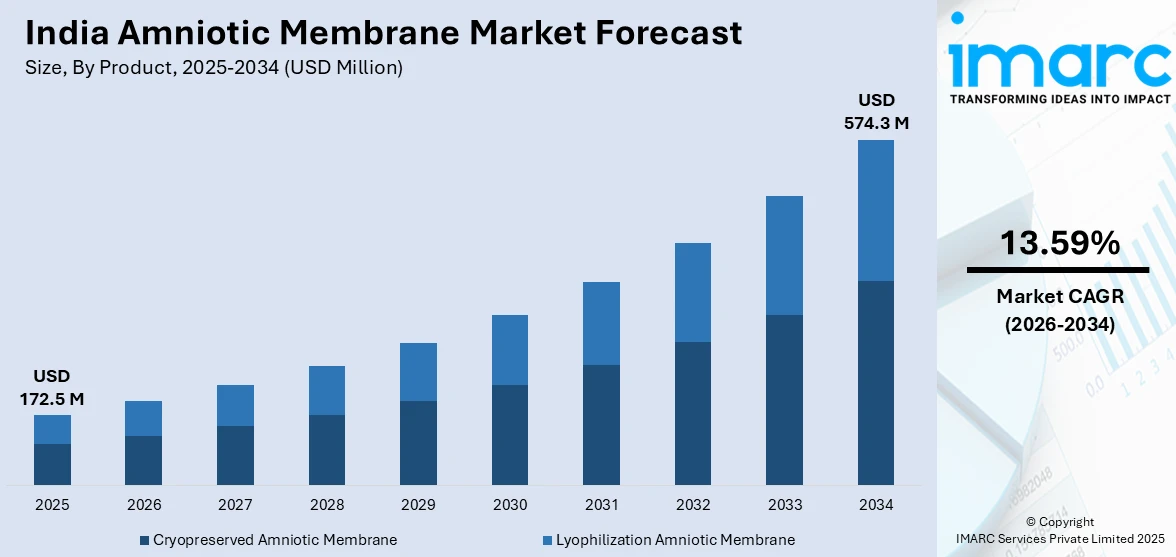
The India amniotic membrane market size was valued at USD 172.5 Million in 2025 and is projected to reach USD 574.3 Million by 2034, growing at a compound annual growth rate of 13.59% from 2026-2034.
The India amniotic membrane market is experiencing significant growth due to the increasing demand for advanced biologics in wound care and the rising number of ophthalmology procedures in the country. The increasing awareness about regenerative medicine, the development of healthcare infrastructure in tier two and tier three cities, and the large patient base that requires tissue repair solutions are all contributing to the growing demand. The development of tissue preservation technology and the expanded use of amniotic membranes in surgical wound care, corneal reconstruction, and burn care are revolutionizing treatment approaches and making India a prime growth market for amniotic membrane products in the Asia-Pacific region, thus fueling the India amniotic membrane market share.
Key Takeaways and Insights:
- By Product: Cryopreserved amniotic membrane dominates the market with a share of 58.7% in 2025, driven by superior preservation of biological integrity, extended shelf life enabling efficient inventory management, and widespread clinical preference across ophthalmology and wound care specialties.
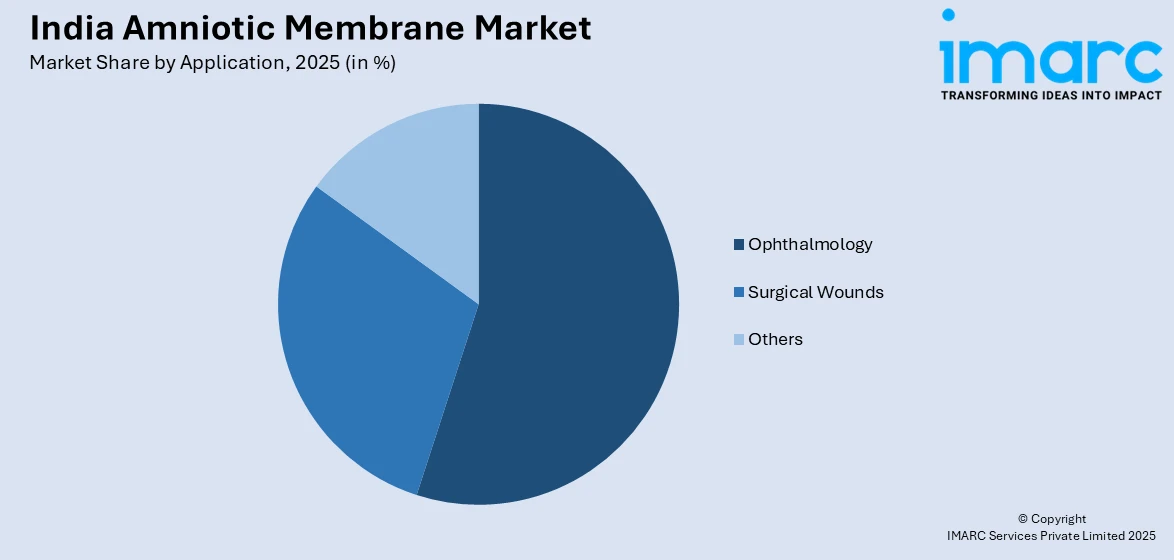
- By Application: Ophthalmology holds the largest market share at 46.2% in 2025, fueled by the increasing prevalence of ocular surface disorders, the growing use of amniotic membrane grafts in corneal reconstruction, and rising volumes of cataract and refractive procedures.
- By End User: Hospitals lead the market with a share of 51.4% in 2025, driven by high surgical volumes, access to advanced operating facilities, and the presence of specialized ophthalmology and wound care departments.
- By Region: South India dominated the market with a share of 36.5% in 2025, underpinned by the concentration of premier eye care institutions, advanced tissue banking facilities, and a well-established network of super-speciality hospitals.
- Key Players: The India amniotic membrane market exhibits a moderately competitive landscape, with established tissue banking companies, domestic regenerative medicine firms, and international wound care specialists competing through product innovation, clinical partnerships, and expanded distribution networks.
To get more information on this market Request Sample
The India amniotic membrane market is advancing as healthcare providers increasingly adopt biologic tissue-based therapies for complex wound management and ocular surface reconstruction. The country's large population base, coupled with rising incidences of diabetes-related chronic wounds, burn injuries, and ophthalmic conditions such as cataracts and pterygium, is creating sustained demand for amniotic membrane products. Expanding private hospital networks, particularly in southern and western regions, are integrating advanced regenerative therapies into clinical workflows. In June 2023, India’s Union Health Ministry reported that over 75 lakh cataract surgeries were performed under a national backlog-clearance campaign, reinforcing government-backed expansion of advanced ophthalmic treatment capacity. Meanwhile, growing government focus on strengthening primary and secondary eye care infrastructure through national health programmes is broadening patient access. The development of dehydrated and vacuum-dried membrane variants is improving product accessibility in resource-constrained settings by reducing cold chain requirements. Additionally, tissue banking capabilities are maturing domestically, supporting reliable procurement from the country's large birthing population and enabling consistent product availability across surgical specialities.
India Amniotic Membrane Market Trends:
Expanding Adoption of Dehydrated and Room-Temperature Stable Membrane Formats
The India amniotic membrane market growth is being shaped by the rising preference for dehydrated and vacuum-dried membrane products that offer room-temperature stability and simplified storage. These formats eliminate the need for specialized cold chain logistics, making them particularly suitable for outpatient clinics and ambulatory surgical centers in semi-urban and rural areas. Enhanced portability and rapid rehydration capabilities are broadening clinical accessibility, enabling wider adoption beyond traditional hospital settings and supporting the decentralization of advanced wound care delivery across the country. In July 2024, MIMEDX announced its first publication in Nature – Scientific Reports, demonstrating how its placental-based allografts, DHACM and LHACM, modulate fibrosis, further validating the clinical potential of these products in surgical and wound care applications.
Integration of Artificial Intelligence in Ophthalmic Diagnostics and Treatment Planning
Artificial intelligence-enabled diagnostic platforms are increasingly being deployed across Indian eye care networks to enhance early detection of corneal disorders, diabetic retinopathy, and ocular surface diseases. These technologies facilitate precise disease staging and treatment planning, enabling ophthalmologists to identify patients who would benefit from amniotic membrane grafting at earlier clinical stages. In December 2025, India launched its first AI-driven national community screening programme for diabetic retinopathy through the Armed Forces Medical Services in collaboration with AIIMS and the Ministry of Health, using the MadhuNetrAI platform to automate retinal screening and triage across multiple cities. State-level initiatives deploying AI-driven screening networks are expanding the diagnostic funnel, connecting previously underserved populations with advanced therapeutic interventions and driving referrals for membrane-based procedures.
Development of Multi-Layer and Combination Membrane Products
Innovation in amniotic membrane product design is advancing toward multi-layer constructs that combine amnion and chorion layers for enhanced tensile strength and prolonged therapeutic activity. These next-generation products offer improved structural support for complex surgical wounds and deep tissue defects. According to reports, Smith+Nephew expanded its placental tissue portfolio with advanced multi-layer amniotic membrane products designed to improve wound healing durability and structural performance in complex surgical and chronic wound cases. Combination formulations incorporating antimicrobial agents are also gaining traction, providing dual-action wound management that addresses both tissue regeneration and infection control simultaneously, meeting the clinical needs of burn units and chronic wound care departments.
Market Outlook 2026-2034:
The Indian amniotic membrane market is expected to have a positive outlook in the coming years as the modernization of the healthcare sector, the rising prevalence of chronic diseases, and the increasing number of surgeries are expected to fuel the demand. The adoption of regenerative biologics in the field of ophthalmology, wound care, and the emerging area of orthopedics is expected to increase the addressable market. The penetration of healthcare insurance, government spending on eye care infrastructure, and the maturity of the domestic tissue banking industry are expected to make the product more accessible. The market generated a revenue of USD 172.5 Million in 2025 and is projected to reach a revenue of USD 574.3 Million by 2034, growing at a compound annual growth rate of 13.59% from 2026-2034.
India Amniotic Membrane Market Report Segmentation:
|
Segment Category |
Leading Segment |
Market Share |
|
Product |
Cryopreserved Amniotic Membrane |
58.7% |
|
Application |
Ophthalmology |
46.2% |
|
End User |
Hospitals |
51.4% |
|
Region |
South India |
36.5% |
Product Insights:
- Cryopreserved Amniotic Membrane
- Lyophilization Amniotic Membrane
The cryopreserved amniotic membrane dominates with a market share of 58.7% of the total India amniotic membrane market in 2025.
The cryopreserved amniotic membranes preserve the natural biological structure, growth factors, and extracellular matrix proteins that are critical for the promotion of tissue regeneration and inhibition of inflammation. The preservation technique ensures that the anti-scarring and anti-microbial properties of the amniotic membrane are retained, thus making it the most preferred option among ophthalmologists and wound surgeons for the treatment of complex ocular surface diseases and chronic non-healing wounds in Indian hospitals.
The popularity of the cryopreserved variants is also aided by the development of tissue banking infrastructure with advanced cryogenic storage systems. With the growing investment in cold chain infrastructure and procurement systems by healthcare facilities, the availability of cryopreserved grafts is also improving in tertiary care hospitals and eye care centers in the southern and western parts of the country.
Application Insights:
Access the comprehensive market breakdown Request Sample
- Surgical Wounds
- Ophthalmology
- Others
The ophthalmology leads with a share of 46.2% of the total India amniotic membrane market in 2025.
The high prevalence of ocular surface disorders, cataracts, pterygium, and corneal injuries driven by environmental factors and prolonged screen exposure is propelling amniotic membrane usage in ophthalmic procedures. Amniotic membrane grafts serve as biological scaffolds that support corneal epithelial healing, reduce postoperative scarring, and manage conditions such as chemical burns, limbal stem cell deficiency, and persistent epithelial defects. In November 2024, India Today reported that corneal blindness accounts for higher share of India’s total blindness burden, with infections, trauma, and delayed treatment remaining major contributors. This highlights the growing need for corneal repair and regenerative interventions.
The expanding network of dedicated eye care hospitals and vision centres across urban and semi-urban areas is creating a strong clinical pipeline for membrane-based interventions. National blindness prevention programmes and state-level screening initiatives are increasing early diagnosis rates, directing more patients toward surgical and therapeutic ophthalmology services that rely on amniotic membrane products for optimal clinical outcomes.
End User Insights:
- Hospitals
- Ambulatory Surgical Centers
- Specialized Clinics
- Research Centers and Laboratory
The hospitals dominates with a market share of 51.4% of the total India amniotic membrane market in 2025.
Hospitals act as the main consumption point for amniotic membrane products due to the presence of complex surgical procedures that require the use of biologic tissue grafts. Tertiary care hospitals and multi-specialty centers have dedicated departments for ophthalmology, plastic surgery, and wound care where amniotic membranes are used on a regular basis, with in-house procurement and supplier networks.
The growing presence of private hospital chains in tier-two and tier-three cities is bringing the benefits of advanced regenerative medicine to a larger number of patients. Hospital infrastructure development in modern operating rooms, sterilization processing units, and cryogenic storage facilities is facilitating the easy incorporation of amniotic membrane grafting into mainstream surgical practices.
Regional Insights:
- North India
- South India
- East India
- West India
South India exhibits a clear dominance with a 36.5% share of the total India amniotic membrane market in 2025.
The South Indian market is supported by the presence of globally renowned eye care facilities and super-specialty hospitals in the states of Tamil Nadu, Karnataka, Telangana, and Kerala, which have led the way in the clinical application of amniotic membrane therapies. The region is further aided by the availability of advanced tissue banking infrastructure that is internationally accredited, thus ensuring a domestic supply chain for quality amniotic membrane allografts.
The state government's initiatives in the southern region, with a focus on universal eye care accessibility and AI-assisted disease screening programs, are further driving demand in the region. The region's robust medical tourism infrastructure, along with the well-established private healthcare infrastructure and increased per capita healthcare spending, continues to draw patients seeking access to advanced ophthalmic and wound care therapies that incorporate amniotic membrane technologies.

Market Dynamics:
Growth Drivers:
Why is the India Amniotic Membrane Market Growing?
Rising Prevalence of Chronic Wounds and Diabetes-Related Complications
India faces a rapidly escalating burden of chronic wounds driven by the growing prevalence of diabetes, obesity, and peripheral vascular diseases. Diabetic foot ulcers, venous leg ulcers, and pressure injuries require advanced wound management solutions that go beyond conventional dressings. According to the Indian Council of Medical Research (ICMR) and Ministry of Health (2023), India has over 10.1 crore people living with diabetes, significantly increasing the national risk pool for chronic and non-healing wounds and diabetic foot complications. Amniotic membranes, with their inherent anti-inflammatory, anti-microbial, and pro-regenerative properties, offer a biologically superior alternative for promoting wound closure in non-healing cases. The rising patient population requiring long-term wound care interventions, combined with increasing awareness among clinicians about the benefits of biologic tissue grafts, is generating sustained demand. Healthcare providers across hospital burn units and chronic wound care departments are progressively integrating amniotic membrane products into treatment protocols, recognizing their ability to accelerate epithelialization, reduce scarring, and improve overall patient outcomes in complex wound scenarios.
Expanding Ophthalmology Infrastructure and Growing Surgical Procedure Volumes
India's ophthalmology sector is experiencing significant growth driven by the high prevalence of cataracts, refractive errors, corneal diseases, and screen-induced myopia affecting a substantial portion of the population. The expansion of dedicated eye care hospital chains into tier-two and tier-three cities is creating new clinical demand for amniotic membrane grafts used in corneal reconstruction, pterygium excision, and ocular surface stabilization procedures. In December 2025, ASG Eye Hospital unveiled its ‘Vision 2030’ plan backed by a ₹1,500–₹2,000 crore investment to expand its network from around 175 hospitals to approximately 600–700 centres nationwide, particularly targeting underserved Tier‑2 and Tier‑3 regions. Government-backed blindness prevention programmes are enhancing screening coverage and increasing the identification of patients requiring surgical intervention.
Advancements in Tissue Preservation and Processing Technologies
Innovations in amniotic membrane preservation and processing are significantly enhancing product quality, shelf life, and clinical applicability. Advanced cryopreservation techniques maintain the native biological properties of the membrane, including growth factors, cytokines, and extracellular matrix components critical for tissue regeneration. Meanwhile, dehydration and vacuum-drying technologies are producing shelf-stable products that can be stored at room temperature, dramatically reducing logistical barriers and enabling deployment in outpatient and resource-limited settings. India’s Ministry of Health and Family Welfare has implemented the New Drugs and Clinical Trial Rules, clarifying regulatory pathways and improving transparency for cell‑ and tissue‑derived products, which supports the clinical development and approval of innovative biologic grafts, including advanced membrane constructs.
Market Restraints:
What Challenges the India Amniotic Membrane Market is Facing?
High Product Costs Limiting Broader Accessibility
The significant cost associated with amniotic membrane products and their associated surgical procedures presents a considerable barrier to widespread adoption in India's price-sensitive healthcare environment. Limited insurance reimbursement coverage for biologic wound care products further compounds affordability challenges, restricting usage primarily to well-funded private hospitals and specialty centres while constraining uptake in public healthcare facilities and economically weaker patient segments.
Stringent Regulatory Requirements and Complex Approval Processes
The regulatory landscape governing human tissue-derived products in India involves rigorous compliance requirements for donor screening, tissue procurement, processing, and distribution. Obtaining necessary accreditations and navigating multi-stage approval processes can be time-consuming and resource-intensive for manufacturers. These regulatory complexities may delay product launches, increase operational costs, and create entry barriers for smaller domestic companies seeking to establish tissue banking and allograft manufacturing operations.
Limited Awareness and Infrastructure in Rural and Semi-Urban Areas
Awareness of amniotic membrane-based therapies remains limited among healthcare providers and patients in rural and semi-urban regions of India. The lack of specialized training, inadequate cold chain infrastructure for cryopreserved products, and insufficient availability of skilled surgical teams in peripheral health centres hinder market penetration beyond metropolitan areas. Bridging this knowledge and infrastructure gap is essential for unlocking the full market potential across the country.
Competitive Landscape:
The India amniotic membrane market has a moderately consolidated competitive environment with the presence of both established domestic tissue banking firms and global regenerative medicine companies. The market players are competing with diversified product portfolios, evidence development, and strategic collaborations with leading hospital chains to improve market reach. The adoption of advanced processing technology, such as proprietary preservation and multi-layer graft development, is turning out to be a differentiating factor among the market players to improve the efficacy of the products. The players are also working on acquiring international accreditations for their tissue banking facilities to gain recognition and explore export markets. The expansion plans of the market players include setting up manufacturing units in key geographies, expanding distribution channels to cover tier-two and tier-three cities, and partnering with the ophthalmology and surgical wound care departments for product validation and adoption. The competitive environment is anticipated to become more intense with the growing acceptance of regenerative medicine in the clinical community and the entry of new players to tap into the growing demand for biologic wound care and tissue repair products in India.
Recent Developments:
-
In September 2025, Akriti Ophthalmic Pvt. Ltd. launched Natarajan Macuseal™, the world’s first desiccated amniotic membrane for retinal surgery, designed for macular hole closure and complex retinal repairs. The innovation improves surgical precision, handling, and healing, supporting India’s growing leadership in ophthalmic regenerative medicine.
India Amniotic Membrane Market Report Coverage:
|
Report Features |
Details |
|
Base Year of the Analysis |
2025 |
|
Historical Period |
2020-2025 |
|
Forecast Period |
2026-2034 |
|
Units |
Million USD |
|
Scope of the Report |
Exploration of Historical Trends and Market Outlook, Industry Catalysts and Challenges, Segment-Wise Historical and Future Market Assessment:
|
|
Products Covered |
Cryopreserved Amniotic Membrane, Lyophilization Amniotic Membrane |
|
Applications Covered |
Surgical Wounds, Ophthalmology, Others |
|
End Users Covered |
Hospitals, Ambulatory Surgical Centers, Specialized Clinics, Research Centers and Laboratory |
|
Regions Covered |
North India, South India, East India, West India |
|
Customization Scope |
10% Free Customization |
|
Post-Sale Analyst Support |
10-12 Weeks |
|
Delivery Format |
PDF and Excel through Email (We can also provide the editable version of the report in PPT/Word format on special request) |
Frequently Asked Questions About the India Amniotic Membrane Market Report
The India amniotic membrane market size was valued at USD 172.5 Million in 2025.
The India amniotic membrane market is expected to grow at a compound annual growth rate of 13.59% from 2026-2034 to reach USD 574.3 Million by 2034.
Cryopreserved amniotic membrane, holding the largest share of 58.7%, remains the preferred product type in India's amniotic membrane market owing to its ability to retain native biological properties, extended storage viability, and widespread clinical adoption across ophthalmology and wound care applications.
Key factors driving the India amniotic membrane market include rising prevalence of chronic wounds and diabetes-related complications, expanding ophthalmology infrastructure and growing surgical procedure volumes, advancements in tissue preservation technologies, increasing government investments in eye care programmes, and growing clinical adoption of regenerative biologics.
Major challenges include high product and treatment costs limiting accessibility, stringent regulatory requirements for tissue-derived products, limited awareness and cold chain infrastructure in rural areas, reimbursement constraints, and the need for specialized surgical training to expand clinical adoption beyond metropolitan centres.
Need more help?
- Speak to our experienced analysts for insights on the current market scenarios.
- Include additional segments and countries to customize the report as per your requirement.
- Gain an unparalleled competitive advantage in your domain by understanding how to utilize the report and positively impacting your operations and revenue.
- For further assistance, please connect with our analysts.
 Request Customization
 Speak to an Analyst
 Request Brochure
 Inquire Before Buying
Benefits of Customization
- Personalize this research
- Triangulate with your data
- Get data as per your format and definition
- Gain a deeper dive into a specific application, geography, customer, or competitor
- Any level of personalization
Get in Touch With Us
UNITED STATES
Phone: +1-201-971-6302
INDIA
Phone: +91-120-433-0800
UNITED KINGDOM
Phone: +44-753-714-6104
Email: [email protected]
Client Testimonials




.webp)




.webp)













Related Reports

Choose your plan
*Please note that the prices mentioned below are starting prices for each bundle type. Kindly contact our team for further details.*
Single User License
- 1 User License, Access on 2 Devices
- PDF Report + Excel Dataset (Password Protected)
- Lifetime Access
- No Printing Rights
- 10% Free Report Customization
- 10–12 Weeks of Analyst Support
Five User License
- Access for 5 Users, 2 Devices per User
- PDF Report + Excel Dataset (Password Protected)
- Lifetime Access
- Dedicated Account Manager
- 12–14 Weeks of Analyst Support
- No Printing Rights
- 15% Free Report Customization
- 25% Discount on Your Next Purchase
Corporate User License
- Unlimited User Access (Within Your Organization)
- PDF Report + Excel Dataset
- Lifetime Access
- Dedicated Account Manager
- 14–20 Weeks of Analyst Support
- No Printing Rights
- 20% Free Report Customization
- 30% Discount on Your Next Purchase
Essential Insights
What's included:
3 reports
- Lifetime Access
- PDF Reports
- Excel Datasets
- 2 Weeks of Free Analyst Support
- 2 User Licenses
- Access on 2 Devices
- Printing Rights
- Complimentary PowerPoint (PPT) Version
- Complimentary License Upgrade
Professional Access
What's included:
5 reports
- Lifetime Access
- PDF Reports
- Excel Datasets
- 8 Weeks of Free Analyst Support
- 2 User Licenses
- Access on 2 Devices
- Printing Rights
- Complimentary PowerPoint (PPT) Version
- Complimentary License Upgrade
Business Advantage
What's included:
8 reports
- Lifetime Access
- PDF Reports
- Excel Datasets
- 14 Weeks of Free Analyst Support
- 2 User Licenses
- Access on 2 Devices
- Printing Rights
- Complimentary PowerPoint (PPT) Version
- Complimentary License Upgrade
Enterprise Intelligence
What's included:
10 reports
- Lifetime Access
- PDF Reports
- Excel Datasets
- 20 Weeks of Free Analyst Support
- 2 User Licenses
- Access on 2 Devices
- Printing Rights
- Complimentary PowerPoint (PPT) Version
- Complimentary License Upgrade