
India Baby Food and Infant Formula Market Size, Share, Trends and Forecast by Type, Distribution Channel, and Region, 2026-2034
India Baby Food and Infant Formula Market Summary:
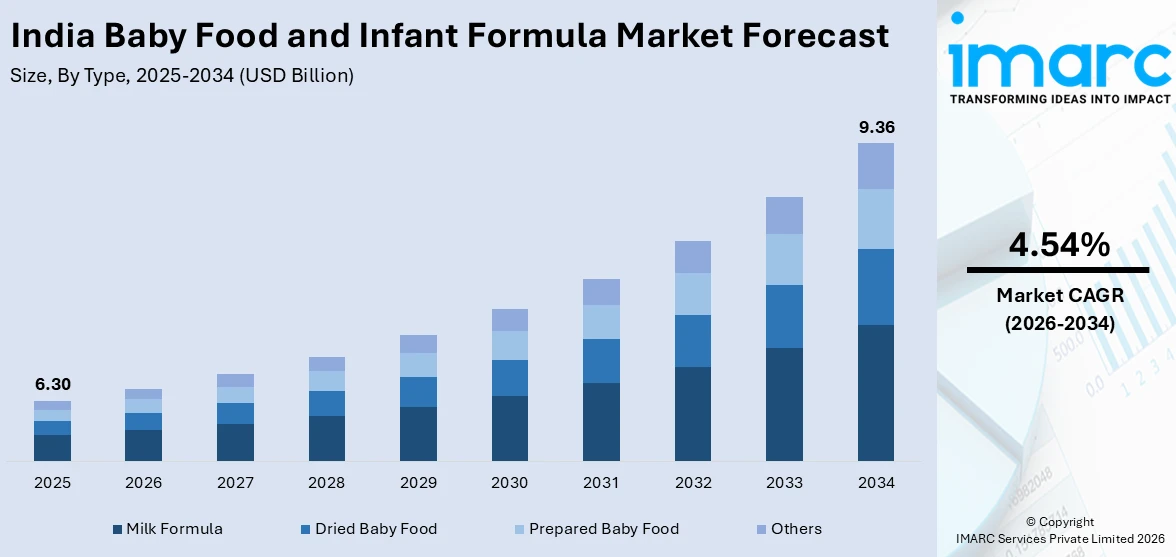
The India baby food and infant formula market size was valued at USD 6.30 Billion in 2025 and is projected to reach USD 9.36 Billion by 2034, growing at a compound annual growth rate of 4.54% from 2026-2034.
The India baby food and infant formula market is growing at a fast pace due to factors such as urbanization, an increase in working mothers, and an increase in parental awareness about infant nutrition needs. The development of the organized retail infrastructure, the adoption of e-commerce, and the acceptance of infant formula as an alternative to breastfeeding are contributing to the growth of the India baby food and infant formula market share.
Key Takeaways and Insights:
- By Type: Milk formula dominates the market with a share of 54% in 2025, driven by its widespread adoption as a nutritionally complete breast milk alternative among working mothers and urban Indian households.
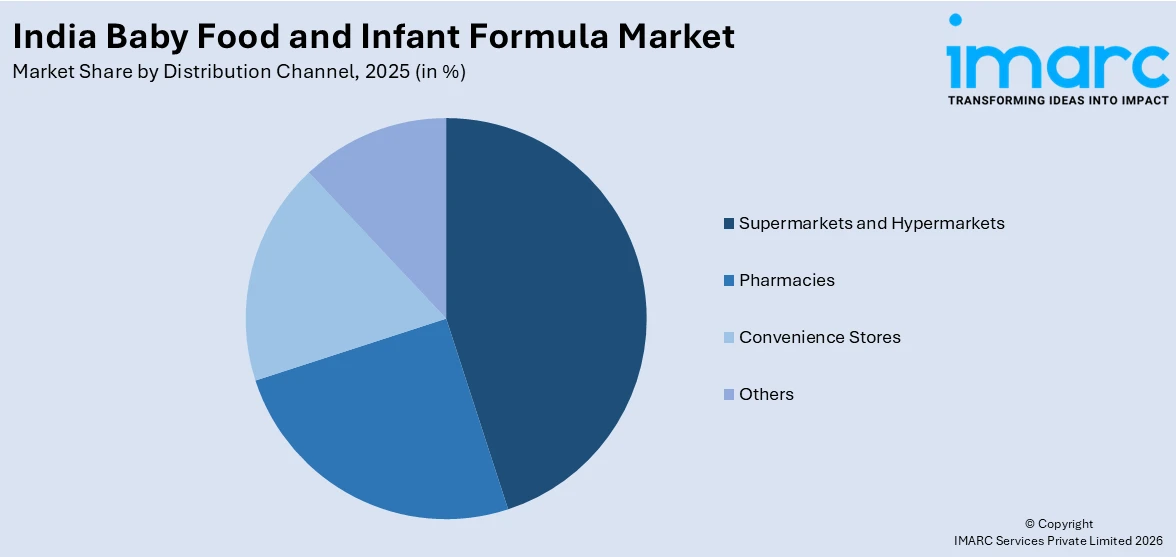
- By Distribution Channel: Supermarkets and hypermarkets represent the largest segment with a market share of 45% in 2025, owing to their extensive product variety, competitive pricing, and trusted in-store experience that facilitates informed baby nutrition purchasing decisions.
- Key Players: The India baby food and infant formula market exhibits moderate competitive intensity, with global multinational corporations competing alongside regional manufacturers across premium, standard, and specialized product segments, leveraging brand equity, scientific research capabilities, and extensive distribution networks to maintain consumer trust and market share. Some of the key players operating in the market include Nestlé India, Abbott, Nutricia, Mead Johnson & Company, LLC, Danone India, FrieslandCampina, and Amway India Enterprises Pvt. Ltd.
To get more information on this market Request Sample
The India baby food and infant formula market is shaped by a complex interplay of demographic, socioeconomic, and behavioral factors that are transforming the infant nutrition landscape. Rapid urbanization has altered household structures, with nuclear families becoming increasingly prevalent and traditional caregiving support systems diminishing. This transition has elevated demand for commercially prepared baby nutrition products that offer guaranteed nutritional completeness and preparation convenience. In February 2026, global dairy and infant formula leaders like Danone faced sales impacts and safety scrutiny after a widespread recall due to contamination, highlighting how safety concerns influence consumer confidence. The parallel rise in female workforce participation has further accelerated adoption of infant formula and ready-to-eat baby food formats. Simultaneously, heightened parental awareness regarding the critical importance of early childhood nutrition during the first thousand days of life has prompted investment in premium, scientifically formulated products. The integration of digital media channels has amplified awareness, enabling manufacturers to directly engage with informed, health-conscious parent demographics across urban and semi-urban regions of India.
India Baby Food and Infant Formula Market Trends:
Rising Demand for Organic and Clean-Label Baby Food
Indian parents are increasingly prioritizing organic and clean-label baby food products, seeking ingredient transparency and formulations free from artificial additives, preservatives, and refined sugars. According to reports, demand for organic and nutritious baby food products in India has been rising due to growing awareness of nutrition and food safety, with a significant portion of parents (about 79 %) saying an “organic” label is important when choosing baby foods. This behavioral shift is rooted in growing health consciousness and heightened awareness of early childhood nutrition safety. Parents are actively choosing natural, minimally processed options that align with holistic infant wellness philosophies, driving manufacturers to reformulate and expand their organic and clean-label product portfolios across India.
Premiumization and Product Fortification
The India baby food and infant formula market is experiencing accelerating premiumization as parents increasingly seek scientifically advanced formulations enriched with functional ingredients including probiotics, prebiotics, DHA, and immune-supporting compounds. These fortified products address targeted developmental needs spanning cognitive growth, digestive health, and immune function. Reflecting this trend, Danone’s premium Aptamil infant formula portfolio, positioned for gut health and immunity with active prebiotic blends, has been noted for strong sales momentum in India and other Asian markets, growing noticeably faster than the broader sector in recent performance commentary by the company. Growing parental awareness of the long-term developmental impact of early nutrition is encouraging a clear consumer shift toward higher-value, research-backed baby nutrition solutions across urban and semi-urban markets.
Expansion of E-Commerce and Digital Retail Channels
Digital retail platforms are fundamentally reshaping how Indian parents discover, evaluate, and purchase baby food and infant formula products. Rising smartphone penetration, improved internet connectivity, and the convenience of doorstep delivery are accelerating online channel adoption nationwide. In 2025, FirstCry announced a strategic realignment of its product and delivery operations to improve pricing, margins, and customer outreach across its online platform, highlighting how leading e‑commerce retailers are prioritizing digital engagement and faster fulfilment to capture the attention of young, digitally active parents. This shift into optimized omnichannel engagement reflects how major players are adapting to changing buyer behaviour in India’s baby care segment. Parenting communities, social media influencers, and targeted digital marketing campaigns are playing increasingly influential roles in shaping brand perception and purchase decisions, prompting manufacturers to prioritize e-commerce investments and direct-to-consumer engagement strategies.
Market Outlook 2026-2034:
The Indian baby food and infant formula market is on the verge of experiencing steady growth over the forecast period, driven by the growing urbanization trend, increasing number of working mothers, and rising spending on early childhood nutrition by parents. Innovation in the high-end, organic, and specialty formula categories will attract more premium customers, while the growing reach of organized retail and online platforms will make the market more accessible in tier-2 and tier-3 cities. Supportive government policies, enhanced healthcare infrastructure, and rising doctor endorsements for formula-feeding will drive demand. The market generated a revenue of USD 6.30 Billion in 2025 and is projected to reach a revenue of USD 9.36 Billion by 2034, growing at a compound annual growth rate of 4.54% from 2026-2034.
India Baby Food and Infant Formula Market Report Segmentation:
| Segment Category | Leading Segment | Market Share |
|---|---|---|
| Type | Milk Formula | 54% |
| Distribution Channel | Supermarkets and Hypermarkets | 45% |
Type Insights:
- Milk Formula
- Dried Baby Food
- Prepared Baby Food
- Others
The milk formula dominates with a market share of 54% of the total India baby food and infant formula market in 2025.
Milk formula with its scientific ingredients similar to human breast milk is the largest selling product in the India baby food and infant formula market. It is of great significance with its essential macronutrients and micronutrients for the development of infants. The demand for milk formula is also being boosted by rising acceptance of formula-feeding practices among urban parents, especially working mothers who require a convenient nutritional alternative. There is an increasing awareness regarding the importance of a balanced diet for babies during the first year of life. This is boosting demand for milk formula for various market segments.
The growth of milk formula market is also being attributed to ongoing product innovation, with various players including Abbott Laboratories, Danone S.A, and Nestle S.A launching new and improved variants of milk formulas that are enriched with probiotics, DHA, and immune-boosting molecules providing specific developmental benefits. The market has now extended to include specialized formulations of milk formulas for infants who require cow’s milk protein allergy or have lactose intolerance. The growing spread of distribution channels across organized retail and online platforms makes a variety of milk formula variants readily available to parents in urban and semi-urban regions of India.
Distribution Channel Insights:
Access the comprehensive market breakdown Request Sample
- Supermarkets and Hypermarkets
- Pharmacies
- Convenience Stores
- Others
The supermarkets and hypermarkets lead with a share of 45% of the total India baby food and infant formula market in 2025.
Supermarkets and hypermarkets account for the largest distribution channel share in India’s baby food and infant formula market, driven by their ability to offer extensive product variety, competitive pricing, and a trusted in-store shopping environment. Parents favor these outlets for the opportunity to compare products across brands and formulations, benefit from promotional offers, and make informed purchasing decisions with direct access to product labeling and nutritional information. The steady expansion of organized retail chains into tier-2 cities further strengthens this channel’s dominance across the country.
The prominence of supermarkets and hypermarkets is reinforced by increasing foot traffic from middle-income urban households seeking premium and specialized baby nutrition products. These retail environments provide high visibility for new product launches and enable strategic merchandising that supports brand differentiation. The integration of loyalty programs and digital promotions within these outlets is enhancing consumer engagement and repeat purchase behavior, while staff-assisted shopping and established retail trust further encourage consumer confidence, particularly among first-time parents navigating complex baby nutrition decisions across India.
Regional Insights:
- North India
- West and Central India
- South India
- East India
North India represents a leading regional market for baby food and infant formula, driven by high urbanization rates, a growing concentration of dual-income households, and increasing parental health awareness. Superior organized retail infrastructure and strong digital channel penetration further support consistent demand for premium and specialized infant nutrition products.
West and Central India exhibits strong market potential, underpinned by a large base of urban working parents, well-established organized retail networks, and rising consumer awareness of specialized infant nutrition formulations. Growing disposable incomes and expanding e-commerce accessibility are further accelerating product adoption across the region.
South India demonstrates sustained demand for baby food and infant formula, supported by high literacy rates, above-average maternal health awareness, and widespread physician recommendations for formula supplementation. A well-developed pharmaceutical and organized retail distribution network ensures consistent product availability and accessibility across urban and semi-urban markets.
East India represents an emerging growth frontier for baby food and infant formula, with accelerating urbanization creating expanding consumer bases in key cities. Improving organized retail penetration, rising disposable incomes, and growing parental awareness of commercial infant nutrition solutions are collectively strengthening market development prospects across the region.

Market Dynamics:
Growth Drivers:
Why is the India Baby Food and Infant Formula Market Growing?
Rising Urbanization and Changing Lifestyle Patterns
Rapid urbanization across Indian cities is fundamentally reshaping household structures and consumption behaviors that directly support the growth of the baby food and infant formula market. As nuclear family units replace traditional joint families, the traditional support networks that enabled home-based infant food preparation are diminishing, creating a practical need for commercially prepared alternatives. Urban living is associated with time-constrained lifestyles where both parents are frequently engaged in professional activities, significantly reducing time available for preparing fresh infant meals. Ready-to-feed baby food and infant formula products address this time-sensitivity while providing assured nutritional completeness, making them an attractive proposition for urban parents seeking convenience without compromising their child’s developmental health. In 2025, Indian dairy cooperative Amul stirred industry attention by launching what it promoted as “India’s first liquid infant formula,” a move that highlights how domestic companies are innovating to cater to the convenience demands of urban families, although the product also drew scrutiny from advocacy groups for potential regulatory concerns under the Infant Milk Substitutes Act.
Growing Female Workforce Participation
The increasing integration of women into India’s formal and semi-formal workforce is a fundamental structural driver of the baby food and infant formula market. As women pursue professional careers and entrepreneurial activities, the feasibility of exclusive breastfeeding for the recommended duration becomes significantly constrained by workplace demands, organizational policies, and physical accessibility challenges. Infant formula and commercially prepared baby foods serve as indispensable nutritional alternatives that enable working mothers to maintain both professional commitments and their child’s dietary requirements without compromise. Reflecting this broader shift, demand for baby‑care products, including formula, ready‑to‑eat foods, and complementary nutrition solutions, has been reported to be growing in double digits by industry leaders such as Artsana India (which markets brands like Chicco), driven in part by increased engagement from working parents navigating time‑pressured lifestyles and dual‑income households.
Increasing Parental Awareness of Infant Nutrition
Heightened awareness among parents regarding the critical importance of proper nutrition during early childhood is driving growing investment in high-quality, scientifically formulated baby food and infant formula products. The first thousand days of a child’s life are widely recognized as a foundational period for physical, cognitive, and immunological development, and parents are increasingly seeking products that address these specific developmental needs. Digital media, healthcare practitioner guidance, and parenting communities are amplifying awareness around functional ingredients such as DHA, probiotics, and fortified vitamins that support brain development and immune function. Supporting this broader focus on early nutrition, the Government of India’s Mission POSHAN 2.0 under the POSHAN Abhiyaan framework has expanded digital nutrition‑monitoring tools and Anganwadi‑based services to enhance awareness and delivery of appropriate nutrition practices for mothers and young children, reinforcing nationwide emphasis on optimal infant and early childhood nutrition. This informed consumer base demonstrates a clear preference for premium, research-backed formulations, encouraging market participants to invest in product innovation and transparent nutritional labeling to build enduring consumer trust.
Market Restraints:
What Challenges the India Baby Food and Infant Formula Market is Facing?
Strict Regulatory and Compliance Requirements
The India baby food and infant formula market is subject to rigorous regulatory oversight by the Food Safety and Standards Authority of India, which mandates strict standards for formulation, labeling, packaging, and marketing practices. Compliance with the Infant Milk Substitutes, Feeding Bottles, and Infant Foods Regulation Act restricts promotional activities, limiting brand visibility. These regulatory obligations increase operational costs for manufacturers and create significant barriers to entry for smaller domestic players seeking to compete in this specialized market.
Price Sensitivity and Affordability Constraints
A significant portion of India’s consumer base remains highly price-sensitive, particularly in semi-urban and rural areas where disposable incomes are constrained. Premium baby food and infant formula products command prices that exceed the affordability thresholds of low and lower-middle income households, limiting market penetration across these segments. This pricing barrier restricts volume growth and necessitates careful product tiering strategies to balance premium positioning with accessibility, creating ongoing challenges for market participants seeking broader geographic and demographic expansion.
Cultural Preference for Breastfeeding and Home-Prepared Foods
Deeply rooted cultural attitudes in India continue to favor breastfeeding as the preferred and most trusted method of infant nutrition, limiting the adoption of commercial formula feeding among traditional and rural consumer segments. The practice of preparing home-cooked complementary foods using locally available ingredients also remains prevalent, reducing reliance on commercially prepared baby food. Overcoming these entrenched cultural preferences requires sustained consumer education and trust-building efforts, particularly among first-generation urban parents and healthcare professionals.
Competitive Landscape:
The India baby food and infant formula market is found to be moderately competitive, with well-established multinational companies holding prominent market shares based on their strong brand equity, R&D investments, and established distribution networks. The market players are using scientific knowledge and international nutritional requirements to sustain consumer trust in the products, regardless of the environment, whether in pediatrician suggestions or retail stores. The market is also marked by innovations in products, with companies launching high-end, fortified, and specialty products to create a distinct market for their offerings. Local players are also creating niche markets in the region by promoting culturally acceptable products, competitive pricing, and local sourcing credentials. The market is also experiencing growing entry from new local health food brands in the emerging organic and clean-label markets. Diversification of distribution channels, especially in e-commerce and online marketing, is also turning out to be an important competitive factor for companies to reach health-conscious parents in India directly.
Some of the key players include:
- Nestlé India
- Abbott
- Nutricia
- Mead Johnson & Company, LLC
- Danone India
- FrieslandCampina
- Amway India Enterprises Pvt. Ltd.
Recent Developments:
- In February 2026, Nestlé India Limited said all infant formula sold in India is manufactured domestically, reassuring parents amid global infant‑formula recalls linked to toxin concerns in Europe and other markets. The company stated that none of the recalled products are imported or sold in India, emphasising local production and compliance with safety norms.
India Baby Food and Infant Formula Market Report Scope:
| Report Features | Details |
|---|---|
| Base Year of the Analysis | 2025 |
| Historical Period | 2020-2025 |
| Forecast Period | 2026-2034 |
| Units | Billion USD |
| Scope of the Report |
Exploration of Historical Trends and Market Outlook, Industry Catalysts and Challenges, Segment-Wise Historical and Future Market Assessment:
|
| Types Covered | Milk Formula, Dried Baby Food, Prepared Baby Food, Others |
| Distribution Channels Covered | Supermarkets and Hypermarkets, Pharmacies, Convenience Stores, Others |
| Regions Covered | North India, West and Central India, South India, East India |
| Companies Covered | Nestlé India, Abbott, Nutricia, Mead Johnson & Company, LLC, Danone India, FrieslandCampina, Amway India Enterprises Pvt. Ltd., etc. |
| Customization Scope | 10% Free Customization |
| Post-Sale Analyst Support | 10-12 Weeks |
| Delivery Format | PDF and Excel through Email (We can also provide the editable version of the report in PPT/Word format on special request) |
Frequently Asked Questions About the India Baby Food and Infant Formula Market Report
The India baby food and infant formula market size was valued at USD 6.30 Billion in 2025.
The India baby food and infant formula market is expected to grow at a compound annual growth rate of 4.54% from 2026-2034 to reach USD 9.36 Billion by 2034.
Milk Formula held the largest market share, accounting for 54% of the total market. Its dominance reflects widespread adoption as a scientifically formulated breast milk alternative among working mothers and urban households seeking convenient, nutritionally balanced feeding solutions.
Key factors driving the India baby food and infant formula market include rapid urbanization, rising female workforce participation, increasing parental awareness of infant nutrition, growing acceptance of formula feeding, expanding organized retail and e-commerce channels, and continuous product innovation in premium and specialized formulations.
Major challenges include strict regulatory requirements under FSSAI and the IMS Act, price sensitivity among lower-income consumers, cultural preferences for breastfeeding and home-prepared foods, and intensifying competition from both multinational and emerging domestic brands targeting niche nutrition segments.
Need more help?
- Speak to our experienced analysts for insights on the current market scenarios.
- Include additional segments and countries to customize the report as per your requirement.
- Gain an unparalleled competitive advantage in your domain by understanding how to utilize the report and positively impacting your operations and revenue.
- For further assistance, please connect with our analysts.
 Request Customization
 Speak to an Analyst
 Request Brochure
 Inquire Before Buying
Benefits of Customization
- Personalize this research
- Triangulate with your data
- Get data as per your format and definition
- Gain a deeper dive into a specific application, geography, customer, or competitor
- Any level of personalization
Get in Touch With Us
UNITED STATES
Phone: +1-201-971-6302
INDIA
Phone: +91-120-433-0800
UNITED KINGDOM
Phone: +44-753-714-6104
Email: [email protected]
Client Testimonials




.webp)




.webp)













Related Reports

Choose your plan
*Please note that the prices mentioned below are starting prices for each bundle type. Kindly contact our team for further details.*
Single User License
- 1 User License, Access on 2 Devices
- PDF Report + Excel Dataset (Password Protected)
- Lifetime Access
- No Printing Rights
- 10% Free Report Customization
- 10–12 Weeks of Analyst Support
Five User License
- Access for 5 Users, 2 Devices per User
- PDF Report + Excel Dataset (Password Protected)
- Lifetime Access
- Dedicated Account Manager
- 12–14 Weeks of Analyst Support
- No Printing Rights
- 15% Free Report Customization
- 25% Discount on Your Next Purchase
Corporate User License
- Unlimited User Access (Within Your Organization)
- PDF Report + Excel Dataset
- Lifetime Access
- Dedicated Account Manager
- 14–20 Weeks of Analyst Support
- No Printing Rights
- 20% Free Report Customization
- 30% Discount on Your Next Purchase
Essential Insights
What's included:
3 reports
- Lifetime Access
- PDF Reports
- Excel Datasets
- 2 Weeks of Free Analyst Support
- 2 User Licenses
- Access on 2 Devices
- Printing Rights
- Complimentary PowerPoint (PPT) Version
- Complimentary License Upgrade
Professional Access
What's included:
5 reports
- Lifetime Access
- PDF Reports
- Excel Datasets
- 8 Weeks of Free Analyst Support
- 2 User Licenses
- Access on 2 Devices
- Printing Rights
- Complimentary PowerPoint (PPT) Version
- Complimentary License Upgrade
Business Advantage
What's included:
8 reports
- Lifetime Access
- PDF Reports
- Excel Datasets
- 14 Weeks of Free Analyst Support
- 2 User Licenses
- Access on 2 Devices
- Printing Rights
- Complimentary PowerPoint (PPT) Version
- Complimentary License Upgrade
Enterprise Intelligence
What's included:
10 reports
- Lifetime Access
- PDF Reports
- Excel Datasets
- 20 Weeks of Free Analyst Support
- 2 User Licenses
- Access on 2 Devices
- Printing Rights
- Complimentary PowerPoint (PPT) Version
- Complimentary License Upgrade