
India Champagne Market Size, Share, Trends and Forecast by Product, Price, Distribution Channel, and Region, 2026-2034
India Champagne Market Summary:
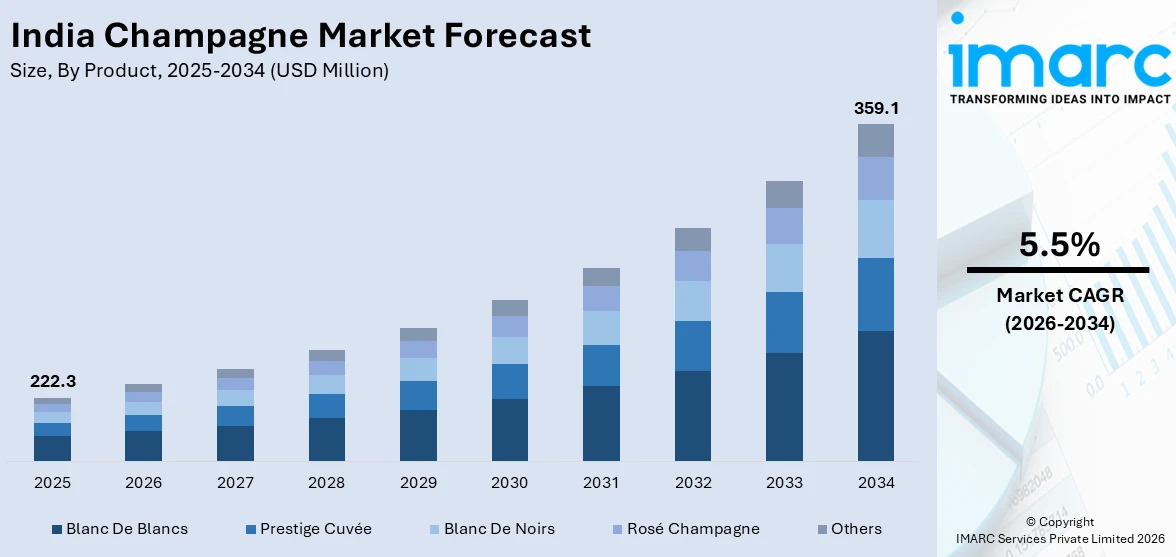
The India champagne market size was valued at USD 222.3 Million in 2025 and is projected to reach USD 359.1 Million by 2034, growing at a compound annual growth rate of 5.5% from 2026-2034.
The market is driven by rising disposable incomes and an expanding affluent consumer base that associates champagne with luxury, celebration, and social prestige. Growing urbanization, exposure to global lifestyle trends, and the increasing popularity of premium beverages at weddings, corporate events, and festive occasions further fuel demand. The expanding hospitality and tourism sectors, along with the proliferation of e-commerce platforms offering convenient access to premium products, continue to strengthen the India champagne market share.
Key Takeaways and Insights:
- By Product: Blanc de blancs dominates the market with a share of 27% in 2025, driven by its refined, elegant flavor profile appealing to India's discerning luxury consumers preferring lighter, citrus-forward champagnes.
- By Price: Mid-range leads the market with a share of 42% in 2025, owing to its accessibility to India's expanding upper-middle-class consumers seeking premium quality without prohibitive luxury pricing for celebrations.
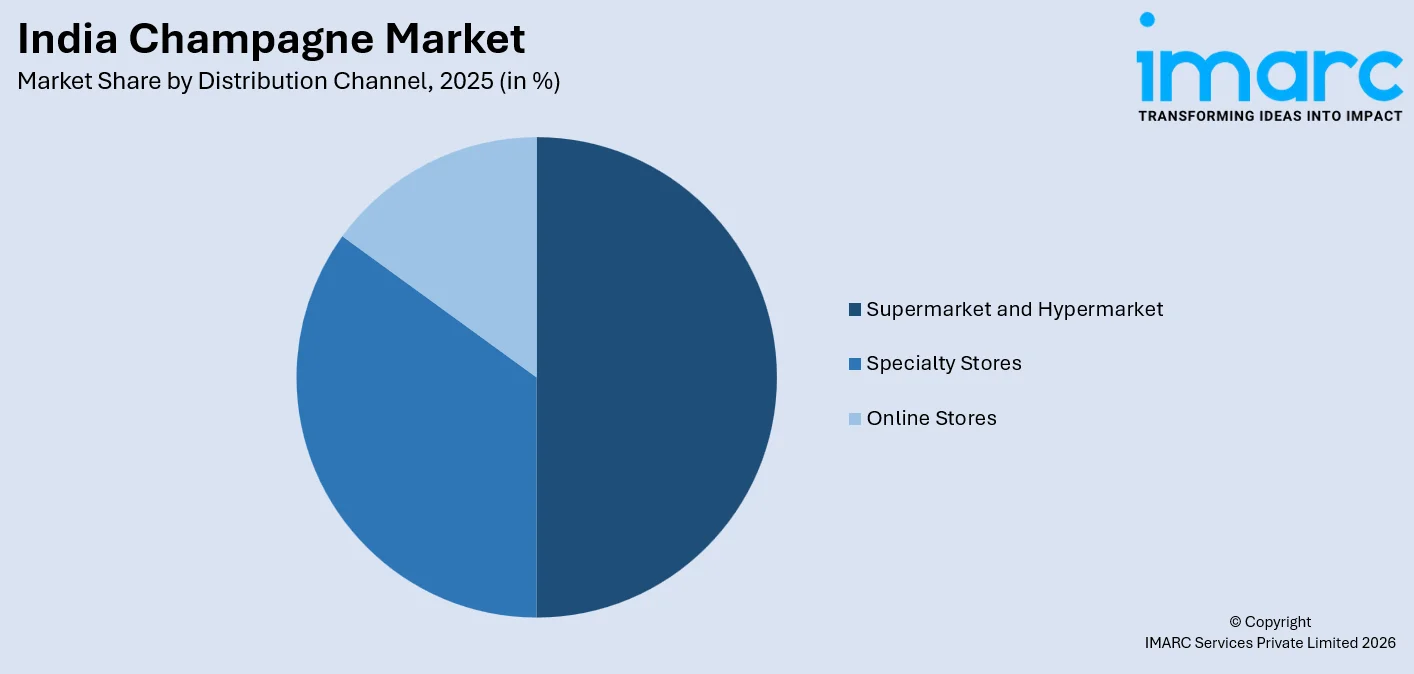
- By Distribution Channel: Supermarket and hypermarket represent the largest segment with a market share of 50% in 2025, driven by wide product assortment, in-store promotions, and one-stop shopping convenience enabling consumers to explore multiple champagne brands.
- Key Players: The India champagne market exhibits a moderately consolidated competitive landscape, with established international luxury beverage conglomerates competing alongside premium importers and distributors across diverse price segments and distribution channels nationwide.
To get more information on this market Request Sample
The India champagne market is propelled by a convergence of socio-economic and cultural factors reshaping the country’s premium beverage landscape. Rising disposable incomes among the urban middle and upper-middle class are driving a pronounced shift toward premiumization, with consumers increasingly seeking sophisticated and aspirational products for personal milestones and social gatherings. As per sources, Chandon India secured four international medals at the prestigious Decanter World Wine Awards, reinforcing global recognition of Indian sparkling wine excellence. The adoption of western lifestyle trends, fueled by global media exposure, international travel, and social media influence, positions champagne as a symbol of elegance, achievement, and celebration. Simultaneously, the rapid expansion of luxury hospitality infrastructure, including fine-dining restaurants, boutique hotels, and upscale event venues, creates an ecosystem where champagne is prominently featured as a hallmark of refined taste.
India Champagne Market Trends:
Premiumization and Experiential Consumption
Indian consumers are increasingly gravitating toward champagne as part of a broader premiumization wave sweeping the luxury beverage sector. The desire for curated, experience-driven consumption is reshaping purchasing behavior, with buyers seeking champagne as an integral part of elevated social rituals. In May 2025, Cellar 33 and Sonarys hosted an exclusive pre‑launch dinner to introduce eight artisanal grower Champagne houses to the Indian market, signalling rising interest among connoisseurs and hospitality professionals. Champagne tastings, pairing dinners, and exclusive launch events hosted by luxury hotels and upscale restaurants are gaining popularity among affluent urban demographics.
Digital Commerce and Social Media Influence
The rapid growth of digital commerce is transforming how Indian consumers discover and purchase champagne. E-commerce platforms and specialized online wine retailers offer curated selections, tailored recommendations, and doorstep delivery, making premium champagne accessible beyond traditional metropolitan retail hubs. In July 2024, major Indian states including Delhi, Karnataka and Haryana began exploring pilot projects to enable home delivery of alcohol through leading apps such as Swiggy, BigBasket, Zomato and Blinkit, reflecting rising demand for online access to wine and spirits. Social media platforms serve as powerful catalysts, with lifestyle influencers and content creators showcasing champagne as an emblem of celebration and modern living.
Rise of Occasion-Based and Celebratory Consumption
Champagne consumption in India is increasingly anchored to milestone celebrations, festive gatherings, and high-profile social occasions. The growing tradition of incorporating champagne into weddings, anniversaries, corporate galas, and New Year celebrations mirrors global luxury consumption patterns. In March 2025, a high‑profile Delhi wedding served Dom Pérignon champagne in Zalto hand‑blown glasses, highlighting how elite celebrations increasingly feature premium sparkling wine alongside bespoke. As the Indian consumer base becomes more cosmopolitan, champagne is being embraced as a universal symbol of joy and achievement across diverse cultural contexts.
Market Outlook 2026-2034:
The India champagne market is expected to register a positive growth trajectory in terms of revenue over the coming years, driven by the increasing wealth of the population, urbanization, and the subsequent adoption of Western consumption patterns in Indian society. The revenue growth in the champagne market will be driven by the increasing demand for premium and mid-segment champagne products. The growth of the champagne market will be driven by the development of the organized retail sector, online shopping, and the development of luxury hospitality infrastructure. The market generated a revenue of USD 222.3 Million in 2025 and is projected to reach a revenue of USD 359.1 Million by 2034, growing at a compound annual growth rate of 5.5% from 2026-2034.
India Champagne Market Report Segmentation:
| Segment Category | Leading Segment | Market Share |
|---|---|---|
|
Product |
Blanc De Blancs |
27% |
|
Price |
Mid-Range |
42% |
|
Distribution Channel |
Supermarket and Hypermarket |
50% |
Product Insights:
- Prestige Cuvée
- Blanc De Noirs
- Blanc De Blancs
- Rosé Champagne
- Others
Blanc de blancs dominates with a market share of 27% of the total India champagne market in 2025.
The blanc de blancs commands the largest share of the India champagne market, driven by its distinctive character derived exclusively from Chardonnay grapes. This product type is renowned for its crisp acidity, delicate citrus and floral notes, and refined elegance, which resonate strongly with India's growing community of sophisticated wine consumers. In November 2024, Cellar 33 showcased a curated portfolio of 14 premium champagne producers at ProWine India 2024, boosting exposure of refined styles, to Indian sommeliers and connoisseurs. The segment benefits from its versatility in food pairing, making it a preferred choice at upscale restaurants, fine-dining establishments, and curated tasting events across metropolitan cities.
The appeal of blanc de blancs extends to its positioning as a premium gift and celebration beverage, reflecting exclusivity and refined taste. Urban consumers, particularly millennials and high-net-worth individuals, are drawn to its lighter profile that complements India's evolving palate preferences. The segment also benefits from the growing trend of champagne education and sommelier-led tasting sessions, which highlight the unique terroir-driven qualities of blanc de blancs. As luxury dining and premium hospitality continue to expand, this product type maintains its dominance.
Price Insights:
- Economy
- Mid-Range
- Luxury
Mid-range leads with a share of 42% of the total India champagne market in 2025.
The mid-range leads the India champagne market, reflecting the preferences of the country's expanding upper-middle-class consumer base. This segment occupies the optimal position between affordability and perceived luxury, offering consumers access to quality champagne without the premium pricing associated with luxury and prestige cuvée categories. Mid-range champagnes are widely stocked across organized retail channels and e-commerce platforms, ensuring broad accessibility and visibility among aspirational buyers seeking sophisticated beverages for diverse occasions.
The strength of this segment is that it appeals to both first-time champagne consumers and loyal champagne buyers who look for consistent quality. Mid-range brands act as a gateway for champagne for consumers who are upgrading from local sparkling wines to champagne. The segment is also aided by promotional activities, discounts during festivals, and packages that increase the perceived value. With the increasing disposable income and champagne becoming more integrated into their culture, the mid-range segment maintains its leading market position.
Distribution Channel Insights:
Access the comprehensive market breakdown Request Sample
- Supermarket and Hypermarket
- Specialty Stores
- Online Stores
Supermarket and hypermarket exhibit a clear dominance with a 50% share of the total India champagne market in 2025.
Supermarkets and hypermarkets represent the dominant distribution channel in the India champagne market, accounting for the largest revenue share. These retail formats offer consumers the advantage of browsing diverse champagne selections across multiple brands, product types, and price points under a single roof. As per sources, the Delhi government’s excise department proposed modernising and expanding retail liquor outlets including larger, better‑stocked stores in malls and shopping complexes to improve consumer experience and widen availability of premium and imported brands.
The channel's dominance is reinforced by the rapid expansion of organized retail infrastructure across India's metropolitan and tier-two cities, bringing premium beverage categories within reach of a wider consumer base. Supermarkets and hypermarkets frequently leverage seasonal promotions, festive displays, and dedicated premium beverage sections to drive champagne sales. Strategic partnerships with champagne brands for exclusive in-store launches and tasting events further enhance consumer engagement, positioning this channel as the preferred purchasing destination for champagne across the country.
Regional Insights:
- South India
- North India
- West and Central India
- East India
South India, led by cities like Bangalore, Chennai, and Hyderabad, represents a significant champagne consumption hub driven by a thriving IT workforce, cosmopolitan dining culture, and expanding luxury hospitality infrastructure. The region's growing expatriate community and rising preference for premium beverages at social gatherings, corporate celebrations, and fine-dining venues further strengthen demand for champagne across diverse consumer segments.
North India, particularly Delhi, Chandigarh, and Jaipur, holds a substantial affluent consumer base fueling champagne demand. The region's vibrant wedding industry, high-profile corporate events, and luxury retail ecosystem drive consistent consumption. Rising aspirational lifestyles among young urban professionals and the proliferation of premium clubs, lounges, and upscale restaurants further reinforce champagne's presence as a preferred celebration beverage.
West and Central India, anchored by Mumbai, Pune, and Ahmedabad, ranks among the leading regions for champagne consumption. Mumbai, as the financial capital, serves as a luxury hub with significant demand across upscale hotels, premium clubs, and retail outlets. The rising trend of lavish events, upscale dining, and cosmopolitan social culture in these cities sustains strong champagne demand.
East India, including cities like Kolkata and Bhubaneswar, shows a growing preference for champagne as urban consumers gain exposure to international lifestyle trends. The region witnesses increasing champagne offerings at luxury hotels, upscale restaurants, and premium retail outlets. Consumers here are progressively choosing high-quality imported beverages for special celebrations and milestone events, expanding the market footprint.

Market Dynamics:
Growth Drivers:
Why is the India Champagne Market Growing?
Rising Affluence and Expanding Middle-Class Consumer Base
The sustained growth of India's middle and upper-middle-class population, particularly in metropolitan and tier-one cities, is creating a robust demand base for premium champagne. As disposable incomes rise and consumer spending patterns evolve, there is a pronounced shift toward aspirational products that signify social status and sophistication. In October 2025, India’s alcoholic beverage industry reported a strong festive season with premium spirit categories driving a 10–20 % upswing in sales, highlighting the rising preference for high‑end drinks among urban consumers. Urban consumers, especially young professionals and high-net-worth individuals, view champagne as an essential accompaniment to milestone celebrations, corporate achievements, and elevated social experiences.
Expansion of Luxury Hospitality and Tourism Infrastructure
The rapid expansion of India's luxury hospitality sector, encompassing five-star hotels, boutique resorts, fine-dining restaurants, and premium event venues, serves as a significant catalyst for champagne market growth. These establishments prominently feature champagne in their beverage menus, curated dining experiences, and celebration packages, positioning it as a hallmark of refined hospitality. In December 2025, global hotel giant Hilton announced plans to double its luxury hotel portfolio in India aiming to add landmark properties including Waldorf Astoria and other upscale brands reflecting rising investment in premium hospitality infrastructure. The growing influx of international tourists and the rise of domestic luxury travel further amplify demand, as travelers seek premium beverage experiences that mirror global standards across India's prominent tourism destinations.
Growing Adoption of Western Lifestyle and Celebration Culture
The increasing adoption of Western lifestyle trends among India's urban population, driven by global media consumption, international travel, and extensive digital exposure, is significantly elevating champagne's cultural relevance. As Indian consumers become more cosmopolitan in their tastes, champagne transitions from a niche import to a mainstream luxury choice for celebrations and social gatherings. In December 2024, industry leaders such as Moët Hennessy India noted that wines and premium imported spirits including champagne that have become “very mainstream” among urban drinkers, as premiumisation accelerates beyond traditional whisky consumption. The broader cultural shift toward incorporating champagne into weddings, anniversaries, corporate milestones, and festive occasions mirrors global consumption patterns, creating sustained year-round demand across diverse demographic and geographic segments.
Market Restraints:
What Challenges the India Champagne Market is Facing?
High Import Duties and Multilayered Taxation
Champagne imported into India is subject to substantial import duties, excise taxes, and state-level levies that significantly elevate retail prices. This multilayered taxation structure makes champagne considerably more expensive compared to domestically produced beverages and competing sparkling wines, limiting accessibility to a narrow affluent consumer segment and constraining broader market penetration among aspirational middle-class buyers.
Complex and Fragmented Regulatory Landscape
India's alcohol regulation framework varies significantly across states, with differing licensing requirements, distribution rules, and consumption restrictions creating operational complexities for champagne importers and distributors. Several states maintain prohibition or impose stringent restrictions on alcohol sales, limiting geographic reach and increasing compliance costs that hinder the ability of brands to establish a uniform national presence.
Competition for Domestic Sparkling Wines and Alternatives
The India champagne market faces growing competition from domestically produced sparkling wines, prosecco, and other international alternatives offering a comparable celebratory experience at significantly lower price points. As Indian wineries expand their sparkling portfolios and improve quality standards, price-conscious consumers increasingly opt for these accessible alternatives, particularly in mid-range and entry-level segments.
Competitive Landscape:
The India champagne market features a moderately consolidated competitive structure characterized by the presence of established international luxury beverage conglomerates alongside specialized importers and premium distributors. Market participants differentiate themselves through brand heritage, product portfolio breadth, exclusive partnerships with luxury hospitality establishments, and targeted marketing strategies aimed at affluent urban consumers. Competition is primarily driven by brand prestige, perceived exclusivity, and the ability to deliver consistent quality across diverse product types and price segments. Strategic investments in digital marketing, influencer collaborations, and experiential events are increasingly shaping competitive positioning.
Recent Developments:
- In October 2024, Chandon India celebrated 10 years in the luxury sparkling wine segment by launching a limited-edition Chandon Vintage 2015. Crafted from the inaugural Nashik grape harvest, it features vibrant floral, peachy, and subtle toasty notes, reinforcing Chandon’s leadership and premium positioning in India’s champagne market.
India Champagne Market Report Scope:
| Report Features | Details |
|---|---|
| Base Year of the Analysis | 2025 |
| Historical Period | 2020-2025 |
| Forecast Period | 2026-2034 |
| Units | Million USD |
| Scope of the Report |
Exploration of Historical Trends and Market Outlook, Industry Catalysts and Challenges, Segment-Wise Historical and Future Market Assessment:
|
| Products Covered | Prestige Cuvée, Blanc De Noirs, Blanc De Blancs, Rosé Champagne, Others |
| Prices Covered | Economy, Mid-Range, Luxury |
| Distribution Channels Covered | Supermarkets and Hypermarkets, Specialty Stores, Online Stores |
| Regions Covered | South India, East India, West and Central India, North India |
| Customization Scope | 10% Free Customization |
| Post-Sale Analyst Support | 10-12 Weeks |
| Delivery Format | PDF and Excel through Email (We can also provide the editable version of the report in PPT/Word format on special request) |
Frequently Asked Questions About the India Champagne Market Report
The India champagne market size was valued at USD 222.3 Million in 2025.
The India champagne market is expected to grow at a compound annual growth rate of 5.5% from 2026-2034 to reach USD 359.1 Million by 2034.
Blanc de blancs held the largest market share, driven by its refined elegance, distinctive Chardonnay-based flavor profile, and strong appeal among India’s growing base of discerning luxury consumers seeking premium champagne for celebrations and fine-dining occasions.
Key factors driving the India champagne market include rising disposable incomes and premiumization trends, growing adoption of Western lifestyle and celebration culture, expansion of luxury hospitality and tourism infrastructure, and increasing accessibility through organized retail and e-commerce platforms.
Major challenges include high import duties and multilayered taxation that elevate retail prices, a complex and fragmented state-level regulatory landscape, growing competition from affordable domestic sparkling wines and international alternatives, limited consumer awareness beyond metropolitan cities, and supply chain constraints inherent to imported luxury beverages.
Need more help?
- Speak to our experienced analysts for insights on the current market scenarios.
- Include additional segments and countries to customize the report as per your requirement.
- Gain an unparalleled competitive advantage in your domain by understanding how to utilize the report and positively impacting your operations and revenue.
- For further assistance, please connect with our analysts.
 Request Customization
 Speak to an Analyst
 Request Brochure
 Inquire Before Buying
Benefits of Customization
- Personalize this research
- Triangulate with your data
- Get data as per your format and definition
- Gain a deeper dive into a specific application, geography, customer, or competitor
- Any level of personalization
Get in Touch With Us
UNITED STATES
Phone: +1-201-971-6302
INDIA
Phone: +91-120-433-0800
UNITED KINGDOM
Phone: +44-753-714-6104
Email: [email protected]
Client Testimonials




.webp)




.webp)













Related Reports

Choose your plan
*Please note that the prices mentioned below are starting prices for each bundle type. Kindly contact our team for further details.*
Single User License
- 1 User License, Access on 2 Devices
- PDF Report + Excel Dataset (Password Protected)
- Lifetime Access
- No Printing Rights
- 10% Free Report Customization
- 10–12 Weeks of Analyst Support
Five User License
- Access for 5 Users, 2 Devices per User
- PDF Report + Excel Dataset (Password Protected)
- Lifetime Access
- Dedicated Account Manager
- 12–14 Weeks of Analyst Support
- No Printing Rights
- 15% Free Report Customization
- 25% Discount on Your Next Purchase
Corporate User License
- Unlimited User Access (Within Your Organization)
- PDF Report + Excel Dataset
- Lifetime Access
- Dedicated Account Manager
- 14–20 Weeks of Analyst Support
- No Printing Rights
- 20% Free Report Customization
- 30% Discount on Your Next Purchase
Essential Insights
What's included:
3 reports
- Lifetime Access
- PDF Reports
- Excel Datasets
- 2 Weeks of Free Analyst Support
- 2 User Licenses
- Access on 2 Devices
- Printing Rights
- Complimentary PowerPoint (PPT) Version
- Complimentary License Upgrade
Professional Access
What's included:
5 reports
- Lifetime Access
- PDF Reports
- Excel Datasets
- 8 Weeks of Free Analyst Support
- 2 User Licenses
- Access on 2 Devices
- Printing Rights
- Complimentary PowerPoint (PPT) Version
- Complimentary License Upgrade
Business Advantage
What's included:
8 reports
- Lifetime Access
- PDF Reports
- Excel Datasets
- 14 Weeks of Free Analyst Support
- 2 User Licenses
- Access on 2 Devices
- Printing Rights
- Complimentary PowerPoint (PPT) Version
- Complimentary License Upgrade
Enterprise Intelligence
What's included:
10 reports
- Lifetime Access
- PDF Reports
- Excel Datasets
- 20 Weeks of Free Analyst Support
- 2 User Licenses
- Access on 2 Devices
- Printing Rights
- Complimentary PowerPoint (PPT) Version
- Complimentary License Upgrade