
India Gemstone Market Size, Share, Trends and Forecast by Product, Application, and Region, 2026-2034
India Gemstone Market Summary:
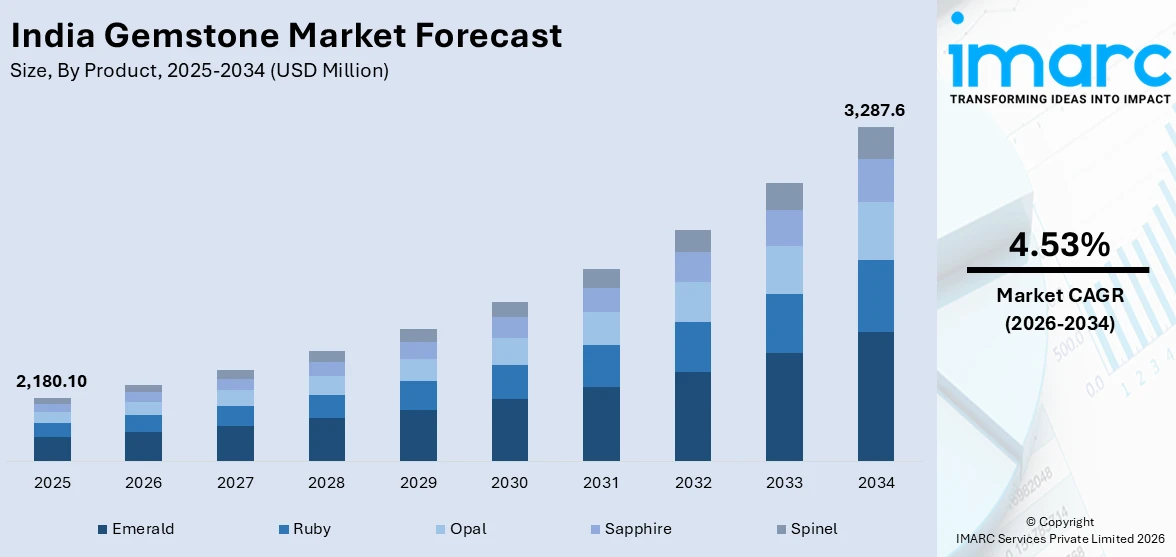
The India gemstone market size was valued at USD 2,180.10 Million in 2025 and is projected to reach USD 3,287.6 Million by 2034, growing at a compound annual growth rate of 4.53% from 2026-2034.
The India gemstone market is experiencing steady expansion driven by deep-rooted cultural traditions, rising disposable incomes, and growing consumer preference for precious and semi-precious stones. Increasing urbanization and evolving fashion sensibilities are encouraging demand across both traditional and contemporary jewelry segments. The integration of advanced cutting technologies, digital retail platforms, and gemstone certification systems is enhancing accessibility and consumer confidence. Expanding export opportunities and strengthening international trade partnerships are further reinforcing India's position as a prominent global hub for gemstone processing, trading, and craftsmanship.
Key Takeaways and Insights:
- By Product: Emerald dominates the market with a share of 34.7% in 2025, owing to its deep cultural significance in traditional Indian jewelry, widespread use in astrological applications, and enduring perception as a symbol of prestige and luxury among consumers.
- Key Players: Key players drive the India gemstone market by expanding product portfolios, enhancing cutting and polishing technologies, and strengthening distribution networks. Their investments in certification, digital retail innovation, and international trade partnerships are boosting consumer confidence and accelerating market growth.
To get more information on this market Request Sample
The India gemstone market is progressing as consumers, jewelers, and exporters are increasingly adopting certified and high-quality precious and semi-precious gemstones for various purposes ranging from jewelry to astrology, investment, and art. One of the key factors that have contributed to the growth of the India gemstone market is the country's age-old reputation as a global gemstone cutting, polishing, and trading hub, due to its skilled artisanal traditions that are primarily concentrated in cities like Jaipur, Surat, and Mumbai. The gems and jewelry market in India has been driven by the size and strength of the overall industry ecosystem in which the gemstone market operates. The initiatives taken by the government, such as lowering customs duties on colored gemstones and setting up common facility centers, are also helping to improve manufacturing capabilities and export competitiveness. The growth of e-commerce platforms, awareness about the authenticity of gemstones, and demand for customized and responsibly sourced gemstones are also helping to create a positive market environment, making India an important player in the global gemstone value chain.
India Gemstone Market Trends:
Growing Emphasis on Gemstone Certification and Authenticity
The Indian consumer is increasingly showing interest in certified and authenticated gemstones, which is a major shift towards transparency in the gemstones market. The demand for scientifically authenticated gemstones with a unique identification number and traceability facilities is on the rise in both urban and semi-urban areas. This is further aided by the rise in the retail chain providing trust-based purchasing experiences, which is thereby triggering the growth of the Indian gemstone market.
Digital Transformation Reshaping Gemstone Retail
Digital innovation is rapidly transforming the landscape of gemstone marketing, sales, and authentication in India. E-commerce sites, virtual try-on apps, and direct consumer engagement are expanding the customer base of gemstone sellers beyond the boundaries of physical stores. Computer-aided design and blockchain authentication are enhancing product customization and authentication. This digital transformation is attracting young, tech-savvy consumers who value convenience, customization, and sustainability in the purchase of gemstones.
Rising Preference for Lightweight and Contemporary Gemstone Designs
One of the significant transitions that have been observed in gemstone jewelry designs, which are shifting towards light, flexible, and modern designs, is having an impact on consumer preferences in India. The younger generation and working professionals are increasingly showing a preference for jewelry that can be worn on a daily basis, which combines traditional craftsmanship with modern designs. This is limited to traditional heavy jewelry designs that are worn on special occasions and also includes modular designs that can be worn on different occasions.
Market Outlook 2026-2034:
The gemstone market in India is expected to continue growing, with strong cultural demand, a growing retail presence, and government support. There is a growing demand for certified and conflict-free gemstones, and online platforms are helping to expand the reach. With more investments in gemstone processing technology, more international trade agreements, and the country becoming more export competitive, the revenue generation for the gemstone market in India is expected to improve. The gemstone market in India is expected to mature. The market generated a revenue of USD 2,180.10 Million in 2025 and is projected to reach a revenue of USD 3,287.6 Million by 2034, growing at a compound annual growth rate of 4.53% from 2026-2034.
India Gemstone Market Report Segmentation:
|
Segment Category |
Leading Segment |
Market Share |
|
Product |
Emerald |
34.7% |
Product Insights:
- Emerald
- Ruby
- Opal
- Sapphire
- Spinel
Emerald dominates with a market share of 34.7% of the total India gemstone market in 2025.
Emerald holds the leading position in India's gemstone market, underpinned by its deep-rooted cultural significance and widespread demand across fine jewelry, bridal adornments, and astrological applications. Known locally as panna, emerald is considered an auspicious stone associated with prosperity, intellectual clarity, and planetary influence, driving consistent consumer interest. India's role as a major hub for emerald cutting and polishing further strengthens domestic supply capabilities. According to industry estimates, a large proportion of gemstone jewelry purchases in India are linked to wedding ceremonies and festive occasions, underscoring the central role that emeralds play in traditional ornamentation.
The appeal of emerald extends across both premium luxury collections and accessible everyday jewelry segments, reflecting its versatility in contemporary design applications. Consumer preference for certified, natural emeralds is rising steadily as awareness around gemstone authenticity and quality grading strengthens. In an effort to appeal to younger consumers looking for unique and significant jewelry, Indian jewelers are now producing personalized emerald-studded pieces that combine traditional themes with contemporary design. The expanding presence of online gemstone retail platforms is further broadening access to high-quality emeralds, enabling consumers in tier-two and tier-three cities to participate in the market.
Application Insights:
Access the comprehensive market breakdown Request Sample
- Jewelry and Ornaments
- Luxury Art
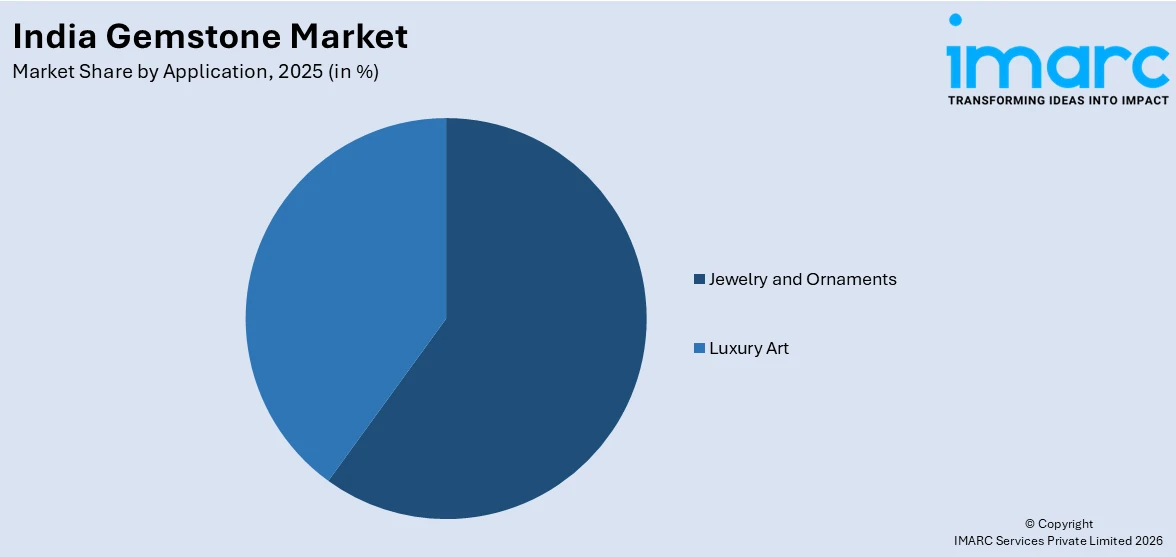
Jewelry and ornaments represent the primary application for gemstones in India, driven by the country's deep cultural attachment to adorned accessories across weddings, religious ceremonies, and festivals. Demand spans a wide spectrum from high-value bridal sets featuring emeralds, rubies, and sapphires to accessible daily-wear pieces. Rising disposable incomes and evolving fashion preferences are encouraging broader adoption of gemstone-studded jewelry among urban and semi-urban consumers. The growing availability of certified gemstones through organized retail and digital platforms is enhancing purchasing confidence and stimulating demand across diverse consumer segments.
Luxury art constitutes a niche but expanding application for gemstones in India, encompassing decorative artifacts, collectible sculptures, and heritage-inspired ornamental pieces. Affluent consumers and institutional buyers increasingly value rare and high-quality gemstones as investment assets and cultural symbols. The integration of precious stones into art objects reflects a growing appreciation for craftsmanship and exclusivity. This segment benefits from rising wealth creation, expanding luxury retail infrastructure, and heightened interest in artisanal heritage products that combine aesthetic appeal with long-term value retention across discerning collector communities.
Regional Insights:
- North India
- South India
- East India
- West India
The gemstone industry in North India is an important hub, with Jaipur being a well-known international destination for gemstone cutting, polishing, and trading. The region has access to a pool of skilled laborers, with trading channels in place and easy connectivity to the large consumer markets in Delhi and the National Capital Region. The cultural demand for gemstone-studded jewelry in weddings and festivals remains strong. The government-supported common facility centers and trade organizations are working to improve processing capacity, with growing retail modernization and technology adoption expanding consumer access in the Northern states.
The demand for gemstones in South India is quite high, with a flourishing jewelry manufacturing sector and consumer demand for gemstone jewelry. Major gemstone jewelry manufacturing and trading centers in South India are cities such as Chennai, Hyderabad, and Bangalore. The deeply rooted cultural tradition of gold and gemstone jewelry in South Indian temple rituals and weddings sustains demand. Rising penetration of organized retailing, urbanization, and awareness about gemstone certification are encouraging more consumers in the southern metropolitan and semi-urban areas to participate in the market.
East India is an emerging market in the gemstone industry, with Kolkata being the prime location for gemstone trading and jewelry manufacturing. The strong craftsmanship and cultural trend of gemstone jewelry in religious and social gatherings in the region ensure a steady market. Increasing consumer awareness about authentic gemstones and the establishment of retail infrastructure are slowly bridging the market development gap. Improved connectivity with the national supply chain and increasing disposable incomes of the urban population are set to unlock market development opportunities in the eastern states.
West India represents a significant market for the gemstone industry, and Mumbai and Surat are major centers for gemstone processing, export, and wholesale trade. There are many gemstone trading companies in this region, and there are good international trade links. There is a good demand for quality gemstone jewelry in Gujarat, Maharashtra, and Rajasthan. The presence of special economic zones, favorable export infrastructure, and proximity to ports further establishes the significance of western India in the gemstone value chain.

Market Dynamics:
Growth Drivers:
Why is the India Gemstone Market Growing?
Deep-Rooted Cultural Significance and Festive Demand
India's profound cultural heritage places gemstones at the center of social, religious, and ceremonial life, creating enduring and resilient demand across generations. Gemstones are integral to wedding jewelry, auspicious gifting, and astrological practices, ensuring consistent consumption patterns that transcend economic cycles. The country's diverse regional traditions each carry unique gemstone preferences, from emerald-studded Rajasthani sets to ruby-adorned South Indian temple jewelry, creating a multifaceted demand landscape. Seasonal peaks during major festivals, wedding seasons, and religious observances generate substantial purchasing activity that sustains market momentum throughout the year. Consumer attachment to natural gemstones is further reinforced by beliefs in their metaphysical properties and planetary influences, which drive purchases for wellness and spiritual purposes. As younger generations increasingly blend traditional values with modern aesthetics, demand for contemporary gemstone jewelry that honors cultural significance while reflecting individual style is growing. This evolving consumer mindset ensures that cultural drivers remain a foundational pillar of market growth, supporting both traditional and innovative product offerings across diverse price segments and retail channels.
Supportive Government Policies and Trade Agreements
Government initiatives aimed at strengthening India's gems and jewelry sector are creating a more favorable environment for gemstone market expansion. Policy measures focused on reducing import duties, simplifying export procedures, and establishing processing infrastructure are enhancing the industry's competitiveness and attracting fresh investment. The introduction of Authorized Economic Operator status for the sector has streamlined customs processes, while investments in common facility centers are bolstering domestic manufacturing capabilities. International trade agreements are opening new export corridors and reducing barriers for Indian gemstone products in key global markets. Bilateral partnerships focused on gemstone standardization, certification harmonization, and knowledge exchange are enhancing India's credibility as a reliable sourcing destination. These collaborative frameworks facilitate smoother cross-border trade flows and strengthen institutional linkages between Indian industry bodies and international counterparts. The cumulative effect of these policy interventions and trade facilitation measures is lowering operational costs, expanding market access, and reinforcing investor confidence in the long-term growth potential of India's gemstone industry.
Expanding Digital Retail and Consumer Awareness
The rapid expansion of digital retail channels is fundamentally reshaping consumer access to gemstones across India, enabling purchases from any location and broadening market reach beyond traditional trading centers. E-commerce platforms, direct-to-consumer models, and social media marketing are connecting gemstone retailers with previously underserved consumer segments in tier-two and tier-three cities. Digital tools including virtual try-on experiences, high-resolution imaging, and online certification verification are enhancing the purchasing experience and building consumer trust. Growing awareness about gemstone quality, grading parameters, and authentication processes is empowering buyers to make more informed decisions, reducing information asymmetry that historically characterized the market. Educational content disseminated through digital channels is familiarizing consumers with the value distinctions between natural, treated, and synthetic stones, supporting demand for certified premium gemstones. The convergence of digital accessibility and rising consumer sophistication is creating a more transparent and efficient marketplace that supports sustained growth across both premium and accessible price segments.
Market Restraints:
What Challenges the India Gemstone Market is Facing?
Price Volatility of Raw Gemstone Materials
The market faces challenges due to the fluctuations in the prices of raw gemstones, which are affected by the disruption of supply in mining areas, geopolitical issues, and changes in currency exchange rates. The fluctuations in the prices of raw gemstones affect the manufacturing costs, retail prices, and profit margins of the companies in the supply chain. The small and medium-scale traders and jewelers are highly affected by the increase in costs and are unable to maintain a stable pricing and inventory level. The fluctuations may also affect the purchase decisions of customers in the price-sensitive segment.
Proliferation of Synthetic and Counterfeit Gemstones
The rise in the availability of synthetic, lab-created, and imitation gemstones has been a challenge to the natural gemstone market in India. The fact that these gemstones are often indistinguishable from natural gemstones without expert analysis has led to a loss of trust in the unorganized market. The cost-effectiveness of synthetic gemstones is likely to cannibalize the market for natural gemstones. To overcome this challenge, there needs to be a mass adoption of certification best practices to communicate the value proposition of natural gemstones.
Supply Chain Complexity and Sourcing Constraints
The Indian gemological chain is complex, with several middlemen involved in the mining, sourcing of rough diamonds, cutting, polishing, and retailing of gems. Relying on imports of rough diamonds from Africa, South America, and Southeast Asia makes the industry vulnerable to disruptions in the supply chain, logistics, and regulatory issues. The need for ethical sourcing and compliance with international norms makes it even more complex for the industry to operate with a transparent supply chain.
Competitive Landscape:
The India gemstone market has an environment that is competitive and characterized by a combination of trading, organized retailing, and small and medium-scale gemstone artisans and dealers. The competitors are based on quality, authenticity of certification, innovation, and reach. The competitors are using advanced cutting and polishing technology, online retailing, and international trade partnerships to improve their positions in the market. The growing importance of gemstone authentication and tracing is encouraging the competitors to use standardized certification, and the franchise model of retailing is helping the organized sector to increase their reach in the semi-urban and urban regions. Partnerships with international gemstone sourcing organizations and international trade shows are also increasing the exposure of Indian gemstone businesses.
Recent Developments:
- In December 2025, GemLab opened its brand-new Colored Gemstone Experience Showroom in Delhi, which offers real-time gemstone verification, professional gemologists' scientific advice, and a carefully chosen selection of certified colored stones, such as coral, emerald, sapphire, and ruby. For authenticity and traceability, the showroom makes use of a Gem Track System and an eight-digit Gem Identification Number system.
- In February 2025, At the Bangkok Gem and Jewelry Fair, India and Thailand inked three Memorandums of Understanding, promoting cooperation in the trade of colored gemstones, silver jewelry, and gemstone standardization. The agreements were signed by the Thai Silver Exporters Association and SGJIA, the Jewelers Association Jaipur and Chanthaburi Gem and Jewelry Traders Association, and GJEPC's IIGJ-RLC and GIT Thailand.
India Gemstone Market Report Coverage:
|
Report Features |
Details |
|
Base Year of the Analysis |
2025 |
|
Historical Period |
2020-2025 |
|
Forecast Period |
2026-2034 |
|
Units |
Million USD |
|
Scope of the Report |
Exploration of Historical Trends and Market Outlook, Industry Catalysts and Challenges, Segment-Wise Historical and Future Market Assessment:
|
|
Products Covered |
Emerald, Ruby, Opal, Sapphire, Spinel |
|
Applications Covered |
Jewelry and Ornaments, Luxury Art |
|
Regions Covered |
North India, South India, East India, West India |
|
Customization Scope |
10% Free Customization |
|
Post-Sale Analyst Support |
10-12 Weeks |
|
Delivery Format |
PDF and Excel through Email (We can also provide the editable version of the report in PPT/Word format on special request) |
Frequently Asked Questions About the India Gemstone Market Report
The India gemstone market size was valued at USD 2,180.10 Million in 2025.
The India gemstone market is expected to grow at a compound annual growth rate of 4.53% from 2026-2034 to reach USD 3,287.6 Million by 2034.
Emerald dominated the market with a share of 34.7%, driven by its deep cultural significance in Indian jewelry traditions, prominent role in astrological applications, and enduring consumer perception as a prestigious and valuable gemstone.
Key factors driving the India gemstone market include deep-rooted cultural traditions, supportive government policies, expanding digital retail channels, growing consumer awareness of gemstone certification, and strengthening international trade partnerships.
Major challenges include price volatility of raw gemstone materials, proliferation of synthetic and counterfeit stones, supply chain complexity, ethical sourcing requirements, dependence on imported rough stones, and varying certification standards across market segments.
Need more help?
- Speak to our experienced analysts for insights on the current market scenarios.
- Include additional segments and countries to customize the report as per your requirement.
- Gain an unparalleled competitive advantage in your domain by understanding how to utilize the report and positively impacting your operations and revenue.
- For further assistance, please connect with our analysts.
 Request Customization
 Speak to an Analyst
 Request Brochure
 Inquire Before Buying
Benefits of Customization
- Personalize this research
- Triangulate with your data
- Get data as per your format and definition
- Gain a deeper dive into a specific application, geography, customer, or competitor
- Any level of personalization
Get in Touch With Us
UNITED STATES
Phone: +1-201-971-6302
INDIA
Phone: +91-120-433-0800
UNITED KINGDOM
Phone: +44-753-714-6104
Email: [email protected]
Client Testimonials




.webp)




.webp)













Related Reports

Choose your plan
*Please note that the prices mentioned below are starting prices for each bundle type. Kindly contact our team for further details.*
Single User License
- 1 User License, Access on 2 Devices
- PDF Report + Excel Dataset (Password Protected)
- Lifetime Access
- No Printing Rights
- 10% Free Report Customization
- 10–12 Weeks of Analyst Support
Five User License
- Access for 5 Users, 2 Devices per User
- PDF Report + Excel Dataset (Password Protected)
- Lifetime Access
- Dedicated Account Manager
- 12–14 Weeks of Analyst Support
- No Printing Rights
- 15% Free Report Customization
- 25% Discount on Your Next Purchase
Corporate User License
- Unlimited User Access (Within Your Organization)
- PDF Report + Excel Dataset
- Lifetime Access
- Dedicated Account Manager
- 14–20 Weeks of Analyst Support
- No Printing Rights
- 20% Free Report Customization
- 30% Discount on Your Next Purchase
Essential Insights
What's included:
3 reports
- Lifetime Access
- PDF Reports
- Excel Datasets
- 2 Weeks of Free Analyst Support
- 2 User Licenses
- Access on 2 Devices
- Printing Rights
- Complimentary PowerPoint (PPT) Version
- Complimentary License Upgrade
Professional Access
What's included:
5 reports
- Lifetime Access
- PDF Reports
- Excel Datasets
- 8 Weeks of Free Analyst Support
- 2 User Licenses
- Access on 2 Devices
- Printing Rights
- Complimentary PowerPoint (PPT) Version
- Complimentary License Upgrade
Business Advantage
What's included:
8 reports
- Lifetime Access
- PDF Reports
- Excel Datasets
- 14 Weeks of Free Analyst Support
- 2 User Licenses
- Access on 2 Devices
- Printing Rights
- Complimentary PowerPoint (PPT) Version
- Complimentary License Upgrade
Enterprise Intelligence
What's included:
10 reports
- Lifetime Access
- PDF Reports
- Excel Datasets
- 20 Weeks of Free Analyst Support
- 2 User Licenses
- Access on 2 Devices
- Printing Rights
- Complimentary PowerPoint (PPT) Version
- Complimentary License Upgrade