
India Hand Wash Market Size, Share, Trends and Forecast by End User, Sales Channel, and Region, 2026-2034
India Hand Wash Market Summary:
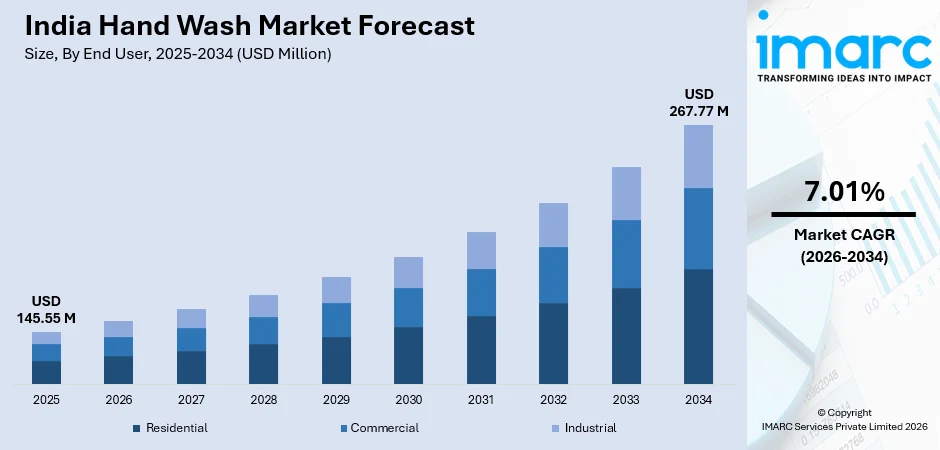
The India hand wash market size was valued at USD 145.55 Million in 2025 and is projected to reach USD 267.77 Million by 2034, growing at a compound annual growth rate of 7.01% during 2026-2034.
The India hand wash market is gaining steady momentum as heightened hygiene awareness, rapid urbanization, and rising household incomes reshape user behavior across the country. The growing preference for liquid hand wash over traditional bar soap, combined with increased penetration of modern retail and digital commerce platforms, is broadening market access. These converging forces are creating sustained opportunities across diverse end-user segments, reinforcing India hand wash market share across residential, commercial, and industrial settings.
Key Takeaways and Insights:
- By End User: Residential represents the largest segment with a market share of 58.6% in 2025, driven by heightened household hygiene awareness, accelerating shift from bar soap to liquid hand wash, and the growing urban dwellers preference for skin-nourishing formulations.
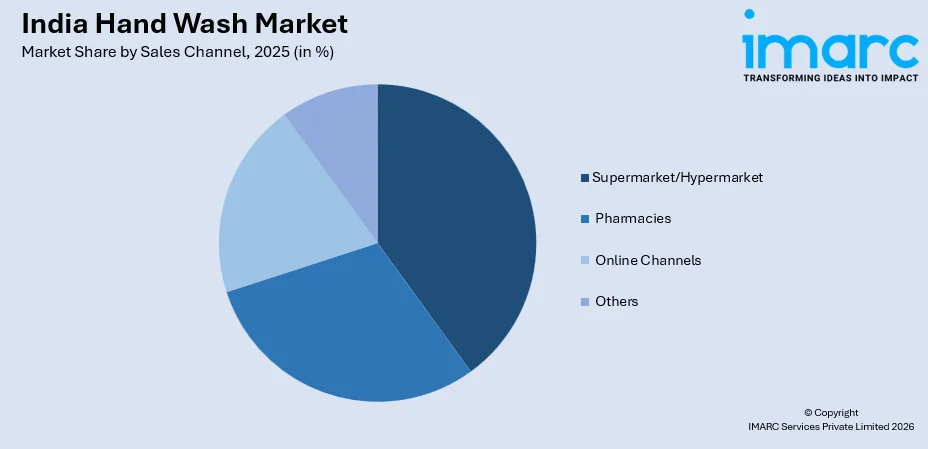
- By Sales Channel: Supermarket/hypermarket leads the market with a share of 39.7% in 2025, supported by one-stop shopping convenience, wide product variety, promotional pricing, and the strong presence of organized retail chains across India's major urban centers.
- By Region: North India dominates the market with a share of 29.5% in 2025, underpinned by its high urban population concentration, strong organized retail infrastructure, and elevated hygiene consciousness among users in states, such as Delhi NCR, Uttar Pradesh, and Punjab.
- Key Players: The India hand wash market features a competitive mix of multinational corporations and established domestic personal care brands competing across price points, formulations, and distribution channels to address the growing individual demand for hygiene and skincare solutions.
To get more information on this market Request Sample
The India hand wash market is positioned at the intersection of rapid population expansion, improving sanitation infrastructure, and shifting personal care behaviors, creating strong long-term growth prospects. Increasing awareness around hygiene, supported by public health initiatives and wider access to sanitation facilities, is expanding handwashing practices beyond urban areas into semi-urban and rural regions. In addition, brands are adopting more targeted communication strategies to influence behavioral change across younger demographics. In 2024, Savlon partnered with rapper Emiway Bantai to promote hand hygiene among children through a hip-hop themed campaign, using music-driven messaging to encourage regular handwashing habits. This reflects a broader shift toward culturally relevant and engaging outreach approaches that resonate with younger audiences, strengthening product adoption while reinforcing hygiene as a daily habit across diverse user segments in India.
India Hand Wash Market Trends:
Increasing Hygiene Awareness and Behavioral Shift
The growing awareness regarding personal hygiene and disease prevention is significantly influencing hand wash usage across India, driving a shift from occasional to habitual usage. People are increasingly prioritizing regular handwashing as a preventive health measure, supported by educational initiatives and wider exposure to hygiene standards. In 2025, Reckitt introduced the ‘Hygiene Building as Learning Aid (H-BaLA)’ platform under its Dettol Banega Swasth India programme, integrating hygiene education into school infrastructure to encourage behavioral change among children. This approach reinforces long-term awareness, particularly in semi-urban and rural regions, where traditional practices are gradually being replaced, strengthening consistent demand across diverse population segments.
Growing Disposable Income and User Spending Capacity
Increasing disposable income levels across India are strengthening individual spending on personal care and hygiene products, including hand wash solutions. As household earnings rise, there is a clear shift toward premium, branded, and higher-quality products that support health and daily well-being. The Ministry of Statistics reported that per capita Net National Income increased to INR 2,05,324 in FY2024–25 from INR 1,88,892 in FY2023–24, indicating improved purchasing capacity among people. This financial progress is enabling more frequent purchases and encouraging experimentation with new product variants, while the expanding middle-class population continues to drive sustained demand for convenient and reliable hygiene products aligned with modern lifestyle preferences.
Rise of Organized Retail and E-commerce Channels
The expansion of organized retail and digital commerce platforms is significantly enhancing product accessibility across India, supporting stronger hand wash market penetration. Supermarkets, hypermarkets, and online marketplaces offer a diverse range of options, enabling people to compare products and make informed purchasing decisions. The growing scale of digital commerce further highlights this shift, as the India Brand Equity Foundation reports that the e-commerce industry, valued at INR 10,82,875 Crore in 2024, is projected to reach INR 29,88,735 Crore by 2030, reflecting sustained growth. This expanding retail ecosystem, supported by convenient delivery models and promotional offerings, is improving product reach, increasing visibility, and encouraging consistent consumption across urban and emerging markets.
Market Outlook 2026-2034:
The India hand wash market is poised for consistent growth throughout the forecast period, driven by sustained urbanization, rising per capita incomes, and deepening hygiene consciousness. The market generated a revenue of USD 145.55 Million in 2025 and is projected to reach a revenue of USD 267.77 Million by 2034, growing at a compound annual growth rate of 7.01% from 2026-2034. The growing retail penetration, expanding e-commerce infrastructure, increasing adoption of premium formulations, and government-backed sanitation programs will continue to support robust demand across all end-user and regional segments.
India Hand Wash Market Report Segmentation:
|
Segment Category |
Leading Segment |
Market Share |
|
End User |
Residential |
58.6% |
|
Sales Channel |
Supermarket/Hypermarket |
39.7% |
|
Region |
North India |
29.5% |
End User Insights:
- Commercial
- Residential
- Industrial
Residential dominates with a market share of 58.6% of the total India hand wash market in 2025.
Residential represents the largest segment attributed to its direct association with daily hygiene routines in households. Hand wash products are utilized several times daily for regular tasks, like before eating, after being outdoors, and maintaining cleanliness, which guarantees steady demand. Growing awareness of personal hygiene and disease prevention has notably boosted product use in households. Moreover, smaller packaging and low pricing make hand wash products available to a broad range of consumers. The increasing inclination towards liquid hand wash instead of conventional soaps, fueled by ease of use and perceived hygiene advantages, further reinforces residential consumption in urban and semi-urban households in India.
Residential remains the leading sector in the market, driven by changing lifestyle trends and a heightened emphasis on family well-being and safety. Consumers are progressively choosing items with extra advantages such as antibacterial features, hydrating qualities, and appealing scents, increasing usage rates. The impact of marketing, online platforms, and educational initiatives is strengthening the significance of consistent handwashing at home. Additionally, increasing disposable incomes allow individuals to transition towards branded and premium options. Convenient access via retail outlets and online shopping sites enhances regular buying, while refill options and value deals promote ongoing consumption, strengthening the market's residential leadership.
Sales Channel Insights:
Access the comprehensive market breakdown Request Sample
- Supermarket/Hypermarket
- Pharmacies
- Online Channels
- Others
Supermarket/hypermarket leads with a market share of 39.7% of the total India hand wash market in 2025.
Supermarkets and hypermarkets have cemented their position as the preferred retail channel for hand wash purchases in India, offering buyers the ability to compare multiple brands, formats, and price points under one roof. The organized retail expansion across metropolitan and Tier 1 cities is substantially increasing the visibility and accessibility of hand wash products. The physical browsing experience, in-store promotions, and bundled offers characteristic of large-format retail stores consistently drive impulse purchases and encourage trial of newly launched product variants.
The dominance of the supermarket and hypermarket channel is also driven by strategic in-store placement, dedicated promotional displays, and the integration of private-label hand wash products that attract cost-conscious shoppers. Major retail chains across North and West India serve as critical launch pads for new product introductions, allowing brands to reach large urban audiences efficiently. As modern trade continues to expand into Tier 2 cities across the country, supermarkets are expected to deepen their lead as the primary point of purchase for hand wash users.
Regional Insights:
- North India
- South India
- East India
- West India
North India exhibits a clear dominance with a 29.5% share of the total India hand wash market in 2025.
North India leads the market in terms of region because of its dense population and significant urban concentration in cities like Delhi, Chandigarh, and Lucknow. The area faces considerable demand due to heightened awareness regarding hygiene and sanitation, especially in homes, workplaces, and communal areas. Government programs encouraging hand hygiene and cleanliness have further reinforced product uptake. Moreover, increased presence of organized retail and the presence of various brands promote steady consumption. The involvement of institutional purchasers, including schools, hospitals, and businesses, further ensures consistent demand, bolstering North India’s top rank in the hand wash sector.
The dominance of the area is further strengthened by the shifting lifestyle trends and increasing health awareness among people. Regular use of hand wash products has turned into a routine, especially following heightened emphasis on hygiene prevention measures. The area enjoys robust distribution networks and convenient product availability throughout urban and semi-urban regions. Rising disposable incomes and a preference for quality branded products are driving market expansion. Additionally, the heightened interest in variants such as herbal, moisturizing, and antibacterial hand washes is broadening the category, promoting repeat purchases, and reinforcing North India's market dominance.
Market Dynamics:
Growth Drivers:
Why is the India Hand Wash Market Growing?
Urbanization and Lifestyle Transformation
Swift urban growth is profoundly altering personal habits in India, boosting the need for accessible and efficient hygiene items. Increased access to contemporary retail outlets, worldwide consumption trends, and changing personal care norms is driving a transition to liquid hand wash from conventional options. The Economic Survey 2023–24, backed by NITI Aayog estimates, anticipates that over 40% of India's population will live in urban regions by 2030, underscoring the magnitude of this shift. Shifts in work settings, greater mobility, and a stronger focus on cleanliness in communal areas are promoting consistent product usage, thereby broadening the user base and bolstering long-term market demand.
Shift Toward Convenient and Hygienic Packaging Formats
Shifting user preferences are fueling the need for convenient packaging designs that enhance usability and hygiene in everyday activities. Pump dispensers, refill pouches, and touchless options are becoming more popular because of their convenience and lower chance of contamination. Individuals are prioritizing products that merge functionality with safety, especially in communal settings. Refill packs provide financial benefits, promoting repeat sales while aiding in minimizing packaging waste. The increasing emphasis on convenience and practicality is speeding up product acceptance in homes, workplaces, and public areas, where upholding consistent hygiene standards are becoming a vital aspect of daily living.
Rising Demand for Skin-Friendly and Natural Formulations
Individuals are progressively opting for hand wash items that are mild on the skin and devoid of strong chemicals, indicating a transition toward safer and more skin-friendly hygiene options. There is an increase in the demand for products infused with natural components, hydrating factors, and dermatologically evaluated attributes. This trend is influenced by worries regarding skin dryness and irritation owing to constant handwashing. With rising frequency of use, preserving skin health while also ensuring thorough cleansing has become a crucial focus. In reaction, producers are creating gentler and more balanced formulas, expanding product attractiveness and drawing in a larger audience from various age demographics.
Market Restraints:
What Challenges the India Hand Wash Market is Facing?
Price Sensitivity Limiting Premium Segment Penetration
A significant portion of people in semi-urban and rural India is quite sensitive to pricing, affecting the adoption of hand wash. The elevated prices of premium liquid formulations in comparison to bar soap deter regular buying. Numerous individuals emphasize fundamental affordability over additional features, restricting the appetite for advanced versions and hindering the transition to high-end hygiene items.
Entrenched Competition from Traditional Bar Soap
Bar soap continues to be commonly utilized in rural regions and low-income urban homes in India, hindering the acceptance of liquid hand wash. Its low cost, easy access from nearby stores, and enduring familiarity make buyers less likely to change. In areas with restricted retail presence and decreased awareness of liquid options, these behaviors persist in hindering category expansion.
Quality Standardization and Counterfeit Product Challenges
The proliferation of unbranded and low-quality hand wash products from smaller regional manufacturers presents a challenge to market integrity and user trust. Without consistent quality standards and enforcement across all market tiers, substandard products can undermine brand equity and create confusion among price-sensitive buyers. The presence of imitation formulations in informal retail channels further complicates competitive positioning for established branded manufacturers seeking to expand reach.
Competitive Landscape:
The India hand wash market reflects a dynamic competitive environment characterized by the coexistence of established multinational personal care corporations and a diverse ecosystem of domestic FMCG companies. Market participants compete across multiple dimensions, including product formulation, packaging innovation, pricing strategy, and retail channel penetration. The shift toward herbal, antibacterial, and premium moisturizing variants has intensified product differentiation efforts, with brands investing in research and development, digital marketing, and regional campaigns to strengthen brand recall. Strategic investments in e-commerce, modern trade partnerships, and rural distribution expansion are reshaping competitive dynamics, rewarding brands that demonstrate agility across India's heterogeneous user landscape.
Recent Developments:
- June 2025: The Indian Lifestyle Store launched its first in-house product, Glowra Hand Wash, marking its entry into personal care. The product featured natural ingredients like aloe vera and neem, focusing on gentle cleansing and antibacterial protection. This launch reflected rising user preference for plant-based, skin-friendly hygiene products in India’s daily care segment.
India Hand Wash Market Report Coverage:
|
Report Features |
Details |
|
Base Year of the Analysis |
2025 |
|
Historical Period |
2020-2025 |
|
Forecast Period |
2026-2034 |
|
Units |
USD Million |
|
Scope of the Report |
Exploration of Historical Trends and Market Outlook, Industry Catalysts and Challenges, Segment-Wise Historical and Future Market Assessment:
|
|
End Users Covered |
Commercial, Residential, Industrial |
|
Sales Channels Covered |
Supermarket/Hypermarket, Pharmacies, Online Channels, Others |
|
Regions Covered |
North India, South India, East India, West India |
|
Customization Scope |
10% Free Customization |
|
Post-Sale Analyst Support |
10-12 Weeks |
|
Delivery Format |
PDF and Excel through Email (We can also provide the editable version of the report in PPT/Word format on special request) |
Frequently Asked Questions About the India Hand Wash Market Report
The India hand wash market size was valued at USD 145.55 Million in 2025.
The India hand wash market is expected to grow at a compound annual growth rate of 7.01% during 2026-2034 to reach USD 267.77 Million by 2034.
Residential holds the largest revenue share of 58.6% in 2025, driven by heightened household hygiene awareness, a sustained shift from bar soap to liquid hand wash, and the growing urban user preference for value-added, skin-nourishing formulations.
Key factors driving the India hand wash market include expanding organized retail and digital commerce, improving product accessibility and visibility. As per IBEF, the e-commerce industry, valued at INR 10,82,875 Crore in 2024, is projected to reach INR 29,88,735 Crore by 2030, supporting wider reach and consistent consumption.
Major challenges include persistent price sensitivity limiting premium product adoption, strong competition from traditional bar soap particularly in rural and lower-income markets, and quality standardization issues arising from the proliferation of unbranded products in informal retail channels.
Need more help?
- Speak to our experienced analysts for insights on the current market scenarios.
- Include additional segments and countries to customize the report as per your requirement.
- Gain an unparalleled competitive advantage in your domain by understanding how to utilize the report and positively impacting your operations and revenue.
- For further assistance, please connect with our analysts.
 Request Customization
 Speak to an Analyst
 Request Brochure
 Inquire Before Buying
Benefits of Customization
- Personalize this research
- Triangulate with your data
- Get data as per your format and definition
- Gain a deeper dive into a specific application, geography, customer, or competitor
- Any level of personalization
Get in Touch With Us
UNITED STATES
Phone: +1-201-971-6302
INDIA
Phone: +91-120-433-0800
UNITED KINGDOM
Phone: +44-753-714-6104
Email: [email protected]
Client Testimonials




.webp)




.webp)













Related Reports

Choose your plan
*Please note that the prices mentioned below are starting prices for each bundle type. Kindly contact our team for further details.*
Single User License
- 1 User License, Access on 2 Devices
- PDF Report + Excel Dataset (Password Protected)
- Lifetime Access
- No Printing Rights
- 10% Free Report Customization
- 10–12 Weeks of Analyst Support
Five User License
- Access for 5 Users, 2 Devices per User
- PDF Report + Excel Dataset (Password Protected)
- Lifetime Access
- Dedicated Account Manager
- 12–14 Weeks of Analyst Support
- No Printing Rights
- 15% Free Report Customization
- 25% Discount on Your Next Purchase
Corporate User License
- Unlimited User Access (Within Your Organization)
- PDF Report + Excel Dataset
- Lifetime Access
- Dedicated Account Manager
- 14–20 Weeks of Analyst Support
- No Printing Rights
- 20% Free Report Customization
- 30% Discount on Your Next Purchase
Essential Insights
What's included:
3 reports
- Lifetime Access
- PDF Reports
- Excel Datasets
- 2 Weeks of Free Analyst Support
- 2 User Licenses
- Access on 2 Devices
- Printing Rights
- Complimentary PowerPoint (PPT) Version
- Complimentary License Upgrade
Professional Access
What's included:
5 reports
- Lifetime Access
- PDF Reports
- Excel Datasets
- 8 Weeks of Free Analyst Support
- 2 User Licenses
- Access on 2 Devices
- Printing Rights
- Complimentary PowerPoint (PPT) Version
- Complimentary License Upgrade
Business Advantage
What's included:
8 reports
- Lifetime Access
- PDF Reports
- Excel Datasets
- 14 Weeks of Free Analyst Support
- 2 User Licenses
- Access on 2 Devices
- Printing Rights
- Complimentary PowerPoint (PPT) Version
- Complimentary License Upgrade
Enterprise Intelligence
What's included:
10 reports
- Lifetime Access
- PDF Reports
- Excel Datasets
- 20 Weeks of Free Analyst Support
- 2 User Licenses
- Access on 2 Devices
- Printing Rights
- Complimentary PowerPoint (PPT) Version
- Complimentary License Upgrade