
India Home Diagnostic Testing Market Size, Share, Trends and Forecast by Test Type, Form, Distribution Channel, and Region, 2026-2034
India Home Diagnostic Testing Market Size, Share, Trends & Forecast (2026-2034)
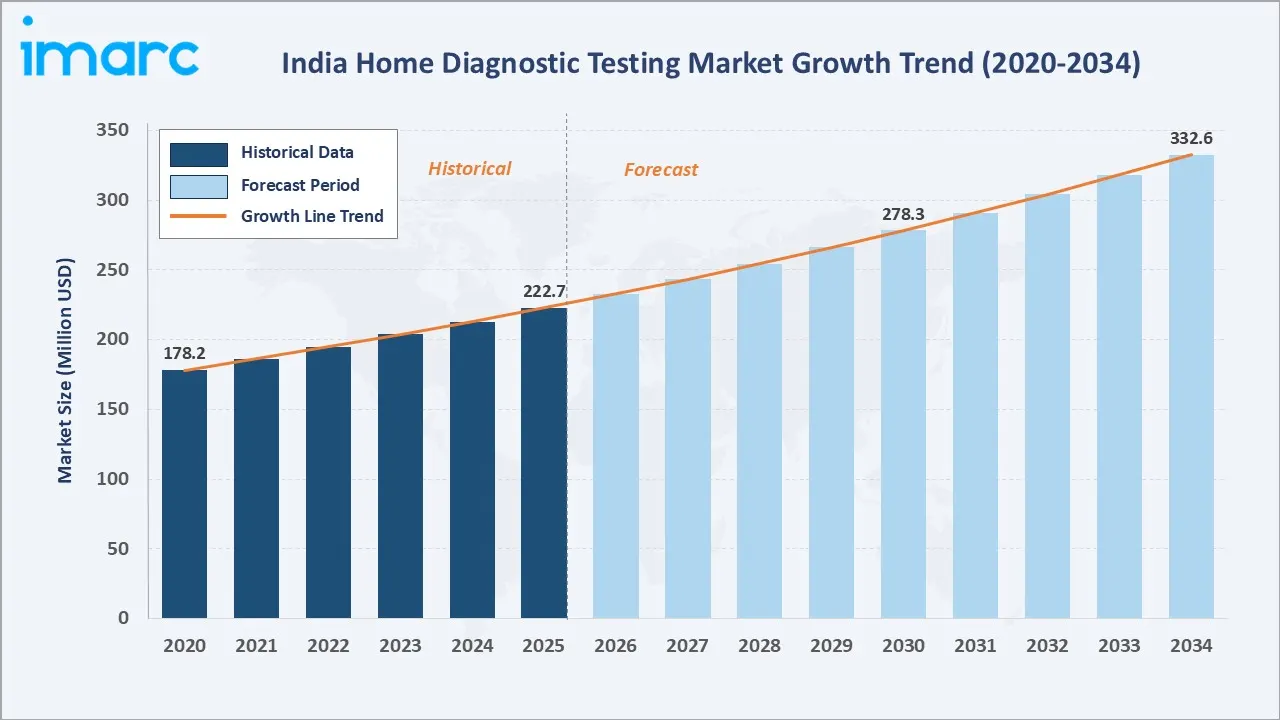
The India home diagnostic testing market grew from USD 222.7 Million in 2025 to USD 232.8 Million in 2026 and is projected to reach USD 332.6 Million by 2034, growing at a CAGR of 4.56% during 2026-2034. The market is driven by rising prevalence of chronic diseases, growing consumer health awareness, and increased adoption of digital health monitoring. Glucose monitoring devices dominate at 32.4% by test type in 2025. Retail pharmacies lead distribution at 41.3%. North India commands the largest regional share at 35.7% in 2025, supported by a dense urban population and strong pharmacy network.
Market Snapshot
|
Metric |
Value |
|
Base Year Market Size (2025) |
USD 222.7 Million |
|
Market Size (2026) |
USD 232.8 Million |
|
Forecast Market Size (2034) |
USD 332.6 Million |
|
CAGR (2026-2034) |
4.56% |
|
Base Year |
2025 |
|
Historical Period |
2020-2025 |
|
Forecast Period |
2026-2034 |
|
Dominant Test Type |
Glucose Monitoring Devices (32.4%, 2025) |
|
Leading Distribution Channel |
Retail Pharmacies (41.3%, 2025) |
|
Leading Region |
North India (35.7%, 2025) |
The India home diagnostic testing market grew from USD 178.2 Million in 2020 to USD 222.7 Million in 2025, and further to USD 232.8 Million in 2026, reflecting sustained demand for consumer health monitoring solutions. The market is projected to reach USD 278.3 Million by 2030 before reaching USD 332.6 Million by 2034.
To get more information on this market, Request Sample
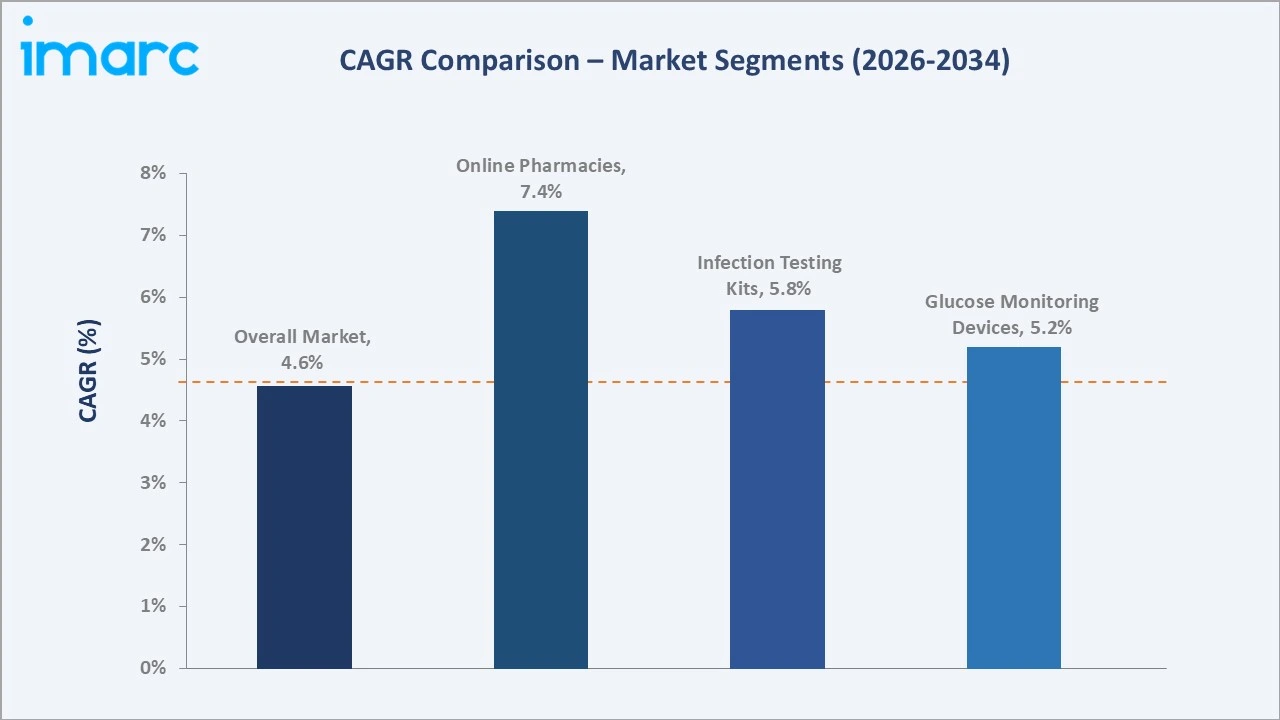
Online pharmacies are projected to grow at the highest segment CAGR of approximately 7.4% during 2026-2034, driven by rapid e-commerce adoption and consumer preference for home delivery. Infection testing kits are forecast at 5.8%, and glucose monitoring devices at 5.2%.
Executive Summary
The India home diagnostic testing market is on a sustained growth trajectory, underpinned by increasing chronic disease burden, rising consumer health literacy, and greater accessibility of affordable diagnostic products. The post-COVID era catalyzed broad consumer acceptance of at-home testing, with rapid antigen kits demonstrating that self-testing is a viable, convenient alternative to facility-based diagnostics. This attitudinal shift continues to benefit the broader market across glucose, pregnancy, ovulation, cholesterol, and infection testing categories.
Glucose monitoring devices lead at 32.4% of market share in 2025, driven by India's estimated 101 million diabetic population. Retail pharmacies dominate distribution at 41.3%, while online pharmacies at 21.3% represent the fastest-growing channel. North India holds the largest regional share at 35.7%, followed by South India at 28.4%.
Key Market Insights
|
Insight |
Data |
|
Dominant Test Type |
Glucose Monitoring Devices – 32.4% share (2025) |
|
Leading Distribution Channel |
Retail Pharmacies – 41.3% share (2025) |
|
Leading Region |
North India – 35.7% (2025) |
|
Key Market Opportunity |
Rising diabetic and chronic disease population driving sustained demand for glucose monitoring and infection testing kits across urban and semi-urban India. |
Key Analytical Observations Supporting the Above Data:
- Glucose Monitoring Devices at 32.4%: India has one of the largest diabetic populations, creating massive structural demand for portable blood glucose monitoring devices in home and community settings.
- Retail Pharmacies at 41.3%: Traditional retail pharmacies remain the dominant channel due to widespread trust, pharmacist consultation, and immediate product availability across urban and semi-urban India.
- North India at 35.7%: High urban density, significant chronic disease burden, and a well-established pharmacy distribution network collectively underpin the region's leading market share.
India Home Diagnostic Testing Market Overview
The India home diagnostic testing market encompasses the production, distribution, and retail sale of consumer-operated diagnostic devices and test kits used for self-testing in domestic settings without clinical supervision. Core product categories include blood glucose monitors, pregnancy and ovulation test kits, cholesterol detection kits, HIV self-test kits, infection testing kits, and drug-of-abuse test kits.
The market ecosystem spans raw material processors, diagnostic kit manufacturers, national and regional pharmaceutical distributors, retail pharmacies, drug stores, modern trade chains, and digital health platforms. India's diagnostic market is growing, with home diagnostics representing a growing consumer-accessible sub-segment benefiting from rising health awareness and smartphone integration.
Market Dynamics
To evaluate market opportunities, Request Sample
Market Drivers
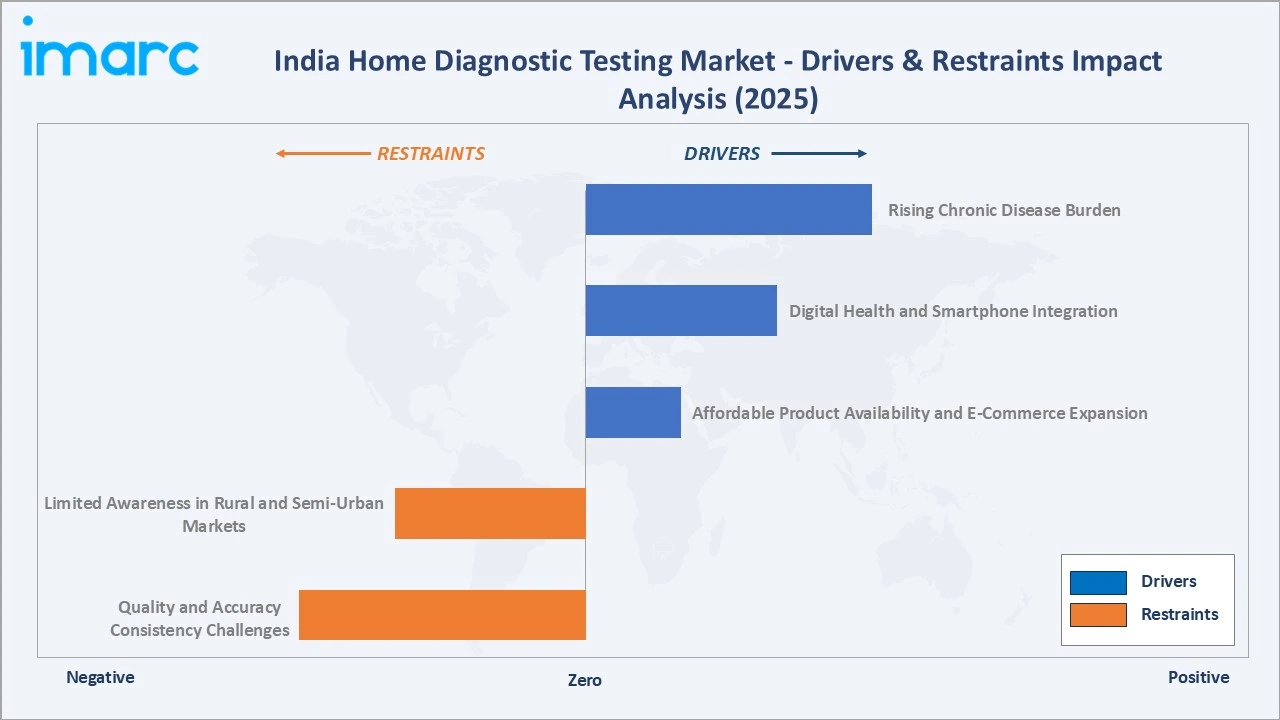
- Rising Chronic Disease Burden: India’s adult diabetes population (ages 20–79) is projected to increase significantly, rising from 89.8 million in 2024 to 156.7 million by 2050, creating a large base of recurring users for blood glucose and cholesterol home monitoring products. Growing non-communicable disease prevalence directly fuels sustained demand for regular self-monitoring devices.
- Digital Health and Smartphone Integration: Connectivity-enabled glucose monitors and app-linked testing devices are experiencing rapid adoption, with approximately 85.5% of Indian households owning at least one smartphone, while 86.3% have access to the internet within their homes. Digital integration enhances user experience, enables remote health tracking, and expands the consumer utility of home diagnostics.
- Affordable Product Availability and E-Commerce Expansion: Price-competitive locally manufactured diagnostic kits and the growth of online pharmacies are lowering cost barriers. Online pharmacy revenues in India are expanding home diagnostics access beyond traditional pharmacy footprint areas.
Market Restraints
- Limited Awareness in Rural and Semi-Urban Markets: A significant proportion of India's population still lacks awareness of at-home diagnostic testing products and their clinical relevance, constraining adoption outside major urban centers.
- Quality and Accuracy Consistency Challenges: Variability in product accuracy across different price tiers and brands can undermine consumer confidence, particularly for conditions requiring high diagnostic precision.
Market Opportunities
- Expanding Preventive Healthcare Culture: Growing government focus on preventive diagnostics and annual health check habits among working-age urban consumers is creating new demand categories. Multi-parameter home test kits combining cholesterol, glucose, and blood pressure monitoring represent an emerging high-value opportunity.
- Rural Market Penetration via Digital Channels: India has 958 million active internet users, with 57% residing in rural areas and increasing rural smartphone penetration; digital health platforms and rural pharmacy programs represent a large untapped addressable market for home diagnostic products.
Market Challenges
- Price Sensitivity in Mass Market Segments: A significant portion of India's consumer base remains highly price-sensitive, constraining the adoption of premium or connected home diagnostic devices. This limits average revenue per user and margin profiles for device manufacturers in competitive volume segments.
- Consumer Trust and Result Interpretation Barriers: Without professional guidance, consumers may face challenges in accurately interpreting diagnostic results, leading to potential misinterpretation. Building consumer education alongside product sales remains an ongoing challenge for market participants.
Emerging Market Trends
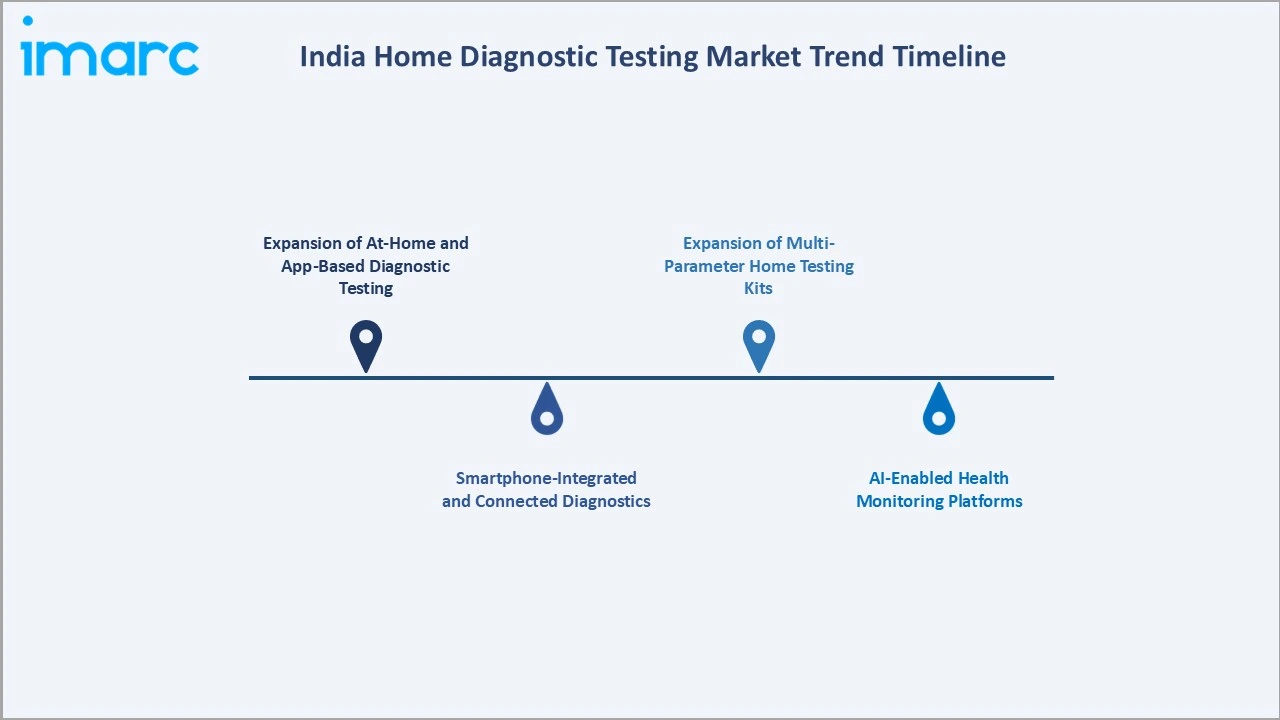
1. Expansion of At-Home and App-Based Diagnostic Testing
In June 2025, Amazon India launched Amazon Diagnostics, an at-home diagnostic service that allows customers to book lab tests, schedule sample collection, track appointments, and access digital reports through the Amazon app. Initially available across six cities and 450+ pin codes, the service offers 800+ diagnostic tests, doorstep sample collection within 60 minutes, and routine test reports in as little as six hours. The launch highlights the growing adoption of convenient, app-based home diagnostic services in India.
2. Smartphone-Integrated and Connected Diagnostics
Manufacturers are increasingly integrating Bluetooth and NFC connectivity into home diagnostic devices to enable real-time data sharing with smartphone apps and healthcare providers. India's digital health ecosystem is creating an enabling environment for connected diagnostic device adoption across urban populations.
3. Expansion of Multi-Parameter Home Testing Kits
In February 2026, Oxygen Times launched SomniScan, an at-home sleep diagnostic solution designed to make advanced sleep testing more accessible across India by enabling convenient and comprehensive sleep health assessments from the comfort of home. These services improve convenience and accessibility by enabling individuals to assess sleep-related health conditions from home, reducing dependence on traditional clinical settings.
4. AI-Enabled Health Monitoring Platforms
Artificial intelligence is being integrated into home diagnostic workflows to deliver personalized health insights from testing data. AI-powered platforms analyze trend data from glucose monitors, offer dietary recommendations, and predict health risk trajectories, significantly enhancing the value proposition of home diagnostic devices beyond single-point test results.
Industry Value Chain Analysis
|
Stage |
Description |
|
Raw Material Procurement |
Plastic polymers, nitrocellulose membranes, reagent chemicals, absorbent pads, and electronic components sourced from specialty material suppliers. |
|
Component Manufacturing |
Test strip fabrication, electrochemical sensor production, antibody conjugation, and reagent formulation carried out by specialized component manufacturers. |
|
Device & Kit Assembly |
Integration of manufactured components into complete diagnostic devices and test kits, including housing assembly, calibration, and packaging at production facilities. |
|
Quality Assurance |
Clinical validation, regulatory testing, stability studies, and quality control processes to ensure product accuracy and compliance with applicable standards. |
|
Distribution & Logistics |
National and regional pharmaceutical distribution through wholesale networks, cold-chain logistics for temperature-sensitive kits, and last-mile delivery to retail points. |
|
End Users |
Patients, caregivers, and health-conscious consumers conducting self-testing at home for chronic disease monitoring, reproductive health, and infectious disease screening. |
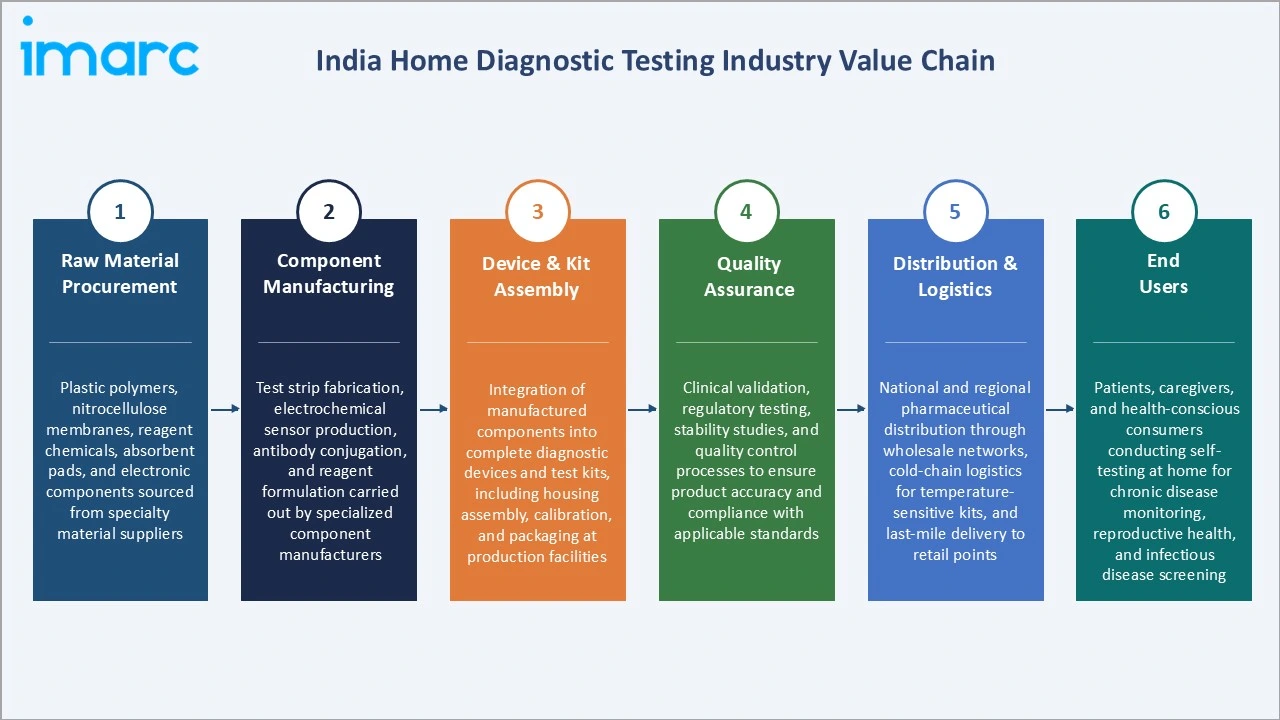
Device and kit assembly represents the highest value-added stage in the home diagnostic testing value chain. Integration of precision-engineered components into calibrated, consumer-ready devices requires advanced manufacturing expertise, quality infrastructure, and regulatory compliance capability. This stage determines product accuracy, user experience, and ultimately brand positioning in a competitive market.
Technology Landscape in the India Home Diagnostic Testing Industry
Biosensor Technology Innovations
Electrochemical biosensors continue to dominate blood glucose monitoring, offering high accuracy, miniaturization potential, and low-cost manufacturing. Next-generation continuous glucose monitors using subcutaneous microelectrodes are gaining adoption among insulin-dependent diabetics, representing a premium growth segment.
Microfluidics and Lab-on-Chip Technology
Microfluidic platforms enable high-accuracy multi-analyte testing from small blood or saliva samples in compact, low-cost consumer devices. Lab-on-chip technology reduces reagent consumption, improves result turnaround, and enables point-of-care performance equivalent to laboratory testing in portable home formats.
AI-Enabled Health Monitoring Platforms
Artificial intelligence algorithms embedded in diagnostic apps analyze historical testing data to provide personalized health trend analysis and early risk detection. AI integration is evolving home diagnostics from transactional test events into continuous, data-driven health management platforms that enhance both consumer engagement and clinical value.
Market Segmentation Analysis
The report covers the following segments:
|
Segment Category |
Leading Segment |
Market Share |
Year |
|
Test Type |
Glucose Monitoring Devices |
32.4% |
2025 |
|
Form |
🔒 |
🔒 |
2025 |
|
Distribution Channel |
Retail Pharmacies |
41.3% |
2025 |
|
Region |
North India |
35.7% |
2025 |

By Test Type
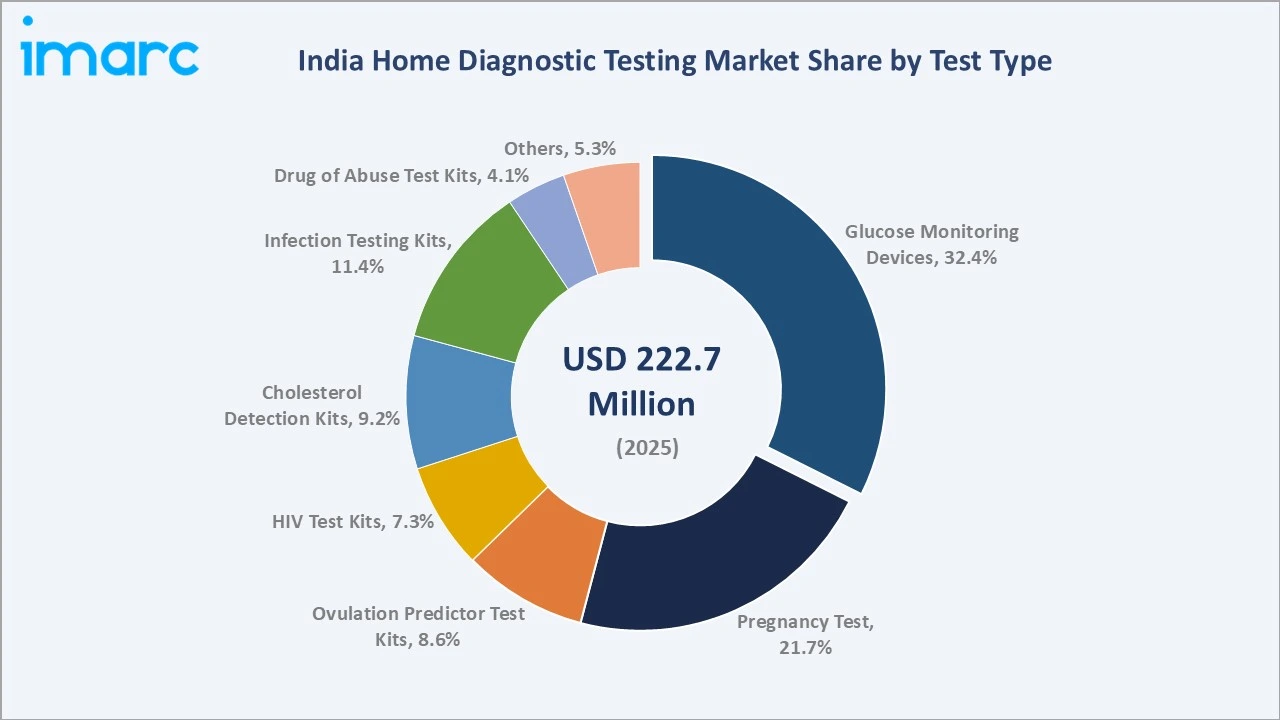
Glucose monitoring devices dominate at 32.4% in 2025, reflecting India's massive diabetic population. Pregnancy tests at 21.7% hold the second-largest share, driven by high birth rates and growing female health awareness. Infection testing kits at 11.4% benefit from post-COVID at-home testing adoption sustained across infectious disease screening use cases.
To access detailed market analysis, Request Sample
Cholesterol detection kits at 9.2% serve the growing preventive cardiovascular health segment. Ovulation predictor test kits at 8.6% and HIV test kits at 7.3% address specific reproductive and infectious disease monitoring needs. Drug of abuse kits at 4.1% serve workplace testing and family monitoring use cases. Others at 5.3% include thyroid, anemia, and multi-parameter wellness panels.
By Distribution Channel
Retail pharmacies lead with 41.3% market share in 2025, benefiting from high consumer trust, pharmacist consultation, and broad geographic coverage. Drug stores contribute 24.6%, providing accessible neighborhood-level distribution. Online pharmacies at 21.3% represent the highest-growth channel, driven by e-commerce convenience, home delivery, and competitive pricing across major platforms.
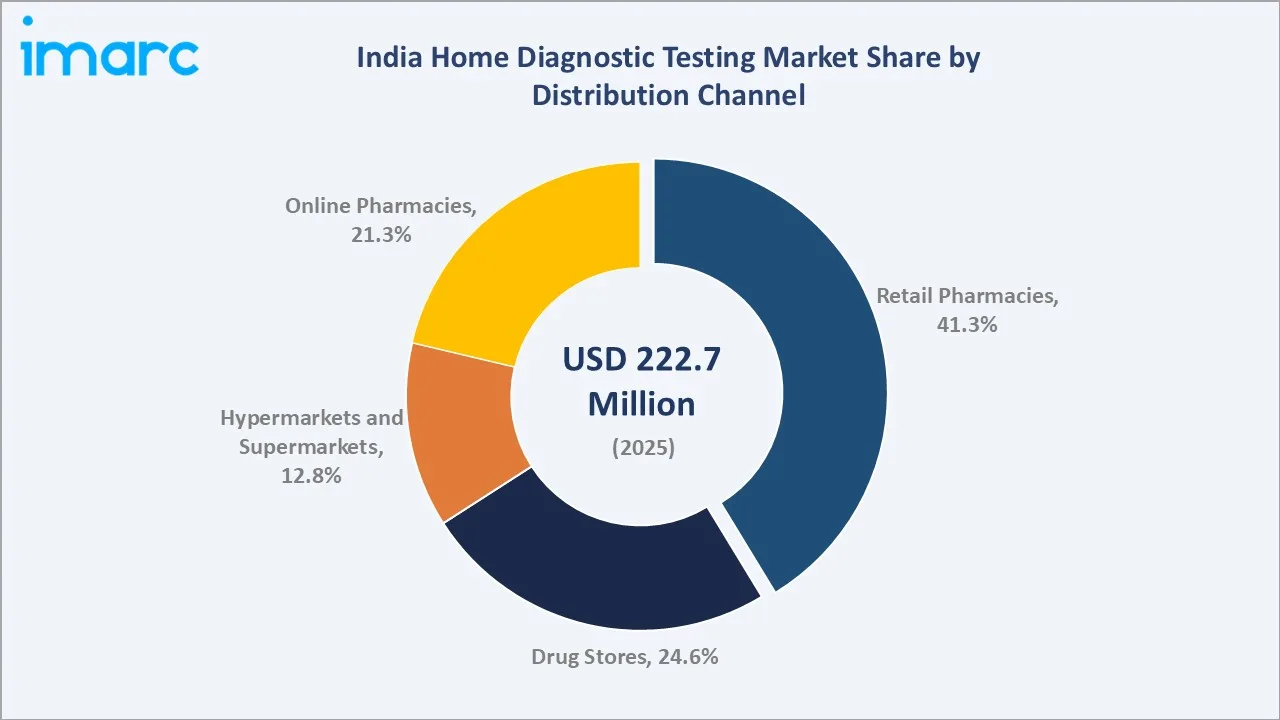
Hypermarkets and supermarkets contribute 12.8%, primarily serving modern trade consumers in metro cities seeking convenience in purchasing. The online pharmacy channel is projected to grow at approximately 7.4% CAGR during 2026-2034, reflecting a structural shift toward digital health commerce as consumer comfort with online pharmaceutical purchases deepens.
Regional Market Insights
|
Region |
Share (2025) |
Key India Home Diagnostic Testing Market Drivers & Characteristics |
|
North India |
35.7% |
High urban density across major cities, large chronic disease burden, well-established pharmacy retail network, and significant post-COVID testing culture driving broad diagnostic kit adoption. |
|
South India |
28.4% |
Advanced healthcare infrastructure, high urban health awareness, strong pharmaceutical distribution networks, and growing middle-class spending on preventive health monitoring products. |
|
West India |
19.7% |
Expanding modern trade pharmacy channels, growing middle-class health consciousness in major commercial centers, and high smartphone penetration supporting online pharmacy channel growth. |
|
East India |
16.2% |
Rising awareness of preventive healthcare, expanding pharmacy distribution into semi-urban areas, and increasing diabetes and hypertension prevalence creating new demand for monitoring devices. |
North India's leadership at 35.7% reflects the high concentration of urban consumers with established pharmacy access, combined with a significant diabetic and hypertensive population requiring regular home monitoring. South India at 28.4% benefits from above-average healthcare literacy and organized retail pharmacy infrastructure across major cities.
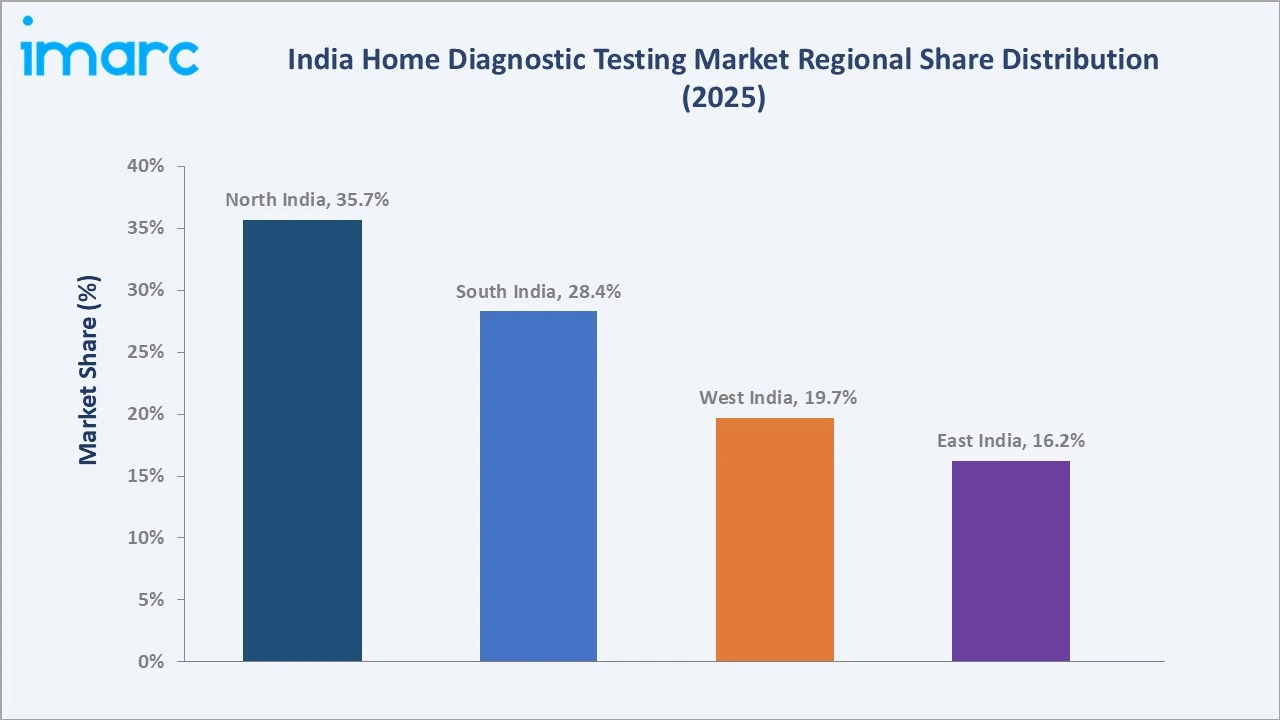
West India at 19.7% is supported by expanding e-commerce health product adoption and growing urban middle-class preventive health spending. East India at 16.2% remains the smallest regional contributor but is witnessing accelerating demand driven by growing diabetes prevalence, expanding semi-urban pharmacy networks, and increasing consumer health awareness in tier-2 and tier-3 cities.
Competitive Landscape
The India home diagnostic testing market is moderately fragmented, with multinational diagnostics corporations maintaining leadership in premium glucose monitoring and clinical rapid test segments, while domestic pharmaceutical companies and regional players compete across value-priced pregnancy, ovulation, and infectious disease kits.
|
Company |
Key Offerings |
Market Position |
Core Strength |
|
Abbott |
FreeStyle Libre |
Market Leader |
Abbott plays a key role in home and point-of-care diagnostic testing in India by supplying rapid, accessible screening tools that reduce pressure on clinical laboratories and empower self-monitoring. |
|
F. Hoffmann-La Roche Ltd |
Accu-Chek Active, Accu-Chek Instant |
Market Leader |
F. Hoffmann-La Roche Ltd (operating via Roche Diagnostics India Pvt. Ltd.) plays a major role in India's home and decentralized diagnostic landscape, primarily anchored by self-monitoring for chronic diseases. |
|
BD |
BD Veritor Plus System, BD MAX System |
Established Player |
BD plays a foundational and expanding role in India’s at-home and decentralized diagnostic testing ecosystem by providing core medical technology, sample collection devices, and strategic service partnerships. |
|
SD Biosensor, INC. |
STANDARD Q |
Niche Player |
SD Biosensor, Inc. plays a major role in India’s home and point-of-care diagnostic market through self-testing kits, chronic care management, and rapid screening solutions. |
|
Cipla |
CIPtest |
Challenger |
Cipla participates in diagnostics in India through rapid testing cards and pandemic-response kits rather than a massive direct-to-consumer home diagnostic portfolio. |
Companies compete based on test accuracy, service coverage, turnaround time, pricing, customer convenience, and the availability of trained professionals for doorstep sample collection. Increasing digitalization, strategic partnerships, and investments in technology are enabling market participants to expand their service portfolios and strengthen their customer reach.
Key Company Profiles
Abbott
Abbott is a diversified healthcare company operating across diagnostics, medical devices, nutrition, and pharmaceuticals. Its diagnostics division serves both clinical laboratory and consumer health segments, with a particular focus on glucose monitoring for diabetic patients. The company maintains a strong presence across urban and semi-urban Indian markets through its established pharmaceutical distribution network.
- Key Offerings: FreeStyle Libre.
- Strategic Focus: Expanding premium consumer diagnostics across India through enhanced pharmacy reach, digital health partnerships, and continuous glucose monitoring technology adoption programs.
F. Hoffmann-La Roche Ltd
F. Hoffmann-La Roche Ltd, through its Roche Diagnostics, operates across professional diagnostics, digital pathology, and consumer health testing. Its Accu-Chek product line is among the most recognized blood glucose monitoring brands in India, with strong pharmacist and clinician recommendation support. Roche serves both institutional healthcare and individual consumer markets.
- Key Offerings: Accu-Chek Active, Accu-Chek Instant.
- Strategic Focus: Strengthening consumer diagnostics market presence through enhanced product features, pharmacist engagement programs, and digital health integration to improve patient adherence and monitoring outcomes.
Market Concentration Analysis
The India home diagnostic testing market exhibits moderate concentration in premium segments such as glucose monitoring and connected health devices, where multinational diagnostic companies hold strong brand equity and clinical credibility. The top organized players are driven by technology barriers and distribution scale advantages in the premium device category.
The broader market, including pregnancy tests, ovulation kits, infection testing, and drug-of-abuse tests, is significantly more fragmented, with domestic pharmaceutical companies, regional manufacturers, and private-label pharmacy brands competing across value-priced segments. This fragmentation creates ongoing opportunities for organized players to gain share through brand building, quality differentiation, and expanded digital health distribution strategies through the forecast period.
Investment Growth Opportunities
Highest Growth Segments
Online pharmacies at an estimated 7.4% CAGR represent the highest-growth distribution opportunity, driven by e-commerce penetration and consumer shift toward digital health commerce. Infection testing kits at 5.8% CAGR benefit from sustained post-COVID at-home testing adoption. Glucose monitoring devices at 5.2% represent the largest single-segment revenue opportunity, supported by India's large and growing diabetic population base.
Investment Themes
- Connected and AI-Enabled Diagnostics: Investment in Bluetooth-enabled devices, app-integrated health monitoring platforms, and AI-driven health analytics represent the highest margin innovation opportunity. The premium connected diagnostics segment is growing at above-market rates as urban health-conscious consumers demand integrated health management tools beyond single-test devices.
- Rural Market Expansion via Digital Channels: India's under-penetrated rural and semi-urban markets represent a significant addressable opportunity. Investment in rural pharmacy partnerships, vernacular digital health platforms, and affordable product tiers can unlock the next phase of home diagnostics market growth beyond existing urban consumer bases.
Future Market Outlook (2026-2034)
The India home diagnostic testing market grew from USD 222.7 Million in 2025 to USD 232.8 Million in 2026, reaching USD 332.6 Million by 2034, exhibiting a CAGR of 4.56% during 2026-2034. The market is expected to reach an intermediate milestone of approximately USD 278.3 Million by 2030, driven by accelerating chronic disease prevalence, expanding digital health infrastructure, and growing consumer health monitoring adoption across urban and semi-urban India.
Three structural forces will define the India home diagnostic testing market through 2034. First, India's chronic disease burden will sustain structural demand for glucose monitoring and metabolic health testing devices. Second, the progressive integration of home diagnostics with digital health platforms, telemedicine, and digital mission infrastructure will expand the value proposition of at-home testing beyond point-in-time measurement toward continuous health management. Third, increasing consumer spending on preventive health and wellness, supported by rising disposable incomes and digital health literacy, will expand demand into new product categories and value tiers through the forecast period.
Research Methodology
Primary Research
Primary research comprised structured consultations with home diagnostic device manufacturers, pharmaceutical distributors, retail pharmacy operators, e-commerce health platform representatives, and healthcare professionals. These discussions validated market sizing, assessed regional demand dynamics, and provided insights into competitive positioning and distribution channel trends across India's home diagnostics sector.
Secondary Research
Secondary research incorporated published data from the Indian Council of Medical Research, Ministry of Health and Family Welfare, International Diabetes Federation, company annual reports, investor presentations, industry publications, and regulatory filings. Historical market data spanning 2020 through 2025 was cross-validated across primary and secondary sources to ensure data integrity.
Forecasting Models
Market forecasts were developed using bottom-up and top-down modeling incorporating historical market growth rates, disease prevalence projections, per-capita healthcare expenditure trends, channel-specific growth analysis, digital health adoption curves, and macroeconomic indicators including GDP growth and private healthcare consumption spending patterns across Indian regional markets.
India Home Diagnostic Testing Market Report Coverage:
| Report Features | Details |
|---|---|
| Base Year of the Analysis | 2025 |
| Historical Period | 2020-2025 |
| Forecast Period | 2026-2034 |
| Units | Million USD |
| Scope of the Report |
Exploration of Historical Trends and Market Outlook, Industry Catalysts and Challenges, Segment-Wise Historical and Future Market Assessment:
|
| Test Types Covered | Glucose Monitoring Devices, Pregnancy Test, Ovulation Predictor Test Kits, HIV Test Kits, Cholesterol Detection Kits, Infection Testing Kits, Drug of Abuse Test Kits, Others |
| Forms Covered | Cassettes, Midstream, Instruments, Strips, Test, Digital Monitoring, Dip Cards |
| Distribution Channels Covered | Retail Pharmacies, Drug Stores, Hypermarket and Supermarkets, Online Pharmacies |
| Regions Covered | North India, South India, East India, West India |
| Companies Covered | Abbott, F. Hoffmann-La Roche Ltd, BD, SD Biosensor, INC., Cipla, etc. |
| Customization Scope | 10% Free Customization |
| Post-Sale Analyst Support | 10-12 Weeks |
| Delivery Format | PDF and Excel through Email (We can also provide the editable version of the report in PPT/Word format on special request) |
Key Benefits for Stakeholders:
- IMARC’s industry report offers a comprehensive quantitative analysis of various market segments, historical and current market trends, market forecasts, and dynamics of the India home diagnostic testing market from 2020-2034.
- The research report provides the latest information on the market drivers, challenges, and opportunities in the India home diagnostic testing market.
- Porter's five forces analysis assist stakeholders in assessing the impact of new entrants, competitive rivalry, supplier power, buyer power, and the threat of substitution. It helps stakeholders to analyze the level of competition within the India home diagnostic testing industry and its attractiveness.
- Competitive landscape allows stakeholders to understand their competitive environment and provides an insight into the current positions of key players in the market.
Frequently Asked Questions About the India Home Diagnostic Testing Market Report
The India home diagnostic testing market reached USD 232.8 Million in 2026, driven by rising chronic disease prevalence, increasing consumer health awareness, and growing adoption of at-home testing products.
The market is projected to grow at a CAGR of 4.56% during 2026-2034, supported by chronic disease burden, digital health adoption, and expanding pharmacy distribution across urban and semi-urban India.
The market is projected to reach approximately USD 278.3 Million by 2030, driven by glucose monitoring demand growth, infection testing adoption, and expanding online pharmacy channel penetration.
Glucose monitoring devices lead with a 32.4% share in 2025, driven by India's large diabetic population requiring regular blood glucose self-monitoring.
Retail pharmacies lead with 41.3%, driven by increasing demand for convenient access to healthcare products, expanding pharmaceutical distribution networks, and growing consumer preference for nearby, accessible healthcare services.
North India leads with a 35.7% share in 2025, reflecting high chronic disease burden, urban density, and a well-established pharmacy retail distribution network across the region.
Key players include Abbott, F. Hoffmann-La Roche Ltd, BD, SD Biosensor, INC., and Cipla, among others.
The market is projected to reach USD 332.6 Million by 2034, driven by chronic disease demand, connected diagnostic device adoption, and expanding digital pharmacy distribution.
Need more help?
- Speak to our experienced analysts for insights on the current market scenarios.
- Include additional segments and countries to customize the report as per your requirement.
- Gain an unparalleled competitive advantage in your domain by understanding how to utilize the report and positively impacting your operations and revenue.
- For further assistance, please connect with our analysts.
 Request Customization
 Speak to an Analyst
 Request Brochure
 Inquire Before Buying
Benefits of Customization
- Personalize this research
- Triangulate with your data
- Get data as per your format and definition
- Gain a deeper dive into a specific application, geography, customer, or competitor
- Any level of personalization
Get in Touch With Us
UNITED STATES
Phone: +1-201-971-6302
INDIA
Phone: +91-120-433-0800
UNITED KINGDOM
Phone: +44-753-714-6104
Email: [email protected]
Client Testimonials























Related Reports

Choose your plan
*Please note that the prices mentioned below are starting prices for each bundle type. Kindly contact our team for further details.*
Single User License
- 1 User License, Access on 2 Devices
- PDF Report + Excel Dataset (Password Protected)
- Lifetime Access
- No Printing Rights
- 10% Free Report Customization
- 10–12 Weeks of Analyst Support
Five User License
- Access for 5 Users, 2 Devices per User
- PDF Report + Excel Dataset (Password Protected)
- Lifetime Access
- Dedicated Account Manager
- 12–14 Weeks of Analyst Support
- No Printing Rights
- 15% Free Report Customization
- 25% Discount on Your Next Purchase
Corporate User License
- Unlimited User Access (Within Your Organization)
- PDF Report + Excel Dataset
- Lifetime Access
- Dedicated Account Manager
- 14–20 Weeks of Analyst Support
- No Printing Rights
- 20% Free Report Customization
- 30% Discount on Your Next Purchase
Essential Insights
What's included:
3 reports
- Lifetime Access
- PDF Reports
- Excel Datasets
- 2 Weeks of Free Analyst Support
- 2 User Licenses
- Access on 2 Devices
- Printing Rights
- Complimentary PowerPoint (PPT) Version
- Complimentary License Upgrade
Professional Access
What's included:
5 reports
- Lifetime Access
- PDF Reports
- Excel Datasets
- 8 Weeks of Free Analyst Support
- 2 User Licenses
- Access on 2 Devices
- Printing Rights
- Complimentary PowerPoint (PPT) Version
- Complimentary License Upgrade
Business Advantage
What's included:
8 reports
- Lifetime Access
- PDF Reports
- Excel Datasets
- 14 Weeks of Free Analyst Support
- 2 User Licenses
- Access on 2 Devices
- Printing Rights
- Complimentary PowerPoint (PPT) Version
- Complimentary License Upgrade
Enterprise Intelligence
What's included:
10 reports
- Lifetime Access
- PDF Reports
- Excel Datasets
- 20 Weeks of Free Analyst Support
- 2 User Licenses
- Access on 2 Devices
- Printing Rights
- Complimentary PowerPoint (PPT) Version
- Complimentary License Upgrade