
India Muscle Stimulator Market Size, Share, Trends and Forecast by Product, Modality, Application, End User, and Region, 2026-2034
India Muscle Stimulator Market Summary:
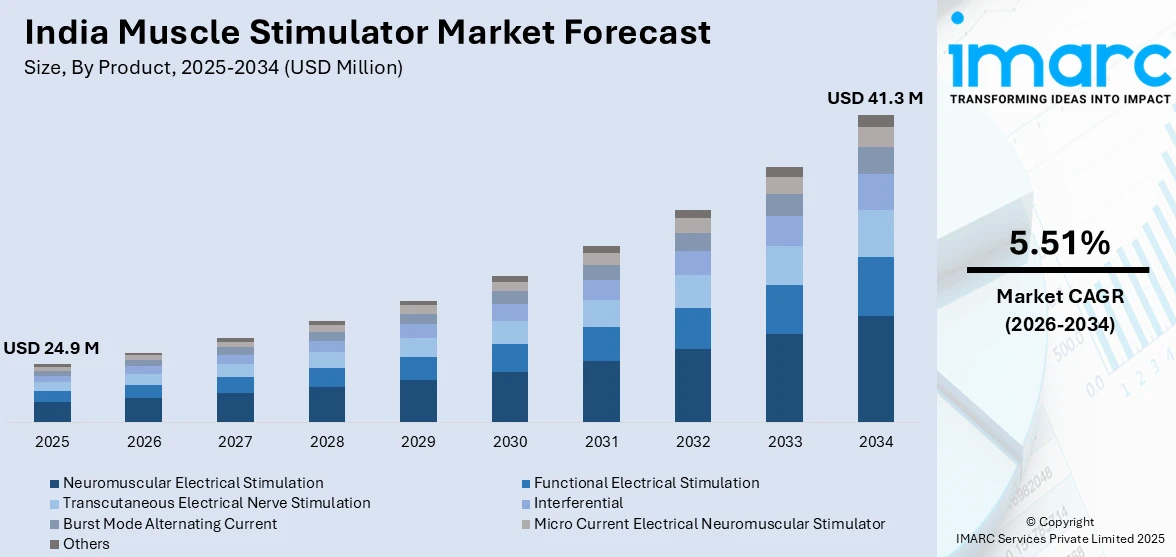
The India muscle stimulator market size was valued at USD 24.9 Million in 2025 and is projected to reach USD 41.3 Million by 2034, growing at a compound annual growth rate of 5.51% from 2026-2034.
The muscle stimulator market in India is experiencing a significant rise due to the increasing incidence of musculoskeletal disorders, the adoption of non-invasive pain management therapies, and the rapid development of electrotherapy technology. The increasing expenditure on healthcare, the development of rehabilitation infrastructure, and the increasing awareness of the benefits of electrical muscle stimulation therapy are some factors that are fueling the muscle stimulator market share in India.
Key Takeaways and Insights:
-
By Product: Neuromuscular electrical stimulation dominates the market with a share of 34.7% 2025, driven by its widespread clinical adoption for muscle rehabilitation, motor recovery, and post-surgical reconditioning applications.
-
By Modality: Handheld lead the market with a share of 41.3% in 2025, supported by their compact design, affordability, and growing preference among physiotherapists and home-care users for convenient treatment delivery.
-
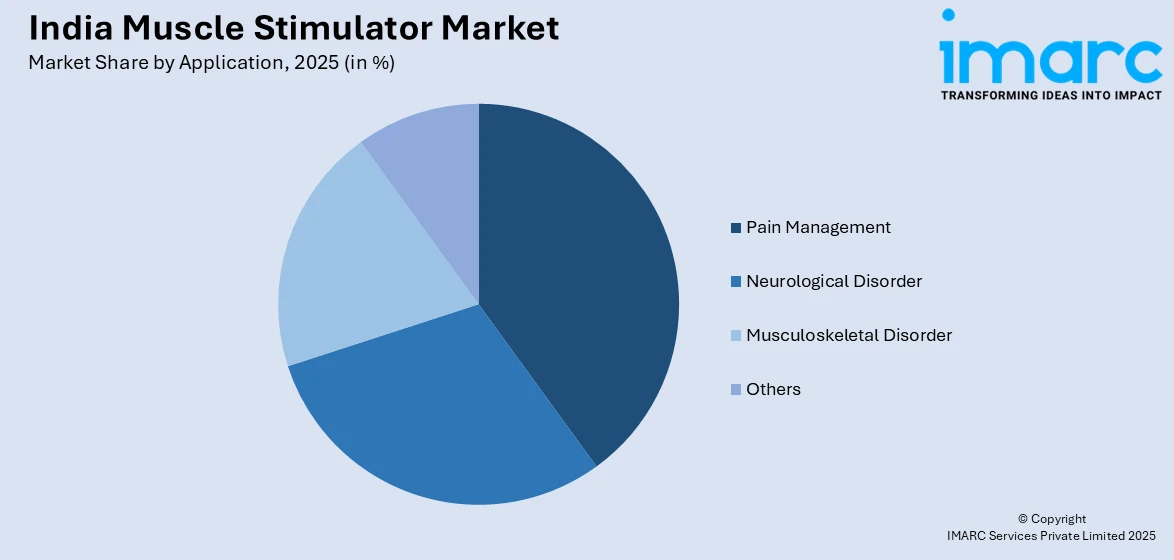
By Application: Pain management holds the largest market share at 38.9% in 2025, fueled by the rising prevalence of chronic pain conditions and increasing demand for drug-free, non-invasive pain relief solutions.
-
By End User: Hospitals dominated the market with a share of 43.5% in 2025, owing to comprehensive rehabilitation departments, advanced electrotherapy infrastructure, and high patient throughput for musculoskeletal treatments.
-
By Region: South India leads the market with a share of 29.8% market share in 2025, attributed to the concentration of multispecialty hospitals, established physiotherapy networks, and growing healthcare investments.
-
Key Players: The India muscle stimulator market features a competitive landscape with domestic and international manufacturers competing through product innovation, technological differentiation, affordability strategies, and expanding distribution networks across hospitals, clinics, and home-care channels.
To get more information on this market Request Sample
The India muscle stimulator market is advancing as the healthcare ecosystem increasingly prioritizes evidence-based rehabilitation and non-pharmacological pain management approaches. The growing geriatric population, coupled with a rising incidence of musculoskeletal and neurological disorders, is amplifying demand for electrical muscle stimulation therapies across institutional and home-care settings. Reflecting this trend, in September 2025, the Government Institute of Medical Sciences in Noida launched an advanced physiotherapy and sports injury rehabilitation centre in 2025, equipped with high-energy inductive therapy and deep tissue stimulation systems to enhance pain management and recovery outcomes. Government-led initiatives to expand primary and secondary healthcare infrastructure, along with the integration of physiotherapy services into national health programs, are broadening market access. Advancements in portable and wireless stimulation devices are enabling more patient-centric treatment models, while increasing disposable incomes and improving health insurance coverage are enhancing affordability. The convergence of technological innovation, policy support, and growing consumer health consciousness positions the market for sustained long-term expansion.
India Muscle Stimulator Market Trends:
Rising Adoption of Non-Invasive Electrotherapy Solutions
India is experiencing a significant shift toward non-invasive and drug-free therapeutic approaches for managing chronic pain and musculoskeletal conditions. Muscle stimulators, including transcutaneous and neuromuscular electrical stimulation devices, are gaining acceptance among physiotherapists and rehabilitation specialists. Supporting this trend, the Nagpur Municipal Corporation announced the launch of four government-run physiotherapy centres in 2024, equipped with muscle stimulators, TENS therapy systems, ultrasound machines, and short-wave diathermy units to expand access to affordable electrotherapy-based rehabilitation for elderly and disabled patients. This preference for non-pharmacological interventions reflects broader healthcare trends emphasizing patient safety, reduced medication dependency, and holistic recovery protocols, supporting India muscle stimulator market growth.
Integration of Smart and Wireless Technologies in Stimulation Devices
The muscle stimulator landscape in India is being reshaped by the integration of wireless connectivity, smartphone compatibility, and intelligent programming features. Modern devices offer app-controlled treatment customization, real-time monitoring, and personalized stimulation protocols. In September 2025, Banaras Hindu University (BHU) and IIT‑BHU were granted a patent for a biofeedback‑enabled neck exercise device that integrates muscle strength measurement with programmable rehabilitation technology, pointing to innovation in connected therapeutic devices in India. These technological enhancements are improving treatment adherence and clinical outcomes while expanding the usability of muscle stimulators beyond clinical settings into home-based rehabilitation environments.
Expansion of Home-Based Rehabilitation and Telehealth Services
The growing preference for home-based recovery, particularly among elderly and post-surgical patients, is driving demand for compact and user-friendly muscle stimulation devices. For instance, in 2025 Resolve360 announced India’s first AI and AR enabled online active physiotherapy platform, designed to deliver personalised digital rehab programmes, including remote muscle stimulation guidance, directly to patients at home. Telehealth platforms are enabling remote physiotherapy consultations where clinicians prescribe and monitor electrotherapy regimens from a distance. This trend is expanding market reach into semi-urban and rural areas where access to specialized rehabilitation facilities remains limited.
Market Outlook 2026-2034:
The Indian muscle stimulator market is poised to register a positive growth trajectory, driven by the development of the Indian healthcare infrastructure, growing demand for rehabilitation, and the adoption of advanced electrotherapy technologies. The rising incidence of chronic pain, musculoskeletal disorders, and neurological disorders is expected to create a robust demand for muscle stimulation devices in the Indian market. Furthermore, government healthcare programs, awareness about non-invasive treatments, and the growing physiotherapy industry are also expected to contribute to the growth of the Indian muscle stimulator market. The market generated a revenue of USD 24.9 Million in 2025 and is projected to reach a revenue of USD 41.3 Million by 2034, growing at a compound annual growth rate of 5.51% from 2026-2034.
India Muscle Stimulator Market Report Segmentation:
|
Segment Category |
Leading Segment |
Market Share |
|
Product |
Neuromuscular Electrical Stimulation |
34.7% |
|
Modality |
Handheld |
41.3% |
|
Application |
Pain Management |
38.9% |
|
End User |
Hospitals |
43.5% |
|
Region |
South India |
29.8% |
Product Insights:
- Neuromuscular Electrical Stimulation
- Functional Electrical Stimulation
- Transcutaneous Electrical Nerve Stimulation
- Interferential
- Burst Mode Alternating Current
- Micro Current Electrical Neuromuscular Stimulator
- Others
The neuromuscular electrical stimulation dominates with a market share of 34.7% of the total India muscle stimulator market in 2025.
Neuromuscular electrical stimulation is commonly employed in hospitals, rehabilitation centers, and physiotherapy centers in India due to its proven efficacy in stimulating muscle function, preventing atrophy, and assisting in post-surgical recovery. The treatment involves the use of precise electrical impulses administered to motor nerves, which stimulate controlled muscle contractions that assist in strengthening and neuromuscular reeducation in patients with impaired mobility, making it the backbone of modern physical rehabilitation and therapeutic interventions in India.
The growing incidence of orthopedic disorders, spinal injuries, and elderly muscular degeneration is fueling the demand for neuromuscular electrical stimulation devices in India. In addition, the growing awareness among medical professionals of evidence-based electrotherapy practices is solidifying the segment's leading market position. The increasing adoption of these devices in standardized rehabilitation protocols is also fueling the segment's leading market position.
Modality Insights:
- Handheld
- Portable
- Table Top
The handheld leads with a share of 41.3% of the total India muscle stimulator market in 2025.
Handheld muscle stimulators are gaining significant traction across India due to their compact design, ease of operation, and versatility for both clinical and home-based applications. In December 2025, Curapod announced the launch of India’s first personalised wearable pain‑relief and muscle stimulation device, a CDSCO‑ and FDA‑registered product designed to address over 30 pain conditions with non‑invasive therapy, highlighting a growing domestic focus on connected, user‑centric electrotherapy solutions. Physiotherapists and rehabilitation specialists increasingly favor handheld devices for their portability, enabling efficient bedside treatments and outpatient therapy sessions without requiring bulky equipment. Their user-friendly interfaces and cost-effectiveness further enhance their appeal among healthcare providers seeking practical electrotherapy solutions for diverse patient needs.
The rising demand for affordable and accessible electrotherapy solutions, particularly in tier-two and tier-three cities, is significantly boosting the handheld segment's growth. Growing consumer interest in self-administered pain relief and muscle recovery is expanding the user base beyond clinical settings. Additionally, increasing retail availability and expanding e-commerce distribution channels are broadening access to handheld stimulation devices, driving adoption across diverse end-user groups and reinforcing the segment's strong market position.
Application Insights:
Access the comprehensive market breakdown Request Sample
- Pain Management
- Neurological Disorder
- Musculoskeletal Disorder
- Muscle Rehabilitation
- Muscle Atrophy
- Muscle Toning & Strengthening
- Muscle Spasticity & Spasms
- Others
The pain management dominates with a market share of 38.9% of the total India muscle stimulator market in 2025.
Pain management remains the primary application driving muscle stimulator adoption in India, as healthcare providers increasingly integrate electrotherapy into multimodal pain treatment protocols. In February 2025, it was reported that the first spinal cord stimulation procedure using Medtronic’s rechargeable Intellis system was successfully performed in India to treat chronic pain patients, demonstrating the growing acceptance of advanced electrical stimulation therapies in clinical practice. Muscle stimulators deliver effective, non-invasive relief from chronic conditions including lower back pain, arthritis, fibromyalgia, and neuropathic pain through targeted electrical impulse delivery. Their ability to provide sustained symptomatic relief without surgical intervention makes them a preferred therapeutic choice across diverse clinical settings.
The growing preference for drug-free pain interventions is accelerating as patients and clinicians seek alternatives that minimize side effects associated with long-term analgesic use. Expanding physiotherapy infrastructure and the inclusion of electrotherapy in standardized rehabilitation guidelines are further strengthening pain management as the dominant application segment. Additionally, rising awareness of non-pharmacological treatment approaches across both institutional and home-care settings is reinforcing sustained demand for muscle stimulation devices in pain management applications.
End User Insights:
- Physical Therapy and Rehabilitation Clinics
- Hospitals
- Ambulatory Surgery Centers
- Home Care
- Others
The hospitals leads with a share of 43.5% of the total India muscle stimulator market in 2025.
Hospitals represent the largest end-user segment in India's muscle stimulator market, driven by their comprehensive rehabilitation departments, multidisciplinary care models, and access to advanced electrotherapy equipment. Muscle stimulators are routinely deployed in hospital physiotherapy units for post-operative recovery, injury rehabilitation, and chronic pain management programs. The integration of electrotherapy into structured clinical pathways further reinforces hospitals as the primary institutional channel for muscle stimulation device utilization.
The ongoing expansion of hospital networks across urban and semi-urban India, supported by government healthcare investment initiatives such as the Ayushman Bharat scheme, is significantly enhancing the deployment of electrotherapy devices. Additionally, the growing volume of orthopedic surgeries, trauma cases, and neurological admissions is sustaining consistent institutional demand for muscle stimulation technologies. Rising patient throughput and increasing focus on evidence-based rehabilitation protocols continue to strengthen the hospital segment's dominant market position.
Regional Insights:
- North India
- South India
- East India
- West India
South India exhibits a clear dominance with a 29.8% share of the total India muscle stimulator market in 2025.
South India leads the muscle stimulator market, supported by the region's well-established healthcare ecosystem, concentration of multispecialty hospitals, and robust physiotherapy infrastructure across states including Tamil Nadu, Karnataka, Kerala, and Andhra Pradesh. The presence of renowned medical institutions and specialized rehabilitation centers drives strong adoption of advanced electrotherapy devices, positioning the region as the foremost hub for muscle stimulation technology utilization across both public and private healthcare facilities.
Growing healthcare investments, rising health awareness among the population, and the expansion of specialty clinics across metropolitan and tier-two cities are reinforcing South India's market dominance. The region's favorable healthcare policy environment, increasing medical tourism activity, and strong network of physiotherapy training institutions further contribute to sustained demand for muscle stimulation technologies. These factors collectively strengthen South India's leadership position across diverse clinical and rehabilitative applications nationwide.

Market Dynamics:
Growth Drivers:
Why is the India Muscle Stimulator Market Growing?
Rising Prevalence of Musculoskeletal and Chronic Pain Disorders
India is experiencing a significant rise in musculoskeletal disorders fueled by increasingly sedentary lifestyles, prolonged screen time, poor ergonomic practices, and a growing geriatric population susceptible to degenerative joint and bone conditions. Chronic pain ailments, including lower back pain, arthritis, cervical spondylosis, and fibromyalgia, are becoming widespread across urban and rural demographics. According to a WHO‑linked COPCORD survey published in 2024, roughly one‑sixth of Indians suffer from musculoskeletal pain, with tens of millions affected by conditions like osteoarthritis and soft tissue rheumatism, highlighting the growing public health burden of chronic joint and muscle ailments in the country. This escalating disease burden is generating sustained demand for effective and accessible pain management solutions, positioning muscle stimulators as a vital therapeutic tool in both clinical rehabilitation programs and home-care pain relief protocols. The shift from purely pharmacological approaches toward integrated treatment strategies that incorporate electrotherapy is further reinforcing market expansion across institutional and individual care settings.
Expanding Healthcare Infrastructure and Rehabilitation Ecosystem
India’s healthcare landscape is undergoing a transformative expansion, with significant investments flowing into hospital construction, specialty clinics, and rehabilitation centers across metropolitan and tier-two cities. Government-led initiatives are broadening access to primary and secondary care services, including physiotherapy and rehabilitative medicine, in underserved regions. For example, in December 2025, Tamil Nadu launched a plan to set up 150 new physiotherapy and rehabilitation clinics, run in partnership with local entrepreneurs and digital health providers, to expand specialised rehab access in smaller towns and support employment for allied health professionals. The integration of physiotherapy into national health programs is facilitating wider institutional adoption of electrotherapy equipment, including muscle stimulators. The growing number of physiotherapy training institutions is also enhancing the skilled workforce necessary to deploy advanced stimulation technologies effectively. This infrastructure-driven growth is creating a robust ecosystem that supports sustained market demand for muscle stimulation devices.
Growing Consumer Awareness and Preference for Non-Invasive Therapies
Health-conscious consumers across India are increasingly seeking non-invasive, drug-free treatment alternatives for pain management and physical rehabilitation. Rising awareness about the potential side effects of prolonged medication use is driving patients toward electrotherapy solutions that offer targeted relief without systemic impact. For example, a Times of India report in December 2025 noted a growing trend in Bihar and other regions where patients are turning to unconventional and non‑pharmaceutical medicare practices, such as yoga, naturopathy, and electrical stimulation therapies, for chronic pain and musculoskeletal issues, reflecting a broader shift beyond pills in patient preferences. Muscle stimulators, with their proven efficacy in pain reduction, muscle strengthening, and functional recovery, are gaining traction among individuals managing chronic conditions, sports injuries, and post-surgical rehabilitation. The proliferation of health information through digital channels and social media is further accelerating awareness about the benefits of electrical stimulation therapy. This consumer-driven shift toward proactive and non-pharmacological care is emerging as a significant growth catalyst for the market.
Market Restraints:
What Challenges the India Muscle Stimulator Market is Facing?
High Device Costs and Limited Affordability in Price-Sensitive Markets
The high initial investment cost of advanced muscle stimulation devices is a major hindrance to their adoption, especially in the Indian market among individual customers and smaller healthcare facilities. Although the cost of equipment can be easily borne by institutional buyers, the price sensitivity of home care customers and smaller healthcare facilities in semi-urban and rural India is a major hindrance to adoption. The lack of adequate reimbursement policies for electrotherapy is an added constraint.
Competition from Alternative and Traditional Therapies
India has a long-established tradition of alternative medicine practices such as Ayurveda, yoga, acupuncture, and manual physiotherapy, which compete head-on with electrical muscle stimulators for the attention and expenditure of patients. These conventional practices have been widely preferred by patients and practitioners alike because of their familiarity and lower costs of treatment. The competitive pressure thus exerted by these established alternative practices limits the adoption rate of electrical muscle stimulators.
Regulatory Complexities and Lack of Standardized Clinical Guidelines
The environment surrounding the regulation of medical devices, such as muscle stimulators, in India is characterized by strict approval procedures that may cause a delay in the entry of new devices into the market. Furthermore, the lack of standardized clinical practices for the use of electrotherapy in medical facilities may lead to disparities in treatment approaches among various health facilities.
Competitive Landscape:
The India muscle stimulator market is moderately fragmented in terms of competition, with global brands and new entrants in the Indian market competing for a share of the market. Market players are focusing on product development, technological advancements, and pricing strategies to cater to the needs of hospitals, rehabilitation centers, ambulatory surgery centers, and home care patients. The competitive landscape is driven by ongoing developments in wireless and portable stimulation technology, with market players investing in R&D to develop products with improved programmability, multi-channel capabilities, and smart connectivity features. The distribution landscape is undergoing changes as companies increase their presence through e-commerce platforms, medical equipment distributors, and direct institutional partnerships. Strategic partnerships, product diversification, and the ability to manufacture products in India are emerging as critical factors that will help market players improve their positioning in the India rehabilitation and pain management market.
Recent Developments:
-
In December 2025, Litemed India introduced CURAPOD, India’s first CDSCO-approved wearable device for musculoskeletal pain. The device uses photobiomodulation (light-based muscle stimulation) to manage over 30 conditions, including chronic back pain, arthritis, tendonitis, and sports injuries. Manufactured domestically, CURAPOD is distributed nationwide through physiotherapy clinics and direct-to-consumer channels.
India Muscle Stimulator Market Report Coverage:
|
Report Features |
Details |
|
Base Year of the Analysis |
2025 |
|
Historical Period |
2020-2025 |
|
Forecast Period |
2026-2034 |
|
Units |
Million USD |
|
Scope of the Report |
Exploration of Historical Trends and Market Outlook, Industry Catalysts and Challenges, Segment-Wise Historical and Future Market Assessment:
|
|
Products Covered |
Neuromuscular Electrical Stimulation, Functional Electrical Stimulation, Transcutaneous Electrical Nerve Stimulation, Interferential, Burst Mode Alternating Current, Micro Current Electrical Neuromuscular Stimulator, Others |
|
Modalities Covered |
Handheld, Portable, Table Top |
|
Applications Covered |
|
|
End Users Covered |
Physical Therapy and Rehabilitation Clinics, Hospitals, Ambulatory Surgery Centers, Home Care, Others |
|
Regions Covered |
North India, South India, East India, West India |
|
Customization Scope |
10% Free Customization |
|
Post-Sale Analyst Support |
10-12 Weeks |
|
Delivery Format |
PDF and Excel through Email (We can also provide the editable version of the report in PPT/Word format on special request) |
Frequently Asked Questions About the India Muscle Stimulator Market Report
The India muscle stimulator market size was valued at USD 24.9 Million in 2025.
The India muscle stimulator market is expected to grow at a compound annual growth rate of 5.51% from 2026-2034 to reach USD 41.3 Million by 2034.
Neuromuscular electrical stimulation, holding the largest revenue share of 34.7%, remains pivotal for India’s muscle stimulator market, enabling effective muscle rehabilitation, post-surgical recovery, and chronic condition management across hospitals and clinics.
Key factors driving the India muscle stimulator market include rising prevalence of musculoskeletal disorders, expanding healthcare and rehabilitation infrastructure, growing consumer preference for non-invasive therapies, and increasing adoption of advanced electrotherapy devices.
Major challenges include high device costs limiting affordability for individual users, competition from traditional and alternative therapies, regulatory complexities delaying product introductions, limited standardized clinical guidelines, and restricted access to advanced rehabilitation services in rural areas.
Need more help?
- Speak to our experienced analysts for insights on the current market scenarios.
- Include additional segments and countries to customize the report as per your requirement.
- Gain an unparalleled competitive advantage in your domain by understanding how to utilize the report and positively impacting your operations and revenue.
- For further assistance, please connect with our analysts.
 Request Customization
 Speak to an Analyst
 Request Brochure
 Inquire Before Buying
Benefits of Customization
- Personalize this research
- Triangulate with your data
- Get data as per your format and definition
- Gain a deeper dive into a specific application, geography, customer, or competitor
- Any level of personalization
Get in Touch With Us
UNITED STATES
Phone: +1-201-971-6302
INDIA
Phone: +91-120-433-0800
UNITED KINGDOM
Phone: +44-753-714-6104
Email: [email protected]
Client Testimonials




.webp)




.webp)













Related Reports

Choose your plan
*Please note that the prices mentioned below are starting prices for each bundle type. Kindly contact our team for further details.*
Single User License
- 1 User License, Access on 2 Devices
- PDF Report + Excel Dataset (Password Protected)
- Lifetime Access
- No Printing Rights
- 10% Free Report Customization
- 10–12 Weeks of Analyst Support
Five User License
- Access for 5 Users, 2 Devices per User
- PDF Report + Excel Dataset (Password Protected)
- Lifetime Access
- Dedicated Account Manager
- 12–14 Weeks of Analyst Support
- No Printing Rights
- 15% Free Report Customization
- 25% Discount on Your Next Purchase
Corporate User License
- Unlimited User Access (Within Your Organization)
- PDF Report + Excel Dataset
- Lifetime Access
- Dedicated Account Manager
- 14–20 Weeks of Analyst Support
- No Printing Rights
- 20% Free Report Customization
- 30% Discount on Your Next Purchase
Essential Insights
What's included:
3 reports
- Lifetime Access
- PDF Reports
- Excel Datasets
- 2 Weeks of Free Analyst Support
- 2 User Licenses
- Access on 2 Devices
- Printing Rights
- Complimentary PowerPoint (PPT) Version
- Complimentary License Upgrade
Professional Access
What's included:
5 reports
- Lifetime Access
- PDF Reports
- Excel Datasets
- 8 Weeks of Free Analyst Support
- 2 User Licenses
- Access on 2 Devices
- Printing Rights
- Complimentary PowerPoint (PPT) Version
- Complimentary License Upgrade
Business Advantage
What's included:
8 reports
- Lifetime Access
- PDF Reports
- Excel Datasets
- 14 Weeks of Free Analyst Support
- 2 User Licenses
- Access on 2 Devices
- Printing Rights
- Complimentary PowerPoint (PPT) Version
- Complimentary License Upgrade
Enterprise Intelligence
What's included:
10 reports
- Lifetime Access
- PDF Reports
- Excel Datasets
- 20 Weeks of Free Analyst Support
- 2 User Licenses
- Access on 2 Devices
- Printing Rights
- Complimentary PowerPoint (PPT) Version
- Complimentary License Upgrade