
India Prebiotics Market Size, Share, Trends and Forecast by Ingredient, Product, Application, and Region, 2026-2034
India Prebiotics Market Summary:
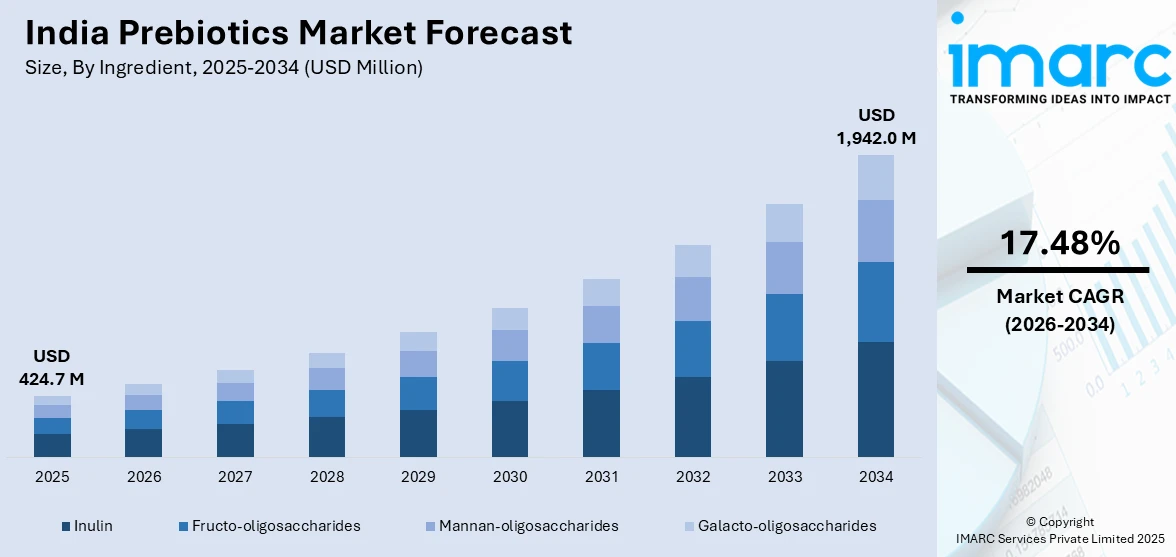
The India prebiotics market size was valued at USD 424.7 Million in 2025 and is projected to reach USD 1,942.0 Million by 2034, growing at a compound annual growth rate of 17.48% from 2026-2034.
India’s prebiotics market is growing steadily as more consumers focus on gut health and digestive wellness. Wider use of prebiotic ingredients in functional foods and dietary supplements is boosting demand. Urban lifestyles, changing diets, and preventive healthcare trends are supporting adoption. E-commerce growth, improved formulations, and FSSAI regulations add momentum. Rising interest in clean-label, plant-based nutrition and expanding use in animal feed are also strengthening market opportunities nationwide.
Key Takeaways and Insights:
- By Ingredient: Inulin dominates the market with a share of 42.6% in 2025, owing to its versatile functionality as a natural dietary fiber, proven efficacy in promoting beneficial gut bacteria growth, and widespread application across food, beverage, and supplement formulations.
- By Product: Dietary supplements lead the market with a share of 54.3% in 2025, driven by rising consumer preference for convenient, science-backed gut health solutions and increasing availability of prebiotic supplement formats across online and offline retail channels.
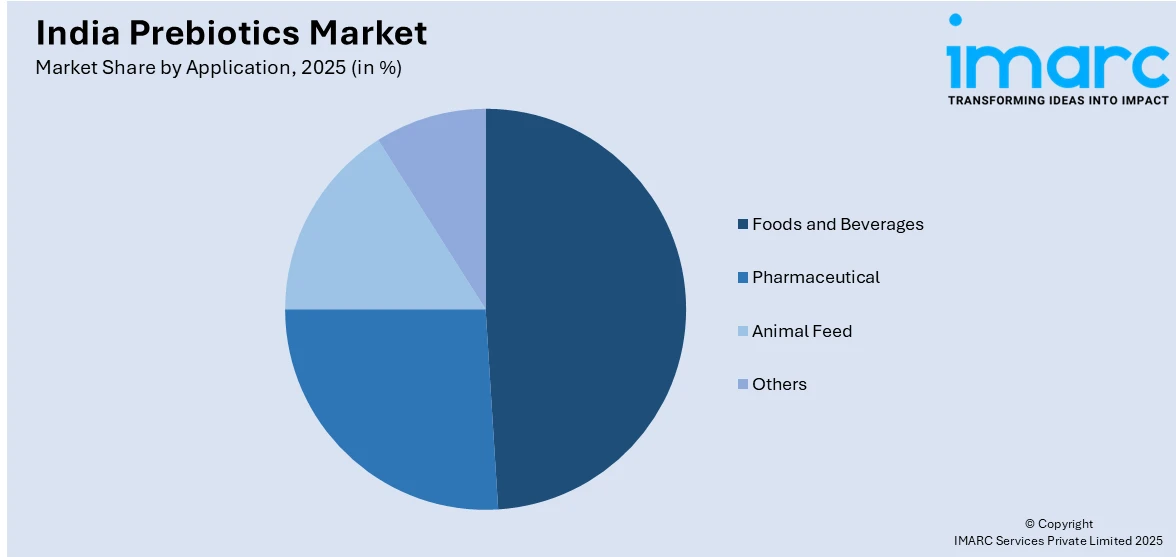
- By Application: Foods and beverages represent the largest segment with a market share of 48.7% in 2025, reflecting the growing incorporation of prebiotic ingredients into functional dairy products, cereals, beverages, and snack formulations to meet evolving consumer wellness demands.
- By Region: North India comprises the largest region with 36.2% share in 2025, supported by higher urbanization levels, greater health consciousness among consumers, robust retail and e-commerce infrastructure, and stronger penetration of functional food and supplement brands.
- Key Players: The market is moderately fragmented, with global ingredient leaders, domestic nutraceutical brands, and dairy/functional food players competing on clinical validation, quality certifications, and pricing. Differentiation centers on clean-label, plant-based sources, targeted formulations, and strong distribution, especially through e-commerce and pharmacy-led channels.
To get more information on this market Request Sample
The India prebiotics market is advancing as consumers, healthcare practitioners, and food manufacturers increasingly recognize the critical link between gut microbiota and overall health. A major catalyst shaping this progress is the rising prevalence of digestive disorders and lifestyle-related health conditions that are driving demand for preventive nutritional solutions. According to a 2024 research study published in the International Journal of Advances in Medicine, nearly 54% of Indian patients experience bloating, which is one of the major symptoms of irritable bowel syndrome. This growing public health concern is reinforcing the shift toward prebiotic-enriched foods and supplements. Policy encouragement through FSSAI's regulatory framework for nutraceuticals, expanding functional food innovation, and increasing investments in prebiotic product development are contributing to a more favorable environment for market expansion across urban and semi-urban regions.
India Prebiotics Market Trends:
Rising demand for personalized gut health solutions
India is witnessing a growing shift toward personalized nutrition, with consumers increasingly seeking customized prebiotic and probiotic formulations tailored to individual gut health profiles. For instance, in June 2024, Bengaluru-based MicrobioTx launched Personal Probiotics, the country's first hyper-personalized prebiotics and probiotics blend, alongside GutChat, a free chatbot dedicated to gut health inquiries. Moreover, continual advancements in microbiome science, digital health platforms, and direct-to-consumer wellness models are enabling more targeted and effective prebiotic interventions, supporting India prebiotics market growth.
Emergence of prebiotic-infused functional beverages
The functional beverage segment in India is rapidly incorporating prebiotic ingredients into carbonated drinks, fermented beverages, and health-focused refreshments. For example, in September 2025, Misfits, recognized as India's first prebiotic soda brand, successfully closed its seed funding round from investors including Nu Ventures and angel investors to expand production capacity and distribution channels. This trend reflects the broader consumer preference for beverages that combine taste with digestive health benefits, moving beyond traditional supplement formats.
Rapid Integration in plant-based and clean-label products
Indian consumers show rising preference for plant-based foods which contain clean-label ingredients and prebiotic fibers that come from natural sources like chicory root, oats and bananas. The increasing popularity of vegan diets together with rising health awareness has led to plant-based products such as coconut yogurt, almond milk kefir and probiotic juices becoming more popular than traditional dairy products. Manufacturers use transparent product labeling along with natural ingredient sourcing methods to establish consumer trust while they want to attract more health-conscious customers who are growing in numbers.
Market Outlook 2026-2034:
India's prebiotics market is poised for sustained advancement, underpinned by growing consumer health awareness, expanding functional food innovation, and strengthening regulatory support for nutraceutical products. Industry research indicates that 53% of Indian consumers actively take proactive measures to enhance their health and overall wellness. In line with this, the increasing integration of prebiotic ingredients into diverse product categories, including dietary supplements, dairy foods, beverages, and animal nutrition, is expected to drive higher revenue streams. Furthermore, continual advancements in ingredient science, particularly in inulin and oligosaccharide formulations, coupled with rising e-commerce penetration and personalized nutrition trends, are anticipated to foster a more competitive and mature prebiotic landscape across the country. The market generated a revenue of USD 424.7 Million in 2025 and is projected to reach a revenue of USD 1,942.0 Million by 2034, growing at a compound annual growth rate of 17.48% from 2026-2034.
India Prebiotics Market Report Segmentation:
|
Segment Category |
Leading Segment |
Market Share |
|
Ingredient |
Inulin |
42.6% |
|
Product |
Dietary Supplements |
54.3% |
|
Application |
Foods and Beverages |
48.7% |
|
Region |
North India |
36.2% |
Ingredient Insights:
- Inulin
- Fructo-oligosaccharides
- Mannan-oligosaccharides
- Galacto-oligosaccharides
Inulin dominates the market with a share of 42.6% of the total India prebiotics market in 2025.
Inulin, which exists as a natural polysaccharide that comes from chicory root, maintains its leading market share in the Indian prebiotics industry because it functions as three different products: dietary fiber, sugar substitute and texture enhancer. The ingredient obtains preference in food and beverage and supplement products because it successfully drives the growth of beneficial gut bacteria, especially bifidobacteria. The rising interest among health-conscious Indian consumers for food products that contain low calories and high fiber content, which leads to the expansion of inulin use across different product formulations.
The commercial value of inulin in India is growing because its usage in baked goods, dairy products, infant nutrition formulas and functional beverages is becoming more common. Indian manufacturers are using inulin as their primary ingredient for developing clean-label products because they want to create products that consumers already recognize. The ingredient's compatibility with both conventional and plant-based formulations positions it favorably to capture sustained demand as the functional food ecosystem continues to mature.
Product Insights:
- Dietary Supplements
- Dairy Food
Dietary supplements lead with a share of 54.3% of the total India prebiotics market in 2025.
The dietary supplements segment holds the largest share of the India prebiotics market, reflecting the growing consumer inclination toward convenient, scientifically formulated gut health solutions. Rising awareness about the connection between microbiome balance and overall wellness, combined with increasing disposable incomes, is driving higher adoption of prebiotic supplements across capsule, powder, and sachet formats. Urban consumers in particular are embracing these products as part of daily preventive health routines. For instance, the India gut health supplements market reached USD 507.05 Million in 2024, underscoring the strong demand trajectory for digestive health-focused supplementation across the country.
The expansion of e-commerce platforms and direct-to-consumer wellness brands has significantly enhanced accessibility and consumer engagement in the prebiotic supplements space. Digital health platforms and personalized nutrition services are empowering consumers to make informed choices regarding their gut health needs. Pharmaceutical companies and emerging startups are actively launching innovative prebiotic supplement formulations that combine prebiotics with probiotics, vitamins, and dietary fibers to deliver comprehensive wellness benefits. The availability of diverse product formats, competitive pricing, and targeted marketing through influencer-driven campaigns are collectively accelerating the penetration of prebiotic dietary supplements across India's urban and semi-urban markets.
Application Insights:
Access the comprehensive market breakdown Request Sample
- Foods and Beverages
- Pharmaceutical
- Animal Feed
- Others
Foods and beverages account for the highest revenue share of 48.7% of the total India prebiotics market in 2025.
The foods and beverages application segment commands the largest share in the India prebiotics market, driven by the expanding integration of prebiotic ingredients into functional dairy products, cereals, fortified beverages, and health-oriented snack formulations. Indian consumers are increasingly seeking food products that deliver health benefits beyond basic nutrition, creating strong demand for prebiotic-enriched offerings. The functional food and beverages segment accounted for the largest revenue share of 49.20% of India's nutritional supplements market in 2024, demonstrating the strong consumer preference for food-based wellness solutions that seamlessly integrate into daily dietary routines.
The growing popularity of prebiotic-fortified yogurts, health drinks, breakfast cereals, and energy bars is reshaping the Indian food landscape, with major dairy players and FMCG companies introducing innovative formulations to capture health-conscious consumers. Manufacturers are incorporating prebiotic fibers such as inulin and fructo-oligosaccharides into product recipes to enhance fiber content, improve texture, and reduce sugar levels without compromising taste. The convergence of clean-label trends, plant-based dietary shifts, and increasing regulatory support for functional food claims is creating a conducive environment for continued expansion of prebiotic applications across India's diverse food and beverage industry.
Regional Insights:
- North India
- South India
- East India
- West India
North India holds the largest share at 36.2% of the total India prebiotics market in 2025.
North India has emerged as the dominant regional market for prebiotics, benefiting from higher urbanization rates, greater consumer awareness regarding gut health and preventive nutrition, and a well-established retail and e-commerce infrastructure that facilitates widespread product accessibility. As such, in February 2026, Velocity planned to invest INR 100 Crore from internal funds to scale its AI-led shipping platform over two years. Based in New Delhi, the company’s logistics arm serves 19,000+ pincodes, contributes 40% of revenue, and supports 900 brands. The region's dense concentration of health-conscious consumers in metropolitan areas such as Delhi-NCR, Chandigarh, and Lucknow, combined with a robust pharmaceutical and nutraceutical distribution network, drives sustained demand for prebiotic supplements and functional foods.
Moreover, rising disposable incomes and expanding middle-class populations across states such as Haryana, Punjab, and Uttar Pradesh are supporting premium product adoption. Modern trade outlets, specialty health stores, and online marketplaces are increasing shelf visibility for prebiotic-enriched foods, beverages, and supplements. Active marketing by nutraceutical brands, growing fitness culture, and recommendations from healthcare professionals are further strengthening consumer trust. Regional manufacturing and distribution hubs also enable faster supply chain movement, ensuring consistent availability and competitive pricing across North India.

Market Dynamics:
Growth Drivers:
Why is the India Prebiotics Market Growing?
Escalating consumer awareness of gut health and preventive wellness
India is witnessing a significant shift in consumer health priorities, with growing awareness about the critical role of gut microbiota in overall physical and mental well-being. Urban populations are increasingly embracing preventive healthcare approaches, recognizing that digestive wellness directly influences immunity, metabolic health, and nutritional absorption. This awareness is being amplified by healthcare professionals, nutritionists, and digital health influencers who advocate for prebiotic-enriched diets as a proactive measure against lifestyle-related disorders. Similarly, the rising incidence of gastrointestinal conditions, obesity, and metabolic diseases across Indian demographics is further accelerating demand for prebiotic products. An assessment based on data from the Longitudinal Ageing Study in India (LASI) found that 18% of adults aged 45 years and older reported experiencing gastrointestinal issues.
Expanding functional food and beverage ecosystem
The rapid expansion of India's functional food and beverage sector is creating substantial opportunities for prebiotic ingredient integration. Indian food manufacturers are increasingly incorporating prebiotic fibers into everyday products such as dairy items, breakfast cereals, health drinks, and confectionery to meet the growing consumer demand for products offering health benefits beyond basic nutrition. This trend aligns with the global movement toward food-based wellness solutions. Major FMCG companies and emerging health-focused brands are launching innovative prebiotic-enriched product lines to differentiate their offerings and capture health-conscious market segments. For instance, in October 2024, Zydus Wellness launched Complan VieMax exclusively at pharmacies, delivering probiotics, prebiotics, and protein to support gut wellness, muscle health, and immunity in adults. Such targeted product development strategies are diversifying prebiotic applications and expanding their commercial reach across India's evolving food landscape.
Supportive regulatory framework and government health initiatives
Government policies and regulatory developments are creating a favorable environment for the growth of prebiotic products in India. FSSAI's comprehensive regulatory framework for health supplements, nutraceuticals, and functional foods provides clear guidelines for prebiotic product development, labeling, and marketing, enhancing manufacturer confidence and consumer trust. These regulations ensure product quality and safety while facilitating market entry for innovative prebiotic formulations. India's broader health policy landscape is also reinforcing prebiotic market growth. The FSSAI re-operationalized certain provisions of the proposed Food Safety and Standards regulations for health supplements, nutraceuticals, and prebiotic and probiotic foods, signaling continued regulatory support for the sector. Government initiatives promoting nutritional awareness, preventive healthcare, and nutraceutical innovation are further strengthening the institutional foundation for prebiotic market expansion across the country.
Market Restraints:
What Challenges the India Prebiotics Market is Facing?
Regulatory complexity and compliance burden
The regulatory landscape for prebiotics in India involves navigating multiple compliance requirements across FSSAI guidelines, labeling standards, and health claim substantiation processes. Manufacturers must ensure that product formulations align with approved ingredient lists while meeting stringent safety assessment and documentation requirements. This regulatory complexity increases time-to-market and compliance costs, particularly for small and medium enterprises and new market entrants seeking to introduce innovative prebiotic products.
High production costs and supply chain vulnerabilities
The production of high-quality prebiotic ingredients, particularly inulin derived from chicory root, involves significant manufacturing and sourcing costs that can constrain market accessibility. India's limited domestic production capacity for certain prebiotic raw materials creates dependency on imports, exposing manufacturers to price volatility, currency fluctuations, and supply chain disruptions. Climate-related impacts on agricultural raw material availability further compound these challenges, affecting cost stability and production scalability for prebiotic ingredient manufacturers.
Limited consumer awareness in rural and semi-urban markets
Despite growing awareness in metropolitan areas, consumer understanding of prebiotics and their specific health benefits remains limited across rural and semi-urban India, where the majority of the population resides. Many consumers continue to conflate prebiotics with probiotics or lack awareness of prebiotic-enriched product categories altogether. This knowledge gap restricts market penetration and necessitates substantial investments in consumer education, outreach programs, and targeted marketing strategies to drive adoption beyond urban centers.
Competitive Landscape:
The India prebiotics market is characterized by a competitive landscape featuring both established multinational corporations and emerging domestic players. Companies are differentiating through product innovation, ingredient quality, scientific validation, and strategic distribution partnerships. Competition is intensifying as manufacturers invest in research and development to introduce novel prebiotic formulations across diverse application areas, including functional foods, dietary supplements, and animal nutrition. Strategic collaborations between ingredient suppliers and consumer brands are fostering innovation and accelerating market penetration. The growing emphasis on clean-label products, personalized nutrition solutions, and digital commerce strategies is reshaping competitive dynamics and enabling market players to strengthen their positioning across India's expanding prebiotics landscape.
Recent Developments:
- In August 2025, PepsiCo’s launched of Prebiotic Cola, signalling strong growth in the functional beverage market. With added prebiotic fibre, lower sugar, and no artificial sweeteners, the product targets health-conscious Gen Z and millennials. Rising demand for drinks that support digestion, immunity, and overall wellness is driving expansion across retail shelves.
- In August 2025, DRIX, a Kochi-born functional beverage brand, launched prebiotic sodas in Peach & Cream and Yuzu Citrus, each containing 5–7g prebiotic fiber, sugar-free and low-calorie. Targeting Gen Z and Gen Alpha, it debuted on Swiggy Instamart and BigBasket, with expanding retail and HoReCa presence across major Indian cities.
India Prebiotics Market Report Coverage:
|
Report Features |
Details |
|
Base Year of the Analysis |
2025 |
|
Historical Period |
2020-2025 |
|
Forecast Period |
2026-2034 |
|
Units |
Million USD |
|
Scope of the Report |
Exploration of Historical Trends and Market Outlook, Industry Catalysts and Challenges, Segment-Wise Historical and Future Market Assessment:
|
|
Ingredients Covered |
Inulin, Fructo-oligosaccharides, Mannan-oligosaccharides, Galacto-oligosaccharides |
|
Products Covered |
Dietary Supplements, Dairy Food |
|
Applications Covered |
Foods and Beverages, Pharmaceutical, Animal Feed, Others |
|
Regions Covered |
North India, South India, East India, West India |
|
Customization Scope |
10% Free Customization |
|
Post-Sale Analyst Support |
10-12 Weeks |
|
Delivery Format |
PDF and Excel through Email (We can also provide the editable version of the report in PPT/Word format on special request) |
Frequently Asked Questions About the India Prebiotics Market Report
The India prebiotics market size was valued at USD 424.7 Million in 2025.
The India prebiotics market is expected to grow at a compound annual growth rate of 17.48% from 2026-2034 to reach USD 1,942.0 Million by 2034.
Inulin dominated the market with a share of 42.6%, driven by its versatile functionality as a natural dietary fiber, proven prebiotic efficacy, and widespread application across food, beverage, and supplement formulations in India.
Key factors driving the India prebiotics market include rising consumer awareness of gut health, expanding functional food innovation, growing demand for dietary supplements, supportive FSSAI regulatory frameworks, and increasing integration of prebiotics in animal nutrition.
Major challenges include regulatory complexity and compliance burdens, high production costs and import dependency for raw materials, limited consumer awareness in rural markets, supply chain vulnerabilities, and the need for sustained consumer education efforts.
Need more help?
- Speak to our experienced analysts for insights on the current market scenarios.
- Include additional segments and countries to customize the report as per your requirement.
- Gain an unparalleled competitive advantage in your domain by understanding how to utilize the report and positively impacting your operations and revenue.
- For further assistance, please connect with our analysts.
 Request Customization
 Speak to an Analyst
 Request Brochure
 Inquire Before Buying
Benefits of Customization
- Personalize this research
- Triangulate with your data
- Get data as per your format and definition
- Gain a deeper dive into a specific application, geography, customer, or competitor
- Any level of personalization
Get in Touch With Us
UNITED STATES
Phone: +1-201-971-6302
INDIA
Phone: +91-120-433-0800
UNITED KINGDOM
Phone: +44-753-714-6104
Email: [email protected]
Client Testimonials




.webp)




.webp)













Related Reports

Choose your plan
*Please note that the prices mentioned below are starting prices for each bundle type. Kindly contact our team for further details.*
Single User License
- 1 User License, Access on 2 Devices
- PDF Report + Excel Dataset (Password Protected)
- Lifetime Access
- No Printing Rights
- 10% Free Report Customization
- 10–12 Weeks of Analyst Support
Five User License
- Access for 5 Users, 2 Devices per User
- PDF Report + Excel Dataset (Password Protected)
- Lifetime Access
- Dedicated Account Manager
- 12–14 Weeks of Analyst Support
- No Printing Rights
- 15% Free Report Customization
- 25% Discount on Your Next Purchase
Corporate User License
- Unlimited User Access (Within Your Organization)
- PDF Report + Excel Dataset
- Lifetime Access
- Dedicated Account Manager
- 14–20 Weeks of Analyst Support
- No Printing Rights
- 20% Free Report Customization
- 30% Discount on Your Next Purchase
Essential Insights
What's included:
3 reports
- Lifetime Access
- PDF Reports
- Excel Datasets
- 2 Weeks of Free Analyst Support
- 2 User Licenses
- Access on 2 Devices
- Printing Rights
- Complimentary PowerPoint (PPT) Version
- Complimentary License Upgrade
Professional Access
What's included:
5 reports
- Lifetime Access
- PDF Reports
- Excel Datasets
- 8 Weeks of Free Analyst Support
- 2 User Licenses
- Access on 2 Devices
- Printing Rights
- Complimentary PowerPoint (PPT) Version
- Complimentary License Upgrade
Business Advantage
What's included:
8 reports
- Lifetime Access
- PDF Reports
- Excel Datasets
- 14 Weeks of Free Analyst Support
- 2 User Licenses
- Access on 2 Devices
- Printing Rights
- Complimentary PowerPoint (PPT) Version
- Complimentary License Upgrade
Enterprise Intelligence
What's included:
10 reports
- Lifetime Access
- PDF Reports
- Excel Datasets
- 20 Weeks of Free Analyst Support
- 2 User Licenses
- Access on 2 Devices
- Printing Rights
- Complimentary PowerPoint (PPT) Version
- Complimentary License Upgrade